

Eumelanin, a form of melanin typical of mammals, is a brown-black coloured pigment found in skin, hair, and eyes. It absorbs sunlight energy and transforms it into heat, acting as a natural sunscreen. For a pigment that plays this crucial role—and many more—surprisingly little is known about its composition and[Read More…]
Science & Technology
The latest in science and technology.
The sky’s the limit—or is it?
McGill hosted the eighth Interstellar Symposium from July 10 to 13 and assembled a stellar panel of experts, ranging from National Aeronautics and Space Administration (NASA) engineers to space lawyers, to discuss how to expand civilization into space. The public panel featured: Alan Stern, the engineer in charge of the[Read More…]
McGill’s most sci-fi courses of the 2023-24 academic year
PHYS 534 Nanoscience and Nanotechnology This course, taught by professor Peter Grutter, aims to provide an overview of nanotechnology, a field that studies and manipulates incredibly tiny materials, ranging from one to 100 nanometres in length. To put this in perspective, a DNA double helix is typically 10 nanometres wide,[Read More…]
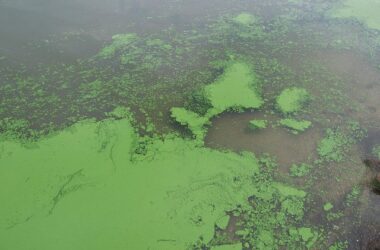
Cyanobacterial growth: An underlying cause for unsafe drinking water
Cyanobacterial toxins are amongst the most hazardous substances for humans. Their presence in drinking water due to cyanobacterial growth can result in undesirable health effects such as hay fever-like symptoms, skin rashes, respiratory and gastrointestinal distress, and even liver and kidney damage upon exposure. Therefore, there is an urgent need[Read More…]

To cure the incurable: Stem cell transplantation process provides insight into potential HIV cure
Human Immunodeficiency Virus (HIV) is a viral infection characterized by its ability to harm white blood cells that are crucial for the immune response. This makes HIV patients very susceptible to slightly or moderately acute diseases (that would not normally pose a serious risk for healthy individuals) by diminishing their[Read More…]

P. aeruginosa: The culprit of lung infections in cystic fibrosis patients
Approximately 70 000 people worldwide live with cystic fibrosis (CF). Around 80 to 95 per cent of them fail to recover from lung infections, which can lead to rapid lung function decline and even death. Disturbingly, the standard treatment for lung infections fails in around one third of patients. In[Read More…]

McGill Science Writing Initiative pushes students to share their knowledge accessibly
On April 9, the McGill Science Writing Initiative (MSWI) announced the winner of their third annual Case Competition. For this competition, McGill undergraduate students presented their projects in a variety of formats, including children’s books, podcasts, and literature reviews. Five teams made it to the final round of the competition,[Read More…]

The infinite potential of untangling quantum numbers
Over the last decade, thanks to developments in hardware and software technologies, computers can now tackle problems previously thought impossible. Computer chips are faster (in accordance with Moore’s Law) and developing fields like deep learning—a class of algorithms that use brain-inspired neural networks to process data—allow computers to more efficiently[Read More…]

Planting a SEED: McGill sustainability project moves forward in UN competition
Two years ago, roughly half of high school-aged Canadians did not believe that climate change could be stopped. Some of this hopelessness stems from climate education, which still revolves around causes and effects, rather than solutions. But, can climate change be stopped without spurring the next generation to action? That[Read More…]
Walking the academic tightrope
Canadians have been calling for reform in higher education for years because many feel that such institutions fail to effectively prepare students for the workforce. This isn’t the only issue on students’ minds though—the university’s priorities are, too. From recycled class lectures, rotating professors, and the struggles with contacting lecturers,[Read More…]