Latest News

Off the Board, Opinion

The case for comprehensive education

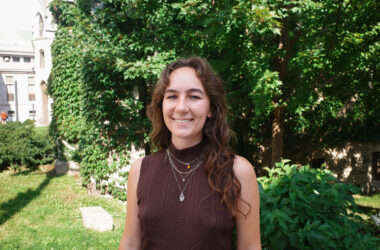
When I applied to McGill’s Interfaculty of Arts and Science, I didn’t know what I wanted to major in, but I did know one thing: I was in search of an interdisciplinary education. I didn’t want to stay in the STEM box I had streamlined myself into during my final years of high school. With that goal in mind, I knew I had to push beyond my comfort zone and develop skills I hadn’t fully explored yet. That desire led me to McGill’s interfaculty programs, and eventually to The Tribune

The Bachelor of Arts and Science is a hidden gem at McGill. My peers often ask me, “Wait, that’s a thing?” It’s ironic how overlooked this degree is, given how well it represents what education should be—interdisciplinary. Too often, education feels like a series of narrow boxes—science students stick to labs, and humanities students stick to essays. But the most meaningful learning happens when we cross those boundaries. My experience in this program—and my work at The Tribune—has cemented my belief that all faculties should become interfaculties. 

When I accepted my role as Web Editor for The Tribune, I knew it wouldn’t be a typical tech job consisting of writing HTML and CSS or debugging code. I knew I would have to write—something I never practiced and avoided at all costs because it intimidated me. Writing this article, for example, has involved painfully long hours of staring at a blank Google Doc, battling self-doubt. But I also knew writing would push me to grow, help me understand the importance of communication, and change the way I approach learning. 

While my role focuses on web development, it would be impossible to ignore the larger importance of the stories we publish. What good is a beautifully designed website if the content doesn’t resonate with its readers? That realization made me appreciate writing as a cultivable and important skill. Writing this article has been an exercise in conveying complex ideas clearly and compellingly—a skill as crucial in coding as in journalism. 

Poor communication, I’ve learned, undermines brilliant ideas even in highly regarded fields such as academia. A professor of mine once described the common academic experience of watching a researcher, passionate and technically skilled, lose their audience. They dive straight into formulas and technical details, leaving the room disengaged as they fail to regard the crucial storytelling aspect of their presentation. There is importance in explaining the context behind their scientific research and the journey that led them there. It’s tragic—not just because it’s boring, but because it wastes an opportunity to educate and inspire. Every breakthrough has a story, and if no one tells it, its impact fades. 

This is why comprehensive education matters. In my data science class, I’ve learned that technical skills are only half the equation; the ability to communicate and present findings in a clear, impactful way is just as important. Failure to do so can lead to serious consequences, as misleading or poorly interpreted research can harm public understanding and decision-making. Similarly, medical students spend years mastering clinical skills, but how do they advocate for policy change or connect with patients in their most vulnerable moments? Courses in literature or ethics could help them develop empathy and strengthen their communication skills. The same principle applies across all disciplines. 

When I think about my future, I don’t want to wear a single, isolated label as either a  “science person” or  an “arts person.” I want to create, communicate, and connect; education should foster that adaptability. That’s why I believe every faculty should embrace an interdisciplinary approach, encouraging students to explore modes of expression and learning beyond their comfort zones. Ultimately, education isn’t just about preparing students for specific careers, it’s about preparing them for life. A comprehensive education builds adaptability, empathy, and the ability to connect ideas across fields. These aren’t just workplace skills—they’re human skills. If my time in the Interfaculty of Arts and Science and at The Tribune has taught me anything, it’s that the best learning happens at the intersections of disciplines.

Editorial, Opinion

McGill’s bandaid solutions don’t protect students from bigotry

On Nov. 25, the McGill administration announced an immediate suspension of room bookings for extracurricular speaker events until January, citing “unacceptably high” security risks and the need to protect the school’s academic mission during the exam period. The decision follows recent backlash surrounding the invitation of Mosab Hassan Yousef to speak at McGill. Yousef, a highly controversial figure, has made public statements widely criticized as hateful and Islamophobic, such as stating that he does not have any respect for Muslims, and that he believes that Islam is not a peaceful religion. He has also expressed harmful views about Palestinians, including claiming that Palestinian is not a nationality nor an ethnicity. His past appearances at other universities, such as Princeton, have sparked similar controversy. By asking students to engage in discussions with individuals who dehumanize them, McGill is both insulting and endangering students. 

This pause of in-person events also coincides with recent tensions over UN Special Rapporteur on the Occupied Palestinian Territories Francesca Albanese’s academic talk on Nov. 4, where student organizers alleged that the university tried to prevent the event from taking place by relocating it multiple times, while simultaneously facing legal pressure from various campus groups to cancel her appearance entirely. 

However, the recent suspension raises concerns about McGill’s role in perpetuating division on campus. The administration has acted against the outcomes of student elections before, such as preventing the Students’ Society of McGill University (SSMU)’s adoption of the Palestine Solidarity Policy in April 2022, and it has failed to acknowledge its own contributions to the increasingly hostile campus environment through the increased policing of its students. Rather than creating opportunities for meaningful discussion, McGill’s approach exacerbates the divisions which they claim to want to eradicate, leaving students and student groups in an increasingly polarized environment. Thus, while McGill claims that moving controversial events online might be beneficial in protecting immediate physical security, it fails to address the deeper issues at play. 

McGill’s course of action is symptomatic of a broader issue: The administration’s unwillingness to engage with its community in a productive way. Controversial speakers have historically been a hallmark of university life, but their presence (or enforced absence) now increasingly fractures campus communities rather than fostering considerate dialogue and academic discourse. This is not simply a failure of communication—it reflects McGill’s neglect in creating a campus environment where all voices can be heard. The university’s tendency to prioritize its image over student concerns, as seen in its suppression of protests and lack of thoughtful consultation, has only worsened the situation. Further, participating in the criminalization of student activism undermines the very principles of free expression and open dialogue that universities claim to uphold. 

By staying engaged, students can challenge the false equivalence between platforming free speech and hate speech, taking a firm stand against rhetoric that marginalizes or harms vulnerable groups. SSMU also has a responsibility to represent the voices of those the administration overlooks, including holding firm on their activism against the genocide in Palestine. This is a crucial time to push SSMU to reflect the will of the student majority and advocate for inclusive, democratic practices on campus. Every student has a role in presenting McGill with demands for accountability and justice while maintaining sustained, collective pressure to ensure real change.

Rather than hiding behind a facade of neutrality, McGill must confront the flaws in its decision-making process, particularly its tendency to reactively oppose activities instead of addressing and unpacking the root causes of campus tensions. Neutrality in the face of harmful rhetoric is not impartial—it is a choice that often perpetuates harm and division. Students must hold McGill accountable for moving beyond short-term fixes and urge the university to develop transparent, inclusive policies rooted in empathy and care, instead of simply avoiding conflict through pausing in-person speakers altogether. By involving students—especially those from marginalized groups—in shaping these policies, the administration can ensure that its actions are informed by the community it serves, rather than dictated by external pressures or fears of reputational damage. If McGill truly values academic freedom, it must recognize that freedom thrives in a democratic, inclusive environment and commit to fostering a campus culture that bridges divides rather than deepening them.

Art, Arts & Entertainment

‘Costume Balls: Dressing Up History, 1870-1927’ probes imperial myths behind the glitz

In 1870, Montrealers adorned themselves with velvet and tassels and silk, and then made their way to the ball. Queen Victoria’s son, Prince Arthur—the namesake of rue Prince-Arthur—was visiting the city for the year. No expense was spared; there would be a costumed carnival, and it would be on ice. 400 of the city’s elite spent the evening gliding across the rink at the Victoria Skating Club, drinking, laughing and dancing. Mary, Queen of Scots sailed past Fra Diavolo, fat, fluffy garlands hung from the rafters, the lights were warm, colourful reflections of guests whizzing by made brushstrokes on the ice, and little Hattie Atwater—of the market, library, and station—dressed as “Fanciful Fans,” with two-dozen folding fans attached to her velvet dress, and one more on her head. And there was music—Waldteufel’s “The Skaters’ Waltz.” 

There’s a man in blackface, captured in a painting of the ball. In a portrait from that night, Mr. Reynolds shows off his costume as “Quewaygoosquequamteros,” an invented Indigenous character. He posed for the photo with an axe in his mouth. 

The McCord Stewart Museum’s latest exhibition, Costume Balls: Dressing Up History, 1870-1927, displays over 40 costumes from balls across Canada. Opulent and fantastical, costume balls were the apex of elite society escapism—they were, as a journalist from the Montreal Daily Witness put it, “the very acme of the phantasmagoria of the hour” (or, in the words of a fellow exhibition goer, “une grosse affaire là”).

The exhibition interrogates how the balls, though beautiful, reinforced colonial and imperial mindsets. The costumes invite viewers to be enchanted by elegance, but to ask what stories lie beneath it.

“I wanted us to present an exhibition that really had teeth,” Exhibition Curator Cynthia Cooper said in an interview with The Tribune.

Costume Balls welcomes viewers into the world of the Van Hornes and Atwaters, the Molsons and McConnells. While servants did dress up for the balls, their costumes were largely lost and many went unphotographed.

Moving through the exhibition, you hear the same music the elite danced to over a century ago, sourced from dance programs in newspapers.

“I took all the dance programs to the National Library of Canada, to the sound division, and we looked for early recordings of all these pieces [….] We were able to track down a certain number of them on records, and we made a recording of […] 20 pieces that were actually played,” Cooper said. 

In the last room, the music stops. In 1896, at the Historical Fancy Dress Ball in Ottawa, Hayter Reed, “Deputy Superintendent of Indian Affairs,” led a group of guests dressed as Indigenous caricatures to the centre of the floor, “making loud noises and aggressive gestures.” 

Indian agents”—Canadian government officials sent to reserves to “manage” affairs—stole moccasins, octopus bags, and eagle feathers from Indigenous peoples to adorn the elite for lavish balls. The items were never returned and were often destroyed.

The exhibition confronts viewers with an aesthetic problem: There’s something special in seeing shoes people walked in and dresses they danced in a hundred years ago, to imagine them whirling around the room, alive and bright and brilliant, taken off and worn again. It’s heady—to see century-old photographs, and the costumes right there, stained and worn and human. It seems so real, and so beautiful, but it hides such an ugly colonial reality; gorgeous clothes dressing gruesome ideas.

There’s a blue dress in the penultimate room. Silk with a lace collar and cuffs. Cooper found that between the 1760s and 1789, the dress travelled along the path—Virginia, New York, Shelburne, Quebec City—of one of the earliest Black communities in Canada, providing insight into the lives of those who did not leave garments behind. The sartorial stories behind the pomp persist even after the clothes themselves have been lost, waiting for someone to search, to look, and to listen.

Costume Balls: Dressing Up History, 1870-1927 will run until Aug. 17, 2025. Tickets are available online or in person at the McCord Stewart Museum.

Montreal, News

Protest travels through downtown Montreal on International Day of Solidarity with the Palestinian People

“Gaza, Gaza, Montréal est avec toi.”

Around two hundred members of the Montreal community gathered in Victoria Square for a protest on Nov. 29, organized by the Palestinian Youth Movement (PYM)’s Montreal chapter, in honour of the International Day of Solidarity with the Palestinian People. Throughout the demonstration, protestors called on private corporations, the Canadian government, and universities in Montreal complicit in the genocide of Palestinians to cut financial ties with the Israeli state.

In an interview with The Tribune in Victoria Square, a representative from Students for Palestine’s Honour and Resistance (SPHR) at McGill spoke to the way that student activism and wider community activism for Palestine are interrelated as part of the international Boycott, Divestment, Sanctions (BDS) movement. This movement aims to financially pressure Israel to comply with international law, targeting a wide range of institutions “from McDonald’s to McGill.”

“It’s very important for students to show solidarity with the wider community, and the wider community to show solidarity with the students, because there’s more power in numbers,” the representative said. “We’re all fighting the same fight, whether that’s divestment from academic institutions or divestment from all the other companies that we’re going to be walking by at this protest.”

One attendee who wished to remain anonymous explained to The Tribune that protests are a way to drive gradual, step-by-step progress towards defunding the Israeli state’s genocide in Gaza.

*“Keeping those protest spaces alive is really important […] so that every time the topic evolves, we can be there and show our political support for those actions,” the attendee said.

Organizers later led protestors into the street and onto rue Sainte-Catherine. Demonstrators walked west through crowds of Black Friday shoppers, calling on onlookers to join the protest in support. Many pedestrians stopped to listen, with some following the protest along the rest of its route.

“We will never normalize what is happening,” a PYM representative said. “If you are hearing these words, you are part of this fight. You are accountable [….] Whether you’ve been with us for decades, or this is your first time joining us, you are part of this struggle, because if you are not with us, it means that you are normalizing what is happening.”

Two Cégep students were among the protest’s attendees. They told The Tribune that they have been supporting the Palestinian cause for over a year, without seeing any progress be made in the demands they are fighting for. The students also expressed disappointment at the investments of numerous universities—such as McGill, Concordia, and Université de Montréal—in companies complicit in Israel’s siege on Gaza, noting that this has also impacted their considerations on where to pursue their university career. 

“I used to be a student who wanted to go to McGill, because it’s known for intelligent students,” one Cégep student said. “But then a very dear friend to me went on a hunger strike to protest the genocide happening. She made [her hunger strike] unlimited because she was confident that no university was going to let their students starve. But McGill was able to prove the opposite. They let her starve. So I took a vow to never go to McGill.”

In a written statement, the McGill Media Relations Office (MRO) explained that the university aims to “remain neutral on geopolitical issues.” However, the MRO stated that McGill upholds community members’ right to freedom of expression, which is also part of the code of Student Rights and Responsibilities.

“We respect the right of students to pursue political objectives and to express their beliefs,” the MRO wrote. “Still, when a small group of students went on a hunger strike early this year, we urged them to put their health and well-being first since those are our priorities.”

The protest ended on the corner of rue Sainte-Catherine O and rue Guy where protestors danced and chanted: “The students united will never be defeated.” Organizers then played Palestine’s national anthem while they circulated a donation box for Palestinian aid. 

A PYM speaker concluded the protest by reminding participants that the movement is far from over. 

“From our banks, Scotiabank, that invest millions of dollars in Israeli weapons systems, our universities like Concordia, that invest in weapons companies, from our pension funds, every part of Canada is complicit in genocide,” they said. “We are here to say that as long as there is genocide, we will continue to take to the streets.”
*This quote has been translated from French.

News, SSMU

SSMU by-election fails to make quorum, results nullified

The Students’ Society of McGill University (SSMU) closed its executive by-election polls for the Vice-President (VP) Student Life and VP Sustainability and Operations roles on Nov. 29. The by-election voting window was nine days long, starting on Nov. 20. 10.7 per cent of SSMU’s constituency cast a vote, meaning that the vote failed to make the quorum of 15 per cent, leaving the positions remaining vacant.

Justice Bongiovanni and Alice Postovskiy were competing for the VP Student Life position, which was left unfilled after Chloé Muñoz’s resignation on Oct. 29. Bongiovanni, U1 Arts, ran with the campaign slogan, “Vote for change, vote for Justice.” His campaign included proposals to invest $10,000 CAD to help students facing food insecurity and funding more affordable extracurricular courses to teach career development skills. 

Bongiovanni wrote to The Tribune that although he enjoyed being a part of the SSMU electoral process, he found the results of the election disappointing. 

“The fact that the by-election was nullified is a shame for [the] 10.7 per cent of students that took part, and democratically problematic,” Bongiovanni wrote. “However, I want all students to remember that an executive general election is coming relatively soon, despite this situation, and that their voices still count.”

The other candidate, Postovskiy, U3 Arts, ran on a platform that included maintaining SSMU services for students, helping streamline SSMU finances, and improving clarity for student groups on the union’s regulations. 

In a comment to The Tribune, Postovskiy wrote that she believes that SSMU’s Internal Regulations do not outline a quorum for executive by-elections. Postovskiy added that she asked the SSMU Chief Electoral Officer to release the results of the election, but was refused. She plans to bring this issue to the SSMU Judicial Board if the student union does not revert their decision to nullify the election. 

“Beyond just the by-election, this echoes a trend at the SSMU of not taking student democracy seriously,” Postovskiy wrote.“The McGill Student Union Democratization Initiative Policy, passed by referendum in 2021, has not been implemented. There have been various controversies with the SSMU failing to adopt policies passed by referendum, notably last year’s Policy against the Genocide in Palestine [….] It is unfortunately not clear to me what the McGill student body can do to achieve democratic control over its student union.” 

Neither the Internal Regulations nor SSMU’s Constitution specify a specific quorum for executive by-elections. Thus, the question will go to the union’s Judicial Board. SSMU President Dymetri Taylor, wrote to The Tribune that if the Board rules there is no quorum, that could lead to an undermining of student democracy as—in an extreme case—a single voter could determine the outcome of an election.

Kareem El Hosini and Arya Cheuk were competing for the VP Sustainability and Operations role, following Meg Baltes’ announcement that she will be resigning effective Dec. 13. El Hosini (U3 Engineering)’s campaign slogan was “Efficiency. Transparency. Enrichment.” El Hosini promised to improve underused spaces, revitalize McGill’s community garden, and bring more affordable and accessible food to campus.

“I’m disappointed that [people] don’t care enough to vote but I also understand why they don’t. I’ve noticed that [people] typically feel indifferent towards or don’t like [SSMU] in general due to past actions,” wrote El Hosini.

Cheuk, U1 Arts and Science, had a campaign slogan of “Vote Arya for a Greener Area.” Cheuk hoped to improve composting on campus and to encourage clubs to get sustainability certificates. 

In a comment to The Tribune, Cheuk described the election results as anti-climactic. She attributed the low voter turnout to students’ disinterest in student politics and the election’s timing coinciding with finals season. 

“I am happy I had the opportunity to run as a candidate, and that so many had come together to help nominate me in such a short [time]. I am apologetic that I could not materialize their support,” Cheuk wrote. 

Taylor wrote that he was not surprised that the election did not meet quorum, as SSMU has struggled to get high numbers of students to participate in elections, compared to universities such as the University of British Columbia.

“Clubs, services, and other groups that rely on SSMU will experience a slowdown in operations as the tasks [of the vacant positions] are distributed to other executives,” Taylor wrote. “So far, I’ve been working very closely with the services to create a better structure for them and, hopefully, provide them with some financial freedom vis-a-vis the VP of Finance & bank accounts [….] We have chugged along and will continue to do so.”

Behind the Bench, Sports

Karolina Wisniewska and Nikki van Noord speak on women’s leadership in sports in alumni panel

The McGill Women’s Alumnae Association partnered with the McGill Women in Sport Program to host a panel featuring Paralympic Ski Champion Karolina Wisniewska and McGill Assistant Swim Coach Nikki van Noord to speak on their careers in sports, the influence McGill had on their success, and how gender affected their journeys.  

In her first year at McGill, Wisniewska, BA ‘99, made the Canadian Para-Alpine Ski Team and spent the rest of her four years balancing her skiing career with academics. While a student, she became World Champion in Super G and won silver at the 1998 Paralympic Games in Japan. 

“It was very challenging to be on the national team and pursue that [academic] schedule,” Wisniewska said. “I was in my first year, and I’d never been to university or to Montreal, so I was a bit lost. And I just went about it the best way I knew how.” 

She shared that she regrets not asking for help and urged other athletes struggling to learn from her mistake.

Van Noord, M.E. ‘22, is currently pursuing a doctorate in exercise physiology. She swam for five seasons at McGill before joining the coaching staff, where she helped McGill win the 2024 Réseau du sport étudiant du Québec Championships and was selected for the 2024 U SPORTS Female Apprentice Coach Program.

“I came to McGill as a pretty mediocre swimmer,” she said. “Peter [Carpenter] will admit to me now that I was the last pick the first year of my McGill career […] him taking that chance on me is, fundamentally, what’s changed my entire life [….] Sometimes all you need is one person believing in you and seeing your potential when you don’t see it in yourself; that’s something I can only hope to be for [other] athletes.” 

When the speakers were asked how their gender impacted their experience in sports, van Noord described her evolving goals.  

“I’m hoping that [leadership positions] can be something that not just women are a part of, that we can build it and have a more equal showing,” she said. “And part of that as an athlete is becoming captain of the team or trying to strive for a leadership role. This led me to be like, ‘Well now in this leadership role, there’s only so much that I can do. What can I do next?’ And that next step was becoming a coach. Now I’m like, ‘Well, now that I’m this woman and coaching, what can I do now?’” 

She concluded her response by reiterating that she hopes she can help inspire even just one athlete, and Wisniewska caught her with an important correction. 

“You keep saying, ‘Maybe I’ll hopefully touch one person’s life.’ Stop it. Everybody who is female in this room, just stop that ‘Oh maybe one person,’” she said. “[Instead say,] ‘Yes. I’m going to impact a lot of people’s lives for the better.’”  

This moment was a significant one that audience members and Martlet Soccer players Aaliyah Kamdar, U2 Arts, and Alexandra Hughes-Goyette, a Master’s student in science, highlighted.  

“Imposter syndrome is a thing a lot of women experience. So just hearing these successful women talk about that today really helps with how to deal with it,” Kamdar shared.  

“It validates those feelings, to know that I’m not the only one who feels that way in those settings,” Hughes-Goyette added.  

As a final question, the panellists were asked to share advice for young women athletes. Van Noord underlined the importance of passion and leadership when playing a sport or coaching one, emphasizing that inherent talent is not in the criteria for success in coaching. Wisniewska also highlighted the importance of hard work. 

“I was never the best skier because I was born disabled […] until you have the results […] until I see how you’re skiing, or how you treat your teammates and your coaches, that’s what counts,” Winiewska said. “Just shut up and get to work. That’s the point. Do the work, put in the time. You will get the results.” 

Local Stories, Student Life

Social media signalling isn’t enough

In the wake of the U.S. election, my social media feed was flooded with reactions. Old classmates from my New Jersey high school shared Instagram Stories condemning Donald Trump, highlighting allegations against him, and denouncing his voters. These posts were swift and impassioned: An immediate outpouring of anger and grief. Yet, within 48 hours, the fervour had all but disappeared. No links to community organizations, no resources to turn outrage into action—just a digital silence.

This isn’t to say that social media activism lacks value. Social media is an incredible tool for spreading information, especially in moments of crisis. It can amplify marginalized voices, expose injustices, and mobilize movements. In 2020, the Black Lives Matter movement was fueled by the virality of posts educating people about systemic racism, police violence, and ways to support Black communities. Digital networks can be a powerful tool to galvanize the activism process. In community organizing, this notion is known as the ladder of engagement, where more and more people are encouraged by their peers to take on progressively greater action in pursuit of a goal. Social media is a new digital rung on the ladder that’s easier to reach than many offline alternatives. Additionally, platforms like Instagram and Xhelp shed light on conflicts and catastrophes that mainstream media often overlook. 

Cecilia Eu-ahsunthornwattana, U1 Arts, shared their thoughts on the role social media can play in spreading awareness.

“I learnt about a lot of causes or social issues that I wouldn’t have even heard about through social media,” Eu-ahsunthornwattana wrote to The Tribune. “A lot of them are subjects that I’m now more educated in and see the importance of, from hearing personal stories of other people and doing extra research.”

“There has never been a time before where information could be so wide spread, and I think being able to share on social media gets a population that may not have been educated on subjects involved,” wrote a student who wished to remain anonymous.

But there’s a darker side to this: Are we using social media to inform and create action, or are we simply signalling our moral alignment? After the election, many posts felt less like calls to action and more like declarations of group identity. Sharing a story condemning Trump wasn’t just about what the post said—it was about what it meant. These posts functioned as social signifiers, telling followers, I’m one of the good guys. I’m on your side.

This phenomenon isn’t unique to elections. Story posts often serve as a form of performative activism—symbolic gestures that communicate outrage or solidarity without necessarily leading to tangible change. A person might share an infographic or photograph but stop short of donating, volunteering, or organizing. 

The issue lies in the echo chamber of social media. We create online communities with people and perspectives that align with our own. When we post about activism, it’s likely that much of our audience already agrees with us. 

Soffia Gaw, U2 Arts, talked about the purpose of reposting in a written statement to The Tribune

“Rarely do I see a reposted political story not meant to display an overt message that is on behalf of the person reposting. I think those who repost aim to create greater knowledge for their audience while also re-establishing their position on the issue.”

Sharing a post is easy; taking meaningful action is harder. It takes more effort to attend a protest, contact elected officials, or engage in community organizing than it is to tap “share” on an infographic. This isn’t to diminish the importance of raising awareness—education is a critical first step in any movement. But if awareness isn’t followed by such efforts, what’s the point?

Activism requires more than just visibility—it requires action. Sharing a story is a start, but it shouldn’t be the end. 

Campus Spotlight, Student Life

Queer McGill’s drag night defies traditional drag categories

“Whenever you put on a lash, it’s not just for fun, it’s resistance.” These were the opening words from host Rosa Golde at Queer McGill’s annual amateur drag night on Nov. 28. On the pulsing dancefloor of Cabaret Berlin, eight up-and-coming performers gave their all to deliver a show for the ages. From political satire to burlesque, the drag artists pushed the boundaries of traditional “drag king” and “drag queen” categories, showcasing a new wave of avant-garde stars looking to break down and transcend binaries. 

Self-proclaimed “drag thing,” Pandora’s Box Muncher, U3 Arts and Science, debuted at a Queer McGill drag show in 2022. Their act combined theatre and cinema in an eclectic live rendition of Barbra Streisand’s “I’m the Greatest Star” from Funny Girl and Pearl’s monologue from Pearl (2022)

“In this colonial, imperialist, white supremacist culture, [drag] is something that’s suppressed. Drag at the fringes—like less mainstream [than] RuPaul’s Drag Race drag—is important in pushing back,” they told The Tribune, speaking on the political importance of drag. 

In another act, Tall Graycie embodied this sentiment in their identity as a “drag creature.”

Pandora’s Box Muncher commented on the importance of a student group such as Queer McGill hosting a drag night. 

“I have met five people tonight who are telling me it’s their first drag show and that in itself is important,” they said. “Promoting drag in places where it’s not usually promoted allows more awareness.” 

Indeed, as Rosa Golde and co-host Augusta Wind asked how many people in the crowd were “popping their drag show cherry” that night, many people cheered and raised their hands. The energy in the room was electric, with the audience unprepared for what was to come. Notably, the acts varied widely from each other; the night was a mix of traditional lip-sync dances, instrumental numbers, and live singing performances.

“We not only want and need designated spaces in order to thrive and succeed but we want to have fun and memorable experiences,” Valeria Munoz, a Master’s student in Educational Leadership and one of Queer McGill’s Events Coordinators, shared in a written statement to The Tribune. “We must push boundaries and go beyond comfort zones […] We think it’s a valuable opportunity to use our platform to foster connections within the McGill and Montreal community.” 

In keeping with this mission, Queer McGill hosts various events such as movie screenings, queer orientations for incoming students, and ballroom workshops—an underground queer subculture of competitive performance invented by the first person known to describe himself as a drag queen, William Dorsey Swann.

Overall, the reception of the drag night was spectacular. The performers shared how encouraging and supportive everyone was; they expressed thanks to the staff of the venue, the Queer McGill executives, and the crowd themselves. 

“This event was truly an astounding success. [Event Coordinators] Anushka Manoj and Valeria Munoz’s teamwork and coordination skills were reflected in the way they singlehandedly contacted the venue [and] performers, and did the marketing/promotion of the event,” the Queer McGill events team shared in a written statement to The Tribune. “Between all of these moving parts and the anxiety built up right before doors opened, I’m impressed with ourselves and couldn’t be happier.”

Evidently, there was no need to worry. The team delivered an amazing show that highlighted the evolving landscape of drag arts. Furthermore, they reaffirmed the need to provide outlets for new creatives and to expose more students on campus to queer culture and history. Overall, Queer McGill’s amateur drag night exemplified the importance of being your authentic self and how the gender revolution will be led by drag artists.

Local Stories, Student Life

At rock bottom? It might be time to dig a little deeper!

It is a truth universally acknowledged that all great stories of the world require adversity. In critical times of civil unrest and political despair, it can feel like an act of hard faith in the face of a cruel joke to believe things might truly improve. We get so invested in loving a world that seems to not love us back that we grow resentful and tired. The will to change is a lost art—as students, we feel too small for our ambitions and too restless for our own good. 

Sophia Mugford, U2 Science, spoke about despair as a catalyst for change in an interview with The Tribune

“Grief is an expression of compassion,” she said. “It’s the mirrored other side of the coin of love to be hurt and lost at times. Without these feelings, you don’t get the anger you need to confront the unjust feelings of unfairness and sadness needed to move forward and enact change.”

Addressing transgender rights activism particularly, Mugford highlighted that giving in to despair means giving up on living authentically. 

“The greatest form of protest is to live,” Mugford said. “Being open to the truth of who you are and commanding space is a life-saving act for people like you.” 

Fear, too, can be a powerful tool in mobilizing communities, acting as a wake-up call to action.

Coming from a science background where politics are often less front-and-center in the classroom, Apollo Goderich, U3 Science, pointed out that activism and solidarity has the power to pull students out of the daily grind and into engaged communities. 

“You have to keep focusing on schoolwork like nothing is happening. It’s isolating and reminds you of the city’s apathy [….] When we talk with each other, we cultivate understanding—we share our anger and suffering,” Goderich stated.

The weight of the ecological crisis has driven many members of Gen Z to question whether bringing children into this world is ethical, given our grim environmental outlook. However, Rebecca Solnit, an American writer, is quick to rebut that in her experience, many activists who face the realities of the climate crisis daily are people with family and children—for whom they hope to secure a better, liveable future. This defeatist surrender reveals Gen Z’s uniquely nihilistic doubts for a prosperous future generation—it’s not uncommon to hear friends and siblings say, “We don’t even want another generation.”

Setareh Setayesh, U3 Science, however, delineates between optimism and actionable hope. 

“You can’t just have blind hope and optimism that everything will be okay—it’s satiating but it’s not fuel,” Setayesh told The Tribune. “People need to recognize the urgency, we don’t need to be comfortable and optimistic, we need to be hopeful and opportunistic.” 

Hopelessness is an emotion masked with false hope. We push things away and hope they will change, when change is an active participatory performance of will. We need to live with despair and try to understand it intimately to find ways out of it. Grief is an act of merciless, unsentimental love which spares no one. We owe it to ourselves and future generations to create a better world, working through our despair and grief to find a way forward. 

Recalling her Fundamentals of Global Health class, Setayesh recalled Thunberg’s words: “Once we start to act, hope is everywhere. So instead of looking for hope, look for action. Then, and only then, hope will come.”

Art, Arts & Entertainment

‘Witches: Out of the Shadows’ demystifies the resilient witch

The final room of Witches: Out of the Shadows is one of the most powerful exhibition endings I have ever witnessed. Kiki Smith’s bronze sculpture Woman on Pyre lies atop the centre pedestal, engulfed by a circular structure of distorted, geometric mirrors; it confronts the senses, inviting viewers to witness an execution scene frozen in time by its cast medium. Just because a pinprick drew no blood, the figure now kneels atop serrated logs that gnaw at her legs’ flesh, tearing through her barren form that helplessly pleads for mercy. At first glance, one could ask how a woman so vilified by the public as a violent figure hunches over in desolate surrender to her fate, but the motion of her outstretched arms beckoning for a final sliver of forgiveness takes the shape of a spirited resistance. She rises from her damnation as an accused witch, asserting resilience and fortitude even in death. Smith’s work bears witness to these silenced narratives of the demarcated witch, capturing the essence of this spirited exhibition.

Pointe-à-Callière’s exhibition Witches: Out of the Shadows considers the witch both as a historical construct rooted in sexism, and as a contemporary popular symbol of combined strength and folly. With its wondrous collection of diverse objects—scientific manuscripts, ritual accompaniments, tarot cards, and couture fashion, and more—the exhibit beautifully depicts the continuously remoulded perception of this mystical being. The jewel tones that cascade down from the walls accentuate witchcraft’s artistic nature, reasserting the ephemeral beauty of these historical items.

The exhibition begins with the genesis of the witch as a religious symbol of the blasphemous unknown and heretical magic. It then investigates its subsequent transformation into a secular vision of women’s disobedience in the Middle Ages as a perceived threat to the man-dominated sphere of science. Portrayed through manuscripts, medieval woodcuts, and manuals for witch elimination, the room artfully curates a glimpse into the world of intense paranoia of women’s power. Anything unknown to man, such as the woman-dominated world of natural healing and midwifery, would be deemed “otherworldly” and therefore indicative of wicked intentions. We see the torture devices reserved for these so-called witches, and are forced to face this appalling history of subjugating women’s bodies to physical torture for scientific excellence.

Moving from room to room, the exhibit masterfully balances examples of women’s suffering with feminist reclamations of this violently circumscribed label. A dress by Alexander McQueen, titled In Memory of Elizabeth Howe, Salem, 1692, comments on the culture of traditional women’s practices, like textile design, and the use of structured garments as a form of armour. The piece builds off the hardships of ancestors to strengthen tenacity in a modern age where blatant inequalities still exist. Flanked by a 17th-century painting of the Salem Witch Trials and a tranquil video installation about witchcraft, the couture garment’s unexpected inclusion highlights this continuous presence of the feminine subject, not as victims but as demystified beings of enduring force.

The upper floor covers the dissemination of the “witch” into popular culture via urban legends, otherworldly games, and a process of spiritual protection through physical guidance. On display are antique Ouija boards, hand-painted tarot cards, religious amulets, and other modes of metaphysical connection. Projected onto the installation’s walls, the witch has taken shape across mediums as a misunderstood, beautified being who tirelessly revolts against hardship—and through power, reclaims her agency. Witches: Out of the Shadows brings light to this levelling of the perceived “cultural witch,” reminding attendees of the lengthy history of systemic expulsion and the subsequent revolution of the feminine spirit.

Witches: Out of the Shadows runs until Apr. 6, 2025. Tickets are available online or in person at Pointe-à-Callière.

Read the latest issue

Read the latest issue