


Latest News

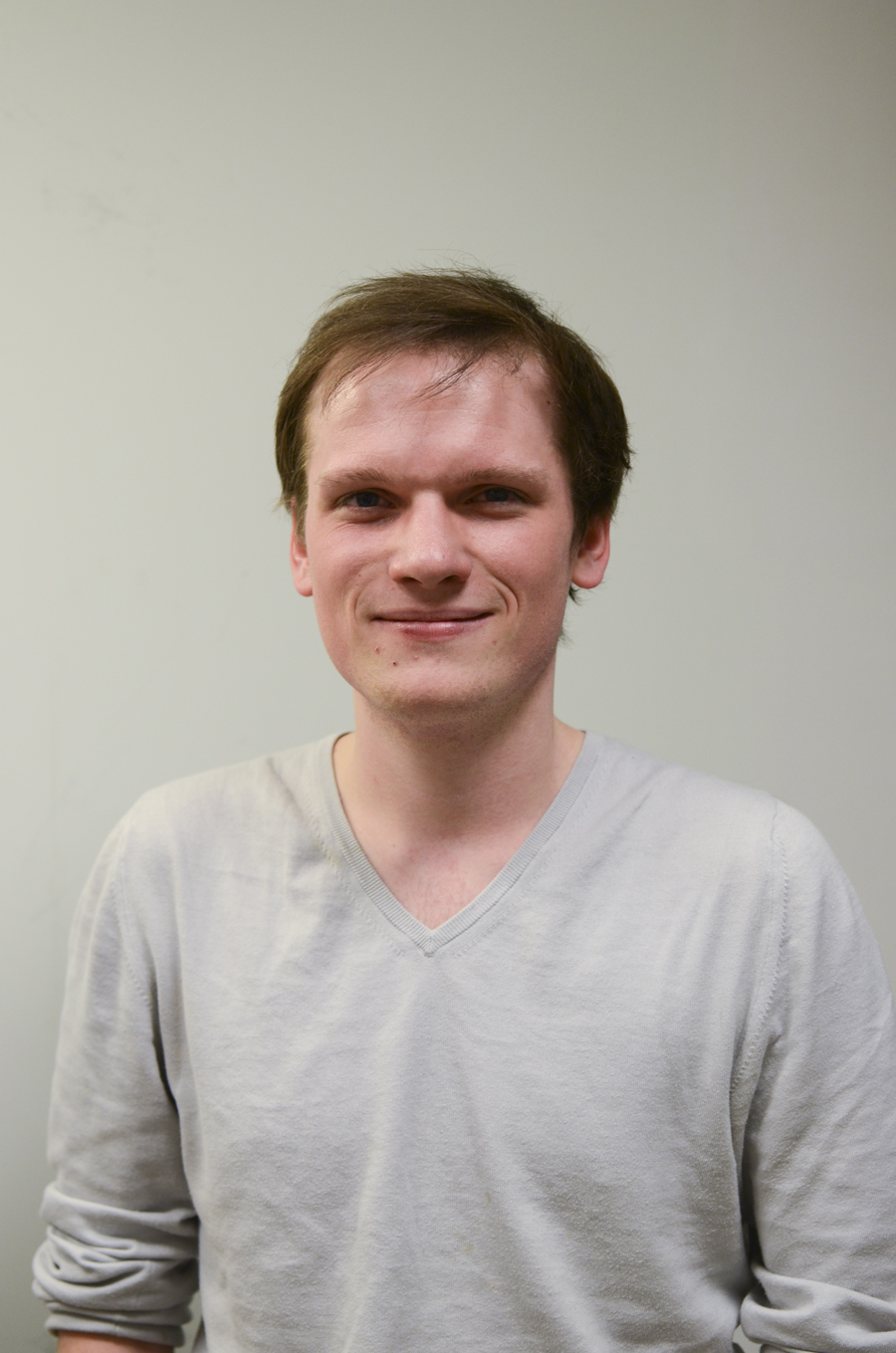
Brian Farnan (Sam Reynolds / McGill Tribune)
a, SSMU Elections 2013

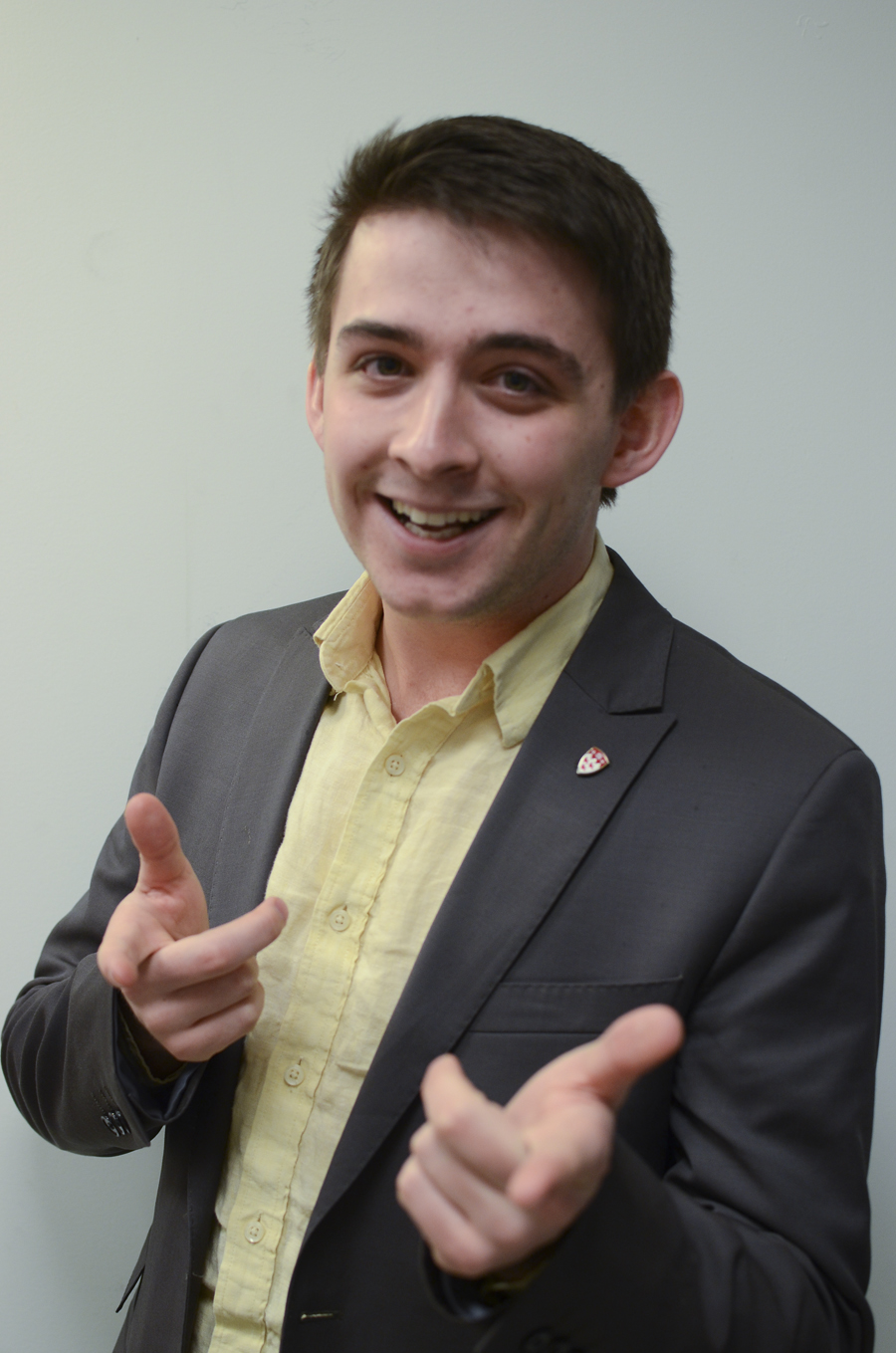
Brian Farnan, candidate for VP Internal

McGill Tribune: What tangible experiences do you have that qualify you for the position?

Brian Farnan: Going into this year, as VP External for Arts, I gained experience working with an executive team. With regards to Frosh and events planning, I’ve coordinated Arts Frosh, which was one of the biggest [Froshes]. Being both an executive and a coordinator, we cleared $17,000 profit. I knew that I was running for this position since September, so September-December was figuring out logisitics … taking to Mike [Szpejda, current VP Internal] since the beginning of the year, and then attending the working groups that he sits on as well as the larger orientation planning groups.


MT: So, based on all these experiences, what professional and personal skills have you developed that will prepare you for SSMU VP Internal?

BF: First, it’s dealing with people. I think that’s a skill I’d just grown because it’s a skill that you realize you need. It’s being approachable. It’s being open-minded. The other aspect is kind of just breaking with tradition … With my [AUS VP] External position this year, we [were] in charge of philanthropy. So in years past, it’s been like a charity week … a five-day long, isolated event … I took issue with that at the beginning of the year. So what I did was I changed it, so that I created a committee, it’s called the arts community engagement committee, and so just doing that job throughout the year, in smaller, more focused ways.


MT: You said you want to contribute by making tweaks,  rather than overhauling existing programs entirely. You just also said you want to bring a bigger picture and shift things around. How are you going to marry those two goals, and what is going to come out of that?

BF: I have a lot of respect for the process, so at no point do I want to feel like an idiot that is promising something that I can’t deliver on, so I would say that main desire in shadowing Mike, is that, I know from the past couple of months … what is generally possible, what’s not. Some of the things that were brought up in the debate last night were “oh, you can do this. You can change Orientation week completely,” but you can’t do that … I was talking to the coordinator of Rad Frosh, what they do is that they wear bandanas and have people going around essentially making sure everyone is comfortable. They don’t have that in Faculty froshes. It seems like the simplest thing. That’s the kind of stuff you can add. It’s the little things you can put in the cracks to an already functioning mechanism and make it better.

When you go to bigger innovations, I think that’s leaning more towards the communications aspect of the portfolio because it’s under-developed. [Listserv] emails are just obsolete. Letting people know what events [are happening], getting people in contact with stuff, it’s also just not one-way communications. The Simplify McGill thing, is really just sitting down, and out of the communications budget, allotting just one, right-of-the-bat fee for a website designer. I’ve seen crazy things that people can do with websites over a campaign period. If you can do it for a campaign period, you can implement this for the whole Students’ Society. And you just have these interactive maps for each of these various topics or various subjects. So these are the bigger innovations you can bring into the portfolio within reason that I think are tangible or can get accomplished.

MT: What projects would you want to implement next year that are different?

BF: Well, the Simplify McGill is a huge one for me because I think that these are little, simple things you can do that don’t take a lot of manpower, they don’t take a lot of resources… The equitable events protocol is something that the Equity commissioners are working on, that I would really like to get solidified and get included because it kind of links to this other thing that I want to do, which is create a chair on every events committee or at least have a step that is purely consultative before an event gets off the ground … to go through the Equity and Sustainability chair and just see what their thoughts are.

The other thing … is implementing a system that essentially makes the application process for orientation staff and leaders, a lot more thorough … what someone brought up at this meeting, and that I would love to jump on and push with all my might, is a certificate program for Orientation staff and Frosh leaders. The certificate program would just essentially be, whether it be a certificate or a letter from a faculty or the Dean of your faculty or the Dean of Students, whatever, it can just be a photocopied signature, essentially just adding more credibility to these positions … essentially just setting that tone and set that expectation right away works because when  they think that they are something important, then they usually reciprocate with behaviour that reflects that.

What were you for Halloween?

I was a baby. I wore a man diaper and stuff. It was great. Hopefully that picture doesn’t make it into this issue.

Click here to see the Tribune’s endorsements.

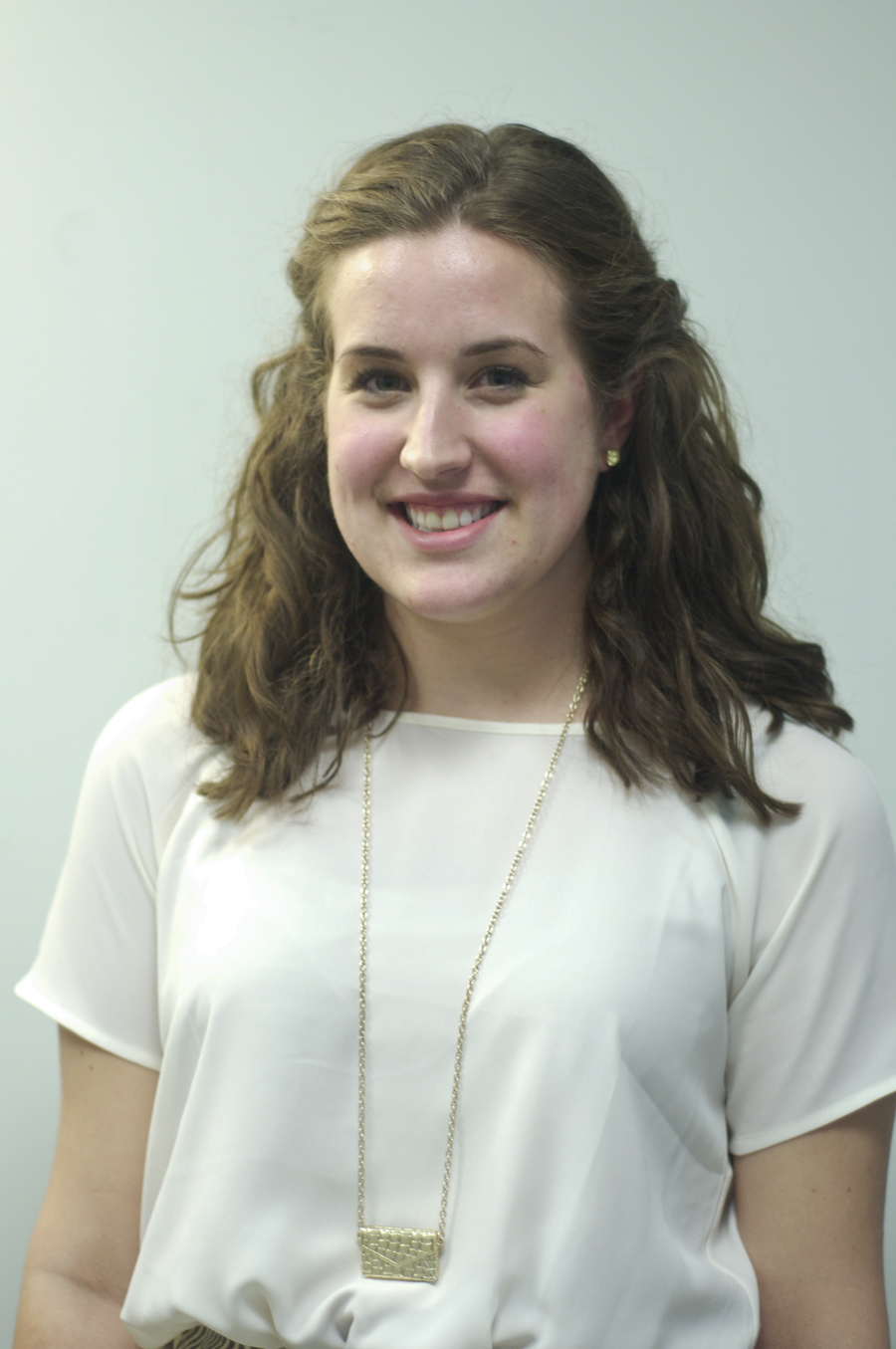
Julia Kryluk (Sam Reynolds / McGill Tribune)
a, SSMU Elections 2013

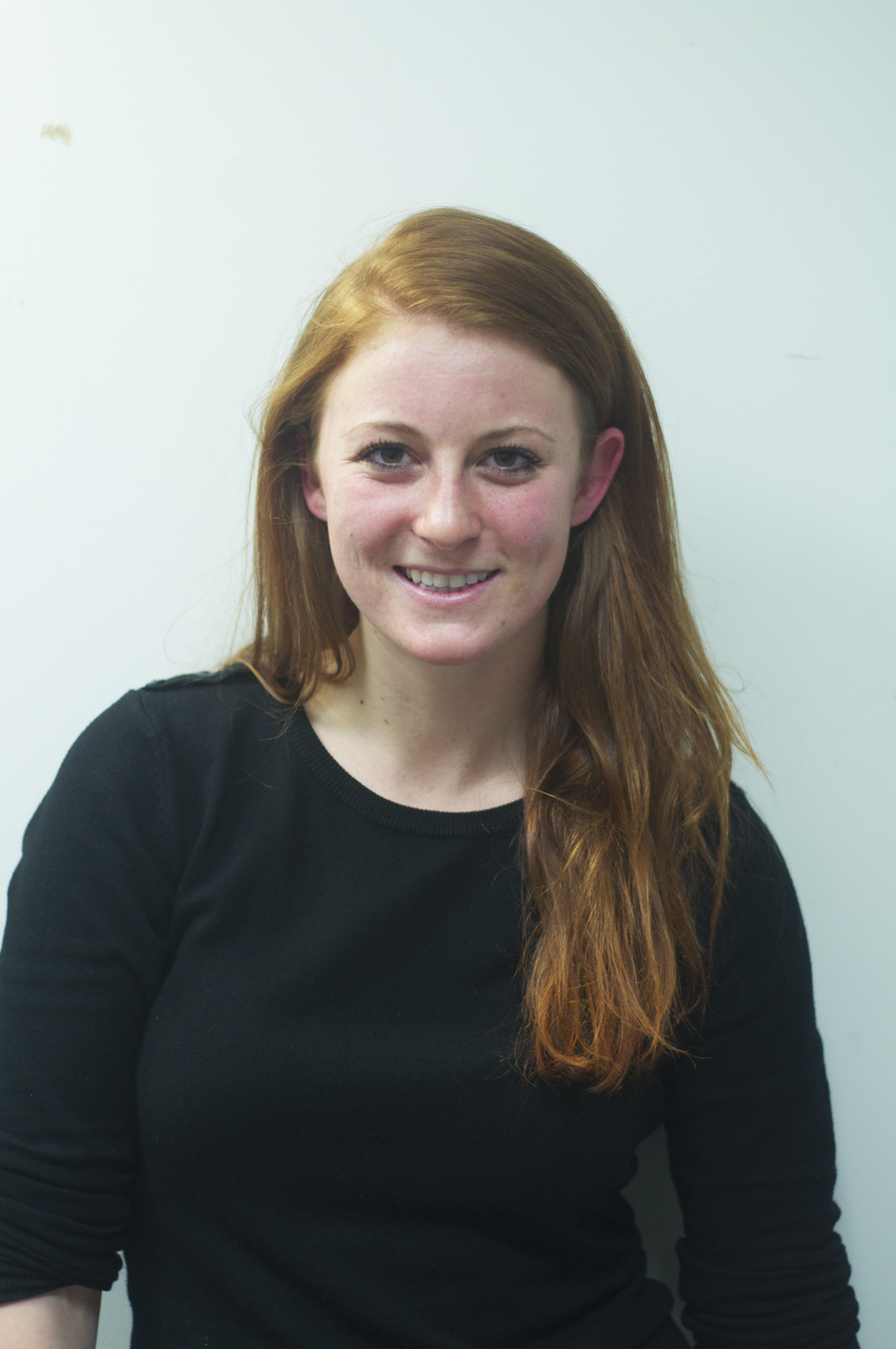
Julia Kryluk, candidate for VP Internal

McGill Tribune: Why are you a good candidate for this position?

Julia Kryluk: I work extensively with the current VP Internal, and I was on the Student Programming Network Committee, which is the main committee that the VP Internal oversees, so it plans SSMU’s events. And so I planned all the events for last year and this year. Also I’ve done a lot of events for the Science [faculty]. I was a Frosh coordinator this past summer. I was also the Science Carnival coordinator last January. I also sat as the Science councillor coordinator, so I have a lot of experience within SSMU … I’ve seen all the exec reports, what it’s really like to be an internal. And also working with all the events, having coordinated them before gave me firsthand experience of actually doing these events, as opposed to only observational experience.

Within my platform, I talk about more than planning events. Within my platform, I talk about incorporating, accountability, sustainability, and equity, which I think is something that has really been lacking. Especially with equity … sometimes the average student does not know what is an equitable costume, or if this or that event is making someone uncomfortable.

Also part of my platform is integrating all ages events because each year there’s many students that can’t participate because they are underage … So I introduced the idea of an all-ages Frosh—at the same time as faculty frosh—run by SSMU that would alleviate the pressure of faculties to decide to plan all these different events where there’s no drinking on top of their other events. I really don’t think that this would deter [students] from going to Rad Frosh or Fish Frosh because usually those also fill up very quickly. Here are a lot of students in residence that just don’t do Frosh because they feel there’s no place for them.

MT: You mentioned that equity is a big part of your platform. What specific ideas do you have to promote it on campus?

JK: Definitely educating students about what is equity and what is an equitable event. That includes, first and foremost, educating events leaders and coordinators because they are the ones who interact one on one with the students … they are the point of contact with the students … What matters is to make the average student familiar with that term.

MT: You mentioned the idea of having an all-ages Frosh. This year, SSMU incorporated Orientation Week, which had a lot of non-drinking events. Do you see this Frosh as being part of this week or completely different?

JK: Orientation Week was a great step forward … my idea follows that stream of thought and expands it even bigger. So Faculty Frosh is three days … but about 20 per cent of undergrads are under 18, and so [the idea is that] when the student comes to the registration table for [their faculty], we offer him this other program that is happening at the same time. They will have their own leaders and their own activities for [the same] three days. They will be doing fun activities that everyone can enjoy and feel safe doing. Things like going to the Biodome, or hiking up to a mountain, or making a bus trip to somewhere, doing a laser tag game, or playing a game of survivor. It gives them something fun to do and if you present it in a fun way a lot of students will be interested.

MT: During the debates, you discusse instituting a calendar of events. How are you planning to move this forward?

JK: The first step would be deciding the format … deciding the information we need from science, arts, clubs, and athletics and asking them “do you want to be included in this? …and then, there’s someone already at SSMU who does things like these and who works on the interactive calendar for Frosh where students can pick the events that they want to go to.  Even getting it forward … getting most of the events done by September and then moving forward from that [would be great].  Often students don’t know what’s going on. [They] cannot find it in the listserv, or the website had no information …putting it all in one place, and making it inclusive and accessible [would make everything easier].

MT: In what way is this better than the listservs? Because at least in the listservs you get information delivered to your inbox—with the calendar students, will have to go and find it.

JK: The listervs are a good tool but also people don’t always read them. Also, especially this year they aren’t really regular … I think that having a second tool is very useful, and where everything is in one place, can also become a primary tool in the future.

MT: Is there anything else that you would like our readers to know about your platform?

JK: I definitely think that you need to look at the facts, to see who has direct experience as opposed to observational experience. It’s great to see someone do things, but actually doing it is quite a different thing. My vision for more inclusive and equitable events is a very exciting thing. I just want people to have good spirit and bring a sense of community.


Click here to see the Tribune’s endorsements.

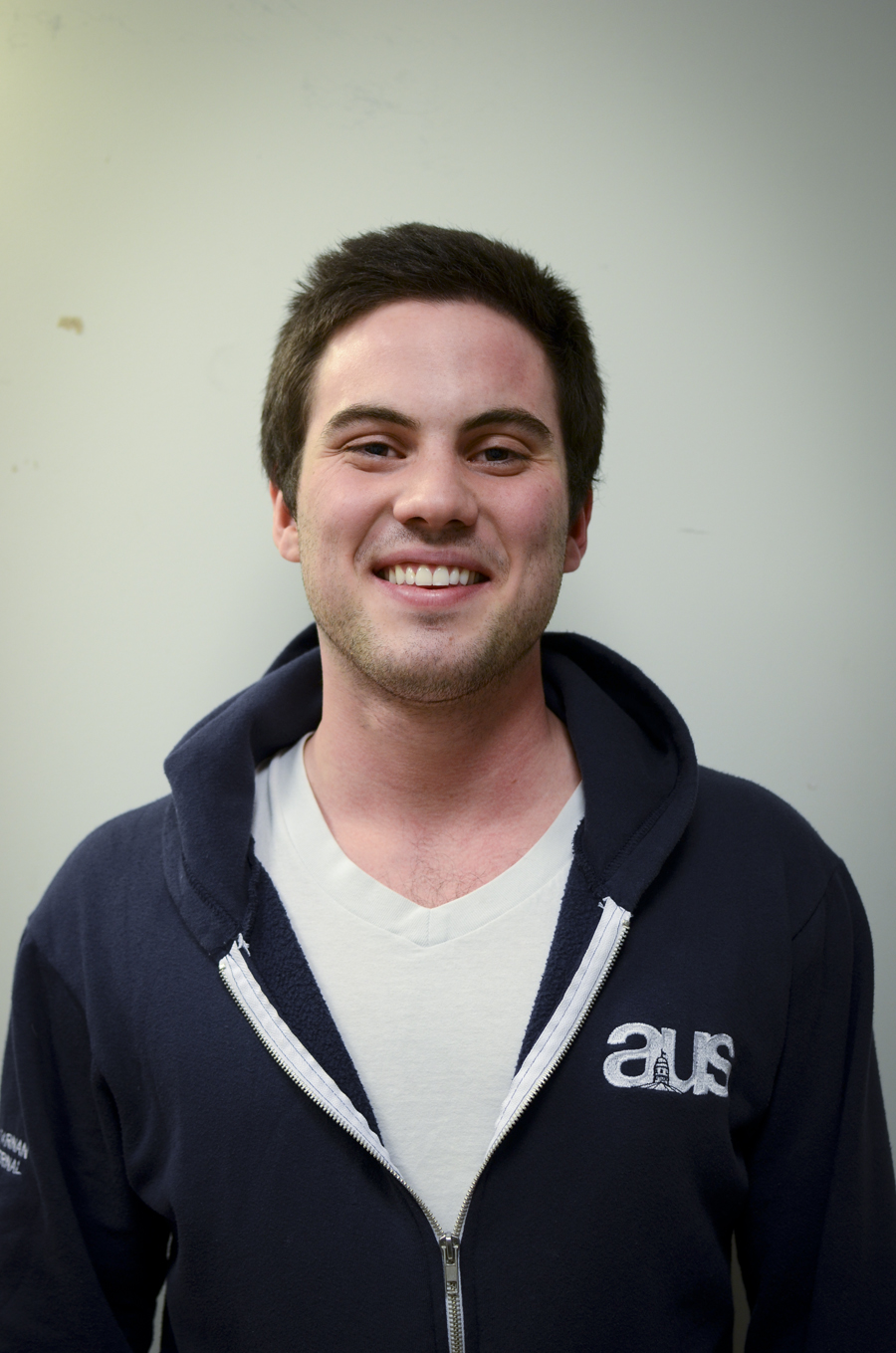
Sam Gregory (Simon Poitrimolt / McGill Tribune)
a, SSMU Elections 2013

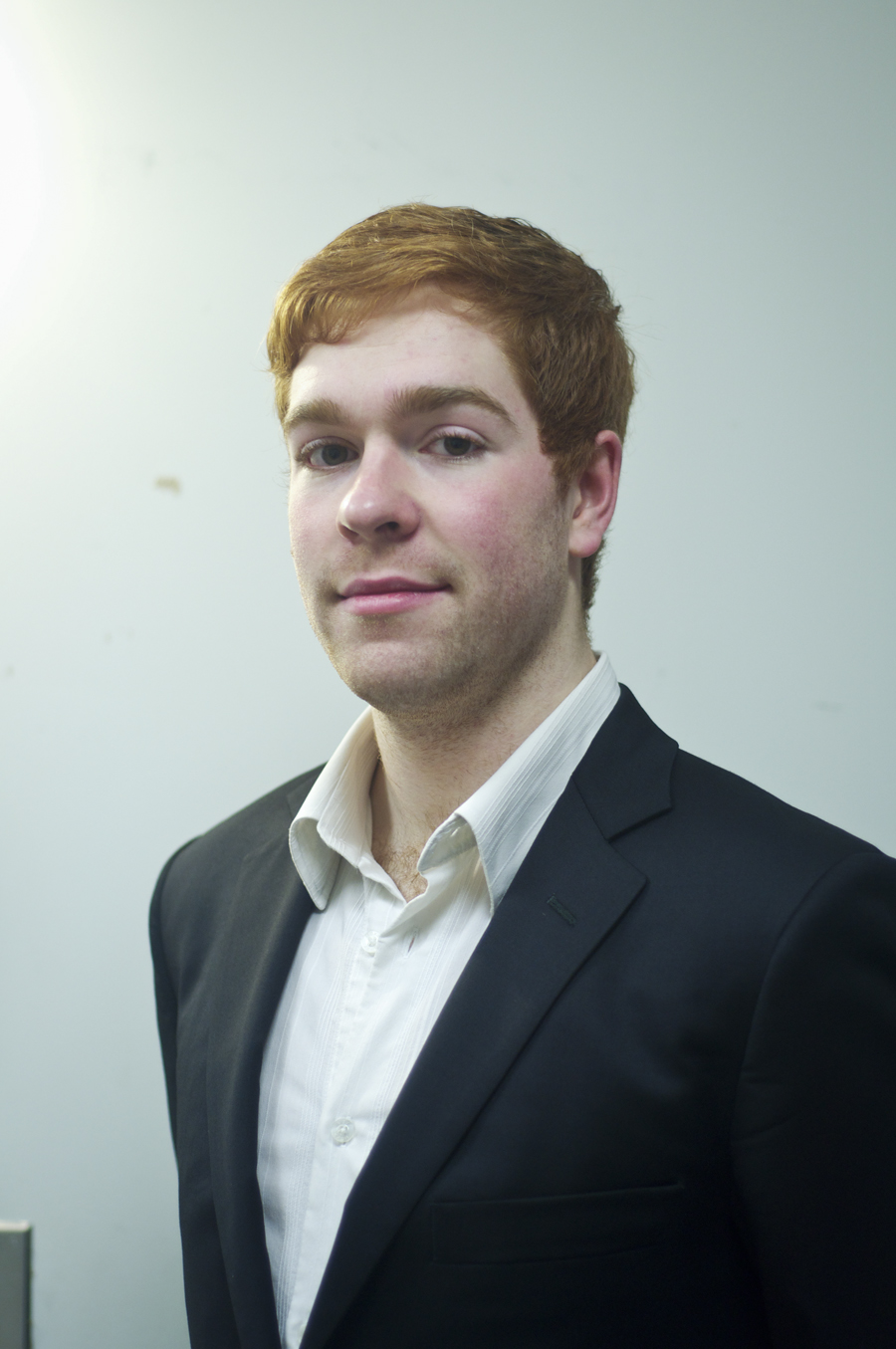
Sam Gregory, candidate for VP UA

McGill Tribune: How does your experience qualify you for the position of VP UA?

Sam Gregory: [There are] two experiences which I bring to the table that I think qualify me the best: the first is this year I’m working as  … an ombudsman … for McGill food and dining services. McGill Food and Dining Administration recognized me as someone who was able to work and both represent students and understand where the administration was coming from. We had to find compromises or solutions that would work for everyone when issues arise for McGill Food and Dining. Secondly, this year I’m working at SSMU as the Senate and Committee Secretary General for Haley Dinel, the current VP UA. I’m in the office almost every day, I know the key issues I know the methods to address them, I’ve got a very good understanding of the university and the different communities that exist, what they do, and what they’re supposed to address.


MT: In your opinion, what is the significance of consultation fairs and how do you see SSMU getting more students to attend?

SG: This is difficult. The issue is how do you get students involved and engage them. We need to bring the consultation fairs back to the university-wide level. I think there are two ways we can make it more effective. One, we can have a day with two consultation fairs, one where students can just attend and a second where students are invited by the administration to bring their points of view and maybe the administration selects students of lower academic rankings, higher academic rankings from each faculty, so that they can get a broad perspective of students and so they can move forward on issues like that. The second thing I think we should do is move consultation fairs to a much more accessible location. What about the new group study area in Redpath? Locations that are open to students, where students who are just walking by in their day-to-day life can come in and participate in the consultation fair.


MT: What do you consider to be the most important part of your platform?

SG: I think it’s very hard to pinpoint one. One of the things that I really want to try to work on next year, though, is trying to make SSMU relevant for all students. That’s one of the things that we really struggle with, when it’s more controversial issues, and then students become disengaged because of that. I know it’s a little bit dry and boring for students, but we need to find ways to communicate it, so they realize that SSMU is more than just debating controversial issues and I think that will really engage students more in the conversation.


MT: Do you have a plan for the communication aspect of it?

SG: I think using the social media outlets that already exist; if you look at the SSMU Facebook page, it’s very much to do with events that are going on with SSMU. I think it could also use a once a week update, maybe the VP UA portfolio itself could do a short video of what we’ve done this week, and it could be posted to the Facebook account. One thing that existed last year was a website called “Senators Corner,” but it was separate from the SSMU website, and this year it has been taken off, so trying to find some way to reincorporate that.


MT: If you had a super power, which one would it be?

SG: My first thought was laser eyes but maybe like, to fly? Then I could go around the world.


MT: And what were you for Halloween?

SG: I was a palm tree. I had this big thing on my head and like hula stuff.


Click here to see the Tribune’s endorsements.


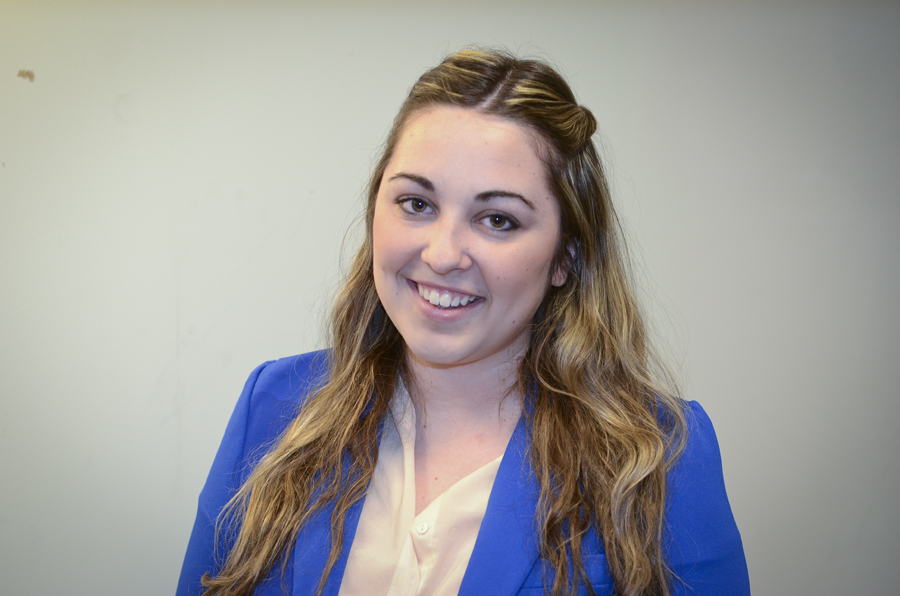
Joey Shea (Sam Reynolds / McGill Tribune)
a, SSMU Elections 2013

Joey Shea, candidate for VP UA

MT: What experiences qualify you for the position of VP UA?
JS: I’m the VP Academic for the PSSA and last semester I chaired two of the hiring committees for the new political theory prof and the new international relations prof, and the new comparative politics prof—I wasn’t the undergraduate chair, but I did help the chair conduct the interviews—so I have a lot of experience dealing with faculty. So, on a faculty level, I think that experience directly relates to being able to deal with administration, and also representing student interests. Obviously there were a lot of course selection meetings last semester about courses they want to hold for next year, and we send out surveys trying to get opinions. One big one was trying to get a “Women in Politics” course, because it is really ridiculous that McGill poli sci doesn’t have a “Women in Politics” course, so that experience of dealing with faculty on that level is directly related to being able to deal with administration.
MT: Your platform talks about professionalizing SSMU in a sense. How specifically is this going to strengthen the link between students and administration?
JS: The Internship Offices Network is the network that coordinates internships for sciences, agricultural sciences, arts, management and engineering. I want to coordinate with them so that students can do academic internships at SSMU. At the last GA, one of the really good motions that was passed was one on conflict minerals by the girls in the STAND club, and it was a really good motion, really well researched. I want to have the opportunity to have those really well researched motions at SSMU, and so I think coordinating with the internships office would not only be providing students with internships at SSMU, but it would also be able to have more policy documents on the desk of the administration, and strengthen our policy that way. It’s sort of a two-pronged approach.

I have some other ideas about engaging admin, too. One of my ideas is to invite admin to the GAs. Just like Haley and all the execs presented what they’ve been doing over the course of the year and over the course of the semester at the beginning, it would be really cool if we had HMB presenting what was going on with the budget cuts at the GA. Most students, they don’t have time to sit through two hours of Masi talking about his PowerPoint presentation in the middle of the day, but a GA is [on] our terms. It doesn’t happen very often, so if we can bridge that gap and invite the administration to present then it would not only engage more students, but get everyone a bit more involved in the process and opening up that dialogue between the two parties. I also want to create joint Senate-admin committees, because the reason we have senators is [because] students don’t have time to sit through town halls, and consultation fairs. I went to the advising one last semester, and the one on the protocol, and there were more students from the press there than there were actually regular students giving their opinions, so … creating direct SSMU-admin committees utilizing our student representatives is also another part of my ‘engaging admin’ strategy.

MT: Do you have any ideas of how to get more students to attend GAs?
JS: Well I think that by inviting administrators, that would definitely increase interest. I think that there would have been a lot more people if we had advertised that [Principal Heather Munroe-Blum] was coming. Getting people to come to GAs—it’s a hard issue. SSMU this year tried really hard to get people involved, and they did the great thing before about having the workshops on Robert’s Rules and I think it was well-advertised, but it is hard and I have one idea—obviously the admin thing—but I think that needs to continually be worked on and debated and discussed to try to get more students involved.

MT: So why are you the candidate best suited for the position?
JS: I think that, being U3, I’m really familiar with this school, I know all the different execs—engineering, management [for example]. By the time you’re in fourth year, you’ve understood how the McGill community works together and how it doesn’t work together. And I think that my direct experience with faculty and having that real experience of trying to represent political science students’ interests to the faculty directly, I think that those two things really make me the best candidate for the position, and my ideas too.

MT: What were you for halloween this year?
JS: Oh my god, I was so many things for halloween. Halloween is my favourite holiday. Okay. I was Carrie, if you’ve seen the horror film, the 1970s Steven King, the one where she’s covered in blood. I was Nietzsche, on Oct. 31 which was a Wednesday, I had an existentialism exam on Nietzsche so I dressed up as Nietzsche, it was pretty cool, I was like the only one actually dressed up on campus. I dressed up as the Cheshire Cat from Alice in Wonderland and—what was my other thing? Maybe that was it, maybe there were only three things. But yeah, I love Halloween. Halloween is literally my favourite holiday, it’s better than Christmas.

Click here to see the Tribune’s endorsements.

Tyler Hofmeister (Sam Reynolds / McGill Tribune)
a, SSMU Elections 2013

Tyler Hofmeister, candidate for VP Finance and Operations

MT: What experience do you have, specifically that makes you apt for this position?

TH: I co-chaired MUS Carnival. It’s an event that has a budget around $100,000 … I oversaw a committee of 16 people to make sure it went well and I think it went very smoothly. I was chief of staff for my faculty frosh. I oversaw 32 frosh staffers for that. I’ve had numerous involvements in business competitions, Model UN. I was sent to West Point last year and I was a director and McMUN chair. On top of that, before I came to McGill, I worked in a bar. I was a manager and I oversaw well over $100,000 of sales and inventory. I took care of daily sales reports. In summation, this is right along what I’ve been doing for a long time. I really think the skills I’ve developed over the past four-plus years are really going to translate well to this position.

MT: Do you have any particular visions on projects you will bring to McGill?

TH: I think my focus is going to be getting tangible things done. I’ve noticed that student governance has a fair amount of bureaucracy to it, which is fair. In the same sense, there is no way that has to hinder progress. Things like the student-run café, I think it’s absolutely realistic to set tangible goals for that, like having renovations begin starting next summer. I’ve actually spoken to [current VP Finance] J.P. about that at length and we both agree that it’s something that can actually happen.

Currently, there isn’t a formularized method to determine the order of how the committee goes through all the funding applications. So I talked about formulizing a triage process for that and actually publicizing the process. […] I think this will help it significantly, specifically for events that have deadlines which require that funding. The second thing was looking at multiple deadlines … I think having multiple deadlines will really change it. Instead of one giant pile of funding applications, they will come in a more manageable pace.

MT: What are your plans with the student-run café and the other space that is becoming available?

TH: I’m kind of putting the café on hold because that will depend on whether or not students want that. After looking through the [student space] survey results, I assume the café will still be at the top of the list. If it is, the first step would be going over the current business plan, which would break down exactly what needs to be done into a series of steps. For example, going to the architecture students’ society and get them to draw out floor plans. Then looking at what the overhead would be, so what would it actually cost, what supplies we need. Currently, J.P. is drafting one of those, and I’ve talked to him at length about it … This would allow me to fast track it and make sure that it does happen.

MT: What were you for Halloween?

TH: I was originally Max from Where the Wild Things Are, but I had the wrong jumpsuit, so I traded with a friend of mine for Tintin. He had the little dog and he safety pinned it to his shoulder and I had the similar coloured shirt he wears; so it was really great.

See TVM’s interview with Hofmeister here.

Thomas Kim (Sam Reynolds / McGill Tribune)
a, SSMU Elections 2013

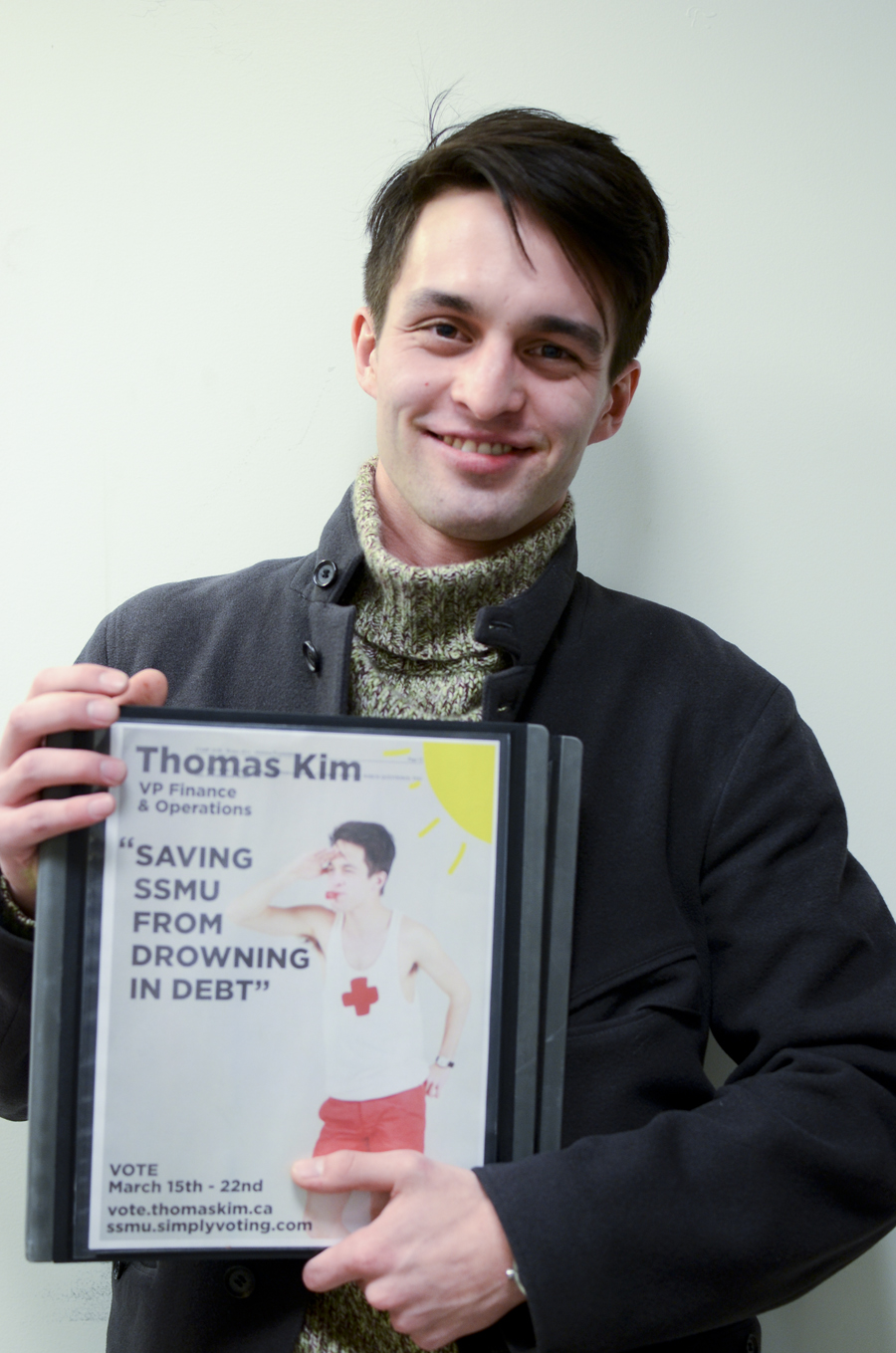
Thomas Kim, candidate for VP Finance and Operations

McGill Tribune: What experience do you have that makes you apt for this position?

Thomas Kim: The brand managing position that I had at Fullum and Holt is quite relevant to the position. Beyond that, I did communications and PR for a legal clinic in Ontario. I was responsible for PR for the campaign, so contacting media, and media relations, and outreach. I was also responsible for soliciting corporate and individual sponsorship and donation for the clinic, and was successful in doing both. I also have experience in Montreal with event planning, and so part of that is coordinating things with other people, working around multiple peoples’ schedules, creating a budget, revising that budget to maximize profits… as well as promotion and PR, soliciting sponsorships again, checking out different venue spaces. So, I’ve had a lot of experience working with financial details but also working in outreach initiatives, and that’s what I’m really basing my platform on.

MT: Do you have concrete plans for a student-run café?
TK: Well, like I said [during last week’s] debates, it’s very difficult to have a tangible plan, given that there is still the lease negotiation going on…. However, I can say that after the lease negotiation is done, and we are aware of what the contract is and how much money SSMU is required to pay, the step would be to look at the five-year financial plan, and to see if the money allocated for the student-run café is still feasible to allocate. After you examine how much money can be allocated, then you need to take that money and create a budget. Once you have that budget, you take that budget and create a business plan. They have already set a menu—that was researched last year. This year, I hear that they’re in the process of researching equipment and details like tables and chairs. So, assuming that those two things are done, the next step would be the lease and the business plan.
MT: Beyond the student-run café, what specific plans do you have for next year that you’d like to input?
TK: Well, one of my [priorities] is long-term financial sustainability. And what I want to do with that is look into creating a committee to examine the possibility of SSMU opening an alumni relations office. And that office would be incorporated as a charity and a distinctive entity to that of SSMU, so that SSMU can then use that office to broaden its revenue input through soliciting individual donations, and being able to give those donors tax receipts—something that SSMU is unable to do given that they’re not a charity, they’re a non-profit. And being a charity and a non-profit are two distinctive things—a non-profit cannot issue a tax receipt for donations. So, that’s in the long-term plans.

One of the things that I also want to do is try to find someone who is willing to chair… a case competition for students to put forward ideas for student-run businesses in SSMU … and then SSMU can use that business to, again, outreach to the community and increase their operations, which hopefully would increase their revenue.

MT: How would you differentiate yourself from your opponent?
TK: I think that given my experience in the private sector and not-for-profit, especially with the legal clinic… perhaps I have a stronger legal background than he might. And I think that’s important, especially when considering SSMU is [not only] a corporation, but it’s a non-profit corporation, and there are a lot of rules regarding its non-profit status. So even though we have these great ideas, they’re not always necessarily financially feasible given the rules that govern non-profits.

MT: Last night, you talked a bit about visibility and engaging more with SSMU constituents. Out of the six executives, it might be easier for a position like VP Finance to stick within the office. What ideas do you have to make yourself a presence in the SSMU Building, and engaging with clubs and services and other students?
I want to hold weekly office hours in Gert’s. And the reason that I want to do that is … I find the process of speaking to the executives sometimes to be somewhat tedious … it’s a little bit intimidating and at the same time it makes [the executives] feel like they’re removed from campus when really, they’re working for you, or they’re working for us rather, and people can kind of forget that they are the stakeholders. So that’s something that I think would be new, and would be a little more engaging.

MT: What were you for Halloween?
TK: What was I for Halloween this year? I didn’t dress up because I was studying in the library that night, and I ended up going out later, like after I was, so I just said that I was a professor and dressed up really nerdy.

See TVM’s interview with Kim here.

Samuel Harris (Sam Reynolds / McGill Tribune)
a, SSMU Elections 2013

Samuel Harris, candidate for SSMU VP External

McGill Tribune: How does your experience qualify you for this position?

Samuel Harris: Well, I’ve been on the external affairs committee of SSMU all year. I’ve gone to TaCEQ meetings. I’ve also had extensive discussions with this year’s VP External, Robin Reid-Fraser. I feel as I have a very good knowledge of what the position entails. And also, I’m fluently bilingual, so I think that’s an important communication skill, especially for this position.


MT: Based on your interaction with Robin Reid-Fraser over the course of the year, what would you say is the most important part of the position?

SH: I think that that would be somebody who can bridge gaps, who can really connect the reality of McGill undergrads to the rest of Montreal and Quebec society. It’s a pretty broad thing, but I think that’s generally the most important thing.


MT: How do you think you’ll be able to ‘bridge the gaps?’

SH: I mentioned that I’m fully bilingual, which I think is a big help. I’m Montreal born and raised, so I think have a unique perspective. As somebody who has grown up here my whole life, I’ve been immersed in Quebec politics, society, et cetera. I’ve sort of been an outsider from McGill for most of my life, but now I attend McGill, so I’m an insider; I’m more involved with SSMU, so I feel like a have a good understanding of  [the issues] inside SSMU and outside SSMU.


MT: You are running unopposed for this position. Why should students vote for you anyway?

SH: Well, I think that I’m qualified, for the reasons that I’ve mentioned above. I decided months ago that I was running, so regardless of the fact that other people decided not to run or decided to run and then retracted their nomination, that has nothing to do with me. I think that regardless of me running unopposed, I have the qualifications.


MT: What’s your overall vision for the VP External portfolio?

SH: I see it as generally all relations external to McGill undergrads, more specifically what that means is relations with the government, with other universities, and even with the Montreal community and specifically, Milton-Parc. I think that on each of those levels, we want to strengthen and build on those relationships. One thing I haven’t mentioned so far is that I want to have discussion workshops with other Montreal universities, especially the francophone ones, but even Concordia. We’re very geographically close to them, and yet we don’t have [close relationships] … last spring we had different opinions, but why didn’t we ever sit down together to discuss them?


MT: If you had a superpower, which one would you have?

SH: Levitating—so that I could lie down anywhere with enough resistance that I could basically just sleep anywhere on air. (more…)

Stefan Wong (McGill Tribune)
a, SSMU Elections 2013

Stefan Fong, candidate for SSMU VP Clubs & Services

McGill Tribune: What experience do you have that has prepared you for this position?

Stefan Fong: When I joined McGill, I knew right away that I was going to be a part of a student group because that’s what I had done since high school and following on through CEGEP. I found The Musician’s Collective by pure chance and it so happened that that semester that I joined McGill, they were looking for four new executives. And so, I joined as a new executive and since then I’ve just been part of that student group at McGill. I’ve been president of The Musician’s Collective for a year now, and before then I was VP External and VP Finance. I’ve been juggling both roles, because they have never done finance before and I started doing that for them.


MT: What would you bring out of that experience to the portfolio?

SF: A great thing about my group is that it’s an over-arching network of musicians. And so, part of my job as [VP] External when I joined was communicating with other groups and because of that, I’ve gotten to know what other groups have to face. And especially this year because now we’ve got an office and we share the office and so I hear everyone’s grievances. I’ve gotten to know a lot of different clubs, even while campaigning, I get to talk with them and see what sort of issues they have been dealing with. My job was to talk to Carol [Fraser], who used to be the VP Clubs and Services, and also talk to Shyam [Patel], who used to be the VP Finance. This year, I’ve been working a lot with [current VP Clubs & Services] Alison because we just turned into a service—which is exciting. And so, interactions with SSMU have taught me what’s going on.


MT: So what would you change as VP Clubs & Services to address the issues you are familiar with, being a club executive?

SF: One of the things that I find unfortunate is the fact that there are three [Clubs and Services representatives to SSMU] … but as clubs, we were never told that these three students are there to help us and to represent us. So, when I joined The Musician’s Collective—[which] had become a new group the year before and had just been granted full status as a club—we didn’t know how to do many things. It’s a shame because clubs really do need to know that these people are there to help. I think that Alison gets overwhelmed by so many emails from clubs because, as soon as they have a problem, they think that Alison will be able to help them. And it’s true that it’s her job, but 300 clubs sending emails daily [is] a lot to go through. Some of that work could be shared with the C&S representatives so that everyone would be able to share their responsibility. In that sense, the C&S reps would better be able to represent students on council because they’d be more familiar with the issues that a lot of the clubs are facing.


MT: As VP Clubs & Services, you have so many different people to answer to—all the clubs, all the services, all the independent groups. How do you make yourself a presence for all of those different people? How do you make yourself accessible to all of those representative groups?

SF: I think it’s really important to make sure that people find you accessible and open. It’s important to reserve time for the clubs and I think that to have office hours outside the office is a good idea, and to hold them somewhere public where students can approach you with any issues. I think that if we were to do that, the clubs lounge would be an ideal place. And so I might definitely consider having my office hours in the clubs lounge so any club can come and see me at any time. Another thing that a lot of clubs have been telling me is that they send a lot of e-mails and they don’t always get a reply as soon as they’d like, so I think it’s important to touch base [with] clubs.


MT:  I know that creating budgets for clubs is a big problem, filing tax returns, getting audits and stuff like that. How would you work to address those issues specifically?

SF: Each club is like its own island, You have to be flexible and be able to deal with a range of issues. I know one other thing that Alison is working on this year is what is it called Clubpedia. It’s important to make sure that clubs have easy access to this kind of [financial and administrative] information and Clubpedia is a fantastic way of doing it by putting everything in one place. You can go on the website. You can fill out the form directly there. You don’t have to submit it in person.


MT: If you could have a superpower, what would it be?

SF: Oh my goodness, um, if I had a superpower…I think that it would be really cool to be able to control the elements. I think that would be pretty insane.

Click here to see the Tribune’s endorsements.

(Alexandra Allaire / McGill Tribune)
a, Sports

Playing on Sunday: Martlets claim consolation final

After cruising to an RSEQ championship and securing a berth in the CIS Final 8 for the second consecutive year, the McGill Martlets arrived in Regina, Saskatchewan looking to make some noise and win their first ever Bronze Baby trophy. Although the Martlets fell short of their title aspirations, they proceeded to notch a respectable fifth place finish amongst an extremely talented Final 8 after winning the consolation finals 71-50 over the Ottawa Gee-Gees.

The sixth-seeded Martlets kicked off the tournament Friday evening against the hometown favourite Regina Cougars in front of a raucous crowd. However, it was clear that the Regina’s home-court advantage was a non-factor for McGill, as they remained composed and stretched their lead to six points in the second quarter after a three-pointer by fourth-year guard Diana Ros. Ros was named McGill’s player of the game after compiling a team-high 13 points, five rebounds, and five assists. The Martlets entered halftime with a 28-23 lead.

The contest remained evenly matched in the third frame, with the two teams trading blows en route to a slight 40-39 Regina advantage. However, the fourth quarter was a different story for McGill. They had a few lapses on the defensive end, giving up rebounds and turning the ball over. The Cougars went on a furious 10-0 scoring run halfway through the final quarter to take a 59-48 lead with 2:55 to go. It was too late for the Martlets to mount a comeback, and the game ultimately ended in a 68-53 Regina victory.

The Cougars’ defensive tenacity was problematic for the Martlets all game, as McGill shot just 29.5 per cent from the field, and were dominated on the glass 46-25.

(Alexandra Allaire / McGill Tribune)

“We had a good start and over the first three quarters, we were basically executing our game plan,” Martlet Head Coach Ryan Thorne said. “Defensively, our help was there … but then they made some adjustments and we tried to adjust, but I don’t think we followed through on what needed to be done. … We just gave up too much in the fourth, defensively.”

The Martlets took to the court on Saturday to face the Fraser Valley Cascades and their star player Kayli Sartori in the consolation semi-finals. Following a pedestrian first quarter, McGill’s offence exploded in the second and third frames, outscoring Fraser Valley 46-24. Unlike the game against Regina, McGill shot 40 per cent from the field, and an impressive 81.5 per cent from the line, which was markedly different from their embarrassing 59.1 per cent free throw shooting the night before. The Cascades never recovered from the scoring onslaught, as the Martlets claimed the 70-52 victory.

McGill dominated thanks to great scoring balance led by veteran forward Anneth Him-Lazarenko and guard Francoise Charest, who both recorded 12 points in the contest. Standout rookie forward Mariam Sylla also tallied a double-double with 11 points and 13 rebounds. She was honoured in the pre-tournament awards ceremonies with the Kathy Shields Award for CIS Rookie-of-the-Year. She’s had a stellar debut year, and was ranked first in offensive rebounds and second in defensive rebounds across the CIS.

Despite the previous night’s loss against Regina, the Martlets never lost focus on their goal: to play on Sunday.

“The reality is that we told the team when we arrived that our goal was to be playing on Sunday, so we haven’t moved away from that,” Coach Thorne said. “There’s the consolation side and the championship side. Either way, when you come into this tournament, you want to be playing on Sunday.”

McGill tipped off against the Ottawa Gee-Gees on Sunday morning in the consolation finals. Early on, it was apparent that the Martlets would dominate the game, as they jumped out to a quick 8-0 lead. By the end of the first half, McGill’s second-year guard Gabriela Hebert had 12 points on 5-5 shooting to give the Martlets a 40-24 lead heading into the half. Hebert would end up recording 19 points on perfect shooting, going 7-7 from the field and 3-3 from three-point range. She was also awarded the Player of the Game.

“Gabriela is a [streak] shooter and you have to let her shoot until she cools off, but she just didn’t cool off today,” Thorne said.

(Alexandra Allaire / McGill Tribune)

Aside from a third quarter scare, McGill led after every quarter and ended up dispatching the Gee-Gees 71-50. Sylla was solid inside once again with 14 points and 8 rebounds in the winning effort, while Ros tallied six assists. The Martlets finished the weekend in fifth place with the victory.

The real winners of the weekend, however, was the University of Windsor, who took home the CIS championship after beating the favoured Cougars in the gold medal final. Saint Mary’s University won the bronze after beating the University of Calgary Dinos 83-73.

Sunday’s win marked the end of the university career of Him-Lazarenko, a five year team veteran. She recorded 1545 points and 858 rebounds over her career, and has her name cemented in McGill’s history books as the all-time leader in both categories.

The Martlets have a bright future ahead of them, with the majority of this year’s team returning for next season. The added playoff experience has been invaluable, and this year’s dominance once again puts them in prime position to be the RSEQ favourite for the 2013-2014 campaign.

Maurice Richard statue. (wikimedia.org)
a, Sports

Behind enemy lines

“Hey Boston Bruins, get out of the way!” yelled a gruff Quebecer, laughing at my dad posing in black and gold next to a statue of Maurice “The Rocket” Richard outside the Bell Centre. He had insisted we pose next to the Canadiens legend, which would not have been so bad if my mother knew how to work an iPhone camera. She finally got the picture she wanted, and I waved a hand in silent embarrassment at the now long queue of Montreal fans, waiting to get their picture taken with the statue. We walked toward the main gates to watch the Penguins-Habs game on Hockey Night in Canada.

Several months ago, when I knew my parents were going to be coming to Montreal for the first weekend of Reading Week, I offhandedly suggested to my dad that we try to get Habs tickets. Each year I’ve been at McGill, I’ve managed to go to one game. I had already seen the Canadiens beat Winnipeg earlier in the season, but knowing my dad’s affinity for hockey, and inability to resist the prospect of experiencing true Canadian culture, I thought I’d propose the idea. We looked at the schedule and saw that the Penguins were coming to town. The thought of seeing the greatest modern hockey player—Sidney Crosby—on my mom’s hometown team was enough to convince them both to purchase tickets. Through some glitch in Stub Hub’s system, we scored four tickets for the price of three, closer to the ice than the original seats we had tried to buy.

The Bell Centre was a sea of red, white, and blue with a surprising amount of black and gold peppered throughout. Enthusiastic staff members in yellow shirts greeted us with loud cheers as we took the escalator up to our seats. It turned out our “better seats” were only about ten rows from the nosebleed section in the Best Buy Family Zone. It didn’t matter; from that angle, we could see the whole rink.

After a long-winded intro, where every Habs player was given equal share of the highlight reel, came the performance of the American and Canadian national anthems. “The Star Spangled Banner” always causes my chest to swell with patriotic pride, but it doesn’t feel like a proper hockey game without a hearty rendition of “O Canada.” The performance was definitely less awkward than the last game I attended, when the Quebecois separatist next to me booed throughout the entire song.

The game turned out to be the highest-scoring game I’ve ever seen live. When the Habs scored, the stadium erupted; everyone jumped out of their chairs, high-fived, and cheered. When the Penguins scored, my mom was the only one in our section to let out a belated whoop and fist pump.

Going into the game, Crosby had tallied 31 points on the season, but the superstar was barely noticeable on the ice. Nonetheless, he seemed to always be in the right position and tallied two assists and a goal off a rebounded shot by Kris Letang. Ultimately, the Pens’ Brandon Sutter scored the overtime goal—his second of the night—to claim victory for the Pens, causing the Habs fans to silently file out of the stadium.

Walking out onto Avenue des Canadiens-de-Montréal, I heard a mixture of voices speaking in French and English, talking about the game. I smiled to myself, as we walked past the statue of Richard, feeling somewhat closer to the habitants of Montreal.

Read the latest issue

Read the latest issue