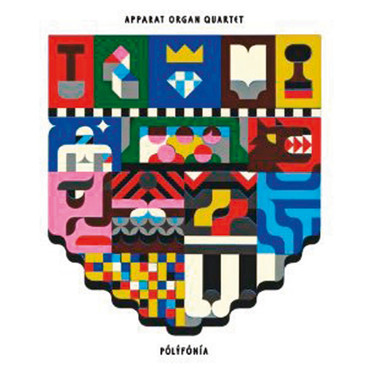
There must be something in the water in Iceland. The nation has given birth to many popular acts, such as Björk and Sigur Rós, known for treading into strange, experimental realms with their music. Apparat Organ Quartet certainly fits this mould, with their inventive electro-rock and their particular style, which relies on using reclaimed or thrown-out instruments. Their sophomore album, Pólýfónía ,is a compelling, genre-twisting mélange that doesn’t cease to entertain.
“Babbage” begins with keyboard licks before transitioning into a relaxed, lyricless rock beat. It sets the tone for the rest of the album, and most other pieces follow in its style. The first single, “Cargo Frakt,” is more anthemic, with distorted lyrics and a grittier feel. The lyrics of “Konami” weave together with less focus on the instruments to create one of the album’s more accessible tracks. “Pentatronik” pulsates and contrasts; it starts frenetic, slows down to a crawl, and finally picks up its pace and lets loose. The lyricism of “123 Forever” is ethereal, yet somehow spot-on; it intermingles with the rock-style electronica flawlessly. This is the type of song that captivates, with enough complex components to warrant many listens. Finally, drawing Pólýfónía to a chaotic close is “Songur Geimunglingsins,” layered deep with angst.
Apparat Organ Quartet have created something rare with Pólýfónía. While strange and puzzling, it’s done in an innovative way. The novelty of their sound is indicative of the band’s adventurous nature. Unlike their instruments, none of their sound is recycled.
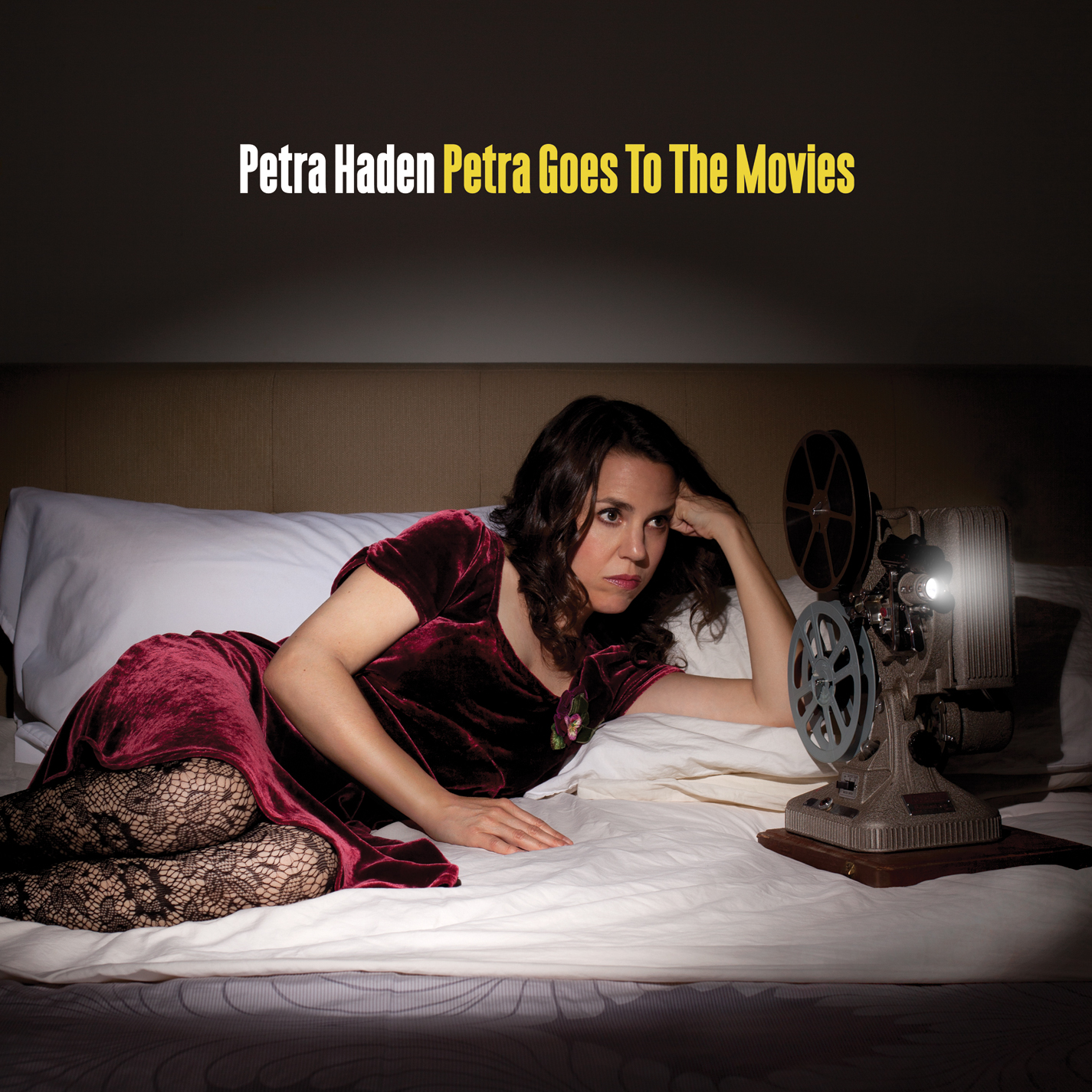
You might have heard of the American singer and musician Petra Haden, in connection with her collaborations with internationally acclaimed artists, such as The Foo Fighters and Bill Frisell. Or, if a cappella is your thing, you may be familiar with the solo album she released in 2005, containing a cappella renditions of The Who’s masterwork The Who Sell Out. With her newest album, Petra Goes to the Movies, Haden undertakes a similar musical experiment—this time featuring unique a cappella reinterpretations of famous movie soundtracks, from Psycho to The Social Network. After this introduction to her second go at a cappella covers of popular songs, the first question on your mind might be, “Why?”
The answer is simple: because she can. The album stands as testimony to the fact that Haden is a musician of enormous talent, in possession of unique vocal skills that enable her to pull the project off with surprising success—at least from a technical standpoint. The skillfulness with which she rethinks complex instrumental orchestrations (as in the Superman theme song) into multi-layered vocal renditions is impressive.
Praise thus given where it is due, some of her interpretations are so experimental that they pass beyond the ‘unique’ classification. They can be described as nothing else but ‘weird’ and, at times, ‘annoying.’ Unfortunately, rather than compelling one to press replay, the album’s 45-minute long display of Petra Haden’s unquestionable vocal talent tempts the listener to seek out the original versions of the songs.
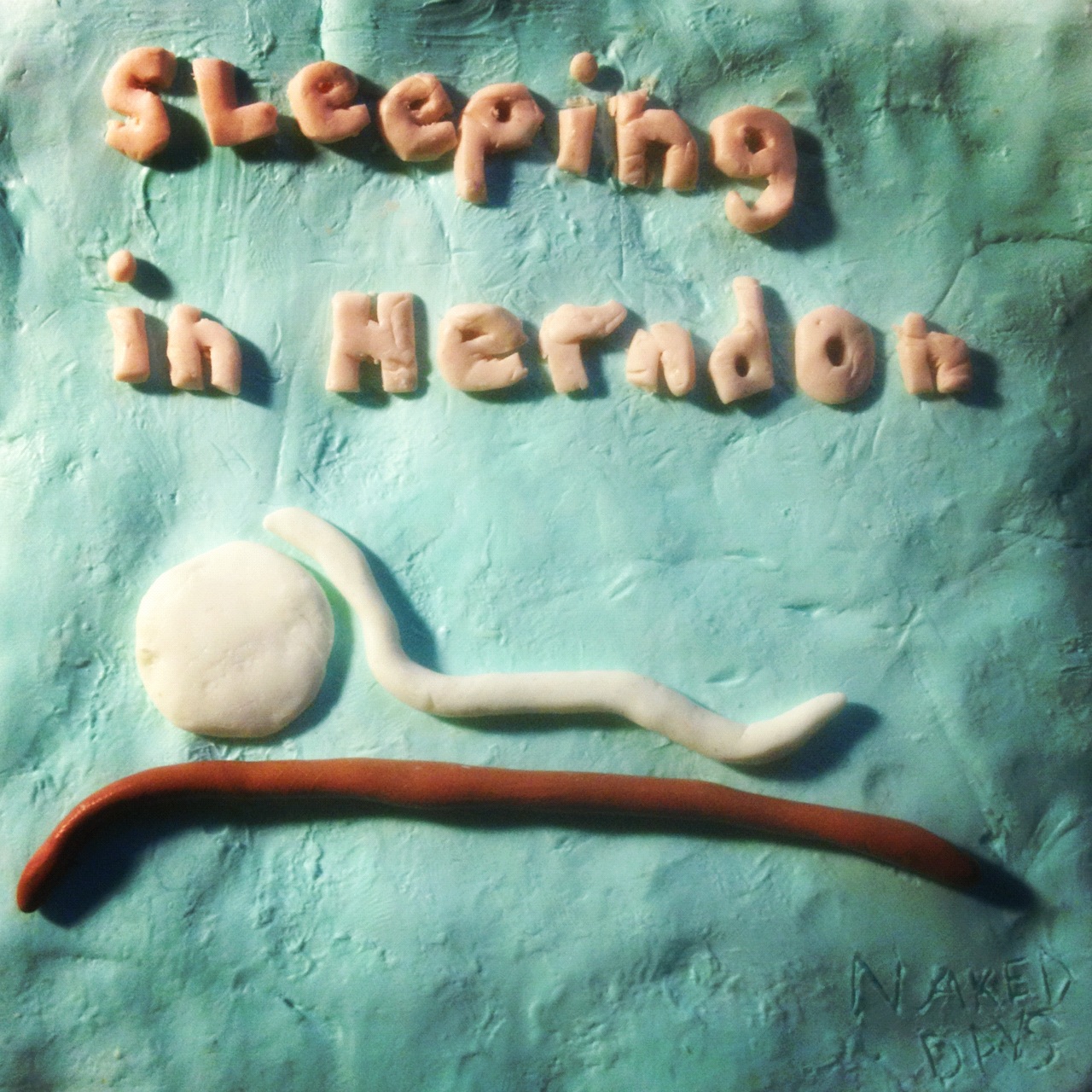
Naked Days, an eclectic band hailing from Leesburg, Virginia, brings us a unique arrangement of acoustic alternative sound. Reminiscent of the likes of The Silversun Pickups, Edward Sharpe and The Magnetic Zeroes, and Montreal’s own Thus:Owls, this indie foursome fuses a muffled, low-definition sound with sweet lyrical supplement in their newest album titled Sleeping in Herndon. Featuring patchy percussion, quirky vocals, and dashes of violin and trumpet, Naked Days impresses with some tracks, and bores with others.
Of the six songs on Sleeping in Herndon, two are noteworthy. “Bran Flakes” features the complimentary vocals of Degnan Smith and Amanda Schiano Di Cola that act as a strong call and response through the male and female lyrical dynamic. The muffled sound and prominent acoustic guitar work well here, as well as in “Bug Eyes”—the only other song truly worth a listen. Both encompass Naked Days’ acoustic yet scratchy riff quality, juxtaposed with a sultry harmony, which are lacking in the rest of the album (particularly in “Cold Cold Dairy” and “Bird’s Brain”).
The overall feel to this sophomore album was amateurish, with occasional flares of potential. The band hovered around a concrete sound, but didn’t seem to agree on it. I haven’t given up on you just yet, Naked Days. Third album’s the charm?
Beautiful City Theatre’s production of Godspell, the hit broadway musical, promises to be a unique experience. It presents the life of Jesus through a series of parables from the Gospel of Matthew. However, this shouldn’t discourage the non-believers—the company holds humanistic values and asserts that many different themes can be found throughout.
Godspell is very much a demonstration of the McGill community’s participation in Montreal’s world of professional theatre. Several members of the cast, like Dane Stewart (Jesus) and Elizabeth Conway (John; Judas), are current students. Moreover, the two founders of Beautiful City, Calli ArmSstrong and Natalie Gershtein also studied at McGill. Even a McGill professor, Myrna Wyatt Selkirk, was involved and led workshops for the actors.
According to Armstrong, who also directed the show, McGill’s theatre community is invaluable, because it “allows people to develop their ideas and learn all aspects of theatre.”
Armstrong describes Beautiful City as a “process-oriented company.” One of the musical’s main themes is about a group of people coming together. In order to demonstrate this on stage, the company spent several weeks engaged in group activities, following the script reads. In addition, each actor was encouraged to develop their own child-like character that was independent of themselves, but nonetheless still inspired by personal experiences.
The script itself allows this sort of method to be implemented on the production itself. Only two of the actors—Stewart and Conway—actually play named characters. The original Godspell was developed with the participation of its original actors, who lent their names to the characters they portray. There is a general ambiguity about elements in the original script that has allowed this work to have many varying iterations. This opens the piece to interpretation and gives creative licence that can be used to present mandates like Beautiful City’s, which seeks to examine humanity and its interactions.
One of the ambiguous elements is the set itself. Beautiful City continues in the same vein as past productions by refraining from explicitly discussing the location. Instead, it chooses to create an atmosphere of play and childhood. This story is used as a venue to introduce lively characters and examine the universal themes of the development of independence and sexuality. In doing so, Godspell becomes instantly accessible to anyone—from a university student to a theatre aficionado. It also shies away from presenting the parables exactly as the Bible does, but rather, delivers a new twist to the way they are presented.
The musical promises a uniques experience: the show goes outside the realms of conventionality by breaking the fourth wall and including improvised elements. In short, every single performance will be unique and fresh.
As Armstrong says, “Aside from it being very thought-provoking, it’s a lot of fun. It’s something to be experienced.”
Beautiful City Theatre’s production of Godspell runs from Jan. 31 to Feb. 2, 7:30 p.m. at Centaur Theatre (453 St. François-Xavier). Student admission $20.
The extent to which Tennessee Williams’ The Glass Menagerie is autobiographical will always remain ambiguous. The play, however, looks undeniably inward, casting its spotlight on tensions that emerge within the four walls of a house. This memory play, told from the perspective of Tom Wingfield (nicknamed “Shakespeare”), who reminisces over his adolescence in Depression-era St. Louis, is currently being performed by McGill’s Players’ Theatre.
The absence of a father informs the relationships between Tom, his mother Amanda, and his sister Laura. It causes Amanda’s desperation to find a “gentleman caller” for her limping daughter Laura, who she fears will otherwise wind up alone as well. It also forces Tom to step into his father’s role as breadwinner for the family. Lest the audience forget the father, his portrait hanging on the wall, reminds the audience of his absence by intermittently lighting up.
With the exception of this gimmicky touch, director Rowan Spencer has chosen to play a subtle hand. Spencer noted that his initial intention for the set was to show a dilapidated living room covered in sheets, which would gradually be uncovered throughout the performance to reveal the set pieces. But in the end, he chose a more minimalistic approach: the walls of the set are fragmented, perhaps alluding to the fragile nature of memory, or the characters’ lives. Yet, the set does not draw attention to itself—it remains a backdrop. Spencer’s conservative approach to the production as a whole is commendable. He brings out the poetry of Williams’ work, rather than superimposing his own.
This intimacy is suited to a small theatre, and especially fitting a student production where all but one of its characters are young adults. Andrew Cameron plays Tom with an appropriately heavy dose of sarcasm and teen angst. Arlen Stewart plays the painfully shy Laura; her relationship with her mother and awkward chemistry with the other characters are appropriately cringe-worthy, but occasionally they weigh down the pace of the play. Jim O’Connor, the “gentleman caller” that Laura finally receives, is audacious, complete with a set of grandiose and lofty ambitions; but James Kelly’s performance incorporates enough of a human touch to prevent him from becoming a mere caricature.
Amanda is the only character who is not a young adult, but Ingrid Rudie’s performance is spot-on. It is appropriately over-the-top, with a Mississippi cadence that will ring in your ears even after the lights come on. Though, as Tom mentions, her character is certainly no “sphinx.” Amanda plays the role with nuance; though assertive, she is also insecure. Even in her cheeriest moments, we often sense that she is trying to refrain from crying.
A central tension in The Glass Menagerie is entertainment versus reality: Tom escapes from his mundane life to the adventure offered by the movies; meanwhile, Laura lives in a fantasy world with her little glass dolls. This production of Williams’ play offers escapism done well. Melodrama is a difficult feat to pull off: overdo the weepy factor, and the play is no longer believable; not enough emotion, and we are no longer invested. Like Laura’s glass dolls, when it comes to melodrama, there is a fine line between illusion and illusion shattered. The cast and crew have demonstrated excellent taste, and ensured that at least one illusion—the play itself—remains intact.
The Glass Menagerie runs Jan. 30-31, Feb. 1-2, at 8 p.m., Players’ Theatre (3rd floor SSMU building). Student tickets $8.
Every year, popular media whips up a great hullabaloo over the Oscars. However, it’s important to keep in mind exactly which aspects of the awards generate buzz: Who is leading in the Best Picture race? When will the next Harvey Weinstein temper-tantrum be? Is Bjork wearing a swan around her neck?
But sometimes, the side dish is better than the entrée.
As predictable as the parade of snobs and snubs may be, an equally reliable aspect of the Academy Awards is that ‘minor’ categories will be overlooked. This is particularly true for the ‘shorts’ categories—live action, animation, and documentary—which not only serve as important launching pads for future auteurs, but often feature talent and artistry that rival, if not best what is offered by the Best Picture slate.
Cinema du Parc will be screening this year’s Oscar-nominated animated and live action short films, and while there is no mind-boggling ‘must see’—Logorama(2009), anyone?—the diversity and imagination represented in the selections practically guarantee that something will catch your fancy. If not, have no fear—they’re shorts after all, and are thus decidedly quicker and less painful to sit through than the latest Adam Sandler film to which you were dragged by friends (or so you claim).
The shortest short is in the animated category, with PES’ Fresh Guacamole clocking in at just under two minutes. In creating the titular dish out of everyday objects such as light bulbs and baseballs, PES demonstrates not just narrative imagination but also technical skill, as transformations are accomplished with wizard-like alacrity. Similarly light-hearted is David Silverman’s Maggie Simpson in “The Longest Daycare” which follows the adventures of the youngest Simpson at the Ayn Rand Daycare Center, and features an escape sequence reminiscent of Indiana Jones, accompanied by a brilliant-as-usual score from Hans Zimmer.
Timothy Reckart’s Head Over Heels, in which an elderly couple navigate life together while holding completely opposite world views—one lives on the ‘floor,’ the other, the ‘ceiling’—benefits from a delightful premise, though the claymation is a little rough around the edges (it’s no Wallace and Gromit). And the current frontrunner in the race—take note, all those participating in Oscar pools—is John Kahrs’ Paperman, which has gotten a big boost in name recognition thanks to its studio Walt Disney Animation. This is not to detract from the short’s excellence, which unites a saccharine tale of love with a new animation technique that gives more control to artists and animators.
The clear personal favourite, however, is Minkyu Lee’s Adam and Dog. It is difficult to put a fresh spin on a story as old as Genesis, but Lee accomplishes this confidently, through brilliant Miyazaki-like animation. The lushness of the Garden of Eden is captured in breathtaking textures—every still could be a watercolour masterpiece. The power of the storytelling is particularly formidable when one considers that the film is absent of dialogue; here, Lee’s virtuosity speaks for itself.
The live action category features a Canadian entry, Quebecker Yan England’s Henry. The short shares many similarities with Michael Haneke’s Amour, nominated for Best Picture and practically guaranteed to win the Best Foreign category. In addition to being shot in French, the two each portray aging musicians as they struggle with mortality, and the physical and mental decline that inevitably comes—though Henry is decidedly more sentimental. Don’t expect a statuette for England however; a win would be a long shot, despite Canada’s strong overall record in the shorts categories throughout the years.
Other nominees include Bryan Buckley’s Asad, a snapshot into the life of a young Somali boy as he struggles for survival in a war-torn country, with a cast entirely comprised of Somali refugees. Tom Van Avermaet’s Death of a Shadow possesses several strengths: a high-concept sci-fi premise, a beautiful steampunk-inspired production design, and the star power of Matthias Schoenaerts (Bullhead; Rust and Bone). But the short that hit home personally was Sam French’s Buzkashi Boys, a universal tale of hope and aspiration, set in the impoverished strata of Afghan society and framed through sport (Buzkashi is the national sport of Afghanistan; think polo, but replace the ball with a goat carcass). Under French’s lens, Afghanistan looks stunningly beautiful, even if evidence of the country’s tumultuous recent history is apparent in every shot. In a perfect world, Buzkashi Boys would leave the Kodak next month with gold.
Our world is far from perfect, however, and strong buzz surrounds Shawn Christensen’s Curfew. The writer and director also plays the lead role, as a twenty-something whose life is, quite literally, saved by the chance call of his estranged sister and his sassy niece. This category has rewarded films that situate effervescent, often nihilistic humour in bleak contexts, so Curfew seems perfectly poised to take the crown.
To an extent however, who will win the statuette is a pointless enquiry; every one of these shorts displays merit, talent, and artistry—and each deserves much more attention than they will inevitably earn.
The 2013 Academy Award Nominated Shorts start Feb. 1 at Cinema du Parc (3575 Avenue du Parc).
The century-old Wolf’s Law says that our bones can adapt themselves to carry increasingly heavier loads over time; the more stress we place on our bones, the more resistant they become to these external pressures. There seems to be no better testament to this theory than Welsh band The Joy Formidable, who have played alongside the likes of Muse and the Foo Fighters, and made notable appearances at Glastonbury, Reading, and Leeds. The title of their sophomore album is an apt description of their sound, which has endured the test of time to evolve into something remarkable with this second release.
After extensive touring in recent years, the effects of being on an international platform are evident in The Joy Formidable’s music; Wolf’s Law is lyrically saturated with political references. The aggressive, rhythmically captivating “Maw Maw Song” alludes to consumerism, whereas “The Leopard and the Lung” is a tip of the hat to Kenyan environmental, and women’s rights activist Wangari Maathai. There are occasional fitful bouts of soul-searching, such as in “Tendons,” an emotionally-charged track that captures vocalist Ritzy Bryan’s relationship with bassist Rhydian Dafydd. Though most of the album follows a single, unrelenting trajectory, Bryan’s vocals shine through on slower tracks, such as “Silent Treatment” and “The Turnaround.”
Through the course of eleven tracks, The Joy Formidable have shown themselves capable of living up to their album’s name. Rather than caving into the excitement and hype surrounding Wolf’s Law, the band has emerged sounding more promising and resilient than ever before.
Louis-Philippe and I agreed to meet at a café on Masson Street to talk about art. As he reached over the table to take a sip from his cup of hot chocolate, I couldn’t help but notice his hands; they had traces of paint all over them.
Louis-Philippe is a street muralist. At his young age—23 years old—he has already been commissioned to create three wall paintings in both Longueil and Montreal. His most recent work, a mural that extends 50 x 24 square feet on boulevard St-Hélène, is a dynamic display of colours and figures inspired by Hip-Hop culture that tells the story of urban life.
Being a street artist is not an easy job, and it is often misunderstood. Lying on the verge between scorn and praise, this form of art has always been controversial. It chooses borrowed and often illegal canvases that are vulnerable to the same vandalism of which it is accused. It has the streets as its gallery, frequented by thousands of stern and often disapproving critics that demerit its artistic value. And it’s creations are irremediably bound to fade away under the intemperate Canadian weather, or be eventually destroyed to give way to new blank walls, disappearing without a trace.
Yet, when asked why he had chosen to do street art over a more conventional genre, Luis-Philippe answered with conviction: “To bring colour to the city, to create a reaction, whether it is good or bad. You want your work to be seen, and [you want] art to be on the streets … because that’s where it belongs.”
Artist Hell-P painting a mural in Longueil (hellp-art.com)
Not long ago, street art, like graffiti, was seen as a delinquent activity that had to be eradicated. Crusading against this form of expression, the City of Montreal spent $3.3 million in the year 2008 alone to clean graffiti and street art from 150,000 square metres of street wall.
However, in recent years, the city has progressively changed its approach. In cooperation with several partners, it has invested in the creation of artistic murals for all Montrealers to see, hiring, on some occasions, the same artists that were once deemed as vandals.
One such partner is MU, an independent, not-for-profit organization created in 2006. In French, the word “Mue” means “rejuvenation through the shedding of an old skin,” and that is precisely the organization’s mission. It supports and promotes public art in the greater Montreal region through the creation of murals in local communities.
This new approach to street art follows the example of Philadelphia’s Mural Arts Project, which aimed at doing just the same: encourage artistic expression, and use local talent to bring new life to the most neglected urban spaces of the city.
“It became not only about taking out things, but about producing things; about being active and progressive, and integrating the notion of embellishment [into social policy],” said Emmanuelle Hébert, McGill alumnus and co-founder of MU. “The MU’s mission is about creating an open air gallery in Montreal, and democratizing art by bringing [it] to the streets. No matter where you are, if you’re in Montreal you should be able to see art.”
Mural on boulevard St-Hélène by artist Hell-P
Not only is this enterprise trying to support art and local artists in Montreal, it also seeks to promote social change and community involvement in the city.
“When you start embellishing, acting, and doing something nice, it is the igniter to something else. The citizens see their own neighborhood differently. They are proud of it. They get more involved with the community,” Hébert said.
When asked what the biggest challenge had been to the development of such bold initiative, Hébert answered without hesitation: “to convince people [that we had what it took to succeed]. It didn’t exist [in Montreal]. It was innovative, unheard of, so it was very bold.”
The project was nothing short of ambitious, and Hébert and her associate did not have any experience in the field of visual arts. “We were not from the art world. We knew nothing about murals. The first time, we showed up with a book from Philadelphia and said, ‘this is what we want to do.’”
Yet, their drive and dedication earned the trust of its sponsors.
Interior mural done for a new SIMONS store in Quebec in 2012 by A’Shop
“People believed [in it]. They believed in us. They realized we were committed, [and that] we had a clear vision. And we delivered,” said Hébert.
With the cooperation of the private sector, as well as various organizations and government programs, the project has turned out to be a big success. To date, MU, has created 40 murals, and 35 other-smaller scale community works.
When I grow up, I want to be a kid, done in NDG in 2012 by A’Shop
The murals’ creators come from many disciplines of the visual arts. Yet, they share a common commitment to creating something for their community. “We work with people who have studied art, or who did scenography. [but also with people] who did their practice in the street. These are [people] that started as graffiti artists, but that developed their own ‘language’ over the years. we don’t have any preconceptions,” Hébert explained.
The legalization of urban spaces for street artists has paid off, as it has given these artists the opportunity to showcase their talent and counter the negative connotation that street art had acquired over the years in the community. Among these artworks, is the renowned “Our Lady of Grace,” a five storey masterpiece displayed at the corner of Madison and Sherbrooke Street West in N.D.G. This breathtaking piece of art was A’Shop’s creation, a Montreal-based collective of artists that combine graffiti art and urban aesthetics into their artwork. Year after year, the collective has renewed its commitment to creating open-access art for the Montreal community, and their work currently embellishes multiple spots throughout the city.
What future awaits Montreal’s street artists? When talking about graffiti art, Emmanuelle sees it as an inherent part to today’s culture, as an artistic expression, and as something with the potential for great social change.
“When you look at art history, you realize that the mural is the oldest form of art. People have always wanted to express themselves in public settings … Street art started as an underground culture that has now come into the galleries. [It] is a big trend in contemporary art.” Hébert said. “A can, like a pen or an airbrush, is a medium. [More than about how you say it,] it is all about what you want to say.”
In case you were too busy a) being a victim of a helmet-to-helmet hit from Bernard Pollard; b) doing carnival; or c) Lennay Kekua, here’s what you missed this past week in the world of sports …
COLLEGE FOOTBALL — Last week, we told you about how the world became obsessed with Alabama quarterback A.J. McCarron’s girlfriend. Now the world seems to have latched onto the romantic interest of his BCS Championship foe Manti Te’o from Notre Dame— well, sort of. In one of the most bizarre stories in recent sports history, it was revealed that Heisman Trophy finalist Te’o was the subject of a hoax involving a long distance girlfriend named Lennay Kekua who he claimed to be in a relationship with over the past year. This fake girlfriend “passed away” in September, and Te’o dedicated his season to her. According to major sports news outlets, Te’o was totally tricked into believing he had a girlfriend—they spoke on the phone, sent pictures to each other, but neither met in person nor used Skype—because, you know, using Skype doesn’t really make sense in the year 2012, especially when your girlfriend gets in a car accident and then develops leukemia. According to ESPN, the hoax was set up by Te’o’s acquaintance Ronaiah Tuiasosopo, who created this fictional girl and her elaborate story. Te’o was the subject of countless interviews this week and denies that he was involved in the prank. Whether you believe Te’o or not, it’s safe to say that this story is a little weird. No, actually, it’s super weird.
CYCLING — The Te’o hoax wasn’t the only major sports scandal story from this past week, as Lance Armstrong, the most successful cyclist in the sport’s history, finally admitted his use of performace enhancing drugs (PEDs) in a two-part interview with Oprah, who seems ready to seize the mantle of exclusive emotional sports interviews from Bob Costas. The news is unsurprising after the Union Cycliste Internationale decided to strip Armstrong of his seven Tour de France titles in 2012. While Armstrong spearheaded the Livestrong Foundation, which has raised hundreds of millions of dollars for cancer research and victims, his reputation has been tainted for some as a result. Armstrong vehemently denied using PEDs throughout his career and condemned those that accused him. His legacy is now one of the most polarizing in sports. If only Armstrong were the mastermind behind the Te’o prank … we think the Internet would instantaneously combust.
HOCKEY — The lockout-shortened NHL season got underway this past weekend, as puck heads around North America took in the first slate of games. The veterans stole the show on Saturday, as 40-year-old Jaromir Jagr and 42-year-old Teemu Selanne each tallied four points, while 39-year old Alexei Kovalev added three points in his opener. The Los Angeles Kings finally lifted their Stanley Cup banner, but failed to impress in opening their title defence, as the Chicago Blackhawks dominated them 5-2. The Detroit Red Wings got off to a pretty horrible start as well and are looking like they miss Niklas Lidstrom after being crushed by St. Louis, 6-0. Montreal was buzzing on Saturday night, as the Habs opened up against their bitter rivals, the Toronto Maple Leafs. The Leafs prevailed 2-1 in a fairly sloppy contest. After a 48 hour debate about which street should host the Stanley Cup parade, the Leafs lost to the Buffalo Sabres on Tuesday. All returns to normal.
NFL FOOTBALL — There will be no brotherly love in the Super Bowl this year. The San Francisco 49ers, led by Head Coach Jim Harbaugh, will battle the Baltimore Ravens, led by Head Coach John Harbaugh—their parents are probably pretty happy. The 49ers advanced after overcoming a 17-0 deficit to defeat the Atlanta Falcons. Quarterback Colin Kaepernick leads a dynamic offence that is flanked by one of the premier defences in the league. Baltimore heads to the title game after taking down the mighty New England Patriots in a result that few saw coming. The Ravens contained the potent Patriots offence and received offensive contributions led by quarterback Joe Flacco, who has silenced his critics on this impressive postseason run. Just a quick heads up: brace yourself for the brother narrative, as it will be played on loop for the next two weeks.
The 2013 National Baseball Hall of Fame election took place on Jan. 9. For the first time since 1996, no players were voted in, despite players like Barry Bonds and Roger Clemens being up for induction. Many baseball analysts believe that this trend may continue as more players, who played during the steroid era become eligible for induction. Two contributors weigh in on the controversial decision …
For Decision
The 2013 National Baseball Hall of Fame election came to a quiet conclusion last week. Labelled as perhaps the most contentious and controversial election in baseball history, the event finished without an inductee for only the second time in four decades and for the eighth time since 1945.
While controversy always surrounds an election that produces no winner, this year’s event was especially dramatic given the players involved. Steroid-tainted superstars Barry Bonds and Roger Clemens were both eligible for the first time, yet each received fewer than 40 per cent of the vote—a rather low percentage, despite the allegations pressed against them.
Clemens, one of the top pitchers in MLB history by any statistical measure, finished the election with only 37.6 per cent of the vote, despite receiving the seven Cy Young award seven times. Clemens finished his career third all-time in strikeouts, including an astounding 292 strikeouts in 1997, to go along with an ERA of 2.05.
Bonds, the all-time leader in home runs and one of the greatest hitters in MLB history, finished with an astounding low 36.2 per cent of the vote.
Though their performances certainly speak for themselves, and though it is quite possible that their calibre of play will never again be matched, it would be wrong to vote for these players—and other players who have been associated with performance enhancing drugs—into the Hall of Fame.
In an era of baseball where players are becoming increasingly aware of the availability of ergogenic aids, allowing these players to enter the Hall would send a welcoming message to those who knowingly seek to bend the rules of the game.
Players and fans alike both recognize that the use of these substances violate MLB policy. Why should players who openly violate the regulations be welcomed into the most prestigious and respected realm of baseball? If a player knowingly defiles the integrity of the sport, the sanctions for these actions must be severe.
When the best players of an era are not allowed into the Hall of Fame, it will undoubtedly erase the players’ relevancies in baseball history. However, it is necessary to use this opportunity to set the tone for the future and to establish that, those who unabashedly undermine policy will be punished accordingly.
Athletes like Ben Johnson, and more recently, Lance Armstrong, have had to come to terms with the harsh realities that present themselves when rules are broken. If the MLB does not take this opportunity to defend the anti-doping regulations of the sport, I fear that the legitimacy of the league will remain in question in the future.
— Justin Simon
Against Decision
I’ve visited the Baseball Hall of Fame in Cooperstown several times, and revere it for its unvarnished history of the sport. However, the Baseball Hall of Fame voting this year has made a mockery of all that Cooperstown stands for, namely that the game’s best players—blemishes and all—were not voted into the Hall.
This year’s ballot had it all—the gritty converted catcher Craig Biggio, who collected 3000 hits in a long and distinguished career; fierce sluggers Mike Piazza and Jeff Bagwell, with their offensive numbers that every team coveted; the speedy Tim Raines, a man that enthralled a generation of Montreal Expos fans; and last but not least, the otherworldly Roger Clemens and Barry Bonds, who have solidified themselves among the all-time greats after dominating the MLB for the entirety of their careers.
Instead of recognizing these achievements, the Baseball Hall of Fame voters astonishingly elected nobody to the Hall this year, depriving these players of the proper honour they deserved, and shortchanging fans that make their pilgrimage to the Hall of Fame induction ceremony every summer. What was the reason for this shortsighted decision? Laziness, idle speculation, and dumb superstition.
Biggio will get into the hall eventually, but did not this year because he is not considered ‘first ballot’ Hall-of-Famer material, which is incredibly silly.
Piazza and Bagwell never tested positive for taking performance-enhancing drugs, but since they were muscular sluggers in the steroid era, their reputations have been tarnished in the eyes of some voters. On the basis of this unempirical thinking, all baseball fans are voided from commemorating these two great careers, which is a shame.
Clemens didn’t get in mainly because of Brian McNamee’s discredited testimony, which accused Clemens of taking HGH and steroids—an allegation that was never proven in court. And even if McNamee’s allegations were true, Clemens won over 300 games and won more Cy Young awards than any other pitcher in the history of the game. To leave him out of the Hall would be analogous to erasing history.
Similarly, Bonds did not get into the Hall despite never testing positive for performance enhancers. Like Clemens, Bonds was also the pre-eminent star of his era, setting the MLB record for home runs in a career and in one season, while stealing bases and takeing a pitch like nobody else. But because of the allegations against him, and the fact that he came across as surly and unlikable, he’s being punished. On the other side of a similar coin, Raines has been penalized for using cocaine in the ‘80’s—why that should be held against his stellar career, is again, a question left unanswered.
It’s pretty clear to see that the Baseball Hall of Fame voters are corrupt and unaccountable. Put all of these men into the Hall, and let knowledgeable baseball fans explain the circumstances of these players’ careers to their parents and kids. By not doing so, the Hall of Fame voters have infantilized and shown contempt for legions of baseball fans all across the world.
— Joshua Freedman
Winner: For Decision
The National Baseball Hall of Fame exists to celebrate the game’s best players. If it were to induct players who violated the rules, then the league’s legitimacy and integrity are put into question. Therefore, those surrounded in the steroid scandal have no place in Cooperstown this time around.