My only lasting memory of the Montreal Expos is when my parents bought me a Florida Marlins baseball cap at a game. I kept badgering them for that nifty, teal-colored cap with the fish. I didn’t care for baseball as a child, but their cool logo gave the Marlins a new supporter.
In 2012, the Marlins completely revamped their look to coincide with the inauguration of a new ballpark and their move to Miami. They quickly became the flashiest team in baseball. Its stylish, brightly-coloured logo and outrageous home run statue in the stadium have allowed the team to fulfill the promise of their revamped image. Surprisingly, the Marlins—traditionally a small market team—completed the overhaul with uncharacteristically big free-agent signings. They were finally relevant, and looked to be competitive in a tough National League East.
It turns out that it was all an illusion, orchestrated by the greatest magician in baseball, Marlins owner, Jeffrey Loria. Last Tuesday, the Toronto Blue Jays and Marlins pulled off one of the largest trades in baseball history. In return for a slew of prospects, Toronto received some of the very same players Miami signed just a year ago. By purging their payroll, the Marlins reverted back to the shoddy business model that has frustrated their fans for years.
This latest cash-saving strategy has substantial political and economical implications that go beyond alienating fans. The city of Miami made a significant commitment to the team by agreeing to fund nearly 80 per cent of its new ballpark. By combining interest, the sum amounts to a staggering $2.4 billion subsidized by taxpayers. Loria has clearly violated the trust and good faith of the people of Miami, by ridding the team of its best players. In a city like Miami, home to one of the U.S.’s highest poverty rates, how are local politicians supposed to justify the decision to allocate scarce monetary resources to a non-competitive team? What about all those businesses in the Marlins Park vicinity that depend on fan presence? The deal even prompted the mayor of Miami to write Commissioner Bud Selig a letter, asking him to review the trade “in the best interest of the residents, taxpayers and fans.”
In 2010, the MLB Players’ Association (MLBPA) was unhappy with the way the Marlins managed their revenue-sharing funds. In an effort to encourage more investment in player salary, the MLBPA and the Marlins signed off on an agreement to have the team’s finances monitored. Ironically, the agreement expired at the end of the 2012 campaign, and the Marlins have now conveniently dumped more than $160 million in player salary on the Jays. It’s also worth mentioning that the trade was completed after the Marlins received next year’s season ticket renewals. It’s a pipe dream, but those fans should be reimbursed following the false advertisement and Loria’s deceit.
The Marlins have damaged their image by fooling baseball fans and ruining what was supposed to be a fresh, new start for a struggling franchise.
I was intrigued by the Marlins’ new flashy colours and funky fish. As a background supporter, I received their new baseball cap as gift from my sister, which rekindled a fond childhood memory. A year later, I find that same excitement has been washed away by a careless owner. While currently a member of Red Sox Nation, I can only imagine the frustration of Marlins die-hards who have to endure yet another rebuild.
At least the Marlins haven’t traded away Giancarlo Stanton—though, knowing Loria, I wouldn’t put it past him.
The Nov. 14 McGill Senate meeting discussed the annual report of the Committee on Student Discipline (CSD). Senators also heard a presentation by Vice-Principal Research and International Relations Rose Goldstein on McGill’s research funding performance, which outlined how McGill can expand its funding for research.
Interim Dean of Students Linda Starkey presented the CSD’s annual report to Senate on the student disciplinary cases that were addressed and resolved during the 2011-2012 academic year.
The report notes that the total number of allegations was slightly higher this past year than in 2010-2011, with 427 cases compared to 408 in the previous year. The non-academic allegations made against students increased by 48 per cent, from 193 to 286.
“This increase can be attributed to improved reporting of e-mail harassment or inappropriate use of McGill posting sites; the growing number of residence spaces; and the campus atmosphere last year,” the report said.
Last year, several students faced disciplinary allegations after McGill Security Services videotaped students at rallies and protests on campus, including an occupation of the sixth floor of the James Administration Building. Science Senator Moe Nasr questioned the role of McGill Security Service within the disciplinary procedure at McGill.
According to Starkey, the mandate of Security Services is not to accuse a student of violating a specific protocol, but to report alleged violations to a disciplinary officer.
Catherine Lu, an associate professor of political science, expressed concern over whether the CSD displayed equity in sanctioning punishments.
“There were different penalties that came out of similar offenses,” Lu said. “What needs to be done institutionally to correct this for the future?”
In response, Starkey explained that CSD does not issue standard sanctions, and that every case is heard and assessed individually.
Several students attended the Senate meeting to observe Starkey’s presentation. Some held a large red sign that read ‘McGill’s Committee on Squashing Dissent.’
“We are here because the University’s rules and procedures related to student discipline are interpreted and applied inconsistently and with bias against known student activists,” read a flyer that the group distributed at Senate.
Senators also voted to endorse McGill’s new Strategic Research Plan (SRP) for 2013-2017. The plan guides how McGill will improve its research capabilities and is a required document for many external funding programs from which researchers at McGill receive funding—such as the Canada Foundation for Innovation. The previous plan was adopted in 2006.
Almost 75 per cent of McGill’s current research funding comes from the federal and Quebec governments. Presently, McGill places second in rankings of research universities conducted by the Tri-Council Agencies, federal agencies which provide a majority of research funding in Canada. Goldstein said the new plan aims to diversify research funding and to help McGill overtake the University of Toronto as the top-ranked University for research intensity.
“We need to reorganize funds if we are going to be competitive in the next few years,” Goldstein said. “Provincial and federal pools are not growing … we need to diversify.”
Several senators expressed concerns over the SRP’s logistics, including the source of the potential new funds. According to Goldstein, McGill plans to launch a Business Engagement Centre to reach out to new businesses for funding.
Brendan Gillon, associate professor of linguistics, expressed concern about how the growing role of external organizations might affect the topics chosen for research, and about the possibility that McGill might consequently see less curiosity-driven research.
Senate also passed a motion to broadcast their sessions on the Internet for a one-year trial period, starting in January 2013. These broadcasts will only be available to members of the McGill community, and will be accessible through a password-protected login.
The Ad Hoc Committee on the Recording and Transmission of Senate Meetings brought this motion forward with the intention of making Senate meetings more accessible to the McGill community.
“We want to have engagement from the broad university community,” Chandra Madramootoo, chair of the committee and dean of agricultural and environmental sciences, said.
In the Nov. 6 American presidential election, Democrat incumbent Barack Obama secured a narrow win over Republican nominee and former Massachusetts Governor Mitt Romney.
Although Obama gained a 332-206 lead in electoral college votes, his share of the popular vote—just over 50 per cent—was notably lower than the 52.7 per cent he had in 2008.
Although the unemployment rate in the United States has dropped from a peak of 10 per cent in 2007 to 7.9 per cent last month, the American economy remains a concern in light of slow GDP recovery, pending tax increases and spending cuts, to take place in late 2012 and early 2013 (known as the fiscal cliff), and a $16 trillion deficit.
Last week, several McGill professors explored the implications of Obama’s re-election, including the challenges he will face and the opportunity he has to redefine his legacy as an American president.
McGill professor Gil Troy, who specializes in modern American history, keeps a blog aimed at informing students about American politics. In an entry posted Nov. 7, Troy describes several key challenges that Obama faces in his second term, including unemployment, health care, and the ‘second-term curse,’ which refers to presidents’ historically diminished effectiveness.
“The man who promised to change Washington and heal the nation cannot continue to be proof that Washington is gridlocked and the nation hopelessly divided,” Troy wrote. “Obama’s legacy will be shaped by his ability to live up to his 2008 vow to create a new kind of politics. Blaming Republican obstructionism for his failure is not good enough.”
Regarding U.S. foreign policy, professor Mark Brawley of the political science department argued that relations with Arab Spring countries, and countries whose foreign policies may significantly affect their regional neighbours—such as China, Iran and Syria—will remain a concern. However, Brawley said, Obama and Romney did not have significantly different views on foreign policy. He emphasized the limitations of U.S. presidents with regards to international relations.
“I don’t think it matters that much for international relations who wins the election,” Brawley said at a Bipartisan Symposium organized by the Political Science Student Association last Monday. “No matter what they want, they are constrained by other actors like Congress and Senate.”
Leadership transitions in China and an unstable Middle East leave many unknown variables these regions. Brawley pointed to Obama’s previous tactics in the face of terrorism, such as reducing conventional force in favour of drone strikes, as well as Obama’s moderate responses to unexpected events such as the Arab Spring. Brawley predicted that the U.S. president will remain reactive and diplomatic, rather than aggressive and heavy-handed.
On Nov. 6, McGill students gathered at venues around campus to follow developments in the election. As the winner became clear, a wide range of emotion surfaced among the students.
“I think Obama was a huge disappointment for us in a lot of ways in the past four years, but I’d rather choose [a moderate candidate] over one who is keen on alienating China, bombing Iran, and neglecting the poor,” Kate Walsh, an American U1 arts student, said.
Other students were disappointed with the results, including Romney supporter and U2 arts student Alex Greene.
“I get that lots of people—especially people here—think he’s a rich, out-of-touch phony, but I think the fact that he’s pragmatic and business friendly might actually be what America needs right now,” Greene said. “Obama screwed up things like XL pipeline, [No Child Left Behind], and basically left a huge mess with ObamaCare. I’m not too sure if having him for four more years is a great idea.”
Montreal Mayor Gerald Tremblay resigned on Nov. 5, following allegations of corruption made at the Charbonneau Commission. Tremblay stepped down, despite repeatedly denying the allegations made against him.
Quebec Premier Pauline Marois pressured Tremblay to resign as a result of accusations that the former mayor’s party engaged in bribery.
The mayor made his final speech in the city’s Hall of Honour, where he called his decision “the ultimate sacrifice” after 25 years of public service and blamed the corrupt nature of politics for his downfall. In his speech, Tremblay hinted that he was betrayed by some of his trusted associates and was forced to take responsibility, which ultimately led to his resignation.
The Montreal City Council will elect the next mayor in a secret ballot vote on Nov. 16. This interim mayor will hold the position until the next public election in Nov. 2013.
Explosion at Sherbrooke factory kills three
Last Thursday, an explosion at a biochemical plant in Sherbrooke, Quebec, claimed the lives of three people and hospitalized 18 others.
At approximately 1:30 p.m., a blast from inside Neptune Technologies et Bioressources Inc. ignited a fire that rapidly spread throughout the plant. Firefighters were able to get the fire under control by 3:45 p.m., but were concerned by the toxic fumes from the large quantities of acetone—a dangerous chemical—at the plant. While officials report that most of the debris is not toxic, a perimeter has been made around the site to ensure the safety of civilians.
While the cause of the explosion remains unknown, Executive Officer of Neptune Technology Michel Chartrand stated that the employees’ health is the company’s priority. Of the 18 injured, two are still being treated for immediate shock and serious burns in the Sherbrooke University Hospital. Four others were transferred to other hospitals in Montreal.
‘Superbugs’ uncovered in Canadian hotels
Antibiotic resistant bacteria have been uncovered in six major hotel chains assessed in tests by CBC Marketplace. Released last week, the study examined hotels in Montreal, Vancouver, and Toronto, including Best Western and Holiday Inn chains, according to CBC News.
The identified ‘superbugs’ are c. difficile and methicillin-resistant staphylococcus aureus (MRSA). Although they are common, these bacteria have the potential to cause fatal infections, especially if contracted by people with weakened immune systems. According to the U.S. Center for Disease Control and Prevention, MRSA kills over 15,000 Americans each year.
The study found that areas of high bacterial contamination include comforters, faucets, and remote controls. Using hidden cameras, Marketplace also captured footage of hotel staff using cleaning practices that facilitate the spread of bacteria—for example, one housekeeper used a toilet brush to clean a sink.
Five of the six hotel chains have issued responses expressing shock at the findings. Both EconoLodge and Sheraton have indicated their intentions to re-assess cleaning practices at their hotels.
Canada becomes home for cyber-crime
The Public Safety Department is concerned that Canada is becoming a host nation for cyber-crime activity, according to departmental briefing notes obtained by the Canadian Press under the Access to Information Act.
While countries in Eastern Europe, East Asia, and Africa have traditionally been the locations of organized malicious online activity, the notes suggest this trend may be shifting to countries like Canada, the United States, and France. According to Websense, a digital security company, Canada ranked second in the world for hosted phishing sites last spring. The company also said malicious Canadian sites tend to stay up longer than those in other countries.
The discussion draws attention to the challenges inherent in regulating online behaviour without invading citizens’ privacy. According to a presentation prepared by the Justice Department, it is difficult for legislative changes to keep up with the fast pace of technological advancements, leading legislators to prefer ‘technology neutral’ laws.
Canada fosters relationship with Philippines
Last Saturday, Prime Minister Stephen Harper signed a military memorandum of understanding that allows the Philippines to buy military equipment from Canadian firms. The deal between the Filipino defence department and the Canadian Commercial Cooperation is expected to enable the Philippines to better defend its territory.
Prime Minister Harper and President Benigno Aquino III signed the deal at Aquino’s presidential palace in the Philippines. At a news conference, both leaders emphasized how Canada’s involvement in Filipino security issues has cultivated a stronger relationship between the two countries.
The Philippines is currently the largest source of Canadian immigrants, and approximately 600,000 residents of Filipino descent currently reside in Canada. Acquino, who has been president since 2010, has initiated an anti-corruption campaign to encourage investors from other countries like Canada to do business with the Philippines.
Freshman Events and Representative Committee (FEARC)
The Freshman Events and Representative Committee (FEARC) aims to promote the welfare and interests of first-year students in the faculties of arts and arts and sciences. According to FEARC Co-President Marta Canneri, FEARC also provides “activities and services to enhance the educational, cultural, environmental, and social aspects of the lives of its members.”
The FEARC executive is composed of nine members, all of whom are first-year students. The council also has a number of subcommittees, including the Publicity Committee, the First-Year Handbook Committee, the Fundraising Committee, and a group of Academic Councillors.
“Our priorities for the year are to ease the academic and social transition from high school [or] CEGEP to university, and to integrate first year students into the greater McGill community,” Canneri said. “We want to foster a sense of belonging and community among first years and create an environment that is conducive to both academic and social success.”
FEARC represents its constituents at the bi-monthly Arts Undergraduate Society Council meetings. This year, FEARC also added two new executive positions to their council: a CEGEP representative and an International Student representative.
FEARC executives meet once a week, while the entire body—executives and subcommittees—meet as required. Subcommittees also convene separately with their respective heads.
First-Year Involvement Team (FIT)
FIT aims to increase first-year involvement in the Management Undergraduate Society (MUS) by relaying important information and hosting events aimed at easing the transition into university life for first-year students.
“The primary focus [of FIT] is to increase first-year involvement within the faculty,” a FIT executive wrote to the Tribune via Facebook account. “Overall, we aim to make first-year students feel more included and at home within the MUS and Bronfman.”
FIT is composed of 13 members, including students from five different McGill residences, as well as students who live off-campus. Provincial, out-of-province, and international students are all represented.
“FIT is unique from other associations because of its role within MUS,” the FIT executive wrote. “Not only is it directed [towards] management students, but FIT collaborates with other clubs and events within the MUS portfolio … to increase first-year awareness of all the opportunities the MUS has to offer.”
The team has a number of goals for the year, such as hosting events targeted at first-years, communicating regularly with the student body, and reaching out to the incoming class of 2017 to ensure that they feel welcomed before coming to campus next September.
FIT executives meet once a week to assess their progress and set goals for the week.
Freshman Undergraduate Science Society (FUSS)
The Freshman Undergraduate Science Society (FUSS) aims to increase interaction between first-year science students by acting as a liaison to clubs and organizing various events throughout the year.
“The primary purpose of FUSS is to give the first-year science students a chance to interact with each other through various events that we will put on throughout the year, as well as [to] organize the Note-Taking Club, which sells notes that students can buy,” FUSS President Sukhmeet Singh Sachal said.
FUSS is composed of nine executive council members, all if whom are in either the faculty of science or the faculty of arts and science.
The society also organizes Judgement Day—an event that provides information about the various majors available to science and arts and science students, and helps first -year students apply to their major at the end of the year.
Sachal said the society is also going to host a series of seminars called the Freshman Interest Group for Students (FIGS), which is currently offered to only a few undergraduates due to limited space.
“This program will share information pertaining to the science field including internships, research positions, and volunteering,” Sachal said.
FUSS will host meetings once every two weeks, once the three other councillor positions have been filled.
First Year Council (FYC)
Composed of six executive members, the First Year Council (FYC) works to represent all first-year students at McGill by advocating for their needs, interests, and concerns. FYC also aims to promote the involvement of first-year students both on and off campus, to ease their transition to McGill, and to expose them to Montreal life and culture.
According to FYC President Lucy Liu, FYC is unique among the other first-year associations because it the only body that represents all first-year students, operates under SSMU in dealing with student politics, and whose primary function isn’t to organize events.
“We are primarily representation and advocacy-based,” Liu said. “We work on negotiating student issues, changing policies, and addressing first-year concerns.”
FYC’s priorities for the year include increasing advising and academic support to first-year students prior to their arrival at McGill, and organizing several events, including one that provides free massages to all first-year students during the exam period.
Another of FYC’s goals is to further facilitate cooperation between the other first-year associations by organizing round table discussions and subcommittees composed of representatives from each of the first-year councils. Together, they will organize several interfaculty events.
FYC meets at least once a week, while subcommittees meet when necessary.
Inter-Residence Council (IRC)
The Inter-Residence Council (IRC) is responsible for ensuring that students’ experiences in McGill residences are positive and enjoyable. According to IRC President Kareem Ibrahim, the Council hosts events throughout the year for all students in residence, and provides networking opportunities. IRC also liaises with the residences’ administration as well as Rez Life.
IRC is composed of 27 elected members—seven members who are elected by students in McGill residences, including the presidents and vice-president externals from each of the Hall Councils. Each individual residence has a Hall Council, whose members are elected by the students living in that residence.
“IRC is unique because [it is] the only association whose sole purpose is to provide for students in residence,” Ibrahim said.
According to Ibrahim, the Council is given great flexibility in how they choose to fulfill this mandate. IRC is granted a yearly budget of $20,000 for its initiatives; this comes from a portion of the residence fees paid by each student living in residence.
“This year, we aim to ensure that our events and activities cater to a diverse audience within residence, and that everybody can leave this year feeling that the IRC truly cared about their individual concerns and preferences in terms of their time in residence,” Ibrahim said.
IRC meets at a different location each week—typically at the McGill residences—in order to “better connect with the places where everyone lives and [understand] how each living space is unique,” said Ibrahim
Skyfall, the 23rd entry into the 50-year-old Bond film franchise, brings the spy hero back to life. It features both a restored Bond (Daniel Craig), back for more action after being declared dead, and offers a revival of the classic 007 formula. If 2006’s Casino Royale was the origin of a 21st century Bond, director Sam Mendes’ Skyfall is a resurrection of the iconic tropes (The villain! The gadgets! The girls!) but with modernity, depth, and realism.
After a disastrous mission in Turkey, MI6 presumes Bond dead. Our hero, however, survives both bullet wounds and falls, to investigate an explosion at British Secret Service headquarters. What unfolds next is a typical Bond plot: an action-jammed, international mystery with plenty of misdirection. But this time, the threat is internal. MI6 leader M (Judi Dench) is under government duress; and villain Raoul Silva (Javier Bardem)—deformed, deranged, and devious as per Bond standards—is a former Secret Service agent gone rogue. Bardem’s performance is utterly captivating; he manages to make Silva horrifying, yet somehow sympathetic. Silva is out for M’s blood, making his revenge plans far less threatening to the globe than past Bond villains, but he is no less sinister. The name of the game in Skyfall is cyber-terrorism, prompting the return of Bond tech-master Q, this time an internet-raised youngster with disdain for old-school spy work and exploding pens.
Of course, there is no Bond film without a Bond girl. Like many other successful entries in the franchise, Skyfall gives Bond two tempting ladies with whom to tango. Naomie Harries plays the sexy and spunky Eve, an MI6 agent and Bond’s sometimes-partner. Certainly not a passive character, she holds Bond’s life in her hands more than once. Bérénice Marlohe, as Sévérine, is intriguing and vulnerable, though perhaps done away with too soon.
All James Bond films open with ambitious title sequences—a full song and psychedelic imagery. Skyfall does not disappoint. The eponymous title song, sung by Adele, is moody, theatrical, and retro, recalling classic Bond songstress Shirley Bassey. The accompanying animation—bloody, haunting, and beautiful—sets the tone for the film’s action.
Skyfall presents viewers with some of the most breathtaking visuals to have graced the franchise to date. Turbulent elemental scenes of water, fire, and fog; fireworks and dragon lanterns in Macau; and an eerie ruined island fortress form plot pieces and backdrops. One of the more memorable fight scenes is obscured, filmed entirely in graphic silhouette.
With all its suavity, glamour, and intrigue, Skyfall shows the emptiness and pain behind the 007 blueprint. Skyfall’s Bond is not beaten, but almost broken. After returning to MI6 he fails his physical, and can barely shoot a static target. James Bond is a scarred and bruised shell fuelled by too much drink, too many pills, disposable women, and desperate patriotism. Daniel Craig’s brutal, yet human performance reveals the man behind the code name.
The combination of iconic features with a modern, qualified understanding makes Skfyall one of the best films in the Bond canon. It is a rollicking action movie as well as a character study. It has all the fun and charm of a Connery film with a modern sensibility. Skyfall resurrects Bond—making the world’s favourite spy franchise into something deeper than a guilty pleasure, but without sacrificing any of its humour, wit, or action.
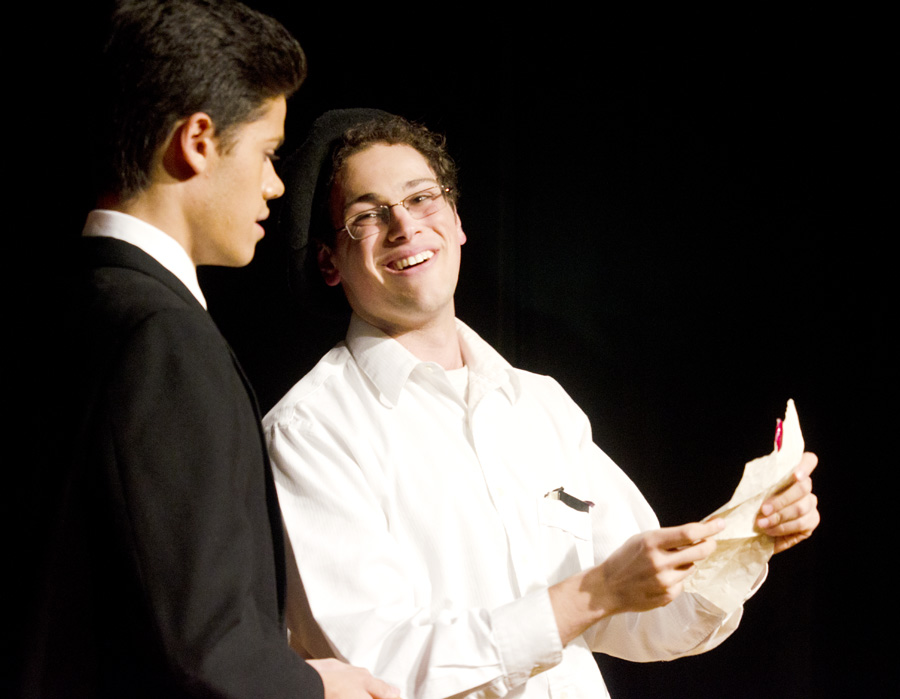
Front of house are still serving up interval drinks and the audience are taking their seats as, mere metres in front of me, an Athenian noblewoman—whose tribal dress from the previous act has transformed itself into a Dobby-the-house-elf-esque toga—buries her sobbing form into the depths of the imposing construction that stands centre stage.
This is not your classic Shakespeare production. Rather, this is Shakespeare à la Tuesday Night Café (TNC) Theatre—a production set to challenge even the staunchest exponents of the ‘Shakespeare-is-old-and-dull-and-belongs-in-high-school-lit-class’ tradition. What TNC achieves with The Life of Timon of Athens is a dynamic reworking that brings to the fore the honest profundity and contemporary relevance of what is, unfortunately, one of the Bard’s lesser-known works.
The play is bleak and challenging, even by Shakespearean standards. Timon is an Athenian noble (nobleman, in the original) who treats her ‘friends’ with unrivalled kindness, offering patience, praise, loans, expensive gifts, and endless entertainment without asking or expecting anything in return. She lives for the joy of giving and has no doubts that her less well-off friends would do the same were their respective situations reversed. Indeed, she states this belief repeatedly and even laments the distance which her superior wealth creates between them.
The play opens with scenes of her benevolence: lavish banquets and touching speeches on the beauty of friendship—until she is informed that her constant generosity has bankrupted her. She is subsequently confronted with a crowd of debtors demanding repayment. A little embarrassed but unafraid, Timon confidently turns to the kindness of her ‘friends’—who refuse, one by one, to offer her the slightest degree of sympathy or assistance. Driven to despair, she shuns Athens, fleeing into the woods to live out her hateful rage against mankind alone. Cue the Dobby outfit and the emotionally-charged tail-end of the play.
The demands of near-constant stage presence—all but lead lady Emily Murphy appear as multiple, often drastically different characters—hardly show. The performance manages to maintain a high level of energy, even an impressive dose of subtle humour.
The production’s reworking is not limited to the camouflage set—dialogue is altered, scenes blurred, and genders reversed to maintain pace and interest throughout. Some of the bleaker scenes are supplemented with a musical soundtrack that, while minimal, goes a long way toward creating depth of atmosphere. This also reinforces the passion of what may otherwise be quite inaccessible dialogue (this is Shakespeare, after all). The technical quarters also make effective use of lighting to create drama and guide audience attention, sometimes necessary given the proximity of the performers.
Overall, Timon is a highly polished performance, in which technical production, energy, and cast finesse combine to produce a refreshingly real, and engaging portrayal of a classic piece. Come prepared to be shocked, shaken, and confronted with mankind at his ugliest. But also come ready to be amazed at the strength and versatility of TNC’s talented cast and crew. The skill and passion behind this play allow the story itself to shine, and the treatment it is given here may be enough to make you fall (hopefully, fall back) in love with the genius of the English canon’s most famed man.
Life of Timon of Athens runs Nov 7-10 and 14-17 at 8 p.m., Morrice Hall (3485 rue McTavish). Tickets are $10 general, $6 for students.
Alcebiades (Harrison Collett). (Alexandra Allaire / The McGill Tribune)
For many McGill students, a walk through the Milton-Parc area is part of the daily commute to class, so ingrained in their routine that they no longer notice its grey-stone facades, charming staircases, and painted wooden details. What most students don’t know is that this beloved neighbourhood and architectural heritage site was nearly demolished in the 1960s. It stands today thanks to the tireless efforts of a passionate group of community activists.
The Milton-Parc district was constructed in the 1860s with the opening of the Hotel-Dieu hospital, and was originally based around Sainte-Famille Street. Over the next 30 years, British merchants and Anglophones settled in the neighbourhood, building ornate two- and three-storey grey-stone houses that demonstrated the area’s character as an upper-middle-class neighbourhood.
Following the Second World War, its wealthier residents migrated to Westmount, Outremont, and other Montreal suburbs. Rising real estate prices led landlords to subdivide dwellings into smaller rent units, attracting low-income families, elders, immigrants, and McGill’s growing student population.
Despite the deterioration of the neighbourhood, as Claire Helman writes in her book, The Milton-Park Affair, the area retained a particular charm, and many of its residents “liked the old, somewhat run-down neighbourhood for its surprising sense of community … and urban village atmosphere.”
Illustration of the closing of the overpass. (Ben Ko / McGill Tribune)
The origins of the Milton-Parc Citizens’ Committee
The coexistence of these very different groups was threatened in the mid-1960s, when four companies began to buy the buildings in the six-block area of Hutchison, Pins, Sainte-Famille, and Milton. These purchases were part of a ‘re-development’ movement in North America in the ’60s that promoted the construction of high-rises to stimulate urban development.
In 1968, members of the University Settlement—an organization that provided services to lower-income residents—discovered that the four companies in fact belonged to a single, major real estate company: Concordia Estates Ltd. Between 1958 and 1968, this company had purchased 96 per cent of the residences in the six-block area.
At this time, it came to the residents’ attention that Concordia Estates Ltd. intended to demolish the houses in the area, recalls Lucia Kowaluk, current president of the Milton-Parc Citizens’ Committee, and one of the residents who played a primary role in saving the neigbourhood.
“Florence Bailin, [one of the members of the University Settlement] said, ‘you know, there’s a company buying up all of this property and they’re going to tear it down—they’re going to throw people out,”’ Kowaluk says. “She convinced the staff and other people that the University Settlement had to do something about it. And they did. We formed the Milton-Parc Citizens’ Committee.”
Thus began the Milton-Parc Citizens’ Committee (MPCC), a grassroots response to the news that the area was going to be demolished and replaced with high-rises that would drastically change the urban environment and the demographic composition of the area. Residents were additionally concerned that lower-income families would be pushed off the area.
In the following four years, members from the Citizens’ Committee and the University Settlement worked in a movement that aimed to protect the neighbourhood they called home.
“Those were four years of a tremendous amount of work,” said Kowaluk. “There were demonstrations, and many people came … Older people, who had never in their lives gone on a demonstration, marched with us to City Hall. That really big one was a few thousand people.”
Click to read the full feature!
The residents organized petitions, knocked on doors to raise awareness, demonstrated in the streets, and held festivals and events to rally the community to protect the architectural value of the neighbourhood. Community members began discussing, for the first time, the possibility of forming housing co-operatives in the area, but the project was not feasible at the time.
During this period, Concordia Estates Ltd. began the first phase of their project. Tenants in designated blocks were forced to move out, and their houses were demolished to make room for the construction of the La Cité complex and underground mall, as well as an office building and the hotel that is now McGill’s New Residence Hall.
In May 1972, a dozen citizens organized a sit-in and occupied the offices of Concordia Estates Ltd. on Parc Avenue in protest. A total of 56 people, including community members standing outside of the office in support of the occupation, were arrested by the police and charged with public mischief. Kowaluk herself was not arrested, but her partner and many of her friends were. In February 1973, a jury trial acquitted the group, but the arrests left the community exhausted and discouraged.
“[Many] felt that they had failed, that they had not succeeded at doing what they wanted to do,” Kowaluk says. It seemed that the movement had lost the momentum and energy that it needed to protect the area.
Alexandra Allaire / McGill Tribune
A new opportunity
Over the next few years, a mixture of economic factors created problems for the developers. The Ford Foundation, one of the project’s financial supporters, withdrew its funding in response to the negative attention generated by the MPCC’s demonstrations.
In addition, the construction linked to the 1976 Montreal Olympics led to an inflation of building material prices that decreased the value of the funds that Concordia Estates Ltd. had set aside to develop the remaining two thirds of the area.
In 1977, the community learned that Concordia Estates Ltd. was interested in selling the rest of the area, and residents explored options to acquire the land. During this period, the Trudeau government gave Canada Mortgage and Housing Corporation (CMHC) the mandate of developing housing co-operatives. Aided by a grant to research the feasibility of turning the neighbourhood into co-ops, and with support from the city-wide heritage conservation movement, community members submitted an application to the CMHC. In May of 1979, the CMHC announced that it owned the property and that it would divide it into co-ops, renovate all the properties, and turn them into subsidized co-op housing.
The co-operatives
The process of transferring the properties from CMHC to the residents was lengthy. It wasn’t until June 12, 1987 that the members of the houses in question signed a Declaration of Co-ownership. The buildings and the land underneath are owned by a legal ‘person’ called the Communauté Milton-Parc (CMP), which governs as an assembly.
According to Kowaluk, who is as also one of the founders of the CMP, the community decided that a single co-op would be unmanageable, and divided the properties into 15 co-ops and six non-profit organizations. The rent is heavily subsidized by the CMHC.
“I pay my rent to the co-op—I’m a tenant but I’m also a co-owner,” Kowaluk explains. “As a tenant, I can expect some work from the co-op, the co-op can take care of some things for me. But basically, I have to take care of the house the way an owner takes care of it.”
Alexandra Allaire / McGill Tribune
There are several strict stipulations that come with being part of the co-op. The houses must be available for people with moderate incomes who need housing, and co-op members must maintain the architectural qualities of the buildings’ facades. Co-owners cannot sell an individual building under any circumstances. In doing so, the co-operatives have enabled low-income residents to enjoy the proximity to Montreal’s downtown, while preserving the architectural value of the area.
“We preserved six square blocks of housing downtown, in a large city,” Kowaluk says of the movement’s legacy. “This is not only of benefit to the people who live there, but a benefit to the city as a whole because residential housing keeps urban areas safe, comfortable, and secure.”
A student neighbourhood?
Kowaluk emphasizes the importance of having spaces for long-term residents of the area.
“That residential area is now threatened with people selling, moving out [and renting out spaces to students]—that destroys the community aspect of the neighbourhood,” she says. “I think that everybody loses when that happens. The students may gain in the short run, McGill may gain in the short run, but in the long run, I think it takes away the safety of an area. The students all leave in May, and then, who moves in? It’s not healthy.”’
Kowaluk also rejects the common term ‘McGill Ghetto,’ used colloquially for over 15 years to describe the Milton-Parc area, as a misnomer.
“We don’t use that word,” she says adamantly. “It’s not a ghetto and it doesn’t belong to McGill.”
Before: geocaching.com
The Milton-Parc Citizens’ Committee today
The role of the Milton-Parc Citizens’ Committee (MPCC) has shifted from its original purpose of protecting the neighbourhood from demolition. Today, the focus is on facilitating the community’s continued well-being.
“It’s a normal citizens’ committee, and we deal with a lot of issues,” Hélène Brisson, vice president of the MPCC says. “Some have to do with our neighbours, the students, and the university. We’re also concerned about other issues that pertain to urban life, such as parking, snow removal, being in contact with our elected officials, and maintaining green spaces.”
In addition to facilitating communication between different sectors that impact the community, the MPCC has remained involved in other improvement projects in the area. Among those was the dismantling of an overpass at Pins and Parc, built in 1959.
Neighbourhood residents challenged the expansion of the overpass in the ’70s, and in the ’90s, 23 associations demanded its complete dismantling, as there had been over 50 accidents in 1989 alone.
“It was not at all adapted to today’s number of cars—it was becoming dangerous because of the curves and the ramps,” Brisson says. “Mostly people from the co-ops across the street were active in getting the ramp closed because there had been very deadly accidents.”
After: the demolition of the overpass increased green spaces and safety in the neighbourhood. (www.geocaching.com)
The committee’s efforts gained momentum after a 1999 report found that it would cost four to six million dollars to extend the overpass’ life another 10 years, as the it was in constant need of repairs. In 2001, a survey of the area found that 85 per cent of the residents of Hutchison and Parc Ave. were in favour of closing the ramp onto Hutchison because of the accidents. The City initiated a consultation process, and Brisson herself sat in a Comité de Bon Voisinage to ensure that the residents’ concerns would be heard.
The demolition of the overpass began in June 2005, followed by the re-development of the Pins-Parc area. The freed-up land has allowed for expansion of the Jeanne-Mance Park, in addition to other green spaces and bike paths on Parc Avenue.
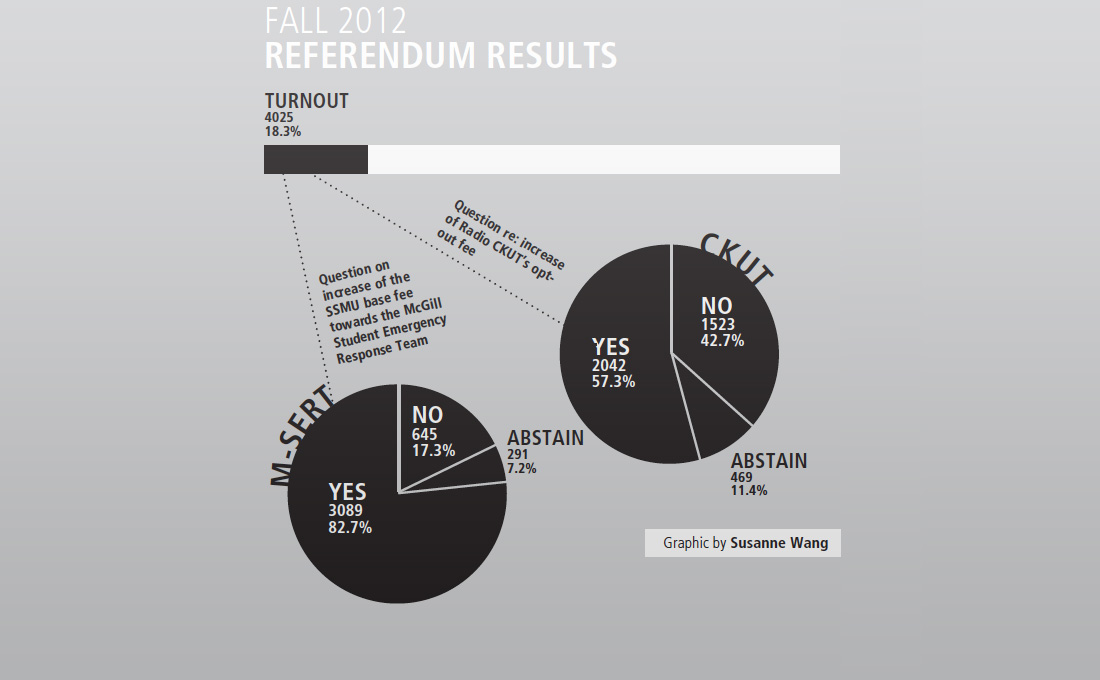
Last Sunday, Elections SSMU released the results of the 2012 Fall Referendum period for the Students’ Society of McGill University (SSMU). Students voted in favour of fee increases for both CKUT Radio and the McGill Student Emergency Response Team (M-SERT).
CKUT
With 57.3 per cent of students voting in favour of its referendum question, CKUT will benefit from a $1 increase in its opt-outable student fee, beginning in January 2013. According to Carol Fraser, chair of CKUT’s Board of Directors, the current $4 fee has not increased or been indexed to inflation since 1988. She said the fee would go towards the station’s current priorities, including covering their deficit, rent, equipment repairs, and staff salaries.
“This means CKUT will continue to be an amazing community and campus resource, and its international prestige will be maintained,” Fraser said. “It means we can basically continue the work we are doing now … this win helps the station stay afloat and stay awesome.”
Fraser said she was grateful for the station’s supporters during the referendum and throughout the past year. CKUT has run three referendum questions in the last 12 months. Last semester, a question asking for its fee to become non-opt-outable failed to pass.
Fraser suggested that students supported this Fall’s referendum question because the fee will remain opt-outable. She suggested that many students use the opt-out system or agree with it in principle. According to Fraser, the nature of the group’s campaign also contributed to its success.
“We have done a lot of outreach to students this semester,” she said. “It is also CKUT’s 25th anniversary. Students have recognized that their station has been going so strong on such a small fee, [and] they were willing to open their hearts and minds and give more.”
M-SERT
M-SERT’s student fee will also increase next semester, after 82.7 per cent of students voted in favour of the $0.50 increase for all students studying at the downtown campus.
M-SERT Vice-President Finance Patrick Tohill said the team is excited and relieved by the results.
“I think our greatest concern was that the referendum would not reach quorum,” Tohill said. “Thankfully, we had some great campaigning going on to get the word about the referendum questions, and I also think the incentives for voting and advertising done by Elections SSMU probably helped a lot.”
According to Tohill, the additional money will go towards improving the quality of M-SERT’s equipment and of the first-aid courses M-SERT offers to the McGill community. The service also hopes to reduce the financial burden on M-SERT volunteers—who pay for their own training, uniforms, and meals while on shift—and expand student coverage and hours of operation. Tohill added that the campaign period also allowed M-SERT to raise awareness of the group’s existence.
“I think one thing this referendum may have revealed to us is that there is a significant amount of students who don’t know who we are or what we really do,” he said. “I hope we can take the momentum of this referendum result and promote M-SERT as a relevant and useful service for as many students as we can.”
Voter turnout
This referendum period saw 18.3 per cent voter turnout from students. Although it exceeded the 15 per cent quorum for referenda, voter turnout has decreased since last year. For example, 24.7 per cent of SSMU members voted in the Fall 2011 referendum period.
SSMU Chief Electoral Officer Hubie Yu suggested that voter turnout may have been comparatively low because the issues raised were not as contentious as some of last year’s had been. For example, CKUT’s question requested an increase in their student fee, rather than making their fee non-opt-outable. Yu also noted that the there was less discussion on campus about these issues because students did not establish a ‘No’ committee for either question.
“If anything, we tried to increase turnout this time … by having a gift card raffle for people who voted, [which is] something Elections SSMU used to do,” Yu said. “While our turnout isn’t where we wanted [it to be] … I think we did well, given the circumstances.”
Fraser said CKUT was happy with the voter turnout, but expressed concern that some students had trouble accessing the link to the online voting system.
“[Voter turnout] could have been higher if the SSMU voting system were a little more user-friendly—if you could simply go to a link, as in years past, instead of having to receive an email,” she said. “This made getting the vote out a bit harder.”
Yu expressed hope that the online voting system would be improved to facilitate student participation in the Winter referendum period. She also said Elections SSMU will use other methods to address voter turnout next semester.
“We’re definitely going to keep pushing to increase turnout next semester, and will probably do the gift card draw, [or] give free food or items to people who vote to make elections more exciting,” Yu said. “A lot of emails I receive from students [say] that all we do is run ‘popularity contests,’ or that people … don’t know who to vote for when they walk by our polling stations, so we’re really hoping to change that perception.”