Latest News

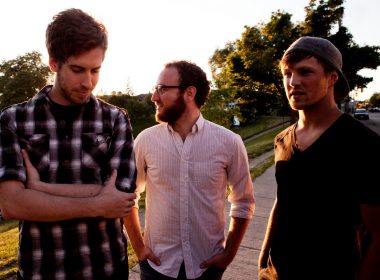
Mother Mother tours its latest album, The Sticks. (Todd M. Duym / www.mothermothersite.com)
a, Arts & Entertainment

From the sticks to the limelight

After the recent launch of their fourth, full-length album, Vancouver indie band Mother Mother is back, kicking off a nation-wide tour on November 7. While the band has been on and off the road this year, opening for Our Lady Peace, appearing at summer festivals, and headlining shows of their own, the upcoming tour will mark the first time they draw material from their latest album, The Sticks.

“Releasing a record is like letting free a caged bird,” says lead singer Ryan Guildemond. “It flies away, quickly out of eye shot, and you start to forget all about it. Going on tour is our turn to be a bird in a cage, doing tricks. The only thing that matters in a day is getting better at our tricks.”

While every band needs to practice their tricks, Mother Mother is no stranger to the business of touring. While continuing to deliver quality tracks, they’ve consistently toured every year since the release of their first album, Touch Up, in 2007. They’ve even garnered enough attention to tour internationally several times—a milestone for every indie band.

“It’s the difference between getting invited to a sort-of-friend’s party where you don’t really know anyone, and throwing your own party where you know everyone,” says Guildemond, when asked about how recent shows compare the recent shows to their early gigs. “The former, you have to execute your gestures with grace and precision to win ‘em over. The latter, you have more leeway to blunder. That said, no one really likes a sloppy host, so we tell ourselves that every additional impression is a first impression.”

In between dominating the nation’s indie-music industry, touring, and experimenting with reverb chamber closets in the studio, it’s hard to imagine that Mother Mother actually has time to sit down and write music.

When asked where the inspiration comes from, Guildemond responds, “Music is a very fun medium of creative expression that offers a wonderful escape from the mundanity of the everyday. Once you experience that, you realize that staying prolific is to the soul’s benefit, so you best not be lazy.”

Mother Mother’s music falls somewhere along the spectrum of “a random clash of pop and rock that just happened to sound amazing,” and plain noise. They have standouts that stick in listeners’ ears long after the first listen, as well as tracks which border on the quickly-forgettable;  both darker songs that experiment with multi-dimensionality, and those for easy-listening.

“How we come off to others  [in terms of] challenging versus easy music is likely to show inconsistencies, and which of the two I prefer, I don’t really know. I just want to do what appeals to me and the band, because you can’t please them all,” says Guildemond. “The indie-diehards will say we’re banal while the mainstreamers will say too weird, and therein lies the meaningless subjective beauty of art.”

Still, their repertoire is broad enough—it’s a little bit of what mainstreamers love, and just enough of what indie kids don’t.

Mother Mother play on November 21 at the Corona Theatre (2490 Notre-Dame West). Tickets are $26.90

Dan Deacon’s latest delves into exploration and discovery. (www.reeperbahn.com)
a, Arts & Entertainment

Dan Deacon on smartphones, classical music, and America

When I finally reach Dan Deacon after a frustrating number of dropped calls, he apologizes for the poor reception, and tells me, in high spirits, that he’s “somewhere rural.”

Deacon is currently traversing North America in support of his third album, and Domino Records debut, America. As the title suggests, the album deals with land and landscape—in particular, with travel, including jaunts to the frontiers of mobile reception.

America is inspired by the sweeping scope and immense diversity of the country Deacon calls home. Its very name possesses, according to the album’s press release, “an infinite range of connotations, both positive and negative.”

Deacon, moreover, appreciates the novel aspects that touring across the country brings to his music.

“Travelling with new people, and some people who haven’t travelled before, brings a newness and a freshness to it,” says Deacon; the experience has only reinforced his ideas about the diversity of the land.

This freshness, and its consequent broadening of horizons, seems to be a recurring theme for both the man and the album. Indeed, a good deal of media attention has focused on the changes evident in America, a record which moves away from the energy-charged pop intensity of Deacon’s hit debut Spiderman of the Rings. The changes, however, are less drastic than critics may suggest.

Sophomore record Bromst (2009), while lacking the amount of song-suite-epicness in this latest offering, marks an indubitable transition from the pop ecstasy of former days. Deacon began work on America as soon as Bromst was finished, and shows have featured material from America for quite some time.

The live performances, however, won’t differ too much from what fans have come to expect.

“There’s largely the same energy to the show,” says Deacon. “It’ll be pretty sweaty… people dance quite a bit.”

The break between Deacon’s last two releases can, in large part, be attributed to the fact that he’s been rather busy. His diversions have included scoring Francis Ford Coppola’s Twixt, and several classical music projects, including two compositions which were performed at Carnegie Hall earlier this year.

“They changed the way I think about sounds, instruments, music … they definitely had a big influence,” Deacon says of his side projects. He has a real interest in working with different media, wanting “to try as many different forms as possible … they all have their own forms, settings, contexts.”

When it comes to working with someone else’s vision, such as during the Coppola project, Deacon is amazingly positive—perhaps surprisingly so, for a man who custom-built a recording space for one of America’s tracks to ensure full creative control.

“It’s always nice to work within limits,” he says. “It gives you something to push the boundaries of.”

This penchant for experimentation is not limited to Deacon’s lesser known projects. Audiences on his present tour will be treated to some Deacon-style performance innovation, such as his concert mobile app.

“If you think about [smartphones as] lights and speakers …you can synchronize and utilize those in a way that adds to the performance,” says Deacon.

Having just last week been implored by Dan Mangan to “all put away our phones and just be here,” I can’t help but comment to Deacon that his embrace of smartphones runs counter to the impatience and frustration many other artists express.

His response is that the app “changes the way that people think about the phone. That’s what I like about it. It’s no longer about the individual phone … Our app is deliberately not interesting if you use it by yourself. You can’t really use it by yourself, you have to use it at a show … it needs a critical mass of people to make it work, to make it exciting.”

This latest experiment certainly should be; it’s the latest in a long line of crowd-participation techniques from a man who’s long been known for the unified energy and synchronized dancing of his live shows—Deacon even performed earlier this year to energize crowds at the Occupy protests. This current tour is just the beginning—he is “still figuring out how it all works” this time around, but already looking ahead to writing music specifically to be used with the app in the future.

But where does this interest in getting folks involved come from? “Ah… I don’t know… I think it’s just a weird neurosis that I have,” Deacon replies.

Whatever the source of his talent, working up a crowd is something which the man has mastered. Deacon’s tour hits Montreal on November 10, and a fantastic time is all but guaranteed.

For those who don’t have a smartphone, fret not.

“It sounds cheesy,” Deacon admits, “but the light literally shines on us all… we don’t all need to have the phone.”

Of the show itself, Deacon says, “it’s better to go with an open mind and with no expectations, people might have a better time that way.”

Dan Deacon plays on November 10 at the SAT (1201 Boulevard Saint-Laurent.) Tickets are $17 advance, $20 at the door.

a, Arts & Entertainment

Could Be Good

Theatre: Hamlet

Is your life short on Shakespeare? Fear not! Over the next week and a half, Persephone Productions will be performing Hamlet, perhaps the bard’s most resonant play. If you miss out, you may have to wait for a few decades—the last time Montreal had an English production of Hamlet was 1976.

Hamlet runs at the Calixa-Lavallée Theatre (3819 Calixa-Lavallée), November 1-10, and Victoria Hall (4626 Sherbrooke Street West), November 17-18. Student admission $12.

Film: Masterpieces in 35mm

In the upcoming week, Cinema du Parc revives a set of classic 35mm films. The menu opens with Joseph von Sternberg’s The Blue Angel, which marks his first collaboration with the great Marlene Dietrich. Luis Bunuel’s surrealist masterpieces, Un Chien Andalous and L’Age D’Or follow.

The Blue Angel will be showing November 2-4, at 9:15 p.m. Un Chien Andalous and L’Age D’Or will be showing November 5-7, at 9:15 p.m.

Film: Wine From Here

Fancy a movie and a drink? Look no further than the screening of Wine From Here, a documentary dealing natural Californian wineries, their histories, and their goals. Afterwards, take part in a winegrower-led panel discussion, taste some wine, and sample the canapés.

Catch the one-off showing of Wine From Here next Monday, Nov. 5, at Cinema du Parc. Admission is $20, and includes one movie ticket and wine-tasting.

Audio Art: Lounge

Inspired by 1950s-era Montreal piano bars, Lounge delves into what the act of listening entails. The performance features Seth Horvitz’s “Eight Studies for Automatic Piano,” and Laura Cetilia’s cello.

Lounge takes place at the PHI Centre (407, Saint-Pierre Street), at 9 p.m., November 10. Admission is free with a pass, available at the PHI Centre.

Dance: La Danseuse Malade

After a whirlwind tour of Japan and Indonesia, Jocelyne Montpetit’s La Danseuse Malade is returning to Montreal. Named Best Dance Performance of 2011 by La Presse, Montpetit returns with her exploration of Japanese choreography, or butoh.

La Danseuse Malade will be playing at the Segal Centre for Performing Arts (5170 Chemin de la Côte-Ste-Catherine), on November 8, at 8 p.m. Admission is free. Warning: onstage nudity.

a, Arts & Entertainment

When language fails

As a university student studying English literature, I am a firm believer in the role of language as a mode of cross-cultural and cross-temporal expression. Yet, if there is one thing I have also learned after more than two years of engaging critically with different literary forms, it is the obvious incapacity of the written word to accurately communicate certain experiences. Language simply falls short, for example, when trying to say something meaningful about a preliterate society that was dependent on entirely different verbal and natural modes of expression.

The MAI (Montreal, arts interculturels) is a venue for interdisciplinary art practices that seeks to overcome this shortcoming by exploring non-verbal media for intercultural dialogue. From October 25 to 27, MAI staged the multi-sensorial trans-cultural dance-theatre production, Colonial. The show, which toured globally, uses the human body, music, and visual arts to tell the complex story of the colonization of the Philippines by the Spanish in the 16th century, and the American occupation three centuries later. Colonial is a collaboration of five Filipino artists, each using their artistic talent to address their cultural heritage, and explore how to align it with a modern Philippines that now identifies with Western ideals.

The first of the production’s three parts transports the audience back to the pre-colonial jungles of the Philippines. Filipino-Canadian dancer-choreographer, Alvin Erasga Tolentino, gracefully dances on the small stage; a long and narrow mask covers his head, preventing him from seeing the audience or noticing anything beyond the small natural world of jungle sounds and shrubbery he moves in. Gradually, the background music swells in intensity, the rustling of leaves and bird-song are replaced by beating drums, and the sound of church bells makes itself heard in the distance, announcing the arrival of the Spanish colonizers.

The production’s second part begins with Tolentino crawling onto the stage and throwing himself into an uncontrolled, maniacal dance, as images of European and American cultural artifacts surround him on all sides, relentlessly imposing themselves on his natural space.

In contrast to this overt expression of the individual’s battle against overwhelming external influences, the production’s third and final act features a Tolentino who seems to have regained a state of inner equilibrium, his dancing becoming more controlled: we’ve returned to the present, in which the Philippines has gained its independence, but remains irreversibly changed by its colonial past.

Colonial is a fascinating and innovative interpretation of the past and present of the Philippines, and an excellent example of the interdisciplinary artistic vision of the MAI.

The MAI is located at 3680, rue Jeanne-Mance, bureau 103. For more information visit http://m-a-i.qc.ca/en

a, Arts & Entertainment

Move over, Edward Cullen—there’s a new undead in town

The Twelve is the second book in Justin Cronin’s compelling trilogy about a pseudo-vampire apocalypse, brought about by the volatile combination of ambition and stupidity on the part of several rogue scientists. Following The Passage (2010), The Twelve begins in the aftermath of the second uprising of the virals, or vampires. The storyline takes several chapters to settle in, but it’s worth the effort. What sets Cronin’s work apart from other novels in this genre is his realism: there are believable resolutions to different situations. Familiar characters die; such portrayal makes the story much more engaging.

The prologue opens with a brief recap of the virals’ rise, and introduces Amy, the leading lady chosen by God to save the earth. As one might expect in a story about good and evil, Cronin vividly illustrates the conflict between God and the Devil. Thankfully, this dimension does not overpower the storyline. From then on, Cronin enlists average Joes to wage the second war on the ghouls. From his scenes of harvesting in the communal corn fields with the constant threat of being “taken-up” (converted) by a rogue viral, to those of working in the oil refineries on the Texas coastline, Cronin creates a world we could believe ourselves a part of. The most intriguing aspect of the book is the introduction of a mysterious cloaked woman who, though sharing human features, is working with the virals to destroy the remnants of mankind. Alicia, who was infected with the virus at the end of The Passage, rendering her viral-human hybrid, also blurs the line between her human allegiances and her newfound viral blood. Just when readers relax, the tables turn, and, in Cronin’s words, “you’re running for the hard-box.”

As an English professor at Rice University, it is little wonder that Justin Cronin knows how to craft a trilogy with the power to stay. His home in Houston, Texas, provides the real-life setting that inspired the small southern towns of his novel. The remote settings in the book add to the sense of isolation that mark the characters’ plight, and help Cronin to focus on developing each character’s story with no extraneous detail.

The Twelve’s best feature is its breadth of story. Jolting the reader between characters and plot lines, Cronin teases readers with open-ended stories so that one is never completely sure of who lives, who dies, and who goes viral. That said, when Cronin focuses on one character at a time for several hundred pages, the book can become mundane and tedious. These sections lack the pizzazz we have come to expect from him—it’s a good four pages of action packed, into fifteen chapters.

Although the story assumes an end-of-days tint, don’t let all this talk of the humanity’s demise deter you from picking up Cronin’s latest. It’s actually an optimistic story:

“Everything that deals with ‘the end of the world—is actually a creation story,” says Cronin in an interview with The Independent. “Otherwise, it’s completely nihilistic and nobody would read it.”

At some 1500 pages already invested in this trilogy, this is a creation story not to be breezed through. So pace yourselves. But remember: when in doubt, run.

Plants and Animals looks ahead. (jemzz.wordpress.com)
a, Arts & Entertainment

Montreal trio on new beginnings

Montreal’s own Plants and Animals are no strangers to the music scene. The talented trio, consisting of Warren Spicer, Matthew “Woodman” Woodley, and Nicolas Basque, met at Concordia University and took what seemed like the natural step forward to form an indie-rock compilation.

In the beginning, the trio was heavily reliant on improvisation, taking small stages around Montreal. Spicer (vocals) was quite shy at first, and it was only when he allowed his silence to grow into his signature melodic vocals that the band really took off.

“We’ve become something like a chicken sandwich. Warren is the meat, Woody is the bread that holds us all together and I like to think I’m the sauce that tends to get all over the place,” says Basque.

The majority of their inspiration stems from music in the ‘60s, as well as modern theatre and dance.

“It’s really tough to pinpoint what inspires you musically as a band,” says Basque. “We all have many creative friends, such as Katie Moore and Michael Bryan, that radiate wild, loose, and experimental waves. We find that kind of exposure very healthy.”

Since their formation in 2002, Plants and Animals released a self-titled debut album, in 2003, followed by an EP and three full-length albums. Basque explains that the band’s three newest albums are meant to resemble the transitions between childhood, adolescence, and adulthood.

Parc Avenue (2008) definitely has a naïve aspect to it, along with it being precious and welcoming. La La Land (2010) is much darker and psychedelic, and reflects the experimental stage in someone’s teenage years. We then finally arrive at The End of That (2012), which radiates a certain sense of nakedness, maturity, and simplicity.”

Though each album’s sound was developed quite differently, each one is recorded close to home.

“We love to record and rehearse at the Treatment Room here in Montreal. All of our gear is there, we know the place like the back of our hand, and we know the people so well. It’s home to us,” explains Basque.

When asked to describe Plants and Animals’ signature sound in a few words, Basque calls it a “vibrant and real with an organic quality.” It is something that “moves a lot, and moves together simultaneously as the chemistry is sonically dynamic.” Compression and saturation in order to please radio standards is something they shy away from, and instead strive for the notions of experiment and surprise.

The End of That sparked an undeniable buzz in Montreal, as well as other provinces, eventually catching on across borders. Previously touring with Wolf Parade, Gnarles Barkley, and Grizzly Bear, Plants and Animals have shown a ready appeal to national audiences.

Following the end of their tour, which winds down in mere weeks, the trio plan to buckle down and get back to rehearsing.

“The direction in which our sound is now going is really exciting for us. We want to try to do something with more texture and depth that is challenging both for us and our listeners,” says Basque.

No matter where this new direction takes them, their sound is nothing short of accessible. What will remain constant are the recurring emotional curves that emerge when listeners least expect them.

“Our ideal fan is someone who can party to one of our groovier songs, and mellow out during a slower one,” Basque says. “Whoever can keep up with the highs and lows of our pieces is welcome at any show of ours.”

Plants and Animals are playing Nov. 16 at The Corona Theatre (2490 Rue Notre-Dame West.) Tickets are $20.

a, Arts & Entertainment, Music

Macklemore & Ryan Lewis: The Heist

After Macklemore & Ryan Lewis partnered up to bring us the acclaimed The VS. EP in late 2009,  some fans feared a sophomore slump. Instead, the duo’s latest release, titled The Heist, plays like a veteran rapper’s ‘best-of’ compilation.

In a surprising turn for a rap album, The Heist provides an invigorating instance of straight talk. In direct contrast to the belief that ostentatious displays of wealth and bravado are de rigeur in rap (see Zadie Smith’s interview with Jay-Z), Macklemore, whose real name is Ben Haggerty, writes only what he knows. The record’s subjects range from the agonizingly candid “Starting Over,” where Haggerty struggles with the shame and disappointment of relapsing into cough syrup use, to the jaunty “Thrift Shop,” an ode to second-hand stores. Haggerty’s songwriting, however, is at its peak in “Neon Cathedral,” the young rapper’s elegy to the solace that drinking provides the hopeless. The theme of substance abuse is well-trodden ground for an artist whose most personal track prior to The Heist was “Otherside,” a song lamenting the cough-syrup epidemic stifling both hip-hop and his own life. The tone, however, never verges on the moralistic—Haggerty readily admits that he’s not a judge, only a storyteller.

Lewis, the duo’s producer and DJ, plays an invaluable part in this process. Since the two began working together, Lewis has coupled Haggerty’s tracks with some of the most captivating beats in recent memory, often employing dense, intricate layers, with his own skill on show in the instrumental “BomBom.”

With Haggerty’s incandescent delivery, and Lewis’ expert production, Macklemore & Ryan Lewis have brought out the most impressive record of 2012. Welcome to The Heist—you’ve pulled it off.


a, Arts & Entertainment, Music

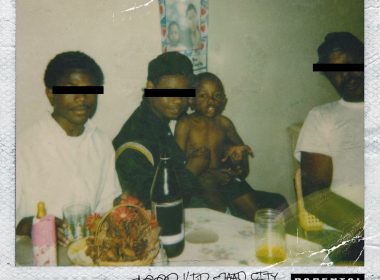
Mellowhype: Numbers

Unless you’re a well-versed hip-hop fan, it’s possible that your familiarity with rappers Left Brain and Hodgy Beats only stems from their frequently cited Odd Future involvement. The pair of artists, however, also make up the separate rap group Mellowhype, which recently released their third studio album, Numbers. In comparison to their previous work, the album features toned-down and introspective tracks, and showcases the pair’s recent shift away from adolescent antics to musical, and perhaps even personal, maturity.

In other words, Numbers is less hype, more mellow. In some instances, this leads to artistic breakthroughs, such as with “Under 2,” in which Left Brain touchingly raps about his newborn son. Other times, however, the mellowness is monotonous, leaving longtime fans wishing for some of the adolescent anger and intensity present in their earlier work. Frank Ocean’s appearance on “Astro” adds some star power to the album; the track features beautiful crooning by Ocean with a great Left Brain beat. Earl Sweatshirt, on “P2,” adds excitement as well, though disappointingly mumbles throughout much of his verse.

In sum, the album could use more energy and variety in its use of beats, sounds and features. As the first effort of a more cultivated Mellowhype sound, however, it can be considered a step in the right direction.

a, Arts & Entertainment, Music

Wintersleep: Hello Hum

Although the Juno award-winning Wintersleep has been lauded as having released ‘the album of their career’ with Hello Hum, not much has changed from their previous work. The band brought producer Dave Fridmann (Flaming Lips; MGMT) aboard for their fifth full-length album, although his presence is not especially noticeable.

With melodies beautifully backed up by intricate guitar picking, the album’s instrumentals remain on par with Wintersleep’s sound in past albums. Lead singer Paul Murphy’s nasally vocal tone, highly reminiscent of Interpol’s Paul Banks and We Are Scientists’ Keith Murray, acts as a distinct instrument woven through each song. Matching perfectly with the tones of the rest of the band, Murphy’s vocals are essential to the creation of their seemingly effortless sound.

Most peculiar is that Wintersleep were able to stay true to their old-school rock sound while adding hints of synths to their music. With soft, elaborate instrumentals and full choruses, it’s hard to tell whether Hello Hum disappoints, in that it has not shown enough progress from their past work, or if Wintersleep is just so musically adept that listeners fail to realize that there’s work being done.


Patricia Summersett as Jacqueline. (Susann Hofgraef / Infinithéâtre)
a, Arts & Entertainment

Horrors of war still hit close to home

The premise is intriguing enough: Jacqueline, a female combat officer who served in Afghanistan, wakes up in a dark hospital cell complaining of a phantom pain in her amputated leg. What follows, however, is more phantasmagoric—the brilliant Zach Fraser enters the stage as Jacqueline’s French-Canadian great-grandfather, who was unjustly shot for desertion in WWI.

Alyson Grant’s Trench Patterns is an immersive spectacle. The lighting and sound are outstanding, and Guy Sprung’s direction in this Infinithéâtre production does full justice to the piece’s haunting experience. The play itself seldom departs from the hospital cell setting, which effectively facilitates a “brain in a vat” exploration of Jacqueline’s febrile consciousness. One by one, hallucinatory figures from both wars appear on the platform—vignettes that each pledge the case of abject humanity.

On the surface, the play questions the paradoxical concept of a “just war” and the “good soldier”—nothing new there. Yet what is new, is an ambitious creation a character distressed by a double-stranded memory, which oscillates between her great grandfather’s tragic fate in WWI, and her own participation in the Afghan conflict. It certainly baffles temporal and spatial logic to enact scenes from both wars, almost a century apart, in a hospital ward­­­­—unless this straddling of time occurs in a character suffering from post-traumatic stress disorder. Even so, the show requires some willful suspension of disbelief.

This is especially necessary in Jacqueline’s imaginary conversation with her great-grandfather, and her evocation of painstakingly real scenes from WWI. Of these, she has no first-hand experience—after all, she has only read about them in history books. The audience’s bewilderment mirrors Jacqueline’s disorientation in a play that, for the most part, operates at the expense of logic. Were it not for Patricia Summersett’s riveting performance as Jacqueline, the play may have failed to convince on a structural level—however surrealistic in tone Grant intends it to be.

However, it is Jacqueline’s hallucinatory plunge into history that rescues the binding theme the play desperately needs. In her introduction, Grant notes that her play is about “how a past family member’s life … can shape those in the following generations.” It is Jacqueline’s attempt to reconcile her identity as a soldier with her particular familial history that ultimately rewards a genuine comprehension of what the play alludes to.

Throughout, Jacqueline is either stuck in bed, propped up in a wheelchair, or limping across the stage; all states generate sincere pathos. The title of the play derives its name from the often twisted and zig-zagged patterns of the communication trench in WWI. Jacqueline’s road to recovery, thus, requires not only the psychiatrist (also played by Zach Fraser) and her mother (Diana Fajrajsl) to understand her, but also the audience, to make sense of her long recuperative process, physical and mental, as she interrogates both her past and present.

Grant is evidently an able playwright. Commendably, there is an almost Beckettian tinge to the wonderfully conceived character of Jacqueline. Yet Trench Patterns is very much just a demonstration of potential, raw talent on display; on the whole, it is much too ambitious, and consequently falls a little flat.

Trench Patterns runs through Nov. 18 at Bain St-Michel (5300 St-Dominque); Tuesday to Saturday at 8 p.m. and Sundays at 2 p.m. Student admission is $20.

Read the latest issue

Read the latest issue