Latest News

Commentary, Opinion

Students are choosing apathy over engagement with SSMU

Unsurprisingly, forming strong opinions about something that you cannot see or readily gather information about can pose a challenge. This simple phenomenon obstructs the vast majority of McGill students from interacting with, caring about, or even knowing of the Students’ Society of McGill University (SSMU). The SSMU name floats aimlessly around campus, with most only able to recall the most recent scandal covered by an on campus publication. For many members of the student body, SSMU is inaccessible and seemingly non-existent, and this has allowed for corruption to run rampant within the organization. This lack of engagement and accountability on behalf of the student body allows SSMU the chance to cover up its internal issues

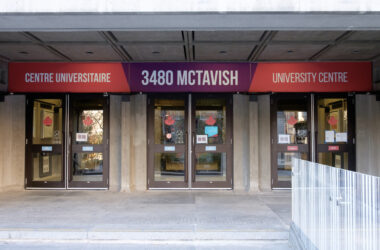
Unless they somehow stumble into the foreboding and unremarkable brutalist cave that is the official SSMU Building, otherwise known as the University Centre, a student will likely never directly interface with SSMU. Considering SSMU’s failure to reach a quorum in its most recent General Assembly, students appear to have little to no interest in the workings of the student union. Of course, there are the innumerable emails that bombard students’ inboxes, imploring them to vote for executives and referendums; but these go largely ignored, made evident by the less-than-20 per cent voter turnout in SSMU’s most recent elections. This gives rise to the question: On a campus where the student government is virtually invisible, how do students gather information about it? The answer is simple: Gossip. 

When SSMU is brought up in conversation, its discussants almost always tether it to deliciously scandalous stories of corruption, discrimination and harassment. As a third-year student, the most memorable encounters I have had with the entity of SSMU have been through secondhand accounts of its corporate greed, the thousands of dollars they have allegedly lost due to mismanagement—dollars paid by their constituents—or its disheartening failure to pass particular policies, even if they are supported by the vast majority of students. As our primary interface with SSMU, these narratives portray a student government that functions only to misrepresent and ignore the very people it was made to support.

But campus gossip, while often based in truth, does not provide an accurate picture of the capabilities of McGill’s student union. Despite its ever-so-apparent failings, SSMU can be an excellent resource for students, and it should appear on many more radars. Without organizers and workers in SSMU, there would be no Activities Night, no access to mental health and safety resources like Keep.MeSAFE, no free menstrual products in the bathrooms. Without SSMU, we wouldn’t even have the beloved Gerts Cafe & Bar. Visibility and recognition, however, still remain an obstacle. If SSMU does not make students aware of their resources, how can students partake in them? 

When the only news is bad news, students have poor incentive to involve themselves with SSMU. If students only have ears for gossip, why has SSMU not attempted to provide another narrative for itself? This speaks more to SSMU’s indifference toward its reputation than the youthful tendency to stir the pot. Ultimately, SSMU’s invisibility and apparent disinterest in providing an alternative form of self-representation perpetuates the vicious cycle of student disengagement and the union’s inability to accurately represent the student body. 

So how can SSMU make itself seen and felt? A simple start would be broader representation. SSMU is meant to serve all of campus, so it shouldn’t exist solely in the University Centre. Members of SSMU should be more active in student buildings, tabling and raising awareness about their mandate and goals for student life. This form of in-person engagement would garner far more success than holding general assemblies over Zoom on weeknights when next-to-no students can attend. By firmly staking its presence on campus, SSMU can better fulfil its role as a union and take responsibility for mending the rift between students and their governing body. Although SSMU could and should be doing more for McGill undergraduates, it could start by making itself known to its constituents. Perhaps, then, that students have a chance of voicing their needs, and hopefully see them met. 

Arts & Entertainment, Film and TV

‘Delicate: Part One’ marks American Horror Story’s entrance into subdued horror

Spoilers for American Horror Story: Delicate

American Horror Story (AHS) returned with its twelfth season, Delicate, on Sept. 20, concluding Part One on Oct. 18. The first installment of this two-part series chronicles Anna Victoria Alcott’s (Emma Roberts) introduction to stardom by the efforts of PR specialist Sioban (Kim Kardashian). Alcott’s struggle to win an Oscar while trying for a child through in-vitro fertilization quickly descends into an isolated journey where satanic figures, mysterious stalkers, and phantom miscarriages haunt her. Delicate diverges from the typical extravagant nature of AHS and offers a fresh, subdued horror perspective to revitalize the show after two lacklustre seasons. 

Where previous seasons of the show began their first few episodes with mentions of the paranormal or fear-inducing horror, Delicate opts for a more subtle approach. The lack of in-your-face supernatural activity allows the season to build on an ominous unplaced anxiety. While the horror tactics that the show employed in the past have contributed to its success and acclaim, after 11 seasons, these same strategies become redundant and overplayed. Season 12 breaks this worn-out cycle and allows for a more ominous viewing experience. Despite the brief glimpses of satanic essence in the first few episodes, the viewer remains unsure of whether the protagonist is simply experiencing hallucinations or is truly a victim of demonic beings. In the later episodes, the unease culminates into a specified horror. While the alternate approach to this season may leave die-hard fans of American Horror Story unsatisfied, this refreshing take revitalizes the show for many viewers in a necessary manner. 

In an era where right-wing fascists have waged war against women’s reproductive rights, this season presents itself as a timely commentary on women’s rights and their experiences during pregnancy. Delicate does an excellent job of portraying the heterosexual social focus on men throughout women’s pregnancies and the phenomenon of men viewing a woman’s body as a mere vessel for their child. Anna’s husband Dex Harding (Matt Czuchry) initially epitomizes the so-called ‘loving husband,’ but as the story progresses, he brushes off Anna’s hardships, accrediting them to a grieving mother’s hallucinations. He exemplifies the faux progressive man who wishes to be seen as a ‘good guy’ but ultimately only sees his wife as a means to an end. 

Not only does the pace of the show offer a revitalization, but the surprising acting performances lend an unexpected brilliance to this season. Emma Roberts brings her usual stunning abilities to the screen, offering a realistic take on a distressed and haunted woman. However, it is Kim Kardashian’s surprising performance which piques this season’s appeal. Most viewers expected Kim’s presence in this season to be merely a PR move to boost the show’s ratings. On the contrary, she acts as more than merely a celebrity making an appearance, presenting herself similarly to Lady Gaga’s feature in American Horror Story: Hotel where Gaga shocked audiences with her full-fledged performance. This rare example of admirable celebrity acting allows for Season 12 to adopt the same intrigue that Season Five did. Kim plays an unfabricated, almost alternate version of herself, bridging familiarity and fiction, leaving the viewer excited and yearning for more of her screen time. Although Kim’s performance is not to the quality of AHS veterans such as Jessica Lange, who starred in the first four seasons of the show, she has nonetheless impressed viewers with her rousing performance and many are claiming it to be Emmy-worthy. 

American Horror Story: Delicate was evidently the change in direction the show needed to maintain its position as a horror classic. With its subdued horror approach, commentary on contemporary issues, and Kim Kardashian’s surprising performance, this season has the potential to return American Horror Story to its cult classic legacy. 

American Horror Story: Delicate is available on FXNow. Part two will be released in 2024.

Arts & Entertainment, Pop Rhetoric

Pop culture journalism keeps the arts alive

On Oct. 6, Entertainment Tonight (ET) Canada aired its final episode, marking the end of an 18-year-long run in Canadian entertainment reporting. Although the closure appeared sudden, it would not come as a surprise to those following the state of Canadian arts and entertainment reporting in recent years. A decline in viewership for both broadcast and cable programs with the advent of streaming, combined with the closure of daily newspapers, has left major publications vulnerable to significant staffing cuts

Entertainment reporting sections are frequently among the initial casualties, regarded as the most frivolous form of journalism. Despite often being categorized as low culture, pop entertainment journalism plays a marquee role in helping Canada distinguish a separate identity within the entertainment industry outside of an American context. Reporting centred on Canadian music, film, television, and celebrity news is critical for helping Canadian artists and reporters cultivate a cultural ecosystem that is not just a mere spin-off of our neighbours to the South. This is especially important for shedding light on artists based outside of major metropolitan areas, such as Toronto or Montreal, whom American news outlets may completely pass over. 

ET Canada cited a struggle to retain advertisers as the primary reason for the sudden closure, an obstacle shared by many news programs internationally. Shaky TV ratings have led to a 4.1 per cent drop in ad revenue for traditional media in the last quarter, while new media, including social media, saw an 8.7 per cent increase—a result of shifting cultural attitudes towards the ways we consume news. Advertising revenue drops when ratings are down, meaning that at 7 p.m., all eyes are on Twitter (now X) instead of the nightly news. Since advertising dollars greatly influences the longevity of TV shows, a major pivot in the go-to source for news directly impacts the future of media, inadvertently collapsing an entire industry.

An absence of traditional media dedicated to celebrity and entertainment news may not seem like the biggest loss, but it has major ramifications in smaller Canadian markets. ET Canada often covered stories relating to Canadian artists and athletes, showcasing the country’s best and brightest in a way they often aren’t in the American iteration. Last September, ET Canada featured Plains Cree entrepreneur and activist Shayla Stonechild as a co-host in an episode dedicated to showcasing and celebrating ‘Indigenous Artists & Icons.’ Stonechild uses her organization, Matriarch Movement, to elevate and foreground the voices of Indigenous peoples working in the wellness and entertainment sphere. This is particularly important as often content produced by Indigenous peoples, but especially Indigenous women, gets marked as difficult to market and not worth the expensive production. Providing proper coverage of this content is critical in increasing viewership and demonstrating its place in the media landscape. 

While some argue that social media provides a wider reach and allows for marketing directly to an audience, the sheer breadth of content on these platforms can make it difficult for smaller artists to stand out and gain visibility among the competition.

Entertainment news programs and papers are essential in fostering a national arts identity. Whether it influences box office numbers and concert attendance or serves as a catalyst for social change, establishing a national arts identity creates a landscape in which a career in entertainment is viable for Canadians without having to leave the country. Their absence from the airwaves is bound to have far-reaching consequences on the entertainment industry and journalism as a whole in Canada. Programs such as ET Canada are unassumingly valuable, offering Canadian artists a platform for exposure and the chance to nurture a distinct national identity. 

Student Life

First date jitters: Happily ever after’s archnemesis

After a frantic week of tricks and treats, we’re tucking away our costumes and throwing out our carved pumpkins that have rotted overnight. A light cover of frost blankets the city daily, trying to insulate the cold streets against what’s to come. It’s that time of year again when I pull out my fluffy blankets, avoid my schoolwork, and binge the latest cheesy romcoms Netflix has to offer. While dreaming of meet-cutes and improbable couples, it’s hard not to notice the empty spot on the couch next to you. We all want that fairytale romance or at the least someone to get hot cocoa with during the cold winter months; but first, we must face the greatest foe in the dating world: First-date jitters.

We all get them—that small sense of panic mixed with excitement. The hectic looped thoughts of “Will I do something stupid?” or “What if I have nothing to say?” Or how about the five outfits you lay out on your bed because you can’t decide on what to wear? As ideal as happily ever after looks in the movies, let me tell you, I was never warned as a kid that I’d first have to live through painfully awkward first dates—such false advertising!

Luckily, as intimidating as a first date can seem, it doesn’t have to be all that unnerving. To start with, choose a relatively casual date activity. Meeting for coffee is a classic go-to because it conveniently has no time restraint. You can stay for 30 minutes and dash out on a bad date, or you can chat for two hours with the newfound apple of your eye. The everpresent buttery smell of pastries and the tart of coffee can’t hurt the vibes. Pick your favourite café—somewhere you feel comfortable, and you can sink into some plush chairs—and just relax and get to know each other. However, if a caffeine-heavy date is not your cup of tea, try planning an easy outing like thrifting or going to a museum. Having things to do reduces the pressure to strike up a fascinating conversation and gives you the chance to express your personality through actions. 

After you’ve planned out an acute activity or café visit, and you’ve finally managed to leave the house in the fifth outfit you’ve tried on, it’s time to put on a smile and be yourself—easy, right? But, it doesn’t feel so simple when you’re sitting across from someone new who’s making intensely awkward eye contact. My best tip: Don’t put too much pressure on yourself in a conversation. If it’s not intriguing or the flow feels off, that’s okay, maybe this first date is not meant to be anything more than a funny story for your next one. In general, though, try to talk about things you’re passionate about or things you love—you’ll find conversation flows easier when you’re both sharing what you value. 

Remember that you’re an intriguing person. If the person across from you showed up and also went through the jitters of getting ready and facing a first date, they must want to listen to what you have to say. When it comes down to it, a first date is nothing to stress over—you’re just getting to know each other. Maybe your personalities don’t click or you have no common interests. If so, don’t fret! Even if they’re just not the person for you, you’ve at least got some first-date experience under your belt. In this way, first dates are casual because not much is riding on them, so don’t overthink it! Second dates, however, I can’t help you with.

McGill, News

Quebec students and faculty mobilize against provincial government’s proposed tuition hikes

Students and faculty from McGill, Concordia, and Bishop’s University protested against the Quebec government’s proposed tuition increases for out-of-province and international students attending anglophone universities on Oct. 30.

Quebec Minister of Higher Education Pascale Déry announced the tuition hike on Oct. 13. Quebec will double tuition fees from about $9,000 to approximately $17,000 a year for out-of-province students starting their undergraduate degrees in the fall of 2024. The tuition rate for international students will also increase to a minimum of $20,000 annually. The Coalition Avenir Québec (CAQ) government says that it made the decision to protect the French language and will use the additional revenue from the tuition hike to fund French-language universities.

The protest began at 1:30 p.m. at Dorchester Square, where a crowd of mostly Bishop’s students had gathered—sporting their school’s purple. Ellis Mari Bambela, U1 Arts, was one of the few McGill students present at the start of the protest.

“For any sane person, what’s going on right now is completely outrageous because people come here for an opportunity to better their education, but it will become impossible for many, many people to study in Quebec, in Montreal,” Bambela told The Tribune

Quebec’s three English-language universities have voiced similar concerns. Bishop’s University told CityNews that the hike will jeopardize the university’s survival given that one-third of its students come from outside Quebec. Concordia warned that it could lose up to 90 per cent of its out-of-province population. McGill announced on Nov. 3 that the tuition hikes could result in $94 million in revenue losses and up to 700 job cuts across the board, sharing that it might devastate its Schulich School of Music, among other programs. 

Around 2 p.m., protestors marched down boulevard De Maisonneuve toward Concordia’s downtown campus before turning on Sherbrooke Street towards McGill’s Roddick Gates. The chant “Education is a right, not just for the rich and white” echoed through the streets. Many of those who attended the protest had pinned a red square to their clothes, a symbol of Quebec’s 2012 student strikes, also known as the Maple Spring. The march ended in front of Premier Francois Legault’s office, where organizers and speakers gathered by McGill’s Roddick Gates for speeches. Three English professors from Concordia addressed the crowd, criticizing the proposed increases and Legault’s CAQ government in general.  

“This is not a measure that really has to do with language [….] This is a measure that has first of all to do with incompetence and corruption. We’re talking about the same government that at the beginning of the pandemic let elderly people die in nursing homes,” Professor Nathan Brown said in his speech. “Of course, the government is attempting to divide us along lines of language, but I would say also that this divides the community in Montreal along lines of race, religion, and class, and we can’t allow that to happen.”

Kennedy McDiarmid, an out-of-province U2 Arts student from British Columbia, also spoke at the protest. She condemned the tuition hikes for “making education only accessible to the wealthy and privileged few” and criticized the Quebec government’s student mobility agreements that exempt French and Belgian students from international tuition rates. 

“Legault wants to protect French, so I have some suggestions to help them figure that out. […] You know the tuition that students from France and Francophone Belgians pay? Make that accessible to students from all French-speaking countries,” McDiarmid cried to a raucous crowd. 

The Oct. 30 protest was dubbed “Blue Fall” by the organizers, U2  Arts student Alex O’Neill and  Concordia student Noah Sparrow. In an interview with The Tribune, O’Neill explained the name’s symbolic meaning: “Blue” represents the CAQ’s official colours, while “Fall” represents the season and is meant to pay tribute to the 2012 Maple Spring protests.  

“If you read it backwards, fall of the blue, it [symbolizes] the CAQ government. Something that, obviously, has kind of fueled this [is the] government’s inability to consult with the universities, with the student body on not only this issue but, a lot of issues over the last five years,” O’Neill said. 

This piece was updated at 9:45 on Nov. 13.

Album Reviews, Arts & Entertainment

Sampha makes long-awaited return in stunning fashion with ‘Lahai’

In 2017, British singer Sampha released his debut album, Process, to widespread critical acclaim, earning him the Mercury Prize. Despite Process’ success, fans waited six years for Sampha’s next album, Lahai, the long-overdue follow-up to his debut record. During that time, Sampha has clearly endured considerable artistic growth, given the incredibly textured production and existential songwriting on Lahai.

Thematically, Sampha takes a more conceptual approach with Lahai. The lyrics paint the artist’s existential crisis as he seeks to grasp onto meaning amidst a flurry of questions about the nature of time, space, and memory. On the track “Satellite Business,” he questions common conceptions of reality, singing “Maybe there’s no ends, Maybe just infinity, Maybe no beginnings, Maybe just bridges.” The ambiguity of time is a particular point of interest for Sampha. “Suspended” imagines the singer finding solace in the memory of someone from his past. By escaping his demons through living within a memory, Sampha challenges the linear conception of time.

Sampha is concerned with finding purpose through personal growth, an overarching theme of Lahai. He frequently illustrates the evasion of one’s problems and soaring toward liberation through a metaphor of birds’ flight. In “Inclination Compass (Tenderness),” Sampha sings “How about we fly towards the source again? Let’s switch from cold to warm again,” relating the idea of spiritual healing to birds’ migration.

Unlike Process, which employs a more stripped-back and simplistic production style, Lahai’s instrumentation is elegant and polished. The production is also futuristic and experimental, such as with the dynamic drum and bass breakbeats on “Spirit 2.0.” Sampha’s tendency to introduce groovy drum beats in the second half of many of Lahai’s songs is certainly a highlight of the record. 

In an era when artists rapidly pump out music to maintain relevancy or amass riches, Sampha is an outlier. The composition of Lahai’s meticulous production, angelic vocals, and introspective writing is a testament to Sampha’s insistence on taking his time to perfect his craft. Lahai is a triumph that was undoubtedly worth the wait.

McGill, Montreal, News

Candlelit vigil at McGill honours victims in Gaza

Content Warning: Mentions of violence, death, and mourning

The McGill Palestinian and pro-Palestine community members stood in collective grief by the Arts Building on the evening of Nov. 2, as hundreds gathered for a vigil to mourn the Israeli government’s killings of Palestinians in Gaza.

The vigil was organized by Law Students for Palestine at McGill and Solidarity for Palestinian Human Rights (SPHR) McGill. Five other student organizations also endorsed the event. No member of the McGill administration was present for the vigil. McGill did not comment directly on whether the administration attended. 

Pocket-sized candles surrounded a Palestinian flag on the steps of the Arts Building. Flags and signs were absent from the crowd at the request of the organizers. 

Addresses to the crowd, in English, French, and Arabic, began just past 5:30 p.m., with speeches from the organizers and some of the groups that endorsed the service. The speakers touched on remembering those who the Israeli government has killed in Gaza and criticized Principal Deep Saini’s communication on Nov. 2 for not drawing distinctions between the different groups’ sufferings. They also demanded a ceasefire and encouraged the crowd to take action to support the Palestinians, from protesting to writing to their local Member of Parliament. 

Members of the crowd began to light candles and the 6,747 known names and ages of those who have been killed in Gaza were projected onto the Arts building. 

According to the Associated Press on Monday, Nov. 6, Israel’s attacks on Gaza since Oct. 7 have killed over 10,000 people, including 4,100 children. Over 1.4 million people in Gaza have also been displaced. Israel’s attack came in response to an attack from Hamas that killed an estimated 1,200 people, with over 200 taken hostage. 

An individual at the vigil, who asked to not be named, expressed a deep sense of sorrow, finding themselves at a loss for words amid the grief.

Another attendee, who also wished to remain unnamed, said that they have had trouble sleeping and engaging with university work in the past three weeks, with all their thoughts being about Gaza. 

“This is my reality, [this is] what I think about through the day, I literally can’t cope,” they said. 

Near the end of the vigil, a minute of silence was held in remembrance of those who have been killed in Gaza. Only the sound of distant cars from Rue Sherbrooke could be heard as the names continued to be projected onto the Arts building. Some closed their eyes and tilted their heads forward, and dozens quietly cried. 

The service drew to a close after about an hour. Music played quietly as attendees lined the stairs with more candles and laid flowers at the front of the steps. 

The organizers invited the crowd to write notes of remembrance on pieces of paper to hang across the stairs, with many choosing to sit cross-legged and write on the floor in front of the stairs. The music then went silent. Those writing and lighting candles continued while community members stood at the front and soberly watched on. 

“I thought the event was done very well. I came by myself but I am glad I did. We haven’t done this [at McGill] yet to my knowledge and hearing from the speakers was moving,” an attendee, who did not want to be named, said reflecting on the vigil. “The situation right now is so terrible […] we needed to come together.” 

Resources: 

For faculty and staff:  

For students:  

  • The Student Wellness Hub offers counselling services for students located in Montreal.  
  • Keep.MeSafe is a service accessible 24/7 whenever you need to speak (or text) with a mental health professional for support. You can access Keep.MeSafe from anywhere in the world.

This piece was updated at 11 p.m. on Nov. 13 to revise the estimated Israeli death toll. On Nov. 10, Israel lowered its estimated death toll following the Oct. 7 attack from 1,400 people to 1,200. 

Arts & Entertainment, Film and TV, Music

Concert films bridge the gap between music and cinema

As an aggressively straight drum line steadies watery synths, the members of Talking Heads cast dark silhouettes on a dimly lit red background. David Byrne’s robotic voice drones on as he comes into view, lying supine beside the drum kit. Cameras cut to a full view of the stage: Band members perform a militaristic march to Byrne’s monotonous chant of “Swamp.” The tone turns humourous as Byrne limps across the stage, tripping into a knock-kneed dance before reassuming his previous robotic stature. The sequence’s sinister tone departs deliberately from the previous tracks of ecstatic rhythm and jubilant energy in its cataclysmic visuals and unwavering force. Jonathan Demme’s 1984 concert film, Stop Making Sense, is a culmination of years of Talking Heads’ musical collaboration memorialized in a time capsule of sound and sight. 

The concert film is a unique art form in itself, as it bridges musical landscapes with the world of cinema and combines the audible with the visible. This configuration’s underlying power allows the music to flow physically into the world, taking the musician’s work to new heights with interpreted imagery evocative of their sound. Stop Making Sense is a testament to the genre’s expansiveness: A celebration of joy and surrender to the sanctity of movement and rhythm.

Concert film tradition dates back long before Demme’s 1984 project, gaining rock ‘n’ roll prominence in the 1960s with films like The T.A.M.I. Show and Monterey Pop. What initially began as an informational mode of cultural diffusion, allowing audiences to see the diversity of international music, rapidly evolved during the 1970s to more stylistic collaborations between filmmaker and musician. Experimental artists sought to explore the heights of the new medium using film. These visual aides benefit their sound—a practice that dates long before the popularity of music videos—and in certain instances serve as commemorations of specific accomplishments. There are often distinctions made between concert films and concert documentaries where the former tends to focus primarily on a band’s pure musical output and the latter focuses on a band’s narrative history. However, several films such as Martin Scorsese’s 1978 film The Last Waltz diverge from this practice, combining cinematic musical performances with inklings of historical narrative.

The Last Waltz depicts The Band’s final concert at Winterland Ballroom in San Francisco—the first venue where they performed under their own name. It’s a faded picture of the past, an intimate portrayal of The Band’s impressive legacy. With the colour grading earthy, the set design jewel-toned, and the shots framed close to the subject, Scorsese’s techniques translate The Band’s palace of sound into unadulterated physicality. The film preserves their musical footprint in formal interviews, candid conversations, and onstage performances with long-time friends such as Bob Dylan, Muddy Waters, and Joni Mitchell, producing a snapshot of authenticity and a glimpse into their aspirations. It is a marker of time, an anecdote of a film that perfectly encapsulates The Band’s skill and musical legacy. 

The uniqueness of each concert film exemplifies the endless possibilities of the art form. While Demme’s Stop Making Sense is otherworldly in his unabashed presentation of the avant-garde artfulness of Talking Heads, in The Last Waltz, Scorsese paints a much softer lens of The Band, staying true to their musical intentions of intimacy and harmonic connection. These films can be taken in a world of different directions. Concert films sit unparalleled on an artistic plane and cannot be replicated by any singular form. The two media of music and cinema meet where the boundaries of the singular craft can be transcended.

Know Your Athlete, Sports

Know Your Athlete: Elizabeth Ling

Currently a senior in civil engineering, Elizabeth Ling has been making waves in the  McGill Swim Team since her freshman year. Although The Tribune had already sat down and interviewed Ling in 2021, her recent achievements compelled an encore, reflecting on her experience and motivation as a senior. 

Growing up in Calgary, Ling played a wide variety of sports. Ultimately, she took up swimming. From then on, Ling continued to participate in swimming clubs and then pursued the sport more competitively. At 15, Ling shifted from her first club, the Calgary Patriots Swim Club, to the University of Calgary Swim Club, which spurred her to challenge herself and compete. 

“With my first club, it was kind of chill […], I wasn’t really pushed there,” Elizabeth Ling told The Tribune. “I moved to a different club and they had higher expectations for you to try harder and practice and stuff like that.”

After nine years of swimming at the competitive club level, Ling transitioned to the McGill Swim Team as she began her university career. Despite making her debut as a freshman during the 2020-21 COVID-19 season, Ling noted the stronger emphasis on team identity at McGill. 

“It wasn’t a crazy big shift, but it is quite different from club swimming where you’re swimming more for the team and not just yourself anymore,” Ling explained. “There’s a bigger community within that [McGill] team which is really nice to have.” 

This year, first-year students compose around half of the Marlets’ swim team. The McGill team has been particularly successful in recent meets, winning first place at every event at the first Cup of the 2023-24 season. 

“It’s nice to see how the team environment changes every year with graduating students and rookies,” Ling said. “We’ve got a really good bunch of rookies this year, some of them are really fast and they all bring their best effort and attitude to the workouts […] The team environment is really good every year, but this year, especially, everyone’s having a lot of fun.”

Attending and performing in competitions all around Quebec and Ontario while working to complete her civil engineering bachelor’s degree is a significant time commitment for Ling. 

“I feel like you kind of have to make sacrifices for both. But my coach was really understanding if you need to take a day off for swimming, or you have a midterm and you need to study or something,”  Ling explained. “[During meets] you have to swim three events and probably a relay, which is twice as much [as in high school club swimming]. So that’s kind of difficult, but I like it a lot better because you’re only racing for one day rather than an entire weekend..”

Ling emphasized her need for growth and her desire to continue with sports recreationally, even when her swimming career comes to a close. 

“I just really want to have a good season this year and maybe get some personal best, help the team maybe get to […] [place]  third at USPORTS this year,” Ling explained. “I think my time with swimming is coming to an end, this year or next year. I’d be down to try  badminton or something. ”

Ling has been  named McGill athlete of the week twice and Réseau de Sport Etudiants au Québec (RSEQ) athlete of the week once since the beginning of the 2023-24 season. Last year, Ling pushed new boundaries by establishing McGill’s new 50-m back record. 

However, with great performance comes great pressure—something Ling has struggled with throughout her swimming career. 

“It helps, knowing that I’m just sort of in it for the fun of it,” Ling reflected. “I really like racing, knowing that I [achieved] that time before, it helps. I did it before, so I can do it again. It just helps with practice and knowing that I’ve been trying my best during practice and putting in the work. It doesn’t really matter what I do, if I’m happy with my time and perform well then it’s alright. […] [Now that]  I’m older, it’s sort of, ‘why be upset about it and why stress about it, because it won’t help me in any way.’ ”

Ling is making the most out of her last season as a varsity athlete, enjoying the community brought by the team while still performing at impressive levels, constantly surpassing herself.

Science & Technology

Trib explains: Environment degrees at McGill 

What on Earth is going on with environment degrees at McGill? There are numerous programs, spread across different departments and faculties, each with their own take on one of the most critical issues humanity is facing. While students in the Bieler School of Environment share core courses, they specialize in different areas under various faculties—Arts, Science, Agricultural and Environmental Science, or the Interfaculty Programs. 

‘Environment’ is a broad term, and educational institutions often divide it simply into environmental science vs. environmental studies—the natural science approach and the social science approach. As many disciplines recognize the increasing relevance of the climate crisis, many science and humanities departments at McGill have broadened their focus to include discussions about the environment. However, environment majors explore these complex issues with much greater depth and employ multidisciplinary approaches.

Kathy Roulet, the Bieler School of Environment’s Program Advisor, helps students navigate the faculty’s seemingly limitless options to find a program that aligns with their individual interests. 

“The Bieler School covers environmental science and environmental studies, but we don’t choose to define it that way,” Roulet said in an interview with The Tribune. “We choose to look at environment as comprising both of those different elements.”

Regardless of their faculty, every environment major must take seven core courses that cover topics ranging from evolution and landscape formation to environmental ethics, thought, and research. Faculty members from different disciplines co-teach the core courses. 

In an interview with The Tribune, Mia Bhatia, a U2 Environment student in the Faculty of Science, explained the value of diverse perspectives and approaches.

“It gives you a lot of context that a lot of science degrees might not,” Bhatia said. “After graduation, I want to work in biotechnology or something along those lines. I realized that a lot of people who are coming out of their undergrad [and] want to work in those fields don’t have the breadth of knowledge to see how environmental issues impact each other, and how easily the science side of things can impact the social side of thing—environment is a really cool way to explore that.” 

That being said, the experiences of environment students are not the same. For starters, environment students can be on two different campuses. Those in the Faculty of Science or the Faculty of Arts—the majority of environment students—typically stay in the heart of Montreal on the downtown campus. However, a 35-minute shuttle away, students in the Faculty of Agricultural and Environmental Science enjoy the calmer scene of the Macdonald Campus, located on the West Island. 

Environment majors in these three faculties choose from 13 thematic areas that form the bulk of their program.

“These thematic areas we call concentrations,” Roulet said. “Those concentrations, say for example, food production, will be based on courses that are coming from faculties across the University.” 

While the Arts concentrations are distinct, most Faculty of Science concentrations are also offered in the Faculty of Agricultural and Environmental Science. Roulet explained that students deciding between these faculties should compare course descriptions and consider the lifestyle associated with each campus given their size and location.

One exception to this are the Interfaculty Arts and Science Programs, which include two degree options: Environment and Sustainability, Science, and Society (SSS). While key differences remain, students in both interfaculty programs do not choose concentrations. 

“The difference between the [interfaculty programs] largely comes down to the SSS program being focused strictly and solely on sustainability,” said Roulet. “Whereas the Environment Art-Sci program can be focused on whatever program goals a student is trying to achieve.” 

With so much flexibility, Roulet brought attention to the “trickiness” that some students may anticipate when developing a schedule, but ensured that she can work with students to put a plan together that not only fulfills the program’s requirements but also satisfies their unique interests and goals. 

Read the latest issue

Read the latest issue