Latest News

Horoscopes, Student Life

‘The Tribune’ predicts: Halloween horoscopes

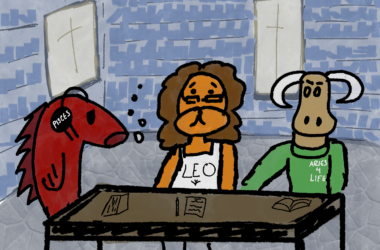
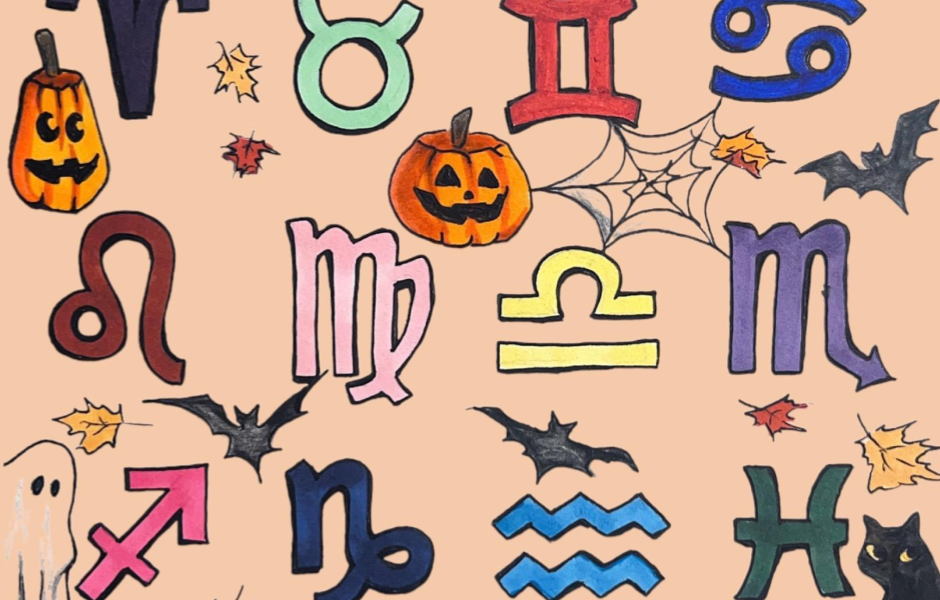
The leaves are falling, the sun is setting earlier, and the constellations are forming in eerie ways. The little ghosts floating around your astrological signs are telling you what the stars have in store for you this Halloween. 

Aries (March 21-April 19): Aries, your energy and ability to take everything as a challenge will come in handy this Halloween season. You’d be really good at trick-or-treating—try running around Milton Parc and collecting as much candy as you can. Keep the Swedish Fish for Pisces. 

Taurus (April 20-May 20): For you, Halloween can be a time to seek comfort. Dress up as a set of arms (you figure out what that means) and walk around the Y-intersection giving people hugs. Good for you, good for the world. 

Gemini (May 21-June 20): Sign of the twins: Watch out for your double appearing randomly around you, eerily staring back at you from behind your reflection in the mirror, following you around on campus, hiding under your bed at night. But don’t worry, this should only last for a few hours on Halloween day—consult a medical practitioner if it persists for more than 24. 

Cancer (June 21-July 22): Cozy up with a scary movie, spiderweb cookies, and the strange creature that has inexplicably been following Gemini all day. This Halloween, taking some time to yourself (with a cryptid) is just what you need.  

Leo (July 23-Aug. 22): Luxury and extravagance are in this Halloween. Your costume should stand out from the crowd, both figuratively and literally: Go for something out of the ordinary, but also eye-catching and fun. Don’t worry about the people sitting behind you in Leacock 132––having lights and clumps of feathers sticking out of you isn’t a distraction at all. 

Virgo (Aug. 23-Sept. 22): Your creativity and whimsy are all you need to come up with Halloween costumes for your friends. Here are some suggestions you can bounce off of: Barbie and Ken (fun!); a character from a Pixar movie everyone loves (awww, cute!); Gemini’s likeness (nothing weird about this one!). 

Libra (Sept. 23-Oct. 22): Who cares about Halloween? It’s just a typical Tuesday night for you. Don’t forget you have a big paper due in a few days, and an exam for that bird course you took that might require quite a bit more effort than anticipated. 

Scorpio (Oct. 23-Nov. 21): You love to keep others on their toes with your mysterious and secretive vibes. This Halloween, try dressing up as one of the extras from a show that only aired a handful of episodes a decade ago. Nobody will know what you are (good).  

Sagittarius (Nov. 22-Dec. 21): Sagittarius, you’re always the most loved one at the party, opinionated but kind. This Halloween season, try walking around the room and critiquing everyone’s costumes. Don’t be shy, we all agree that Scorpio’s costume makes no sense. 

Capricorn (Dec. 22-Jan. 19): For you, Halloween should be about coming out of your shell. It’s okay to show some emotions and be a bit silly sometimes. Switch things up for once and impress all your friends by eating the most candy in one go.

Aquarius (Jan. 20-Feb. 18): Master of the liquids, why not give mixology a try? Your weird concoctions aren’t all too odd this weekend. Give your closet kombucha the chance to finally be consumed, instead of just sitting in the dark, under shelves of clothes, for weeks on end.  

Pisces (Feb. 19-March 20): Nobody likes Swedish Fish, but you’re a Pisces, so it’s your duty to take one for the team and eat all of those little chewy, sticky, waxy candies this Halloween. We’re sorry. 

McGill, Montreal, News

Kanien’kehá:ka Kahnistensera appear in court, discuss disbandment of archaeological panel

Content Warning: Mentions of assault and genocide

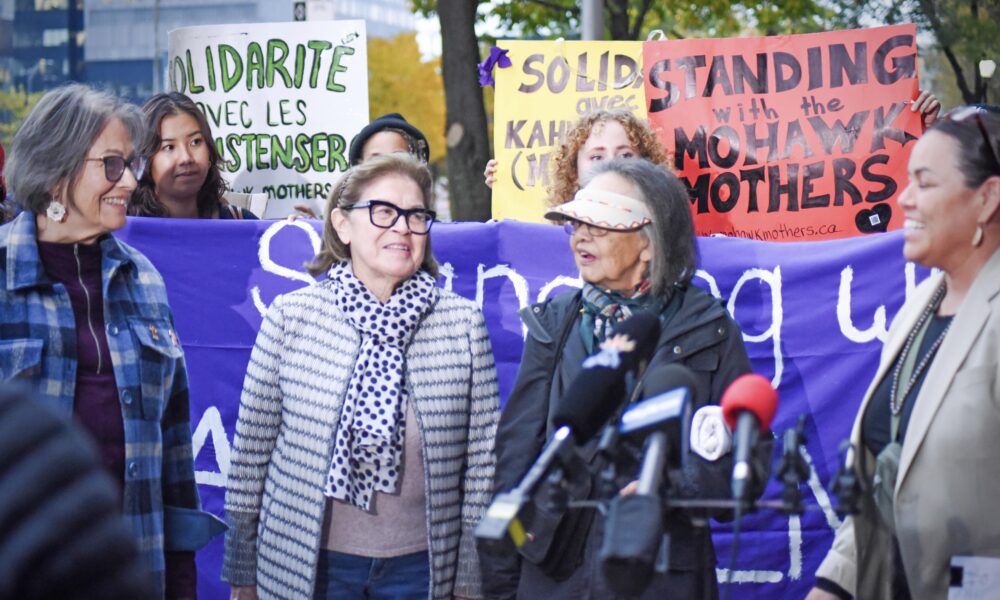
The Kanien’kehá:ka Kahnistensera (Mohawk Mothers) appeared at the Montreal Courthouse for a five-hour case management hearing on Oct. 27. The hearing came as part of the Mothers’ ongoing investigation into McGill’s New Vic Project site—where the Mothers fear that there may be unmarked Indigenous graves—alongside McGill, the Société québécoise des infrastructures (SQI), the Royal Victoria Hospital (RVH), the City of Montreal, and the Attorney General of Canada

The Mothers gave the first statement before Justice Gregory Moore. Beginning with Mohawk Mother Kwetiio, the Mothers urged the court to enforce the settlement agreement, which, in Kwetiio’s interpretation, states that all parties are bound to the recommendations of the court-appointed expert archaeological panel. Kwetiio further alleged that McGill had sent contracts to the three members of the panel—which disbanded on Aug. 3—with three-month termination dates. The Mothers were not informed of these contracts until they had already been signed and were irreversible. 

Kwetiio argued that Ethnoscop—the archaeological firm hired for the investigation—did not use appropriate methods to protect the forensic chain of custody of any potential evidence, as they were touching evidence with their bare hands and not using tamper-proof bags. She also stated that the defendants were strategically choosing which information they would share with the Mothers in order to continue the investigation without delays.  

“There’s been a lot of cherry-picking of what [the defendants] are going to use to help themselves to further their construction, and not the investigation,” Kwetiio said in a press conference after the hearing. 

The court then heard from Mohawk Mother Kahentinetha, who shared that potential anomalies were excavated on the site in rapid time which did not allow for proper significance and care to be given to each anomaly. She said that on one day, nine anomalies were excavated with a mere 45 minutes allotted to each anomaly. Kahentinetha claimed that the soil was not sifted properly, and any bone fragments found were immediately deemed to be of animal origin. 

In a written statement to The Tribune, the SQI asserted that all excavation is being carried out in accordance with proper archaeological regulations by expert firms, with proper methods used to ensure soil is not mixed or contaminated.  

Kahentinetha also shared that after facing verbal assault from SQI security guards on July 25, the Mothers had asked to be accompanied by Indigenous security personnel from T.D. Security while onsite. However, it took three weeks before the defendants complied with this request. 

Kwetiio continued, asserting that the Mothers deserve to be treated with respect on the site and should not be subjected to “uncontrollable anger” from the defendants when they ask questions. She ended the Mothers’ statement by contending that the defendants had breached every part of the settlement agreement. 

The court took a fifteen-minute break, after which Julian Falconer—the lawyer for the Office of the Independent Special Interlocutor, Kimberly Murray—gave his statement, alleging that the defendants were being denialistic. He stated that the Mothers already had an insurmountable burden placed on them throughout this case, and this burden had “quadrupled” the day the panel was disbanded. He condemned the disbandment of the panel and alleged that McGill and the SQI had replaced the panel with their own archaeological experts so that they could inform the public that they were relying on the advice of experts. 

“Today was about bringing back the experts that know how to do this work, to find unmarked burials,” Murray said in a press conference after the hearing. “We have a lot of companies that can do scans. We don’t have a lot of people that have expertise in analyzing the data.” 

Later, the court heard from the SQI. Their statement was delivered in French and translated for the Mothers by anthropologist and associate of the Mothers Philippe Blouin. Members of Take Back Tekanontak—an advocacy group in support of the Mohawk Mothers—were stationed outside of the courthouse after the hearing to show solidarity. In an interview with The Tribune, an organizer of Take Back Tekanontak, Diane, who chose not to give her last name, shared her belief that the lack of a court-provided English translation of the SQI’s statement for the Mothers was appalling and oppressively exclusionary. 

“The Kanien’kehá:ka Kahnistensera come to court, and they speak Kanyen’kéha, their own language, and their colonial language is English,” Diane said. “It’s not okay to ask them to learn French as a second colonial language, and yet there is no translation provided for them. I cannot believe my eyes.” 

McGill’s lawyer, Doug Mitchell, provided the next statement before Justice Moore. He stated that the university believes that it has abided by the settlement agreement wholly and respectfully, arguing the occasional disagreements between parties are not an indication that the agreement is being violated. He asserted that the defendants are bound by the recommendations of techniques by the panel, not to anything else. 

Mitchell additionally claimed that Falconer had “theatricized” his speech to the court so that Justice Moore would rule in the favor of the Mothers.  He stated that the Mothers needed to take the emotion out of the investigation, alleging that the Mothers and Murray only wanted to enforce their interpretation of the contract and were not suffering any irreparable harm by the way McGill was carrying out the investigation. 

Falconer responded to Mitchell’s statement, saying that Mitchell should apologize for asking the Mothers to be less emotional about the investigation. He also argued that all parties should acknowledge that the panel’s recommendations have not been followed, as the panel itself believes its suggestions have not been entirely executed.  

“It is absolutely essential that McGill, the Quebec government, [and the] SQI come to their senses and understand that it is very short-sighted to essentially terminate a panel they agreed to be bound by in order a further a development,” Falconer said in a press conference after the hearing. “I promise you, whatever few dollars [the defendants] make on their development, the [societal cost] and the [further erosion] of trust is absolutely innumerable in terms of the size of the expense.”

Kwetiio also replied to Mitchell’s statement, stating that Mitchell’s words were “deeply offensive,” and reiterating the fact that all parties would not be back in court if the recommendations of the panel had been respected. 

“I think it was pretty disgusting that the defendant said ‘Oh, there’s no irreparable harm done here.’ […] There’s never a situation where any one of us is going to bargain without children of the past, present, and future,” Kwetiio said in response to Mitchell’s comment in a press conference after the hearing. 

Justice Moore adjourned court with no decision made, explaining that he would need some time to review all submissions and testimonies. McGill media relations officer Frédérique Mazerolle told The Tribune in an email that McGill will provide a comment on the hearing once Justice Moore makes a decision. A tentative subsequent court date is set for Dec. 1, during which all parties will discuss the issue of archives and records related to the investigation. 

“We demand that we have a proper best practice investigation for our children and for those that were disrespected on that site,” Kwetiio said. “I think our children are looking for us to find them, and this is what’s important, and I’m so glad that all these people are here today in support.”

Science & Technology, Student Research

Creating more accurate and realistic spine surgery simulation models

Before performing procedures, surgeons must receive step-by-step training. The traditional method, “See One, Do One, Teach One,” asks trainees in surgical residency to repeat after their instructors. To gain experience, these trainees often practice their surgical skills on cadavers.

Due to the high cost of cadavers and limited availability of resources, researchers have directed their attention to virtual-reality-based surgical simulations. So far, they have developed different surgical simulator models that imitate various procedures.

However, realistically reproducing human tissues remains challenging. In soft tissues such as muscles and blood vessels, it is crucial to replicate their internal dynamics and physical properties, such as viscoelasticity—the tissues’ ability to remain viscous and elastic.

“In practice, [viscoelasticity] means that when you push or pull on tissue, the force it exerts in response is not only dependent on how far that tissue is pushed or pulled, but also, to an extent, how fast,” Harriet Violet Chorney, a master’s student in McGill’s Department of Mechanical Engineering, wrote in an email to The Tribune.

Although researchers have attempted to recreate viscoelasticity, inherent model uncertainties, resulting from imperfect data predictions, presented another problem. Chorney aims to strike the balance between accurate tissue representation and model uncertainty in spine surgery.

With professors James Forbes and Mark Driscoll from the same department, Chorney recently published a paper in Computers in Biology and Medicine that explores viscoelasticity in minimally invasive (MI) spine interbody-fusion surgery. During this operation, surgeons make small incisions through which they introduce microscopic cameras to access spinal nerves, vertebrae, and discs. 

“[MI spine interbody-fusion surgery] is one of the largest surgeries that is associated with low back pain,” Chorney said in an interview with The Tribune. “When preventative measures no longer work, then surgery is what is implemented.”

Simulators can respond to different forces, such as pressure and vibration. This coordination provides valuable information known as ‘force feedback.’ Based on this feedback, simulators for the access-gaining step of MI spine surgery gain high realism, known as fidelity, to replicate as accurately as possible real-world conditions.

To develop a realistic force feedback model for this first step, Chorney built four mathematical models: Maxwell (MW), Kelvin-Boltzmann (KB), higher-order blackbox (HO), and inverted linear (IL). Because soft tissue behaves dynamically, simulation models must incorporate the dynamic frequency signals observed during the surgery, including those emitted by surgeons.

“It is important to design dynamic tests to inform the dynamic models,” Chorney explained in her email. “[B]ecause the surgeons may be pushing or pulling the tissue at different speeds, which can affect the corresponding force that is experienced, and we want the models we design to reflect that.”

MW and KB stand out in viscoelasticity, whereas HO shows the best error metrics—the lowest magnitude of errors compared to actual values. Conversely, IL represents soft tissues less accurately because it contains a static spring, and the applied force is in the opposite direction of other models.

Using these models, Chorney conducted an in-person study with 45 participants from the healthcare sector. In conditions with and without force feedback, participants would try to puncture a rubber tissue for a short time. Afterward, they answered two questions regarding the forces’ and the tissue’s realism.

“The purpose of my tests was to validate the numerical models that we actually built,” Chorney said. “Even though it was only a two or three minute test, it was to validate how many components you need to capture that accuracy, then the tradeoff with the uncertainty in the models itself.”

Overall, the researchers presented HO as the model with the highest similarity to soft tissues, as indicated by participants and mathematical data. This suggests that a model that better captures dynamic signals created in tissue may also be the most realistic, therefore making it the best to use for training.

“We were trying to develop not only the systems themselves being dynamic because tissue behaves dynamically […] but also a surgeon behaves dynamically, and in my paper, we capture both of those things.”

McGill, News

Students decry tuition hikes during SSMU town hall

On the evening of Wednesday, Oct. 25, the Students’ Society of McGill University (SSMU) held a town hall to discuss the Quebec government’s proposed tuition increases for out-of-province students. Students and organizers voiced concerns over the policy’s impacts on access to education and quality of learning and discussed ways to mobilize McGill’s population to resist the price spike. 

SSMU aimed to gain insight into students’ opinions on the tuition hikes that they will use to inform how they approach subsequent organizing. SSMU Vice President (VP) External Liam Gaither spoke on the priorities that the student union will have going forward in mobilization, such as focusing on working with other Quebec university student unions, after the event. 

“Our priorities are [to] continue to keep good solidarity with the student unions that are affected by this, to continue to work on building a common student front, because francophone students are heavily mobilized and passionate about accessible education,” Gaither said to The Tribune. “And making sure that our tactics […] whatever we decide to employ as an association,line up with the student membership’s view, as well as [having] some actual feasibility and achievability to them.”

The event drew around 40 students, including certain SSMU executives, and was moderated by Gaither and Alex O’Neill, U2 Arts, an organizer of the Blue Fall Protest on Monday, Oct. 30. The town hall comes after SSMU and the Concordia Student Union (CSU) put out a joint press release on Oct. 19, condemning the proposed increases, citing that they impede the human right of “universally accessible post-secondary education.”

Attendees discussed several issues, including criticism that the policy heightens economic barriers to post-secondary education and will increase student debt. Many students argued that the negative financial impacts of this policy on McGill would degrade the university’s quality of education and could result in the permanent closure of smaller departments. 

“For me, having to pay for higher education is a problem, already. I don’t think people should have to pay to go to university.” Chloé Hugla, U3 Arts, said. “Just increasing tuition is going to hurt people […] that have less money, [not letting] them come to McGill.”

After some attendees highlighted the potential damage to McGill’s prestige, O’Neill reiterated the importance of promoting solidarity and balancing the focus between the policy’s impacts at McGill and beyond it.

“That point of view can lead to something very exclusionary.” O’Neill said during the meeting. “We need to balance those aspects and the greater good for access to education, and access to education from province to province.”

The town hall included a brief presentation on the history of student protests against tuition raises in Quebec by Adam Semergian, a first year Concordia student and communications officer with Coalition de Résistance pour l’Unité Étudiante Syndicale (CRUES). Semergian spoke mainly about the 2012 protests against a proposed university tuition increase under premier Jean Charest. 

Following Semergian’s presentation, Gaither highlighted the red square as a symbol of student mobilization against tuition hikes popularized in 2012. Gaither and O’Neill encouraged attendees to pin the small squares of fabric onto themselves to raise awareness and situate their efforts in a longer history of student resistance against tuition increases in Quebec. 

“This tuition hike is a reminder of [the 2012 protests] in some ways, and we need to pick up where things have been left off and fight for affordable education once again,” Gaither said. 

Vikram Nathan, U3 Science, and president of the McGill Biology Student Union, talked to The Tribune after the town hall and underscored the potential for unity across different backgrounds, disciplines, faculties and schools in opposing the policy. Nathan expressed hope, looking both to the past and the future. 

“I just think it’s up to us to actually take concrete steps, like the Blue Fall protest that’s about to happen, to address this,” Nathan said. “I think, also, it was eye opening to hear about the history of this collective action callback and the fact that this isn’t actually that unprecedented. We can advocate for ourselves and we will do it again.”

Science & Technology

Hot science tickets for a cold month

The Science and Technology team at The Tribune have gathered around our fall campfires to bring you the best of McGill’s upcoming science-related talks and events this November. 

Hand on My Heart: A Journey of Healing and Impact

Wednesday, Nov. 1, 2023 – 5:30 p.m. to 7:30 p.m.

Coming up first, on Nov. 1st, is the McGill Global Health Programs’ book launch of Dr. Maureen Mayhew’s new memoir, Hand on My Heart: A Canadian Doctor’s Awakening in Afghanistan. Dr. Mayhew has worked across the globe, including in Afghanistan and the Northwest Territories. In her book, she shares her clinical experiences and personal transformations, highlighting her involvement in Doctors without Borders in Taliban-occupied Afghanistan. You can register for the event on McGill’s Department of Global and Public Health website. 

Probing Human Consciousness and Creativity Through Brain Criticality and AI

Monday, Nov. 6, 2023 – 1:00 p.m. to 2:00 p.m.

This event, hosted at the McGill Neuro as part of the Feindel Brain and Mind Seminar Series, explores the possibilities of using artificial intelligence (AI) to study human consciousness and creativity. Karim Jerbi, a professor in Université de Montréal’s Department of Psychology, will discuss recent research from his lab that uses electrophysiology, signal processing, and AI to study cognition. He will bring together a variety of topics, including the effects of caffeine, anesthesia, and meditation on brain function. If you have been wondering how your caffeine consumption affects your cognition during those unbearable 8:30 a.m. classes, this event may hold the answer! Registration will be available soon at McGill’s Department of Psychology website

Fuzzy Robots with Feelings: Understanding physical emotional communication

Monday, Nov. 13 – 6:00 p.m. to 7:00 p.m.

Karon MacLean, professor at University of British Columbia’s Department of Computer Science, will be giving this talk in the context of the Centre for Interdisciplinary Research in Music, Media, and Technology’s (CIRMMT) distinguished lectures. She will cover the relationship between emotion and physical touch, something that is extremely hard to replicate with robotic interactions. Her research is truly interdisciplinary, and offers an exciting window into the future of human-machine interactions. This talk may not give you warm, fuzzy feelings but the title guarantees discussion of fuzzy robots! Registration is available at the CIRMMT website.

Unconventional semiconductors and processes for flexible, stretchable, and wearable electronics

Tuesday, Nov. 14, 2023 – 1:00 p.m. to 2:30 p.m.

In this seminar hosted by McGill’s Department of Chemistry, Antonio Facchetti, adjunct professor at Northwestern University and co-founder of Flexterra Inc., will provide an overview of new materials and techniques in the field of wearable and flexible electronics. His company, Flexterra, aims to develop soft, flexible electronic devices that can be worn and folded without issue. This involves developing innovative technologies for transistors and visual displays, the chemical techniques and principles for which Facchetti will discuss in his seminar. Registration is not required for this event.

Examining the role of diverse sexual behavior and conflict on eco-evolutionary dynamics

Thursday, Nov. 23 – 4:00 p.m. to 5:00 p.m.

This installment of the McGill Biology Department’s Conservation, Ecology, Evolution, and Behaviour lecture series will explore the relationship between animals’ sexual patterns and the resulting evolutionary changes. The speaker will be Swanne Gordon, assistant professor at Cornell University’s Department of Ecology and Evolutionary Biology, whose research focuses on evolutionary diversity using fish, moths, and butterflies. Registration is not required for this event. 

Open Science in Action Symposium

Thursday, Nov. 30 – 9:00 a.m. to 5:00 p.m.

The McGill Neuro’s fifth annual Open Science in Action Symposium features a variety of events. Topics will range from data sharing practices, open-source software in neuroscience, and the potential of the open science movement to accelerate drug discovery. Vincent Larivière, the Inaugural UNESCO Chair in Open Science and a professor of information science at Université de Montréal, will deliver the keynote address to open the symposium. You can register for the symposium on The Neuro’s website, where there will also be a livestream provided on the day of the event. 

Baseball, Behind the Bench, Sports

An ode to Dusty Baker

The creator of the high five. The winner of a Gold Glove, World Series, and two Silver Sluggers. The first African American manager with 2000 victories and the first manager in Major League Baseball (MLB) history to lead five different teams to division titles. On Oct. 26, following their elimination from the playoffs, Houston Astros’ manager Dusty Baker announced his retirement, prompting many fans to reflect on one of the most illustrious baseball careers imaginable. 

While he is largely regarded for his career as a manager, Baker’s career as a player is nothing to scoff at. In the 1967 MLB draft, the Atlanta Braves chose Baker in the 26th round; he then went on to make his MLB debut on Sept. 7, 1968 against none other than the Astros. Baker played in the minors for the following three seasons, finally cracking the Opening Day roster in 1972. Historical moments characterized Baker’s time with Atlanta, such as watching Hank Aaron’s record-breaking 715th home run from the on-deck circle. Baker also served in the Marine Corps Reserve as a mechanic in motor transport from 1968 to 1974. 

In 1976, Baker was traded to the Los Angeles Dodgers where he not only won his first Silver Slugger and only Gold Glove, but  this was when Baker took part in what is believed to be the first-ever high five with his teammate Glenn Burke in 1977. It was also with the Dodgers that Baker won his only World Series as a player in 1981. Baker then went on to play for the San Francisco Giants in 1984 before being traded to the Oakland Athletics in 1985, where he finished out his career. During his time with the Athletics, Baker began chewing a toothpick––a staple throughout his managerial career––later revealing they both deterred chewing tobacco and were an “excellent” source of protein. In 1986, Baker also began to wear wristbands––another fashion mainstay during his managerial career––to wipe the sweat of his forehead. 

In 1993, after spending some post-retirement years as a stockbroker, the Giants hired Baker as their manager, making him the seventh Black manager of a major league team. In Baker’s first season as manager, the Giants acquired Barry Bonds, who would go on to break Aaron’s home run record under Baker’s management. Baker won his first National League Manager of the Year in 1993; then again in 1997 and 2000, when the Giants won division titles. 

Baker’s career with the Giants ended in 2002, but the Chicago Cubs hired him as their manager in 2003. In Chicago, Baker managed through the infamous Steve Bartman incident, and the team’s on-field struggles led the Cubs not to renew Baker’s contract at the end of the 2006 season. 

After one year on the sideline, Baker stepped in as manager of the Cincinnati Reds from 2008 to 2013. Baker was then hired by the Washington Nationals in 2016, and after leading the team to back-to-back National League East titles, the Nationals opted to part ways with him in 2018. 

In the aftermath of their 2017 cheating scandal, the Astros brought Baker in to help revamp the team’s jaded image in 2020. While the players garnered boos from fans on the road, Baker came to be viewed as the only manager capable of weathering the storm. And with a 320-336 record, playoff appearances in each of his four seasons, two American League pennants, and the 2022 World Series victory, Baker proved to be the man for the task. 

Baker has been a vital voice in calling out the lack of diversity across baseball. In 2022, Baker was incredibly vocal of the lack of effort by MLB to draw more U.S.-born Black players to baseball, as not a single U.S.-born Black player played in the 2022 World Series for the first time since 1950. 

Ultimately, Baker took home 2183 wins (seventh all time), three Manager of the Year awards, three pennants across the American league and National league, and one World Series. His toothpicks and sweatbands will be remembered and as far as we can tell, Dusty’s voice will remain in the baseball world for years to come.

Out on the Town, Student Life

Warming up near campus: ‘The Tribune’s’ recommendations for soup

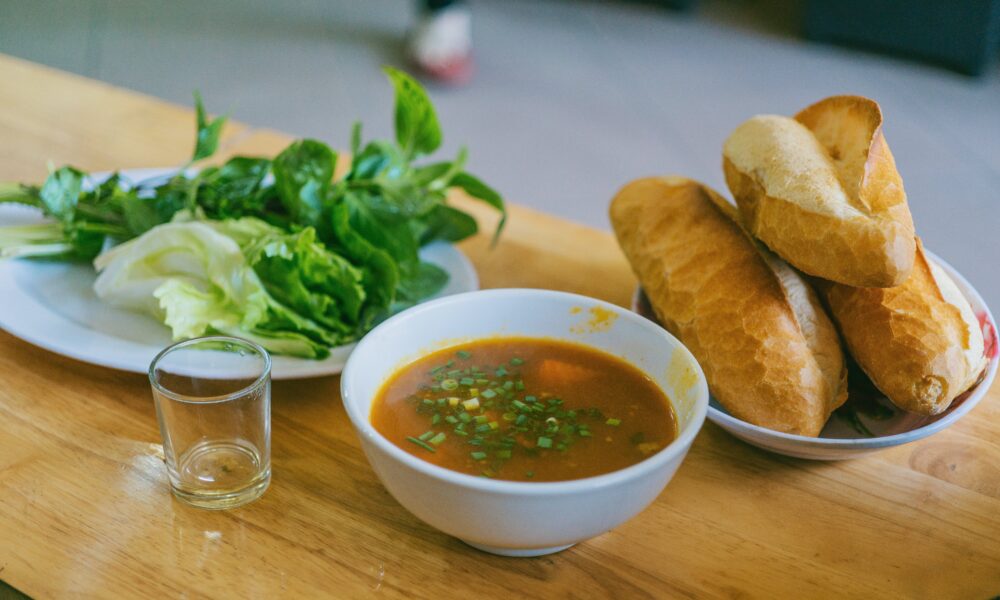
It’s 6 p.m., the sun has already set, you have 10 pages left to write for your essay, and the t-shirt you left the house in this morning isn’t protecting you from the cold—you need soup. So grab your spoons or chopsticks, as The Tribune highlights some nearby soup spots. 

Soupe Café

Distance: On campus

With midterms season transitioning into finals season, you shouldn’t have to take time out of your day to walk across the city for a nice bowl of soup. Soupe Café has three locations on campus: Burnside Hall, the Education Building, and the Sports Complex. Offering a different kind of soup every day, veggie and meat options alike, it’s the perfect place to go to in between classes (or even during your lecture’s 10 minute break). 

Vinh’s Café

Distance: On campus

Another campus icon, Vinh’s has become a go-to option for students looking for delicious but affordable sandwiches. What some might not know, or at least haven’t yet tried, is that Vinh’s has flavourful pho. With two locations, the Genome Building and the Strathcona Music Building, chances are that Vinh’s is only a stone’s throw away. Just don’t forget to bring your sandwich punch card. 

Nouilles Zhonghua

Distance: 1 minute on foot

A favourite for many McGilians, this Sherbrooke spot specializes in Chinese soups with hand-pulled noodles. Zhonghua offers a wide variety, from beef and pork to vegetarian options like tofu. This establishment is sometimes a victim of its own success, as long lines can form—it’s advisable to go during off-peak hours.

I AM PHO

Distance: 8 minutes by transit, 20 minutes on foot

Though it may be closer to Concordia than McGill, I AM PHO remains a great choice for Vietnamese soup. Served quickly and portioned generously, the soup packs an umami punch that will leave you satisfied for your impending three-hour lecture. Not to mention, they are open from Sunday to Wednesday, until 11:45 p.m. and from Thursday to Saturday, until 2:30 a.m.—making it ideal for those long nights at the library. 

Tsukuyomi Ramen

Distance: 10 minutes by transit, 15 minutes on foot

Despite the tough competition, Tsukuyomi has some of the best ramen near campus. This establishment is on Bishop, though there are also outposts in the Mile-End and Bois-Franc. It is a great choice for those who want options: From chicken to miso to tofu, there are bowls that cater to everyone’s taste, and plenty of vegan options to boot. 

Mandy’s

Distance: 5 minutes on foot

Believe it or not, your favourite fancy salad restaurant also offers soups. Their selection consists of matzo ball soup, vegan peanut butter and lentil soup, and butternut squash soup, the latter only available in October and November. If one of these three happens to be your favorite, or if you find stress in decision-making, Mandy’s is the soup spot for you. 

Olly Fresco’s

Distance: 5 minutes on foot

Another affordable option merely a few minutes away from campus is Olly Fresco’s, located under the Simon’s on St. Catherine. Simply walk in and choose your favorite soup from a fairly decent selection of options, including chili, chicken noodle soup, and potato bacon soup. Since you’re serving yourself, you can be in and out in minutes—quick, easy, and delicious soup. 

Olive et Gourmando

Distance: 15 minutes by transit, 20 minutes on foot

Located a bit further away from campus, this Old Port establishment is best known for its sandwiches, but don’t let that fool you; their soup of the day is worthy of the trek. Whether it’s black bean, tomato, or green chili, it’s sure to be comforting on those cold days. 

Dishonourable mention: Tim Horton’s

Distance: It doesn’t matter

Everyone loves the convenience of the Tim Horton’s on Sherbrooke and University, only a few minutes away from most of your classes. It’s a beloved Canadian classic, good for coffees and pastries, but their meals leave more to be desired. If you need a second warm liquid to complement your caffeinated drink, Tim’s offers a “two birds, one stone.” But come on, we’ve listed other options. You deserve nice things.

McGill, News

McGill celebrates sixth annual Queer History Month themed “Other Worlds”

Throughout October, the McGill Administration’s Equity Department hosted its sixth-annual Queer History Month, which consisted of panels, meetings and networking events—both online and in-person—for 2SLGBTQIA+ people and allies. The theme of this year’s Queer History Month at McGill was “Other Worlds,” a concept that examined the role and integration of storytelling into conversations about violence and hatred directed at members of the 2SLGBTQIA+ community. The theme sought to develop a platform for discussing how fictional, futuristic utopias can offer insight and serve as a tool for 2SLGBTQIA+ individuals to process backlash,homophobia, and transphobia.

Nalo Hopkinson, this year’s keynote speaker and an acclaimed Jamaican-Canadian writer of speculative fiction, hosted an interactive workshop and a keynote speech where she promoted creative storytelling and writing as a cathartic medium to inspire interpersonal empathy. This workshop also illuminated opportunities for attendees to reflect upon how they navigate a time when the identities of 2SLGBTQIA+ individuals are frequently stifled.

In the past few years, there has been a sizeable rise of anti-2SLGBTQIA+ and transphobic rhetoric and ideologies throughout Canada. Recent Conservative bills in New Brunswick and Saskatchewan have advocated for legal preferred pronoun discrimination in public education and have sparked protests, including the “1 Million March For Children” initiative that strives for the elimination of gender-neutral safe spaces and washroom facilities in schools. 

Andrea Clegg, an organizer of McGill’s Queer History Month and an Equity Education Advisor of Gender Equity and 2SLGBTQIA+ Education in the Office of the Provost and Vice-Principal (Academic), cited the importance of creating empathetic spaces for 2SLGBTQIA+ members of the McGill community to express themselves freely.

“McGill Queer History Month events offer a way to come together as a community, to celebrate our talents and achievements and to talk about and share stories of strength and pride,” Clegg wrote in an email to The Tribune. “Within a context of increasing attacks on our basic rights as queer people, having celebratory spaces to gather and connect with each other becomes all the more important.”

One of the most popular events during the month was McGill’s annual Homecoming event, “Return of the Rainbow.” First introduced in 2001, “Return of the Rainbow” is an evening for 2SLGBTQIA+ staff members, alumni, and students to network and discuss the intergenerational support networks that arise within, and beyond, McGill’s queer community. Attendees were encouraged to share their experiences of queerness and transness at McGill over catered food and drinks in an informal, conversational setting.

In an interview with The Tribune, Shannon Wood, a queer McGill alum and a Sexual Violence Education Advisor at the Office for Sexual Violence Response, Support and Education (OSVRSE), emphasized the importance of creating versatile, inclusive spaces for both students and staff.

“While there are a number of student groups on campus, queer-specific support for McGill staff is not as prominent,” Wood said. “Connecting with queer colleagues at events like Return of the Rainbow […] has been so comforting—especially during a time where parts of our society have taken steps backwards in regards to trans and queer rights. This reality is what makes the Other Worlds theme so timely, that we, both queer folks and allies alike, must continue aspiring to realities where we are accepted and safe to be who we are.”

In addition to Queer History Month events in October, McGill promotes diversity-focused workshops and year-round consultation support on its Equity website for 2SLGBTQIA+ students and staff members. These informational and supportive networks are provided through administrative and student-led organizations such as the Union for Gender Empowerment, OVRSE, and Queer McGill. However, despite the resources McGill promoted, alumnus Alexander Dow expressed the challenges students face in accessing the support systems offered. 

“Access to therapists and psychologists through the [Student Wellness Hub] is critically important, especially ones that understand queer issues and support them,” Dow said in an interview with The Tribune

“McGill already does have one of the largest networks for this. However, the system continues to see overwhelming demand that doesn’t meet the needs of all students. Increasing accessibility to these services and trust would be an area for improvement. Ultimately there are more positives than negatives in relation to McGill’s attitude, actions, and support for the queer community.”

Album Reviews, Arts & Entertainment, Music

boygenius continues to amaze its listeners on ‘the rest’

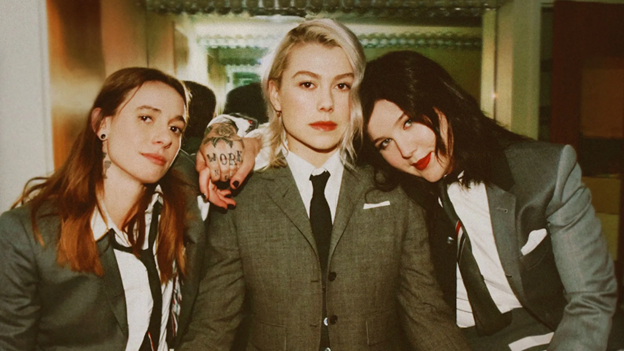
Since debuting their self-titled EP in 2018, boygenius—the alternative/rock group formed by Phoebe Bridgers, Lucy Dacus, and Julien Baker—has been on everyone’s radars. After reuniting almost seven months ago to release their first full-length album, the record, the group put out a four-song EP on Oct. 13 titled the rest.

One can either listen to the record and then immediately follow it with the rest, or just listen to the rest independently. Both sound natural since the closing of the record almost perfectly leads into the start of the rest and because the latter touches upon themes explored in the former. “Voyager,” in particular, revisits the lunar imagery that Bridgers touches upon in the record’s “Letter from an Old Poet” and throughout her solo work. 

Over the last five years, boygenius has collaborated in a masterful way to show each of the band members’ maximum potential. They have beautiful voices separately, but when combined, their harmonies and lyricism build ethereal melodies. On this new EP, the opener and closer—“Black Hole” and “Powers,” respectively—showcase the trio’s expertise in collaborating without ever overpowering each other. 

While this EP might not blow either boygenius or the record out of the water, it still builds upon the solid foundation the band has established through their previous works. These four new songs have the same attention to detail and quality as their previous works; their lyrics are as poetic as always, especially on “Afraid of Heights,” and the melodies remain faithful to their classic mix of indie and rock sounds. 

To many, boygenius represents friendship, queer love, and acceptance. Their friendship makes every song that they write so pure and inherently relatable. Their openness with their sexuality empowers their fanbase to celebrate alongside them, turning each concert and listening session into a safe space for their fans to be proud of their sexuality. In the face of increasingly widespread homophobia and transphobia across America, boygenius’ music is a defiant expression of the importance of queer joy. 

McGill, Montreal, News

QPIRG-McGill’s Culture Shock explores intersection between food and social justice

The Quebec Public Research Interest Group at McGill (QPIRG-McGill) held their annual Culture Shock event series—dedicated to anti-racism, migrant justice, and Indigenous solidarity—from Oct. 6 to Oct. 27. The student-run and student-funded organization selected food as the event’s theme, delving into food as a human right, as an aspect of cultural and historical identity, as a social justice issue, and as a form of community-building.

Nelly Wat, an Outreach and Promotions Coordinator at QPIRG-McGill, explained that food felt like an important theme to tackle during this year’s Culture Shock because of the prevalence of food insecurity among both students and the broader Montreal community, particularly in the midst of inflation and rising food prices

“That was the vision for the theme of food: Thinking about food as something that essentially should be a human right—something that people should have access to—but also something that can bring communities together,” Wat elaborated. “So, [there were] many different aspects of food that we wanted to explore. We had an open call-out for workshops, and people submitted their proposals.”

This year’s Culture Shock was comprised of four events: A panel discussion on food insecurity, a workshop on making elderberry syrup, a cooking event with Community Cooks Collective (CCC), and a community feast

“[We] wanted to introduce students to a variety of ways to actually get involved in their community, beyond just working within your institution, within the university,” Wat explained when asked about the range of events. “Actually going out into the community and finding different ways that you can get involved [and] connecting with people outside of [the] McGill bubble, so to speak, the Anglophone bubble also.”

At the Oct. 6 panel, which kicked off the event series, three panellists and a moderator spent an hour and a half discussing the different ways that food systems and food insecurity impact peoples’ everyday lives.

“Today we will be covering a topic that affects everyone: Food,” Nat Alexander, Programming Coordinator at Midnight Kitchen and panel moderator, said at the start of the event. “Each panellist that we have has direct experience with different facets of the food system, from academic research and policy to growing and distribution.”  

The panellists were professor Erik Chevrier from the Concordia Food Coalition, a group that aims to reimagine food systems and promote food sovereignty; Sona Sadio from the Sankofa Farming Cooperative at Concordia, a student-run community garden that provides food to Black and Indigenous communities; and Ayub Allene from Sister Sabria, an organization that seeks to provide food and shelter to those in need, particularly women. 

“Food justice is a complex topic that interweaves so many disciplines and social issues,” Alexander elaborated. “Issues of income inequality can’t be separated from food justice. Issues of racism and colonialism can’t be separated from food justice. Food is also emotional, it’s a way that we connect, a way that we remember.” 

During the event, all of the panellists stressed that existing food systems are not sustainable. Chevrier specifically pointed to the environmental impacts of our current farming and food production practices, emphasizing the need for change. 

“Agriculture is a main culprit of actually producing CO2 [carbon dioxide]. So not just about food travelling from one distance to another, but as soon as you start tilling agricultural land, you’re actually releasing carbons,” Chevrier explained. “We’ve actually crossed the threshold of nitrogen and phosphorus being produced […] we’re actually chemically synthesizing these for farms […] we’re creating dead zones, we’re actually acidifying the ocean.”

Sadio stressed that food insecurity and food deserts have disproportionate effects on people of colour and those from lower-income neighbourhoods.

“Grocery stores don’t feel incentivized to open up in certain areas that they don’t see as profitable for whatever reason,” Sadio said. “And, when we rally around Black lives or Indigenous lives or talk about policing, and how that leads to so much debt, […] so does this issue with food, it’s up there with the main causes of debt.” 

At one point in the panel, Alexander commended Let’s Eat McGill—a student-run campaign dedicated to tackling food insecurity on campus—for its efforts to bring accessible food options to McGill students. According to Wat, Let’s Eat McGill was also a recipient of QPRIG’s summer research stipend. 

“They’re doing some really important work specifically on the issue of food insecurity, the price of food on campus and residences and cafeterias,” Wat said. “We typically fund projects that do community work like [Let’s Eat McGill], or research projects, as well as student research projects related to social [and] environmental justice.” 

Chevrier suggested building a coalition like the Concordia Food Coalition at McGill in order to bring change to the university’s food systems.

“If you’re from McGill, you could actually start coalitions in your university to start changing your own food systems,” Chevrier said. “So Concordia, […] basically what we did is in 2013, [we] formed collective action to figure out ‘how can we transform our campus?’ and ‘how can this spill out into the community so that the community could actually reap the benefits of what we’re up to?’ [….] We actually now have the Hive Café, which is a collective-run organization, the means of production are owned by the community.” 

In an interview with The Tribune, Wat emphasized that QPIRG-McGill is making a concerted effort to be more visible on campus. 

“We’ve always struggled just a little bit to reach students, because oftentimes people don’t know who we are and our offices are not exactly on campus, [they’re] on Parc,” Wat said. “[Through the Culture Shock event series] we’re hoping to bring together a few community groups and some students as well, so that we can, you know, share a meal and also get to know one another even more.”

The final event of the Culture Shock series, a community feast for activists and community members, took place on Oct. 27.

Read the latest issue

Read the latest issue