Latest News

Features

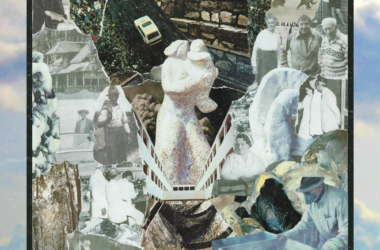
Finding the Old Home

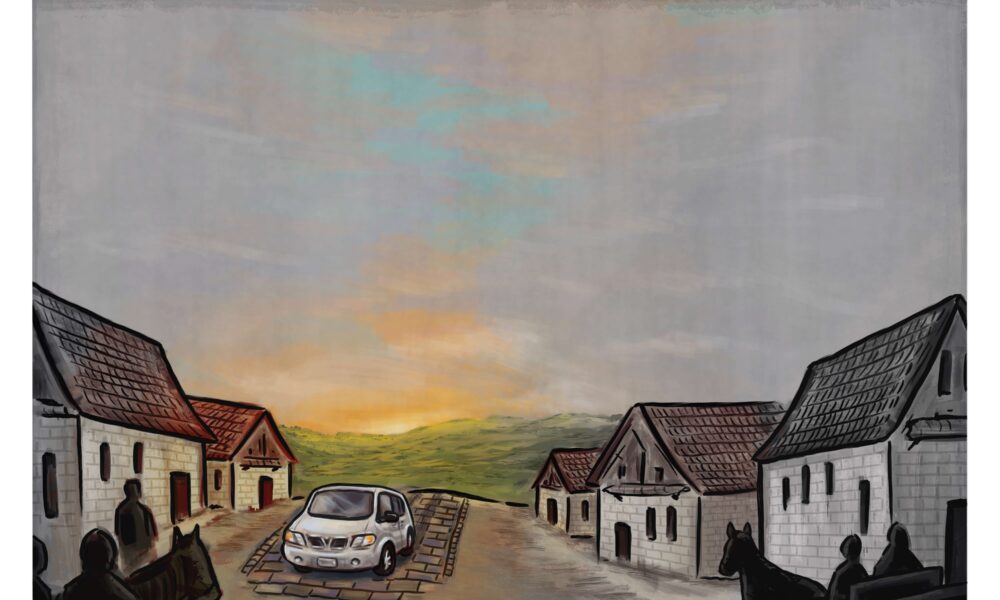
I was nine years old when I first decided to go to synagogue with my grandfather. Every Saturday, I would sit on my couch, looking out the window onto the driveway, waiting for Zaidy Ell to pick me up in his grey minivan at 9:30 a.m. 

I began this weekly tradition after accompanying my family for the year of mourning for the passing of my grandmother, Bubby Shirl. I enjoyed spending the time with Zaidy Ell, and I wanted to see if religion would speak to me, resonate with me in a way that it hadn’t with the rest of my secular family. 

I had a lot of questions about the synagogue experience. I noticed that the old men who were called up to the Torah pronounced their Hebrew differently than the younger Rabbi. Some men wore blue and white prayer shawls while others wore black and white. There were also no other kids my age there. Parents often brought their toddlers with them, but once they reached my age, they seemed to stop going. 

Looking back, I never enjoyed synagogue that much. I would time my bathroom breaks specifically to miss the longest standing part, and the food afterwards at the Kiddush was always pretty gross. But I loved the snarky remarks Zaidy Ell and I would make about people or the playful punches on each other’s thighs to make sure we weren’t falling asleep. 

Mostly, I enjoyed the car rides there and back when he would tell me stories. He told me about his grandmother, Bubbe Sarah, who had taught him Yiddish and who raised him after his father died and his mother got sick. When she drank tea, he recalled, she would pour it into the saucer to cool it down and suck the tea through sugar cubes. He also told me about his grandfather, Zaide Charles (Shaya), who deserted the Russian army during the Russo-Japanese War and always put on his shoes before his pants—a technique he was taught as a soldier. 

He would also answer the questions that I had. He explained to me that the blue and white prayer shawl, or tallis, signifies that the diasporic Jewish yearning has been fulfilled because Israel exists, while the black and white signifies that Jews are still mourning and yearning because the Messiah hasn’t yet come. He conceived it as a way of enacting a vision for the community through individual choice of dress. He wore a blue and white tallis, the same style he gave me for my Bar Mitzvah.

He taught me that the Rabbi spoke a more modern Hebrew, while he and the older Eastern European Jews, or Ashkenazim, use a different pronunciation—pronouncing many of the T sounds in modern Hebrew like S’s and pronouncing “Oh” like “Oi.”

Going to synagogue didn’t make me religious, but the folklore Zaidy Ell shared connected me to a time and place—a place that wasn’t my hometown of Toronto or that suburban synagogue. Ashkenazi Jews commonly refer nostalgically to their place of origin as the Old Home, or Alte Haym in Yiddish. However, defining what that meant for me required a synthesis of place and belonging which felt difficult to articulate.

My ancestors were from all over Eastern Europe, including Poland, Ukraine, Belarus, and present-day Russia, and I knew that I was Jewish. But apart from my dad’s mom, who was born in Poland, all my grandparents, and even great-grandparents on my mom’s side, were born in Canada. Although my family and I do identify strongly as Canadian, with my Dad growing up in strongly-patriotic rural Ontario and Zaidy Ell being an avowed monarchist, it was always a place of arrival rather than origin. 

Being a dual American-Canadian citizen and also having connections and family bonds to his diverse European background, Avishai Infeld, U3 Arts, had difficulties defining his identity when growing up.

“I was born in the U.S. and then moved to Canada when I was five, so it definitely took me a few years of people asking to finally say Canadian,” Avishai explained. “But also my background is quite mixed. My grandfather was born in Poland, and my grandmother was from Germany. On my mom’s side they’ve been in the U.S. for a hundred years but also from Eastern Europe [….] But I don’t have a very strong connection considering the circumstances that they left.”

Similarly to Avishai, my family holds ties to all these different places, many of which don’t exist anymore, like Austria-Hungary or the Russian Empire. Depending on who I asked, my Old Home was different. Some said I was from Russia, highlighting that aspect of my identity. Others said Poland. Or some said Israel—with me being part of the diaspora. So my answers always changed. 

When I was much younger, I used to say I was from Israel. I was passionate about the ideas of Jewish revival that Zaidy Ell and other family members imparted upon me. It also helped me connect more deeply with the biblical stories I was told and to this empowering idea of a unified Jewish heritage for a geographically disparate people.

But on our car rides, I realized that the stories that resonated with me weren’t ancient biblical tales; they were the stories of my ancestors, Eastern European Ashkenazi Jews. I longed to be connected to the bustling folklore, life, and joy of these communities that I imagined from the stories.

This longing for Eastern Europe manifested itself in strange ways. 

When I was around 10, I first decided that I was Russian, in line with my mom’s side of the family. My grandfather taught me a few Russian phrases that he learned from his grandparents growing up, and I parroted them proudly to any Russian I knew. But once the thrill and exoticness I felt in using my few words faded, my Russian dreams died along with them.

Then I decided I was Polish, identifying more with my dad’s mother, Bubby Sylvia (Zlate), who was born there. For the 2018 World Cup, when I was 15, I bought a Polish jersey, and did my best to pronounce all the Polish last names of the players. But when I wore the shirt in front of my dad’s Polish friend and realized that my pronunciations were all wrong, I felt more than a little fake. After that World Cup, where Poland dismally exited in the first round, my aspirations to be a Pole more or less ended. 

My Eastern-European identity side quests, however, rested on romanticization and were perhaps doomed from the start. I didn’t know who I was trying to emulate. My Polish grandmother wasn’t ethnically Polish, and she didn’t even speak Polish; she was a Jew who spoke Yiddish. More importantly, my ancestors left these places for a reason. Although only the bad experiences are remembered, the stories I heard were mostly horrific; both sides of my family suffered terribly due to pogroms-–antisemitic massacres that killed hundreds of thousands of Jews before the Holocaust. 

Avishai’s grandparents were deeply affected by the violence inflicted upon them by the Nazi regime, which profoundly shaped his conception of origin.

“My grandmother left Germany in 1938 after being subjected to all the Nuremberg laws,” Avishai said. “My grandfather from Poland, his entire family was killed—every single person except for two cousins and an aunt—his parents, his siblings, grandparents, everyone [….] So everyone left under really terrible conditions. What happened was so bad that I honestly feel very little connection to these countries. I identify with them but not in a positive way.”

My identity crisis quickly found its way to Zaidy Ell, who continued to tell me stories to feed this insatiable yearning I had. The stories he told, however, weren’t just about Eastern Europe and his ancestors; in fact, most of them were actually about him growing up in Montreal—in an intensely vibrant Ashkenazi Jewish community in the first half of the 20th century, then numbering over 100,000 people. 

He told me the story about how on one of his first dates with Bubby Shirl, they were up until 5 a.m.—doing God knows what—and they went to either St. Viateur or Fairmount bagel (I can’t remember which), just as they were making the bagels for the day.

He recounted the absurdity of being recruited while in the line-up for a deli to the YMHA’s basketball team, solely because he was 6-foot-8. He never played—it was more of an intimidation factor. 

Or he explained the dynamics of the different Jewish high schools. Baron Byng, located on St. Urbain Street, was where the poorer first-generation Jews went, while Strathcona Academy—where Zaidy Ell went—was attended by the wealthier multi-generational Jews.

When I was a bit older, he mentioned in passing—to my amazement—that he dated Leonard Cohen’s half-sister for six months. 

As I heard these stories, I started to feel the same way about Montreal as I did about the Old Home that I romanticized so much. I imagined Montreal as a place bustling with Jewish life and folklore. 

My grandfather was not alone in speaking of Montreal as a city imbued with Ashkenazi Jewish culture. Zev Moses, founder and executive director of the Museum of Jewish Montreal,  described how the area surrounding St. Laurent Boulevard, mainly the Plateau and Mile End, held a thriving Jewish community and Yiddish culture and recounted how there were over 90 buildings that served as synagogues in the area.

“They created their own society within the city that was Yiddish-speaking, strongly and tightly knit. Yiddish had become the third-most-spoken language in the city after French and English and basically stayed that way until the 1950s,” Moses explained. “There was also a publishing house [a part of Canada’s leading Yiddish newspaper, Der Keneder Adler], so Yiddish writers living in Montreal could publish their books here, and they would be exported back to Europe. So in the 1920s and 30s, there were Yiddish poets from Montreal being read in Warsaw, Kyiv, and other parts of Eastern Europe.”

My mom was also born in Montreal, in the Côtes-Des-Neiges area, but left with her family along with thousands of other Jews during the 60s and 70s in search of better opportunities. The growing Quebec nationalist movement left the mostly-anglophone community feeling ostracized. Even to this day, there is resentment in my family regarding how they were forced to feel alien in the province and city that was their home.

“For many it felt like the rug was pulled out from underneath them,” Moses said. “Of course it’s not at all the same, but the shock of a political movement tied to an ethnicity and language that was calling for major, major changes, came within a generation of the Holocaust or other upheavals in Europe [….] But that’s not necessarily the main reason most people left, the other reason was economic. If you didn’t speak French that well, the possibilities for you quickly became much fewer.”

————— 

The month before I was set to leave Toronto to study at McGill, Zaidy Ell passed away.

He was old when he passed and had prepared us for the moment, so it wasn’t a shock or a tragedy. But being in Montreal—existing in the same city as he did at the same age—it breaks my heart that I can no longer share my life with him, and that he can’t either.

I know that he would have re-lived his youth through me as I told him about my days in his city. He would have recounted the memories that he had walking down “St. Lawrence Boulevard” after I told him about my own adventures, or he would have recommended to me a restaurant that has long been closed down.

But, at the same time, the city makes me feel connected to him and to my ancestors. 

I’m less than 10 minutes away from Baron Byng—the history of which I know intimately because of Zaidy Ell. I’m also a short walk from St. Viateur and Fairmount bagel. I can’t remember which one the story is from—and that makes me a little sad—but, regardless, I can taste the same bagels that Bubby Shirl and Zaidy Ell had at 5 a.m. over 60 years ago. Or, how every day I go to campus, I walk down St. Laurent, a street he told me so much about and traditionally the beating heart of Jewish life in Montreal.

There’s also a tinge of disappointment about this return to my imagined Old Home. It’s lovely to be here, surrounded by so much personal family history, but it’s not this magical existence that I always imagined it would be. My days here feel mostly the same as they do back home—not some intrinsically meaningful experience. 

————— 

Despite the large migration out of the city along with a post-War suburbanization out of the St. Laurent core, Jewish life still remains in Montreal. 

Ben Wexler, U2 Arts, grew up in the city and attended Jewish schools throughout his childhood. He highlighted the increased diversity between Ashkenazim and Jews mainly from North Africa, called Sephardim.

“There’s a depth of diversity and experience here that’s pretty great,” Ben explained. “Language figures into it a good bit, with Jews in Montreal being outside the established anglo community to some extent and outside the franco community, and then within the Jewish community there’s also this linguistic divide between Ashkenazim and Sephardim.”

Near the end of our conversation, I tried to press Ben to answer whether the Jewish community still retains the romanticized, Yiddish-speaking character of my grandfather’s youth that I felt was truly authentic to Montreal—that the community had the same reverence for the past and viewed the city the same way I did. Ben, however, didn’t conceive of it that way.

“I don’t think you can speak about one Montreal Jewish community. I also don’t think you can speak of one Montreal community,” Ben said. “At a certain point, that search for authenticity can feel like some pastiche of Yiddishkayt [Ashkenazi culture] [….] I think you’ve got to approach the Jewish community in Montreal as it is, and it’s not going to be this sexy, disreputable Yiddish world. It’s a different world now, and that’s it.”

————— 

My conversation with Ben punctuated the struggle I was having throughout this journey. So much of my identity is tied to my constructed image of these places—that life there was somehow more beautiful. I wanted the Montreal community in the present day to fulfill that longing—but, really, it’s just a place. I can’t help but realize that Zaidy Ell’s Montreal, and even Eastern Europe were the same—just places. Of course they all carry culture and community, and it’s a tragedy that some of it was destroyed or simply no longer exists. But the people there were just living their lives; it wasn’t some magical existence.
In the same sense, returning to Montreal, my Old Home, was not this transcendent experience that brought me my long-sought clarity about who I am. Although it’s certainly nice to be here, and Montreal is a lovely city, I don’t feel like I’m living the life of Zaidy Ell or my ancestors, and I don’t feel like I’ve returned home. Montreal just feels like a place to me, and maybe that’s a good enough place to start.

Campus Spotlight, Student Life

Peer mentoring program returns to foster student connections

For many McGill first years, starting university can be quite a daunting experience—especially when you have little or no peers to turn to for advice and support. To assist with this dilemma, the McGill Student Accessibility and Achievement office (SAA) re-launched its  McGill Peer Mentor program this January. The program’s goal is to facilitate access to learning and support for all students throughout their university careers. It is devoted to creating an inclusive, supportive, and transparent environment where students can receive advice based on their needs. 

Areas the program can help with include, but are not limited to: Identifying and working towards academic and school-oriented short-term and long-term goals, transitioning to university, developing networks and skillsets, achieving academic goals with learning strategies, managing stress, and learning about resources available around campus. The program is spearheaded by learning support specialists Jacqueline Biddle and Julia Adams-Whitaker and six paid Mentor Peer Leaders who aim to reduce the connection gap between mentors and mentees.

“The importance of this mentor program is to get the mentors and mentees to know each other,” Biddle said in an interview with The McGill Tribune. “McGill is a big campus, and often finding the right support is difficult. People can find it daunting to connect and have a start on their new journey away from home.”

Prior to COVID-19 lockdowns, when the program was moved online, most students were unaware of its existence on the Student Accessibility and Achievement website. Nevertheless, Biddle and her team are working hard to make the program more mainstream by trying out new approaches.

“We figured out the program’s importance and realized it through COVID-19. First-year students required immense support during these tough times, and a tailored relationship achieved through this program is ideal for that,” Biddle said. “Not only in terms of having a semester-long relationship, but incoming students can also navigate and be involved in social activities and know wellness and academic resources to succeed in McGill.”

Mentors and mentees meet on a weekly basis (either virtually or in person), but mentees can also contact their mentors based on their needs. This schedule has been helpful for Dayley Wood, a U2 Science student, who enrolled as a mentee for the winter semester. 

“At first I heard about the mentor program from the Office of Student Accessibility and Achievement through a workshop. So, I decided to give it a try,” Wood said in an interview with the Tribune. “I recently met with my mentor and my experience so far has been very pleasant. I am able to receive a lot of advice and guidance from my mentor on how to effectively study during midterms and final exams since that was a major problem that I had.”

Despite her positive experience with the program, Wood thinks that it would be helpful to have more mentors from diverse programs. 

“I think if mentors are matched with mentees who are in the same faculty and department, then it’s very beneficial for both since [they] may have undergone very similar problems before,” Wood said. “This could also be a great way to spread the word on this program since a mentee could mention it to their friends and they could tell other people and so on.”

Anyone who wants to become a mentee can go to the learner support program tab and apply there. Each mentee is paired with a mentor (who has to have been a McGill student for at least one year) based on an array of compatibilities such as their discussions with an SAA Advisor, their academic backgrounds, their extracurricular interests, and their needs for specific resources, such as exam support. The mentee application form gives each mentee a chance to share what they want to work on most. 

“Whether we want to admit it or not, we experience life differently,” Biddle said. “We have faced challenges in connecting mentors and mentees. However, we had tremendous success due to the shift in on-campus classes for students and more spreading of the word. Therefore, we were very busy pairing up new mentors and mentees, and we expect a similar reaction in the winter semester.” 

Album Reviews, Arts & Entertainment, Music

Joesef’s ‘Permanent Damage’ delves into the messiness of breakups

On Jan. 13, Joesef released his debut album, Permanent Damage, a soulful and intimate ode to his chaotic romantic relationships. The ominous title describes the indelible mark that love and subsequent heartbreak can leave on a person. A honey-soaked voice and confessional, explorative lyrics characterize the Scottish singer-songwriter, who moved to London in 2020, as an emerging figure in the alt-pop genre. 

Throughout the album’s 13 tracks, Joesef walks his listeners through the feelings of losing and being lost, hurting and being hurt, and the residual love that lingers even when it should be gone. In “Borderline,” the instrumental quiets down, giving the stage to a close-mic narrative about meeting the right person at the wrong time. The funky and upbeat mood of  “Didn’t Know How (to Love You)” accurately conveys the feeling of not caring anymore. And “Joe”’s lively and uplifting rhythm contrasts with the subject matter of a bad relationship with oneself.  

The queer artist presents his brutally honest and unapologetic lyrics as a result of his upbringing in Glasgow’s East End, which he once described as “a rough area where what you see is what you get.” The influence of his hometown appears in “East End Coast,” which presents Glasgow as a comforting place through a melody both melancholic and uplifting.

Sonically, Permanent Damage evolves in a soul and indie pop universe. Joesef’s falsetto allows for a light breeze of airiness on themes that could easily drag you down. Alternatively, his full voice brings the listener through the tumultuousness of love with smooth delivery grounded by raw lyrics.

The 27-year-old singer emerged four years ago with the debut EP Play Me Something Nice, followed by Does It Make You Feel Good? in 2020, both exploring the theme of deep longing. With this debut album, Joesef continues digging into his emotions—especially the ones related to breakups—for inspiration. His continued authenticity and heart-infused songs are an undeniable reason for Joesef’s solid fan following, who will be the first to experience this album live on stage during his European tour starting in March.

Permanent Damage is available to stream on all platforms.

McGill, News, The Tribune Explains

Tribune Explains: McGill’s whistleblowing policy

McGill’s Policy on Safe Disclosure allows individuals to confidentially report misconduct or abuse of power at the university without fear of reprisal—a practice generally known as whistleblowing. The policy was created in 2007 and is a last resort for students when other university mechanisms have failed or are unable to address “improper activity.” The McGill Tribune looked into the whistleblowing policy, how it works, and how to use it. 

How does someone use the Policy on Safe Disclosure and what is “improper activity”?

Any member of the McGill community can submit a report if they suspect “improper activity” on campus. The person reporting improper activity is called the “discloser” and the person being accused is called the“respondent.” The policy identifies three types of improper activity: Academic misconduct, which is the “failure to perform academic duties, improper use of confidential academic material,” or “misrepresentation of material facts”; financial misconduct, or the “misappropriation or misuse of funds or property that belong the university”; and research misconduct, or “fabrication, falsification, plagiarism,” and other serious breaches of protocol specific to research being conducted. Reports through the policy are submitted to the secretary-general of McGill.

Reports should include as much information as possible about the respondent’s alleged improper activity. Only university employees, appointees, and volunteers or those serving in positions on boards of affiliated organizations, or bodies created by such a board, are subject to the policy. A student cannot be the target of a report unless they are also part of an aforementioned university body. After a report is submitted to the secretary-general, an investigation is opened.

How is an investigation conducted?

The secretary-general will send the report to an officer that specializes in incidents similar to the one reported. For academic misconduct, the provost oversees investigations; for financial misconduct, it is the executive director of internal audit at McGill; and for research misconduct, it is the research integrity officer. The appropriate officer has 15 working days to determine if the case was reported in good faith, falls within the scope of the policy, and necessitates further investigation. 

When appropriate, an investigator will evaluate the allegations and deliver conclusions within 30 days. Before a final decision is reached, the respondent will be informed of the allegations against them and have 10 working days to respond. None of the information collected is revealed to the general public; however, the involvement of the police or a granting agency can break this high level of confidentiality. 

During an investigation, a respondent has the right to an unpaid advisor to help them navigate the situation. An advisor is an unpaid member of the university who has agreed to help out the respondent. 

When should one submit a report?

A person should only whistleblow after having tried to report an incident through other means or if these other means are not suitable under the circumstances. 

When submitting a report through the policy, one should have reasonable grounds to believe that abuse has occurred. When a report is deemed as not being “in good faith” by the responsible officer, the person filing the report can be subject to disciplinary repercussions. If the respondent is found innocent, they will face no consequences, although the university will take measures to protect the respondent’s privacy and reputation. If the respondent is found guilty, they will be subject to disciplinary action “in accordance with the relevant regulations, policies, or collective agreements.”

How frequently is the policy used?

According to McGill’s most recent report on their safe disclosure policy, it is not widely used. Since 2019, there have been three total reports, one each year. Two of the reports have found the respondent guilty. No one filed a report through the policy for the first five years of its existence. 

Off the Board, Opinion

Stop skirting around the clitoris

Content Warning: Mention of sexual violence

Against a red background, my mobile browser welcomes a vibrating text box that reads “clit-me.” Clicking on the arrows to view the next page, I see a fluffy white avatar that I’m instructed to customize: A clitoris. I choose a wide-eyed smiley face, a bobble hat, and wavy pubes. The game then teaches me five moves—caressing, making circles, pinching, patting, and multi-tapping—before letting me freestyle. The goal is to please your customized clitoris by responding to the avatar’s visual and vocal feedback.

Clit Me is the product of eight l’Université du Québec à Montréal students’ collaboration with the National Film Board’s Digital Studio in Montreal. It was launched in 2019 to demystify female sexual satisfaction and, more specifically, the clitoris. A less important motive, I like to believe, was to give me something to make people uncomfortable with. I admit some of the sound effects make me uneasy, too, but everything else about the game strikes the perfect balance between educational and whimsical. Yet, learning about Clit Me was accompanied by the realization that the clitoris is an offensive word to the majority—two fresh discoveries for 16-year-old me. 

Giselle Portenier, the co-founder of the End Female Genital Mutilation/Cutting (FGM/C) Canada Network, introduced me to the mobile game. I joined the Network to raise awareness about the practice of altering and injuring young girls’ and women’s genitalia for non-medical reasons. As I campaigned across Vancouver’s hotspots, I soon realized that even some women would walk away at the mention of the clitoris. 

As disappointing as witnessing people dismiss female anatomy is, their disregard is far from shocking. Science has always been more interested in the penis than the clitoris. The first known count of  clitoral tissue, released in October 2022, revealed that the clitoris is home to 10, 281 nerve fibres. Previously, the scientific community estimated there were 8,000 nerve endings—based on a 1976 study on cows

With the historical absence of women in the medical field, the clitoris has been neglected. Which dinosaur has never been discovered? The Clitoraus, we joke. Its mystery is due to male scientists’ audacity to omit it from the 1948 edition of Gray’s Anatomy, a landmark anatomical guide, while rushing to name female body parts after themselves. Ernest Gräfenberg planted a flag on the G-Spot, even though the erogenous area may be nonexistent!

The medical field’s bias has plagued the rest of our society, too. The promotional film for Clit Me, titled Draw Me a Penis, humorously shows that we are more informed and comfortable with male genitalia than female genitalia. Doodles of penises, penis-shaped toys, and cookies are embraced, whereas the shape of the clitoris is unknown to many. Most still do not know that the visible “pea-sized” part of the clitoris is only 10 per cent of the organ. A plush toy of the clitoris would be seen as vulgar, and even mentioning the clitoris often results in censorship. Even worse, only a few provinces in Canada include the clitoris in their sexual-education curricula. 

Breaking the massive taboo surrounding the clitoris can be an end in itself, but openly talking about the clitoris is also a means for fighting against human rights violations like FGC. There are nearly four billion people with a clitoris in the world, and at least 200 million of them today have undergone some form of FGC. Despite its prevalence, research and care for survivors is alarmingly low. Those who practice FGC may believe that an uncut clitoris will grow into a penis, hinder fertility, or is unhygienic. Silencing our mentions of the clitoris only perpetuates those vilifying myths and the disregard that shapes medical science and our societies today. To support survivors and to protect the over four million women and girls at risk of losing their autonomy, we must openly and freely talk about female anatomy. Stop beating around the bush and call it the clitoris.

Arts & Entertainment, Pop Rhetoric

Justin Bieber: Canada’s wrongfully maligned hero

When we think of famous Canadians named Justin, one particular name comes to mind—and no, it’s not Prime Minister Justin Trudeau. Instead, it’s pop sensation and heartthrob Justin Drew Bieber. Though the young man’s initial rise to stardom was met with admiration and praise back in 2009, the musician has recently been reduced to somewhat of a running joke in Canadian pop culture. But why exactly did this sudden drop in Bieber Fever occur?

While his arrest in 2014 for driving under the influence of alcohol, marijuana, and Xanax may have lost him some points with parents, it’s difficult to fathom how the same genius that wrote “Yeah, you got that Yummy-yum” could become so tragically irrelevant among the youth. After all, a bad boy is every teen’s dream come true, and nothing screams rebellion like a side-swept fringe and a purple hoodie. His destruction of an Icelandic canyon thanks to the filming of his “I’ll Show You” music video shows that he is more than willing to stick it to the man. This incident is not his only anti-establishment action disrupting the incredibly corrupt systems of government—he was also forced to abandon his pet monkey Mally in Germany back in 2013. 

Bieber’s rise to fame can be owed to the combined efforts of his own talent and access to YouTube. After all, it was his cover of “So Sick” by Ne-Yo that garnered the attention of record producer Scooter Braun, in turn landing him R&B singer Usher as a mentor. Despite Usher’s helping hand, Bieber came up with “Like, baby, baby, baby, oh / I thought you’d always be mine, mine”—something Shakespeare could only dream of writing—all on his own. But do not take these lighthearted, whimsical lyrics for granted—he can also be clever. “I get my weed from California” is clearly a joke, seeing as the Ontario-born star knows all too well that Canada is home to legal marijuana of the highest caliber. 

All of his other accomplishments aside, one revolutionary, national contribution truly makes Justin Bieber stand out—Timbiebs. The legend himself collaborated with Tim Hortons, a Canadian restaurant chain boasting North America’s finest dining, to create a medley of delicious Timbits and stylish merch that took the nation by storm. With the rate at which toques and fanny packs are flying off the shelves, the boxes alone sell online for a handsome sum of $950,000. In fact, the Timbiebs taste so incredible that customers are afraid of developing an addiction, which is the only logical explanation for why the flavours are growing stale behind glass display cases. Fellow Canadian pop star Drake vouched for the quality of these treats, demanding that Bieber and Tim Hortons “right this wrong” after their temporary discontinuation. 

And not only has Bieber won the hearts of young girls around the world, but he has also managed to catch the eye of numerous famous actresses. Every hero has a bit of arm candy—Theseus and Ariadne, Shakira and Piqué—and Bieber is no exception. For instance, the musician’s on-again-off-again relationship with Selena Gomez has entertained the tabloids for years, going so far as to manufacture a love triangle involving Bieber’s current wife Hailey Bieber (formerly Baldwin). The fact that he can romance the two gorgeous gals proves that he deserves our endless adoration. If he can win both Gomez and Baldwin back, then why not Canada? The Great White North has been home to many heroes—Terry Fox, Tommy Douglas, Wayne Gretzky—why should Justin Bieber be hailed any differently? His achievements rival, and arguably even surpass, those of his predecessors. He is a perfect representation of the Canadian dream: He can solve a Rubik’s cube, has his own clothing line, and wrote a song with Ed Sheeran. But will Canada ever see Bieber for the gem that he undeniably is? Never say never.

Arts & Entertainment, Theatre

TNC’s ‘Girl in the Goldfish Bowl’ is hilariously eccentric

What’s the common denominator between the Cuban Missile Crisis of 1962 and a mother seeking to abandon her family? The death of a goldfish. At least, this is what the precocious Iris tries to convince us of in Tuesday Night Café’s (TNC) production of Girl in the Goldfish Bowl

With hilarious dialogue, authentic performances, and poignant direction, Girl in the Goldfish Bowl achieves memorable status among productions put on by the performing arts group. 

The play, written by Canadian playwright Morris Panych, is narrated by Iris (Jaimie Coplan, U0 Arts), a highly intelligent and talkative 10-year-old. She introduces us to her quirk-filled and complex household during a point of palpable tension caused by a crisis in her parents’ marriage. To make matters even more complicated, Iris takes in an unexpected stranger by the name of Mr. Lawrence (Skyler Bohnert, U1 Arts) when she finds him on the shore, as she firmly believes he is the reincarnation of her beloved goldfish. The show’s comical nature hides deeper themes of both adolescent helplessness and domestic dissatisfaction in an unassuming manner. 

Making such an absurdist plot compelling presents a significant challenge. But director Olivia Marotta (U2 Arts & Science) and the production team tackle it with ambition. The whole play develops in one room, changing environments by using lighting and sound when needed. It’s worth remarking that this is Marotta’s directorial debut. After pitching the show, her sheer passion for the project brought her to the director’s chair.

Upon first sight, the logical star and backbone of the show is Iris. Coplan delivers each of her lines with a strangely endearing bluntness, which, combined with impeccable comedic timing, keeps the audience captivated. Iris is perhaps the most coherently written character, which certainly helps to support Coplan’s delightful performance. In an interview with The McGill Tribune, Marotta explained just what made Iris, and Coplan’s performance, so exceptional. 

“I knew whoever was going to play Iris needed to understand her sense of humour,” Marotta said. “[She needed to be] someone who truly believed in each of the lines and didn’t just think like ‘oh, this is just some crazy kid.’”

The rest of the cast’s quirks make the story that much richer. Iris’ parents, Owen (Hugh Kelly, U0 Science) and Sylvia (Ellie Mota, U1 Arts), might start the show as introspective caricatures of quirky parents, but later on, start to unveil both their genuine personalities and some deeply rooted problems intrinsic to a 12-year, one-sided marriage. Their unforeseen guest, Mr. Lawrence, personifies confusion in the tale, as both his origin and purpose remain a mystery throughout. Bohnert’s portrayal of Lawrence both charms and entertains the audience. As for Miss Rose (Molly Frost, U1 Psychology), Iris’ godmother, her dialogue doesn’t reflect much of her personality besides her flirty and alcoholic tendencies. Yet, Frost easily distracts the audience from her character’s lack of substance through her mesmerizing performance.

The production includes elements of magical realism, with the set design serving as a particular standout. Set designer Arwen Lawless (U1 Arts) creates a beautiful and immersive world, cementing the idea that we all are in a goldfish bowl together. She painted a large ocean window that supports the layout of TNC’s theatrical space—where both audience and actors stand on one shared level—to flesh out this innovative design concept. 

As soon as audiences step into the room, they are welcomed by a retro atmosphere, reinforced by multiple vintage artifacts and an—intentionally or not—cozy smell, that transports them directly into the family’s home. They transform from audience members to guests, entertained by the movement of a dysfunctional household, whose story lingers long after the show. 

Girl in the Goldfish Bowl ran from Tuesday, Jan. 24 to Friday, Jan. 27 at Morrice Hall.

Arts & Entertainment, Film and TV

Brian Tyree Henry captures hearts by opening his own

For some, his name may not ring a bell, but his face definitely does—and for others, his name alone garners instant respect. Ranging from Broadway to Emmy-winning TV shows and blockbuster films, Brian Tyree Henry has done it all. Born in Fayetteville, North Carolina and raised in Washington, D.C., his childhood was forever changed when he first saw John Singleton’s classic 1991 Boyz n the Hood and was blown away by Angela Bassett’s character, Reva Styles. Impressing him with both her presence and versatility, Bassett’s performance cemented Henry’s desire to be an actor. 

Henry’s career contains the tried and true elements of hard work, talent, and sheer good luck, as exemplified by his breakout performance as the General in the original Broadway cast of The Book of Mormon in 2011. In 2016, he garnered critical acclaim for playing Alfred ‘Paper Boi’ Miles in the FX dramedy Atlanta, a role that landed him an Emmy nomination for Outstanding Supporting Actor in a Comedy Series. He was later nominated for a Tony Award as Best Featured Actor in a Play for his performance in Lobby Hero in 2018. And as of this past week, he was nominated for an Academy Award for his role in Causeway, where he starred alongside Jennifer Lawrence. Coming full circle, Henry is nominated alongside his former idol, Bassett, for her role in Black Panther: Wakanda Forever. Henry celebrated with a stranger in an elevator when he first got the news, later writing on social media, “…thank you for hugging me and not freaking out!!” 

Brian Tyree Henry has been slowly but steadily working his way up the ladder of success, amplifying underrepresented voices through the characters he chooses to play along the way. Beginning from his roots at Morehouse College, a historically Black college in Atlanta, Henry has put conversations about Black masculinity and vulnerability into the spotlight. Henry admits he used to not get too close to his characters, keeping them at arm’s length and, using them as a shield, making a clear divide and not letting his personal emotions affect his acting.

But now, Henry is moving away from this emotional austerity and embracing vulnerability—and it’s doing wonders for his career. In recent performances, audiences are connecting with not only Henry’s portrayals, but with the actor as well. This on-screen authenticity breaks down the wall that separates where the actor ends and the performance begins, immersing viewers in a more genuine experience, a side effect that he derives a lot of joy from. Henry’s new vulnerability is especially evident in Causeway, which was directed by Lila Neugebauer, a longtime friend of his from the Yale School of Drama. His role as James Aucoin, a mechanic dealing with physical and mental trauma, forced Henry to come to terms with how his own grief has affected him, and allowed him to translate that on-screen. 

Balancing the intimately personal aspects of his characters with the universal, the roles that Brian Tyree Henry has played have helped him establish a good rapport and reputation amongst audiences while uplifting the diverse experiences of Black men for the film industry. His character, Phastos, in Marvel’s Eternals is the first openly gay super-powered person in the Marvel Cinematic Universe and will hopefully pave the way for better inclusion and range within this often ‘straight’-laced set of characters. He is also set to reprise his voice role as Jefferson “Jeff” Davis, the father of Miles Morales, a.k.a. Spiderman, in Sony’s upcoming Spider-Man: Across the Spider-Verse. The openness and vulnerability with which Henry approaches his work truly makes him one of the people’s favourite actors and has helped him capture the hearts of audiences everywhere. 

Off the Board, Opinion

Keith from Bell, you have my heart

Last summer, at four in the morning, I found myself on a beautiful Aegean island, in the dark bedroom of an Ionian villa, with moonlight fluttering in through sheer curtains that generously ushered a gentle, cooling wind towards me. I lay sprawled on the bed, head propped up, phone in hand, arguing with Keith from Bell Mobility on the company’s app about a $30 roaming charge. “I promise, Keith,” I plead with him. “I never once turned my data on while I was out of the country.” He replies in his little blue chatbox: “I hate paying bills too, but there’s nothing I can do.” 

As I gaze upon the flurries of snow out the window of McLennan One, I remember this moment distinctly, and cherish it wholly. Keith and I chatted for a little over half an hour—learning together, growing together. 

“Keith, surely this situation is ridiculous on your end, too. Be real with me, bro, don’t you think this is unreasonable?” I challenge him. “Let me talk to my supervisor,” he writes. By the end of our conversation, during which we navigated an extremely arbitrary web of company policy and unsolicited personal questions from my end, we found a way to solve the problem together and I was refunded. 

I didn’t expect that Bell would ever be sympathetic to my confusion. Anyone who has lived in Canada knows that its monopolistic telecom companies can very swiftly drain someone of their will to live. I also didn’t know if Keith really couldn’t help, if he was talking to other Bell users while he was talking to me, or if his name was actually even Keith. But at that moment, I had unreasonably strong faith that he would guide me to justice. I was also proud of myself. Over chat, I managed to convince someone that an over-dramatic, stubborn, and faceless stranger was worth helping out.

Calling customer support centres, striking up conversations with strangers, and unexpectedly running into acquaintances have become activities that I eagerly look forward to. If a main door to a university building is locked for no reason, you might jokingly complain to a McGill security guard about how absurd you find it. It’s quite remarkable how quickly that can turn into the security guard telling you how he used to frequent a nudist social club that would get together on Thursday nights at the UQAM gym complex and how he loved to swim laps naked in the pool. If you get racially profiled at the U.S. border on your bus ride to New York, and a Québécoise lady and fellow passenger concerningly ask why they held you up, all you need is to express that it must be much worse on the Mexican side before she interjects: “No, but the Mexicans are the real terrorists.” The absurdity and irreplicability of such interactions with strangers—the awkward pauses, oversharing, and out-of-pocket remarks—make me feel more human.

Talking to someone like Keith can be dehumanizing on both ends. Monolithic institutions try to make us feel guilty for subjecting Keith to our complaints—that he’s just someone trying to do their job. And accountability is obscured along the chain of command. Keith might be numb to the unending customer dissatisfaction and has lost his sense of agency, of individuality. But once you ask someone their name, we remind each other that we’re more than preprogrammed dialogue.

I obtain a lot of satisfaction from engaging with people in this way. I hope that Keith found a little bit of strength so that we could each transcend these roles that we often prescribe to ourselves. On that blissful midsummer night in early July, as the sound of the waves hugging the southern Kefalonian coastline echoed towards me, I witnessed Keith’s ardent refusal to succumb to a narrative that wasn’t his. He became my hero that night.

Editorial, Opinion

Stricter bail is a far cry from justice

On Jan. 13, all of Canada’s premiers signed a letter addressed to Prime Minister Justin Trudeau urging him to take immediate action in enforcing stricter bail measures. Such reform would place the onus on the accused to qualify for bail, increase the number of people held in jail without trial, and lead to the financing and construction of more prisons in the country—when the only steps taken should be toward the abolition of the carceral system.

Trudeau’s decision will resonate particularly closely with those in Montreal, considering the malicious murder of Nicous D’Andre Spring on Dec. 25. D’Andre Spring, killed by guards at the Bordeaux Prison under illegal detention—he was innocent of any crime and supposed to have been released the day before. 

Unfortunately, the case of D’Andre Spring is far from isolated. Today, over half of prisoners in provincial jails are being detained without trial, and their right to justice denied. Reforming bail would further undermine the “innocent until proven guilty” principle that is purported to underpin the Canadian justice system. 

Systemic racism is deeply embedded in the carceral system, with people of colour, Indigenous peoples, unhoused populations, and those suffering from mental illness significantly overrepresented in prisons nationwide. Implementing stricter bail measures would only increase the disproportionate incarceration of lower-income Black and Indigenous populations, who are already over-policed and racially profiled. 

The premiers’ letter—and Trudeau’s entertainment of it—reflects the “tough on crime” rhetoric dominating Canadian politics. This discourse ignores that investing in education and health care is actually the most effective solution to reduce crime. Yet, politicians concerned about reelection focus instead on short-term “band-aid” measures that are more appealing to voters while pretending that convictions equal safety. In addition, bail reform is motivated by the Western emphasis on the prison-industrial complex, a mutual system of lobbying working in the best interests of both political actors and the massive prison industry, which will only grow if bail measures are tightened. Since the Canadian government uses the prison system as a means to levy taxes, amounting to approximately $550 per person per year, every taxpayer is complicit. 

The premiers’ response calls for a larger conversation not only about bail reform but the Canadian justice system’s use of punishment instead of rehabilitation in general. The colonial and oppressive roots of the carceral system are inescapable and historically used to dispossess Indigenous nations of their land. Such a system, one that continues to perpetuate colonial violence, is so fundamentally broken that innocent inmates plead guilty to avoid being killed behind bars. Its whole purpose must be rethought, rather than simply reformed. As Black and Indigenous people continue to die at the hands of police, their conception as “first responders” must be completely overhauled.

Ultimately, it is in the taxpayers’ hands to decide where they want their money to go. As the media’s crime alarmism amplifies the “tough-on-crime” discourse, voters must remember that they will be paying the cost of stricter bail conditions by financing mass discriminatory incarceration with their tax money. 


To this day, Nicous’ family has received little justice. The correctional officer in his case received only a suspension. Nicous was not the first, and without large-scale transformation, he certainly won’t be the last. Abandoning the fundamental “innocent until proven guilty” principle of justice is a slippery slope, promoted by a short-sighted government under the guise of safety. Instead, it is crucial that the government fights crime with rehabilitation, not punishment, and that justice is granted for all of the innocent people behind bars, waiting for a trial that they might not ever see. The failure of the carceral system proves the need for another kind of bail reform, one that would respect a human’s right to only be convicted after trial, and one that would be the first step toward abolishing the punitive system as a whole.

Read the latest issue

Read the latest issue