Latest News

Features

A ticking clock

Watching my parents get older is a sombre pastime. It’s hard getting acquainted with a greyer, achier, more weathered version of them each year. Both my parents and I have become unconsenting spectators, watching their list of health concerns grow longer and bodies get more tired.

Time seems to move at warp speed the older the three of us get. We don’t tiptoe around the fact, either. Whether we’re digging up old photos of our family taken before my brothers and I knew our times tables, or talking about the dates my parents went on during their own college years, it’s hard not to remark on how fast time flies. Yearning for one’s youth isn’t unique to my parents, I’m sure, but their outlook has brought my own ideas about age and mortality to shore nonetheless. 

Aging comes with a slew of changes, responsibilities, hardships, and—if you’re lucky—revelations. Some of these changes begin at the microscopic level of cells and proteins. From a biological standpoint, there is no one theory of aging; in fact, multiple theories of aging are heavily debated. Some scientists believe that our cells are programmed to give out on us eventually. In other words, deterioration is written into our plot from conception. Other theories suggest that aging is simply a result of cellular damage accumulated from being alive一the so-called “wear-and-tear theory.” There’s a lot we still don’t understand, however. None of these hypotheses seem to perfectly explain aging’s unknowns. 

Regardless, we know that as cells age, they grow more susceptible to disease, a consequence associated with a build up of DNA damage over time. Mutations in our DNA are typically nothing to worry about: Our cells are constantly replicating, and while the word mutation might have some scary sci-fi connotations, they pop up all the time during normal cell division. Cells are equipped with a well-oiled repair system that works its magic should mutations happen to arise. But as we age, those repairs seem to get less efficient. As a result, damaged DNA can accumulate, leading to increased cell death, or interestingly, cells that are neither dead or able to replicate. Senescent cells (also aptly known as “zombie cells”) are one of the eerie forces we think might be driving tissue aging.

There’s something deeply unsettling about aging. But why? What does it mean to age, past genetic mutations and cells of the undead? Why does any reminder of aging make a pit form in the bottom of my stomach? Such a visceral fear //must// be bigger than a number you celebrate on the same day each year. I don’t bat an eye at the ever-growing integer when it’s plastered everywhere in the form of candles, party decorations, and well-meaning text messages from friends. Instead, what really panics me is the realization that I’m an adult expected to uphold adult responsibilities, figure out my life after graduation, and deal with life’s mundanities.

It might be the lack of control that comes with aging. As someone whose entire psyche gets shaken at the slightest change of plans, this seems like a plausible explanation. It’s easy to feel completely powerless at the hands of time, which is unrelenting and waits for no one. 

Or maybe it’s the pressure to “be someone” by the time you’re 25, a burden that so many young people bear. The shackles of hustle culture leave me feeling like life is a race that I’m laughably and miserably losing. At 21, I can’t help but feel incredibly small. Do I have the accomplishments, esteem, or milestones to show for my time on earth? To prove that I’m even worthy of growing older? 

This isn’t even to mention that your desirability as a feminine-presenting person declines rapidly with age. Rationally, I know that these beauty standards exist to keep the multi-billion dollar anti-aging industry afloat. But a part of my monkey brain can’t help but feel disheartened by the thinning hair on my scalp or panic at the thought of wrinkles making a permanent home on my face. It’s difficult to let go of the notion that youth equals beauty, especially as I’m being thrust into my early 20s. It can feel like at times my youth is running out. 

Aging is also an uncomfortable front for the impermanence and fragility of life. Watching my parents’ age slowly catch up to them serves as a blunt reminder that they won’t be here forever––an idea that I couldn’t possibly have recognized as a young child, and was perhaps too blinded by self-absorption and angst to see in my teenage years. 

The deeper I pick at my fears of aging, the easier it is to start spiraling out of control. Letting fear take over ends up being counterproductive, but it’s almost impossible to ignore it completely. Much like the competing theories of aging in the scientific community, I can only accept that a single satisfying resolution doesn’t currently exist for me. Maybe regaining control in the face of age and time might be as simple as embracing ambivalence. Watching my loved ones age can induce anxiety and make me hyper-aware of our impermanence. But it also makes me appreciate the time we have together that much more. With each tick of the clock, I am reminded of our finitude, and in turn, our humanity.

Hockey, Sports

Two wins in best-of-three weekend propel Martlets hockey to RSEQ finals

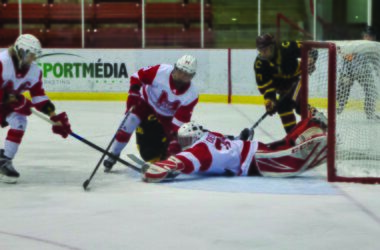
Amid a tumultuous season of COVID-19 stops and starts, the McGill women’s hockey team has proven their resilience, boasting a stellar RSEQ season record of 12–3 and briefly reaching the top of the Canadian rankings. In a best-of-three matchup against the fourth-place Ottawa Gee-Gees over the weekend, the top-ranked Martlets dominated in game one, took a loss in game two, but ultimately edged out their opponents 1-0 in the tiebreaker game, earning them a spot in both the RSEQ and national championships. 

On March 3, Ottawa arrived at McConnell Arena to kick off the best-of-three playoff series. Until well into the second period, the two competitors matched each other’s intensity—Ottawa goaltender Aurelie Dubuc had her work cut out for her as McGill managed 37 shots on goal to the Gee-Gees’ 15 overall. While chances accumulated, though, so did unnecessary penalties and feckless turnovers. Both teams fought tooth and nail for possession, but the first period ended with nothing to show for either side.

Martlets netminder Tricia Deguire had her hands full, too, saving a string of four shots early in the second period to keep the game scoreless. This was until Alice Fillion of Ottawa snuck a lightning-fast backhand five-hole past Deguire at 13:51. Bolstered by a power play in the dying minutes of the second period, the Martlets tried to even the tally, but couldn’t execute an offensive plan. 

But the final period saw the Martlets rejuvenated, making smarter and more threatening plays. 

“In the dressing room, we really tried to rally together as a team and remind ourselves why we’re here and what we’re doing this for,” said alternate captain Laura Jardin. “I think that was a great way to build our energy going into the third period.” 

When third-year forward Makenzie McCallum scored on a power play, the team was finally off to the races. The next goal was a beauty of a slapshot from leading scorer and captain Jade Downie-Landry on a one-player advantage, and she sank to her knees as her teammates rushed over to embrace her. The score was 2-1, but the Martlets weren’t done yet. 

Three more pucks made it past the Gee-Gees, whose defeat was beginning to show well before the final buzzer sounded. Among the scorers were defenceman Elizabeth Mura, capitalizing on yet another power play, and forward Quynn Campbell

“I think it’s a really big team win,” forward Katie Rankin said of the game. “Obviously we had a little adversity to overcome there going into the third period, being down 1-0, but it’s such a sweet feeling and it’s even sweeter that it’s a playoff win.”

Ahead of game two in Ottawa on March 5, Jardin was hopeful that they could continue their winning strategy with aggressive play right from the get-go.  

“Getting that quick start is what we need, and we can’t just wait until the second or third period to get going because other teams might capitalize on that,” Jardin said.

But the away game proved to be more challenging than they thought. Due to COVID-19 protocols, both teams donned medical masks for the entirety of the game’s play. The game was scoreless until the last two minutes, when the Gee-Gees slipped one past Deguire off of a turnover, forcing a rubber match the next day, back on McGill ice. 

On March 6, the trend of the low-scoring matches continued, but this time, McGill prevailed thanks to McCallum’s lonely, winning goal early in the second period. The Martlets will battle it out against Concordia next weekend in another best-of-three series to crown the victors of the RSEQ season and will have the chance to compete for the national title in Charlottetown on March 24-27.  

Stat Corner: Captain Jade Downie-Landry leads the Martlets with 39 points amassed over 25 games. 

Moment of the Game: To break the 1-1 tie in the final frame of game one, a quick pass from Labrecque to Downie-Landry set up a perfect slapshot from the point, beating out Ottawa’s goalie to put the Martlets in the lead. 

Quotable: “We’ve been building on this ever since three years ago, when we first [had] Nationals cancelled because of [COVID-19], so playing tonight was a huge win. We’re playing for all those players who didn’t get the chance last year and the year before, and I think it really showed on the ice, what we’re capable of doing.” — Fourth-year forward Laura Jardin

Baseball, Sports

What on earth is going on with Major League Baseball?

Baseball is a game of highs and lows. In a game where a player hits a grandslam and makes an amazing catch in the outfield, they can also spend a significant amount of time wallowing in the dugout. While there was reason to be hopeful for the state of baseball after Elizabeth Benn was hired as the director of Major League operations for the New York Mets the week of Feb. 27, MLB commissioner Rob Manfred’s decision to cancel the first two series of the regular season snapped optimistic fans back to reality. 

In what MLB insider Jeff Passan has called “a crisis of its own making,” the MLB and its owners have forced baseball’s first work stoppage since the 1994-1995 season—how did we get here? On Dec. 1, baseball’s collective bargaining agreement (CBA), the agreement that governs almost every aspect of the working relationship between MLB and its players, expired. The next day, the league positioned itself as the aggressor, with the 30 team owners voting unanimously to institute what Manfred called a “defensive lockout”—essentially putting all activities on hold before the players could strike. 

The Major League Baseball Players Association (MLBPA), an incredibly powerful labour union with over one thousand members, has found itself fighting a losing battle against owners worth billions of dollars and a commissioner that just does not seem to care about his players.

Following the embarrassing three-month negotiation period over the shortened 2020 baseball season, animosity between the MLBPA and the league was left to fester. Despite claiming that they wanted to “jumpstart” negotiations, Manfred and the league waited more than six weeks to make their first proposal on Jan. 13, a proposal that only revealed the massive gap between the financial demands of the MLBPA and the propositions of the MLB. 

Player salaries have decreased for four consecutive years, while industry revenues and franchise values have soared. Teams have manipulated their players’ service time to prevent them from entering free agency and salary arbitration. Though the MLB implemented the luxury tax to discourage teams’ frivolous spending, it now works as a de facto salary cap, and many teams are nowhere near it. The current draft rules, signing pools, and international signing structures incentivize losing, forcing players to stand idly by as teams gut their rosters and slash their payrolls.

On Feb. 18, fans were fueled with false hope when Manfred announced that the MLB and MLBPA would meet every day during the week of Feb. 21–25 in hopes of reaching a deal without pushing back opening day. However, as negotiations ramped up, the MLB delayed their self-imposed deadline of Feb. 28 until 5 p.m. March 1.  

Dreams of a complete season, propped up by various negotiating tactics on the part of the league, quickly crumbled as Manfred chose to cancel more than 75 games between March 31 and April 5. For Julian Tabbitt, U1 Arts student and avid baseball fan, this lockout has been a long time coming. 

“The grievances of the players over minimum pay and minor league living conditions have been an issue for a long time,” Tabbitt said. “MLB owners continue to make billions in profit while they enlist minor leaguers to below minimum wage conditions. Other efforts by Rob Manfred, including expanded playoffs, have been rejected and counteract the whole point of baseball’s 162-game season. We can expect the long and arduous lockout that has been predicted.”

Players across the league have grown increasingly vocal at their disappointment in the league and team owners. Some players have apologized to their young fans, while others have joked about finding new career paths. Even the League’s golden boy Mike Trout took to Twitter, calling the league out for bargaining in bad faith and working toward an unfair deal.

As the snow begins to melt, baseball fans are left to hope and pray that Rob Manfred, a man who called the World Series trophy a “piece of metal,” can turn right a ship he seems so desperate to crash, and salvage the 2022 baseball season.

Commentary, Opinion

Sensitive course content requires careful instruction

CW: suicide, self-harm

Lecture recordings obtained by The McGill Tribune from a Winter 2022 PSYC 302 (Psychology of Pain) class by professor Jeffrey Mogil reveal him joking about suicide and self-harm, and describing to students the most effective way to shoot themselves. Mogil is a professor in the psychology department who regularly teaches PSYC 302. He has received many awards and research grants, including the Distinguished Career Award of the Canadian Pain Society, and is popular among students, as per his ratings on RateMyProf. And yet, despite his accolades and his research in behavioural neuroscience and pain, Mogil deemed it appropriate to make graphic jokes about suicide in a room full of students. 

Although many professors establish more casual and joking relationships with students as part of their teaching methods, some topics should be off-limits. Jokes about suicide are dangerous. With mental health issues on the rise among young people, telling students the most effective ways to end their lives is completely inappropriate. No matter how friendly the rapport is in the classroom, professors have a responsibility to convey their material appropriately. Fostering a good relationship with students should mean promoting mental health resources and help, not self-harm. 

The comments by Mogil are particularly disturbing considering the barriers students encounter when accessing mental health resources at McGill. Considering its rigorous academic environment that has only been exacerbated by the pandemic, it is unsurprising that the number of students struggling with their mental health is on the rise. From just a brief scroll through r/mcgill, readers will find countless student posts detailing experiences of burnout, depression, and anxiety that reveal the extent to which mental illness is an issue at McGill. However, the resources available to students consistantly fail to meet demand. In order to meet with a psychiatrist, students have to go through a nurse, and then a general practitioner who issues a referral. After that, waiting times to actually meet with a psychiatrist can be as long as 8-10 weeks unless the case is deemed “urgent.” And although psychiatrists are not the only professionals available to students, school counselors fall short of providing the care students need when their mental health cannot be addressed with meditation or better sleep hygiene. On the other hand, students are left to endure a professor’s graphic jokes about suicide. 

Instructors, especially those in the psychology department, should be aware of the difficulties students face in receiving appropriate mental health care. Jokes about suicide are not only irresponsible and dangerous, but a complete abuse of the position of authority that professors are granted. Those teaching these subjects should know that their classes and content can be triggering to a diverse student body. All students, especially those who are struggling with their mental health, deserve to feel safe in the classroom. Instructors should foster a learning environment that gives students options to take care of themselves. Seemingly small actions such as including trigger and content warnings, allowing students to step out of class when needed, or providing access to alternative materials can make a huge difference. Professors should model respect for their students, not contempt for their health. 

Mogil’s comments speak to the larger issue of professors and universities not providing safe learning environments for vulnerable and marginalized students when their classes delve into topics like self-harm, racism, homophobia, transphobia, and sexual violence. The responsibility of protecting the mental well-being of students rests just as much on the shoulders of the McGill administration as it does on professors. This issue is a matter of accessibility. All students have the right to a safe classroom, regardless of the course and the professor’s teaching methods. 

Arts & Entertainment, Books

‘When We Lost Our Heads’ explores feminine obsession in 19th-century Montreal

“For there is no friend like a sister

In calm or stormy weather;

To cheer one on the tedious way,

To fetch one if one goes astray,

To lift one if one totters down,

To strengthen whilst one stands.”

Two little girls are tempted by sinister goblins in Christina Rossetti’s Victorian-era poem “Goblin Market,” but the power of sisterly love prevails and saves the younger sibling from certain death. Though the main characters of Montreal author Heather O’Neill’s new novel When We Lost Our Heads, Marie Antoine and Sadie Arnett, perform contrasting interpretations of the poem at a young ladies’ competition, both capture the adoration and infatuation of late 19th-century Montreal. Their power struggle for notoriety forges a friendship so passionate and inextricable that it threatens to change not only their fates, but that of the entire city when their actions spark an uprising within the working class. Spanning the course of the two girls’ lives, the novel spins a tale of tragic love, vitriolic jealousy, and the romance of violent revolution. 

As the daughter of a sugar factory owner and the belle of upper-class Montreal society, Marie is born into great wealth. In the same privileged neighbourhood of the Golden Square Mile, Sadie lives with her family, whom she detests. She scribbles in her notebook and looks down on everyone she encounters—except Marie. Born from their obsession with one another and disdain for everyone else, Marie and Sadie’s relationship leads to the shocking murder of a maid, tearing the two apart as Sadie is exiled to a boarding school in England. Sadie begins a career as a writer of erotic tales while Marie accepts her fate as a future business mogul. 

When they are reunited, Marie enters into an unhappy engagement to Sadie’s brother. Triggered by this union, amongst other betrayals, Sadie flees to the Squalid Mile, the industrial sector of the city steeped in crime and debauchery. Here is where O’Neill paints a tale of two cities most starkly: Those in the Golden Mile enjoy material luxuries, punctuated by the delights of sugar and tulle, while the unfortunate souls in the Squalid Mile live and die in grime and soot. The most poignant element of this contrast between rich and poor, clean and dirty, is that selfishness and deviance are always lurking in the shadows of both sides of the city. 

With When We Lost Our Heads, O’Neill further solidifies her niche expertise of Montreal’s criminal underbelly, as she did with her 2007 Canada Reads winner Lullabies for Little Criminals. The setting serves as a backdrop for a retelling of the 1789 French Revolution as Marie and Sadie find themselves at odds in a worker’s struggle—complete with allusions to cake and Marie Antoinette—but one set from below Sherbrooke Street to the foot of Mount Royal. Factory workers start organizing against the foremen; the female struggle for safe working conditions and resistance against abuse takes centre stage. Instead of passing judgment, O’Neill lets her characters do the work by contrasting Marie and Sadie’s trivial conflict with the hardships faced by the residents of the Squalid Mile, from bloody factory accidents to botched abortions to filthy lodgings. 

Just like the whip-smart intellect of Marie and Sadie, symbols are cleverly woven into the narrative. Every analogy drives home the notion that this is a fable about the precarity of power and how quickly it can be lost—threats of sexual violence cut across class lines, while class considerations cut across notions of female solidarity. These intersections are presented plainly, with no clear solution or moral reckoning; Sadie works as a prostitute, but by choice, thanks to her upper-class background. What propels the story is thus not moral judgments, but base emotions, like female rage. 

But Marie and Sadie’s chaotic relationship remains the focal point; much as the side characters are bewitched by their love, or hatred, of these two women, so too are readers by their unflinching self-importance. We root for Marie and Sadie despite ourselves. A love like that, so obsessive and all-consuming, only breeds destruction. And eventually, their shared passion and outward disdain culminate in the ultimate tragic spectacle, as it should—being adored or reviled is what their entire lives depend on. 

As O’Neill writes, “Every decent friendship comes with a drop of hatred. But that hatred is like honey in the tea. It makes it addictive.” With this bittersweet delicacy of a novel, readers will be entranced by every last drop. 

Arts & Entertainment, Books, Film and TV

What we liked this reading break

As another reading week comes and goes, McGill students once again return to the textbooks. Even so, the fleeting time away from school has served as a great opportunity to devour new content and re-discover some hidden gems. Here are The McGill Tribune’s favourites from Winter 2022 Reading Week.

The Secret History (1992) — Chantay Alexander, Contributor

People actually read during Reading Week? It’s hard to put down a novel as entrancing as Donna Tartt’s 1992 debut, The Secret History, a foray into the ominous, whimsical atmosphere of dark academia. This is the type of book best read by candlelight with a glass of hard liquor. Despite being written three decades ago, its recent rise in popularity on the popular TikTok community #BookTok alerted a new generation to the book. Tartt’s flawed yet captivating characters sink into the depths of exclusive East Coast scholastics, ancient Greek history, and brutal murder—what more could you want? The collegiate backdrop and vast Vermont forestry provide a picturesque framing for Richard Papen and his newfound class of five’s gradual descent into ethical corruption, intimate betrayals, and riveting explorations of psychological decay. I found The Secret History an intoxicating page-turner, the quintessential modern Greek tragedy, untangling the harshness in beauty at every turn.

7 Days in Hell (2015) — Arian Kamel, Staff Writer

While I was doing my daily three-hour readings of SSMU emails over the break, as any good McGill student would, I stumbled across 7 Days in Hell. A 2015 HBO mockumentary, 7 Days in Hell follows an epic tennis match between Aaron Williams (Andy Samberg), who rocks a haircut that can only be described as a mix of Snooki and Pikachu, and Charles Pool (Kit Harrington), an English tennis prodigy who gets relentlessly bullied by the Queen. What can I say about this film? I laughed, I grew, I rekindled a relationship with my father who left to pick up milk 14 years ago, all in the span of 50 minutes. This is a story about love and friendship, about a legendary seven-day tennis match that shocked the world, and most importantly, about the Queen calling someone a “fuck nut.”

Scream (2022) — Suzanna Graham, Staff Writer 

Alone in the house this reading week? Take advice from the cult classic movie Scream: Don’t answer the landline. That is, if you still have one in 2022. Instead, head to the theatre and watch the newest edition of Scream—a hilariously meta requel of the 1996 original. Return to Woodsboro, California where a new killer wears the Ghostface mask in pursuit of those connected to the original victims and survivors. Despite the new cast of teen victims and (assumed) villains, the film welcomes back Gale Weathers (Courtney Cox) and Sydney Prescott (Neve Campbell), who can still kick some Ghostface butt. This is the movie for Scream-fanatics, those who can survive a good jump-scare, and everyone rooting for Drew Barrymore in the original film’s opening scene. 

Rupaul’s Drag Race Season 14 (2022) — Adrienne Roy, Contributor

Season 14 of Rupaul’s Drag Race premiered on Jan. 7, and the competition is as fierce as ever. The Drag Race franchise has grown exponentially in the past few years, but the American iteration has always been a fan-favourite of viewers around the world. This season is particularly remarkable, diverse, and historic: Maddy Morphosis made headlines and sparked some controversy as the first heterosexual, cisgender man to be cast on the show. However, this season has also been a glass-shattering one for the transgender community, with Bosco, Jasmine Kennedie, and Willow Pill joining Kerri Colby and Kornbread Jeté as the five openly transgender women chasing the title of America’s next drag superstar. Season 14 is igniting important conversations about marginalized communities while serving juicy, drama-filled episodes.

Science & Technology

Canadian nail salon workers exposed to high levels of hazardous chemicals

Imagine a workplace where employees are exposed to toxic chemicals on a regular basis. And imagine that for the majority of these chemicals, there is little, if any, information regarding their effects on human health. Now imagine that quite a few have been suspected to cause health problems such as cancer and reproductive issues.

This is the reality for employees in the nail care industry. You might have imagined a workplace this hazardous to be a waste collection centre or a chemical manufacturing company, but University of Toronto researchers Miriam Diamond, Victoria Arrandale, and Linh Nguyen found that nail salons have unexpectedly high levels of chemicals such as diethyl phthalate (DEP) and tris(1,3-dichloro-2-propyl)phosphate (TDCIPP). 

But, what are these substances, and where are they found?

In an interview with The McGill Tribune, Bernard Robaire, a professor and environmental toxicant researcher in McGill’s Department of Pharmacology and Therapeutics, noted that the two main chemical families investigated in the study are phthalates and organophosphate esters. These chemicals appear in many places: Phthalates, for instance, are found in many everyday products and can be added to materials such as polyvinyl chloride (PVC) to make them more pliable.  

“The thing that makes lipsticks nice and glossy? Those are phthalates. When you walk into a new car, that new car smell is from phthalates,” Robaire explained.

Organophosphate esters (OPEs), such as TDCIPP, are another class of chemicals found in products ranging from pesticides to flame retardant materials, like furniture. 

While these chemicals are ubiquitous, nail salon technicians are exposed to high concentrations for long periods of time. Diamond and co-authors focussed on this group in their study, in collaboration with the Parkdale Queen West Community Health Centre and Toronto’s Healthy Nail Salons Network. They found that nail salon workers’ exposure in the workplace was up to 30 times higher than exposure in homes. 

The vast majority of nail salon workers are immigrant women, particularly of Asian descent. One study from the University of California at Los Angeles found that out of all the nail salon workers surveyed across the U.S., 81 per cent were female and 79 per cent were foreign-born, with nearly three-quarters of all immigrant workers listing Vietnam as their place of birth. The results of this study connect to a broader pattern of environmental racism within the industry, with administrative carelessness leading to inadequate protections and policies that disproportionately expose marginalized people to life-threatening toxicants in the workplace. 

“So then comes the question, if we’re exposed to [these chemicals], at what dose would we have to be exposed for them to have a toxic effect?” Robaire said. 

The Robaire and Hales team at McGill have published numerous papers that suggest mechanisms by which phthalates, OPEs, and other plasticizers may induce toxicity. Their research, along with other correlational studies, provide evidence that exposure to these chemicals at high enough levels could induce toxic effects on one’s nervous, reproductive, or immune systems. These effects are particularly worrisome for nail salon workers who may be pregnant or considering having children.

But nearly all of these studies are done in cell lines and animal models, with very few human epidemiological studies. Health Canada and other regulatory agencies currently require a high burden of proof to demonstrate that each of these individual chemicals are toxic at environmentally relevant levels. According to Robaire, this link is very difficult to prove. 

For example, the harmful effects of bisphenol A (BPA) were known for decades before Canada became the first country to formally declare it a harmful substance. Only then did Health Canada consider that there was sufficient evidence linking exposure to toxic health outcomes. However, Robaire’s team has found that substitutes for BPA may be even more toxic than the chemicals they replaced. Fortunately, Health Canada is considering changing their approach by regulating families of chemicals rather than one at a time. According to Robaire, change also needs to happen through government officials, scientists, and industry representatives from around the world to reduce human exposure to toxic chemicals.

Nail salon workers want these changes as well: Many have begun forming groups, such as the Nail Salon Workers Project, that call out the negative health impacts of working in nail salons and advocate for better work environments.

Behind the Bench, Sports

It’s high time for change: Athletics organizations must relax marijuana testing rules

On Feb. 25, the National Collegiate Athletic Association (NCAA) announced that it would be relaxing the rules surrounding positive marijuana tests for its athletes. Effective immediately and extending retroactively to drug tests conducted as early as fall 2021, the threshold levels for tetrahydrocannabinol (THC), the psychoactive component of marijuana, are increasing from 35 nanograms to 150 nanograms per millilitre. Moreover, positive tests will result in less harsh penalties, and student athletes with a single positive test will no longer be immediately banned from future events.

Cannabis has long been legally considered a dangerous recreational drug, falling in the same category as other substances like heroin, lysergic acid diethylamide (LSD), and peyote according to the Drug Enforcement Administration’s (DEA) schedule categories. But in recent years especially, the validity of this classification has repeatedly been called into question, with countries like Canada, along with several American states, legalizing the drug for medicinal and recreational use.

In the world of professional athletics, cannabis use is permitted in infinitesimally small amounts, and athletes with positive tests are subject to the same penalties for cannabis as for banned performance-enhancing drugs. The rules are set by the World Anti-Doping Agency (WADA) and its national agencies like the U.S. Anti-Doping Agency.

In 2021, American sprinter Sha’Carri Richardson attained the title of sixth fastest woman in the world, and later qualified for the 2020 Tokyo Olympics after she ran 100 metres in an electric 10.86 seconds. In July, however, Richardson received a positive marijuana test, forcing her into a one-month suspension and stripping her of her Olympic eligibility. 

Despite cannabis being legal in Oregon, where the trials took place, and Richardson coping with the death of her mother just one week prior to her race—news which was relayed to her by a reporter—WADA expressed its intent to stick with the suspension decision. Yet, just half a year later, Russian figure skater Kamila Valieva was still permitted to compete in the 2022 Beijing Olympics despite a positive test for trimetazidine, a banned angina medication. 

The placement of cannabis alongside serious performance-enhancing drugs immediately sticks out as a rather silly ascription. The connotations surrounding marijuana usage surely do not paint the picture of a beefy, doped-up athlete ready to annihilate their competition. If anything, the drug could be considered a performance-diminishing drug. A high sprinter would likely have more trouble reaching the finish line, after all, cannabis consumption causes relaxation, confusion, and can slow down reaction time—they might even get a bit giggly and lost.

A 2021 review study compiled a variety of articles investigating the health effects of cannabis and its main cannabinoids (THC and CBD) on athletic health and performance. Unsurprisingly, their conclusions pointed to cannabis having “null or detrimental” effects on athletic performance. The most “enhancing” effect cannabis might have is relieving feelings of anxiety and helping ease recovery. Several other studies support these findings: Marijuana does not improve one’s physical abilities.

The efforts of WADA and its affiliates in eliminating drug use among athletes focus on fairness and athletic equality in sporting competitions. Why then are anabolic steroids, categorically known for enhancing strength and performance, or cocaine, a powerful stimulant drug frequently criticized for its overdosing potential, in the same list of banned substances as THC and cannabis products? The list goes on without a single mention of alcohol regulations, in or out of competition. What makes a violently hungover athlete more eligible than one that got high a week ago? These discrepancies are exactly why cannabis rules must be reinvestigated and updated according to modern scientific findings.

The NCAA’s decision to increase THC thresholds, along with their recommendation that penalties for positive tests are significantly reduced, is a sizable step in a productive direction. If the science does not support such harsh restrictions, it is time to let go of old conservative perceptions surrounding marijuana and THC.

Editorial, Opinion

Decriminalization would place sex work in the foreground, not the underground

On International Sex Worker Rights Day, March 3, Montreal sex workers and advocates organized to call for the decriminalization of sex work in Canada. While the current law governing sex work—the Protection of Communities and Exploited Persons Act, implemented in 2014—has received praise, it ultimately fails to adequately protect sex workers. Instead, its narrowly focusses on exploitation, contains loose prose on sex workers’ ability to communicate their services in the public sphere, and equates of sex work with human trafficking. The law stigmatizes sex workers as immoral, denies them proper labour conditions, and hinders their right to seek sufficient recourse after violent encounters. Municipal, provincial, and federal organizers are doing critical work in educating governments and the public on the varied lived experiences of sex workers. This must coincide with the decriminalization of sex work and a cultural change that humanizes sex workers and recognizes their work as work.

Regardless of one’s individual belief on sex work, laws must reflect that sex workers are deserving of rights and protection from violence. Industries that fail to offer job security, regulation, transparency, and meaningful labour standards doubly affect sex workers, as they face the addtional burden of miscontrued narratives about their profession. Both inside and outside of their job, sex workers are parents, caregivers, hardworking members of their communities. Unspoken barriers to accessing to basic services like health care and community protection due to stigma sends the message that those who engage in sex work are not worth the tax dollars, respect, and effort as those engaged in legal work. Moving toward decriminalization requires serious assessment of counterarguments, however. Beyond superficial value judgements, Indigenous women and leaders raise legitimate concerns about how settler-colonial state violence, surveillance, and control complicates the landscape of sex work. For racialized and undocumented sex workers subject to the violence of borders and policing, this relationship to the state is more fraught.

Arguments that promote criminalization tend to peddle the false belief that it will cause the end of sex work. But this statement removes government responsibility when their criminalization pushes sex workers underground and encourages negative attitudes about people trying to provide for themselves under the thumb of capitalist states. To do sex workers justice is to centre agency in policy debates, rather than victimhood, and to ensure their safety at all levels. 

Just as sex workers must have sustained choice and agency, allies of sex workers must reconsider the ways in which they romanticize the job. When media outlets cover rich, white sex workers who are seemingly happy and fulfilled in their work without a critical lens acknowledging that these instances are the often exceptions, they afford audiences simplicity at sex workers’ expense. These narratives, and larger ones that play into white feminism, like the missing white woman syndrome, take focus off the most affected, such as racialized and trans sex workers. To portray sex workers within the binary of either empowered capitalist girlbosses on OnlyFans or helpless victims is a dehumanizing generalization—it eludes discussions about the oft-exploitative systemic conditions sex workers face. Sex work, like most careers, is not perfect, and it is unfair to pick and choose which forms of sex work to glamourize without beginning to engage with what decriminalization can offer.

The challenges ahead of decriminalization are imposing forces, but they do not offer a reason for governments inaction. Policy solutions must go above rhetoric to include sex workers in employment benefits like the Canada Emergency Response Benefit, which many were unable to access during the pandemic, keeping them in hostile socioeconomic conditions. Debates must focus on the agency and choice of sex workers and should offer them generously increased access to housing, healthcare, mental health services, and protection that, in turn, promote sex worker autonomy. At the university level, McGill can take steps to provide more information about sex work, including through channels like It Takes All of Us. As structural shifts will change people’s assumptions and attitudes, an actionable first step is for community members and policymakers alike to listen carefully to foster empathy, not division or dehumanization, for the multitude of sex workers’ experiences.

Off the Board, Opinion

The challenges and comforts of transitioning at McGill

Crossing Sherbrooke street to pass through McGill’s Roddick Gates tends to offer newly admitted students the chance to explore a new life at university. When I first saw the majestic stone arch, I felt an overwhelming sense of pride. I was proud of getting myself to the university I knew would set me up well for the future. After giving myself a metaphorical pat on the back, a gush of excitement came over me when I remembered all of my reasons for choosing McGill. Canada had strong queer rights, Quebec would help better my French fluency, and the university embodied liberal attitudes. As I passed under the gates, my eyes fell upon the impressive 19th-century architecture of the Arts building, and immediately, I felt confident that I had found my new home. 

However, my optimism in discovering Canadian ways of life dampened when I entered my residence in first year. Though most students were welcoming and just as excited as I was, I found little difference between them and the Europeans from whom I had tried to escape. They had designer, or thrifted, outfits trying to mimic the popular styles, or find their own, and, most of all, they were all very gendered. Most students were also outwardly heterosexual, and those who casually mentioned that they wanted to explore their sexuality were usually women who were influenced by the male gaze. Women who identify with the gaze, like kissing a girlfriend to attract men, abuse their privilege of engaging in queer actions without facing consequences, which has harmful impacts on queer people. When I went clubbing, I feared possible violent oppressions from cisgender men. Witnessing cisgender women kiss others then exacerbated my feelings of marginalization. It was only toward the end of the academic year that I found comfort in new friends who were outspoken about respecting queerness as more than just a heterosexual experiment. 

That same year, my experience with gender transition had positive and negative influences. On the one hand, there were students who thought I was “male” rather than “female” and were confused upon introductions when they compared my seemingly “feminine” name to my “masculine” apparel. On the other hand, positive influences included the rare gems of students who I met on nights out who voiced discontent with the gender binary and gave me confidence in my choices of clothes and haircut. 

In my second year, gender, sexuality and feminist studies (GSFS) courses rejuvenated my comfort in studying at McGill. Conversations that I had with my professors paved the way for me to understand my gender identity as nonbinary rather than fluid. Course content showed me the nonsense of labels, yet also their vital importance in a world of identity politics. The stories of fellow students that I heard in conferences set my heart ablaze. Once again, I felt more attached to McGill than my own home in France. 

With new knowledge comes old truths, and those of Canada were clear: The feminist agendas had not yet been achieved. I had to understand that McGill was part of the institutional barrier that slowed progressive change. For example, feminist discussions are essential for queer rights, but McGill fails to provide adequate resources to the GSFS department, like tenured funding, which mutes its impact on campus. Without a doubt, this reality tarnished the glorious façade of the university that I had set upon my arrival. Yet it sparked a fire within me to fight for something so much more important than an old building made of stone: An equitable society. 

As I near the end of my degree, I look across at the Roddick Gates and the Arts building and feel pride for the students who walked in with an opportunity to write a new chapter, and left with a desire to not fit in. With my McGill experience almost over, I feel grateful for being able to acknowledge that “feeling at home” is no longer attached to a place, but within my own body and identity. 

Read the latest issue

Read the latest issue