


Latest News

Album Reviews, Arts & Entertainment, Music

Homeshake’s new album ‘Under the Weather’ is a musical rendering of distress and isolation

Homeshake, also known as Peter Sagar, is a Montreal-born and Toronto-based artist known for his mellow sound and poignant lyricism. Under the Weather, his fifth studio album, is a 12-track confession of depression and isolation. Although Sagar wrote the morose album in 2019 after mental health struggles secluded him from the world, its release is timely in the context of a prolonged pandemic. 

“People will probably think that I made Under the Weather during or about COVID-19,” Sagar said. “I was just already living my life that way.” 

Sagar’s lyrics of personal distress are widely relatable. Each track explores a different aspect of depression with lyrics so honest they could be from the artist’s diary. The project’s hazy sound resonates like the fogginess of an anxious brain. Overall, the album is delicate and mellow, with passing songs melting into one another in the same slow, honeyed tempo.

“Oftentimes when you are in a dark place, you are supposed to journal, and that helps release the pressure,” Sagar said. “For me, it always found its way into the music.”

However, such repetition also becomes the album’s main flaw. While some songs rise above the album’s homogenous nature, such as “Passenger Seat” and “Tenterhooks,” others become buried underneath the stronger tracks. “Feel Better” and “Careless,” for example, fail to depart from each track’s formulaic make-up. Still, the album’s consistency does bring a sense of comfort and familiarity, with the melancholia of the album serving as the perfect remedy for the beginning-of-class blues. While the imitative tracklist prevents the album from reaching its full potential, Under the Weather is definitely worth a listen for its empathetically brooding tone.

Research Briefs, Science & Technology

Using AI to save lives

Content warning: Mention of suicide and suicidal ideation.

Young people aged 18-29 reported some of the highest rates of depression and anxiety during the COVID-19 pandemic. Even before the social isolation wrought by the pandemic, rates of suicidal ideation among college-aged individuals were troubling: In a 2019 sample survey of 55,000 students, more than 10 per cent reported contemplating suicide in the 12 months prior. 

University students are especially vulnerable to mental health struggles. When they do not have access to appropriate services or support systems, fragile mental health can spiral into self-harm or suicidal tendencies. To prevent such tragedies, identifying primary risk factors for suicidal behaviour is paramount. 

Researchers at McGill and the University of Bordeaux are on their way to doing just that, using machine learning. A new study, published in Scientific Reports, aimed to develop an algorithm to identify factors associated with suicidal thoughts and behaviours. 

The longitudinal study used data from more than 5,000 students in France from 2013-2019, collecting information ranging from lifestyle habits, to sociodemographics, to mental health symptoms. The algorithm then made data-driven predictions, which were compared to the follow-up questionnaires about suicidal thoughts and behaviours. 

Marie Navarro, a PhD student at the University of Bordeaux, performed the statistical analysis for the study. In an interview with The McGill Tribune, Navarro explained the team’s reasons for using machine learning to find predictors. 

“With more classical methods like regression models, you cannot study a lot of factors,  [maximum] twenty, but otherwise, it is complicated,” Navarro said. “With AI, and especially machine learning, we used random forests, [which is] a good algorithm because you can include a lot of factors in your model simultaneously.” 

Random forest algorithms are a type of supervised machine learning typically used to predict outcomes from data patterns—like the future behaviour of a stock, for example. The novelty of machine learning in this context is twofold: Not only does it allow researchers to sift through large amounts of data at once, but it also accounts for the interactions between factors, giving the algorithm better predictive power. 

Indeed, suicidal behaviours do not result from a single, isolated factor; it is often a combination of circumstances. The study found that academic stress and depressive symptoms were top factors for those who identified as women, while self-esteem was one of the most important predictors of suicide risk across gender lines. 

“Some sociodemographic factors, like sex, are already well established as risk factors for suicidal thoughts and behaviours,” Navarro said. “For example, broadly speaking, girls are more likely to report suicidal ideation and even attempts, but more deaths by suicide are reported in boys.” 

Massimiliano Orri, a postdoctoral researcher at McGill and co-author of the paper, believes that universities can benefit from this behavioural data to improve suicide prevention efforts. 

“Universities are uniquely situated to identify youths that need mental health support and help them to have access to care,” Orri wrote in an email to the Tribune. “Today, the wealth of data available and the computational advances such as artificial intelligence provide us with new eyes to identify those youths using simple screening tools that can be easily developed and implemented on a massive scale.” 

The findings suggest that short assessments, perhaps through online, university-administered questionnaires, could reach a broader swath of students who may be hesitant to reach out for help. 

Despite the promising results, Navarro stressed that their work is only a stepping stone to the ultimate goal of harm reduction. 

“This study needs to be replicated and confirmed in other studies, a very important point for research in general, before any application in real life,” Navarro said. “If they are, maybe this kind of analysis can open an interesting target for prevention in the future.” 

If future studies confirm that artificial intelligence techniques like this one are an effective way of identifying at-risk individuals, then this research could result in more powerful screening tools and more lives being saved.

News, PGSS, SSMU

McGill Governance 101

STUDENTS’ SOCIETY OF MCGILL UNIVERSITY (SSMU)

What it does:

SSMU represents all undergraduate student interests and rights in the McGill Senate. SSMU consists of four bodies—General Assembly and Referenda, Board of Directors, Legislative Council, and Executive Council—and is led by seven elected executives, including the president, vice-president (VP), VP internal, VP external, VP student life, VP finance, and VP university affairs. SSMU, specifically the student life portfolio, also plays a large role in student life by organizing events like Activities Night and by running the undergraduate student bar Gerts

Recent Events:

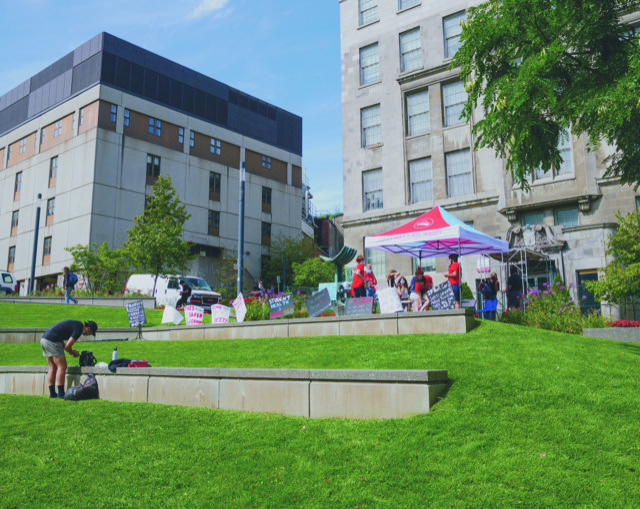
Over the last year, SSMU has focussed its efforts on helping students navigate the COVID-19 pandemic and advocating for student health and safety on campus. On Sept. 1, the Society staged a protest, and over the summer it wrote an open letter, and published a report on the impact of COVID-19 on McGill students. In addition, SSMU has involved itself in social justice movements that extend beyond the Roddick gates, for example, by standing in support and solidarity with survivors of residential schools in Canada in light of the discovery of thousands of unmarked graves of Indigenous children on the grounds of these schools. 

POST GRADUATE STUDENTS’ SOCIETY (PGSS)

What it does:

PGSS is responsible for representing all graduate and postdoctoral students at McGill. Its monthly Council meetings address its policies and committees, and monitor executives’ actions and projects. There are five primary executives elected by McGill postgraduate students, and four PGSS members sit on the McGill Senate. The executives organize regular social and professional events for postgraduates at Thompson House, the PGSS’ headquarters. 

Recent Events:

PGSS has also been campaigning for wage increases for doctoral researchers in McGill’s Faculty of Science and Faculty of Medicine and Health Sciences, as wages have remained stagnant for over a decade while living expenses and tuition fees have increased.

BOARD OF GOVERNORS (BoG)

What it does:

The BoG is responsible for making all final decisions regarding the university’s financial, academic, and business matters. The BoG has 25 members who vote on policies and two non-voting student representatives, one from SSMU and another from PGSS. Notable members of the BoG include McGill’s Chancellor John McCall MacBain and Principal and Vice-Chancellor Suzanne Fortier. 12 members of the BoG are appointed by other members, while the rest are elected or appointed by different campus organizations such as SSMU, PGSS, and the McGill Alumni Association. Students may only attend the community sessions of BoG meetings. 

Recent Events:

In May 2021, Ehab Lotayef resigned from the BoG due to the Board’s refusal to consider a motion for the display of an equity statement on campus. In May 2021, the BoG approved a revised version of McGill’s Policy on Harassment and Discrimination

MCGILL SENATE 

What it does:

The McGill Senate is responsible for overseeing all academic matters at the university, including the courses offered and their curricula. 52 of the 111-member body are elected student senators. The remaining seats are filled by representatives from all other constituencies at the university—like SSMU, PGSS, and BoG—as well as McGill’s chancellor, provost, principal, and the chair of the BoG. Meetings are held once a month and are open to the public, unless they deem a topic confidential. 

Recent Events:
At the final Senate meeting of the 2020/2021 academic year, the Senate approved the Fall 2021 calendar of key academic dates, including the implementation of a Fall reading week. In February 2021, the Senate presented a report on the university’s Policy Against Sexual Violence and its efforts to educate students about sexual violence.

McGill, News, The Tribune Explains

Tribune Explains: Vaccine passports at McGill

As of Sept. 1, accessing non-essential services in Quebec will require a COVID-19 vaccination passport, which is a government proof of full vaccination. While curricular activities at McGill will not require the passport for participation, much of student life will. 

What is the vaccine passport?

The vaccine passport is a Quick Response (QR) code issued by the Quebec government that confirms an individual’s double-vaccination status when scanned via the VaxiCode app. Individuals must present government-issued photo ID and this QR code—either on paper, in PDF format on a mobile device, or on the VaxiCode app—to access non-essential events and services. 

How can students get a vaccine passport?

Fully vaccinated students wishing to obtain a vaccine passport are individually responsible for acquiring this QR code. Those vaccinated in Quebec who have not already received their QR code by email or text can download it online through the Quebec government’s self-service portal.

Those vaccinated internationally or out-of-province must go to a clinic to register their proof of vaccination before downloading their QR code. One can register their out-of-province vaccination either by booking an appointment or by attending a walk-in vaccination clinic, where government-issued photo ID and official proof of vaccination documents are verified. 

The vaccines recognized for the Quebec vaccine passport are Pfizer, Moderna, AstraZeneca/Covishield, and Janssen/Johnson & Johnson; individuals who have received doses of a vaccine excluded from this list can receive an additional dose of an mRNA vaccine in Canada a minimum of 28 days after their last dose. 

How do vaccine passports affect student life?

The list of non-essential activities at McGill that will require the vaccine passport include practising varsity or recreational sports and attending sporting events, concerts, non-curricular academic conferences, and other performances as an audience member. Additionally, students will need the vaccine passport to access fitness centres and common areas in student residences such as TV rooms. Students with vaccine passports will have access to dine-in services while those without passports will only be able to access take-out services.

Students will not need the vaccine passport to access non-curricular or health-related student services, their personal residence rooms, and associated essential common areas such as washrooms, libraries, study hubs, and flex-spaces. 

McGill media relations officer Frédérique Mazerolle wrote to The McGill Tribune about the university’s future plans involving the vaccine passport.

“Our utmost priority has always been the health and safety of our students and staff,” Mazerolle wrote. “McGill has been working with and continues to work with the various government authorities to align with directives, and to adapt our plans and put in place the necessary measures that will ensure the successful return of students and employees to our campuses.

How is the McGill community reacting to this measure?

The vaccine passport mandate has provoked controversy, both about the limits of government power in a pandemic and about how efficient vaccine passports are at limiting the spread of COVID-19. 

Douglas Farrow, a professor of theology and ethics at McGill, expressed his views on vaccine passports in an open letter published on August 30.

“Students, in my opinion, would be very foolish to trade their rights, liberties, and personal autonomy for ‘protection’ they do not need,” Farrow wrote in an email to the Tribune. “That does not work very well, and that puts their health at risk in a new way.” 

In an email to the Tribune, the Students’ Society of McGill University (SSMU)  President Darshan Daryanani explained that he believes the vaccine passport should be needed to access the over 250 clubs and services at McGill, and the large cultural and fundraising events to prevent further outbreaks and campus lockdowns.

“We are here to support the student activities with tools and resources as best we can,” Daryanani wrote. “While the administration claims that a student without a vaccine will ‘miss out on the full and fun McGill experience,’ at SSMU, we hope to provide alternative events to respect the safety of all.”

Arts & Entertainment, Film and TV

‘Only Murders in the Building’ refreshingly reinvents the classic murder-mystery story

In a city filled with self-absorbed, isolated, and irritating people, it seems reasonable that New Yorkers rarely interact with their neighbours. Yet Hulu’s newest show Only Murders in the Building proves that boredom is a strong motivator for some to investigate the most despised person in their apartment complex. 

Created by John Hoffman and Steve Martin, this “whodunnit” series focusses on the humour of the mystery, rather than the circumstances of the murder—effectively subverting the traditional murder-mystery genre. Set in the Arconia, a luxurious apartment building in New York, three strangers bond over their love forof the same true-crime podcast—based off of the real podcast Serial— and narrated in the comedy by none other than Tina Fey. Comedy legend Steve Martin plays Charles, a lonely former actor who repulses most people he meets, except for Oliver (Martin Short), a washed-up, over-exuberant Broadway director. Mabel (Selena Gomez), a cryptic young woman, rounds out the comedy trio with dry wit and an ostensibly secret backstory that fills the entire subplot of the series. When the motley bunch learn that fellow tenant Tim Kono (Julian Cihi) has died, they decide to investigate with the sole purpose of creating their own true-crime podcast on the mystery, an obvious satire to the rise of true-crime media in popular culture.

Although Only Murders in the Building prefers cheesy flashbacks over any presentation of serious backstory, the ironic melodrama is bizarre and whimsical. The three unorganized and chaotic “detectives” are charming enough that their unrealistic misadventures add to the storyline. Tiny yet powerfully humorous details, such as Oliver’s intimate relationship with his bulldog, are the cherry on top of the cake. 

The show expertly blends themes of loneliness and failure with its more fantastical elements. Each main character experiences strained family ties, financial distress, and trauma, grounding the show in some of the common anxieties of a post-pandemic world. 

By intertwining comedy with the more complex aspects of the human condition, Only Murders in the Building is a refreshingly relatable modern dramedy. Though only the first three of 10 episodes have been released, the rest of the season is sure to include more comedic moments, plot twists, and hopefully, a solved murder mystery. And if not, releasing the trio’s chaotic true-crime podcast would be an acceptable alternative. 

Viewers can watch Only Murders in the Building on Hulu, where a new episode is released every Tuesday.

Off the Board, Opinion

Stop trying to make ‘cheugy’ happen

On March 30, a TikTok user posted about a made-up word she and her friends use to describe things that encapsulate millennial, girlboss, out-of-style energy: Cheugy. Since then, gen-Z-ers have embraced the term, making TikToks and other social media posts about certain cheugy staples––think minions, millennial pink, graphic T-shirts, Rae Dunn home decor, and apparently, jean jackets

Admittedly, the term is a fun addition to our ever-growing arsenal of internet vocabulary, and some may argue that those critical of its use are too sensitive. But below the surface, the word represents a worrying pattern amongst youth to subscribe to popular trends—which are almost always rooted in overconsumption—until they are no longer thought of as cool, at which point those who still enjoy them are seenas out of touch. 

The term cheugy can be tied to another phenomenon––micro-trends. Also known as fads, micro-trends in the fashion world refer to garments or aesthetics that rapidly gain popularity but then just as quickly fall out of style. Some examples of recent micro-trends include exercise dresses, the Y2K “coconut girl” look, and even specific pieces of clothing such as the House of Sunny Hockney Dress

Since these kinds of trends come and go so quickly, keeping up with them can be extremely expensive. This exposes the privilege that comes with being able to adhere to them and, ultimately, to avoid being declared “cheugy.” Of course, the average person who throws around the term is likely not doing so with any intention of making others feel tacky. But the joke risks making lower-income people who are not able to stay on-trend feel inadequate. Especially as young people return to more in-person activities, the pressure to dress a certain way can be amplified. 

The impulse towards this approach to fashion also encourages people to turn to fast fashion more often. Surely, some need to make use of fast fashion due to financial restrictions or limited selection at thrift stores due to sizing. But some who feel the pressure to dress a certain way are more likely to make use of businesses that are notoriously unethical, like SHEIN, to keep up with trends. 

Of course, individual young people cannot necessarily be blamed for this phenomenon. Companies are known to stage elaborate social media campaigns to push their products toward trend status, and most larger businesses make use of psychological manipulation tactics to encourage consumers to purchase the latest new item. Beyond these direct campaigns, the rise of social media influencers plays a role in this as well. For example, Emma Chamberlain, a popular YouTuber, posted a picture on Instagram flaunting yoga pants and Ugg boots—a combination that would have been considered cheugy two years ago—and almost overnight, the influencer had sparked a new trend. This situation is only one of many illustrating how easy it is for tides to change when it comes to fashion. 

But regardless of blame, young people who care about social justice, reducing waste, and overconsumption should be more mindful of their decisions to make fun of those who may be “behind” when it comes to trends in clothing, media consumption, or anything else. Rather than subscribing to fast-paced micro-trends, McGill students should try and hold on to clothing staples they have and like, even if the internet is telling them they have to replace them with something new and shiny. Students can also make use of clothing exchanges and McGill’s free and for sale group. These kinds of individual choices may not end this cycle on their own, but they may be able to influence others on campus to stop caring so much about being on-trend. 

Arts & Entertainment, Dance, Theatre

Émilie Monnet’s ‘Okinum’ forages for fervent dreams

On Sept. 2, Okinum made its English debut at Montreal’s Centaur Theatre to a sold-out audience. Originally a 2018 award-winning novel by Canadian writer and performance artist Émilie Monnet, the English version of Okinum was adapted to the stage as part of Centaur’s Brave New Looks program and was co-produced by Onishka Productions and the Imago Theatre. 

Inspired by the power of dreams, Monnet wrote the novel after experiencing three recurrent dreams involving giant beavers, who communicated powerful sentiments of belonging and healing which she could not fully grasp, but felt impassioned to express. Okinum portrays these dreams through an interactive performance, inviting the audience to decipher the giant beavers’ enigmatic guidance by observing Monnet’s personal reenactment and exploration of their words. 

In the Centaur Theatre’s darkly lit auditorium, Monnet and her co-performer Jackie Gallant boldly act out a non-linear tale of self-discovery, intermingling scenes of Monnet speaking to her Anishinaabeg ancestors with representations of her profound dreams. The show’s climax occurs when Monnet portrays herself as a giant beaver, advancing on all fours and capturing an energy that hypnotized the audience into forgetting her human identity. Background noises such as the recordings of live beavers further transport the audience into a vivid aural environment—like that of a dream. Finally, Monnet performs an original song to honour the beavers. 

In an interview with The McGill Tribune, Monnet emphasized the importance of her identity as a member of the Anishinaabeg nation to Okinum‘s creation. For example, her performance interweaves the French and English settler-colonialist languages with Anishinaabemowin, the language that Monnet’s ancestors spoke—and one of the many languages spoken by the Indigenous Peoples who lived in what is now called Montreal.

“I wanted to have the three languages coexist in the performance, the same way they coexist in me,” Monnet said. “I want for people to hear the language, which is so rarely shown on stage, and to actually experience the language born on this territory. They were eradicated by the government policies, but those were the languages that really connect us.”

This use of language extends to the play’s title, which means “dam” in Anishinaabemowin. The title not only references the wooden structures built by beavers but also the barriers placed upon Indigenous Peoples by colonialist powers, such as residential schools and reservation systems. In exploring the ethereal messages from the beavers in Okinum, Monnet deconstructs cultural walls, educating the audience about her own Anishinaabeg identity.

“My hope is to connect the beaver fur trade with the realities of many Indigenous women today,” Monnet said. “To reclaim my language and heritage [is] very powerful, [especially] how it solidifies you.” 

Okinum’s zoomorphic performances continue until Sept. 11 at the Centaur Theatre.  

News

Several McGill professors vocalize demands for vaccine mandate on campus

With the return to in-person classes for the Fall 2021 term, some students have expressed concerns about the McGill administration’s current COVID-19 safety measures, while several faculty members have voiced frustrations about McGill’s proposals for in-person teaching during the Fall. Central to the unease about the administration’s plans for the semester is the ongoing debate about whether the university should implement a COVID-19 vaccine mandate.  

In a media roundtable interview with The McGill Tribune, Christopher Buddle, associate provost (Teaching and Academic Programs), and Fabrice Labeau, deputy provost (Student Life and Learning), spoke of their confidence in the safety measures the university has set in place for the Fall term. 

“I do not want to diminish how people are feeling, because a lot of people are feeling anxious and scared,” Buddle said. “We certainly have heard that from our community. But, we believe and are confident in what we are doing in terms of layers of protection in the classroom environment, so students can feel good about coming in and taking their in-person classes.” 

According to Dr. Nicole Basta, an associate professor in the Department of Epidemiology, Biostatistics, and Occupational Health at McGill, the health guidelines that McGill has in place are insufficient. Basta, along with other McGill professors, is rallying for a stricter approach to preventing the spread of the virus at McGill. 

“Implementing a vaccine mandate is the single most effective policy McGill could implement to protect the entire university community during this fourth wave, which is already underway,” Basta wrote in an email to The McGill Tribune. “Not implementing a vaccine mandate is contrary to all of the scientific evidence we have about how to most effectively increase vaccination rates and how best to prevent the spread of SARS-CoV-2. At the very least, McGill could require routine testing multiple times a week for those who qualify for an exemption from being vaccinated.” 

The administration’s stance against enacting a university-wide COVID-19 vaccine mandate relies on the Quebec government law which states that individuals have the right to refuse consent to medical procedures, with the university’s statement defining vaccinations as such. Labeau explained that while the university can act independently in certain cases, the administration must adhere to provincial legality. 

“We as the university have some autonomy as usual in fulfilling our mission,” Labeau said. “We are bound by a legal framework and so there [are] things that we simply cannot do because of a legal framework. We are definitely trying to stay in line with public health recommendations and making the adaptations that make sense in our context.”

Richard Gold, a professor in the Faculty of Law at McGill, asserts that McGill can, and should, exercise autonomy in implementing a vaccine mandate, given the increasing prevalence of COVID-19’s more contagious Delta variant in Quebec. Gold also argued that the absence of a university-sanctioned vaccination mandate is discriminatory toward faculty and students who are more vulnerable to COVID-19. 

“An analysis [by] 37 professors and teachers from the Faculty of Law concluded that McGill has the full authority to bring in a proof of vaccination requirement and would not violate any constitutional or human rights requirements,” Gold wrote in an email to the Tribune

Gold listed the main reasons why some professors are demanding the implementation of a vaccine mandate at McGill.  

“There are three reasons a proof of vaccination requirement is necessary: [One], given the Delta variant, public health in Quebec has made it clear that we need the population vaccinated at the 90 per cent level; [two], it sends a message to the community that McGill believes in science and medicine and follows the recommendations of its own experts; [three], it provides a concrete reason to the hesitant to be vaccinated now, prior to infection.”

Research Briefs, Science & Technology

McGill researchers set the stage for new triple-negative breast cancer therapy

A cancer diagnosis can radically change the course of a person’s life. Nearly one in two Canadians is expected to develop cancer over their lifetime, and one in four is expected to die from it. Fortunately, physicians have an increasingly effective array of treatments available to counter this devastating disease. 

Three types of receptors are commonly found on the surface of breast cancer tumour cells: Estrogen, progesterone, and HER2 protein receptors. These receptors fuel the growth of cancer cells. Existing therapies can block any of these receptors and successfully stop the growth of the tumour. However, none of these receptors are present in one specific subtype of breast cancer called triple-negative breast cancer (TNBC). It is the most aggressive subtype of breast cancer and it accounts for about 15 per cent of all cases.

The problem with TNBC is that cancer cell growth is not due to any of the three receptors, so current targeted therapies that block the typical receptors are not effective. The way these tumour cells grow is not yet well understood. 

Recently, a team of researchers led by Dr. Jean-Jacques Lebrun, a senior scientist in the Cancer Research Program at the Research Institute of the McGill University Health Centre (RI-MUHC) and a professor of medicine at McGill University, discovered novel mechanisms through which TNBC tumour cells grow. The team used a state-of-the-art gene-editing technology called CRISPR to screen the entire human genome and successfully identified two key pathways that allow TNBC tumours to grow and propagate. 

“There are absolutely no targeted therapies for this type of cancer,” Lebrun said in an interview with The McGill Tribune. “Patients will undergo chemotherapy or radiotherapy, both of which are largely inefficient.”  

The two pathways they identified include an oncogenic pathway named mTOR and a tumour suppressor pathway named Hippo. Both pathways play a role in the regulation of cell growth and programmed cell death, called apoptosis. In TNBC cells, the pathways become abnormally activated, leading to uncontrolled cell growth and tumourigenesis.

The identification of these two growth mechanisms was a major step forward in the search for a TNBC treatment. 

Lebrun and his team subsequently investigated possible ways to interfere with these growth pathways in a recent study published in Nature Communications. They found two potential drugs that would accomplish the necessary interference: Torin1, a drug known to block the mTOR pathway, and verteporfin, a drug normally used for retina eye diseases that can mimic the Hippo pathway.

According to Dr. Meiou Dai, a research associate in the Lebrun Lab at the RI-MUHC and first author of the study, preliminary research has shown some very encouraging results. 

“Torin1 led to growth inhibition on the cell models, and verteporfin was able to induce apoptosis in cancer cells,” Dai said in an interview with the Tribune.

Their results show that these two drugs are effective at countering the growth of TNBC cancer cells. They also demonstrated that both drugs act synergistically and have an even better outcome when used as a combination therapy. 

Lebrun and his team also tested the drugs for other breast cancer subtypes and found that they were all being affected by their combination therapy.

Although this study has paved the way to an effective targeted therapy for TNBC, there is still work to be done before it can become approved. Trials must be conducted on patients to examine the effectiveness of the combination therapy in humans. However, the fact that these are already known drugs is an important advantage. 

“One [verteporfin] is already approved for an eye disease while the second [Torin1] is currently being tested in clinical trials,” Dai said. “This is very important because it should really shorten the time it will take for the proposed combination therapy to be approved and start benefiting patients.”

Research Briefs, Science & Technology

New aortic prosthesis reduces heart surgery operation time

On May 31, a research team at the Montreal Heart Institute (MHI) became the first in Canada to implant a new cutting-edge biological prosthesis into a patient’s heart. The main purpose of the device is to substitute a faulty aortic valve—a valve that regulates blood flow between the heart’s main pumping chamber (left ventricle) and the main artery (aorta). After a defective aortic valve has been removed from the heart, the prosthesis acts as its replacement. 

The novelty of this device is that the replacement tube and valve come pre-assembled, reducing the time patients spend on the operating table and minimizing the risk of technical errors by surgeons. However, according to Renzo Cecere, the director of cardiac surgery at the McGill University Health Centre (MUHC), the new valve generally shares the same design as older models.

“The advantage now is that we have this conduit that comes pre-packaged and pre-built with a biological valve contained within the conduit,” Cecere said in an interview with The McGill Tribune. “But conceptually, there is nothing new or brilliant about this, it just has not been available on the market.” 

Still, the new device is likely to help many patients suffering from aortic valve disease: In 2017, faulty aortic valves accounted for over two-thirds of all valvular heart disease deaths in the United States. 

Valvular heart disease occurs when the aortic valve does not open or close properly. The valve consists of three flaps that open and close together with each heartbeat and acts as a “gatekeeper” by controlling how much blood flows from the heart to the rest of the body. If the valve is diseased, it becomes either too narrow and stiff to fully open (stenosis) or too wide to close completely (regurgitation), causing some blood to flow backwards. Sometimes, valves can also be malformed due to a birth defect called congenital heart disease.  

Given the prevalence of diseased aortic valves, replacing them is a common operation known as the Bentall Procedure. The process involves removing the aortic valve and root and then implanting an artificial tube with a mechanical or biological (tissue) valve inside of it.

Until recently, surgeons have had to sew the valve into the tube before inserting it into the patient’s heart. This step of the procedure is complex, time-consuming, and carries the risk of surgeons making technical errors when stitching the tube and valve together. This new prosthesis, however, eliminates this step with it being pre-assembled and therefore ready to use.

Fortunately, this device will soon be offered to patients in the MUHC: Cecere has already submitted a formal request to acquire it. However, only a select number of patients could qualify as good candidates for this device—even though the MUHC performs about a thousand heart surgeries a year.

“There are a lot of things we do that are quite niche and not high-volume activities,” Cecere said. “But nevertheless, the patients need to be served. It is our obligation to make sure we have the right tools on the shelf.”

For Cecere, this device is further evidence of the remarkable progress that medical technology has made since he became a cardiac surgeon.

“Whether it is in coronary disease, valvular disease, heart failure, or artificial heart technology, all of them have made a tremendous evolution in the last 15 to 20 years,” Cecere said.  Indeed, the first aortic valve replacement was performed in 1962 and now, nearly 60 years later, there is a pre-assembled prosthesis that can be implanted into a patient’s heart in 2.5 hours.

Read the latest issue

Read the latest issue