Latest News

Art, Arts & Entertainment

‘Hyper Real’ thoughtfully reflects race relations

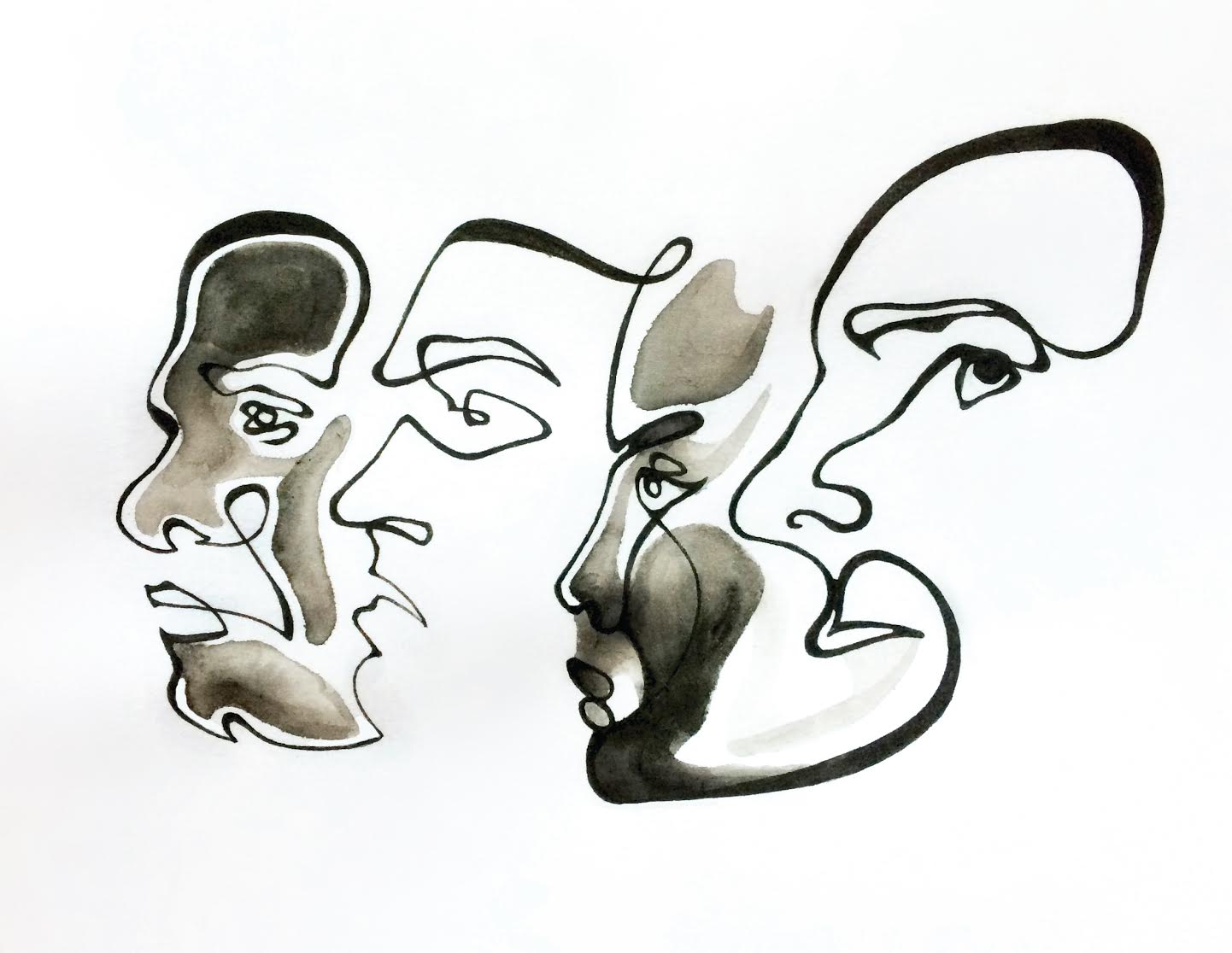
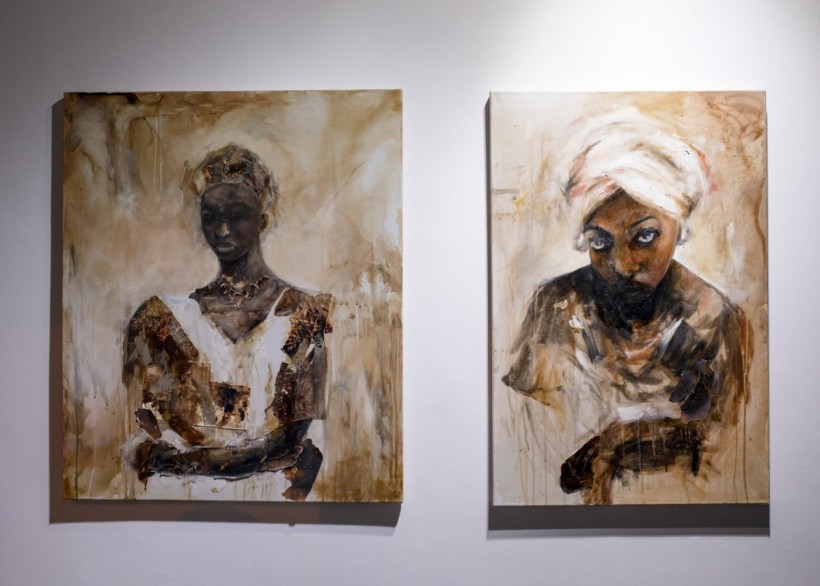
Hyper Real, which showed at Concordia University’s student art gallery, VAV (Visual Arts Visuels,) until Nov. 30, showcased the work of nine black artists, juxtaposing themes like masculinity and femininity, isolation and connection, in a series of video art works, graphic prints, and eerily arranged baby-doll sculptures. The exhibition functioned as a mirror, reflecting the identities and personal narratives of the artists, but also provided viewers with a space to examine their own perceptions of black identity and race relations. While the works varied in form, each deconstructed stereotypical beliefs in an exhibition that was at once introspective and expressive.

One of the works in Hyper Real by Karl Obakeng Ndebele, a multidisciplinary South African artist based in Montreal, is entitled “Siyalima,” which translates roughly to “the cultivation stage of farming” in Ndebele. The work portrays South African history through video art, juxtaposing the past and present in a way that re-envisions storytelling methods through technology. The two-minute clip recounts a moment in colonial history in which early European settlers in South Africa often gave mirrors to local leaders as payment for their lands after convincing them that the mirrors could grant longevity or a second life.

The film depicts two individuals dressed in contemporary streetwear in a nondescript forest setting, holding mirrors that reflect their persons and their environment to the sound of hip-hop beats. “Siyalima” functions as a commentary on colonialist discourse, shedding light on historical racism and systems of oppression that continue to influence the lives of black South Africans today. While the mirrors bear literal meaning given their role in local and colonial relations, they also demand symbolic reflection from viewers. Ndebele’s work prompts consideration of current race relations in South Africa and allows the audience to question their own privilege.

Daniel Itiose, another artist included in the exhibition, works with oil paint, rendering large-scale, hyper-realistic paintings of human subjects. Itiose’s portraiture dissects perceptions of traditional masculinity and gendered norms by showing male subjects experiencing emotions that are otherwise perceived as ‘feminine.’ His work also challenges conformity that racialized individuals must undergo, addressing the audience’s autonomy and the privileges that come with that liberty. From afar, Itiose’s paintings look like photographs, capturing vulnerability and personal strife in close-up shots of male subjects. Upon closer examination, the works are composed of delicate brushstrokes, lending the work detail which could not be created with the click of a shutter.

Student artist nafleri also uses video art portraying a black individual slowly undressing as their body becomes a virtual canvas for ‘bootleg resources’, including radicalized comics, news segments, and a looped sound-bite of Eric Garner. Garner, a black man murdered by the New York Police for selling bootleg cigarettes, repeats “I can’t breathe” as the police choke him. Artist Theran Sativa, works with dolls found in Salvation Army donation centers. The dolls comment on identity construction through materiality the appropriation of the black body.

Hyper Real dissects tensions surrounding acceptance and personal narratives. The exhibition encourages viewers to reflect on their physical presence within the gallery, where acceptance is contingent upon the artists’ invitation. There is a confessional quality to the work in which oil paint and commercialized plastic toys convey the artist’s relationship to the past and present, their cultural histories, and racial discourse. While patrons experiences in the gallery may only be temporary, the artists and their works encourage lasting reflection on racial identity in a supposedly ‘post-racial’ world.

Arts & Entertainment, Theatre

Yvette Nolan’s ‘The Birds’ places indigeneity in the spotlight

Yvette Nolan’s adaptation of Aristophanes’s classic Greek comedy The Birds, which ran Nov. 21-23 and 28-30 at Moyse Hall Theatre, focuses on the history of colonization, and the future of truth and reconciliation for indigenous peoples in Canada. Produced as a part of the English department’s Drama & Theatre Program, The Birds features student actors and crew members who tell the story of Jack (Luke Horton, U3 Arts) and Gulliver (Arielle Shiri, U3 Arts) as they leave their city lives behind to seek a new life in a land inhabited by talking birds.

While the pair originally sought to flee the hustle and bustle of city life, Jack quickly proves unwilling to leave his old profiteering ways behind. Working with man-turned-bird Hoopoe (Alexander Czedledy-Nagy, U3 Management), he pays off a leader in the bird community, Raven (Caroline Portante, U3 Arts), to profit off the land and build a new city modelled after the one he left behind. His plans inadvertently bring a host of other invaders from the city—bureaucrats, missionaries, and the like—who give no credence to the birds’ concerns and work to exploit their society.

Nolan artfully weaves the plot together by making each character’s personality traits and actions double as a commentary on contemporary indigenous-settler relations. Jack serves as a prototypical colonizer, only showing surface-level concern for the birds when he loses control of his dream city’s development or when his own life is at stake. Nightingale (Grace Bokenfohr, U2 Music) Hoopoe’s wife, acts as a storyteller who sings of the creation of Turtle Island. She integrates the Greek tragedy of Philomela, the story of a princess who transforms into a nightingale after her brother-in-law mutilates her, to construct a broader narrative about colonial violence.

Recently invited to join the Mordechai Richler Writer-in-Residence program, Nolan has been writing since 1990. Her first production Blade premiered at the Winnipeg Fringe Festival. Born in Saskatchewan and raised in Winnipeg, Nolan was the managing artistic director of the Toronto based company Native Earth Performing Arts. The Mordechai Richler program aims to offer emerging artists valuable experience and guidance writing for different media, such as television, film and radio.

Where dialogue is sparse, the actors’ body language fills in the gaps to further flesh out the relationships that unfold onstage. Inès Vieux Francoeur (U2 Arts) is particularly strong in her portrayal of Hoopoe’s assistant, Sandpiper –she aggressively pokes her beak out at Jack and Gulliver during their tense first encounter, and gracefully fluffs her feathers during calmer moments. The birds’ chief authority figure, Eagle (Yves Abanda, U3 Science) projects a similarly-strong stage presence by extending his enormous wings to silence the crowd in various scenes. His posture throughout the performance solidifies his role as a powerful and decisive leader in the decolonization process.

The Birds is an entertaining and intellectually-engaging adaptation of the classical Greek comedy. Vibrant and colourful costumes, coupled with well-designed forest props, add a sense of realism in what would otherwise be a purely fantastical world. Each performer and crew member played their roles exceptionally, showcasing the dedication that went into the work. At the end of the performance, the audience left the theatre pondering the nature of reconciliation in the present day.

Science & Technology

The power of effective studying

Productivity and procrastination: The notorious p-words of finals season. As students pack into libraries like sardines to cram a semester’s worth of information into a few days, final exams seem like the only thing on anyone’s mind. Fortunately, there are ways to make the studying process more effective and less strenuous.

In an email to The McGill Tribune, Signy Sheldon, assistant professor in McGill’s Department of Psychology and Canada Research Chair in Cognitive Neuroscience of Memory, explained that, perhaps counterintuitively, taking some time away from the books can actually help to maximize time spent studying.

“One theory [about] memory is that information is remembered better when it is repeated at certain intervals,” Sheldon wrote. “So, when studying for an exam, take breaks before coming back to review information. This will help information become less resistant to forgetting.”

While the research is inconclusive as to exactly how long the ideal studying interval is, anywhere between 25 and 52 minutes seems commonplace, with breaks ranging from three to 15 minutes. Timing aside, there is also research on the best strategies to use when learning material. The levels of processing theory posits that one can learn at a surface level by focusing on simple details, like the words or diagrams from lectures, or at the deeper level by considering the underlying meaning of the material.

“Deep processing leads to memories that are stronger and last longer,” Sheldon wrote. “For something to be learned deeply, you can try linking new information to familiar and meaningful information. One tool would be to link what you’re learning to what you already know.”

Thomas Shultz, professor of computational psychology at McGill, also supports this approach to learning. Shultz is a firm believer in the crib sheet, a double-sided piece of A4 paper on which students can fit a semester’s worth of information to bring into the exam.

“[Students] universally say they like it because they are relearning the course material by organizing it at increasingly-higher levels of abstraction,” Shultz wrote in an email to the Tribune. “They also like it because they are no longer anxious about memorizing.”

This re-organization and summarization of course material fosters deep learning. Further research suggests that writing notes by hand leads to greater retention of information than typing them; thus, a handwritten crib sheet would be the most useful tool for learning.

While studying is crucial, the all-important ‘hygiène de vie’ is just as necessary for good grades as mental health.

“I think the most toxic habit students engage in is not sleeping,” Sheldon said. “Sleep really is essential to creating memories, which is essentially what you are doing when you are studying.”

While people sleep, their short-term memories are consolidated into long-term memories, which allows for better recollection of information. This process is critical for forming new memories, making it ideal for retaining information.

Ultimately, what most students struggle with during finals is staying motivated despite a workload that feels overwhelming at times. One way to overcome negative inertia is to reconfigure the looming pile of work in original ways by planning a study date in a new place or holding a game show-style review session for example. By framing studying as something exciting, it becomes something to look forward to, which makes it all the more likely that the memorization will be productive.

Science & Technology

The microscopic powers in food

Locally-brewed kombucha is all the rage in Montreal; a new brand seems to line the shelves of hipster cafés every week. Kombucha, along with blue cheese, aged meats, and alcohol, are just a fraction of the foods dependent on fermentation. Fermentation occurs when microorganisms break down glucose to make energy without the presence of oxygen. The process produces a number of by-products that change the flavour and consistency of food.

‘Probiotic’ is the umbrella term used to refer to beneficial bacteria that contributes to gut health. According to Lawrence Goodridge, director of the Food Safety and Quality Program, lactic acid bacteria are responsible for the probiotic benefits of substances such as yogurt.

“Lactic acid bacteria […] are useful because they produce a lot of compounds that make our gastrointestinal tract healthy,” Goodridge said.

While these microorganisms are essential for creating certain delicious products, there also exists a variety of miniscule life forms that infiltrate the body through food to wreak havoc. Goodridge explained that these microorganisms are the major culprits for food poisoning. Parasites, like cryptosporidium, cause miserable living conditions for the host. Viruses like norovirus can be so prolific that they actually force cruise ships back to shore. Bacterial infections such as E.coli and salmonella are also responsible for a significant proportion of foodborne illnesses. They are often found in the intestinal tract of animals and can contaminate any produce that comes in contact with animal excrement.

“It’s a common myth that [salmonella] can only be found in chicken and eggs,” Goodridge said. “Certainly, it is found in chicken and eggs a lot, but salmonella can cause outbreaks in virtually every food. There have been outbreaks in chocolate.”’

Recently, the Government of Canada issued a warning against washing poultry prior to cooking it because the splashing water may spread salmonella onto other surfaces. Even more pressingly, on Nov. 26, the Center for Disease Control released a food safety alert linked to E.coli-contaminated romaine lettuce grown on the central coast of California, which produces 75 per cent of the U.S.’s leafy greens. The same strain of E.coli has also been found in romaine lettuce grown in Ontario and Quebec.

When left unchecked, these pathogenic microorganisms can grow inside of people and make them sick for varying periods of time. However, low levels of heat are usually sufficient in killing the more common bacteria, which is why it is so critical to fully cook food before eating it. This is especially true when visiting new places; new bacteria can be dangerous when one is exposed for the first time without prior immunity.

Exotic microbes aside, the majority of people encounter the byproducts of bacterial metabolism in the form of food that has been left in the fridge for too long. Any change in colour or odour indicates that the pseudomonas bacteria has started to digest the food. While a healthy person will not necessarily become ill by eating spoiled food, bacteria will cause food to lose its nutritional value. In addition, its digestive by-products often make the food look and smell unappealing, which is usually reason enough to deter someone from eating it.

Despite their size, microorganisms have a huge impact on human beings, influencing everyday life to a degree most people are never aware of.

While it may seem logical that cutting off the mould on bread would leave the rest of the product salvageable, new research reveals that moulds release spores which burrow into the product. Once there are visible signs of growth, then, the entire loaf of bread is probably compromised. However, harder foods such as meats and cheeses with a little bit of mould can still be eaten so long as all the visible mould is removed, as the denser makeup of the food prevents mould from growing too far.

Science & Technology

Protecting the powerless

Whales, dolphins, and other members of the cetacean family are now one fin-stroke closer to freedom thanks to the new Ending the Captivity of Whales and Dolphins Act, Bill S-203. The act, which passed in the Senate on Oct 23 and is currently undergoing its second reading in the House of Commons, looks to amend Canada’s Criminal Code to ban the capture of cetaceans and enable protections for marine mammals. It further stipulates an end to the breeding of cetaceans in captivity and prohibits the movement of live whales or dolphins across Canadian borders.

Many politicians and animal rights activists vehemently condemn the captivity of cetaceans and continue to fight for their release. In an interview with iPolitics, Senator Mary Jane MacCallum of Manitoba stated that housing animals outside of their natural habitat is amoral.

“This concern is compounded by my personal belief, shared by many, that having these majestic and intelligent animals in captivity is simply unnatural,” MacCallum said. “It is against the very nature, biology and physiology of these animals to be swimming around in tanks when they are wired and built for the vastness of an ocean.”

In 2014, prominent anthropologist Jane Goodall wrote an open letter to the Vancouver Aquarium demanding that the aquarium put an end to their beluga breeding program. Goodall cited high mortality rates and the complex social and sensory lives of the animals as reasons to end the program.

While the bill has been widely praised as a humane initiative, Andrew Trites of the University of British Columbia’s Institute for Oceans and Fisheries questions some aspects of Bill S-203, such as the ban on importing and exporting reproductive materials from Canada.

“Imagine we had an endangered species where the only female left is in Canada and the only male left is in the United States,” Trites said. “We might want to allow them to artificially inseminate.”

Having access to domesticated cetaceans is highly advantageous for research studies. As of 2018, Marineland of Canada in Ontario is the only facility in the country that still houses live cetaceans.

“There are lots of questions [that] we, as scientists, ask, such as ‘does the noise ships make affect killer whales?,’” Trites said. “To answer these sorts of questions a hearing test needs to be completed on the whales and you’re not going to do that on a wild animal.”


The majority of the research done on cetaceans is done in aquariums. Behavioural questions related to topics like food intake, physiology of sight, and cognitive abilities all require close observation and extended periods of data collection, which is only possible in controlled settings.

The ongoing debate now centres around whether or not research practices can take precedent over animal welfare. Trites argues that they aren’t necessarily contradictory.

“There is a lot more focus on providing the animals with stimulus and challenges so [that] they do not develop psychological problems.” Trites said.

According to Trites, a popular way to assess the stress levels of whales in captivity is by analyzing their ability to breed. Whales with reduced levels of stress are more likely to get pregnant and carry offspring full term. Marineland’s success in mating beluga whales may therefore be an indication of their low stress levels.

In the meantime, the language of Bill S-203 remains unclear with regard to the many exceptions it allows at the discretion of provincial legislatures. The act will only prevent the capture of future marine mammals; it exempts facilities which currently hold cetaceans. This fact leaves marine biologists and animal rights activists alike wondering how Bill S-203 will affect the wellbeing of cetaceans still in captivity.

News, SSMU

SSMU supports motion for gun control in Canada

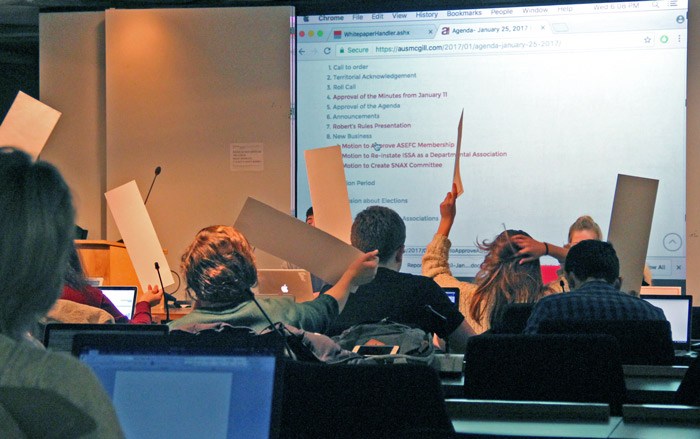
The Students’ Society of McGill University (SSMU) Legislative Council convened on Nov. 29 for their last meeting of 2018. They debated a new motion to support Bill C-71, which was introduced by Canada’s Public Safety Minister Ralph Goodale to reduce gun violence across Canada. Chip Smith, a member of the Accountability Committee, also presented evaluations of the SSMU Executives and Councillors’ performances for the Fall 2018 semester.

Motion Regarding SSMU’s Position on Gun Control in Canada

The Liberal party of Canada is poised to pass Bill C-71, which is currently under review at the Canadian Senate. The bill will tighten laws on firearms by improving background checks and implementing mandatory record-keeping by firearms retailers. SSMU Vice-President (VP) Student Life Cody Esterle had drafted a motion to endorse the bill and lobby Canadian Senators, Members of Parliament, and the Minister of Public Safety of Canada for better gun control. As Esterle was not present, however, Arts Representative Ana Paula Sánchez explained the motion to council.

“Essentially, what the motion is trying to do is have SSMU endorse [Bill C-71] and help in a letter-writing campaign to advocate for a national ban on civilian ownership of handguns,” Sánchez said.

Arts Representative Andrew Figueiredo argued during the debate period that banning handguns will not be the solution to gun violence.

“First of all, hand guns can be used for hunting […and], moreover, for self-protection,” Figueiredo said. “In rural areas, it takes up to 45 minutes for RCMP to actually get to your door [….] In the city of Toronto, 50 per cent of guns used illegally […] are imported from the United States. Maybe invest in border security, because, clearly, banning guns is not the solution in this case.”

Management Representative Brooke Callaghan was critical of Figueiredo’s argument.

“Any measures should […] be taken to prevent the use of guns in in any way, shape, or form in this country and in all countries,” Callaghan said. “Guns are used for violence, period. They are a killing machine […] Whether you are killing an animal or person, [guns are] meant to cause harm [to] another being.”

The motion was passed with 26 in favour, 2 opposed, and no abstentions.

Fall 2018 Accountability Committee Report

The Accountability Committee is mandated to ensure that Officers, Senators, Directors, and Councillors fulfill their obligations and responsibilities. In this semester’s assessment, the SSMU Executives collectively received a grade of ‘A’ or ‘A-’ on each criteria. Each executive also received a specific evaluation to which they had the opportunity to respond. Among the most heavily criticized for delays in their work were VP Finance Jun Wang and VP Internal Matthew McLaughlin.

Wang admitted that the effort of transitioning club banking has taken a toll on his mental health.

“My predecessors never had to deal with this many constituents at once,” Wang said. “And it [becomes] a mental pressure point when I have to deal with not just departmental executives […] but also SSMU club members as well [….The club bank transition is] probably [my] biggest project, and it [has] been very difficult to keep [under control] without impacting the other executives.”

McLaughlin explained that the two-and-a-half-month delay in hiring a Francophone Affairs Commissioner was due to its impromptu addition to his portfolio as a result of VP External Marina Cupido’s resignation. He reported to council that a commissioner was found on Nov. 29.

“This was under the External portfolio until Marina’s resignation, and then it was under my portfolio,” McLaughlin said. “As soon as I got this part of my portfolio [assigned], I launched the job application for the Francophone Affairs Commissioner and the application for the Francophone Affairs Committee. We [have found a commissioner but] only received one application to the committee so far, so I reopened that today to get more applicants.”

Legislative Council will reconvene on Jan. 10.

News

Clintons praise Canada’s diversity and economy at Bell Centre

42nd U.S. President Bill Clinton and former Secretary of State Hillary Rodham Clinton spoke at the Bell Centre on Nov. 28 as part of their “An Evening with the Clintons” tour, casually discussing topics such as their upbringings, role models, and the future of global politics. They also commented on Canadian affairs, recommending that Americans look to Canada as a model for inclusion. Before the talk began, Tanya Taylor, a McGill alumnus and event moderator, presented the couple with customized Montreal Canadiens jerseys, proclaiming that they were sitting on centre ice of the team’s home rink.

The duo commended Canada’s ability to celebrate cultural diversity, embrace immigrants, and elevate the middle class. Hillary Clinton reflected on how, in her various government positions, she has often cited Canada for its dynamic economy.

“In addition to really admiring the culture [of Canada], I also really applaud the economic model,” Clinton said. “We’re looking at how we can get some of that dynamism back into [the U.S.] economy as well as more opportunity for more people. Canada was always a good example because of the way that the economy has lifted people up here, especially in your healthcare system [as a] a basic level of support that everybody should have [….Healthcare] should be a right, not a privilege.”

Although never mentioning the incumbent U.S. President by name, Hillary Clinton expressed resentment for the ‘authoritarian model’ overwhelming the U.S. government and praised Canada for its leadership in these divisive times.

“There are the same tendencies [in Canada] toward partisanship and ‘resentment politics’ that you get in many other places, but to continue to fight against that and keep trying to bring the country together around common goals while maintaining your separate identities […] within an integrated whole seems to be the model that people will wake up and look for again,” Hillary Clinton said. “So, I’m looking to you, Canada, to bring us back to our senses.”

Bill Clinton echoed Hillary’s sentiments, sharing memorable experiences from his diplomatic work with Canada as president and praising the country’s optimism.

“I will always love this place, and I think you really [have to] think about how you can be Canada and still embrace the winds that are blowing in this world in a positive way,” Bill Clinton said. “The United States must return to that if it expects to play a positive role in the future. We should do more of what you’ve been doing.”

The Clintons, now grandparents, spoke about future generations, how their family has expanded, and the importance of helping those in need.

“I don’t know if we give enough kids today the chance to [volunteer],” Hillary Clinton said. “Kids are highly scheduled, [and] they spend a lot of time staring at a screen, so where’s that time to actually go out and interact with other people? When you’re not out in a community and not trying to be part of that, trying to make it better, then you lose track of people who are not like you.”

Bill Clinton also cited the importance of diversity when solving problems, specifically when trying to fight climate change.

“Complex problems are best solved by diverse groups […with] different experiences and different knowledge,” Bill Clinton said. “If you want humanity to be around for another two or three hundred thousand years, we have to work together to moderate climate change [and] we have to adapt to that which we cannot prevent.”

Taylor directed the discussion toward personal anecdotes and lighter topics. The couple talked about their first date at Yale, how Bill proposed to Hillary, and the best gifts they have given each other.

“The part that stood out the most [to me was] when Bill and Hillary talked about their mothers,” Carleton University student Hannah Vatour said. “I think they captured the audience’s attention the most with those stories.”

Arts & Entertainment, Pop Rhetoric

Aladdin remake returns to disappointing tropes

In the wake of widespread excitement for a live-action version of Lion King, Disney has been teasing the release of Guy Ritchie’s remake of Aladdin throughout the fall. Set to be released in May 2019, the film will bring to life the world of Agrabah, a faraway land of childhood dreams. As a child, the animated version of Aladdin (1992) was my first glimpse at cartoon characters who looked something like me and my family. At the time, I was overwhelmed to see a movie that depicted an Arab story, not yet aware of the movie’s many historical and cultural inaccuracies.

Aladdin constructed images of what my culture should have looked like. I wished more of my life as an Arab was filled with the mysticism of Agrabah and that my mother’s Arabic music on the radio sounded more like “A Whole New World.” I constantly questioned why I looked more like Jafar, the evil sorcerer, than any other character in the movie. I was more enchanted by the orientalized, European conception of Arab culture that a few white producers had crafted.

Today, the excitement for the live-action movie bears a sinister reality: The Arab experience can’t escape the stereotype that the film perpetuates. As of 2014, the animated movie was still the third highest-grossing traditionally-animated feature worldwide. The film is full of ethnic stereotypes of Arabs and their physical features, showing exaggerated hooked noses, thick eyebrows, and outrageous facial hair, predominantly evident among the movie’s villains. In contrast to the movie’s protagonists, Aladdin and Jasmine, both of whom bear the Eurocentric markings of lighter skin, thinner lips, and cute button noses, Jafar’s explicitly Arab features are central to his malevolence.

Over 25 years later, it appears as though the live-action movie will perpetuate the trope of a villainous Arab man battling against the whiter, morally-superior couple. In the upcoming remake, Naomi Scott, a light-skinned British-Indian actress with no connection to the Middle East, is cast as Princess Jasmine. The producers made an intentional decision to veer away from the everyday Arab woman, alienating a new generation of girls. This is made especially dangerous when ‘whiteness’ is the ideal standard of beauty among women in the Arab world: The skin whitening industry brought in almost $18 billion in Asia and the Middle East in 2017. Once again, darker-skinned and hooked-nosed men are cast to play more sinister characters including Jafar (Marwan Kenzari) and Hakim (Numan Acar), perpetuating conceptions of Arab men as menacing and untrustworthy.

Retrospectively, Aladdin is a portal to my culture that was more mystical than real. The movie carefully deconstructed and reconstructed aspects of my culture including dress, history, and language as a form of ethnic dominance, making me doubt my own rich culture and ancestry.

Popular culture uses my home as a trope for barbarism and as an object of fascination, which translates from the movie screen to my everyday interactions: I have been ‘randomly’ checked at airports and have had dates ask me to speak Arabic to them because of how ‘exotic’ it is. As an Arab man, I embody Aladdin’s palatable and exotic oriental flavour, but simultaneously, the ugly threat that the Middle East so often represents. While Aladdin is sure to bring back childhood nostalgia to its older audience, it is imperative that we recognize the falsehood of the image perpetuated by the film and its impending remake.


Read the latest issue

Read the latest issue