

Latest News

Soccer, Sports

Women’s soccer growing in Latin America despite lack of investment

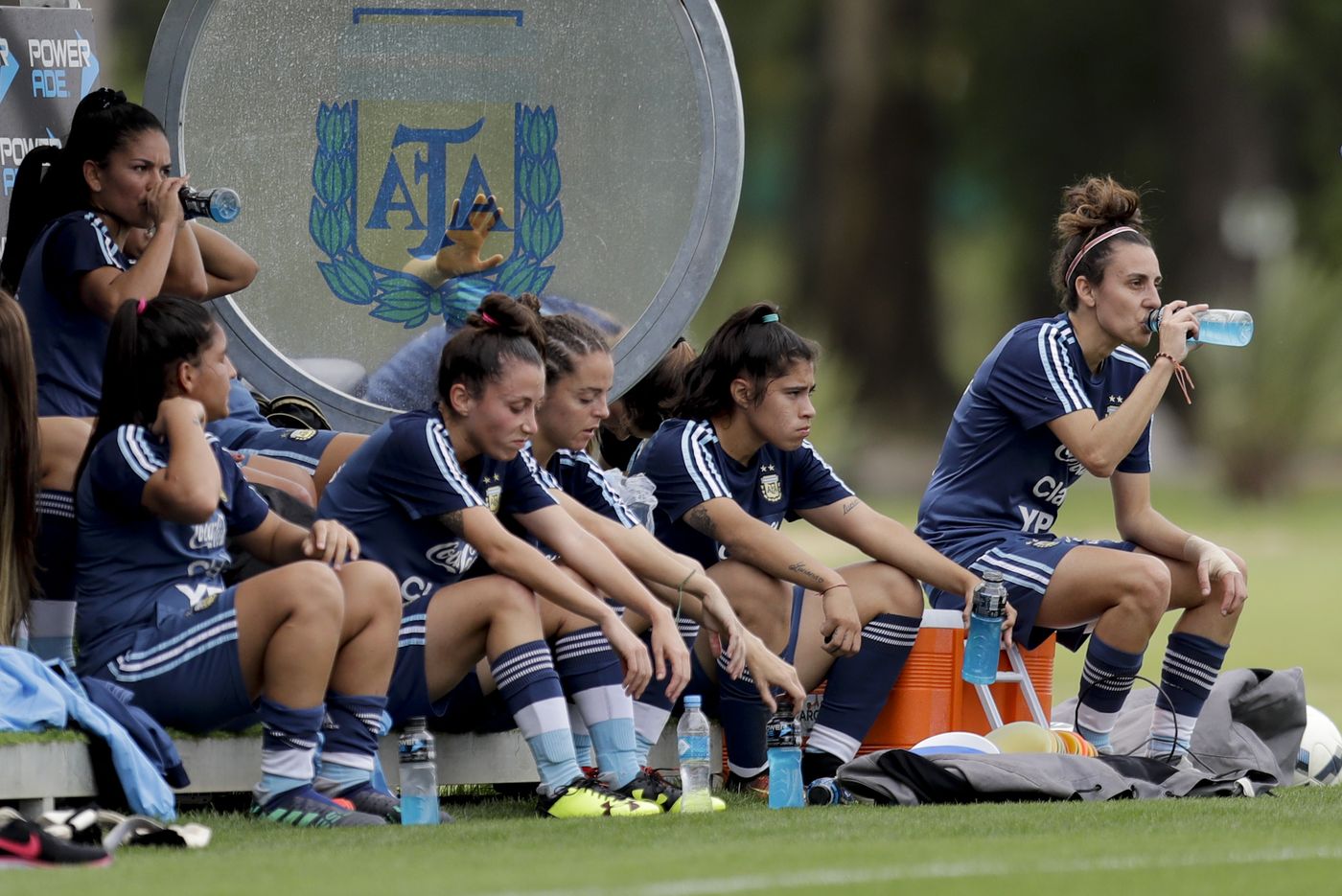
Twelve years after they last appeared at the Women’s World Cup, the Argentine national women’s soccer team is back in the competition. It may seem obvious that they are going to the World Cup; after all, this is the same country that produced Messi and Maradona. The women in Argentina, however, are not on an equal playing field, making this comeback an important one.

Before this year, the women’s national team was not allowed to train at the same facilities as the men’s team. Reversing this policy is a step in the right direction, but the conditions are still far from equal. Women on the national team still only earn the equivalent of $8 USD per day, and, in Sept. 2017, the players went on strike because even that small stipend went unpaid. This is far from a livable wage, especially when the players are expected to eat, sleep, and have the equipment needed to perform at a professional level. For comparison, Messi earns $667, 000 per week after signing his latest contract with FC Barcelona in 2017. Because Argentine women do not make a living wage from soccer in their home country, players are forced to either seek professional club opportunities internationally or work other jobs and only train part-time.

Argentina’s qualification for the 2019 World Cup is made even more impressive by the fact that, in 2017, they, along with several other South American women’s national teams, were dropped from the FIFA world rankings and declared ‘inactive’ because they had not played a match, trained together, or hired staff in over 18 months.

Soccer federations around the world are quick to claim that they cannot pay female players as much as their male counterparts because they do not bring in the same revenue. However, this argument does not hold meaningful ground: In the United States, women’s soccer, even with fewer resources invested in teams and development programs, still brings in higher viewer figures than men’s games. The United States may be the exception and not the rule, but it shows that people care about women’s soccer when it begins to receive proper support.  

Furthermore, the women’s game is unlikely to earn profits for their national federations if there is no investment in players and development, as well as promotion and advertisement of matches and merchandise. Fans and sponsors are the main sources of revenue for federations, and no sponsor wants to invest in an event that nobody will watch. Additionally, audiences will avoid games that they deem to be of lesser quality, but players can’t improve if they can’t commit to their training and they have insufficient resources. And, so, the cycle continues. Federations that use this economic argument simply perpetuate a self-fulfilling prophecy. A women’s side that can only afford to train together three times a week on low-quality fields cannot be expected to perform at the same level and attract the same crowds as a professional men’s side that enjoys full-time professional coaching, medical staff, and superior facilities.

Furthermore, soccer federations are meant to be not-for-profit. While they do need money to reinvest and continue to develop the game in their countries, the board members of many federations earn huge, unnecessary salaries. In 2016, FIFA President Gianni Infantino agreed to a salary of $1.53 million—less than half of what former president Sepp Blatter was paid, excluding the $10 million bonuses Blatter received for every World Cup.

Soccer federations around the world have the funds to support women’s teams but appear unwilling to spend it on the female players who work for it. With tickets for Argentina’s World Cup qualification playoff match against Panama selling out in less than 12 hours, hopefully the tides are finally changing for fútbol femenino in Argentina, the rest of Latin America, and the world.

Student Life, Student of the Week

Student of the Week: Hannah Miller

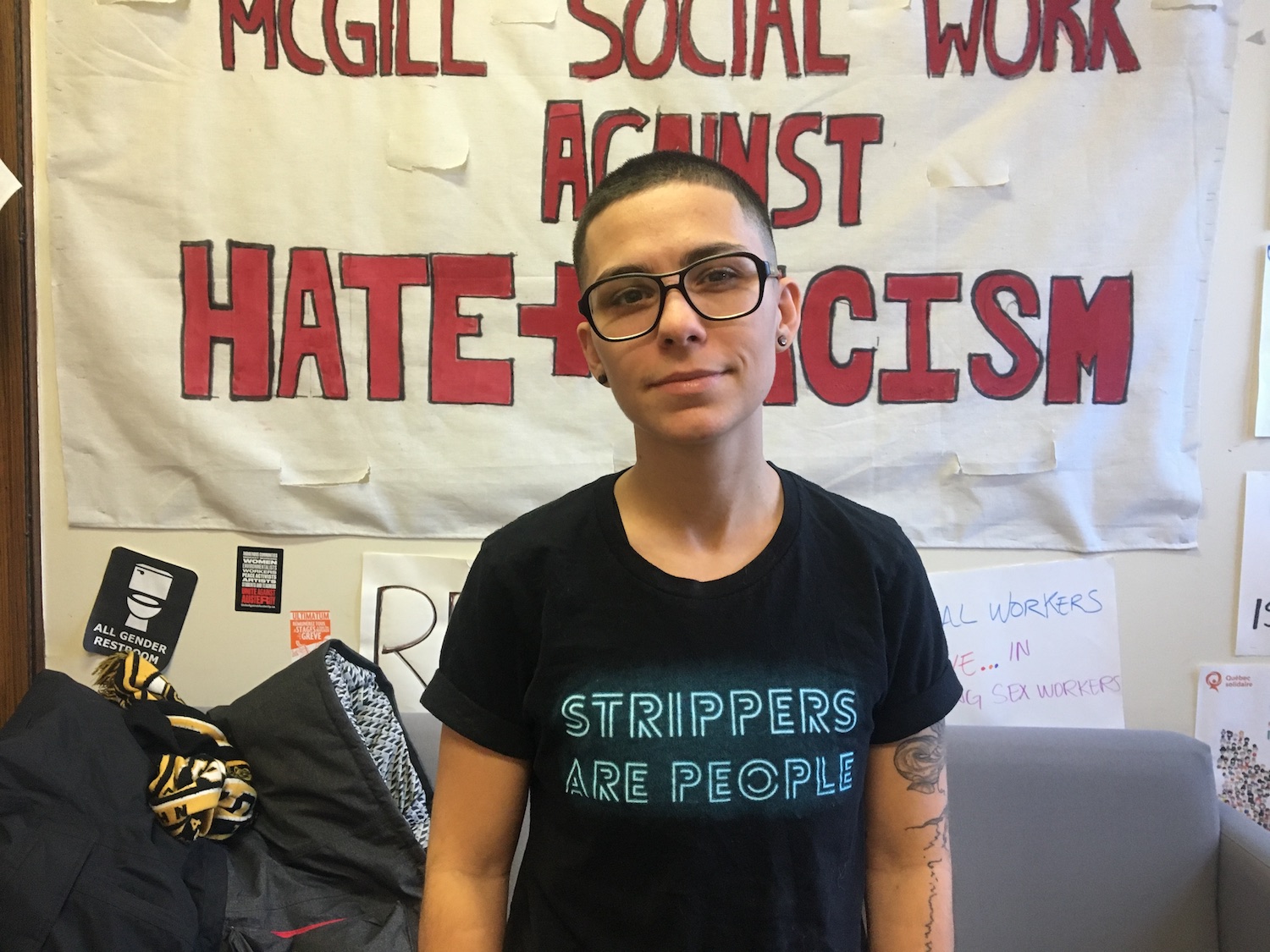
Between Nov. 19 and 23, the McGill Social Work Students’ Association (SWSA) went on strike to protest the faculty’s compulsory internship requirement which students do not receive compensation for. Among the protesters was Hannah Miller, U2 Social Work and the equity coordinator for the SWSA. Though they played a crucial role in the past week on campus, Miller’s activism in the faculty began long before the recent organized protest.  For the last week, Miller has been partaking in teach-outs, blocking access to classes as part of the picket line, and engaging in conversations with faculty administrators. These efforts are meant to encourage the administration to reform the faculty’s curriculum and ensure that student demands are heard.

“Our intention is not to block people from learning or to create a hostile learning environment,” Miller said. “We don’t want to not go to class. We don’t have the option. Certain people can’t afford not getting paid.”

For their internship this year, Miller has worked at Action Santé Travesti(e)s et Transsexuel(le)s du Québec (ASTT(e)Q), which supports trans people around the city through peer support, education, harm reduction, and community empowerment initiatives. Despite the vital work that Miller and their fellow McGill students are providing to the Montreal community, they are often not compensated by their employers.

While many internships in fields such as computer science are paid, internships in the development and care industries, such as education and social work, frequently lack remuneration. Additionally, the labour inequality that McGill’s social work students are aiming to dismantle reflects gendered bias. Female-identifying students who carry out internships are only paid 17 per cent of the time while 45 per cent of their male-identifying counterparts are paid for equal labour.

Additionally, as interns, many of McGill’s social work students take on work positions without access to the insurance or social benefits offered to long-term employees. Miller explained that, in addition to protesting unequal compensation, social work interns are also protesting this discrepancy in provincial labour laws.

“We don’t have any protections,” Miller said. “If you’re facing sexual harassment, if you get pregnant, if you get injured, you have no protection because your labour is not recognized.”

In many ways, Miller prefers working at their internship over attending lectures. At work, Miller is immersed in an inclusive and accepting space—a culture that they do not get to enjoy as often on campus. Miller explained that they feel the faculty’s curriculum is outdated and can make them feel unwelcome.

“[The social work curriculum] lacks intersectionality in all its forms,” Miller said. “[Through] most of the materials and our professors, we learn a very straight, cis-male perspective without recognizing the harm of that [….] There are gender development theorists that say that if you don’t know if you’re male or female at a certain age, there is something developmentally wrong with you. When this is being taught in class, and I’m sitting there, it’s basically telling me there’s something wrong with me.”

After advocating for a more inclusive curriculum, Miller faced resistance from a number of faculty members. Despite this hesitance, Miller feels like it’s the faculty’s responsibility to correct the curriculum’s flaws and to make it more inclusive of current and in upcoming students.

“I feel like if I don’t say something, then nothing will be said, and we don’t have these conversations,” Miller said. “If we want to be effective social workers, we need to be able to have a well-rounded and open understanding of different lived experiences.”

Along with Miller’s full course load, unpaid internship, and many other commitments throughout the school year, they are also a single parent. Hannah prioritizes their child over their grades and other coursework, leaving them with little free time to seek out an alternative source of income. Ultimately, in exchange for the time they have sacrificed for their degree, Miller believes they deserve fair treatment from the university.

“I came into this program, and I knew there was going to be unpaid labour,” Miller said. “I didn’t know how heavy that was going to be on me, both physically and emotionally. My goal for the strike is to have my labour recognized as labour.”

Intercampus
Campus Spotlight, Student Life

A bus ride worth a thousand words

For local poet E. Lloyd Kelly, the writing process takes place whenever inspiration strikes. Kelly, who operates the inter-campus shuttle between the downtown and Macdonald campuses, is also an author and poet who has published five works of literature under his name.

Kelly’s works, four books and a poetry anthology, are uniquely connected to Montreal. Lloyd was first inspired to write poetry during a hectic drive down Sherbrooke Street, which inspired, “Welcome to Montreal,” a poem that describes the chaos and confusion that can arise on streets and highways throughout the city.

“I was coming down [Sherbrooke], just about to cross over the light, but then a group of protesters suddenly blocked the street and sent us back [to take another route],” Kelly said. “Instead of getting mad at this moment, I used this to inspire me to write a poem.”

Kelly’s journey as a writer has been unconventional. He initially aspired to be a singer and wrote several original songs; however, he noticed that many of his lyrics could be published as poems, which motivated him to write for an audience. In 2016, Kelly self-published his first book. The publication of this work allowed him to jumpstart his writing career, but the financial cost of publishing proved a significant setback.

“I ended up spending quite a pretty penny,” Kelly said. “Looking back, I  should not have spent so much. The company was dishonest [and] they made a pitch as if it was very easy publishing. However, at every step, the cost increased.”

Kelly’s early publications were dark tragedies that explored themes of death and despair. But, after receiving feedback, he added more optimism to his work. In his poem collection, “Waters of Silver Springs,” Kelly explores more lighthearted themes such as love, family, and nature. This balance between dark and light subject matter has allowed him to connect to a wider audience.

Although his day-job can be taxing, Kelly manages to set aside time for writing. He does not consider driving to be an obstacle, but, instead, views it as something which complements his writing.

“Every writer needs a muse,” Kelly said. “I think my muse is driving. I always have my notebook and keep it next to me. Sometimes, when I am going down the highway and something comes to my mind, as soon as I get a break or slowing traffic, I jot down those thoughts. This way, that little spark becomes a flame. [The notes don’t] necessarily take any particular form. I just write. When I sit down later, I start editing. It is then [that the notes start] mushrooming into something.”

Though he divides his time on-the-job between the bustling downtown area and the more peaceful Sainte-Anne-de-Bellevue, Kelly prefers Macdonald campus’ bucolic environment, which he finds more conducive to writing.

“I usually get a 30-minute break between each ride. I use the break at Macdonald campus to work on my writing,”  Kelly said. “Macdonald is a lot quieter. I have a place where I park the bus, and no one bothers me. It is where I do most of the writing. I get inspiration on the streets and in the city, but I do the writing at Macdonald.”

One piece of advice Kelly gave to aspiring writers in the McGill community is to start writing without thinking too far ahead.

“Just write,” Kelly said. “[You don’t] have to see the end result from the beginning. Sometimes, you have an inspiration, sometimes, you will have to inspire yourself [….] What I do to reignite the muse is to go back to what I already have there and start reading what I have already written.”

Hockey, Sports

NHL quarter-season awards

Hart Trophy: Connor McDavid

In 2013, Habs forward Lars Eller raised some eyebrows when he compared the Edmonton Oilers to a junior team. The only reason that his comment doesn’t still ring true, five seasons later, is the play from the man they call ‘McJesus’: Connor McDavid. McDavid, on pace for 118 points, has single-handedly willed a terrible Oilers team within four points of the last wildcard spot as of Nov. 26. McDavid deserves the de-facto most valuable player award for his ability to grant his AHL-calibre teammates with cushy NHL contracts and because he has hoodwinked the NHL into thinking that the Oilers are not that bad.

Norris Trophy: Mark Giordano

With the Pacific Division up for grabs, Flames captain Mark Giordano is in line to win his first Norris, awarded to the best all-round defenceman. Playing nearly 24.5 minutes a night, Giordano’s elite playmaking ability has him on pace for 75 points, and the Flames give up half as many passes to high-scoring areas when he is on the ice. Giordano is also on the ice for 6.5 per cent more shots for than shots against, a higher percentage than all other candidates, including Morgan Reilly and Thomas Chabot.

Vezina Award: Pekka Rinne

At 36 years old, Pekka Rinne is proving doubters and aging curves wrong. Rinne has put together another elite campaign in net for the Nashville Predators, and the statistics show it: He has a 10-2-1 record, .942 save percentage, and 1.68 goals against average. With the league’s best defence in front of him, Rinne is in an optimal position to be named the league’s best netminder again. Other Vezina contenders include the Maple Leafs’ Frederik Andersen and the Ducks’ John Gibson, who could continue to put forward compelling cases by season’s end.

Calder Trophy: Elias Pettersson

Despite missing six games after suffering a concussion in October, Elias Pettersson is off to a quick start. With 13 goals and 21 points in his first 20 NHL games for the lowly Vancouver Canucks, the opening to his rookie campaign has been on par with those of Alexander Ovechkin and Evgeni Malkin. His speed, scoring, and playmaking abilities have compelled Wayne Gretzky to compare Pettersson to, well, himself. The sky appears to be the limit for the 20-year-old, and he should coast to the Calder—provided that he remains healthy throughout the season.

Jack Adams Award: Phil Housley

Shocking many in the hockey world, Phil Housley’s Buffalo Sabres have jumped into playoff contention just a season removed from being the NHL’s worst team. Housley has coached the Sabres to the league’s third-best record as of Nov. 26. He has managed his top line of Jeff Skinner, Jack Eichel, and Jason Pominville as it has developed into one of the most dominant offensive lines in hockey, and the team is well on its way to their first playoff appearance since 2011.

Stanley Cup Champion: Nashville Predators

As of Nov. 26, the Predators lead the league in points, on pace for a remarkable 120. The Predators are a team without weakness: They have a solid forward core, an exceptional goalie tandem of Rinne and Juuse Saros, and one of the best defences in the NHL. Their tremendous depth provides an advantage over other contenders: For instance, after Tampa Bay Lightning starting goaltender Andrei Vasilevskiy was injured, the Bolts, otherwise a tough team, saw their record suffer due to weak back-up netminding. Elsewhere, the Winnipeg Jets and San Jose Sharks could be contenders, but both teams have had slow starts relative to preseason expectations. At this rate, the Predators have emerged as the clear-cut favourite to win it all.

Campus Spotlight, Student Life

Hot Cities of the World Tour takes students to far-off destinations

Every year, McGill undergraduate students apply for the “Hot Cities of the World Tour,” a 12-day trip to cities around the world spearheaded by Associate Professor in the Faculty of Management Karl Moore. Following the trip’s slogan, “taking the future to the future,” this initiative is an unparalleled opportunity for 30 undergraduates to travel to some of the world’s leading economic hubs alongside one of McGill’s distinguished professors and a dozen McGill alumni.  

“[The idea for the trip] started in 2006,” Moore said. “I took 20 McGill students to spend the day with Warren Buffett in Omaha. On the way back from [a visit with] the second richest person in the world, I thought to myself, ‘how do you follow up?’”

To name a few destinations on past trips, Moore has taken students to India, South Africa, Russia, Mongolia, Doha, and Jakarta. Applications are due in October, and Moore selects 30 McGill students to go on the excursion soon thereafter. This year, the selected undergraduates will visit Tokyo, Bangkok, and Phuket.

Suneil Kheterpal (BCom’17) participated in the 2016 tour and views the experience as instrumental to his understanding of South America. Kheterpal travelled to the region and had the chance not only to observe practical applications of economic theory, but also discover a new culture along the way.

“There’s a series of memorable moments,” Kheterpal said. “We travelled to a vineyard to see the different wines of Chile, [visited] a coffee plantation site in Colombia, met the mayor of Bogotá, [and went] salsa dancing outside the old city of Cartagena”.

In an effort to make travel accessible to students from various socioeconomic backgrounds, Moore tries to select a varied range of students. This year, for the first time in the program’s history, the trip is taking two law students and three indigenous students on scholarships. Two-thirds of the accepted students have received financial aid. According to Moore, this attention to diversity provokes new and necessary conversations throughout the trip.

“We do reflections on the trip where, fairly regularly, we split into groups of four and we discuss what we [got] out of what we just heard,” Moore said. “Everyone adds their own view. Students from other disciplines get all sorts of lessons from it because you’re hearing from different people.”

Each year, Moore selects different destinations based on current events and recent economic developments. For this reason, the recent stops on the trips have primarily been to cities across Asia, such as Singapore, Malaysia, Seoul, and Hong Kong, where regional economies are rapidly growing and becoming hubs for financial and business ventures.

“We’re looking at some of the leading companies in the world, both global[ly] as well as locally, to get a sense of how they do business but also how they lead, how they advertise, and how they do business outside of America,” Moore said.  “But, [the trip] is not there as a holiday. We meet with CEOs, politicians, journalists, [and others].”

The McGill alumni who accompany Moore and his students serve as mentors and points of contact for students. The alumni simultaneously support Moore throughout the trip and facilitate discussions between students and themselves after the interviews they hold with industry experts.  

“The alumni bring maturity, and the students love to talk to [them],” Moore said. “They talk about their careers, where they live, families [….] It’s you in 10 or 15 years, so, it’s thinking about what your life may be like in the next coming years. It’s your chance to explore the life of someone actually doing those thing you’re thinking about.”

The Hot Cities of the World experience offers students a unique alternative to reading week and the opportunity to make connections and learn directly from successful people in the fields that they aspire to work in.

“The one thing you take away is a lifetime of friendships and relationships that you can build off of,” Kheterpal said. “Today, I am in contact with several of the participants that live around the world, [such as] New York, London, Hong Kong, Los Angeles, [and] Toronto. These are close friends of mine that I can rely on for both advice and employment opportunities.”

News, SSMU

SSMU’s great bank switch

As part of a massive financial overhaul, the Students’ Society of McGill University (SSMU) is currently switching from ScotiaBank to the Royal Bank of Canada (RBC). SSMU was one of ScotiaBank’s biggest customers with over 230 accounts.

“We’re one of the only student unions that gives this many clubs this many bank accounts,” SSMU Vice-President (VP) Finance Jun Wang said. “[ScotiaBank and RBC] have never encountered a client with this many sub-accounts.”

The original ScotiaBank contract was drawn up in 1992 and has not been updated since. Wang blames it for creating communication issues, confusion, and red tape for SSMU clubs, which motivated the switch. According to him, a particular difficulty was that clubs had to communicate with both SSMU and ScotiaBank to receive funding. This made tracking requests for funding and club purchases unnecessarily convoluted.

Preparations for the switch have been ongoing for some time. Last year, former VP Finance Arisha Khan and her substitute, former VP Finance Esteban Herpin, proposed to transition SSMU accounts from ScotiaBank to RBC. Over the summer, Jun Wang, along with ScotiaBank staff, RBC bankers, and a handful of SSMU staff, began cataloguing SSMU club accounts, some of which existed only on paper. In the process they temporarily shut down inactive accounts for the summer and moved each account to RBC. The team also created customized software for SSMU, eliminating any need for mediators and making online banking for clubs simple and more accessible.

Wang trained club executives in the new system through eight workshops at the start of the school year. Communication issues between clubs and himself, lack of space, and limited personnel means that some clubs are still straggling behind, but the switch is still on track to be completed by next semester.

Wang is confident that the financial overhaul will simplify and strengthen the funding process. Clubs will be able to receive money from SSMU through direct deposits without needing to contact RBC, creating a trackable funding system.

This process requires clubs to assume complete financial responsibility. With the ScotiaBank system, confusion and clutter meant clubs were not made fully aware of guidelines, creating further problems for SSMU. Wang hopes that transforming the way in which clubs receive funds will make the banking system more approachable.

“This bank transfer legitimizes the [funding] process and makes sure clubs take banking more seriously,” Wang said. “[Access to bank accounts is] a big privilege that we are extending.”

Over the past few weeks, all SSMU funding underwent a ‘blackout’ period while accounts switched from ScotiaBank to RBC. Eva Ren, a SSMU funding commissioner, works directly with clubs to approve funds.

“All student groups that have been approved for funding cannot receive their funds until after the freeze,” Ren said.

F WORD, a McGill feminist multimedia magazine, needed funds for its launch party on Nov. 15. According to Judy Huang, an F WORD coordinator, the launch coincided with the blackout period.

F WORD was able to work with both SSMU, and our printer to pay the printing cost through SSMU, which was great as it is the largest expense of the semester.” Huang said.  “The SSMU executives were helpful and definitely solved the printing issue. But, otherwise, all costs were paid out of our own pockets [as] we wait for our funds to be accessible again.”

According to Wang, when funds become available again next semester, clubs that were affected by the blackout will be refunded.

Wang plans to see the bank transfer through, even with the unforeseen complications that cropped up during the process. To help future VP Finance executives continue the transfer smoothly, he plans to refine and document each step during his term.

“Hopefully, out of this will come something a lot better,” Wang said. “Moving forward, we’ll have institutional memory so that the next VP Finance knows exactly what to do instead of creating a process from scratch.”

McGill, News, SSMU

Constitutional challenge contested in judicial hearing

The Student Society of McGill University’s (SSMU) Judicial Board (J-Board) held a hearing on Nov. 20 to determine if the Anti-Violence Fee Levy (AVFL) motion was constitutional. The AVFL passed referendum on Nov. 12 with 79.4 per cent of students in favour of the creation of the new fee, which would fund the implementation of the Gendered and Sexual Violence Policy (GSVP). Arts and Science Senator Bryan Buraga, the SSMU representative who referred the matter to the J-Board’s authority, firmly set the stakes for the hearing in his opening statement.

“[This petition] is a case of sexual violence,” Buraga said.  “This will set a [precedent] for survivors.”

Buraga argued that the AVFL passed with an insufficient number of movers, or individuals supporting the motion. The Internal Regulations of Elections and Referenda (IR-ER) requires referendum questions to have at least four movers before being approved by the SSMU Legislative Council; the AVFL only had three when it passed. Buraga also claimed that the SSMU executives showed poor judgement when they did not immediately allocate funding for the GSVP. He asserted that SSMU has the capital to pay for it given that, following last month’s Children of the Corn Halloween event, SSMU expects to reimburse students $10,000 in Uber fares after they were unable to provide transportation back from Macdonald Campus.

“SSMU has found funding for other ad-hoc expenses,” Buraga said “The VP Internal said that SSMU priotisizes safety over cost, but the executive has demonstrated the opposite.”

Although he was listed as a respondent on Buraga’s petition, SSMU Vice-President (VP) Finance Jun Wang was absent from the hearing. Wang, who is responsible for financing the GSVP, stated that he didn’t believe that his presence at the hearing was warranted.

[My absence] is a statement to be made to the filer of the petition to say how much I don’t believe that this is a matter of constitutionality, but rather [Buraga] is just trying to strike down this fee,” Wang said. “I believe that most people will understand that, with the building closure, the budget is not there and that we’re running at a deficit. If I were to attend the hearing, I would just be repeating that.”

SSMU President Tre Mansdoerfer argued that Buraga has overlooked a contradiction in SSMU policy. The Internal Regulations of Governance (IR-G) state that the Standing Rules determine the number of movers a motion needs to pass: Currently, at least three movers are required. In cases where internal regulations contradict each other, the rules within the IR-G take precedence over the IR-ER.

“Main motions require a minimum of three (3) movers to be presented before Council,” the Standing Rules read.

Buraga replied that there is no contradiction between the IR-ER requiring four movers and the IR-G requiring three. He reasoned that the IR-G only claims that it is necessary to have at least three movers, not that having at least three movers is sufficient, leaving room for additional requirements.

In response to Buraga’s accusation of poor judgement, Loïc Welch, a law student at McGill who represented Mansdoerfer at the hearing, argued that the executive has acted in a manner that assures SSMU student security.

“The President and the executive clearly acted within their standards of care,” Welch said. “They quickly moved the AVFL through SSMU in order to fund the GSVP.”

Buraga, who detailed his own experience with sexual violence in a Letter to the Editor of The McGill Tribune, closed his statement with an impassioned plea to the justices.

“There is an immediate crisis of funding […] and, as a result, I have not been able to get the protection I need,” Buraga said. “No student should have to stand here and go through this.”

Chief Justice Georgina Hartono announced that the J-Board will have two weeks to deliberate.  A written judgement will be submitted to the Board of Directors on Dec. 4, and the Board will either affirm, issue an order for amendment, or deny the judgement.

Creative

SSMU Who? | Episode 1: What is SSMU?

SSMU… Who?

In the first episode of our SSMU Series, Keating Reid investigates what the Students’ Society of McGill University (SSMU) is and does.

Video by Sofia Mikton, Tony Wang, and Bilal Virji

Hosted by Keating Reid

Features

Why we stay silent

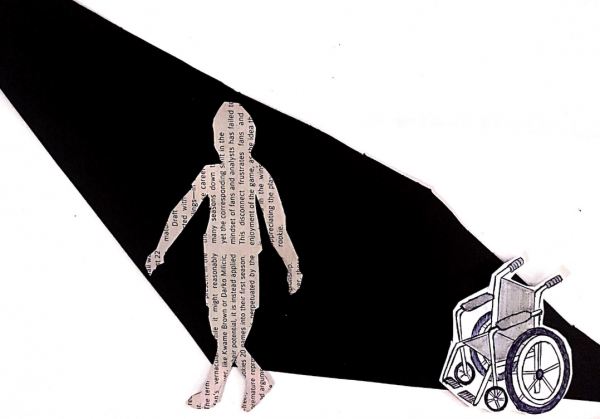
I was nine when I first became a victim of sexual violence. I was assaulted again when I was 12, then again when I was 13, and then I stopped counting—so many different people, and so many different faces to remember. Flashbacks are unpredictable. The first snow of the season reminded me of his cold, ashy breath on my neck. I started picking at my nails because of him, and, now, whenever I look at my hands, I think of him. Sometimes, when I’m completing a mundane task like washing my clothes or brushing my teeth, I recall an event that I had almost forgotten about. I see my abusers’ faces in every nightmare, in shadows while I’m trying to sleep.

Read the latest issue

Read the latest issue