


Latest News

Campus Spotlight, Student Life

A COMunity for Commuters

Of the 40,000 students attending McGill University, over 37,000 are considered commuters. In order to accommodate this population, the Off-Campus and Commuter Student Support (OCCSS) program at McGill has developed a program geared toward students who do not live in a McGill residence: Project COMunity. The initiative provides a useful resource for these students, providing them with effective resources for adjusting to life off-campus.

The project’s organizers believe that commuter students previously lacked an area on campus to unwind and spend time with their peers. In response, Project COMunity created a space for individuals to relax between classes and engage with other students before their evening commutes home.

Founded nearly four years ago, COMunity has recently developed more extensive support systems for first-year commuter students, who, otherwise, lack an outlet to socialize with their peers. COMunity connectors, a team of upper-year students who are commuters themselves, facilitate the services on offer and plan social events for students living outside of McGill residences.

The connectors collaborate with on-campus clubs and services and work to ensure commuter students have similar access to campus resources as those living in residence. For example, floor fellow-like advisors aid the students’ transitions to university. Additionally, the connectors hold workshops that advise commuters on a variety of topics, such as how to make commuting productive with better time management and how best to schedule downtime on campus. According to Claudia Belliveau, a program intern at the OCCSS, commuter students have a different experience at McGill than those living in residences and, consequently, may need auxiliary support.

“Commuter students have a different experience at university because they spend less time here,” Belliveau said. “Their engagement on campus is much lower. We are here to help. We are all commuter students, so we understand what they go through.”

Throughout November, COMunity is hosting the ‘COMon Ground’ lounge on Monday mornings, a social gathering open to all commuters. During these events, COMunity connectors invite these students to come and enjoy free food and coffee, relax, study, and get to know each other in a space of their own. In the future, COMunity hopes to expand their presence at McGill.

“Our main goal in the next five to 10 years is to create a commuter lounge,” Belliveau said. “A COMon ground for students to meet, hopefully with a kitchen, […] maybe with the ability for some students to spend the night during finals.”

The connectors also try to bridge the gap between students living in residences and those living off-campus; for example, first-year students living outside the McGill bubble can participate in Rez Wars on a team of off-campus students. The organizers hope that these sorts of experiences will help commuters better connect with the McGill community.

“COMunity is a program that strives to make commuter students feel at home on campus just as students living in residence have a home,” Belliveau said.

Ultimately, the COMunity connectors recognize the difficulties of commuting and are dedicated to improving the off-campus student experience. As students, time management is a difficult task, and adding travelling time to a long list of activities can be a struggle. Moving forward, the connectors hope to see more students in their COMon Ground lounge and at future events to extend their impact.


Campus Spotlight, Student Life

What to do at McGill’s Gault Nature Reserve

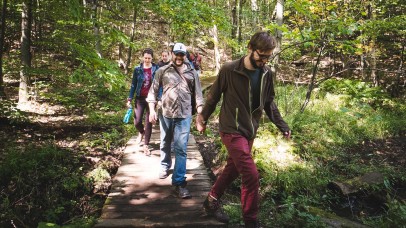
Most McGillians seeking an escape from the city ascend the stairs of Mount Royal or roam the winding concrete paths at Jean Drapeau Park. However, those looking for an authentic adventure in the wilderness should venture out to McGill’s Gault Nature Reserve, a 1000-hectare property owned by the university. Though often unexplored by students, the 60-year-old reserve is situated on Mont St. Hilaire and hosts a variety of athletic and educational activities that are open to the public year-round.

Test out the hiking trails

Students looking to enjoy the quiet countryside can amble along Gault’s secluded pedestrian paths during their visit. On autumn hikes throughout the property, visitors can take in sweeping vistas, local wildlife, and the changing foliage. Gault maintains eight trails of varying intensities which are accessible to the visitors 365 days a year. The trails span across 25 kilometres of forest and allow walkers to navigate their way along Lac Hertel and up the rocky Mont St. Hilaire hillsides. Though novices may find some of the trails challenging, staff is available at the visitor pavilion to advise hikers on their itineraries.

Snowshoeing

Once snow falls, outdoor enthusiasts are welcome to snowshoe across the reserve. The activity is difficult to attempt in an urban setting in which snow is regularly shoveled, but the reserve’s peaceful rural trails make this the ideal place to try the sport. Students can rent snowshoes from the university for 13 dollars, and, other equipment, such as snow poles, is also available. Though guests are only permitted to snowshoe on specified trails, the snow is fresh, and there is little foot traffic.

Observe research in action

Founded with the dual mission to provide public outdoor space and an open-air research facility to McGill students, Gault is home to a variety of scientific projects that visitors can observe around the property. Current field projects include Assistant Professor Virginie Millien’s investigation on the relationship between genetic mutations in mice and climate change. Also on site is Professor Andrew Gonzalez’s Large Experimental Array of Ponds (LEAP) project, featuring artificially-constructed aquatic communities used to study the impact of environmental stressors on freshwater ecosystems. Other smaller fieldwork projects also regularly take place on the grounds, and, if they are lucky, guests can witness scientific history in the making.

Learn about the local ecosystem

As an outdoor classroom, the bucolic reserve offers several opportunities to learn more about Montreal’s flora and fauna. In 1978, Gault was the first Biosphere in Canada given special status under the UNESCO’s Man and the Biosphere Program for its diverse ecological community. Today, the reserve is home to a diverse selection of fish, plants, and reptiles. Partnered with the Société d’ornithologie de la Vallée du Richelieu (SOVDR) bird-watching group, researchers have identified an impressive 200 species on the reserve. For students interested in learning more about the natural populations at Gault, the reserve also hosts lecture events throughout the academic year.  

From downtown Montreal, students can access the Gault Nature Reserve via the 11 bus to Mont-Saint-Hillaire and the Ligne Mont-Saint-Hilaire, which departs from Montreal Central Station.

Basketball, Men's Varsity, Sports

McGill men’s basketball holds off UQAM in thrilling victory

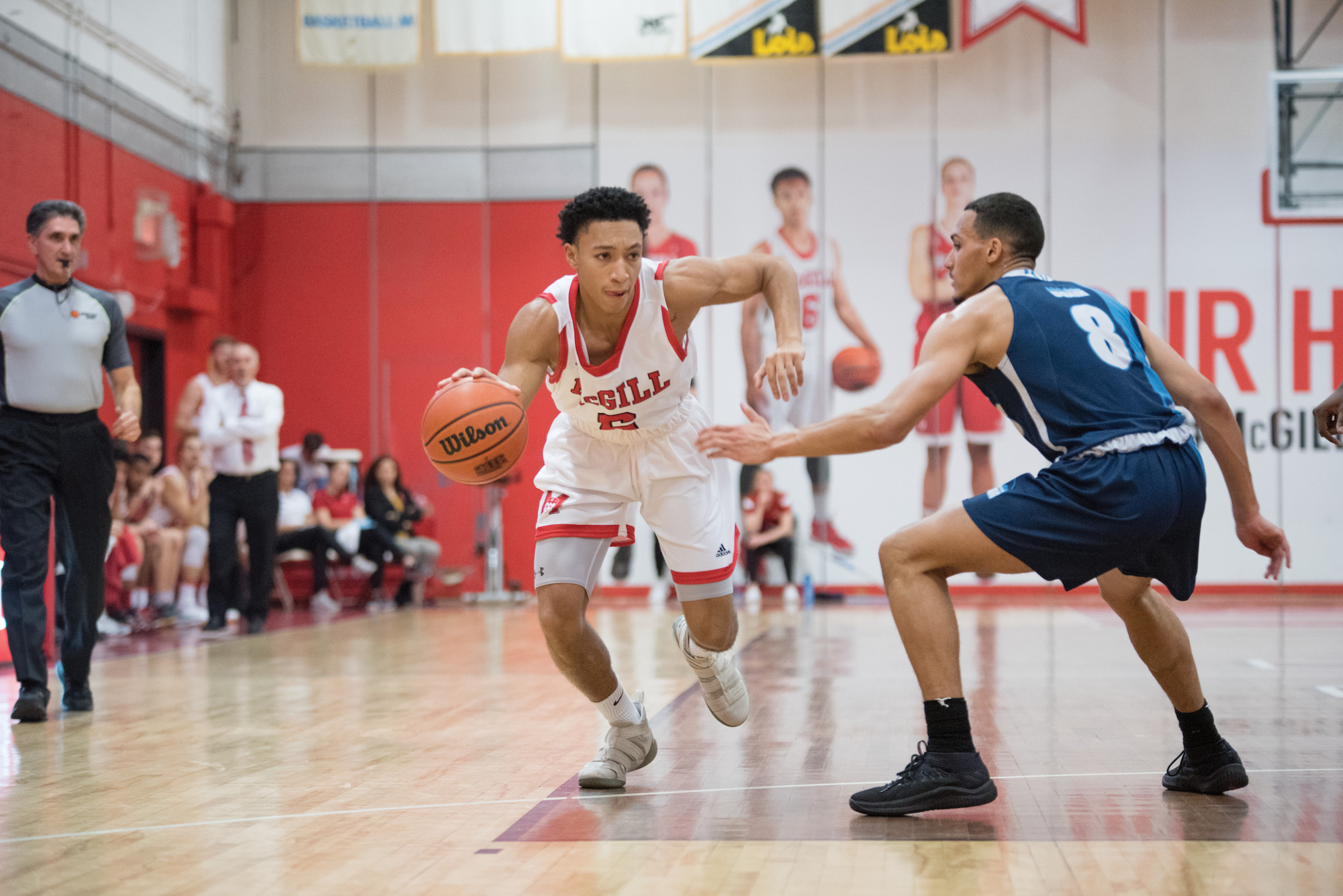
On Nov. 8, the McGill men’s basketball team (2-0) opened their season at Love Competition Hall against the Université du Québec à Montréal (UQAM) Citadins (0-2). In a hard-fought game, McGill won in the final seconds by a score of 62-60.

McGill started quickly, taking a 15-5 lead out of the gate. Fifth-year point guard Alex Paquin was red-hot, scoring the team’s first seven points. The game started to even out as UQAM began hitting their shots and gaining momentum, but fourth-year-transfer McGill forward Levi Londole hit a buzzer-beater, and McGill finished the first quarter up 23-11.

Londole carried his dominating play right into the second: He converted a three-point-play right out of the gate, and McGill stretched their lead to 17, their largest of the night. However, McGill then faltered, letting the Citadins back into the game. UQAM went on a 10-3 run to get back within striking distance before McGill pulled away, once again, to finish the half up 35-24.

“We knew they were [going to] come out hard, so we made sure we were [going to] come out as hard, if not harder, to not give them hope from the beginning,” Paquin said.

At the start of the second half, UQAM turned up the intensity, starting the second half just as strong as McGill did to open the game. The Citadins put up a quick 14 points to McGill’s four, bringing the score to 39-38. With the help of a deep three-point shot by Paquin and a string of crucial defensive stops, McGill brought the game back under control. At the end of the third quarter, they led 48-43.

The two sides traded control of the game throughout the fourth quarter. Late in the frame, McGill went on a quick 6-0 run to give them a 56-48 lead. With momentum shifting, it seemed like enough to carry them to victory. However, UQAM answered with 12 consecutive points to take a late 60-56 lead with 58 seconds left on the clock, shocking the packed crowd.

The home side stayed focused: McGill fifth-year guard Avery Cadogan scored a key three-pointer to cut the deficit to one with 30 seconds left. On the next play, fourth-year point guard Isaiah Cummins got the ball off of a defensive rebound, drove right to the basket, and scored with 17.8 seconds remaining. He also drew a foul and sunk the free throw to make it a 62-60 game.

“I just made [a] few bad plays the few plays before, so I had to make up for it,” Cummins said. “So, I was going to the rack, and I knew we didn’t have much time left, and […] there was only one guy in front of me. So, I just took it to the rack.”

After Cummins knocked down the free throw, fifth-year McGill forward Noah Daoust made a key block, preserving the lead and sealing the game.

McGill moved to 2-0 with a win against Université de Laval (0-2) on Nov. 10 and will next play at home against Bishop’s University (1-0) on Nov. 15.

Moment of the Game

With 17.8 seconds left, fourth-year guard Isaiah Cummins won the game for McGill with a driving three-point-play.

Quotable

“We [have to] do a better job with our young kids and having them understand the scouting report and who we want to shoot the ball and who we don’t.” – Head Coach David DeAveiro on how to prepare themselves for their next game.

Stat Corner

With strong play on both sides of the court, Levi Londole filled the stat sheet. He put up 13 points, a team-leading nine rebounds, and two blocks.

Science & Technology

Cannabis as a key for chronic illness

Since the legalization of cannabinoids—chemical compounds found in cannabisfor medical purposes in 2001, a growing number of Canadian physicians have turned to medicinal marijuana for patients suffering from cancer and other chronic disorders such as multiple sclerosis and arthritis.

Cannabinoid receptors, which bind cannabinoids, influence cognitive and physiological processes and are part of a larger network of receptors that compose the body’s endocannabinoid system. These receptors respond to the two active cannabinoids in cannabis, cannabidiol (CBD) and tetrahydrocannabinol (THC). Positive effects from cannabinoids include pain suppression, enhanced mood, and increased appetite.

Some members of the medical community are eager to use the benefits of cannabinoids to treat their patients. Michael Dworkind, a physician at the Jewish General Hospital, co-founded Santé Cannabis, a Montreal-based medical organization which provides patients with medical cannabis prescriptions, in 2014. Santé Cannabis connects patients to a network of healthcare workers including physicians, educators, and cannabis suppliers.

Specifically, Dworkind is interested in cannabinoids as a potential solution to Canada’s growing opioid crisis, working as a substitute, or at least a complement, for opioid treatment. Currently, 13 per cent of Canadians use prescription opioids, which remains the most frequently-prescribed treatment for chronic illness despite a 5.5 per cent risk of addictive use.

“Opioids and cannabinoids work extremely well together,” Dworkind said. “They are synergistic in their benefit.”

Under Dworkind’s process, following an initial interview process with a doctor, the patient must meet with an educator to learn how to use cannabis responsibly. Only after the patient has completed this process are they put in touch with licenced suppliers. Working with the suppliers to personalize the THC-to-CBD content gives them a newfound degree of involvement in their treatment options.

Despite Dworkind’s optimism, some doctors are not as convinced by the effects of cannabinoids; according to him, only five per cent of doctors in Quebec prescribe cannabinoids. Jeff Blackmer of the Canadian Medical Association emphasized the need for further research, attesting to the fact that eight out of nine physicians in Canada are uncomfortable discussing or providing access to medical cannabis.

“It’s important to recognize that, by and large, that [the] level of evidence [for cannabinoids’ benefits] doesn’t reach the quality that we demand for every other product that physicians prescribe,” Blackmer said in an interview with CBC.

Blackmer’s apprehensions are not unfounded. Like alcoholism and similar psychostimulant abuse disorders, cannabinoids may foster psychological dependence. To combat this effect, doctors who prescribe medical cannabis in Quebec remain in contact with suppliers to ensure that patients are getting the right amount.

“When we see a growth in consumption […], we have to put limits on it, or we ask them to leave the program,” Dworkind said.

Synthetic cannabinoids, such as Nabilone, as well as cannabis-derived medications like Sativex, are commercially available but possess their own set of risks. Similar to cannabis, these options are not covered by provincial health insurance plans.

“Whereas the conventional therapies are covered by the government, non-traditional cannabinoid therapy is not [covered by the government],” Dworkind said. “A bottle of Sativex, which would last two weeks, costs $150.”

Nonetheless, cannabis is a cheaper option for patients on a budget.

“People who have work-related injuries are on a dozen drugs,” Dworkind said. “Total up that amount and compare it $5-$10 a gram, a gram or two a day of cannabis. Cannabis treatment is cost effective.”

The team at Santé Cannabis continues to push forward, educating patients in the hopes that they will embrace cannabinoid treatment for their own sake.

“All of this is about human rights and politics,” Dworkind said. “Quality of life is our bottom line, after all.”

Arts & Entertainment, Film and TV

‘Suspiria’ dances to a vicious conclusion

Suspiria, Luca Guadagnino’s remake, or ‘cover version,’ as he calls it, of Dario Argento’s 1977 horror classic, is a hard pivot from both its source material and Guadagnino’s previous film, Call Me By Your Name. Whereas those films isolated their characters to watch the play of emotions in specific environs—CMBYN in a bourgeois summer home and Argento’s Suspiria in a witch-infested dance academy—the newest iteration of Suspiria has more all-encompassing ambitions. Nonetheless, the dense script is not enough to smother Guadagnino and his usual team’s masterful formalism. The clothes are beautiful; with a few notable exceptions, the people are beautiful; the dance scenes are chaotic, and the queer undertones are palpable.

Suspiria opens with Patricia (Chloё Grace-Moretz) frantically babbling about a coven to her psychiatrist. Drenched in sweat, she explains the hierarchical layers of the witches’ sanctum and the ways in which they uphold the facade of a dance company. As she paces from bookshelf to bookshelf across the office floor, the camera cuts between several vantage points on her increasingly-manic movement, affecting an unnerving sense of surveillance that is less preoccupied with monitoring than with intimidation. An “Appointment In Progress” sign flashes a menacing neon red outside the office door. The psychiatrist, a stodgy academic type played by Tilda Swinton in prosthetics, is concerned, but ultimately dismisses her. Immediately, Guadagnino and screenwriter David Kajganich introduce one of Suspiria’s key themes: The manifold power dynamics of suppression and repression.

The image of a ‘hysterical’ woman pleading desperately with an indifferent authority figure is a loaded signifier in 2018, and the script revives this motif in less than subtle ways throughout the film. The scope of Suspiria’s injunction is expanded, however, when Susie (Dakota Johnson), a Mennonite from Ohio, arrives at the aforementioned dance studio located immediately west of the Berlin wall.

In Kajganich’s script, however, the signification of the Berlin Wall is insufficient for his historical revisionist ambitions. The film promptly reveals Patricia’s involvement in the Red Army Faction (RAF), a militant leftist group that reached international fame in 1977, the year in which Suspiria is set, with the events of the German Autumn.

This much information would be cumbersome to disclose in any film, but Suspiria suffers from a particularly-clumsy unspooling of its complicated historical backdrop. Tropey context-giving clues like radio excerpts and political graffiti alert viewers that context is essential to the narrative, but they fail to consistently connect the plot beyond frustratingly broad strokes. Guadagnino and Kajganich are clearly stressing the necessity of violence in social upheaval, but the relevance of specific historical events is lost in the film’s dedication to carnage.

Of course, when Suspiria does catharsis, it does it right. In the moments it opts to let the plot step aside, it delivers gut-wrenching violence with a painterly precision. The film’s climax, in particular, unleashes the neon red coloured carnage that the witches are no longer able to suppress with brilliantly choreographed chaos.

Though the script could have benefitted from a firmer hand in the editing process, the production is executed masterfully. Guadagnino’s editor Walter Fasano finds himself a far cry from the languid rhythm of CMBYN, working instead in the vein of another 1970s horror classic, Don’t Look Now, to concoct a claustrophobic sense of spatial and temporal unity. The film’s frantic editing and distribution of information threaten to suffocate the characters, despite Suspiria’s extended runtime, but Johnson and Swinton are fantastic nonetheless, as neither character ends up close to where they started. As always, with Guadagnino and his costume designer Giulia Piersanti, the clothes are ravishing.

Suspiria has too much on its mind, and, though it is formally dazzling and strikingly ambitious, it never coalesces to form a consistent thesis. The ghosts of fascism, national guilt, motherhood and false motherhood, and the inevitability of violence in times of social instability all make potentially-interesting cameos over the film’s 152 minutes, but only its neon red carnage emerges with the vicious potency to which Guadagnino aspires.

Science & Technology

Understanding the most common STI: HPV

Human Papillomavirus (HPV) is an extremely common sexually transmitted infection (STI); in fact, up to 80 per cent of sexually active men and women will be infected with the virus at least once in their lives. The infection can be transmitted through skin-to-skin contact and primarily manifests on skin and mucous membranes, causing benign warts. However, it can also be associated with the onset of prostate cancer and cervical cancer. This month’s Movember campaign and last month’s Cervical Cancer Awareness Week provide opportunities to raise awareness for the potential health risks of HPV.

“HPV has been linked in recent years to the development of cervical cancer,” Sabrina Piedimonte, a resident doctor at the Montreal University Health Centre, said. “More recently, we know that it’s associated with vulvar, anal, penile, and head and neck cancers [….] That being said, 85 per cent of people are infected with the virus, but the good thing is that most people are young and healthy and can clear the virus.”

As an STI, contracting HPV can generate painful social stigma and feelings of shame. Many of the factors that put an individual at a higher risk of being infected, including having multiple sexual partners, being sexually active from an earlier age, having HIV or herpes, and smoking, are also subject to disparagement. An overlapping conglomeration of stigmas can have serious repercussions that extend far beyond physical health. Marginalized people are most affected by STI-based discrimination and may additionally have less access to adequate healthcare. 

For those infected with the virus, a promising treatment is available. The HPV vaccine has been shown to not only prevent the transmission of HPV, but also helps the body fight off the virus when already infected. Studies even show that the vaccine can prevent the relapse of precancerous lesions in the cervix. Thus, despite common misconceptions, it is still valuable to get the vaccine even after becoming sexually active. In support of this form of treatment, the Canadian government offers free vaccination to girls under the age of 18 and to men who have sex with men up to the age of 26.

“So far, most people get vaccinated when they’re in elementary school or high school,” Piedimonte said. “[But] not everybody in university has had that chance to be vaccinated or protected. This is a population that’s at higher risk for having multiple sexual partners and not necessarily having access to a doctor or knowing that they should have a PAP test.”

Part of a routine check-up for many women, PAP smears are a cervical screening technique used to test for pre-cancerous tissues. Ideally, they should be performed once every three years. However, if irregularities are found, these tests may be performed more often for monitoring purposes.

The Community Ambassadors to Conquer HPV (CATCH) teamed up with resident doctors from McGill Department of Obstetrics and Gynecology last month to provide students with STI screening, PAP tests, and HPV vaccinations. In addition to the clinic, they held information sessions about HPV, cervical cancer, and general women’s health. The collaborative effort recognized the arduous process of accessing  preventative testing and vaccinations outside of the university campus. The McGill Clinic also performs PAP smears, STI testing, and vaccinations; however, these services are only offered by appointment.

Off the Board, Opinion

The art in athleticism

When I was eight years old, I got the first hit of my competitive softball career. I don’t remember where I hit the ball to, but I remember standing tall on second base, feeling shock, pride, and pure happiness: An exhilarating combination.

Hits came more regularly after that. I spent nine summers playing competitive softball, working my way up from small, backyard tournaments in the San Francisco Bay Area to showcases with over 100 teams. Softball was my entire life during the summer, and I would not have had it any other way. Years later, I’m still benefitting from the lessons the game taught me about competition, grit, and even art.

My life was consumed by other sports during the off-season. There was soccer and cross-country in the fall, more soccer in the winter, and swimming in the spring. No matter the season, I was always playing a sport. I enjoyed some of them more than others, but I was always happy, and I readily accepted my identity as the ‘sports girl.’ I always feared falling into the dumb sports jock trope, though. My perception of identity was molded by pop culture: The music kids were geeky, the nerdy kids were boring, and the sports kids were dumb. My aptitude in math allowed me to escape labels typically attributed to other athletes. So, I was the smart sports girl. But even this label didn’t encompass all of my interests.

I was missing a creative side. In my mind, neither athletes nor mathletes could be artistic, and I went on believing that I would never be an ‘art person.’ I focused on doing well in what I knew I could do: Softball.

Sydney Hersh was the best pitcher on our team. Throughout my first summer of competitive ball, I begged her dad to teach me how to pitch. When he finally agreed, I soaked in everything he told me and practiced all year. By the next summer, I was the ace of my ten-and-under team.

Pitching was an incredible learning experience. The countless hours I spent practicing in the bullpen, the long innings in the grueling desert heat, and every moment in between taught me something. There were obvious lessons like teamwork, discipline, and work ethic. But, pitching threw some curveballs, too.

I had four pitches in my repertoire: The fastball, changeup, curveball, and drop ball. I worked with different coaches over my nine years as a pitcher, adjusting my form, grip, and motion for each of my pitches. With time, I started to feel attached to them; they were uniquely mine, like an artist’s creations. All of a sudden, in the midst of the dirt and the sweat, I, the sports girl-slash-math kid, was creating art.

I had always held such a rigid idea of what I was and wasn’t supposed to like. At last, there was an intersection between what I thought I couldn’t do and what I knew I loved to do. I stopped thinking of my interests as siloed parts of my life. I didn’t have to turn off my math brain on my way to softball practice or leave my identity as an athlete behind when I walked into a classroom. And, I definitely didn’t have to live my life believing that I couldn’t be creative.

Arts & Entertainment, Film and TV

‘First Man’ shoots straight for the moon

Halfway through First Man, Janet Shearon (Claire Foy), wife of astronaut Neil Armstrong (Ryan Gosling), confronts a NASA official (Kyle Chandler) to demand information about her husband after a near-fatal test mission. Her response to the official’s attempt at reassurance is one of the film’s more memorable lines.

You’re a bunch of boys making models out of balsa wood,” Shearon says. “You don’t have anything under control!”

Director Damien Chazelle invites his viewers to agree. First Man, adapted from James R. Hansen’s book of the same name, is pervaded by a feeling of insecurity. Recounting the lead up to the 1969 Apollo 11 mission, the film subverts other cinematic treatments of outer space. Chazelle swaps the mystery and majesty of space films like 2001: A Space Odyssey, Solaris, and Apollo 13 for an intense, shaky immediacy, placing the viewer inside the claustrophobic cabins of the spacecraft as they rattle their way skyward.

The story’s human drama is equally intimate, and Gosling and Foy tether the film with their performances as Armstrong and Shearon. We first see Gosling as the titular hero on a high-altitude flight that nearly ends in disaster.  His subsequent indifference to the ever-present danger of the space program, and his disregard for the distress of his loved ones become Armstrong’s most defining character traits—throughout the film, he remains enigmatic and distant. As political and familial turmoil swirl around him, Armstrong’s gaze remains fixed on the moon and the memory of the loss of his daughter to a brain tumour. Foy plays against Armstrong’s detachment with strength and charisma, serving as her family’s anchor in the absence of her husband.

Central to Chazelle’s vision is the story behind the mission itself, told with dramatic understatement. The deaths of a crew of astronauts in a cabin fire are made all the more shocking by how frankly the film presents them. The death of Armstrong’s daughter in the film, initially treated without much sentimentality, quietly follows him to the surface of the moon.

The film’s intimate camerawork effectively conveys Armstrong’s claustrophobia both in the cockpit and at home. His inability to find breathing space and to reconcile with his grief on the ground drive him to look for calm beyond the tethers of Earth. Justin Hurwitz’s melancholy score punctuates this emotional trajectory, evoking Armstrong’s loneliness amidst the lunar landscape with the sound of a theremin.

Cinematographers often explore personal loss against the canvas of space, as in Alfonso Cuarón’s Gravity, or Christopher Nolan’s Interstellar. But while Chazelle’s commitment to realism creates an experience more grounded and human than either of these films, the extensive dramatic understatement of the film is ultimately more stifling than illuminating.

The domestic drama of the story, told in a direct, intimate fashion, simply isn’t enough fuel for the film to escape the gravity of its subject matter.  The moon landing seems to exist on a level of pure mythology, but the personal drama doesn’t provide enough of a counterweight to the raw excitement of the space sequences to make the film’s exploration of the costs of the mission truly resonate.

Where First Man succeeds most is as a visceral, first-person account of the sheer unlikeliness of the Apollo 11 mission. In its portrayal of the space program’s unceasing, absurd danger, the film evokes a renewed awe for the 1969 mission. First Man’s unrelenting, unsteady energy makes its few moments of stillness all the more profound, and the moon landing sequence alone is worth the cost of a ticket. Yet, leaving the theatre, the viewers might find themselves struggling to see the significance of the human drama—and humming “The Blue Danube” all the way home.


McGill, News

Democrats Abroad at McGill host midterm election viewing

Democrats Abroad at McGill (DAM) hosted a midterm election viewing party on Nov. 6 at La P’tite Grenouille, where at least one hundred McGill students gathered to watch the votes come in. With each updated CNN projection, the group refocused on the screen and waited for results. Each Democrat success brought cheers and claps, and defeats triggered cries of disappointment. At 11 p.m., CNN projected that the Democrats would take back the House of Representatives and the room exploded with victorious energy, happy tears, and hope.

This was a race two years in the making, with Democrats across the U.S. and abroad preparing for the midterm elections since the election of President Trump, hoping to gain a majority in Congress. Congress is the legislative body of the U.S. government, which is made up of Senate and House of Representatives.

The Democrats were unable to wrestle control of the Senate from the Republicans. However, attendants were satisfied that the 115th Congress now includes the most diverse group of members ever, as the country sent its first black, LGBTQ, Native American, and Muslim women to Congress or governor’s offices. Issues such as gun regulations, climate change policies, women’s reproductive rights, and immigration laws are all at stake, and the outcome of the midterms tipped the balance toward the blue.

DAM Vice-President (VP) External Amanda Demers initially felt uneasy about the results due to Republican retention of the Senate but believes the Democrats’ victories are monumental.

“From Gillum’s [contested] loss in Florida and Beto’s loss in Texas, these key democratic candidates did not end up winning their races,” Demers said. “[But], looking more closely at the results, I am very content with how things turned out, as the American political sphere has diversified greatly [because of the] the influx of more women and minorities into Congress overall.”

The midterms saw a record number of young voters as 31 per cent of young people aged 18 to 29 voted, an increase from the 21 per cent recorded in 2014. DAM President Claire Rawson-Dannenbaum commented on the value of young people voting in the masses.

“This year, we’ve seen a huge increase in young voters in early voting, which is amazing,” Rawson-Dannenbaum said. “The youth are a huge portion of the population, but our voices rarely come together enough to strongly be heard.”

Brent Jamsa, U0 Arts, is the Project Manager for DAM. Jamsa organized and handled DAM’s phone banking operations during which members of the club and volunteers called registered Democrats in the U.S. about supporting certain candidates. This semester, DAM made over 4,000 calls for candidates in districts where election results could go either way.

“It was nice to speak with fellow Americans about progressive issues, and we always got praise when we told people over the phone that we were Americans at McGill,” Jamsa said. “They were happy to know that young people [abroad] were committed to helping the situation back home.”

The presence of Canadians and non-American international students provided a diverse environment for politically-inclined students to convene and discuss their views.

“I was thoroughly surprised, as the first few people who came to our midterm event were mostly other international students and Canadians,” Demers said. “It was great and also shocking to have such a turnout and support from our fellow students, even if their interests do not directly lie with U.S. politics.”

Leading up to the 2020 Presidential Election, DAM will continue registering American students to vote over the phone and helping students obtain absentee ballots. Shona Watt, BS ‘09, expressed optimism for the future with regard to young people casting their ballots.

“I’m so happy to see that there are record numbers of young people voting,” Watt said. “People often feel that political candidates don’t represent them or that their one vote doesn’t matter. I see voting as one way to have a say in what kind of a world we want to live in.”

Baseball, Sports

2018 MLB award predictions

With another baseball season in the books, it is time for awards to roll in. On Nov. 12, Shohei Ohtani and Ronald Acuña Jr. took home the American and National League Rookie of the Year trophies, respectively. With more awards to come, The McGill Tribune has compiled a guide to this week in baseball awards.

Tuesday Nov. 13

Managers of the Year (Bob Melvin, OAK; and Brian Snitker, ATL)

Alex Cora won 108 games—and the World Series—but Bob Melvin will be the one to walk away with the American League Manager of the Year Award. Melvin led an overlooked Athletics squad to 96 wins and the playoffs. He got career seasons from Jed Lowrie and Stephen Piscotty and coaxed yet another .247 season out of Khris Davis. Maximizing the production from his veterans, Melvin also oversaw his young corner infielders Matt Chapman and Matt Olson who broke out into premier power hitters and defenders.

National League voting will be much closer; Craig Counsell and Brian Snitker are both worthy finalists. Counsell managed the Brewers, who brought in Christian Yelich and Lorenzo Cain this past offseason, to the best record in the National League. However, the Manager of the Year award more often goes to a candidate with lesser expectations, and Braves manager Brian Snitker’s ability to turn the 2017 90-loss Braves into a 2018 90-win club should earn him the award.

Wednesday Nov. 14

Cy Young Awards (Blake Snell, TB; and Jacob deGrom, NYM)

The AL Cy Young race features a mix of faces both old and new. Blake Snell was 2018’s breakout pitcher with a 21-5 record, 1.89 ERA, and 221 strikeouts. Snell was the only consistent starter on a Rays squad that won 90 games. His gaudy stats will push him above veteran workhorse Justin Verlander, whose 290 strikeouts and 2.52 ERA would have earned more serious consideration for the award in previous years.

Jacob deGrom will win the NL Cy Young award despite his team’s best efforts to sabotage his brilliant season. The pitcher managed a mediocre 10-9 record after the Mets supplied him with a mere 3.7 runs per game of run support. Max Scherzer’s 300 strikeouts and 18-7 record will draw the attention of some voters. But, ultimately, deGrom’s 1.70 ERA and 269 strikeouts will push him past Scherzer given modern voters’ tendency to look past win-loss records.

Thursday Nov. 15

Most Valuable Players (Mookie Betts, BOS; and Christian Yelich, MIL)

This season, Mike Trout posted a career-best mark in OPS+, an advanced metric that normalizes a hitter’s on-base plus slugging percentage relative to the league average. But even his glittering mark of 199, which shows he hit 99 per cent better than the average MLB hitter, will prove insufficient. Once again, Trout will be robbed of the American League MVP award as a result of the Los Angeles Angels missing the postseason. Mookie Betts will be popular with old-school voters as he was the heart of the best-hitting outfield in baseball; and, the Red Sox’s 108 wins certainly won’t hurt, either. Betts’ .346 average, 32 home runs, and MLB-leading 10.4 Wins Above Replacement per Fangraphs (fWAR), will be enough to hold off Trout for AL MVP.

Christian Yelich led the National League in batting average, slugging percentage, and fWAR. He pulled away in the NL MVP race during one of the best individual second halves of a season in MLB history. Colorado’s Nolan Arenado won his second straight Platinum Glove award, but voters will discredit his offence because he plays in hitter-friendly Coors Field, and Javier Baez’s league leading 111 runs batted in aren’t enough to challenge Yelich in any significant way.


Read the latest issue

Read the latest issue