

Latest News

Private, Science & Technology

A sustainable environment and basic income go hand-in-hand

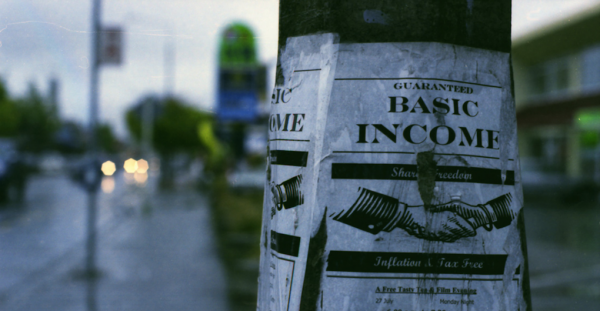
In recognition of the International day for the Eradication of Poverty on Oct. 17, Asian Women for Equality hosted a panel discussion on the synergy between a guaranteed livable income and an environmentally-sustainable future.

In the face of the current environmental crisis, there is a need for a massive upheaval of individual and societal behaviours. According to Rob Rainer from the Basic Income Canada Network, the unconditional provision of a regular, reliable basic income could be a crucial component of this larger paradigm shift.

“We need time to reflect on issues broader than our own survival,” Rainer said. “A basic income can provide a foundation and springboard for this reflection [.…] It can provide a sense of calm when you wake up in the morning.”

Canadian policy already includes some programs that act like basic income, such as the Canada Child Tax Benefit, which helps eligible families raise their children, and the Old Age Security program which assists Canadian seniors.  However, as Rainer pointed out, there is a ‘missing middle’ in these income assistance programs, and the Canadian working class that is sandwiched between the youth and the elderly does not have access to robust welfare systems. Despite setbacks, such as the recent cancelling of the basic income pilot project in Ontario, Rainer believes in the value of basic income to a sustainable economy.

“[A basic income] could be an expression of our collective willingness to be there for each other,” Rainer said.

The adoption of a Carbon Fee and Dividend Policy, which charges a fee on carbon-based fuels and distributes the gains through dividend cheques, could be the key to financing a proposed basic income transfer. for instance, taxing activities that exacerbate climate change, like burning fossil fuels, can provide the revenue for a basic income.

While obtaining a Canadian basic income might be feasible in the not-too-distant future, there is little, if any, discussion on the position of refugees in the debate. Paul Clarke, executive director of Action Réfugiés Montréal, referenced an increased modern risk of small island populations getting displaced and ending up as ‘climate displaced refugees.’ According to Clarke, policies like a basic income are usually reserved for citizens or permanent residents of a nation, leaving out migrants. Policies that address basic income for refugees could be crucial in helping environmental refugees adjust to life in a new country.

Many believe that achieving a universal basic income is a utopian fantasy.  However, success stories from other parts of the world exist. Manitoba implemented MINCOME, a basic income pilot project between 1974 and 1979. More recently, basic income programs have improved social outcomes in regions in Namibia and India.

“[A basic income] is certainly practical, as it has proven to work in many parts of the world,” Toby Davine, communications officer in the McGill Office of Sustainability, said. “It is backed by research and could be feasible in a country as wealthy as Canada. I like the part where a basic income provides the freedom to choose a job that you enjoy. For most of the world, [this] is not the case.”

ghosts
Commentary, Opinion

Bhalla vs. Bird: Are ghosts real?

It’s time to rehash a classic Halloween controversy: Are ghosts real? Contributors Sanchi Bhalla and Lucas Bird duke it out.

The case for ghosts – Sanchi Bhalla

History is littered with tales of ghosts, spirits, and spooky happenings. McGill itself is home to one of the most haunted streets in Montreal, Rue McTavish, second only to Rue Notre Dame in Old Port. With eyewitness accounts of lithe socialites’ ghosts reliving their youth in the Faculty Club, why are we hesitant to consider their existence, when they’re literally knocking down campus buildings’ front doors?

Everyone has experienced those moments: You feel like someone’s looking at you, or you see movement from the corner of your eye, or you have the gut feeling that that brush against your leg wasn’t just the wind. We discount these feelings too easily, and refuse to acknowledge the fact that if these moments are a communal experience, there might be something more to them.

The largely North American insistence that ghosts cannot be real reveals that humans are far more conceited than they have the right to be. It is impossible to understand all that surrounds us, and that mystery is what keeps us exploring and innovating. Images of the supernatural permeate cultures around the world. From the Pagans of the Roman Empire to the Wiccans of the modern day, societies have different ideas of what an all-knowing being is or if one even exists, but the concept of ghosts is universal. Every early civilizations has a story about spirits, whether malignant or benign.

We say that we don’t believe in ghosts, but I think that it’s because we don’t want to believe. We’re terrified of what ghosts’ existence would mean for ourselves and our own personal interpretations of the meaning of life.

The skeptic’s take – Lucas Bird

Normally, to combat ghost hysteria, I’d dust off an old classic: The utter absence of any factual documentation supporting their existence. Instead of revisiting well-trodden territory,  I’m opting to investigate why people think they see ghosts, and how they can distinguish between the paranormal and the psychological.

Psychologists have historically referred to ghost sightings as instances of a ‘sensed presence.’ They can be caused by changes in brain chemistry triggered by stress, lack of oxygen, and other cognitively-impairing circumstances. We sense a presence in situations that we already find disconcerting or stressful.

Social alienation also plays a role in how humans materialize anxiety. In the journal article “The Social Psychology of Fear,” social psychologist Kurt Riezler describes fear as a primary response to feelings of social isolation, an anxiety more common among individuals who are grieving the deaths of loved ones. When a person close to us passes away, they leave an abrupt gap in our lives that we try to fill by imaging that their essence is still with us.

Riezler describes death as a particularly intense anxiety because it’s so alienating. It is a truly impending terror for some people, and ghosts offer a solution to these existential fears. They suggest an ethereal life force that transcends our earthly existence. It gives us hope. We don’t just happen to see ghosts—we want to see them.

I don’t mean to belittle those who believe in ghosts. My partner won’t enter a dark room alone if we’ve recently watched a horror movie, but I still respect her beliefs. However, we should aspire to conquer the unknown, knowing that, if we encounter a spectre along the way, it is not the ghost we should fear, but the deeper anxieties and neuroses that conjure the paranormal.

Arts & Entertainment, Film and TV

‘Halloween’ is a fresh remake with substance and style

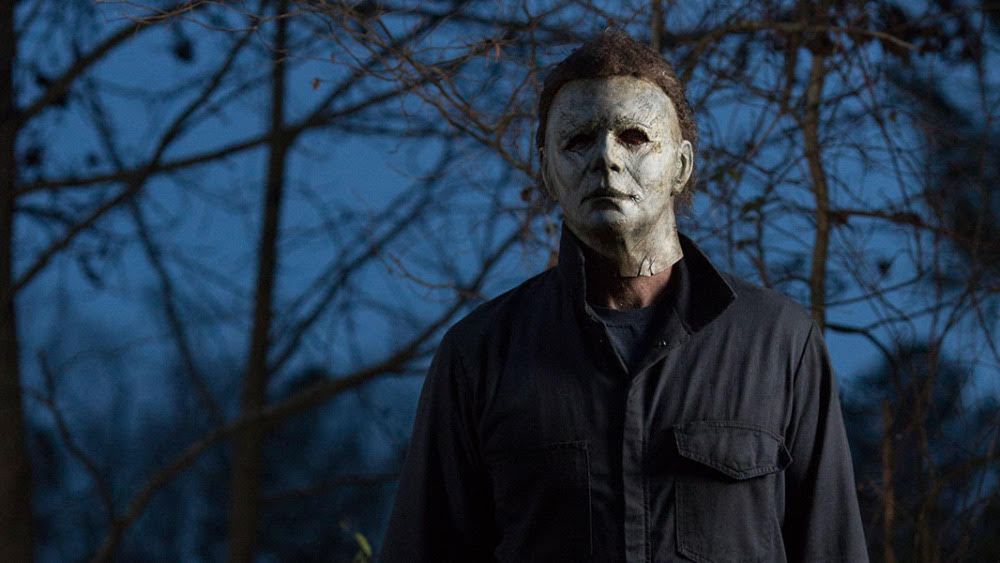
Halloween (2018), the reboot of John Carpenter’s 1978 horror classic of the same name, combines expert filmmaking and fiery performances. With a sly play on genre tropes and a refreshing dose of social commentary, Halloween is a welcome addition to the horror canon. It offers genuine scares while critiquing modern desensitization to mass violence and challenging the stereotypes of female horror protagonists.

In making Halloween, writer and director David Gordon Green along with co-writer, and frequent collaborator, Danny McBride (Pineapple Express, Eastbound and Down) ignored the original film’s seven sequels. Halloween returns to Haddonfield, Illinois exactly forty years after the masked serial killer Michael Myers’ (Nick Castle) ‘babysitter murders,’ of which then-seventeen-year-old Laurie Strode (Jamie Lee Curtis) was the sole survivor. Laurie, now a grandmother, has never healed from the trauma of her ordeal; she has isolated herself in a doomsday bunker in the woods, waiting to exact her revenge. Laurie’s daughter Karen (Judy Greer) and granddaughter Allyson (Andi Matichak) struggle with their strained relationships with her, but when Myers escapes from prison, the three generations of Strode women must either hunt together, or be hunted.

This year, films like Hereditary and A Quiet Place have proven that artistically-bold and character-driven horror films can lead to box office success. Halloween jumps on the bandwagon, taking a surprising number of stylistic risks for a mainstream slasher, especially in its cinematography. Director of photography Michael Simmonds laces the film with some truly stunning visuals, including suspenseful long takes, surreal lighting, and optical illusions using shadows.

While it would be remiss to call Halloween a horror comedy, Green and McBride tap into their trademark sharp-witted humor for some genuinely funny sequences. Still, the comedy does not overshadow the horror, which remains visceral and grounded in reality. Indeed, Halloween does not shy away from practical gore effects, depicting some stomach-churning deaths. Green and McBride have updated the restrained, understated horror of the original, replacing it with a more gruesome and believable terror. As Alison and her friends point out, in a world where terrorism and gun violence have made death into just another daily headline, it takes a lot more than suburban teenagers’ stab wounds to make an impact. As Myers snaps necks and crushes skulls, against bone-chilling sound effects, Green and McBride intentionally prompt the viewer to reconsider why it takes so much for modern audiences to feel moved by suffering and death.

Modern horror remakes have a bad rap of either failing to capture the spirit of the original or producing a lacklustre, identical copy. Green and McBride manage to walk the line between homage and innovation—a dash of ‘70s flair and a handful of blink-and-you’ll-miss-it references to the original serve garnish an already engaging story. Halloween also relies on a strong supporting cast. While the usual suspects are all present—the hot blonde, the comic relief, the clueless boyfriend—Green and McBride’s writing turns these classic tropes on their heads to create sympathetic protagonists and subvert predictable narrative beats.

The amped-up violence is not the only component of the film rife with Green’s social commentary. Arguably, Halloween’s greatest strength is its female leads. Jamie Lee Curtis infuses her iconic role with charisma and raw emotion, supported by excellent performances from Greer and Matichak. Green and McBride are not interested in fetishizing violence against women—in fact, most of Myers’ victims are men. The combined forces of three generations of Strode women are an inspiring example of the potential that horror, a genre often criticized for misogyny, holds. The women in Halloween are proof that scream queens do not have to be virginal, flawlessly beautiful, barely clothed, or brutally abused to carry a horror film.  On the shoulders of its three heroines, Halloween succeeds at hearkening back to the beloved classic, while giving it a grisly yet socially conscious update for the twenty-first century. Green and McBride prove that as a genre, horror can be both canonical and reflexive.

Student Life

McGill-themed Halloween costumes

Dispatch avocado toast

Lucy Keller, Contributor

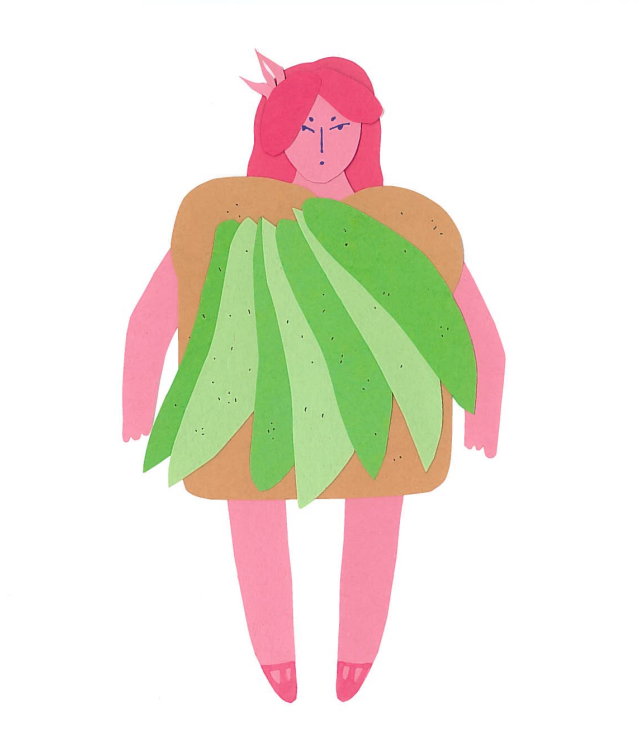
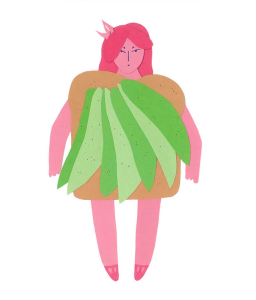
Warning: Not only will your friends think the idea is cute, but they may find you irresistible, too. To start off, find a large brown shipping box that suits your body size. Next, cut out two square torso-sized pieces from the box to use as a base. Next, attach green construction paper to one of the pieces of toast and draw pepper on with a dark-coloured marker. The final step for the toast section of your costume is to find suspenders, preferably green, and attach them to your two pieces of toast. Lastly, any Instagram picture of the Dispatch toast would be incomplete without its pickled onions; to represent this topping, curl ribbon with scissors and attach it onto a headband. Voila, you look as scrumptious as the fluffy avocado toast at Dispatch.

Poli-sci bro

Emma Carr, Student Living Editor


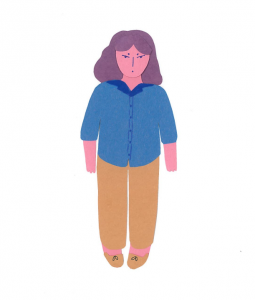
This costume requires minimal crafting and can be replicated using only a few wardrobe pieces: An oxford shirt, a pair of boat shoes, a pair of khakis, and a three-quarter zip sweater. To accessorize, tote around a thick stack of business cards and Ayn Rand’s The Fountainhead—if anyone asks, you have definitely read it.


Samosa

Sophia White, Contributor

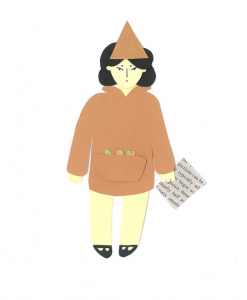
To dress as every McGillian’s favorite snack, use an oversized tan hoodie as a base and construct a triangle hat with brown construction paper or cardstock to emulate samosas’ distinct tetrahedral shape. For another creative touch, print out images of samosa filling ingredients and attach them to your abdomen. Then, tape another piece of solid brown paper on top to act as a flap, which can be lifted up to show off the tasty ‘filling.’ To round off the look, carry around a styrofoam cup of chutney with a plastic spoon and a stack of newspaper sheets.


Première Moisson coffee

Gabriela McGuinty, Staff Writer

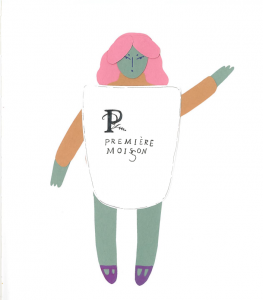
Start constructing the outfit with a hula hoop, tape, brown turtleneck, white sheet, and sharpie. Begin by draping the white sheet over the top of the hula hoop, pulling the fabric taut and securing it with tape. This will be be the lid for your coffee cup. To replicate the coffee cup’s cylindrical shape, tape the remaining white fabric to the sides of the hula hoop, and carefully wrap it around the entirety of the hoop. Once finished, cut three slits—one large enough for your head at the top and two others at opposite sides, to accommodate your arms. Lastly, draw the Premiere Moisson logo on the middle of one side of the sheet. To complete the outfit, don a coffee-brown turtleneck.

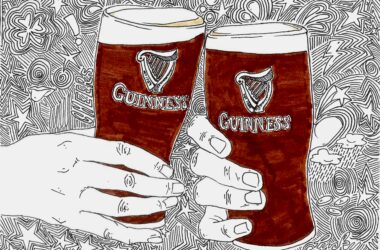
OAP beer

Mary Keith, Staff Writer

(Kaylina Kodlick / The McGill Tribune)

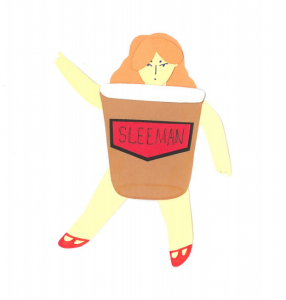
For this project, pick up a flexible poster board and white felt, along with brown, red, black, and white paint. Put some newspaper down or go outside, because this is going to be a messy task. Fold the poster board into a circular shape and secure with adhesive. Next, paint the top portion white for foam, use the brown paint to resemble the beer, and, finally, paint the Sleeman and OAP logos onto the cup. Once the can is dry, place felt around the edge to show foam leaking out, and use the remainder of the felt to create suspenders that hold the cup in place.

Out on the Town, Student Life

MAPP MTL dazzles the Quartier des Spectacles

From Oct. 18 to 20, MAPP MTL hosted its third annual mapping festival in collaboration with Quartier des Spectacles. The yearly festival celebrates video mapping, an art form in which images are projected onto an urban landscape. At this year’s event, three artists showcased a series of original, interactive video projections to the attendees, who were then given the opportunity to vote on their favourites. This lively celebration brought the Montreal community together and highlighted the innovative potential of technologically-driven art.

The theme of this year’s mapping competition was ‘parallel realities.’ All three of the interactive installations projected visitors’ real-time movements alongside fantastical animations onto building facades, creating imaginative and futuristic art pieces. Thien Vu Dang, executive and artistic director and co-founder of MAPP MTL, explained how, in this way, the art form obscures the boundary between reality and illusion.

“[The theme of parallel realities] comes from the identity of mapping,” Vu Dang said. “What’s interesting about mapping is this directly-intuitive augmenting of actual reality.”

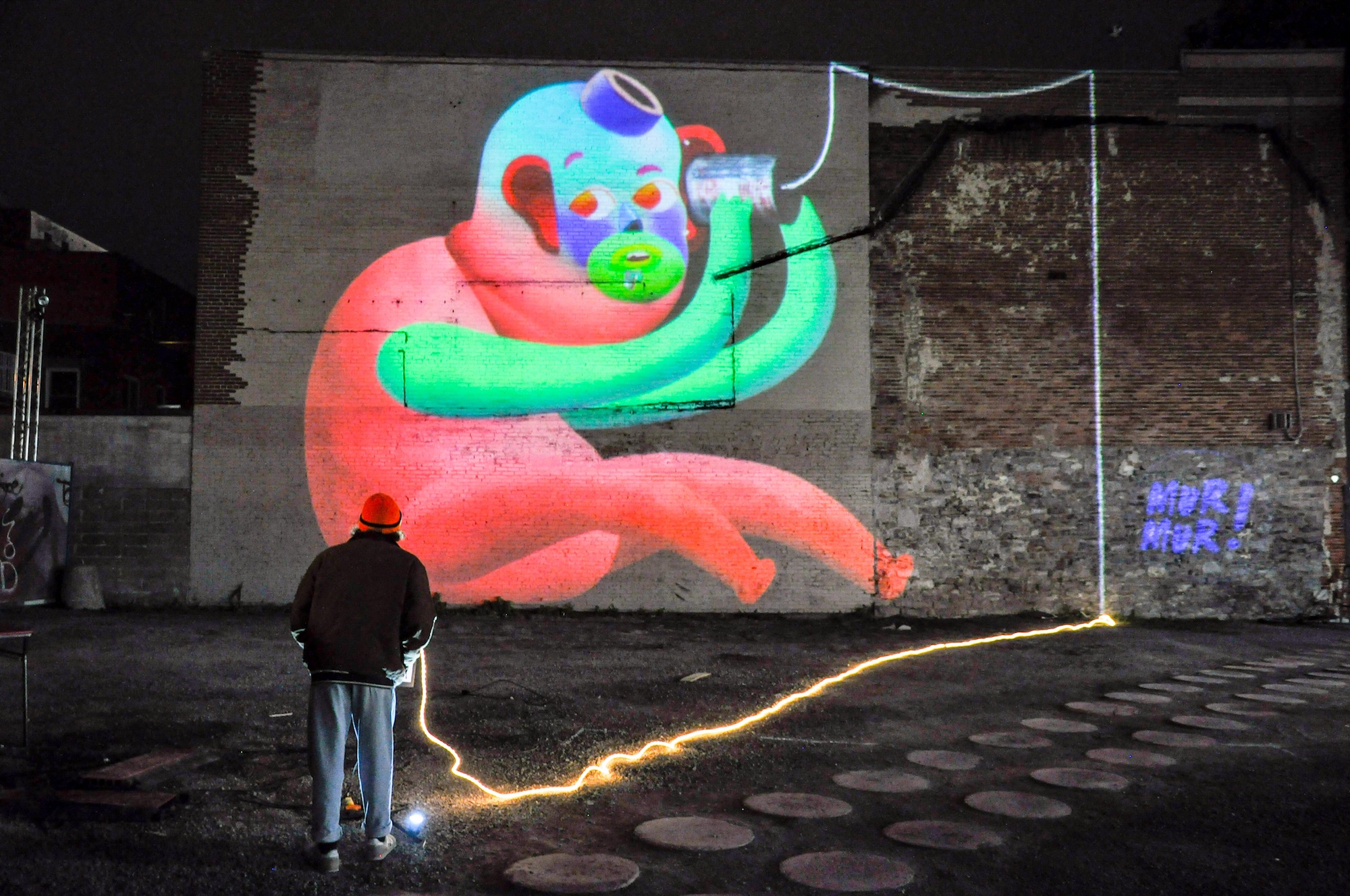
The three competing artists projected their work outside of the Saint-Laurent metro station. The first, “Point de rencontre” by Ensemble Ensemble, generated a virtual clone of viewers dancing nearby. hub studio’s “MurMur” enabled visitors to engage with an endearing animated giant by speaking into a tin can telephone. Thomas Ouellet Fredericks’ surreal piece, “la légèreté de l’être,” captured visitors’ images and animated them to appear as though they were cascading down the facade of the wall.

The public was encouraged to attend the festival during the first two nights and vote for their favourite projection. On the third night, “MurMur” was crowned the winner of the public vote, while “La légèreté de l’être” was selected by a professional panel composed of Vu Dang and other Montreal-based experts on mapping technology.

One of the festival’s defining qualities was its direct engagement between the public and the art. Vu Dang emphasized that the festival’s success was dependent upon the interaction with the audience, and that enlivened the art.

“The public plays an important role in the creation,” Vu Dang said. “Without the public, the creation doesn’t exist. So, the creation becomes alive with the audience.”

In the weeks leading up to the final contest, MAPP MTL hosted a variety of other interactive events to engage the public, including “Map Your Neighbourhood,” a creative workshop which taught adults and children how to animate their own drawings, orchestrated by Montreal artist VJ Suave. Suave equipped his bicycle with a projector and invited participants to follow him throughout Rosemont, the Plateau, and Quartier des Spectacles to tour the festival grounds. The bike projected the drawings, which came to life on their neighbourhood’s walls and streets.

The final showcase evening was a celebratory event, designed to be an experience unlike anything attendees had seen before. The projections captivated festival-goers and inspired viewers to interact with the exhibition. Vu Dang compared the artwork showcased at the festival to other major artistic breakthroughs in history.

“This art form reminds me a bit of the beginning of cinema,” Vu Dang said. “For people who saw [the first films ever], it was like magic. [MAPP MTL has taken this a step further], and, now, the image is transforming the space around people.”

MAPP MTL showcased the art of mapping, engaged the Montreal community, and pushed the boundaries of technologically-projected art. The festival also embodied Montreal’s unique artistic culture and brought local artists together with art enthusiasts of all ages into a shared space.

“A very personal connection with the city, that’s what that project created,” Vu Dang said.

Arts & Entertainment, Music

Artist Profile: Is it People releases first EP ‘Living Inside’

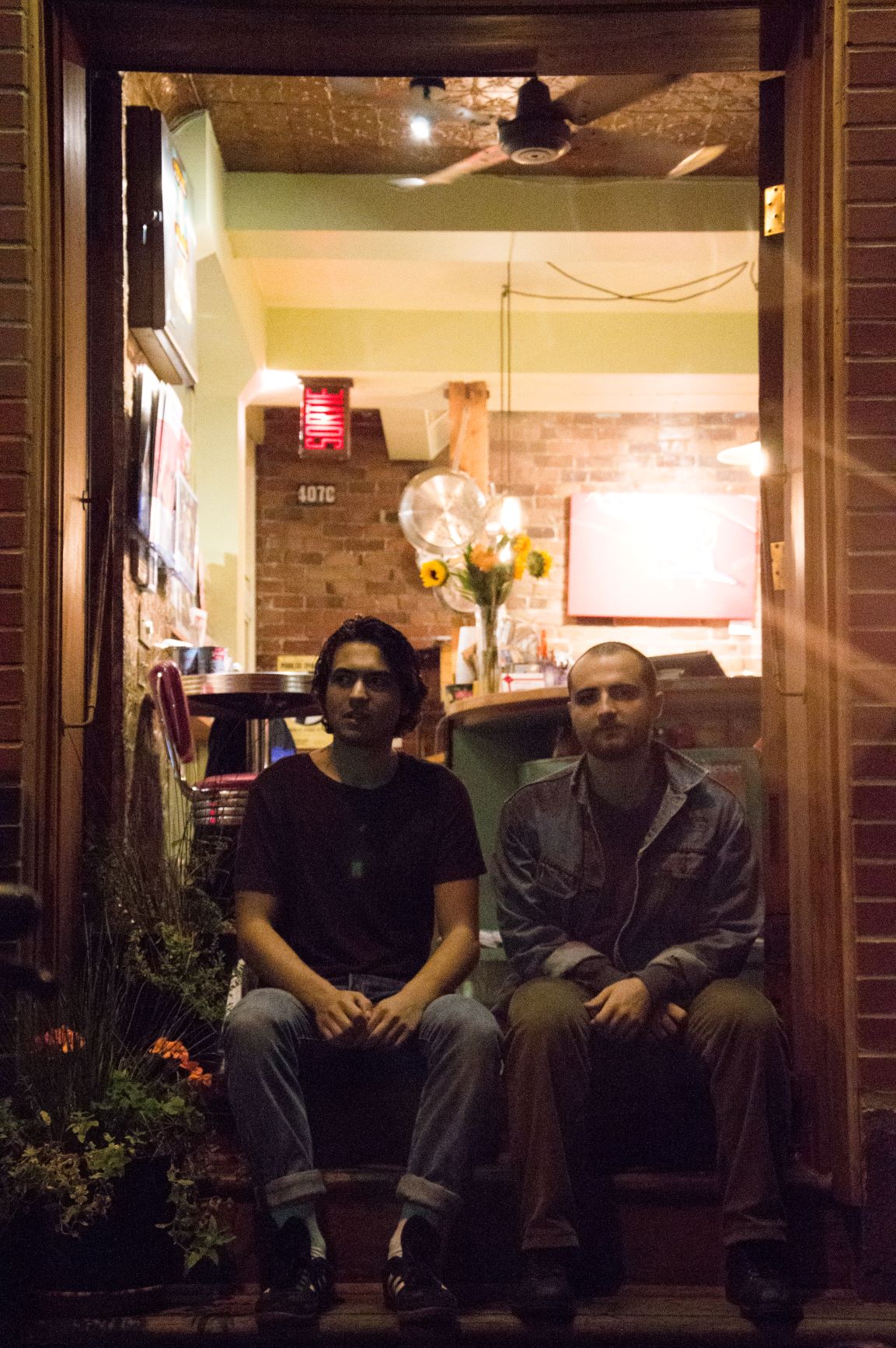
On Oct. 5, Is it People, the indie rock duo comprised of vocalist-guitarist-bassist Antoine Gallois, BCom ’18, and drummer Romain Peynichou, U3 Arts, released their first EP, Living Inside. Although it only features four tracks, Living Inside has been an ongoing project for the two musicians since October 2017, when they began casually playing together  on the weekends.

“When we started jamming, there was no decision that […] we were going to make an EP out of this,” Gallois said in an interview with The McGill Tribune. “When we took the Christmas break we were like, ‘These [sessions were] pretty cool. Let’s think about them and see if we can do something with them when we come back.’”

And so, Gallois and Peynichou recorded most of the EP over the Winter 2018 reading week, adding the finishing touches over the summer. All the recording took place in Peynichou’s bedroom.

“It was very DIY,” Gallois said. “Romain didn’t have that many microphones […] so we just borrowed some mics from McGill [and] from Romain’s friends.”

Peynichou attributes the success of this impromptu setup to the resources available at the McGill library as well as support from the tight-knit local music community.

Beyond the makeshift recording setup, the two took an experimental approach to producing the project. While artists typically go into recording with some plan of what they hope to create, Is it People improvised much of Living Inside’s instrumentals.

“We had these jams, we recorded them, and it’s after we recorded that we really made these decisions and really tortured ourselves with what we were going to do with them,” Gallois said. “It made it super hard, but fun and a good experiment.”

Owing to their lack of musicians, Is it People makes many of their stylistic decisions based on their status as a duo. Whereas a standard four-piece band involves a singer, guitarist, bassist and drummer, Gallois and Peynichou needed to record each of these instrumentals separately, and then layer them on top of each other in the editing process. According to Peynichou, this allowed them to build a fuller sound, and creates a unique aesthetic.

“On the record [there are] two guitars playing, a bass, keys, drums, and vocals, so we’d need other people if we want to perform it, so the music kind of lives only on the software,” Gallois said.

Much like Living Inside, Is it People had a spontaneous beginning. Gallois and Peynichou met during their first year at McGill and quickly figured out that they shared similar musical tastes. By their second year, they started playing together in Montreal jam crowds and, eventually, tried to form a band with others. While that band never got off the ground, Gallois and Peynichou found that they enjoyed working with each other and decided to continue playing together.

The duo drew inspiration for Living Inside from one of their favourite bands, Tame Impala, as well as their own experiences as students. Their lyrics discuss themes of loneliness and longing, and they frequently reference people they met during their university careers.

“The EP actually talks a lot about being inside your own head and dealing with those lonely hours that we can have as McGill students,” Peynichou said.

While both Gallois and Peynichou currently have their hands full with their academic careers, they are eager to continue experimenting and producing music as members of Is it People.

“I think right when we released [Living Inside…] I was like ‘oh, I can’t wait to make another one,’” Gallois said.

Living Inside is available on Spotify, YouTube, Bandcamp, and Deezer.

failure
Commentary, Opinion

Recognizing the successes that come from failure

I almost dropped out of high school in my sophomore year. I was failing three classes, and my already unstable mental health was suffering under the weight of academic pressure. However, I knew that these academic shortcomings, as awful as they felt, would not define my whole life. My boss at the comic book store where I used to work had dropped out of high school, gotten a GED, and gone to New York University. My own father had dropped out of high school and never gotten an equivalent diploma, but I watched him walk across the stage to receive his master’s degree when I was eight. Other students at my school were transferring to other institutions, repeating grades, and considering alternatives to post-secondary education. I wasn’t alone.

Thinking back to the lowest points I had in high school makes me feel like more of an outsider at McGill. This isn’t the kind of institution that’s supposed to accept students like me—students who didn’t see an academic future for themselves—but I got in anyway. This is a university that emphasizes its rankings and proudly touts its successful alumni. Despite McGill’s reputation for academic success, a school-wide email two weeks ago included a note from the Dean of Students, Christopher Buddle, titled “Learning to Fail,” encouraging students to learn from their failures and pursue counselling services if needed. 150 words did not suddenly fix McGill’s high-stakes environment or make support resources more accessible, but at least someone finally said the word ‘failure’ out loud.

The summer after my second year of high school, my mental health reached an all-time low. I didn’t have a stable home, and my self-destructive tendencies were reaching dangerous levels. I was completing an intensive feminist computer science program that I loved, but that was incredibly taxing. This wasn’t an environment in which I felt like I could fail. Being in a program for women and femme-aligned people in science, technology, engineering and mathematics (STEM) came with a pressure to succeed against all odds. I was not just representing myself: The program was meant to motivate young girls and femme-aligned people to go into computer science and related fields, defeat the patriarchy, and become inspiring figures for future generations.

I applied to McGill thinking I wouldn’t make it through a process that looked only at the numbers on my transcript, but I did. I entered university with a computer science major in the Faculty of Arts. Two weeks into my first semester, I changed my major to political science and turned computer science into a minor. By the end of the semester, I had withdrawn from a math class, nearly failed a computer science class, and dropped computer science from my degree. I had not defeated the patriarchy; instead, I felt like I had succumbed to it.

I’m still in a field dominated by men, but if the 2015 intensive program taught me anything, it was that academic successes and failures, whatever form they may take, do not define one’s worth. Success can simply mean getting up in the morning or handing in an assignment, and these acts should be recognized for the victories that they are. McGill takes a lot of pride in numbers and grades, but the classes that you fail can be just as valuable learning experiences as a perfect GPA. As Buddle emphasized, it is important to know how to fail and learn from failure, but, more importantly, it is essential to recognize personal successes, even when it seems like no one else will. I hope that’s something that McGill starts to promote, beyond their emails.

Know Your Athlete, Sports

Know Your Athlete: Tomas Jirousek

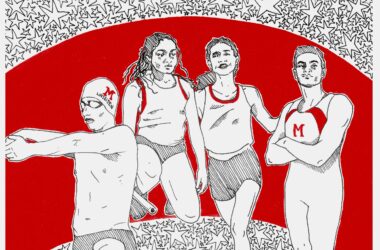
Tomas Jirousek is an indigenous athlete from the Kainai First Nation, a nation of the Blackfoot Confederacy. He is leading the #ChangeTheName campaign and demonstration on Oct. 31 at McGill that call for the university to change the varsity men’s sports teams’ ‘Redmen’ name. When he’s not making waves on campus, Jirousek makes waves on the water as a member of the McGill rowing team.

Once an avid hockey player, Jirousek was forced to quit due to knee problems. He knew he wanted to stay active, though, so he picked up rowing when he came to McGill two years ago.

“I really did want to be in a sport,” Jirousek said. “My parents were both varsity athletes in university, so I’d always wanted to follow that, so I’m glad I could find [rowing].”

Jirousek’s rowing career has enjoyed plenty of highlights so far.

“In my first year, I was able to make Team Quebec and represent the province at the Canada Games,” Jirousek said. “We had a fourth place finish in the Mens 8 [….] To also be the stroke seat of the Mens Heavy 8 in my first year was really an honour.”

Like any invested athlete, Jirousek has his fair share of pre-game rituals, which start with a song.  

“A little embarrassingly, I do love Toxic by Britney Spears before going on the water,” Jirousek said.

Aside from his athletic endeavours, Jirousek is the chairman of Indigenous Affairs Committee, the indigenous affairs commissioner at the Student’s Society of McGill University, and the special advisor on indigenous education to the director at the Social Equity Diversity Education Office. He also works at the First People’s House. Being involved with indigenous projects around campus is important to Jirousek, so he actively seeks them out.

“Basically anything indigenous, I typically like to get involved in,” Jirousek said. “I’m quite passionate about supporting the rights of my people.”

For Jirousek, the #ChangeTheName campaign is all about opening dialogue.

“Part of the reason why we’re launching this campaign and the demonstration is to first show our discontent,” Jirousek said. “[I want to start] an honest discussion where indigenous people can present their views because […] we’ve been cut out of the debate on the Redmen name [many times]. This is an opportunity for both sides of the debate to come together in a collaborative fashion.”

McGill men’s sports teams have used the name since the 1920s. Men’s sports teams picked up the nickname ‘Indians’, while ‘Squaws’ referred to the women’s teams. Up until 1992, the team logo was a stereotypical silhouette of a native person wearing a headdress.

Jirousek is adamant that the name, no matter its origins, is undeniably offensive.

“Denying the actual history of the Redmen name, regardless of whether the university is correct in its argument that the Redmen name comes from the school’s red colours or celtic origins, it doesn’t deny the fact that the Redmen name [has] become connected to indigenous people,” Jirousek said. “The fact [is] that we were known as the McGill ‘Indians’ and the McGill ‘Squaws,’ and the university willingly allowed this. That is difficult to reconcile as an athlete, and it’s difficult to reconcile as a student at the university.”

For many indigenous students like him, the name makes their experience as varsity athletes uncomfortable, and the indifference on campus leaves them feeling isolated and ignored.

“The first thing to understand is that indigenous people […] are the ones who are affected by this name,” Jirousek said. “Unless you are an indigenous student, you can’t really understand the pain and how isolated you feel because of the Redmen name. You can’t understand the pain [and] the history [that] the Redmen name continues to admit.”

Science & Technology

The psychology of fear

For some, Halloween means curling up on the couch and watching a favourite horror movie. The resulting jump scares, hellish demons, and bloody deaths provoke an emotion we are all too familiar with: Fear.

“Fear is an emotional state—the unpleasant feeling of being afraid—that emerges when we perceive an imminent threat to our safety,” Josué Haubrich, a postdoctoral researcher in McGill’s Department of Psychology, wrote in an email to The McGill Tribune.

The stimulus that invokes a fear response is often a physical threat, such as heights or spiders. However, it can also be psychological, as is the case with a fear of midterms or social rejection. When a person encounters a particularly-frightening stimulus, the brain reacts and sends signals to the rest of their body, which can result in a faster heart rate, shortness of breath, muscle tension, shaking, and feelings of panic and uneasiness.

Despite the sweaty palms and occasional screams conjured up by horror movies, many of us intentionally subject ourselves to situations that make us feel scared. Interestingly, this morbid attraction to fear is a product of evolution for humans and other mammals, honed by a long-time association between fear and survival.

“Fear is a natural and beneficial emotion that actually helps to keep us safe,” Haubrich wrote.

In fact, research suggests that humans have even evolved to enjoy experiencing fear in safe contexts. Like riding rollercoasters or playing hide and seek, watching horror movies enables us to trigger the instinctual thrill of adrenaline rushes while avoiding the costs of any actual danger. Developing a familiarity with fear even lets us establish coping strategies for dealing with real scares later in life.

“For most people, I think this is related [to] an avidity we have in experiencing different emotions,” Haubrich wrote. “Real-life threatening experiences trigger a number of biological responses aimed to prepare our [….bodies] for fight-or-flight responses. Part of these responses are triggered by horror films, and some people enjoy experiencing it in a safe environment.”

Humans like to experience emotions, especially the kinds that linger after the fact. This phenomenon is known as the ‘excitation transfer process,’ in which the physical reactions that accompany fear during the movie are later replaced with relief and intense positive feelings.

On the other hand, uncontrollable fear—the main cause of many anxiety-related disorders—is problematic and can even be incapacitating.

The continuum of mild to severe fear is a result of the interaction of different factors, including genetic variability—which gives individuals a predisposition to be fearful of something—as well as developmental factors such as childhood neglect or traumatic experiences. These factors influence why some people despise horror movies and why others can’t seem to get enough of them.

Another, gentler, factor may also be at work. Horror movies tend to evoke fear because they toy with empathy. They often involve characters that are not so different from us, arousing our ability to share others’ feelings. The fear is much more real when we can relate to the characters, which is why more empathetic viewers, who react very negatively to human suffering, tend to dislike horror movies.

Hollywood understands the psychology behind fear and uses it to enhance the effect of horror movies. These films play into common human fears such as the dark, the unusual, and death. Cinematically, they use techniques such as excessive use of negative space, spooky music, and prolonged scenes to make the audience tense and uncomfortable.

Still, our reactions to scary movies are not simply a product of the film industry’s clever techniques; they’re the result of life experience, personality, and human evolution. Similarly, Halloween is not simply a celebration of fear. As a day now known for its consumerism, costumes, and candy, Halloween’s more basic foundation is a celebration of the creativity of the human mind.

Letters to the Editor, Opinion

Letter to the Editor: Clarifying McGill’s treatment of LGTBQ+ students

I suppose I should be delighted at the salute to LGBTQ alumni in The McGill Tribune‘s recent article “LGBTQ+ McGillians making history,” but it hardly makes up for the homophobic treatment I endured while at McGill in the early 70s. As a queer man writing a thesis about the queer Anglo-American writer Christopher Isherwood, I identified as queer in the preface to the thesis. This set off a year-long battle, during which the English department was fully committed to failing my thesis for that very reason. They only backed down after I hired a lawyer and with the help of many friends made their bigoted behavior an issue in the media.

I did finally receive my MA—I believe it was the first openly queer thesis written in Canada (but would certainly welcome evidence to the contrary). I never received an apology from the McGill English department or from the university itself.

Read the latest issue

Read the latest issue