


Latest News

News, PGSS

PGSS Council continues debate over student federations

The Post-Graduate Students’ Society (PGSS) Council meeting on Oct. 3 focused on Council feedback and student federations.. The meeting began with an introduction by Krista Houser, a representative of the Office of Sustainability, about the Sustainability Projects Fund. External Affairs officer Hocine Slimani later presented his annual observation report about the PGSS’ potential involvement with a student federation. Maria Tippler, Academic Affairs officer, also reminded attendees of an essential skills training taking place on Oct. 15 for all Post Graduate Student Association (PGSA) executives.

After the conclusion of new business the council went on to review and approve the reports of the executive officers and other council members. In their reports, Environment Commissioner Isabella Boushey and Tippler called attention to f upcoming events including a community garden event taking place on Oct. 12 and a thesis information session on Oct. 17.


Addressing concerns regarding council conduct

Secretary General Helena Zakrzewski addressed concerns about the conduct of the prior council meeting and advised councillors on delivering effective feedback.

“I very much want everyone to take something positive from the council experience throughout the upcoming year,” Zakrzewki said. “If someone has a concern, the best way of addressing that concern with respect to providing feedback is to be specific [….Also] consider whether council is the best forum. You are here to represent your PGSA and not to vent your own frustrations.”

To this end, Zakrzewski vocalized the importance of building a safe space in PGSS.

“The only way to have a positive dialogue where you can effectively represent your PGSA and the concerns of your membership is to ensure a safe space whereby every single person feels safe and comfortable standing up,” Zakrzewski said.


PGSS Involvement in the QSU or AVEQ

Following a brief overview of his annual observation report, External Affairs Officer Slimani asked the Council whether or not they believed belonging to a student federation is important for PGSS’ advocacy abilities at the provincial level. A lengthy debate followed about the value of the Quebec Student Union (QSU), Slimani’s recommended federation, versus the Association for the Voice of Education in Quebec (AVEQ). A motion mandating was presented that the executive committee draft a referendum question regarding QSU involvement by Jan. 15. The floor was then opened up for debate.

Bradley Por, a graduate student in the Faculty of Law, spoke in opposition to the QSU.

“My successors have presented it as if the Quebec Student Union is the only viable option,” Por said. “I just don’t think AVEQ has been given a fair shake.”

Por also noted that AVEQ has never been invited to speak before the PGSS despite requests from multiple students at last year’s annual general meeting.

Por’s criticism launched a discussion on whether or not more research on both federations was necessary. Slimani argued against this, saying that resuming research would simply delay progress towards what he believes is a major step forward for the PGSS.

“When this body decides on something, it’s bigger than us,” Slimani said. “When a motion passes, it is bigger than us.”

After further discussion, the motion was amended to include the requirement that an unaffiliated party conduct research on student federations by  prior to the executive committee drafting the referendum question, and the motion passed.

Album Reviews, Arts & Entertainment

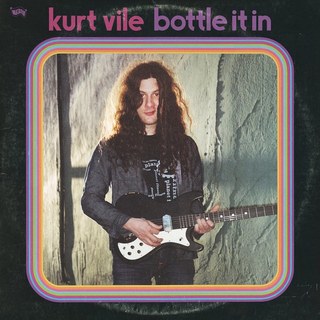
Album Review: Kurt Vile ‘Bottle It In’

Halfway through Bottle It In, Kurt Vile’s newest album, he covers country veteran Charlie Rich’s “Rollin With The Flow.”

“Guys my age are raising kids,” Vile sings.

Vile is raising kids too. Not only that but, at 38, he’s on his eighth album: By that age, many of Vile’s well-documented influences—Neil Young and Stephen Malkmus among them— were already several years past their prime. Yet, Bottle It In is Vile’s best work to date by a significant margin.

          Vile’s songs rely on repetitive, acoustic-picking grooves laid under dense instrumentals. It’s the same formula that produced his biggest hit, 2015’s “Pretty Pimpin’,” but, on Bottle It In, the arrangements are more diverse and sophisticated.

The album’s title track features the harp, played by classically trained musician Mary Lattimore, contrasting with Vile’s curious and wandering country drawl. Although the album spotlights Vile’s best lead guitar to date (“Check Baby,” for one), the strongest instrumentals occur when Vile’s backing band, the Violators, relax into a groove for a while. On “Bassackwards,” backward guitars guide strains of organs through ten minutes of what feels like staring out a car window on a gorgeous country drive. It also features some of the album’s most incisive writing: Vile loops through surreal rhymes, repeats them, forgets some, sets up expectations, defies them, and then follows them again.

The album’s opener, “Loading Zones,” showcases Vile’s wit: It is a song about parking a car, but it is also about loving a city and elusive moments of freedom. Throughout the album, Vile juggles cerebral instrumentals, guitar heroics, and sing-along hooks.“One Trick Ponies,” likely the album’s best song, manages all three at once with ease.

Vile has a strong sense for musical history; he has used his expertise to inform an album that is both inventive and engrossing. Bottle It In is an accomplishment not just in its own right, but also as the extension of a larger body of work: As the patient listener will find, Vile’s effortless growth as a writer and guitarist are just as magnificent.

Off the Board, Opinion

Corporate culture, as seen on TV

Popular media offers a vivid portrayal of modern corporate culture, but I didn’t expect it to translate so literally to my experience at my first tech internship this previous summer.  It was nothing short of jarring to recognize so many phrases I had previously only heard from the mouth of Jared on HBO’s Silicon Valley. Still, my introduction to corporate culture was positive, if bizarre.

The office I worked in implemented an ‘Agile’ methodology. Agile, a term coined in the unironically-titled Manifesto for Agile Software Development, is an approach to software development that emphasizes individual interaction over processes and tools. In practice, this meant that every morning at 9:30 a.m. my coworkers and I engaged in ‘Scrum,’ a meeting for team updates that takes place in front of a Scrum board—a visual organization of all of a team’s tasks to track their progress. The Scrum board my office used was nearly identical to the one featured in Silicon Valley.  As I moved my completed ‘stories’ from the ‘in progress’ column to ‘peer review,’ I couldn’t shake the feeling that I was participating in some religious ritual. I felt as though those around me, who seemingly found the entire affair completely normal, were brainwashed by some Agile god whose influence I had somehow escaped. The whole experience was made even more peculiar by the requisite card game that followed. I quite enjoyed this part, though, I almost always won the little plastic giraffe offered as a prize.

Scrum has been proven effective by countless performance metrics, so, undoubtedly, my secret theory that it was all some tedious exercise meant only to please the powers that be was misguided. This was, however, hard to keep in mind as I sat through my umteenth ‘Q4 Fun-times’ celebration. My tenure overlapped with the fourth fiscal quarter, so, every Friday, we would sign out 15 minutes early and go down to the concert hall, a magnificent old stage complete with crown mouldings and intricately-crafted pillars, to celebrate the week’s sales of abstract corporate research. The powerpoint presentation that followed was almost always painfully boring for a young software-developer intern such as myself. But, in keeping with the company’s emphasis on competition, it was followed by a thoroughly entertaining game invented weekly by the ‘Committee of Fun.’

As I became more comfortable at my internship, Scrum actually became my favourite part of the day. As embarrassing as it was to mumble “I’m still working on the failing tests” fourteen mornings in a row in front of coworkers I admired, by July or so we had developed a rapport. Eventually, I even looked forward to miming the phrase ‘Hannah Montana’ for my puzzled superiors to try and guess—by this point, we had graduated from simple cards to ‘Heads Up.’

One of the strangest parts of working in a company like this was that no one ever acknowledged how peculiar the environment really was. When you’ve never heard the phrase ‘backlog grooming’ before, it can be easy to assume everyone around you is brainwashed and chalk the vernacular up to doublespeak. But, eventually, I realized that my coworkers weren’t brainwashed: They were just adults going to work every day. Scrum didn’t exist at my company to impose arbitrary rituals—it existed because it works. And, as peculiar as the mandatory company ‘Fun Day’ still felt to me in the final weeks of my internship, it did serve its purpose. The softball tournament was a fun and welcome break from the day-to-day monotony, even if it was at the expense of half of the IT department’s ability to walk for the next week.

McGill, News

Department ratifies guidelines on staff-student relationships

The Political Science Students’ Association (PSSA) announced on Oct. 9 that the Department of Political Science had unanimously ratified a set of guidelines regarding relationships between instructors and students at McGill, becoming the first department at McGill to do so.

McGill’s Policy Against Sexual Violence suggests that professor-student relationships constitute an abuse of authority, although the administration also released a memorandum in May which outlines how intimate relationships between staff and students should be conducted. For its part, the Department of Political Science’s new guidelines take a strong stance against intimate relationships between instructors and their students.

“The department regards intimate friendships as well as sexual and romantic relationships between instructors and students as generally incompatible with educators’ professional responsibility,” the guidelines read.

The guidelines define ‘instructors’ as professors, postdoctoral fellows, faculty members, and teaching assistants. The document also offers a list of recommended practices for teaching staff, including advice on appropriate office hours, social media conduct, and respecting students’ privacy.

In an interview with The McGill Tribune, PSSA President Bella Harvey stressed the importance of having these guidelines formally and explicitly written out.

“I think some things, even if they’re understood, [need to be formalized],” Harvey said. “I think [the guidelines are] an accountability mechanism for students to have and for the department to have.”

Harvey also expressed her belief that these guidelines will set an example for other departments and even inspire them to pursue similar guidelines.

“I know [the Department of History] is working on [similar regulations] now, too, and I’ve had [the Institute of] Islamic Studies [ask about them as well],” Harvey said. “I think a lot of students and professors in various departments would like to establish these on a departmental level. I think they’re a good template for other departments and students to use, as well.”

However, Harvey emphasized that these guidelines are part of a greater change.

“Hopefully these issues will stop in their tracks,” Harvey said. “But I also realize that a piece of paper isn’t necessarily going to do that […] I at least think it is a step in the right direction.”

PSSA Vice President (VP) External Jennifer Chan echoed these sentiments and further clarified that these guidelines are the result of the previous work of many students.

“I think it’s important to remember that this is just one step forward and that the step forward could only happen with the labour put in by people, student groups, [and] individuals last year,” Chan said. “It’s not the first time people have been talking about student-teacher relations. And this kind of labour is disproportionately taken on by women, women of colour, black or Indigenous folks, trans folks.”

According to Chan, SSMU’s April 2018 Open Letter Regarding Complaints Against Professors helped mobilize the Department of Political Science to pass their guidelines. The letter, which asserted that the Office of the Dean of Arts had failed to seriously address complaints of sexual violence, called for a third-party investigation into the Office of the Dean of Arts on the handling of formal and informal complaints.

Chan and Harvey both emphasized that the good nature of the relationship between the PSSA and the Political Science Department was essential in getting these guidelines ratified. According to Harvey, had it not been for the support of the department, it would not have been possible to pass these guidelines.

“We are very privileged and lucky as a student association to have the relationship that we do with our department.” Harvey said. “I know other groups have a harder time, but it’s still important that they try.”

Baseball, Sports

2018 World Series preview

Two storied franchises, the Los Angeles Dodgers and the Boston Red Sox, are set to face off in the 2018 World Series. With the first pitch set for Tuesday night, Oct. 23, The McGill Tribune previews the Fall Classic.   

Boston Red Sox

The Red Sox are one of the most well-rounded teams in baseball history. They set a franchise record with 108 wins during the regular season and have maintained their blistering pace into the playoffs. On their path to the World Series, they have beaten the New York Yankees and the Houston Astros, both of whom also won at least 100 games this season. Outfielders J.D. Martinez and Mookie Betts, both American League MVP candidates, have paved the way to the postseason: In their incredible regular-season play, they hit 43 and 32 home runs, respectively. The Red Sox also have one of the best pitching rotations in the MLB, led by Cy Young Award candidate Chris Sale.

Boston has few weaknesses. The biggest hole in their lineup is behind the plate; the team’s catchers, primarily Sandy Leon and Christian Vazquez, combined for -2.1 Wins Above Replacement this season, which is the worst in the league at the position. Furthermore, the Red Sox bullpen has struggled with closer Craig Kimbrel’s shaky outings in the postseason. If the Dodgers can get through Boston’s starting pitchers quickly, they will be in a position to do some real damage. That being said, the Red Sox rarely slip up; it will take a perfect effort to exploit their deficiencies.

(Dylan Buell / Getty Images)

Los Angeles Dodgers

After a tight seven-game series against the top-seeded Milwaukee Brewers in the National League Championship Series, the Los Angeles Dodgers are back in the World Series for the second year in a row. The last team to win back-to-back pennants was the 2014-2015 Kansas City Royals, who won it all in the second go-around.

With the powerhouse Red Sox in the opposing dugout, the Dodgers’ chances look slim this year. Still, they currently have the best pitcher in baseball, Clayton Kershaw, whom manager Dave Roberts has used as both a starter and reliever this postseason in unorthodox fashion. Kershaw will, obviously, play a significant role in the series, as will fellow starting pitchers Hyun-Jin Ryu, Walker Buehler, and Rich Hill. The Dodgers well of pitchers is deep; they can use their bullpen, led by All-Star closer Kenley Jansen, to mix and match to the opposing hitter.

Los Angeles also has one of the most powerful offences in the National League. First baseman Max Muncy has soared this year, driving in 35 home runs in the regular season. Additionally, the bats of Cody Bellinger, Yasiel Puig, and trade-deadline-acquisition Manny Machado have been hitting home runs throughout the season, leading the Dodgers all the way to the Fall Classic.

Still, if the Dodgers offence is swinging and missing, they will struggle to stay in the game against Boston. If the Red Sox can earn early leads against the Dodgers’ pitching staff, Los Angeles’ chances at claiming their first World Series trophy since 1988 will be scant.

Prediction

Boston will win in six games. The Red Sox have a stronger, deeper, and more versatile starting nine. Fans can expect an exciting, hard-fought series to be won with offence, meaning that JD Martinez will be the MVP.


The folly of school spirit
Commentary, Opinion

Home is where the hoco isn’t

McGill homecoming has come and gone, unappreciated and hardly attended. Many students lament this apparent lack of pride and the absence of support for athletics at McGill, while most are simply apathetic. But, university homecomings are not really about pride in athletics: They’re about partying. When McGill students decry our lack of school spirit, they’re usually referring to the absence of a Queen’s-style street party or mass hysterics in a sea of red. Perhaps such manifestations of pride aren’t something we should really be aspiring to.

Rather than representing a unified student culture, outbursts of ‘school pride’ at other schools’ homecomings are more indicative of an overly homogenized campus. If you go to a university like Queen’s or Western, conformity to the party mob is an inescapable requisite to participation in campus life. For mass-debauchery enthusiasts, McGill is well covered with Carnival, Faculty Olympics, and Science Games, to name a few. To our credit, McGill doesn’t conflate its parties with its identity in the same way some other schools seem to.

McGill’s lack of uniform pride is a symptom of its cultural diversity. Queen’s and Western follow the American model of school pride, synonymous with fraternities and game-day tailgates. However, McGill isn’t suited to this sort of monocultural assertion. Unlike Kingston or London, Montreal is an international hub, and its sociolinguistic diversity is reflected within McGill’s 30-per-cent-international student body. For many international students—except maybe our 2413 American peers—this model of school spirit is not part of their cultural lexicon. McGill subcultures engage with a broader and more variable community than can be found in smaller cities.

Even if this model were compatible with McGill’s culture, a conventional homecoming is a logistical impossibility. McGill doesn’t have a student neighbourhood coherent enough to facilitate a big homecoming event. The 80 percent majority of the Milton Park neighbourhood that is not McGill students—not to mention the Montreal police—would never tolerate that kind of party. Queen’s students are able to disregard the annoyance of Kingston locals largely because the university’s presence is so powerful in such a relatively small city. Similarly, at Western, where an unauthorized homecoming event incurred an estimated $100,000 in damage, students command a sufficient presence to make the event practically unstoppable. In fact, when the university tried to diminish the scale of the celebration by moving it to a weekend during the midterm season, Western students continued hosting the event on the same weekend, cutting the event’s affiliation with the university’s homecoming weekend. The party is now called #FOCO, or ‘fake homecoming.’  McGill students do not command the same necessary presence in Montreal to initiate such an event.

However, we shouldn’t want to. Perhaps to the detriment of our athletic culture, McGill doesn’t conform to what is, ultimately, a fallacy of group identity, one that is non-inclusive and that discourages independent subculture. McGill defines itself through its many outlets for communal engagement. Whether they are a part of Carnival, Model UN, or varsity football, McGill students all participate in an egalitarian conception of communal identity—one that resists the homogenizing spectacle of homecoming.

Free speech
Commentary, Opinion

Free speech protects all ideologies, not just conservatism

The 2018 Campus Freedom Index (CFI) bestowed the Students’ Society of McGill University (SSMU) an F grade for its lack of free speech protections and a C for its political practices in 2018. The Justice Centre for Constitutional Freedom (JCCF) sponsors the CFI, an annual assessment of the successes and failures of campus free speech in Canada. But, the CFI is by no means impartial and leans to the right. Its criticism of SSMU merely emphasizes conservatives’ refusal to acknowledge that free speech protects progressives and right-wingers equally.

The CFI points to SSMU’s Equity Policy as its biggest flaw, citing its support for safe spaces and disapproval of microaggressions. These things, the CFI says, hinder free speech. However, while a right to free speech is not explicitly entrenched in SSMU’s constitution, Article 3.2 of the Equity Policy states that the policy shouldn’t detract from students’ right to engage in open discussion of controversial opinions. Safe spaces actually help marginalized people share their stories and opinions, promoting equitable free speech.

Beyond the Equity Policy, the CFI points to SSMU’s politics as another vehicle for suppressing free speech. Taking political stances allegedly diminishes the university’s freedom of expression. SSMU represents the entire student body, but it is an elected body and, therefore, inherently political. The society has a long history of political expression and has explicitly taken an anti-oppressive mandate since 1989. It announced its support for Black Lives Matter in 2016, participated in anti-austerity protests in 2015, and called out McGill’s response to sexual assault reports this past April. All of these political stances actively defend the free speech rights of marginalized people.

Former SSMU vice president External Marina Cupido’s Facebook post about the newly elected Coalition Avenir Quebec (CAQ) government was accused of infringing on campus free speech. Cupido faced considerable backlash for calling the CAQ ‘racist’ and ‘xenophobic,’ and for alleging that the party has connections to white supremacists. Regardless of their failure to cite their sources or confer with fellow executives, Cupido had a right to take a stance, even on the official SSMU External Affairs Facebook page. The post may have been ill-advised, but they were elected to a political executive office by a majority of voters. Students who did not feel represented by Cupido’s statement should at least respect the result of the democratic process.

The narrative that only leftist voices inhibit freedom of speech is tired and biased. Beyond McGill, conservatives have long bemoaned the plight of free speech on college campuses. One such conservative is Rick Mehta, former professor in Acadia University’s Department of Psychology. In March, Mehta prompted controversy after defending Conservative Senator Lynn Beyak’s right to post racist remarks on her government website. Beyak shared arguments from Canadians criticizing indigenous communities for receiving government aid and asking for reparations for injustices like the residential school system. Statements like hers perpetuate harmful stereotypes, and Sen. Beyak was rightfully removed from the Conservative caucus for platforming them. But, Mehta saw himself as a counterbalance to liberal bias on campus, and so, he stood up for Beyak.

While Mehta said that he does not support racist comments, he attacked the Conservative Party for impeding her right to free speech. But, even if he does not believe in the far-right sentiments that he defends, Mehta was magnifying them. Amplifying hyper-conservative and racist voices does nothing to diversify mainstream conversations—it only reinforces historically-entrenched traditions and beliefs.

Mehta’s story challenges the dominance of conservative ideology in the free speech arena. If right-wing ideologies perpetuate traditional ways of thinking, which have historically excluded marginalized people from public debate, then they stand to hinder free speech equally as much as left-wing ideologies.

The right to free speech does not guarantee freedom from criticism. Conservatives like Mehta and the JCCF need to stop conflating valid criticism of right-wing belief systems with the infringement of fundamental human rights. As much reason as there is to criticize SSMU, claiming that the organization hinders free speech by promoting marginalized voices and leftist politics is absurd. Students should challenge these arguments, which are made in bad faith and without a comprehensive understanding of free speech, to create a productive space for discourse that includes minority voices.

Arts & Entertainment, Film and TV

‘Festival du Nouveau Cinema’ showcases films from around the world

The 47th edition of Festival du Nouveau Cinéma (FNC) ran Oct. 3-14, gracing Montreal’s silver screens with an eclectic program of films ranging from festival-circuit fare to micro-budget Québecois features. The McGill Tribune team was there in full force.

Thunder Road—Jim Cummings

Gabe Nisker, Sports Editor

Based on his 2016 short film and one-man-show of the same name, with Thunder Road, writer-director-star Jim Cummings has managed to upstage even his own source material. Thunder Road tells the story of police officer Jimmy Arnaud, played by Jim Cummings, and his difficulty with coping in the immediate aftermath of his mother’s death. Citing Alfonso Cuaron’s Children Of Men as an influence, Cummings allows his scenes to develop over time; he favours long takes and his writing relies largely on monologues. Cummings surrounds his lead performance with a wonderful ensemble cast, and, together, they beautifully transform the one-man-show into so much more.


Long Day’s Journey Into Night—Bi Gan

Dylan Adamson, Features Editor

As someone who craves structure and instructions, I wasn’t going to miss Bi Gan’s Long Day’s Journey Into Night. Halfway through the movie, I had read, viewers are told to don the 3D glasses that they were given upon entering. How would they tell us? Would the movie pause? Would a Cineplex employee stride out with instructions? Would they be in English or French? The cue was implicit, to my disappointment, but the film’s remaining hour-long, 3D single take was more than enough to compensate. Bi’s neo-noir odyssey is thematically dense and visually brilliant. There’s no telling how, if, or when this will reach North American cinemas, but if it ever does, it is not to be missed.  


If Beale Street Could Talk—Barry Jenkins

Gabe Nisker

Barry Jenkins makes good movies. If Moonlight’s Academy Award for Best Picture wasn’t enough to prove that, then Beale Street should suffice. Based on the James Baldwin novel of the same name, the film could very well win Jenkins a second Academy Award. It’s a gorgeous period piece tracking two timelines—the initial romance between Tish (KiKi Layne) and Fonny (Stephan James), and their present-day tragedy that occurs when Fonny is wrongfully imprisoned for rape. Nicholas Britell adds a suave, jazzy score to complement James Laxton’s beautiful cinematography. If everyone saw faces the way Jenkins and Laxton do, the world would be a better place.

Shoplifters —Hirozaku Kore-eda

Dylan Adamson

When audiences are first introduced to Osamu (Lily Franky) and his son Shota (Jyo Kairi) in the grocery store, stuffing backpacks with stolen non-perishables, it’s clear that Kore-Eda is not going to shy away from the difficult questions concerning family relationships. In the opening scene alone, Kore-Eda questions Shota’s wide-eyed reverence for Osamu, Osamu’s involvement of Shota in the family business, how the need for sustenance has become a father-son bonding ritual—as in the rest of the film, Kore-eda weaves the tapestry of a family unit bound by necessity and love—in that order. As we meet the other family members, we see how hard they all must work to keep their musty, cobbled-together house of cards standing. Shoplifters has little narrative information to disclose, but as the truth eventually finds its way to the surface, it is shattering.


The Sisters Brothers—Jacques Audiard

Gabe Nisker

The Western genre provides countless opportunities for incredible cinematography, and The Sisters Brothers is no exception. Director Jacques Audiard’s English-language debut is a sight to behold. Based on Patrick deWitt’s 2011 novel, The Sisters Brothers also features an impressive ensemble cast. John C. Reilly and Joaquin Phoenix star as the titular Sisters brothers—Reilly proves his dramatic chops with a nuanced performance and Phoenix follows Reilly’s lead on comedy, providing relief from the otherwise tense script. When Riz Ahmed and Jake Gyllenhaal reunite on screen as  Hermann Kermit Warm and John Morris, the chemistry is undeniable. This movie is the epitome of calm and collected, even when its characters are not.


Climax—Gaspar Noé

Dylan Adamson

Gaspar Noé is the enfant terrible of indie cinema. He’s all about disruption. Narrative structure means nothing to him. His movies are hard to watch. Sometimes he’ll show a pregnant woman getting beat up because he doesn’t care what you think, loser. Despite this generally obnoxious, extreme approach, Noé is newly self-reflexive in Climax, a film squarely focused on the youthful drive to live in and make the most of each individual moment. When someone spikes the punch with LSD at a modern dance troupe’s year-end party, fun, kinetic dance-offs give way to a nightmarish soiree of hedonistic violence and cruelty. It’s the best execution of Noé’s bad-boy approach to filmmaking yet, largely because of its focused, 90-minute runtime, the entirety of which may be spent alternatingly gasping and clapping.


Roma—Alfonso Cuaron

Gabe Nisker

Seeing Roma is an experience, one that is difficult to shake. Scheduled for release on Netflix by mid-December, Alfonso Cuarón’s latest film is best seen on the big-screen. It is an ode to Cuaron’s childhood in 1970s Mexico, and, specifically, to the caretaker central to his complicated family. The film features deep shots, rich with detail, and a lead performance from soon-to-be-star Yalitza Aparicio, who brings strong emotion to the role of Cleo. Sadly, what might be lost in the translation from the big to the small screen is the sound design. For viewers at home: It’s worth investing in a good speaker. Roma is most definitely not to be missed, regardless of the platform on which you watch.


Happy New Year, Colin Burstead—Ben Wheatley

Sophie Brzozowski, Arts & Entertainment Editor

Writer and director Ben Wheatley’s latest film, Happy New Year, Colin Burstead is, in a word, boring. The story follows the Burstead family, all piled into an ostentatious and gaudy rental mansion over the course of one long, dreary New Year’s Eve. The micro-dramas that ensue are predictable and clichéd, as are the characters themselves. The shaky, handheld camera work and pithy dialogue provide the tense, uneasy atmosphere necessary for a successful family dramedy to unfold, but the humour falls short of resolving said tension, contributing instead to the overall phoniness of the whole production.

Burning—Lee Chang-dong

Dylan Adamson

Filmmaker Lee Chang-dong and novelist Haruki Murakami share fascinations common to many auteur-type artists—isolation, and futility. What distinguishes them from their similarly-minded peers, however, is their insistent doubling back. Characters in Murakami’s novels will spend multiple chapters trapped in wells by their own volition. The murky isolation is frightening and disorienting, but, when the sun hits the right spot in the sky, the climactic moment of warmth and light is impossible to match. Burning, Lee’s masterful adaptation of Murakami’s short story, Barn Burning, plays out with a simmering, disorienting ambiguity punctuated by these same moments of startling beauty.


McGill should blaze a trail in campus cannabis regulation
Editorial, Opinion

McGill should blaze a trail in campus cannabis regulation

Hundreds of Montrealers lined up at the Société québécoise du cannabis’s (SQDC) Ste. Catherine and Peel location on Oct. 17, vying to be among the first Canadians to buy legal marijuana. Only a few blocks away, a few new rules were also taking effect at McGill.

In accordance with provincial law and the school’s smoke-free campus policy, smoking or vaporizing marijuana on-campus is forbidden. Though these rules are only temporary, they will act as  guidelines for McGill’s permanent regulations, which are scheduled for release this fall. In creating permanent rules, McGill should emphasize a harm-reduction approach, and be cautious of the racial discrimination often associated with marijuana regulation.

According to the McGill’s interim guidelines about cannabis use on campus, all forms of cannabis consumption are prohibited on campus and in residence, including smoking, vaping, edibles, and topical creams. Furthermore, selling, distributing, cooking, and growing cannabis is also prohibited. Breaking any of the aforementioned rules may result in disciplinary action.

Other universities in Canada have introduced similarly conservative models. Concordia University, the University of Toronto,  and the University of Ottawa all prohibit consumption on campus. However, some are more permissive: The University of Alberta allows consumption in designated areas and the University of Manitoba prohibits smoking, but does not explicitly ban edibles or other forms of consumption.

While the university has the right to regulate what happens on its campus, it is not the administration’s place to encourage or discourage general cannabis consumption. Instead, groups like Healthy McGill, McGill Student Emergency Response Team (MSERT),  Frosh organizers, and other student groups should update their education initiatives to respond to the change in cannabis’ legal status, and continue empowering students to make their own choice. Healthy McGill already has a harm-reduction mandate regarding recreational drug use and MSERT trains their responders in emergency first aid, which includes cannabis response. As Canada is one of only two countries in the world to legalize cannabis at the federal level, the vast majority of future international students will be unfamiliar with the system’s ins and outs, making the need for objective  education all the more pressing.

Any university regulation of cannabis should comply with the principle of harm reduction. During the peak of the fentanyl crisis, floor fellows were trained to carry and use naloxone, a temporary antidote for  fentanyl overdoses. Instead of focusing on prevention of opioid consumption, floor fellows were equipped to respond to possible crises. McGill’s new guidelines should follow this model.

Moreover, McGill should be mindful that the the criminalization of marijuana has a disproportionate effect on indigenous Canadians and other people of colour. Black and indigenous Canadians are vastly overrepresented in cannabis-related arrests, despite cannabis use being similar across different racial groups. The question of who receives lenience is often a matter of decision makers’ personal judgement, be they security guards or administrative officials overseeing a hearing. In implementing disciplinary procedures, McGill needs to create policies that account for, and actively resist, racialized discrimination.  

Still, McGill has embraced legal marijuana in at least one respect: The Faculty of Agricultural and Environmental Sciences put on two workshops on cannabis production in August 2018, with the aim of establishing a professional certificate program by next winter. This is a positive step; it would be a major missed opportunity for the university not to offer instruction in a field with such potential for economic growth. However, the administration must again consider criminalization’s bleak legacy. Many racialized Canadians have been imprisoned for doing what is now considered a legitimate career path. McGill can play a part in redressing historical wrongs by including destigmatization initiatives in their training and by prioritizing opportunities and spaces for people of colour in their policy design and execution.

As one of Canada’s leading academic institutions, McGill has the opportunity to set an example for cannabis regulation in universities across the country. In doing so, it should embody the principles of harm reduction, accessibility, social equity, and education. While cannabis’s legalization is new, its consumption is not. If McGill stands by the methods already practiced by its floor fellows and staff, it will be prepared for what change may come.

Science & Technology

Montreal’s wood fireplaces get smoked out

In 2011, Montreal was ranked as the city with the second-worst air pollution in Canada. Sarnia, Ontario, a place otherwise known by the nickname ‘Chemical Valley’, came in first place.

It’s no secret, then, that Montreal is a polluted city—thankfully, policymakers are trying to address the problem. On Oct. 1, a Montreal ban on certain wood-burning fireplaces and stoves came into effect after a three-year grace period. Originally implemented in 2015, the bylaw prohibits using solid fuel-burning appliances during smog warnings and prohibits appliances with emission rates greater than 2.5 grams of fine particles per hour. Residents who don’t obey the regulations can be fined anywhere from $100 to $2,000.

Wood-burning is the main culprit in air pollution. The Service de l’Environnement reports that it accounts for 39 per cent of fine particle emission on an annual basis. These fine particle emissions contribute to climate change by producing black carbon, which traps heat in the atmosphere for short periods of time. More damaging than the heat, though, is the risk to respiratory health.

“Wood heating is a major source of air pollutants like carbon monoxide, volatile organic compounds, nitrogen oxides, polycyclic aromatic hydrocarbons and most importantly, of fine particles,” Montreal’s Service de l’Environnement wrote in an email to The McGill Tribune.

Scott Weichenthal, assistant professor in McGill’s Department of Epidemiology, Biostatistics & Occupational Health, remarked that these fine particles—otherwise known as particulate matter—are extremely harmful to our well-being.

“What comes out of chimneys is similar to what comes out of cigarettes,” Weichenthal said.

While cigarette and wood smoke contain many of the same harmful chemicals, smoke inhaled from burning wood is a much larger-scale public health risk than second-hand cigarette smoke. If inhaled in equal amounts, the lifetime risk of cancer is 12 times greater with wood smoke than with cigarette smoke. In addition, its particulates are chemically active for much longer than that of cigarettes, meaning that they harm the body for longer.

Wood smoke particulates have widespread effects on respiratory and cardiovascular health. According to Weichenthal, they can also have neurological impacts and even result in death. Residential wood burning is the main cause of wintertime smog: A mixture of smoke and fog which is especially harmful to elderly people and children, as well as to those with heart and lung conditions. During Montreal’s bitterly cold winter months, the increase in wood smoke production for heating makes the smog particularly bad.

The number of wood-burning stoves in Montreal exploded after Quebec’s 1998 ice storm. Across the province, 900,000 people were left without power—some for more than thirty days—prompting many to buy wood-burning appliances as back-up heating sources.

Naturally, the memory of one of the worst natural disasters in Canadian history makes people reluctant to let go of their wood-burning ways, so solid fuel-burning appliances will still be permitted during electricity outages lasting longer than three hours. Even so, Poêles et Foyers Rosemont, a Montreal-based fireplace company, reported that there have been many wood-to-gas appliance conversions in light of the new bylaw.  

The media labels Montreal’s new regulations as some of the strictest in North America, however they may become even stricter in the future if officials crack down down on wood-burning businesses.

“We can’t work on the domestic side and ignore the commercial,” Jean-Francois Parenteau, associate member of the Montreal Executive Committee, said in an interview with The Globe and Mail.

In fact, commercial food production accounts for about eight per cent of wood-burning pollution. While St. Viateur Bagel is experimenting with a new pollutant-removing system, other businesses have switched to part-wood, part-gas ovens. In the future, though, Montreal’s famous pizzerias and bagel bakeries may have to fully revolutionize their cooking methods for the sake of public health.

Read the latest issue

Read the latest issue