Latest News

Student Life

Montreal’s greatest foes

McGill and Concordia have the perfect ingredients for a legendary rivalry: Close proximity, a shared language, sports programs, and bright students. Both universities’ students appreciate the struggle of attending competitive anglophone institutions in a bilingual city, Montreal’s wonderfully cheap rent, and the survival techniques to weather harsh, long winters. Despite these similarities, students choose to focus on the universities’ differences, particularly in academics and athletics, to create a competitive atmosphere.

Each university offers something distinct—McGill, founded in 1821, is a well-established institution with a prestigious history, while Concordia, founded in 1974, focuses on innovation and creativity within its student body. Concordia hosts a greater number of arts-oriented programs such as journalism, painting and drawing, and sculpture—none of which McGill offers. McGill, meanwhile, spreads its attention around faculties to a higher degree than Concordia. To Chris Liang, McGill U3 Arts, the difference in academic offerings—not some great disparity in intelligence—helps explain why some students end up at McGill while others choose Concordia.

“McGill students continue to put that higher standard on Concordia kids and label them as ‘stupid,’” Liang said. “But, at the end of the day many students choose Concordia over McGill based on the programs they offer.”

The reasons students choose between McGill and Concordia are diverse, but both universities’ environments can influence their students’ views and perspectives in the long-run. Antony Dagger, former Concordia student and current 102.3FM radio host, produced two videos that asked McGill and Concordia students the same questions and observed their responses. In one question, “Would you rather have $100,000 or a 4.0 GPA?” McGill students unanimously chose the perfect GPA, rationalizing that academic success would hopefully lead to an income of more than $100,000, while most Concordia students chose the $100,000. Dagger took note of the different approaches the two student bodies took in answering.

“At McGill, [students] took two minutes to think about it. At Concordia, they didn’t care, they would rather just have the $100,000,” Dagger said.

In the realm of sports, meanwhile, Concordia has a clear advantage. For the past few years, McGill has consistently lost the Shaughnessy Cup to Concordia, a trophy awarded to the winner of the annual football game. Meanwhile, men and women’s ice hockey results have been less decisive. Some sports have even leaned McGill’s way. With stadiums only miles apart, the Martlets and Redmen usually get to play in front of their biggest crowds when facing the Concordia Stingers.

The McGill-Concordia rivalry is all about identity. According to Dagger, this feeling of individuality allows students to feel a sense of attachment to their respective universities.

“At the end of the day, students just want to be proud to be a part of their schools,” Dagger said.  

Such pride makes students competitive beyond the classroom and the sports field.

“The rivalry will continue to persist, no matter what we challenge each other at,” Liang said.  “We are some of the best universities in Montreal and we continuously try to challenge each other in different academic, sports, and social activities, so we will continue to be competitive with them no matter the activity.”

The McGill-Concordia rivalry will continue to persist for generations, as it has since Concordia’s inception 44 years ago. Compared to other rivalries, ours is relatively young—which leaves plenty of room for new tales and traditions.

Science & Technology

The REM: Too good to be true?

With the sweltering heat of a Friday afternoon combined with yet another traffic jam on the Champlain bridge, almost any price might be considered worth paying for quicker and more accessible transportation. The Réseau express métropolitain (REM), also known as the Montreal light-rail network, aims to provide a solution to Montreal’s congestion by December 2020.

With a projected budget of $6.3 billion, the REM will be a 67-kilometre fully automated public electric rail system linking the South Shore, the West Island, the airport, the North Shore, the Deux-Montagnes line, and downtown Montreal. Proponents toute the project for its environmental benefits, although members of the public, architectural experts, and environmentalists have critiqued the haste with which it has been pushed through approval and implementation.

Nonetheless, the consensus is that building some form of transit system is important for the long-term energy sustainability of cities. A report also suggests that an increased reliance on public transit could help Quebec’s economy by allowing the province to reallocate funds from oil consumption to job creation.

“Usually, public transport, whether it is a bus or a tramway, uses less energy than cars,” Richard Shearmur, Director of the School of Urban Planning, said.

However, as much as public transportation might appear to be an obvious solution to reducing carbon emissions, building a new transit system still has environmental repercussions. As a rule of thumb, steps to make transportation more efficient tend to encourage more of it.

“Every study that has ever looked at traffic over the last seventy years has shown that when there is extra road capacity, new people actually get into their cars,” Shearmur said. “People that wouldn’t usually drive into town [tend] to come into the city.”

Furthermore, in addition to the debate among experts over the increased carbon emissions caused by transit systems, environmentalists question whether the municipal government has done its due diligence when considering the ecological impact of the REM project in particular. The project would involve cutting 20 hectares of trees and shrubs containing the largest heron nesting colony on the West Island.

“[The REM project]  has been very divisive because it has been imposed [on the city] rather than consulted about,” Shearmur said. “What we need is legitimate consultations [between environmental experts and city planners] where real alternatives are considered.”  

Proper consultation is a crucial part of any large-scale project with implications for the surrounding wildlife and their habitats. Critics suggest that the REM project has not undergone adequate analysis. The province’s environmental review agency, the Bureau d’audiences publiques sur l’environnement (BAPE), concluded in Jan. 2017 that the project lacks key information on its costs and environmental effects while contributing little to public transport availability.

“[There] needs to be qualified, non-political people [in] a balanced committee to make a decision,” Avi Friedman, professor in the School of Architecture, said.

In response to the outcry from environmentalists about a lack of appropriate consultation, the city of Montreal promises to plant 250,000 trees to offset the CO2 emissions of this project, 100,000 of which have already been planted. Nevertheless, environmentalists are in the process of appealing to the Quebec courts to halt the process in order to allow for ‘meaningful’ hearings on the project.

Out on the Town, Student Life

Saving the Farine Five Roses sign

Since 1948, the glowing Farine Five Roses sign has been a fixture of the Montreal skyline: A series of neon letters that greets cars approaching from the Southwest District. What began as a simple advertisement for Ogilvie flour, later Five Roses, has become a prominent part of Montreal’s iconography and one of its most treasured landmarks. The sign spotlights the forgotten industrial past of the district surrounding the Lachine canal, which, at one point, held the largest concentration of industrial buildings in Canada. At the same time, the sign has been the subject of hundreds of photographs taken by tourists and locals alike and has become a Montreal landmark. An ongoing art project by Concordia Communications Professor Matt Soar and his collaborators highlights the past and present of this enduring city icon.

Throughout its existence, the sign has gone through just two major changes, no small feat considering the heft of the 15-foot steel letters. After Quebec’s Bill 101 passed in 1977, limiting non-French words on signage across the province, owners eliminated the English translation ‘Flour’ formerly placed below ‘Farine / Five Roses.’ The ‘Five Roses’ line was permitted because of Bill 101’s exception for English brand names. After the brand changed ownership in 2007, the sign was turned off, seemingly for good. Then, resistance rose on social media and was soon backed by advocacy groups including Heritage Montreal. The public response inspired Soar to start a blog to crystallize the effort and preserve the landmark.

Soar—who also founded Logo Cities, which keeps record of the many high-rise logos that mark the Montreal skyline—examines the relationship between  hypercommercialism and signage. Hypercommercialism is the idea that advertizing increasingly seeps into every area of our daily lives. In gathering and researching advertisements for his work, Soar discovered the remarkable social and personal power of the iconography that saturates urban environments.

“What became abundantly clear was not only do we have hypercommercialism […], but when people see, commune with, and touch old signs, it sparks memories,” Soar said. “They act as lightning rods for local memories.”

With this in mind, Soar expanded the reach of his project, which first emerged as the “Save Farine Five Roses” blog, to chronicle the drama surrounding the sign’s possible removal. His new objective was to preserve the landmark in the public’s memory. For example, his photoshopped anagrams of the 15 letters, called ‘Farinagrams,’ generated more interest than simple news aggregation. Though Smuckers, the new owner of the Five Roses brand, ultimately relented to public pressure and committed to restoring and maintaining the sign at significant cost months later, the blog remains active. The Farine Five Roses project has been running since 2009 despite the fading threat of the sign’s demolition. Today, it continues to document updates as well as modern homages to the sign, such as Five Roses tattoos and costumes. By examining how the sign continues to influence culture, Soar showcases the new meaning that the sign has taken on in the eyes of Montrealers.

“I suppose I’m holding on to two contradictory ideas,” Soar said. “The critical idea of there being too much advertizing, but [also the idea] that some signs are worth thinking about and worth saving.”

According to Soar, a rewarding part of the project has been hearing stories that tie the sign into the living city beneath it. People remember the Five Roses sign in the background of their childhoods and their lives as students and young adults; for years, it has been there to greet them on their return from outside the urban centre. Montreal’s iconic signage becomes embedded in the city’s visual culture and, in many ways, synonymous with it. Soar notes that this coalescence is evidenced by our drive to preserve symbols originally meant merely for brand promotion. This is because we draw memories and construct meaning under the ever-present glow of signage.

“The sign [has been both present and in flux…], reflecting economic developments, [as well as] cultural and commercial ones,” Soar said.

The changes to the Five Roses sign reflect the changing nature of branding alongside the tensions between anglophone and francophone Montrealers. But, its lasting presence is a testament to the city’s collective and individual connection with those 15 neon letters that have stood watch over Montreal for 70 years—and, hopefully, will for many more to come.

Baseball, Men's Varsity, Sports

In conversation with McGill baseball coach Casey Auerbach

When asked about his favourite sandwich, Casey Auerbach was quick to reply.

“An ice cream sandwich,” he said. “It’s a little out there. It’s a little bit different.”

Auerbach’s new position at McGill is also a little bit different. Once the associate head coach and recruiting coordinator for McGill baseball, Auerbach is now the program’s fourth-ever head coach. He assumed the role late this season after then-head coach and current General Manager Jason Starr stepped away on Sept. 12 to spend more time with his family.

“Jason and I have always run the program together, and that’s not going to change,” Auerbach said. “Our roles have just kind of changed a little bit.”

Auerbach’s love of baseball is evident in the way he talks about it; his lifelong passion for the game has led him to this monumental point in his career.

“My dad introduced me to the game when I was a kid,” Auerbach said. “My love for it kind of grew from there. I played a lot of hockey when I was younger, too, and I kind of had to make a decision [about] which sport I was going to pursue. Everyone thinks [that since] you’re in Canada, [you will probably pick hockey], but my first love was always baseball.”

The time he spent exposed to the game in his childhood had a strong influence on his interest in pursuing a career in the sport.

“I grew up around the game [and] would obviously play during the spring, summer, and fall time as a kid growing up,” Auerbach said. “[I] just loved being at the ballpark and loved being around the game.”

His career has taken him around the world. As a ballplayer himself, he played five seasons in a Redmen uniform and also spent summers playing in Switzerland.

“What’s cool is [that] baseball unites people across the globe,” Auerbach said. “I had the opportunity to play and coach overseas in Switzerland for a couple of summers, […] which was an unbelievable opportunity.”

In his time on the field with the Redmen, Auerbach played in the infield and pitched from 2008 to 2012.

“It was great,” Auerbach said. “In terms of, first and foremost, academic fit, extracurricular fit, and then [being] able to play some competitive baseball along the way, [it] was a really good fit for me personally.”

At the conclusion of his playing days, Auerbach knew what his next move would be: Coaching.

“I was always interested in some of the off-field things that take place in preparation for game day,” Auerbach said. “It’s always something that was of interest to me, and [I] wanted to get more involved. It was a natural transition to remain on the [Redmen] staff [after graduating] and keep contributing in that way, as well.”

Since his transition to the coaching staff, he has remained involved in the campus community. Like many McGill coaches, Auerbach balances a growing commitment to his team with a day job. He manages the McGill Welcome Centre, handling undergraduate recruitment and enrollment services. One of his main duties is to oversee the campus tour guide program. Not only does he recruit athletes to the baseball team, he also recruits all kinds of students to the school he loves from nine to five.

Perhaps it’s just as illustrative of his devotion to McGill that it takes only a beat for the Westmount native to name his favourite colour.

“It’s tough to coach the McGill Redmen and not like red,” Auerbach said.

Science & Technology

New cities don’t mean new homes

In the past 20 years, hundreds of new cities have sprung up around the world. Some are new political centres, others are aspiring trade hubs or green cities. But, whether it’s Astana, Putrajaya, or King Abdullah Economic City, the reason is the same: To increase economic growth. Surprisingly, though, many of these new cities are overlooking the risk of rising sea levels when building on coastlines.

Sarah Moser, assistant professor in the Geography department, spotted these trends while working on a forthcoming study of new cities. Along with collaborator Idowu Ajibade of Portland State University, she is studying the motivations behind founding new cities and their vulnerability to natural disasters.

Building new cities on coastlines is often justified as a way to relieve urban overcrowdedness, particularly in the Global South. However, as Moser found, the companies building these new cities are not really concerned about social ills such as overpopulation—their goal is profit.

“It seems logical, right?” Moser said. “Let’s make new cities to address crowding and congestion and so people can live in a humane, clean, green environment. But, then, when it really comes down to it, new cities are often a way of justifying massive real estate developments.”

The continuing desire for luxurious waterfront real estate prompts the building of cities for profit on the water, regardless of climate change related costs. Forest City, which a Chinese company is building on artificial islands in Malaysia, is expected to hold 700,000 people. But, because the project is driven by real estate, investors aim to buy 70 per cent of the houses purely for investment purposes and the price will only inflate as they try to sell to the highest-bidding interested homeowner. This case is illustrative of similar problems in many other new cities.

“Can the person earning two dollars a day taking plastic water bottles to a recycling centre ever hope to buy a condo worth two hundred thousand dollars?” Moser said. “No. Such projects are for elites, although they are supposed to be for the growing middle class. Real estate in new cities is often bought not by the poor or middle class who need homes,  but by the super rich who already own multiple homes.”

According to Moser, some projects are also using eminent domain laws—laws which allow the government to take private land for public use—to seize the area that they plan to build on. The vacated residents sell their land to the government for cheap only for the new developments to be unaffordable.

Of the 120 new city projects Moser is examining, she estimates that between 35 and 38 per cent of them are located on the coasts, making them vulnerable to climate change as sea levels rise and storms become stronger. Worryingly, only eight of 120 city projects even mentioned climate change.

Even worse, these new cities inflict ecological consequences themselves. Coastal areas are very sensitive to environmental changes. In the case of Forest City, sand is sucked off the seafloor and redistributed in piles to create islands. In the process, a delicate ecosystem of coral reefs, fish, and an intricate food web that humans rely on is damaged. Unfortunately, many environmental laws regulating these developments are weak or poorly-enforced.

While it might seem to make more sense to fix existing infrastructure in places like Lagos or Jakarta, building an entirely new city is easier from a political perspective. There is no existing population to question decision-making; there is no need to play politics or take bribes. And the profits are enormous: A technology company like Cisco, for example, can make about 400 billion dollars from a new city.

Moser isn’t against new development and feels strongly that Canadians shouldn’t be telling other countries what’s best for them. However, if new development is necessary, local people should be consulted. Perhaps, with more consultation, companies and governments would be building more sustainable and less vulnerable cities further inland rather than on beaches.

Martlets, Soccer, Sports

Concordia Stingers stun Martlets soccer 2-1

The McGill Martlets soccer team’s (4-4-2) winless streak continued Thursday night, Oct. 4, as they fell to the Concordia Stingers (3-6-1) by a score of 2-1.

McGill started off strong, creating two chances on goal in the opening five minutes. The fifth minute even saw cries for a penalty, after a Concordia outfield player allegedly handled the ball in the penalty box, but the referee waved play on. Goalkeeping errors from the Concordia keeper in the 14th and 23rd minutes gifted the Martlets with two opportunities for wide-open goals, but on both occasions, they failed to hit the mark. A Concordia striker got the Stingers’ best chance of the half in the 30th minute when she found herself one-on-one with Martlet goalie Sarah Dubois, but her shot went right into Dubois’ hands.

McGill then piled on the pressure, and fourth-year forward Tia Lore broke the deadlock in the 32nd minute. After the Concordia keeper rushed off her line again, Lore was free in front of the goal to convert an incoming cross. Forward Ariane Ducharme was also through on goal in the 39th minute, but, this time, the Stingers keeper was able to make the save. Ducharme again broke free in the 40th minute, but was stopped in her tracks by a brilliant sliding tackle from a Concordia defender.

McGill continued to dominate the scoring chances at the start of the second half, but second-year forward Victoria Sturgess missed an open shot in the 46th minute, and third-year centre-back Nathalie Brunelle hit the crossbar a minute later.

The Martlets began to lose their composure after Concordia was awarded a penalty in the 61st minute when a McGill defender tripped a Concordia forward. Dubois saved the initial penalty shot, but she couldn’t stop the second effort off of the rebound, levelling the game 1-1.

“We didn’t capitalize on the chances we made, and didn’t secure the win early on, which kept them in the game,” Dubois said. “After the first goal, panic set in, and a bad pass put my centre-back in a hard position and led to a PK.”

Concordia struck again two minutes later when a midfielder converted a cross from a set-piece. The Martlets had a chance to come back once in the 65th minute, when the Concordia keeper fumbled a cross and again, three minutes later, but brilliant recovering saves kept the game in the Stingers’ favour. Concordia held on to their lead for the rest of the second half, condemning the Martlets to yet another loss.

Nonetheless, Martlets Head Coach Jose-Luis Valdes remained positive about his team’s performance.

“Despite the loss, I am still happy with the way the team played,” Valdes said. “We’re moving in the right direction. It was just a very unlucky loss today.”


Moment of the Game

Concordia scored against the run of play as a result of a free kick, which ultimately caused the Martlets to lose their composure.

Quotable

“We will have to change our mindset and tactics for this week as we play Laval. [They are] a much stronger team that will be coming to get a win out of us.” – Tia Lore

Stat Corner

McGill had 11 attempts on goal and four on target, while Concordia had just six attempts and three on target.


McGill, News, Private, SSMU

Student committee to advocate for fall reading week

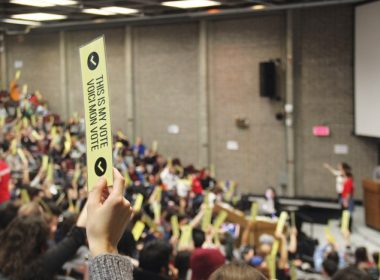
The first major steps are underway for the implementation of a fall reading week and a restructuring of the Student’s Society of McGill University (SSMU) Board of Directors. Following the 2018 SSMU Winter Referendum, in which over 96 per cent of electors voted in favour of a fall reading week, conversations have begun at the administrative and student level with the creation of an ad hoc Fall Reading Break Committee and a subcommittee under the Enrolment and Student Affairs Advisory Committee (ESAC).

Among the leaders of the reading week committee is McGill Arts and Science Senator Bryan Buraga, who researched the implementation of a fall reading week last year. He sees more potential in this year’s effort compared to SSMU’s attempts in 2015, which were sparked by a motion endorsing a fall reading week.

“[Campaigning in] 2015 was focused more on administrators and deans as far as I am aware,” Buraga said. “It is different now because there is a new Deputy Provost of Student Life and Learning who is open to hearing student concerns, and that is a huge leap from where we were last year.”

According to Fabrice Labeau, McGill’s interim deputy provost of Student Life and Learning, obstacles to a fall reading week encountered during the 2015 discussions still need solutions. Scheduling a fall reading week could mean having to compact the final exam schedule or start the term before Labour Day, which could leave some students having to pay an additional month’s rent.  

“There is the question of when […] we make up for the time during the semester that will be taken up by this fall reading break,” Labeau said. “Some faculties, like Engineering and Medicine, have accreditation requirements that involve a certain number of contact hours. So, whenever you lose a day, you need to add a day to the semester either at the end or before the usual beginning of the semester.”

Buraga intends for the Fall Reading Week Committee to split into two working groups, one of which will lobby and negotiate with McGill administration while the other group collects data and researches the needs of the student body.

“I think it’s going to be important to listen to the needs of all students,” Buraga said. “It’s going to be a balancing act, for sure, because [while] we cannot please everybody, […] we need to get a large majority of students to agree that we are okay with Saturday exams or we are okay with starting earlier before Labour Day or some sort of compromise.”

Buraga remains optimistic about the implementation of a fall reading week at McGill.

“Before the 1990s, there was not a winter reading break,” Buraga said. “It was a student-led initiative to get a winter reading break. With that precedent in mind, it is definitely very possible that we may get [a fall reading week].”

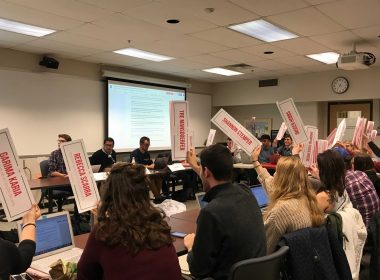
The SSMU Board of Directors could also face major changes within the next couple of years. SSMU President Tre Mansdoerfer has taken action to examine the structure of the board and address what he argues are systematic weaknesses. According to Mansdoerfer, the board, which consists of five members at large, three councillors, and four executives, is easily exploited by members with strong political ideologies.

“You have people of similar political ideologies on the board with an intent to express their political ideologies on a board issue,” Mansdoerfer said.

According to Mansdoerfer, an ideal board would see the council representatives and members-at-large replaced by academic representatives from every faculty.

“The [concerns of the] board should be financial, legal, [and] operational and the current structure doesn’t really reflect that,” Mansdoerfer said. “We can have faculty presidents where stakeholders from every single group [will be] on the board deciding the financial operational decisions for McGill students. [….The proposed reforms are] really trying to make sure the board is what it should be, looking [out] for the best interests of students.”

McGill, News

Board of Governors refuses to vote on divestment

On Oct. 4, the McGill Board of Governors (BoG) held its first meeting of the academic year. Members discussed the diplomatic dispute with Saudi Arabia and the university’s world rankings. On the subject of the Sept. 12 Senate motion to divest from fossil fuels, The Board agreed to ask that the Committee to Advise on Matters of Social Responsibility (CAMSR) investigate the matter before they put any motion to the floor.


McGill’s Saudi students

Principal Suzanne Fortier addressed this summer’s diplomatic dispute between Canada and Saudi Arabia and its subsequent consequences for McGill. She assured that the 223 Saudi students enrolled in the McGill Medical School are no longer at risk of losing their spots due to the political dispute.

“The government of Saudi Arabia changed their course of action and allowed all of the medical residents to continue their program or return to Saudi Arabia,” Fortier said. “[The situation was] a stressful period for the trainees.”

According to Fortier, the program will not be affected, and McGill has already begun interviewing applicants for the 2019 entering class.


Rankings

In its ninth annual report, The Times Higher Education ranked McGill as the 44th best university worldwide, three spots below its 2018 classification.

Fortier informed the Board that this is not a sign that McGill has degraded—it has, she says, improved. Rather, she sees the drop in rank as a result of Asian universities receiving significantly more funding and, thus, growing faster. Fortier anticipates that McGill could continue to lose spots in the coming years as well.

“They are predicting that we will see the Western universities lose their spots as Asian universities enter the ranks,” Fortier said.

One board member suggested that Canadian universities would see similar growth if the government would increase funding to Canada’s three leading research institutions.


Deferring divestment to CAMSR

The McGill Senate, responsible for the university’s academic affairs, uncharacteristically endorsed divestment from fossil fuels. Now, as the final authority over McGill financial matters, it lies on the BoG to actually enact the endorsement.

Ram Panda, Chair of the BoG, recommended that the board defer the issue to CAMSR, which would investigate divestment and report back to the Board. Ehab Lotayef, who represents administrative and support staff, disagreed and proposed that the BoG move forward with a motion at once.

“I think that […] we should put a motion on the BoG and not defer it to the committee,” Loyatef said.

Panda insisted that such a motion would be irresponsible on the part of the BoG given that CAMSR exists to advise on the social responsibility of financial investments. Associate Professor Darin Barney, who represents academic staff, appreciated Lotayef’s ambition but insisted that any action should be well thought out.

“The fact that the Senate expressed an opinion on this matter that disagrees with ours does not constitute a governance crisis,” Barney said. “What would precipitate a governance crisis is if we ignored their views.”

Barney suggested that Section 6.3.9 of the statutes be invoked, which would create a conference committee to settle the disagreement over the Senate’s endorsement. Such a committee would consist of up to 11 members who equally represent the BoG and the Senate and make recommendations to the BoG.

Many members insisted that the disagreement was not clear enough to constitute the use of a conference committee and that CAMSR should remain responsible for investigating divestment. With members of the pro-divestment group Divest McGill observing the meeting, Panda cautioned that the BoG must take this issue very seriously before motioning to adjourn.

Arts & Entertainment, Theatre

‘Don’t Read the Comments’ breaks the silence surrounding the complexities of consent and assault

Today’s climate – at McGill and worldwide – has drawn widespread attention to the prevalence of sexual violence and assault. These discussions lead to people questioning what exactly constitutes sexual assault. Produced by the Office for Sexual Violence Response,

Today’s climate – at McGill and worldwide – has drawn widespread attention to the prevalence of sexual violence. These discussions lead to people questioning what exactly constitutes sexual assault. Produced by the Office for Sexual Violence Response, Support and Education (OSVRSE) as part of their Consent Campaign, Don’t Read the Comments delves into these grey areas of consent, forcing its audience to engage with issues of sexual violence.

The play takes place in the format of a television talk show titled Don’t Read the Comments, with playgoers acting as the studio audience. The show’s host Wendy (Dakota Jamal Wellman) introduces her three expert panelists: Grace (Joy Ross-Jones), Trip (Gabe Maharjan), and Cindy Nancy Cindy (Cara Krisman), before pitching the topic of the day: “Are there grey areas of sexual consent?”

The four characters are played in the bouffon style, a French form of clown theatre focusing on mockery and the reflection of a twisted society. Each of the panelists is an exaggerated stereotype: Grace is an ‘angry feminist,’ Trip is a ‘self-proclaimed male feminist,’ and Cindy is a middle-aged ‘prominent citizen.’ The characters are familiar; aspects of each might remind audience members of themselves. As the show progresses, characters work themselves into twisted arguments that stand upon warped logic: They victim-shame, twist each others’ words, and dismiss men who come forward with their own assault stories. Wendy, meanwhile, provokes her guests and turns them against each other, creating drama for her audience.

It’s uncomfortable to watch, but that’s the point. The purpose of bouffon is to make viewers examine their own behaviour, revealing the perversions of society and their own participation in the corrupt status quo. The show’s creator, Sarah Segal-Lazar, used quotations from a variety of news articles in her script, incorporating the real world into her play. Sources ranged from the far right to far left; from highly accredited to less reputable—but, the rhetoric is familiar to the audience, no matter their background.

Eventually, Wendy dismisses her panelists and invites an ‘anonymous guest’ to tell her story. At this point Segal-Lazar herself, and introduced under the pseudonym Pamela, takes to the stage alone. In contrast to the bouffon characters, Pamela is strikingly real: Simple attire, no makeup—and recounting a true story.

For Pamela, it began with a backpacking trip in Ireland, and some drinks in a pub with unfamiliar men. One of them asked to take her home, and she refused repeatedly. After much intimidation and coercion, she reluctantly let him put her in a cab, taking her back to his apartment. She wasn’t beaten or violently restrained, nor did she give willing consent. All she wanted was, she said, to “get it over with” – so she let it happen.

Segal-Lazar doesn’t sugarcoat or bother with clean language. Her story is about the fear of saying ‘no’—one many women can relate to. Her delivery is powerful and raw, and the jarring shift in tone magnifies the intensity of the narrative.

As Pamela finishes, Wendy and the panelists return and it’s up to the audience to decide: Was Pamela assaulted? Given three slips of paper, ‘YES,’ ‘NO,’ and ‘?,’ a ballot box circulates. It’s a real-world simulation of the court of public opinion every time someone comes forth with a story like Pamela’s.

In the end, the questions that the show explores go unanswered, but the silence that surrounds them begins to break. As she told the audience, Segal-Lazar’s aim was never to give a clear answer to these grey areas, but to make people discuss them. It’s up to the viewers to maintain their own accountability.

McGill, Montreal, News

McGill promotes vision for equitable learning

McGill students and faculty, along with Montreal residents, discussed the role of community in education and research at the 2018 Social Equity Undergraduate Research (SEUR) and Engaged Learning Symposium on Oct. 4. The symposium, which featured panel discussions alongside the second annual SEURA, examined how the principles of equity and diversity ought to feature in the academic world.

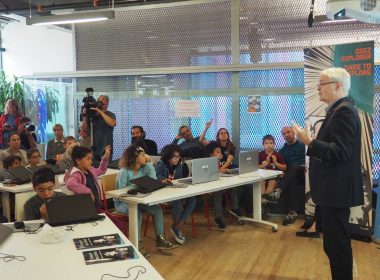
The first event of the symposium, which was hosted by McGill’s Social Equity and Diversity Education Office (SEDE), consisted of a learning panel and dialogue that took the form of a ‘storytelling harvest,’ featuring activities that engaged the crowd and opened discussions about the role of diversity. Audience members were assigned predetermined mindsets by organizers on arrival, directing participants to process the story differently. These mindsets included ‘skill building’ and ‘expectation and experience,’ to demonstrate how stories can be absorbed from different perspectives and the value in sharing them.

Anurag Dhir, co-organiser of the event and engaged learning and access coordinator for SEDE, highlighted the significance of McGill’s role in Montreal’s unique communities.

“Knowledge being learned in the community must come back to the classroom for it to constitute engagement,” Dhir said. “We must make sure these relationships are reciprocal.”

Community-based exchange forms the basis of SEDE’s vision to carve out a space in the university which fosters more diverse voices within research. SEDE hopes that doing so will inspire new, equitable ways of learning.

Community-driven initiatives like Suspicious Fish, NDG Food Depot, and Blac Biblio were showcased as a testimony to the importance of SEDE’s goal.

Founded in 2007, the Suspicious Fish Creative Literacy and Arts program is a non-profit organization that engages with school children in the Verdun area and focuses on developing literacy and artistic skills to improve career opportunities. The program is in a partnership with Literacy Quebec, the McGill School of Architecture, and the School of Urban Planning, which provide institutional support.

Beccah Frasier, youth program coordinator of the NDG Food Depot food security program, echoed similar sentiments concerning the importance of community-based exchange.

“Research on cross-sector partnerships has been very interesting and has allowed our programme to expand,” Frasier said.

Blac Biblio is an organization that provides educational resources on the subject of Canadian black history for elementary school teachers. Genevieve Vande Wiele Nobert, panelist and member of the organization, emphasized the element of self-development in community-based projects.

As a McGill student involved in the project last semester, she views community-based exchange as an environment in which her own academic interests can flourish.

“Approaching community-based research through a lens of self-development makes it much less invasive in communities,” Vande Wiele Nobert said. “Knowing that communities can teach me something encourages genuine exchange.”

The SEUR Awards ceremony values ideals similar to Vande Wiele Nobert’s. Speaking at the ceremony, Students’ Society of McGill University (SSMU) President Tre Mansdoerfer praised the constructive nature of the research awards.

“The principles of equity must not only reside in the pages of textbooks,” Mansdoerfer said.

Sophia Thierry, U2 Psychology, received the award for her research on the impact of musical training on observable positive behaviours in children with Autism Spectrum Disorder (ASD). For her, becoming involved in community-based research was the result of participating in a study last semester. Inspired to conduct her own research and an engaged style of learning, Thierry noted that the process was important to her own personal development.

“It is an important way […] to build upon your interests and pursue your own questions,” Thierry said.

Read the latest issue

Read the latest issue