Latest News

So long, Marie-Anne: Gentrification’s impact in the Plateau (The McGill Tribune)
Editorial, Opinion

So long, Marie-Anne: Gentrification’s impact in the Plateau

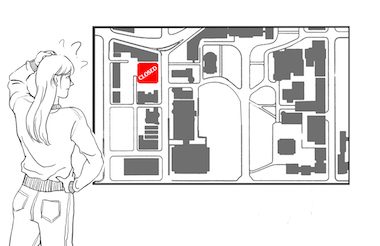
Many McGill students will tell you that they went ‘home’ over the Thanksgiving long weekend. It’s a revealing statement: Despite spending eight months of the year in Montreal, for many, home still means somewhere else. However, the student body’s effect on the city is permanent. Neighbourhoods like the Plateau, Saint-Henri, and the Gay Village have transformed into desirable—and increasingly expensive—places to live, due in part to Montreal’s 170,000 students. Students are a key factor in the Plateau’s gentrification, and they should ensure that the neighbourhood retains its unique atmosphere and accessibility.

On Oct. 2, the Plateau-Mont-Royal borough council passed a new bylaw that restricts commercial short-term rentals, such as Airbnbs, to designated sections of St. Laurent and St. Denis. According to the bylaw’s preamble, the proliferation of unofficial hotels has led to quality-of-life concerns for residents, and increasing demand for short-term tourist lodgings risks displacing businesses. Like tourists, students are a major economic asset to the city, and, as with tourists, coexisting with students is not always easy for long-term residents.

According to Radio-Canada, the Plateau is one of Montreal’s most expensive neighbourhood, a fact at odds with its blue-collar roots. From the 1850s until the 1970s, the borough’s Mile End district was a multicultural landing pad for working-class European immigrants. But, as with other famous, culturally rich North American neighbourhoods like New York City’s SoHo, the Plateau has become a victim of its own success: The influx of demand for housing risks pricing out the people who made it so desirable in the first place.

Cities across North America have created policies to keep housing affordable, and Montreal should take note. In 2016, British Columbia instituted a 15 per cent tax on property purchases by foreign nationals, which has since been raised to 20 per cent. Toronto’s “Yes In My Backyard” (YIMBY) movement advocates for the development of new housing in the city. On Oct. 9, Montreal’s Executive Committee approved a $1.6 million investment in student housing in the Plateau. The project will create 90 new units that range from studios to four-bedroom suites. The city deserves praise for taking prompt and meaningful action.

However, rising demand for housing is not the only rationale for the Plateau-Mont-Royal’s new bylaw. According to Richard Ryan, the Mile End city councillor who introduced the bylaw, tourists occupying Airbnbs often leave garbage on the street and disturb local residents with excessive noise and partying. Unlike municipal housing legislation, common decency is a problem that students can solve on their own. It goes without saying that keeping the streets clean and minimizing Hype Week chants are basic neighbourly responsibilities.

However, truly integrating into a neighbourhood requires more than just common courtesy. While getting involved with initiatives outside of McGill can be intimidating and unfamiliar, this need not stop students from contributing to their communities. Volunteer opportunities are abound: Santropol Roulant, a meals-on-wheels service, creates community ties while providing an essential service. Sun Youth, a Plateau-based community-service charity that does everything from school supply distribution to neighbourhood bike patrols, has many opportunities for student volunteers. Some McGill courses, such as GEOG 494: Urban Field Studies, get students out into the city as part of the coursework, deepening their knowledge of Montreal’s physical and social geography. Even choosing to shop at locally-owned stores helps to ensure that neighbourhood institutions can stay open as operating costs rise.

Without the combined forces of policy and individual effort, gentrification risks erasing that which defines communities like the Plateau. Students impact the places they live in whether they invest in their communities or not. By treating the places they live in as they would their own homes, students can ensure that these changes are for the better—even if ‘going home’ means heading somewhere else.

McGill, News

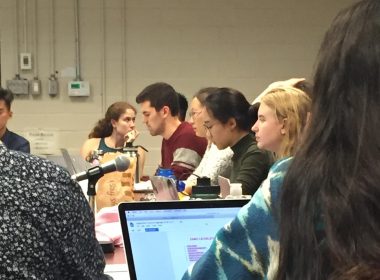
Lawsuit causes leadership crisis in the Institute of Islamic Studies

Professor Michelle Hartman and Assistant Professor Pasha Khan of the Institute of Islamic Studies (IIS) have been dismissed from their respective roles as the Director and Undergraduate Program Director (UPD) of the Institute. The McGill World Islamic and Middle East Studies Student Association (WIMESSA) issued a statement on Sept. 20 expressing frustration with the McGill administration’s lack of communication with regards to the dismissals.

Dean of Arts Antonia Maioni and McGill Provost and Vice-Principal (Academic) Christopher Manfredi recused Hartman in light of an ongoing legal dispute involving an IIS student and faculty member. Over the summer, Assistant Professor Ahmed Ibrahim filed a lawsuit against Khan for defamation after Khan allegedly warned female students of Ibrahim’s sexual behaviours. The suit also named Sarah Abdelshamy, an undergraduate student, as a codefendant. According to Associate Provost (Equity and Academic Policies) Angela Campbell, appointing Physics Professor Martin Grant as IIS Steward is in the Institute’s best interests.

“The decision [to dismiss Hartman as IIS director] is intended to address a structural matter and in no way reflects the University’s confidence or trust in any individual member of the IIS,” Campbell wrote in an email to The McGill Tribune. “Instead, the decision seeks to ensure that no one in an administrative role in the IIS appears to be in a conflict of interest or is subject to allegations of such a conflict.”

The McGill Board of Directors named Grant as the IIS Steward on Sept. 1. In addition to conducting theoretical physics research, Grant is now in charge of assigning academic duties within the IIS, overseeing its budget, and supervising its support staff. Professor Robert Wisnovsky, Associate Professor Khalid Medani, and Hartman—who remains the chair of the IIS tenure consideration committees—sit on the Steward’s advisory committee. Grant has full faith in his advisory committee.

“[Hartman] and [Wisnovsky] are knowledgeable, [as] they were both former directors, […and] they recommended [Medani] to the advisory committee,” Grant said. “We are having weekly meetings but I should mention that, [while] I listen to their advice, any decisions are mine to make.”

As Dean of Science from 2005 to 2015, Grant initiated Soup and Science, a popular event hosted every semester where students can attend science professors’ research presentations and mingle over lunch. Grant plans to roll out similar pilot projects in the IIS to promote increased academic interactions between students and faculty.

“What can we do to get people feeling ownership of the academic mission of the Institute again?” Grant asked. “I’m really big on the idea that the university is about academia. All of us, the support staff and the professors, feel very proud [of our commitment toward scholarship and research] because that makes a big difference for the students.”

According to the statement, Maioni and Grant informed WIMESSA and the IIS Graduate Student Council representatives of Hartman’s dismissal on Sept. 4. The McGill administration did not consult students before making the change and has yet to officially announce its decision to remove Khan as UPD. According to a WIMESSA representative who wished to remain anonymous, Khan directly notified the co-presidents of the McGill Institute of Islamic Studies Student Council (MIISSC), Sabeena Shaikh and Ashutosh Kumar, that he would no longer serve as the IIS UPD.

“We were disappointed that […] Khan wouldn’t be the UPD this year, as we had already met and begun discussing our goals for the year,” the member wrote in an email to the Tribune. “Without [Khan] notifying us, we would not have known, as the [administration] has not yet reached out to us in any way to inform us of the development.”

In the future, WIMESSA hopes that the administration can communicate decisions directly to students instead of relying on Association to relay information.

“As WIMESSA stated in its statement, we believe that there needs to be much more transparency in communication between the administration and the students,” the WIMESSA member wrote. “This also means meeting with us when we request it […] and not just when they decide [to] clue us in.”


A previous version of this article stated that Sabeena Shaikh and Ashutosh Kumar were presidents of the McGill World Islamic and Middle East Studies Students Association (WIMESSA) and that a quote was from Senior Communication Officer James Martin. In fact, they are the co-presidents of the McGill Institute of Islamic Studies Student Council (MIISSC) and the quote was from Associate Provost (Equity and Academic Policies) Angela Campbell. The Tribune regrets this error.

Creative, Private, Sports

McGill Tribune Sports Podcast: Ep. 1 – Baseball (w/Eno Sarris)

McGill Tribune Sports Editors Gabe Nisker and Miya Keilin discuss McGill baseball and the MLB playoffs. Then, Gabe sits down with The Athletic’s Eno Sarris to talk about baseball, sandwiches, and much more!

Creative, Word on the Y

Word on the Y – Advice for first years

The McGill Tribune takes to the Y to ask students what advice they would give to first year students beginning their journey at McGill.

Video by Sofia Mikton with help from Emma Carr, Bilal Virji, and Astrid Mohr

Editorial, Opinion

Supporting survivors means supporting their allies, too

This past year has seen momentous changes in the way McGill handles sexual misconduct allegations: The university has hired a third-party special investigator and launched an ad hoc committee regarding student-teacher relationships. However, structural issues continue to persist. On Sept. 21, the World Islamic and Middle East Studies Student Association (WIMESSA) published a statement on their Facebook page announcing that the McGill administration had removed two faculty members in the Institute of Islamic Studies (IIS) from their administrative positions. According to WIMESSA’s statement, the Provost and Dean of the Faculty of Arts claimed that only an outsider could serve as director without bias, and that Undergraduate Program Director (UPD) Pasha Khan was subject to a conflict of interest after being sued for defamation by colleague Ahmed Fekry Ibrahim. The details are murky, but the message is clear: Two professors face professional retribution for speaking out, and, even as the university attempts to reorganize in the wake of student protests, it upholds a structure that seems detrimental to survivors and their allies.

In its statement, WIMESSA affirmed that it had no prior knowledge of the proposed administrative changes and that it was not consulted. Moreover, WIMESSA student representatives received the news of these decisions on the first day of classes; universities have a tendency to announce dramatic changes at busy times of the year in hopes that students simply won’t pay attention. While the substance of Khan’s purported conflict of interest is obvious, the depth of Hartman’s involvement is unclear. In Apr. 2018, Hartman signed the faculty members’ letter of support for the Student’s Society of McGill University (SSMU) Open Letter in her capacity as a professor in the IIS. The letters alleges a mishandling of complaints against faculty members in the IIS and other departments in the Faculty of Arts.

McGill’s lack of transparency regarding Hartman and Khan’s departures is concerning. The only information currently available is WIMESSA’s statement on their Facebook page and website, as well as the absence of Khan and Hartman’s names on the IIS website’s list of administrative staff. McGill should have disclosed these events publicly—students’ associations cannot be solely responsible for announcing substantial departmental changes three weeks after the fact. McGill has failed IIS students by leaving them in the dark about departmental changes that directly impact them. Major university-wide changes, like the appointment of a special investigator, are a step in the right direction, but those changes are only as powerful as the administration allows them to be. To see substantive reform, McGill must continue to work with individual faculties and departments to create policies tailored to their specific needs.

If the administration has students’ best interests at heart, they should have consulted WIMESSA student representatives while making the decision to replace Hartman and Khan, or at least notified them in advance that a decision was being made. The disregard for WIMESSA’s input is troubling, since student representatives understand their constituents’ concerns better than distant administrative bodies. Moreover, Hartman and Khan’s replacement serves as a reminder that teaching assistants, professors, staff, and other faculty members are all a part of an academic hierarchy that is conducive to abuses of power.

Due to the lack of official communication on McGill’s behalf, the exact nature of the professors’ alleged conflicts of interest is unknown. Still, Hartman’s removal sets a precedent that supporting survivors is dangerous. Silencing Hartman and Khan will only make students in the department feel less safe and more reluctant in calling out potential abuses in the future. Until the administration demonstrates, rather than just proclaims, its commitment to supporting survivors, its expressions of concern will ring hollow.

Off the Board, Opinion, Private

“Hey, so I did a thing…”

I found out that I was pregnant on the same night that the Chicago Cubs won the World Series. The euphoria of my hometown’s victory was accompanied by a devastating plus-sign on a pee stick. I was 17-years-old. The morning after, I called Planned Parenthood and set up an appointment for an abortion the next week. Carrying the clump of cells growing inside of me to term was never an option. While I have always been pro-choice, it’s one I never thought I’d have to make. It was by no means a tortured decision.

Actually getting the abortion was rather simple. In the United States, abortion rights are decided state-by-state, and I was lucky to have been living in New York when I had mine. In Quebec, abortion is legal, free, and available at any time. However, despite its supposed inclusive and liberal campus environment, McGill offers few resources for those seeking an abortion and only recently formed a support group for those who ‘chose.’ My abortion was accessible, but what I didn’t account for was how lonely I’d feel afterwards.

So, three days after Donald Trump’s election, I went to the Planned Parenthood Centre in the Bronx borough of New York City and took a mifepristone pill to kill the fetus, followed by four misoprostol pills to evacuate my uterus. I had never felt more relieved.

The next month involved heavy bleeding, searing cramps, and violent nausea. While my doctor prescribed three weeks of rest and limited activity, I carried on with my life. I went to school, attended track practice and play rehearsals, and picked up more shifts at my movie theatre job. Hearing back from universities, once a monumental phenomenon, seemed minimal compared to my new mental and physical state. With the exception of a few close friends, I never spoke about the abortion to anyone. I was stunned into silence—I felt as though I had made an incredibly mature decision that I was banned from discussing.

I spent a lot of time reading articles and excerpts written by extraordinarily successful women with booming careers and blossoming families. They all said something like “Hey, so, I did a thing when I was 20…” They all seemed to give the same statistic: One in four women will have an abortion by age 45. They all expressed love and empathy for any woman in a position of reproductive vulnerability, especially young women. I noticed that rarely did anyone my own age talk about the choices they’ve made: Abortion seemed to be a topic reserved for middle-aged women already too successful to be hurt by such a confession. There was no space for talking about the process of abortion, its lasting effects, or the simple fact that my body, which I had not yet grown into, was somehow capable of creating another one.

The space to talk about this minor medical procedure is swallowed by politics. Abortion, and the public’s willingness to address it, should not be a partisan issue. Moreover, public acceptance of abortion needs to continue past the procedure itself; one can hold liberal and accepting views regarding abortion, but those views don’t necessarily translate to a willingness to discuss the topic. At 17, I was not remorseful. I did not mourn the loss of my ‘child,’ and, if faced with the same situation today, I would make the same decision immediately. If I could change anything, however, I would seek help ahead of the abortion.

Until this space is created, you can be someone’s support system. Hold their hair back when they’re suffering from morning sickness. Accompany them to their clinic appointment. Let them squeeze your hand when they’re experiencing contractions. Listen to what they have to say—just be there.

Nov. 11, 2016 will always hold meaning for me, but its significance has changed. I am not ashamed of what I did, nor do I feel I did anything extraordinary by choosing to terminate the pregnancy. For me, this date is one of empowerment, of speaking up, and, now, one of telling my story in the hope that someone will feel less alone. On that day, my personal victory felt much more remarkable than the Chicago Cubs’ win.

Becoming Canadian in Canada
Commentary, Opinion

Where are you from?

Back at my international high school in Tokyo, I could answer this seemingly simple question with, “I was born in Canada, but I was raised in Japan,” and that would be that. Many of my friends answered with two or three countries and it seemed like a perfectly-appropriate reply. However, my answer became complicated when I first arrived in Montreal this August. When friendly faces would ask me where I was from, I had to pause. Am I allowed to call myself a Canadian, even though I’ve never lived here? Despite having been born in Victoria, B.C and having a Canadian passport, I have spent my entire life in Tokyo. Identifying as just ‘Canadian’ or ‘Japanese’ seemed reductive—like I would be throwing away half of my identity. On the other hand, saying ‘Tokyo’ would be so much simpler than giving a stranger my whole story.

McGill is an inclusive, diverse campus, with students from over 150 countries making up 30 per cent of our student body. Even though we may be a global community, we still categorize students as either ‘international’ or ‘Canadian,’ when there are so many of us who do not fit into either. Even with the plethora of international clubs and associations that cater to foreign students, in-between Canadians are left out because we challenge their categorizations.

While I was in the same position as many of my international friends coming from Tokyo, I still felt a wave of uneasiness, for not completely fitting in. My friends talked about difficulties they faced getting their immigration documents and the culture shock of living in an English-speaking country, but I could not completely sympathize. I was in an entirely disparate situation—I did not have to acquire a Certificate of Acceptance to Quebec (CAQ), but I was ineligible for government insurance. Although I can speak Japanese, English is my first language. Canadians who grew up in Canada already belong and are comfortable, while I was stuck right in the middle.

It is evident, however, that we are making attempts at normalizing mixed-race identity. An excellent example is Patricia Edmonds’ cover story on half-black, half-white fraternal twins for National Geographic’s April 2018 Race Issue. While the article does, indeed, shed a positive light on biracial people, its focus is on the twins’ visible differences rather than their identities and experiences, demonstrating the need for progress in our understanding of racial categorization.

When reflecting back on my own experience as a half-white, half-Japanese student in Tokyo, my appearance was the first thing that set me apart from others when I introduced myself. I still remember attending a Japanese cram school session when I was in grade school and getting called half, or hafu — a somewhat-derogatory term used in Japan to refer to a biracial person—by both the students and teachers. While they would think of the term as a compliment, telling me how big my eyes were and how beautiful my skin was, it made me feel diminished to ‘half’ of a whole and left me feeling like a foreigner in my own country.

As to where I’m from, I still don’t have a clear answer. Both countries are a part of who I am, and yet, I don’t fit nicely into any category. I am in-between, I’m half, or hafu, but never a whole. While I still think that this provides me with my own individuality, a difference that I find exciting, it also leaves me with an eerie feeling of not belonging to a community. It’s nice being different, but social expectations still have to catch up with the realities of global diversity and multi-nationalism.

Montreal, News

Malala Yousafzai addresses Montreal crowd

 Malala Yousafzai addressed an enraptured crowd of fortunate Montrealers on Sept. 26 at the annual Influence MTL 2018 conference, stressing the importance of youth activism and gender equality. The Mayor of Montreal, Valérie Plante, took to the stage at Place Bonaventure to introduce Yousafzai and underline the importance of young people fighting for their beliefs.

“Why do so many initiatives come from the youth?” Plante asked. “Why do so many initiatives come from you? You can launch small, medium, and large scale initiatives because all victories and all fights are worthy.”*

In a Q&A session led by Danièle Henkel, female entrepreneur and founder of Les Entreprises Danièle Henkel Inc., 21-year-old Yousafzai reiterated the power of youth-driven change. The Pakistani-born Nobel Peace Prize winner sees the 2012 assassination attempt on her life as a clear testimony to the potential for her advocacy work to enact change.

“I started speaking up and realised that some people tried to get rid of my voice,” Yousafzai said during the event. “Just my voice. They were afraid of it because it was so powerful [….] You do not need to be 45, or 60, or 70 to bring change. You do not need to have qualifications. You can bring change at any age, […] make this world a better place, and ensure that everyone […] has education and everyone has health.”

The atmosphere was charged throughout Yousafzai’s panel: The audience reacted to every word she said, cheering at her statements of support for female education and chuckling at her light mockery of her male classmates’ immaturity.

“Before, I was in a girls’ school so I had not really seen boys of my age,” Yousafzai said. “At university, I saw boys and I realized that most of them are boys [….] We expect them to be more mature but they’re not. I have two brothers and they’re the same.”

Nonetheless, Yousafzai pointed out the pivotal role boys and men can play in reducing the gender gap. Yousafzai reminded the audience that gender inequality is not just a problem in her home country of Pakistan, but around the world, including the Western hemisphere.

“Men and boys need to join this fight for equality, it is not just on women,” Yousafzai said. “It’s about their daughters, it’s about their sisters, it’s about their wives [….] When we educate women, when we give them equality, we are not just helping individually, we are helping the whole society.”

To close out the panel, The McGill Tribune asked Yousafzai about her current experience studying at Oxford University and whether she felt that higher education had enabled her to discover new passions and new facets of herself.

“I’m learning not just the content from the books, not just philosophy, politics, and economics, but also learning from my friends, learning from the professors,” Yousafzai said. “Everyone is doing amazing work, one of my friends has done coding and one of my other friends is raising awareness about feminism [….] You get to find your passion.”

The audience was left feeling invigorated by Yousafzai’s messages of optimism and calls for gender inclusivity. Jason Carmichael, associate professor in McGill’s Department of Sociology, attended the event with a group of other professors who lauded Yousafzai’s compelling performance.

“Her courage is infectious,” Carmichael said. “I think that one of the things that she really brings to the table is her courage of conviction and courage of life. I think there are many people that care about a lot of things; there are very few people who are willing to put their lives on the line for what they believe in.”


*Plante’s quote has been translated from its original French by the author.

Sports

Quidditch for the ages

On Sept. 29, McGill and Université de Montreal co-hosted the annual season-opening Vive le Quidditch Libre tournament in Montreal’s Parc Villeray. It was a less-than-ideal start to the year for McGill’s two quidditch teams: McA and Canada’s Finest Quidditch Club (CFQC) placed fifth and seventh, respectively, in a pool of seven teams. Nevertheless, the McGill teams remain optimistic about the rest of their seasons.

Quidditch, the brainchild of Harry Potter author J.K. Rowling, is a fictional sport that is popular within the wizarding world of her bestselling series. Each team fields a side of seven players. They fly around the pitch on broomsticks, throwing a ball, or ‘quaffle’, through a set of giant rings to score points. They also try to avoid being hit by smaller, rock-hard balls called ‘bludgers.’ One member on each team, known as a ‘seeker,’ chases a small, golden ball called a ‘snitch.’ The game ends immediately once the snitch has been caught.

Within the past decade, this fictional hobby has become a reality: Groups across the globe have organized quidditch leagues, and the real-world game has adopted its own unique charm. This version, however, does not involve any flying. Instead, players run with narrow pipes between their legs, and the golden snitch is a specially-trained person dressed in gold with a tennis ball hanging from their pants, paid $10 per game to avoid getting caught by seekers. The players known as ‘beaters’ run around and pelt their opponents with dodgeballs instead of bludgers.

“I think people take it as a joke sport and just kind of laugh,” McGill Quidditch Team Captain Caitlin Belz said. “I consider quidditch to be just as much of a strategic and athletic sport as any other.”

This season is a special one for McGill Quidditch, as it celebrates its 10th anniversary. As far as university quidditch is concerned, McGill is a pioneer. Ever since Canada’s first official club was first formed on campus, the sport’s popularity has spiked.

“We started by playing in the U.S., and then there was a Canadian league,” McGill Quidditch VP Communications Brooklynn Carey said. 

In fact, the game has grown beyond the university level; two of the teams participating in this tournament were made up entirely of alumni who wanted to stay in the sport.

Participants don’t have to be fans of Harry Potter to get into the sport.

“Not as many people as you would think are fans,” Belz said. “The ratio of fans to non-fans is about 65-35, but we always have a few people on the team that have never read the books or seen the movies, and that number is increasing.”

Around 150 people participated in tryouts this season. Two big pulls for the sport are that quidditch is gender-inclusive, one of very few played at the university level, and that it provides exercise without requiring much athleticism. Often, varsity athletes will play quidditch in the offseason to stay in shape. One such athlete is Ashley Blackburn Ouellette, a former hockey player who got into quidditch after finding the club on campus.

“For an athlete, it [is] a really great sport,” Ouellette said. “I actually fell in love with the sport really fast.”

Though the opening tournament was a bit of a disappointment for McGill Quidditch fans, the season is still young. With such an important anniversary to honour, hopefully McGill Quidditch can make this season a magical one.

A previous version of this article stated that Brooklynn Carey was the VP Internal of the McGill Quidditch team. In fact, she is the VP Communications. The Tribune regrets this error.

Letter to the Editor: No, there is no “quest for monolingual domination” in Québec
Letters to the Editor, Opinion

Letter to the Editor: There is no “quest for monolingual domination” in Québec

On Sept. 18, The McGill Tribune published an opinion piece titled “Quebec’s quest for monolingual domination makes healthcare less accessible.” In this article, the author made dubious and confusing links between Bill 10, font changes on information signs at Saint Mary’s hospital, and what he described as “Quebec’s quest for monolingual domination.” We, the Francophone newspaper Le Délit, and the Organisation de la Francophonie à McGill, seek to react and set the record straight lest such an ill-advised and anecdotal opinion piece cultivate confusion and intolerance among the McGill community.

In 2015, the Québec government passed Bill 10: “An Act to modify the organization and governance of the health and social services network, in particular by abolishing the regional agencies.” Bill 10 is part of a vast reform of the healthcare system engineered by the Parti libéral du Québec (PLQ)―elected with stellar majorities in Anglophone ridings like Notre-Dame-de-Grâce (NDG), in which the Saint-Mary’s hospital is located.

Ironically, the PLQ invoked closure, bâillon, to pass Bill 10 and muffle the Parti québécois and Québec solidaire’s opposition to the dismantling of regional agencies. If anglophone communities are indeed worried about the loss of local agencies, this concern is shared by many Francophones. The removal of some local anglophone agencies and the ensuing disorganization of services are consequences of Bill 10, not its purpose.

The constituency of NDG, nonetheless, stands in good posture to voice its concern since Kathleen Weil, minister in charge of the relations with English-speaking Québécois, is currently running for reelection in this same riding.

It is also worth noting that anglophone communities were invited in parliamentary committee before Bill 10 was tabled. Addressing the issue of access to services in English, Article 76 of the bill states that “Each public institution must, in the centres it specifies, develop a program of access to English-language health services and social services for the English-speaking population it serves.”

In fact, no one voiced the alleged determination to make French predominant during debates on the bill at the National Assembly. Purporting that Bill 10 was driven by Québec’s intent of monolinguistic domination is at best ridiculous, if not completely misleading.

Referring to changes in the font size of signs at Saint-Mary’s hospital, the author contends that “legislation like Bill 10 is not only detrimental to [students’] security but is attempting to address an imagined decline in the French linguistic tradition.” We can but call this a misinformed and twisted reading of reality.

How can one pretend to understand the language question in Québec while grounding their analysis in a study that looks at it from a purely market-based perspective, where historical and cultural dimensions have been evacuated? A diagnosis of the state of the French language can not rest solely on a supply and demand analysis. The question is, obviously, more complex than this.

Moreover, the author’s diagnosis of an “imagined” French decline is problematic, as it relies on numbers about Québec residents’ self-assessed ability to sustain a conversation in French. This is not very telling.  Meanwhile, the proportion of Québécois whose first language is French and the number of Québécois speaking French at home are both declining. Another recent study designed by the Organization for Economic Cooperation and Development suggests that almost half of Québécois are functional illiterates. “French is on the rise”—really?

If the author of this opinion piece truly feels concerned by the respect and dynamism of Québec’s linguistic culture, then the impact of his words should probably be weighed more carefully. Changing the signs’ font resulted from an administrative decision; to portray that change as a national “quest for monolingual domination” is dishonest and disrespectful toward Québécois. This sort of presumption can have dangerous consequences, as it fuels confusion and pits communities against each other.

By the way, Montréal is indeed a cosmopolitan city, but it is also part of Québec. And here, French is not just a mere “linguistic tradition”: It is our official language and the basis of our identity.


Antoine Milette-Gagnon and Simon Tardif are Editors at Le Délit, and Christophe Savoie-Côté is the President of L’Organisation de la Francophonie à McGill.

Read the latest issue

Read the latest issue