

Latest News

News, SSMU

SSMU motion on far-right postponed

The Students’ Society of McGill University (SSMU) Legislative Council convened on Sept. 27, during which councillors Bryan Buraga, Mu Rong Yang, Garima Karia, and Andrew Figueiredo were nominated to the Board of Directors (BoD). The Legislative Council also approved a motion to prohibit the Vice-President (VP) Internal from becoming intoxicated at events and event organizers from spending SSMU funds on personal drinks.


In more routine matters, the Council renewed the motion designating affiliated clubs as SSMU’s highest priority and confirmed the membership of the health and dental care review committee. It also discussed a policy defining SSMU’s stance toward far-right groups and a motion addressing the lack of student participation in SSMU politics.

Motion regarding far-right groups postponed indefinitely

Council members voted to indefinitely postpone the Motion to Adopt a Policy Against Affiliation with Far Right Groups, which would forbid individuals or clubs affiliated with far-right groups from being directly involved with SSMU. During the discussion period, VP External Marina Cupido defended this move, stating that the policy in its current form was not yet ready to be submitted to the Legislative Council. Cupido will submit a revised motion in the near future.


“This is a very nuanced issue, and I think that there are a lot of concerns that need to be taken into account when trying to fight the far-right on our university campus, or anywhere really,” Cupido said. “I think that the […] draft that was brought up last year is a good start, but […] I don’t think it is adequate, frankly [….] I would like to see something better and more thorough, and I would like to have the time to put that together.”


The vote was initially proposed by the outgoing 2017-18 SSMU Legislative Council at the Apr. 5 council meeting, during which councillors voted to postpone discussion to the second meeting of the 2018-19 council. Despite this delay, Cupido expressed their commitment to preparing a policy in the coming months to address the presence of far-right groups on campus.


“I want to get this done by the end of October, so I really don’t want to drag [it] out,” Cupido said.

Council unanimously passes motion regarding student governance


Council members unanimously voted in favour of the Motion for Special Emphasis to be Placed on Greater Engagement with Student Governance. The policy, which will establish an ad hoc committee to undertake a comprehensive governance review, is an attempt to address student apathy toward and subsequent distrust of SSMU. These feelings have resulted in low voter participation in SSMU elections, including in the 2018 Winter Election, where only 32.8 per cent of the student body voted. This was the highest voter turnout in 14 years.


“The terms of reference engage in a serious attempt to address a longstanding problem,” VP University Affairs Jacob Shapiro said. “It’s a problem that traditionally has been addressed in ad hoc manners. I hope that this indicates a more sustained effort. Ultimately, we’ll be judged by the actions of this committee and not by words or bad raps.”


During the discussion period, Senate Caucus Representative Bryan Buraga expressed optimism that the policy would improve student perceptions of SSMU.


“I think this is a fantastic step in the right direction for reforming our society and making sure we re-engage our members, and [making] sure that they have faith in this institution that can do so much great work,” Buraga said.

News

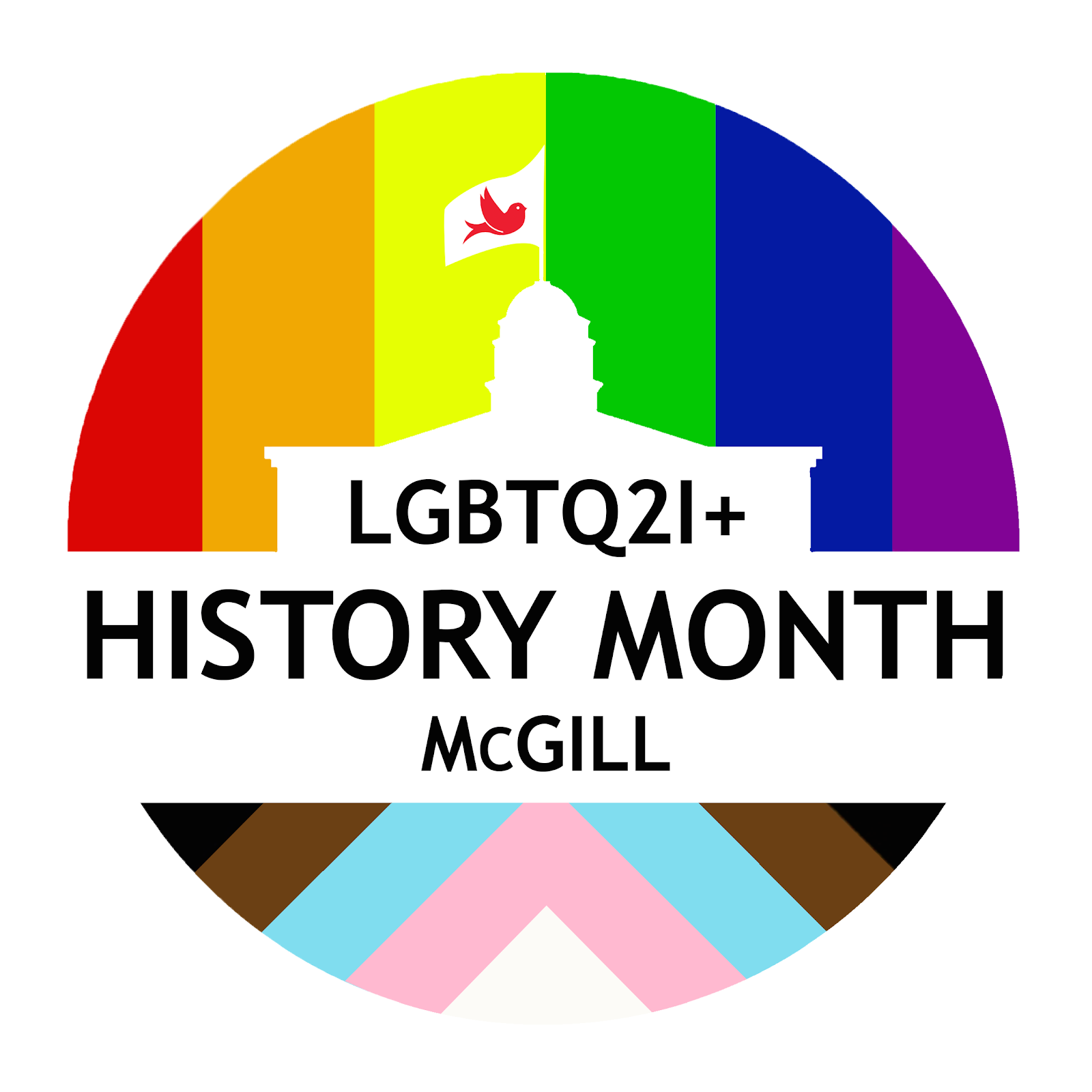
McGill celebrates first-ever Queer History Month

The Office of the Provost, Queer McGill, and the Institute for Gender, Sexuality, and Feminist Studies (IGSF) are a few of the many groups that have collaborated to plan McGill’s first Queer History Month. Officially known as Lesbian, Gay, Bi, Trans, Queer, Two-Spirited, and Intersex (LGBTQ2I+) History Month, the planned celebrations are a first for any university in Canada.

Meryem Benslimane, equity education advisor to the Provost, has been planning the events for the past two months. In an email to The McGill Tribune, she summarized the breadth of events included in the effort.

“The goal of LGBTQ2I+ History Month is to celebrate and highlight the history and achievements of LGBTQ+ communities at McGill University and, more broadly, in Montreal, Quebec, and Canada,” Benslimane wrote. “Through a series of screenings, panels, workshops, and community events, LGBTQ2I+ History Month aims [to raise] awareness, [advance] education, and [increase] the visibility of LGBTQ+ communities [at McGill].”

Quebec’s queer history is particularly complicated when compared to the rest of Canada. In July 1990, police conducted a raid of the Sex Garage, an LGBTQ2I+ party that was held in a warehouse in Old Montreal. According to witness testimony, police blocked partygoers from exiting while yelling homophobic insults—some even removed their badges and started to beat participants.

According to Benslimane, events like the Sex Garage raid have left their mark on Quebec’s queer community.

“[Quebec has] pioneered certain rights […] for instance, they legalized same-sex civil partnership earlier than other provinces,” Benslimane wrote. “But they’ve also been late in regards to other things—Quebec is the only province that forbids non-citizens from changing their gender on their ID and documents, and citizenship may take five to ten years.”

Benslimane and her committee have planned a mix of academic and cultural events in hopes of attracting as many McGill community members as possible. This week, Black Students’ Network (BSN) will be screening Ouvrir La Voix [Speak Up], a film about the experiences of francophone European black women. The ISGF held a love poem workshop with Indigenous academic Smokii Sumac, who also spoke during McGill’s Indigenous Awareness Week. Sumac hopes to teach interested McGill community members about using love poems to express both romantic and aromantic forms of love. Interested students and staff can visit Queer History Month’s Facebook page for a full schedule.

From the perspective of Alanna Thain, director of the IGSF and associate professor in the Department of English, knowing queer history can enhance the university’s ability to understand the present struggles of its LGBTQ+ members. She believes it is important to recognize that Quebec’s queer community continues to face evolving struggles.

“The struggles that occupy a lot of activism today are not always the same ones that were fought in the past,” Thain said. “The Sex Garage riots of the ‘90s are really different from the fight for marriage equality, for example. If you don’t know your history, you might not understand why, for many queer people, marriage equality is not the be all and end all of what we want and dream about.”

While Queer History Month marks a significant milestone in McGill’s commitment to the queer community, students like Bei Evely, U5 Anthropology and Gender, Sexuality and Feminist Studies, hope that McGill’s administration will continue to advocate for queer students and faculty beyond October. Evely hopes that this year’s event will have a lasting impact on McGill culture.

“I think it’s important for McGill to figure out what they want to stand for and then to stand strongly for it,” Evely said. “If we’re having a history month, which was mostly led by people who really feel passionate about having a history month around this community, I want this passion to be reflected in the stance that we take the entire year.”

Soccer, Sports

Four teams to watch in Women’s World Cup qualifiers

Starting this week, the Confederation of North, Central American, and Caribbean Association Football (CONCACAF) will host its qualifying tournament for the 2019 FIFA Women’s World Cup that is to take place in France. The McGill Tribune has compiled a list of four teams to keep an eye on as the tournament begins on Oct. 4 in Cary, North Carolina.

Trinidad and Tobago

One of the best women’s soccer teams in the Caribbean region, Trinidad and Tobago is looking to qualify for its first-ever Women’s World Cup. Ahead of the qualifying tournament for the 2015 World Cup, the team arrived in Dallas, Texas for their opening match with $500 and no transportation, practice equipment, or food, prompting Head Coach Randy Waldrum to call for support via Twitter. These tweets momentarily drew attention to the unreasonable expectations heaped upon many women’s soccer teams around the world. Namely, they perform at the highest level without the sufficient resources to do so. Trinidad and Tobago received some support from businesses in the Dallas area, individuals, and even the Clinton Foundation, but ultimately failed to qualify for the World Cup that year.

Mexico

If they qualify, the Mexican women’s national team, or El Tri, would secure its fourth appearance at the Women’s World Cup, although they have yet to move beyond the group stage. Mexico, currently ranked 24th in the world, is led by midfielder and captain Nayeli Rangel of Monterrey. Last year, Rangel returned to play professional club soccer in her hometown for Tigres UANL in the new Mexican women’s professional soccer league, Liga MX Femenil. By establishing a platform to showcase elite, homegrown talent like Rangel, the league provides an opportunity for the further development of women’s soccer in Mexico.

Jamaica

The Jamaican women’s national team, also known as the Reggae Girlz, finished first in the Caribbean zone’s preliminary qualifying round on home soil, ahead of Trinidad and Tobago. This success came after the team disbanded between 2008 and 2014 after failing to make it out of the qualifying group stages for the 2008 Beijing Olympics. Funding from the Bob Marley Foundation has allowed the Reggae Girlz to return to the world stage, and they currently rank 64th in the FIFA World Rankings. While Marley’s backing provided them with financial support, an appearance at the Women’s World Cup would help raise the team’s profile on the pitch and bring in even more resources to improve their training and development programs.

Canada

Canada, currently ranked fifth in the FIFA World Rankings, has appeared in every FIFA Women’s World Cup—even hosting it in 2015—except the inaugural tournament in 1991. They have brought home two Olympic bronze medals (2012, 2016), two CONCACAF championships (1998, 2010), and one Pan American Games gold medal (2011). This time around, a strong mix of veterans and young talent will take the field. Among the veterans is captain and star forward Christine Sinclair. The Burnaby, BC native is the second-highest international goal-scorer in women’s history, with 173 goals in 268 national team appearances over her 18-year career. She has also been named the Canada Soccer Player of the Year 13 times. France 2019 could be Sinclair’s final chance to win the World Cup and also a chance at redemption for the entire Canadian team, who were eliminated by eventual bronze medalists England in the last World Cup.

Chill Thrills, Student Life

Underrated restaurants in and around the McGill ghetto

Ask any McGill student living in or near the Milton-Parc community about the best places to eat around the neighbourhood, and they’ll most likely respond with the staples: Chef on Call, Lola Rosa, or Alto’s. There are, however, many hidden gems around campus which also offer great meals at student-friendly prices. Here are five alternatives worth checking out for students too busy to cook during midterm season.

Basha

666 Rue Sherbrooke Ouest

In the realm of Lebanese food in Montreal, Restaurant Boustan is usually mentioned as a go-to spot. While it is a fan favorite, it is not located very close to the Milton-Parc area, and delivery can take a while, too. Basha is an economical, local alternative for hearty plates of shawarma, pitas, garlic potatoes, falafel, vegetable dishes, and poutine. For the hungry student on a budget, Basha offers a ‘trio’ of a pita, potatoes, and a fountain drink for under 12 dollars. Basha has several locations throughout Montreal, two of which are easily accessible to residents of the McGill ghetto: One that recently opened on Avenue du Parc and the other on Sherbrooke Ouest.

Amelia’s Pizza

201 Rue Milton

Situated right on the corner of Rue Ste. Famille and Milton, Amelia’s Pizza is a small, charming, family-run Italian restaurant. There is a diverse selection of pizzas on the menu, including BBQ chicken, reuben, and Hawaiian. Customers can also customize pizzas to their liking, and plenty of vegetarian options are available. The shop also serves a variety of pasta dishes all under 15 dollars as well as scrumptious signature submarine sandwiches. The cozy interior, with its wall-to-wall brick aesthetic, spacious seating area, and potted plants makes this neighbourhood joint the perfect spot for a chill night out with friends. For busy students looking to stay in, Amelia’s delivers. Be aware that it is not open past 9 p.m. every day, so, it’s more of a first dinner option.

Super Sandwich

1115 Rue Sherbrooke Ouest

If you know, you know. It is understandable that many people aren’t aware this cult favourite even exists; Super Sandwich is located in a depanneur under La Cartier apartment complex on the corner of Peel and Sherbrooke Ouest. Local customers rave about the shop’s rapid-fire service and fresh, affordable sandwiches. Inexpensive is an understatement—almost every sandwich is under five dollars, including tax. Within walking distance from campus, this is a great place to grab a tasty meal between classes or during a study break. After students’ first Super Sandwich experience, they will wonder how they ever lived without it.

La Crêpe 2 Go

2150 Rue de Bleury

This crêperie is on the border of the Milton-Parc community. As the name suggests, La Crêpe 2 Go has quick service, pushing  people in and out of the door within minutes with a warm crepe in hand. Those craving a sweet treat after a long day of classes can come here for a nutella crêpe topped with fresh fruit, a warm Belgian waffle, or homemade gelato. Alternatively, students looking for a more substantial meal can choose from a variety of savoury crêpes. Patrons can order off the menu or build their own crêpe from the many toppings, spreads, meats, cheeses, fruits, and vegetables available. Gluten-free alternatives are also offered.

Club Soya

225 Rue Sherbrooke Ouest

It seems that Japanese cuisine around campus is mediocre at best. However, one doesn’t have to venture far to find better: Club Soya, an innovative Japanese eatery, is located on Rue Sherbrooke Ouest. This venue will exceed even a Japanese food enthusiast’s expectations with its creative twists on sushi and poke bowls. Their maki burritos are a customer favorite and achieve the perfect balance between spicy and sweet. For customers feeling adventurous, the Club Soya sandwich [a tempura rice cake topped with cream cheese, honey curry mayo, salmon, and prosciutto] is an excellent choice. The restaurant does deliver, but its charming ambience makes for a relaxing and fun in-person dining experience, too.

Arts & Entertainment, Music

Electronica obscura

For some, electronic music is a seasonal interest that begins and ends with Montreal’s annual Piknic Électronik festival. It takes a keen ear and an open mind to truly appreciate the genre in all of its noisy magnificence. For those indoctrinated into the world of ambient, dance and experimental music, however, the beauty lies in the strangeness and the unfamiliarity. Here are some of our favourite electronic releases from the month of September.

‘Konoyo’—Tim Hecker

Kevin Reynolds

Contributor

For the past decade, Tim Hecker has been the closest thing the world of contemporary ambient music has to an idol. With his ninth album Konoyo, released on Sept. 28, the Montreal-based electronic musician continues to deliver the tightly-crafted sound that has previously garnered him such acclaim.

Hecker’s past albums have varied in style, from the modulated choral music of Love Streams, to the multi-textured, cacophonous percussion collages he showcased on Virgins.  Konoyo, on the other hand, delves into long and droning sounds with little in the way of rhythm to anchor the albums tracks as they bleed into each other. Konoyo sees Hecker continuing his experimental trajectory. Past listeners will recognize similarities between his latest effort and albums like Harmony in Ultraviolet. Both feature long, droning tracks that move deeper and deeper within themselves rather than towards any sort of climax. Still, Konoyo has its own sound entirely.

For Konoyo, Hecker collaborated with Tokyo Gakuso, a group of musicians who play gagaku—music from the traditional courts of Japan. Often hidden behind layers of reverberating noise, the instruments, mostly flutes and mouth organs, occasionally peek through. Usually, though, it’s Hecker’s manipulated sound, and layers of hazy noise that come forth to the front of the record.

While certainly enjoyable, Konoyo is not an easy listen. With no vocals and minimal sonic variation, Hecker’s sounds are often jarring, if not unnerving.

Despite the lack of conventional structure, Konoyo remains evocative. The album’s second track, “In Death Valley,” for example, opens with lush instrumentation before sinking back into the atonal noise that is characteristic of Hecker’s music. All of this is to say that, what Konoyo lacks in the terms of rhythm and melody, it makes up for with captivatingly barren soundscapes and dark emotion.

Konoyo might not be an album you want to play in front of strangers or music to listen to on a sunny day.  It might, however, be the perfect album to put on while walking in the dark of night. For fans of Hecker, or anyone who just wants to put something on to make themselves uncomfortable, Konoyo is a must-listen.

‘Collapse’—Aphex Twin

Alyssa Nazmi

Contributor

In the latest release of his post-hiatus career, prolific electronic artist Richard D. James, under the moniker Aphex Twin, taps into an even quirkier sound while revisiting the intricate electro  characteristic of his early discography. Since his first release in 1991, the Cornish recluse has become synonymous with the ambient techno and electro that characterized the ‘90s electronic scene, establishing him as one of the most honored and influential figures in his industry The iconic disfigured Aphex Twin logo cropped up in London, New York, Turin, Los Angeles, and Tokyo a couple of months ago, discreetly announcing the release of Collapse. It wasn’t long before an internet frenzy erupted, culminating in the EP’s release on Sept. 14.

With an abundance of releases under multiple monikers, James’ work covers a vast stylistic spectrum, ranging from organic and emotive cuts like “Avril 14th,” to purely-manic, disturbing noise (James once performed a live set in which he played the sound of a blender for over five minutes). As its title suggests, Collapse is an intricately-designed apocalyptic soundscape, departing from the languid electro of his previous release, Cheetah (2016).

“T69 Collapse” throttles listeners into the bustling future with its glitchy clattering of drums, only to abruptly dissolve into cacophony. James’ ability to humanize heady electronic composition shines through on “1st 44”: He deconstructs a typical footwork jam, splicing the familiar sounds of claps, snares, and bass into echoing samples resulting in an uncanny, abstracted cut that retains a palpable eeriness.

Collapse reshapes elements within James’ stylistic comfort zone, offering a glimpse into the musician’s reflection on his own creative processes. The EP’s rich sound parallels the work of contemporary producer, Jlin, whom James has collaborated with before. It is refreshing to see an artist as acclaimed as James let inspiration flow from his surroundings. Although Collapse does not stand out as one of the best releases in James’  accomplished career, it is a solid addition to his work.

‘Safe in the Hands of Love’—Yves Tumor

Noah Simon

Contributor

Every so often, an album comes along that digs into your consciousness and festers there. After one listen, it is impossible not to immediately listen again. And again, and again, and again. Yves Tumor’s Safe in the Hands of Love (SITHOL), with its genre-bending, mind- altering collage of sound, is one such album.

Tumor released SITHOL on Sept. 5 to near-unanimous praise. Though labelled experimental by critics and fans alike, SITHOL also dabbles in mainstream genres of alternative rock, punk, R&B, house, and Intelligent Dance Music. It is rife with catchy melodies, earworm beats, and cathartic breakdowns.

None of this is to say that the album doesn’t include strange and challenging moments, particularly as it descends into madness during its second half and becomes more abstract, like in “Hope In Suffering.” But, in many ways, these songs resemble pop with their adherence to familiar ideas—“Noid” is straight-forward social commentary with a catchy and memorable hook. Tumor takes existing, mainstream elements and bends them as much as as he can, invoking the spirit of experimental tradition.

Some songs end abruptly, sometimes mid-verse, such as the opener “Faith in Nothing Except Salvation,” while others unfold unconventionally with odd pacing. “Licking an Orchid” and “Recognizing the Enemy” feature guitar loops that sound like a broken record that never gets fixed, invoking a circular chaos.

It feels fitting, then, that the final track ends as a seeming continuation of the opener, while still ending mid-thought, further complicating when exactly this broken album starts and finishes. All you can do is start it all over again and try to put it together.

News

McGill Safety Week held on Lower Field

The Downtown campus’ annual McGill Safety Week activites took place on Lower Field on Sept. 12, replete with both informational booths and fun activities. The event aimed to inform students about a wide variety of important, yet hard to come by, safety skills.

First and foremost, Safety Week was a fun pitstop for students walking down the Y Intersection. Cuddly therapy dogs and cookies were available to passersbys, and Macdonald campus farms provided apples at the Safety Week promotional desk. Randy Westman, a Campus Public Safety employee who distributed apples at the event, expressed his enthusiasm regarding safety week to The McGill Tribune.

I really enjoy seeing students happy and doing what I can through food and being informative on safety,” Westman said.

The light-heartedness of the event bled-through to the more serious panels on offer.  The ‘drunk goggles’ stand offered a sober view of how one perceives their surroundings when their blood alcohol concentration is more than twice the legal limit permitted for driving. When worn, the goggles distort a user’s visual perception, complicating users’ task of completing a series of challenges they might encounter on their way home from a night out on Boul. St. Laurent.

First, the participant had to count $3 worth of change from a pile of coins. Then, they had to use a key to open a door and walk in a zigzag obstacle course. Finally, the fourth challenge tested their aim: Participants had to throw five beanie bags into a bucket roughly two feet away from them, which most failed to do.

At the fire prevention desk, participants had to wear almost 80 pounds of firefighter equipment, ‘rescue’ a dummy of average human weight, and return as soon as possible to put out the fictional fire.

Lukas Shannon, U3 Science, appreciated being able to consult professional fire fighters for needed insight on fire safety tips.

I was thinking of getting a [fire] extinguisher for my apartment […] so when I saw this activity […] I had the opportunity to ask someone who really knew how to use one about how to do so, rather than just the guy at the hardware store,” Shannon said. “I also learned some good tips, like I didn’t know I was supposed to point at the base of the fire. I also found out that the extinguisher is good against combustibles, electronics, and liquids. ”

In the context of Safety Week, the McGill Environmental Health and Safety (EHS) also introduced attendees to basic defibrillator use.

Overall, Safety Week organizers hope to impart valuable skills. Heather Durham, Safety Week 2018 Ambassador, wanted students to understand the importance of Safety Week. Although it’s an uncomfortable thought, she emphasized that events can quickly take a dangerous turn  which necessitates quick and collective responses.

“Safety is everyone’s responsibility,” Durham said. “It is easy to take for granted that we are in a safe environment, but safety requires constant vigilance [….Safety Week] reminds us that we are all collectively responsible.”

Moreover, Durham stressed that it is important to be informed.

“Best practices for safety also evolve with time, so it is important to keep up to date on how we can incorporate safety into all our activities,” Durham said.

Features

Separating self and struggle

After two and a half years of surgeries, chemotherapy, and dwindling odds, my mother died early on a Monday morning in November. My dad broke the news to my brother and me, and we went on a hike to the stream a few blocks from home while someone came to take away her body. The song of the ice-laced brook was the same as it had been for all of my 10 years, and the leaves ranged from umber, to scarlet, to sunflower yellow just as they did every autumn. When I returned to school on Wednesday, my desk in my fifth-grade classroom was still there, and all of my classmates looked the same as they had on Friday. My life, however, was irreparably changed, and I did not know where to focus all of the energy that had been spent before on hoping that my mom would get better. Almost 11 years later, my curly hair and dark eyes still mirror hers, but her influence as my mother and best friend runs much deeper.

McGill, Montreal, News

McGill students run in Quebec elections

McGill students who voted in the ridings of Robert-Baldwin or Gouin on Oct. 1 will have seen the names of fellow classmates on the ballot. Two current McGill undergraduate students, Luca Brown and Alice Sécheresse, are running for office in the 2018 Quebec provincial elections.

Brown, U2 Arts, is majoring in political science and minoring in sociology. He is currently a candidate for the New Democratic Party of Quebec (NDPQ) in his riding, Robert-Baldwin, on Montreal’s West Island. Brown became involved with the federal NDP over the summer of 2017, working on Member of Parliament (MP) Niki Ashton’s leadership election campaign. This past summer, Brown worked on drawing attention to the stories of people who lack food security for the community organization Table de Quartier Sud de l’Ouest-de-l’Île. He presented his project and goals at a committee meeting at which current fellow NDPQ candidate France Séguin was in attendance. Séguin then asked Brown if he would run for the party.

For Brown, running for office was initially intimidating, but, ultimately, it was a valuable learning experience.

“I’m 21 years old, I’ve never done politics before,” Brown said. “I’ve never been a candidate, so I was super afraid and a bit nervous but also very excited to try this out [….] I thought it was an opportunity I couldn’t pass up.”

Brown is still a full-time student and is taking five classes on top of his campaign responsibilities.

“I don’t have a big budget,” Brown said. “I have one volunteer so it’s very grassroots.”

Besides being a candidate for the NDPQ, Brown is an editor for the McGill International Review and has previously written for The McGill Tribune, The Bull and Bear, and The McGill Daily.

Sécheresse, U3 Arts, is studying International Development Studies, Environment, and African Studies. She is currently a candidate for the Green Party of Quebec in the riding of Gouin. Sécheresse found the process of getting involved to be surprisingly straightforward.

“You apply to be a candidate and you have a bunch of interviews and meetings with the party where they can see where you stand [in] the political sphere,” Sécheresse said. “It was pretty simple, but it was a great experience.”

Sécheresse is also the president of Greenpeace McGill, an environmental activist organization which she described as a crucial motivation for her interest in politics.

“The environment, minority rights, and women’s rights are very close to my heart,” Sécheresse said.  “That’s why I decided to get involved with Greenpeace when I first came to McGill.”

Other McGill students are involved in politics in less direct ways. Jean-Philippe Roch, U2 Management, is a member of Liberal McGill, sits on his local MP Frank Baylis’ Constituency Youth Council, and is Vice-President Politics of the Young Liberals of Canada Quebec (YLCQ). He is also involved in the Outremont by-election for Rachel Bendayan and Jonathan Plamondon for La-Pointe-de-l’Île.

Roch believes that, with cooperation, there is potential for youth to change the system.

“You have to work together as a team with the party you choose, and you do things behind the scenes that nobody will realize, but are necessary,” Roch said. “Sometimes, we feel like the system can’t really change, but, when you’re actually a part of the process, things [can] change [….] A good example of that is the legalization of cannabis […which] happened […] because of young people.”

Brown, Sécheresse, and Roch agreed that student engagement in politics is important. Sécheresse highlighted the many opportunities youth have to become politically involved.

“Help out a party, help out a person or member of national assembly (MNA) that you are inspired by,” Sécheresse said. “You’re automatically entering a sphere where people support you […] and who are going to help you achieve what you want to achieve.”

Baseball, Men's Varsity, Sports

McGill baseball beats Concordia in extra innings on Fan Night

McGill fans left Gary Carter Field in high spirits on Sept. 27 at the Redmen Baseball Fan Night, after the Redmen (10-3) defeated the visiting Concordia Stingers (6-6) in extra innings with a 4-3 final score.

The game began on a positive note for the Redmen: Third-year centerfielder Sasha Lagarde made a spectacular sliding catch facing the fence to register the third out of the first inning. The outstanding play saved two runs and proved to be the start of a fantastic night for Lagarde.

The second and third innings flew by, but the Stingers opened the scoring in the top of the fourth. First-year Redmen starting pitcher Zach Finkelstein opened the inning with a strikeout, but subsequently allowed three unearned runs and was replaced. First-year reliever Cole Millinger then took over on the mound and pitched 1.2 scoreless innings.

“It wasn’t our first time being down late in the game,” Redmen Hitting Coach Kendel McKenna said. “We have the bats to come back always. We were getting guys on base every inning, so it was only a matter of time before we [made a comeback].”

The Redmen got their offence moving in the bottom of the fifth, stringing key hits together to score three runs which tied the game. First-year third baseman Michael O’Toole redeemed himself from an error in the inning prior, driving in Emerson Dohm and Jonathan DuForest with a clutch single.

McGill kept the game tied at three in the top of the sixth, thanks to a heads-up play: After a sacrifice fly that should have scored the fourth run for the Stingers, the team successfully appealed that the runner left third base early and had the run negated.

Third-year left-handed pitcher Andre Lagarde threw 2.2 hitless innings to keep the Redmen in the game heading into extra innings. In the bottom of the eighth, pinch hitter Camden Lawhead walked, followed by a single from Dominic DeFelice. Sasha Lagarde then smacked a double into the left center, scoring Lawhead as the game-winning run.

“We had been struggling offensively for a small part of the season,” Lagarde said. “I just looked for something I could handle and shoot something in the gap. I knew that if I could get good wood on it, the runner from second would score, so I just cut down my swing and I got a pitch over the plate to hit.”

The Redmen extended their win streak to seven in a double-header against the last-place University of Ottawa Gee-Gees (3-12) at Gary Carter Field on Sept. 29.

Moment of the Game:

With two runners on base in the bottom of the eighth inning, Sasha Lagarde won the game for the Redmen with a walk-off double. Lagarde’s teammates celebrated by mobbing him at second base.

Quotable:

“We are [a] very superstitious [team….] When we have a rally going, [we watch from] the same spot, and try to do the same thing, and wear a rally cap.” – Redmen pitcher Thomas Mienkowski on the fifth-inning rally.

Stat Corner:

Twins Sasha and Andre Lagarde made their parents proud: Sasha went two-for-four and recorded the game-winning hit, while Andre pitched 2.2 hitless innings and was the winning pitcher.


Montreal, News

Candidates face off at SSMU-organized election debate

Candidates for Westmount–Saint-Louis, the riding encompassing McGill and Milton Park, vied for students’ support in a heated all-party debate in Burnside Hall Sept. 19, discussing issues such as the deregulation of international student tuition, minimum wage, and immigration.

Candidates from the four main parties—the governing Parti Libéral du Québec (PLQ), the Coalition Avenir Québec (CAQ), the Parti Québécois (PQ), and Québec Solidaire (QS)—spoke alongside contenders from the Parti Vert du Québec (PVQ), NDP of Quebec (NPDQ), and the Parti Conservateur du Québec (PCQ). The Students’ Society of McGill University (SSMU) organized the debate, with Elections SSMU Deputy Electoral Officer Isaac Levy and volunteer Dany Morcos moderating the event. SSMU President Tre Mansdoerfer also attended the debate.

“I think it’s going to go great,” Mansdoerfer said. “Elections SSMU did a great job […and] I’m hoping students learn more about voting and decide to go vote.”

Each candidate gave an opening statement, beginning with Jennifer Maccarone, the PLQ candidate and projected winner of the riding. In her statement, Maccarone highlighted the theme of inclusion.

“I chose [to join] the Liberal Party of Quebec because it’s the only party that represents my values […] of inclusion, my values of building a strong Quebec, my Canadian values, and my belief in listening to the community to best serve [it],” said Maccarone. “Liberal values are ones that unite us and not divide us.”

CAQ candidate for Westmount–Saint-Louis Michelle Morin pushed back against criticisms of her party’s immigration plan in her opening statement.

“The CAQ is a party of diversity,” Morin said. “The candidates come from diverse backgrounds, diverse educations, [and] diverse professional backgrounds [….] The CAQ fulfills the true meaning of the word ‘diversity.’”

The candidates then responded to queries from the moderators before answering audience questions. One contentious topic was the candidates’ support for the governing Liberals’ decision to deregulate tuition increases for international students.

QS candidate Ekaterina Piskunova, a professor of political science at the Université du Québec à Montréal (UQÀM) and runner-up to Maccarone in the polls, expressed her opposition to the policy.

“I respectfully very strongly disagree with the Liberals’ policies concerning tuition fees for foreign students,” Piskunova said. “We are a party based on inclusion, and when we present our plan for free education, it’s a question of principle. It should be universal, free tuition for everybody. I’ve seen how deeply concerned UQÀM students are about this new [policy].”

The moderators also asked the candidates about their parties’ immigration policies. The CAQ has proposed an immediate 20 per cent reduction in the number of new immigrants accepted to Quebec per year, and a mandatory French-language skills and Quebec values test and expulsion for those who do not pass it within three years. Polling indicates that the proposed reduction in the influx of immigrants is partially responsible for the CAQ’s drop in support.

During the question period, an audience member asked Morin if her party would rule out separating families under this policy. Morin elaborated on resources new immigrants would be given to learn French, including free language classes.

“Well to answer that question, how we’re going to design the French classes is we’re going to group,” Morin said. “So for example, somebody that might have no knowledge of French will be grouped together, somebody that might have 50 per cent knowledge of the language will be grouped,” said Morin.

Asked to clarify with a yes or no, Morin refused.

“The CAQ never said that we would break up families, so that’s false information you’re receiving,” Morin said. “You’re saying the CAQ said this, they never said this [….] You’re asking us to answer a question that we never stated.”

Read the latest issue

Read the latest issue