Latest News

Science & Technology

EpiPen shortage leaves those with life-threatening allergies scrambling

Earlier this year, Pfizer Canada, the pharmaceutical giant behind EpiPens, reported a shortage in both the 0.3 and 0.15-milligram versions of the drug. As the country’s only brand of life-saving epinephrine auto-injectors (EAIs), Pfizer’s announcement sent Health Canada scrambling for solutions as the shortage is predicted to persist into next year.

EAIs are used to deliver a fast dose of epinephrine—also called adrenaline—to someone experiencing a severe allergic reaction. This includes anaphylaxis, the most severe allergic reaction, which can ultimately lead to death. According to a report by the Canadian Institute for Health Information, allergic reactions make up one per cent of all emergency room visits every year.

Pfizer Canada issued a statement in April, attributing the shortage to “delays at the manufacturing facility and limited third-party quantities of a component for the product.”

When The McGill Tribune reached out for comment, Pfizer Canada’s media relations team could not provide further details about the delay or the parties responsible.

This is not the first time Pfizer’s EpiPen monopoly has come under fire. One of Pfizer’s companies, Meridian Medical Technologies (MMT), received a warning letter from the United States’ Food and Drug Administration (FDA) in September 2017. The letter outlined MMT’s poor quality control and its failure to thoroughly investigate customer complaints and product defects.

“Your […] data shows that you received hundreds of complaints that your EpiPen products failed to operate during life-threatening emergencies, including some situations in which patients subsequently died,” the letter from the FDA read.

In the same correspondence with the Tribune, Pfizer Canada admitted that it had seen “some impact on manufacturing capacity” as a result of the FDA warning.

A shortage of EpiPens doesn’t just mean a manufacturing hassle for Pfizer; this crisis has extreme consequences for many people. A mother in rural Ontario, for example, was reluctant to use her son’s EpiPen during her own severe allergic reaction for fear that it would leave her son—who also suffers from life-threatening allergies—vulnerable during the shortage.

According to a country-wide study conducted by allergy and immunology specialist Moshe Ben-Shoshan and his colleagues at the McGill University Health Centre (MUHC), less than half of patients actually use their EpiPens during anaphylaxis before arriving at the emergency room, often because they are unaware of the severity of their reaction. Even more surprisingly, these statistics were taken before the shortage was announced.

In response to the crisis, Health Canada made an announcement that those who are vulnerable should keep their old EpiPens if they can’t get a new one. However, hoarding EpiPens is only a temporary solution, as they have a relatively short shelf-life of approximately 18 months.

“[An] expired EpiPen will also be effective, although less potent,” Ben-Shoshan said to the Tribune.

As well as encouraging the use of expired EpiPens to meet the demand, the Minister of Health has recently signed a temporary agreement to allow the distribution of AUVI-Q, an EpiPen alternative. Produced by the drug company Kaléo, AUVI-Q is another adrenaline auto-injector now sold for around $170 in pharmacies across the country; they are significantly more expensive than the typical $100 price of an EpiPen.

Moreover, the eggs-in-one-basket model isn’t doing Canada any favours.

“Having different types of manufactures for an epinephrine auto-injector will help reduce the risk of such shortage,” Ben-Shoshan said.

EAIs aren’t the only drugs in low supply. Drugshortagescanada.ca, a third-party website under contract with Health Canada, provides daily updates on drug shortages and discontinuations. According to a document published on the website, drug shortages in Canada have become increasingly common in the last decade.

Drug manufacturers have both a legal and a public responsibility to prevent drug shortages, which means ensuring adequate quality assurance, risk management, and contracting back-up suppliers to guarantee the entire drug supply chain runs smoothly.

McGill, News

SUS discusses annual budget and changes to grading policies

On Sept. 26, the Science Undergraduate Society (SUS) members convened for their second annual meeting. Among the actions taken were the approval of the budget for the 2018-19 fiscal year, details new initiatives, and a brief discussion on desired changes to McGill’s satisfactory/unsatisfactory grading option. Members also discussed a Students’ Society of McGill University (SSMU) motion regarding member affiliation with far-right groups.

SUS Vice-President Finance Dylan Wong presented their 2018-19 fiscal year budget to the council. He explained that last year’s budget deficit hindered the planning of this year’s Science Frosh activities.

“We have enough rollover to run Frosh, but we have used up a lot of our funds in order to run Frosh to its full extent because we didn’t have as much rollover as we should have and as we have had in previous years,” Wong said.

The approved budget will generate more than $113,000 of surplus funds by cutting SUS spending and making use of revenue from this year’s Frosh, which exceeded expectations. According to Wong, this will allow for flexibility when planning Frosh next year.  

SSMU representatives also presented their motions and expressed concern about the Motion to Adopt a Policy Against Affiliation with Far-Right Groups, which the SSMU Legislative Council debated the next day. Ultimately though, the SSMU Council postponed making a decision on the matter.

“The definition [of ‘far-right’] laid out there […] is very vague and very broad,” Science Representative to SSMU Moses Milchberg said. “Under the definition as it stands […], people could potentially make the case that [Conservative McGill] is a far-right organization because of an individual they associate with.”

The definition of “far-right” in the motion is currently taken from RationalWiki, a volunteer-based nonprofit that claims to ‘ fight pseudoscience.’ The motion seeks to deny SSMU membership to clubs associated with far-right groups, and to bar members of far-right groups from running for SSMU offices.

In addition, SUS executives sought input regarding the possibility of modifying the satisfactory/unsatisfactory (S/U), or ‘pass/fail,’ grading option. The S/U option allows students to obtain credit for a course if their grades are satisfactory without having a letter grade affecting their GPA or appearing on their transcripts. Under the current rules, the grading option for a course cannot be changed after the add-drop deadline has passed.

The primary proposed change is to extend the deadline to switch back from S/U to regular grading. Representatives were asked to present their suggestions at the next Council meeting.

“Nothing was set in stone yet,” Vice-President (Academic) Michael Ogundeji said. “[The faculty] just really wanted to know what we think about it and potential problems that can arise from it.”

SUS President Reem Mandil clarified that the faculty administration would not permit students to take more than one S/U course per semester or change regular courses to S/U after add-drop.

Finally, SUS executives announced a series of upcoming events such as an SUS pancake breakfast on Oct. 12 at 9 a.m. around the SUS office area at which Science students will have the opportunity to socialize and meet the SUS executive team.

In addition, Science students interested in attending graduate school were encouraged to register for the McGill Science Grad Fair at New Residence Hall on Nov. 6.

Vice-President Internal Zlata Plotnikova announced the creation of a ‘Department of the Year’ award. Each department under SUS will receive a point when one of its students attends an activity organized by the Science Internal Committee (SIC). The award will go to the most-involved department.

Following the resignation of former VP external Michelle Guo, the executives also announced a by-election to fill the position.  

Ask Ainsley, Student Life

Ask Ainsley: How can I balance my academic and personal life?

Dear Ainsley,

I am new to McGill and trying to find time to keep up with my studies, but it is hard because there are so many activities and extracurriculars to take part in. How do I balance life at university so that I can join clubs, hang out with my new friends, and still stay on top of my school work? Is this all even possible?

Sincerely,

Trying to Survive (TTS)

____________________________________________________________________________

Dear TTS,

This is a question so many students struggle with during their time at university. Students often lament that they only have enough time in the day to pick two of three options: Getting enough sleep, achieving good grades, or enjoying a full social life. While this scarcity of time is understandably difficult to handle, there are ways in which students can, in fact, “have it all.”

Though finding a balance between so many priorities can be exhausting, staying organized can help in achieving this balance. Make schedules and to-do lists your best friends. Schedules are great for keeping track of upcoming deadlines and what daily free time you might have, so you can see when and where to squeeze in some homework or friend time. If you don’t know what your obligations are, keep an updated list of the tasks you would like to accomplish with you at all times, whether it be in a notebook or on your phone. Careful planning makes filling in those schedule gaps a bit easier throughout the day. While you may think that you can keep all of those nitty-gritty reminders in your head, it’s helpful to free up that brain space and leave them on a calendar. Visualizing those details can also uncover time for some well-deserved social time or sleep.

You can also create more space in the day by making your study time count. Often, students will try to enjoy the best of both worlds by taking company to the library, but this can distract you from hitting the books. In this case, it could be beneficial to compartmentalize, either focusing on school during the day and friends at night, or school during the week and friends on the weekend. Talk it over with your friends in order to sync your academic and social schedules. While studying, there are also plenty of tricks to reduce procrastination and finish work more quickly and effectively. For example, having a “power hour” would allow you to study free of social media for one hour, and afterward allot yourself some time for a real break.

Lastly, when trying to manage university life, don’t underestimate the power of a good night’s rest. Many students will prioritize their academic and social lives and, consequently, neglect their health through sleep deprivation. If this is the case for you, find a night where you can free up time and go to bed early. Otherwise, utilize the power of a nap. While a nap may not give you the extra two hours of sleep you’ve been searching for, it can give you an extra boost to power through the remainder of your day. Studies have shown that even a 10-minute nap can be sufficient to overcome a poor night’s rest. Of course, this is not a long-term solution for lack of sleep. Be sure to schedule in appropriate amounts of time for sleep so that your health is not compromised.

By practicing good habits and making use of helpful tools, balancing time for school, friends, and health becomes much more manageable.

Good luck!

Ainsley

Martlets, Sports

Martlets badminton goes 1-4 in season opener

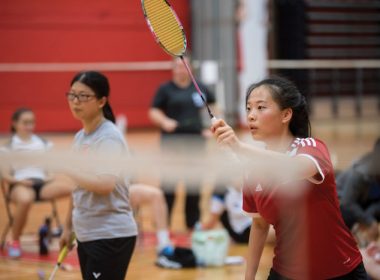
On Sept. 28 and 29, the McGill women’s badminton team kicked off its season at Currie Gymnasium, hosting the first RSEQ competition of the year. The Martlets’ doubles and singles teams won one matchup and lost four against the five visiting Quebec universities: Université Laval, Université de Montréal (UdeM), Université du Québec à Montréal (UQAM), Université de Sherbrooke, and Université du Québec à Trois-Rivières (UQTR).

Matches ran simultaneously throughout the two-day competition, with six courts set up across the gym to handle all of the action. Every school played each other team once, selecting three doubles pairs and two singles to represent them. The singles and pairs then played one match each. Total scores were decided by the number of matches each team won out of five.

During their games, McGill focused on where they placed the birdie on the court and their general shot quality.

“[We wanted to] drive [our opponents] down the court, so they [would have to] both reach to their left then cross to the other side,” first-year doubles player Linda Zhu said. “They’re both on their left side [of the court], so they can’t reach their right [….] You aim for the corners, and [then] you drive [the birdie] down hard and fast.”

On Friday night, Sept. 28, McGill fell to Laval and UQAM, both by a 5-0 score. They found more success on Saturday, however, with their first victory, taking down UQTR by a score of 3-2. Unfortunately, the win was bookended by two more losses: The Martlets dropped matchups against Sherbrooke and UdeM and finished in fifth place out of six teams with a 1-4 record. Still, second-year Team Captain Julia Tian remained optimistic for the rest of their season.

“I feel like we’re doing pretty well,” Tian said between matches on Sept. 29. “This is our first tournament of the year, so it’s always really tough starting out.”

One Martlet who made her mark on the tournament was Angcy Xiao. After Xiao sat out during Friday’s matchups, Tian put her in for Saturday’s singles games. Xiao had to transfer her support and energy from the bench to the court, and it was clear that she stepped up to the opportunity.

“[Xiao was] able to fill in her role as [the third singles player], and she’s doing a really good job,” Tian said. “I’m proud of her. She came in, she was prepared to play, and [she] was still able to do her best.”

Meanwhile, the McGill men’s badminton team also competed this weekend, Sept. 28-29, at École de Technologie Supérieure (ÉTS) in Montreal. They went 3-3 and finished fourth out of seven teams.

With the season’s first tournament now concluded, the Martlets will head back into the gym in preparation for their next tournament, hosted by UQTR on Oct. 27 and 28.


McGill, News

Special Investigator appointed to combat sexual violence

In an email addressed to members of the McGill community on Sept. 11, Provost Christopher Manfredi announced the appointment of Maître Caroline Lemay, an experienced lawyer, mediator, and ombudsperson, to the role of Special Investigator of sexual violence. In her role, Lemay will be responsible for investigating all reports of sexual violence on McGill’s campus and will be the single point of entry for all such reports. The appointment came in response to a student walkout and a Student Society of McGill University (SSMU) open letter in April 2018 that accused the McGill administration of mishandling sexual violence allegations.


Lemay will act independently of the McGill administration and any other disciplinary authority. The creation of her role is intended to alleviate student concerns that McGill’s internal review system is skewed against survivors.


Starting on Oct. 9, Lemay will lead investigations into reports of sexual violence against members of the McGill community. However, her mandate may not include reports filed before her term begins.


Connor Spencer, former vice-president external of SSMU, organizer of the May demonstrations, and member of Our Turn, a national organization addressing sexual violence on college and university campuses, expressed doubt about the scope of the investigation.


“The special investigator was a win for us, even if the role isn’t fully defined,” Spencer said. “[But] we’ve still got absolutely nothing about claims in the past.”


The second prong of McGill’s response to allegations of mishandled sexual violence reports is the Ad Hoc Senate Committee on Teaching Staff-Student Intimate Relationships, that will review McGill’s policy regarding relations between teaching staff and student relationships. The administration hopes that the working groups will create a comprehensive policy that will reconcile differences between the 2017 Policy on Harassment, Sexual Harassment and Discrimination Prohibited by Law and the 2016 Policy against Sexual Violence while ensuring that the policy is in accordance with Quebec’s 2017 law regarding sexual violence on university campuses, Bill 151.


Manfredi emphasized that the ad hoc committee would have strong student representation in his May 10 email to the McGill community. Lemay herself was appointed by recommendation from a committee containing representatives of SSMU and other members of the McGill community.


Associate Provost (Equity and Academic Policies) Angela Campbell stated that students from various associations and the Sexual Assault Centre of the McGill Students’ Society (SACOMSS) would be part of the working groups. These students would represent the interests and input of their respective constituencies.


“We will also be looking at other ways to ensure wide and meaningful input and consultation from multiple stakeholders on campus,” Campbell said.


The Senate ad hoc committee on Teaching Staff-Student Intimate Relationships, held a town hall on Sept. 18 open to all McGill students. Participants were invited to provide suggestions for changes to McGill’s current policy on intimate relationships between staff and students.


In an opinion article published by The McGill Daily, David Collins, a PhD philosophy student, along with several anonymous members of the Philosophy Students’ Association and Philosophy Graduates’ Student Association, called on the administration to outright ban any relations between staff and students. This contrasts with the current policy, which only bans relations between teachers and their own students.


“By banning student-teacher relationships, McGill would join a number of universities with similar bans such as Harvard, Yale, and MIT, and would bring itself in line with policies governing professionals in other fields, such as healthcare providers,” the authors wrote.


The review of McGill’s sexual violence policy is intended to last through the fall semester.

Album Reviews, Arts & Entertainment, Music

Cher’s ‘Dancing Queen’ divides fans

As if her lacklustre performance in this summer’s Mamma Mia 2! Here We Go Again, wasn’t enough, Cher has released an album of ABBA covers. The A&E team is here to deliver the verdict: Does Dancing Queen redeem the Goddess of Pop? Does the diva do justice to her ‘70s-disco Swedish counterparts? Take a chance on us and read on.

Kevin Vogel

Contributor

When I first started to listen, Dancing Queen seemed like an album with some fun bops that I could really get into, even if the original ABBA vocals were missing. But, the longer I listened, the wackier the album got. From robot auto tuning in “Mama Mia” to weepy opera-like singing in “Fernando,” I just couldn’t support the album’s creative decisions. Not only were the songs missing ABBA’s classic harmonies, but they failed to properly showcase Cher’s powerful voice. Sorry, Cher. You’re awesome, but I’m not impressed.

Matthew Hawkins

Contributor

Cher’s Dancing Queen is everything that Mamma Mia! Here We Go Again should have been. Despite being a diehard Cher fan, I found myself extremely disappointed by her performance in the summer sequel. Cher singing ABBA seemed like a dream come true, but  Here We Go Again does both Cher and ABBA an injustice. With Dancing Queen, however, Cher makes up for it. She takes the classic ABBA tracks, “Waterloo,” “Mamma Mia,” and of course, the titular anthem, “Dancing Queen”, and pays homage to their legacy, all while adding her own electrifying energy, iconic auto-tune, and synth beats. While the introduction to the Cher/ABBA fusion was disappointing, this album showcases the best of the hybrid.

Katia Innes

Arts & Entertainment Editor

After watching “Cher: The Unauthorized Rusical” episode of Season 10 of RuPaul’s Drag Race, I assumed that it would be the one and only time Cher would cross my mind this year. Boy, was I wrong. Her dubious appearance in Mamma Mia! Here We Go Again, the premiere of biographical musical The Cher Showin Chicago, and the release of Dancing Queen have further solidified my theory that we have reached peak Cher. Dancing Queen is the cherry on top of this Cher-shaped sundae. Give this woman a Kennedy Center Honours Prize—oh wait! They already have!

Ariella Garmaise

Managing Editor

Unlike most fans, I discovered Cher neither through her music, nor from her prolific stint as a variety show host. Rather, I stumbled across the Goddess of Pop on Twitter, where her experimental work with emojis, capitalization, and punctuation far outshines any movie or album she’s ever made. I enjoyed Dancing Queen just fine, but not nearly as much as I liked her promotional tweeting for the occasion. In less than 280 characters, she says more than “Waterloo” ever could.


Arts & Entertainment, Books

NYRB publishes ‘Moderan,’ a delight of poetic science fiction

In the far-future conceptual world of Moderan, master of literary science fiction David R. Bunch forces readers to consider what it would be like to leave mortality behind. Originally published in 1971, and recently reissued by New York Review Books with 11 previously unread tales, Moderan is a refreshing departure from stylistically-dull science fiction. Bunch writes with a strange poetic momentum, based on a choppy rhythm that pulls the reader into clinical descriptions of gory trauma and emptiness. His science fiction combines the creativity of Philip K. Dick and the stylistic grotesqueness of Nabokov.

Moderan depicts a twisted society. On the eponymous planet, pollution has reached apocalyptic proportions and the oceans have frozen over. The elite have replaced their bodies with “new-metal” exteriors and occupy themselves with constant war. There are state-sponsored meanness competitions. Affection is shown only for made-to-order robots delivered in ships by eunuchs.

Bunch crafts his stories with none of the world-building or sci-fi exposition to which fans of the genre might be accustomed. Instead, Moderan is more of a concept for the reader to visualize. An ersatz utopia that is almost wholly metaphorical, Moderan draws from the literary tradition of the Beats, thematically exploring the horrors of the Vietnam War and the consumer culture of post-war America.  

Despite their publication date, the stories are  prescient. The parallels to today are as plentiful as they are disturbing: The immortal warrior men of metal are recognizable as the objects of a pervasive toxic masculinity. The ravages of nuclear war could easily be substituted with climate change and pollution. The characters’ addiction to augmenting their metal image read as a cautionary tale of the danger of our social fuelled image obsession.

Of all of the stories, exploring how to find meaning in eternity, “One False Step” stands out. Tunneled beneath the plastic crust, a crew repairs flower petals so that they will  be ready to bloom at the push of a button. The leader was formerly the captain of a mysterious kill squad which slaughtered unproductive individuals. He tells his comrades about his demotion from captain to worker—the consequence of waiting too long before killing the unprofitable citizens. The story ends with the former Captain brutally beating his own crew, as if to prove to himself that he is no less merciless than he was when he still held the title.

“He wrote […] on each man’s proper form, the reason due for punishment at Central Whip—careless and excessive bleeding on uniform without cause,” Bunch writes. “He had the hang of it again!…if only he could get them to believe him up there!”

The captain in “One False Step” may be a critique of the aggressive male ego, or perhaps of arbitrary power, but regardless, the story is as haunting as the eeriest of Black Mirror episodes.

In “One False Step” and many of the other stories in the collection, the characters fear that their lives of battle and prestige are empty. Many of them, including the captain, enjoy comical moments of self-doubt and reflection. In Bunch’s hypothesis of immortality, people are so shackled to things, like fortresses and armour, that they themselves have lost their identities outside of material possessions.

“I’m not in this business primarily to describe or explain or entertain,” Bunch said in a 1965 interview with Amazing Stories. “I’m here to make the reader think, even if I have to bash his teeth out, break his legs, grind him up, beat him down, and totally chastise him for the terrible and tinsel and almost wholly bad world we allow.”

Science fiction forces its reader to take stock of their surroundings. In a time of unhindered fossil fuel emissions, populism, and social media domination, our world is beginning to seem more and more dystopian. Moderan’s timely reissue might just be the wake up call we need  

(Kathryn Leci / The McGill Tribune)
Science & Technology

Behind the invisible brain-print of obesity

Most obesity interventions focus on restricting calorie intake through diet or increasing energy expenditure through exercise. For this reason, obesity is often perceived as an individual’s lack of self-control to eat a healthy, well-portioned diet and follow exercise regimes. However, there may be some invisible factors pressing the scale. According to a recent study conducted by Uku Vainik from McGill’s Department of Neurology and Neurosurgery, the brain changes associated with obesity might have genetic roots.

In a comparative study of cognition and body mass index (BMI), Vainik’s team saw individuals with higher BMIs rank lower in cognitive ability when challenged with delayed gratification and visual deduction tasks. Additionally, Vainik’s study determined that brain tissue in subjects with higher BMIs was found in higher quantities in regions associated with emotional responses to food cues and decreased in areas used in understanding context and episodic memory. Taken together, a brain profile emerges in which obesity arises from a cycle of being hypersensitive to food stimuli and then being unable to adequately inhibit an emotional or appetitive response.

With a deeper understanding of how underlying cognitive differences may affect an individual’s BMI,  Vainik asked whether these observable differences were a result of environmental or genetic factors. Distinguishing between the environmental and genetic influences of a particular characteristic like obesity is important when designing models to improve health outcomes.

“We were interested in the behavioural and neurological correlates of obesity [and how they overlap],” Vainik wrote in an email to The McGill Tribune.

By examining the brain structures and cognitive profiles of twins and siblings no longer sharing the same living environment, Vainik was able to test genetic heritability due to genetic factors.

Given their different living conditions, any similarity in the siblings’ neurological impulses would be due to their shared genetics and not environmental factors. Based on this presumption, Vainik found evidence for the genetic heritability of obesity, with similarities of 77 to 89 per cent in obesity-associated brain areas between pairs of siblings or twins.

The growing body of research connecting irregularities in brain structure and functioning to obesity means that current interventions should not focus solely on calorie restriction. Oftentimes, diet-focused weight loss schemes only result in an increased craving for food and a resurgence of any weight lost. A better strategy to reduce overeating is to stock up on healthy foods and to eat fewer calorie dense foods.

“The obesity epidemic of the last few decades has been enabled by the oversupply of cheap and nutrient-dense food,” Vainik wrote. “This creates multiple opportunities for people to overeat […] because, ultimately, [obesity] is acquired through behaviour, [or] by eating too much food.”

Calorie-dense foods tend to be items containing refined sugars and carbohydrates, while healthier options are usually vegetables or other natural foods. Eating more natural and nutritional foods often gives the feeling of satiety faster since the brain thinks it ate a lot, when in fact the true number of calories is quite low.

While the world may be filled with the tempting aromas of samosas and churros, these food cues can be removed in the controlled environments of the home where one spends a significant portion of their day.

Science & Technology

A new smile in the face of defeat

Seven years ago, a hunting accident left Maurice Desjardins severely scarred and unable to eat, drink, speak, or breathe on his own. His former life ruined, Desjardins saw no way for things to return to how they had once been. But, given modern medicine, new hope has arisen. Earlier this September, Montreal’s Maisonneuve-Rosemont Hospital announced that, at the age of 65, Desjardins became the first successful recipient of a facial transplant in Canadian history.

The process began in 2013, with a doctor and a dream. Before he became a superstar in the medical world, Dr. Daniel Borsuk was a student at McGill. From 1997 to 2006, he studied Physiology as an undergraduate and then pursued a joint MBA-Medical program as a graduate student.

Borsuk feels that the management aspect of his education still applies to his practice as a plastic surgeon.

“[It’s] beyond medicine, beyond science,” Borsuk said. “It’s teamwork. It’s skillsets management that we focus on during management training that clearly played [a role].”

In the complex process of Desjardins’ face transplant, teamwork was key. The procedure required the collaboration of more than 100 other medical, nursing, support, and technical staff including nine surgeons.

Among the medical staff were several psychiatric teams. For a surgery of this magnitude, Desjardins had to receive psychological preparation for several years.

“It’s symbolic in a lot of ways, people are worried about their identity [and he needed] the ability, the understanding to reconcile having someone else’s face transplanted on him,” Borsuk said. “The patient has to be able to take his anti-rejection medication for the rest of his life. This is a potentially fatal procedure.”

After seeing a limb reattachment surgery as a graduate student and reflecting on his lifelong fascination with the face, Borsuk knew that he wanted to undertake a facial transplant.

In the beginning, there was much preliminary work and practice to be done. Borsuk and his team operated on cadavers to understand the mechanisms of the surgery and determine how to best find a donor. Nonetheless, as time progressed, Borsuk began to see there were certain criteria his future patient had to meet.

“[We needed] someone who doesn’t have any other options, who’s suffering, who could benefit from this type of procedure,” Borsuk said.

Desjardins met the necessary standards. When asked what he wanted most, Desjardins replied that he just wanted a normal life: To go outside with his granddaughter without having to wear a mask and to sleep peacefully next to his wife.

After the final preparations were completeincluding acquiring a donor face, securing funding, and satisfying both legal and ethical concernsthe procedure began.

Borsuk started with the 12-hour-long removal of the donor face and the 17-hour-long preparation of Desjardins’ face. By the end, most of his old face was removed, save for the upper eyelids, eyes and forehead. He was ready for the transplant.

Time was a key factor. The risk of failure increases the longer the donor face spends without blood. When cutting through bone, skin, scar tissue, and arteries, blood loss must also be minimised.

After the donor’s face was brought in, it was placed onto Desjardins’ skull. Borsuk and his team adjusted the plates and screws, fitting the new and the old together. The medical team worked their way down Desjardins’ face; first working on the nose and then the cheekbones. By the time they had reattached the arteries, they could slow down. Everything went according to plan. The face was transferred successfully.

The recovery process continues to be slow.

“We can’t rush these things,” Borsuk said to The National Post. “But does he like his face? Oh my God, he loves it. Yeah, he’s enjoying his face right now.”

Desjardins’ breathing tube has been removed and he is slowly learning to eat and drink. Borsuk says his nerve endings will reconnect at his lips within six months and he will be able to smile.

Out on the Town, Student Life

Tribune Tries: The best of YUL EAT

Every year, Montreal’s YUL EAT food festival, which ran from Sept. 10 to 16 this year, imports restaurateurs and culinary talent from around QuebecPlace YUL EAT serves as the main hub for the festival, where visitors can sample local products and attend culinary presentations. The McGill Tribune tasted the best of what this year’s pavilion had to offer; these were some of our favourites.

Savoury

The festival showcased a wide variety of small, savoury bites for visitors to sample. One stand-out station was Super Dips, a company that specializes in dehydrated dip powders which can be blended with traditional bases, like mayonnaise and sour cream, to create quick, delicious dips. At the stand, a vendor handed each taster a packet of pretzel sticks, to be dipped into as many of the thirty-plus savoury dips as desired. Unique flavours like asparagus, maple garlic, and curry cocoa were a few of the most noteworthy selections. Each and every dip was delicious, creamy, and perfectly salted. At the stand, Super Dips sold packages for five dollars apiece—which is not cheap for only a small appetizer, but still suitable for special occasions.

Equally popular were the tacos from the Avocados from Mexico setup. At the counter, festival-goers had two options: A vegetarian taco topped with roasted butternut squash, sliced avocado, and crumbled cheese, and a seafood taco with spicy salmon poke, a seaweed shell, and avocado. Simple and easy to replicate at home, these tacos packed a punch and made for a filling meal.

Sweet

Among the neatly-placed tents in Quartier des Spectacles, only a handful contained the best kind of food—sweets. There were offerings of fresh, traditional madeleine cookies prepared by festival staff, samplings of raw honey from Le Miel de Bonneau, tastings of fun overnight oats flavoured with chocolate and matcha from YUMi Organics, and ice cream from Les Givrés. Among these tasty options, Les Givrés’ ice cream stood out above the rest. Maybe it was the unusual September heat that made their generous samples especially delicious. The flavours on offer ranged from classics like chocolate and maple, to more original combinations, such as a cinnamon-apple sorbet and a vegan, coconut-based chai ice cream. Every bite tasted like a perfectly-sweet, creamy cloud.

Refreshing

At the centre of the festival ground stood the Creemore Springs’ Biergarten, where several Canadian beers, wines, and whiskeys were available on tap and for purchase. Additionally, grocery-store giant Gold Peak Beverages gave out samples of its new, refreshing, low-sugar fruit teas. The most unique offerings were the non-alcoholic cocktails concocted by La Ferme d’Achille, a small farm in St. Ubalde, Quebec dedicated to small batches of Argouille, a beverage made from sea buckthorn berries. “Cocktail Momentum,” an Argouille-based cocktail infused with mango nectar, cucumber, and picante sauce, harnessed the berries’ tart flavour. The result was a thirst-quenching and dynamic way to refuel after an afternoon of sampling new food.


Read the latest issue

Read the latest issue