
Latest News

Baseball, Sports

Predicting the MLB midseason

With regular season action less than two weeks away, all baseball fans want is to get started. For them, there’s nothing better than those summer afternoons spent at the ballpark with hot dog in hand. Given the slow offseason, The McGill Tribune pressed fast-forward on the MLB remote to provide a look at how the 2018 season might look at its midpoint.

 

It’s July 16. Winter is a distant memory, and we’re hours away from the greatest skills competition in sports: The Home Run Derby. With half of the MLB season behind us, it’s a perfect time to look back at the last three months of baseball action.


Bronx Bombers

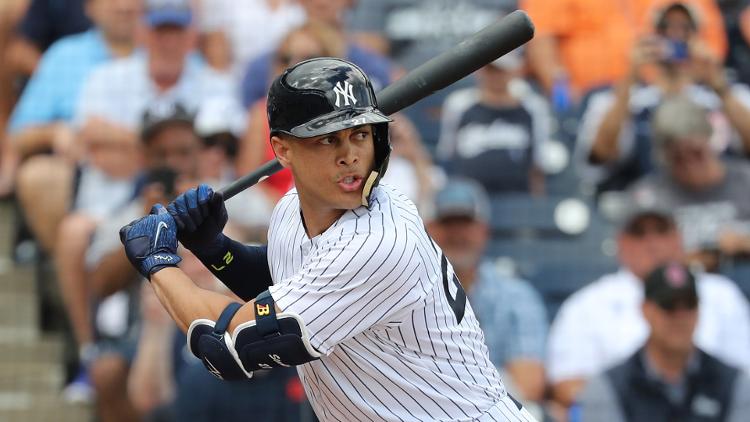
Fresh off an early off-season acquisition of reigning National League MVP Giancarlo Stanton, the New York Yankees are looking strong and mighty so far. Stanton has teamed up with outfielder Aaron Judge and catcher Gary Sánchez to form one of baseball’s most deadly trios in the middle of the Yankees lineup. With that shutdown bullpen still intact from last season’s ALCS run, the Bombers are ready to make a play for Houston’s throne.


Incredible Rookies

Ronald Acuña has been a revelation for the Braves since rising up to the majors, mashing homers and keeping his team competitive. In the American League, Los Angeles Angels’ two-way dynamo Shohei Ohtani has experienced a bit of a learning curve. After some early struggles, he looks a lot more comfortable on the mound but the Angels are still hoping to see the bat come around in time for the stretch run.


In the Playoff Hunt

With the July 31 trade deadline only weeks away, the contenders and pretenders are starting to reveal themselves. The Minnesota Twins deftly added a boatload of talent in the offseason—including starters Jake Odorizzi and Lance Lynn—at minimal cost. They’re right in the thick of things in the AL Wild Card race, only two games ahead of surprise contenders in the Seattle Mariners and Toronto Blue Jays, and one game behind the Boston Red Sox for the first spot.

The Miami Marlins sold off Stanton to the Yankees in December, but they weren’t done there: Miami dealt outfielders Christian Yelich and Marcell Ozuna to the Milwaukee Brewers and St. Louis Cardinals, respectively. Both beneficiaries are in the heat of the NL Central race, only a few games behind the Chicago Cubs, whose bolstered rotation with Yu Darvish and Tyler Chatwood has been excellent.

The San Francisco Giants built the ultimate 2013 superteam in the offseason, adding Andrew McCutchen and Evan Longoria, and the results have been promising. But, with the aforementioned wealth of contenders in the NL wildcard race—plus Jake Arrieta and the Philadelphia Phillies—it looks unlikely that they’ll find themselves in the postseason.


New Rules

An offseason rule change restricting mound visits hasn’t clicked the way Commissioner Rob Manfred would have liked. Teams are now restricted to six mound visits per game without having to make a pitching change, and they are still coming to grips with how and when to use them. The adjustment has made little impact on the pace of play to this point, but more rule changes seem to be on the horizon. Manfred has spoken of his desire to add a pitch clock next season, and Minor League Baseball is testing out new extra inning rules, similar to those used in international play.


Playoff predictions

It’s certainly possible that baseball is re-entering an era of dominant powers. The Astros, Yankees, Dodgers, and Cubs look poised to make another run to their leagues’ championship series, and baseball doesn’t feel quite as competitively balanced as it’s been in years past.

However, as the dog days of summer heat up and make a sharp turn into fall baseball, don’t count out teams like the Red Sox and the Washington Nationals. Both have new managers leading the way—but, then again, even they were in the postseason last time around. Whatever the coming months may bring, fans are set to witness a new volume in a classic baseball story.


Student Life

Texts to send when you want to cancel plans

We’ve all been there: Making plans with friends days in advance only to wind up in your bed when the time comes, wishing there was a way to cancel without sounding rude or unappreciative. In order to help you curate the best lies to get out of plans, The McGill Tribune has a few go-to-texts to send to get your friend off your back.


Hockey, Men's Varsity, Sports

Redmen hockey season recap

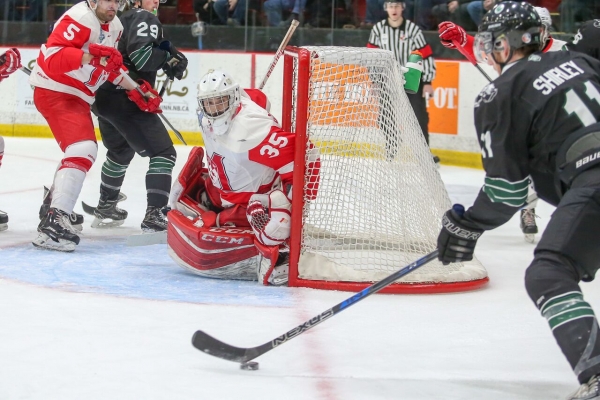
2017-18 marked a successful campaign for the McGill Redmen hockey team, as they captured their 18th OUA Queens Cup and competed at the U Sports National Championships for the second year in a row. Their consistently solid play in the regular season led to a 22-4-2 record and a first-place finish in the OUA East Division. All season, contributions came from up and down the squad’s deep roster: Third-year centre Jerome Verrier led the team in assists and points, with 29 and 41 respectively, while third-year forward Christophe Lalonde led the team in goals with 13. Second-year masters student and captain Nathan Chiarlitti led the rearguard and chipped in three goals and 13 assists. The back end also proved vital offensively, as third-year skater Dominic Talbot-Tassi was second in points on the team with 25. In the crease, second-year goaltender Louis-Phillip Guindon had an exceptional year, stopping shots with a sparkling 2.22 goals against average—an OUA best. Behind the bench, Head Coach Kelly Nobes was the recipient of the Father George Kehoe Memorial Award as the U Sports coach of the year.

Heading into the playoffs, the Redmen maintained their momentum from the regular season: They destroyed the Laurentian University Voyageurs by a combined score of 14-3 in two games, then downed the University of Ottawa Gee-Gees in three.

However, McGill found more difficulty in the OUA East final series against their cross-town rivals, Concordia. The Redmen lost their first game at home, but forced a tie-breaking third game with a suspenseful overtime win in game two. In the end, McGill secured first place in the OUA East division and booked their ticket to nationals with a game three win over the Stingers 6-2. Before heading to the U Sports National Championships, McGill battled the Brock University Badgers on March 10 for the Queen’s Cup (OUA Championship). It was a chippy contest, but the Redmen easily ousted their opponents, securing the Queen’s Cup with a 5-1 victory.

Heading into the national championships in Fredericton, third-seeded McGill faced off against the sixth-seeded University of Saskatchewan Huskies in the quarterfinal on March 16. The Huskies entered the tournament as Canada West Finalists, after finishing in second at the 2016-17 U Sports Championship. In a scrappy affair, the two sides received 84 combined penalty minutes. The contest was tight: The shot total favoured McGill by a tiny 34-33 margin. The Huskies were up 2-0 early in the second, but the Redmen halved the deficit later in the stanza when first-year forward Antoine Dufort-Plante buried one on the powerplay. The Redmen pressed in the third, but fell behind by two halfway through the frame when the Huskies scored on a deflection that fooled Guindon. Despite their many opportunities—including several shots dinged off the post—the Redmen were unable to come back, ultimately falling 4-1 after the Huskies potted an empty net goal.

The University of New Brunswick (UNB) Varsity Reds eventually defeated the Huskies for the bronze medal, while the University of Alberta Golden Bears beat the Saint Francis Xavier X-Men in the gold-medal game to secure the David Johnston University Cup.

The Redmen will lose four seniors to graduation this offseason, including defencemen Chiarlitti and Francis Lambert-Lemay, forward Jan Kaminsky, and goaltender Jacob Gervais-Chouinard. However, as the team retains much of its roster, they will look to build upon this season’s achievements next year. When they return in the fall, their eyes will be set on another appearance at nationals and a run at the U Sports Cup.

Album Reviews, Arts & Entertainment

Reanimating the corpse of trap music

There was a time, not too long ago, when it seemed that Lil Yachty was the future. He looked and sounded like a radically new type of rapper, happiest when crooning over samples of cartoon theme songs, his bars lighthearted and youthful. He entered the mainstream with his 2016 mixtape Lil Boat charting at number 106 on the Billboard 200. The then-18-year-old joined Quality Control, the Atlanta label which includes Migos among its signed artists.

Then, he bricked hard. His debut full-length record, 2017’s Teenage Emotions, was boring, overlong, and a commercial disappointment (and for some reason featured Diplo). The album’s sales were as disappointing as its critical reception, moving less than 50 thousand units in its first week. Another dud could put an end to the short reign of the so-called king of teens. Thankfully, his newest project, Lil Boat 2, released March 9, 2018, finds Yachty unshaken from the failure of Emotions and making some of the best music of his career.

The Atlanta rapper manages to display his improved technical skills while also recalling the carefree bubble-gum trap of his early career. On “love me forever,” Yachty floats over production by Buddah Bless with the fun auto-tuned singing that distinguished Lil Boat the first.

Cuts like “COUNT ME IN” and “OOPS” highlight his marked improvements; on the latter, Yachty impresses by confidently changing his flow over a simplistic drum beat. He deploys his characteristically hilarious bars throughout: On “COUNT ME IN” he implores listeners to call him “Yachty Rothschild.”

The record is good, not great. It slogs in the middle, with songs like “Das Cap” and “WHOLE lotta GUAP” rehashing the same ideas, and sounds he expounds sufficiently on other tracks. And while Yachty has surely developed as a rapper, he still struggles to go bar-for-bar with the likes of Ugly God and 2 Chainz.

Still, this is the project that Teenage Emotions should have been: A solid showcase of all the eccentricities that have made Yachty one of the most subversive rappers of the decade.

Ten years Yachty’s senior, Los Angeles rapper 03 Greedo is no less irreverent. His sound is difficult to pin down, using both Gucci Mane-like triplets alongside R&B melodies that would fit well on a prime Stevie Wonder record. His beat selection is impressive, and he sounds comfortable spitting over both old-school synths as well as the drum machines that have become omnipresent in today’s trap. Lyrically, Greedo is very much a part of the gritty, realist West Coast tradition.

Greedo’s versatility shines through on his impressive new mixtape, The Wolf of Grape Street. On the lead single, “Substance,” his voice carelessly glides over a chilled-out soul beat, contrasting with the story of his struggle with substance abuse. “Baytoven” is celebratory, with Greedo comparing his go-to producers to some of the industry’s hottest: “Ron Ron just like my Zaytoven/Beat Boy, that’s my Metro Boomin’.” Greedo sounds like he’s having fun, effortlessly rapping over a beat that sounds like the brainchild of the same producers who pioneered Migos’ sound.

The mixtape loses no steam down the stretch. Greedo’s versatility demands the listener’s attention by refusing to stay with one sound. He goes for a more atmospheric and smooth sound on “For My Dawgs,” but a few tracks later explodes on the abrasive “Vulture.” 03 Greedo’s strength is his flexibility, and he manages to show it off without making the album feel unfocused.

Yachty and Greedo represent an answer to the current stasis trap music finds itself in. The Migos sound, which seemed so revolutionary not so long ago, has gotten stale. This January’s Culture II, for example, is a bore at almost two hours longin part because they tediously relied on the same formula of triplets and strange adlibs that made Culture work so well. The few highlights of the record are the tracks that the group experiments on, like “Stir Fry.”

Yachty and Greedo, on the other hand, have revitalized the sound by injecting it with their unique personalities and influences. We’d be lucky if these records are any indication of the sound of trap to come.

Commentary, Opinion

It’s not all good in the neighbourhood: Students play a role in gentrification

The McGill Daily published an exposé on Feb. 19 of a landlord’s eviction of the residents of a Parc-Extension building in the name of a luxury apartment project. This comes at a time when Montrealers across the city are protesting gentrification in their neighbourhoods. Gentrification, a complicated process that involves redevelopment of a neighbourhood to appeal to middle-class consumers, results in the displacement of existing inhabitants. As long-term residents are illegally pushed out in favour of high-end apartment complexes, community networks and resources are threatened.

To some, the issue of gentrification may seem disconnected from student concerns. Yet, it is necessary for students to recognize that their presence is appealing to developers, and then strategically work to support existing communities. This is especially relevant in Montreal, where neighbourhoods like Parc-Ex, Saint-Henri, the Mile End, and the Milton Parc community have all faced rent hikes, the ousting of local businesses, and an influx of transient students. In the case of Parc-Ex, development projects are progressing alongside UdeM’s plans to open a new branch in the neighbourhood. This neatly demonstrates the connection between students and gentrification; gentrifying developers wish to capitalize on a growing student presence while undermining the well-being of neighbourhood residents. As students move toward working life, they must remember that they exist within the matrix of a broader community, and their actions within their neighbourhood have consequences.

While students may be more focused on passing their midterms than preserving the integrity of the areas that they live in, they should still be aware of the impact they have on their surroundings. Students are a unique demographic: Many hold the social status of the pre-professionalwho often has the support of parents, universities, and networks of peers and mentorsalongside an independent rootlessness that leaves little room for them to contribute to community building. Furthermore, student communities are often localized on campus, rather than in their neighbourhood. This is especially true at McGill, where four-fifths of students do not list French as their mother tongue and might, because of this, feel unable to fully participate in Montreal’s bilingual culture.

Since most students occupy their Montreal dwellings for such a short time, there is also a disconnect between tenant and landlord. An influx of students may perforate a tightly knit neighbourhood community and mark it as a desirable neighbourhood for development. Additionally, students graduating from McGill are more likely to reach a higher pay grade than those without a college education, and might unwittingly transform into the young urban professionals that gentrifying developers cater to. This could oust past residents who are no longer capable of paying spiking rent costs, putting their welfare at risk.

Just because students are transient occupants of an area does not mean that they do not have a responsibility to that neighbourhood. It is possible to be impermanent and empathetic at the same time.

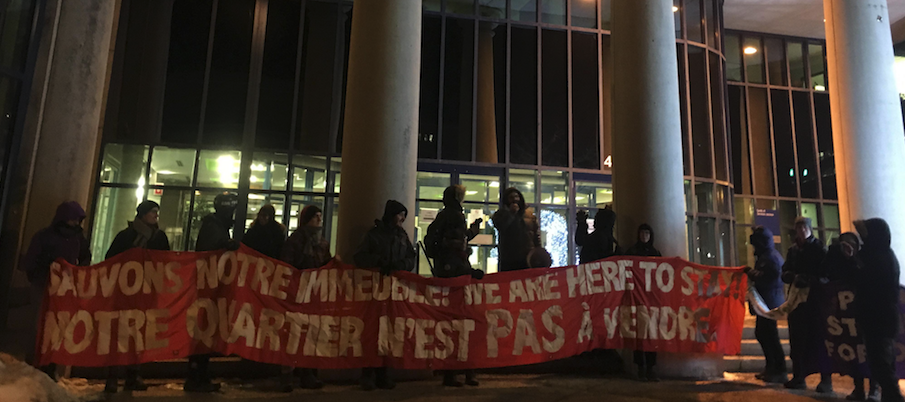
In light of their relationship to gentrification, students have a mandate to be conscientious, both in their relationship with the spaces they live in during university, and with the neighbourhoods they choose to occupy afterward. This entails lobbying for stricter laws against rent hikes, as well as for governmental support for public spaces. It also means being aware of community organizations and, in the case of mobilization against gentrification, supporting permanent residents in their efforts. Examples of mobilization include the Parc-Ex residents’ Feb. 20 demonstration outside Parc Metro station and the 2012 takeover of Building 7 in South-West Montreal by members of the community. There are many ways that students can take on supportive roles: Ranging from raising awareness on social media to joining local groups protesting gentrification.

In the long term, students must also be aware and critical of their own mindset. From coming out of university, to beginning their first job, to settling down, students at every stage of life must ask themselves: Why am I moving where I am? What is my role in this community? A community-based mindset is necessary for the health of the neighbourhood. An individual does not exist as a free agent, but within the context of others.

Just because students are transient occupants of an area does not mean that they do not have a responsibility to that neighbourhood. It is possible to be impermanent and empathetic at the same time. By thinking about community alongside individuality, students can do their part in supporting the residents of Montreal, and any city they might live in after they leave McGill.


A previous version of this article incorrectly stated that UQAM plans to open a new branch in the Parc-Ex neighbourhood. In fact, UdeM is proceeding with a new campus in Parc-Ex. The Tribune regrets this error.

Student Life

Overcoming the fear of missing out: What is FOMO and how can we learn to deal with it?

The fear of missing out, better known as FOMO, is a universally-felt sentiment—one that can creep up on just about anyone, caused by a range of circumstances. Although the term has been used conversationally for years, it was officially added to the Oxford English Dictionary in 2013, and defined as “Anxiety that an exciting or interesting event may currently be happening elsewhere.”

However, FOMO goes deeper than just the feeling of missing out. It involves making unrealistic comparisons between your social life and your peers’. It’s a vicious cycle of thoughts that gnaws away, making you second-guess your choice to spend Friday night studying in the library while your friends are out partying.

Despite being a natural extrovert, Sachin Samarakone, a U3 engineering student, is no stranger to this feeling.

“I usually tend to feel FOMO a lot,” Samarakone said. “I think it’s more to do with my personality type though. I’m a very extroverted person so I love different social experiences.”

Often, our perception of our peers’ social lives may not actually hold true. A study from the University of British Columbia (UBC) found that 48 per cent of first-year university students believe their peers are more socially connected than they actually are. This is largely because social activities typically take place in public, visible to others, while individual activities, like studying, are done in private, and thus go unnoticed. The study found that many students who sense that they are missing out have a reduced sense of social belonging, which is a key indicator of someone’s mental well-being.

While the fear of missing out is natural, if it comes up too frequently or goes undealt with, it can lead to unpleasant reactions and behaviours. For example, the UBC study found that people grow increasingly stressed if they feel regular anxiety about missing out, and they might react by adopting a dependency on social media or general feelings of dissatisfaction with their personal life.

Another study by marketing communications company James Walter Thompson demonstrated that FOMO contributes to people’s dissatisfaction with their social standing and a feeling of having less. It’s proven to play a negative role in people’s overall psychological well-being because it triggers negative social and emotional experiences, such as boredom and loneliness.

But this correlation between FOMO and unhappiness is a two-way street. Eric Barker, writer for TIME noted in a 2016 article that those who are already feeling insecure or unhappy with their lives may be more susceptible to FOMO.  

Barker also points out that witnessing others’ social lives shared on social media initiates FOMO. In the age of Instagram and Snapchat, students are expected to showcase their best moments on social media platforms for their peers to be jealous of when they see them. Faced with these posts, students often develop the unhealthy digital habit of constantly checking social media to stay in the loop and avoid feeling as though they’re missing a major event. FOMO stems not from the fact that our social lives are lacking, but rather the idea that our social lives are not objectively better than others’.

So you’re wondering if your life measures up and you turn to everyone else’s deliberately sculpted illusion of lifestyle perfection,” Barker wrote. “This is the happiness equivalent of reading your bank statement after looking at the Forbes 400 list.”

For Samarakone, this has certainly been the case. Learning not to compare his social life to that of his peers with different academic workloads has been a process.

“I used to do my work around events, but I’ve realized, that’s not a healthy way to do things,” Samarakone said. “Especially when most of my friends are in slightly easier programs as opposed to chemical engineering which is an extremely time consuming degree […My FOMO] has really improved [in my time at McGill]. I’ve realized the long term consequences of my actions just for seeking a few hours of pleasure.”

Science & Technology

Exploring Physicist Stephen Hawking’s Scientific Contributions

On March 14, Stephen William Hawking, physicist at Cambridge University and international best-selling author of A Brief History of Time, passed away, leaving behind a legacy of revolutionary discoveries spanning the past five decades.

At the age of 21, Hawking was diagnosed with amyotrophic lateral sclerosis (ALS), also known as Lou Gehrig’s disease, a progressive neurodegenerative disease that causes an individual to  lose control of their nerve and muscle function over time. While doctors gave him only two years to live, he defied their prognosis by surviving for 55 years with the debilitating, incurable condition. Hawking was a prolific writer, contributing to the field of physics up until the end of his life.

To celebrate his extraordinary life, below are three immense contributions that Hawking made to the field of physics.

Black holes

Hawking pioneered research on one of the greatest mysteries of our universe. Black holes, the remnants of the collapse of supermassive stars. In the 1970s, by applying quantum theory to these intangible facets of our universe, Hawking proved that they were not completely black at all, but in fact radiate energy over time, emitting a faint glow. He also discovered that black holes would eventually leak radiation, and disappear, which opposed the idea that they absorbed everything and would continuously grow larger. The discovery that a black hole could radiate particles was a turning point in modern physics—leading to a stream of fresh findings and research based around this discovery for the next 40 years. In 1974, Hawking introduced the concept of Hawking radiation to the physics world, explaining that black holes thermally emit sub-atomic particles until they exhaust their energy and evaporate completely. Hawking took such pride in his work that he wanted the formula for Hawking radiation to be engraved on his tombstone.

A Brief History of Time

A Brief History of Time: From the Big Bang to Black Holes, Hawking’s most well-known book published in 1988, explored Hawking’s study of cosmologythe laws that predict how things work in the universe, or simply how the universe exists. The book, which has sold tens of millions of copies, caters to non-scientists and answers basic questions on the universe’s origins, its projected fate, its structure, and whether or not it is infinite. Through the general relativity and quantum mechanics theories, Hawkings explores theories of space, time, matter, and gravity. The scientific community reveres A Brief History of Time as a in powerhouse non-fiction literature that provides deep insight into the large scale structure of the universe.

The theory of everything

The “theory of everything,” is an idea in the scientific community that there is a single, all-encompassing theory that can describe the physical world. Although the scientific community has yet to come up with the theory, Hawking came up with a formula that unified quantum mechanics and classical physics. The groundbreaking aspect of this formula was combining both classical and quantum mechanics with classical physics to describe the motion of tiny particles that make up large bodies.

Hawking’s discoveries will remain relevant in the years to come, and his legacy will continue to inspire further pursuit of understanding the mysteries of the universe. The world will forever be indebted to Stephen Hawking’s brilliant mind.  

Sports

Ontario takes positive first step in passing concussion legislation

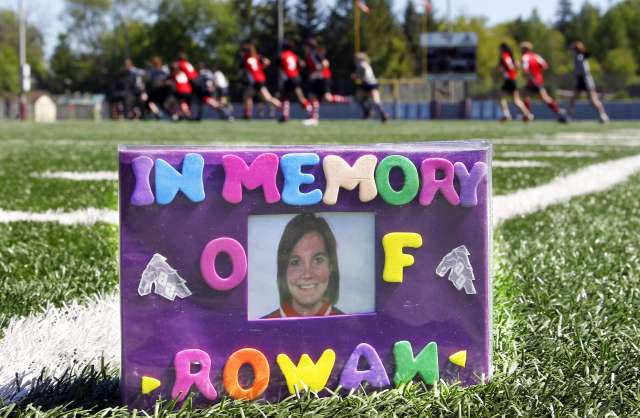
Rowan Stringer was a 17-year-old high school athlete from Ottawa. She picked up rugby in Grade 11, when her high school offered a varsity girls team, and grew to love the sport so much that she joined a club team that summer. Later, in May 2013, Stringer was hit hard during a rugby match. She thought that she may have been concussed, but wanted to compete in her next match, so she ignored her symptoms and played anyways just two days later. She suffered another concussion.

Experiencing repeated head trauma in such quick succession leads to Second Impact Syndrome (SIS), a condition that can occur when a person is concussed for a second time before their brain has recovered from the initial concussion. Even a minor hit can immediately cause the pressure in a person’s brain to increase and must be treated within minutes. In Stringer’s case, SIS led to her death on May 12, Mother’s Day, four days after the second concussion.

After her passing, Dr. Charles Tator, a professor of neurosurgery at the University of Toronto who studies spinal cord injury and traumatic brain injury, requested access to Stringer’s medical documentation. Tator was searching for ways to prevent such tragedies in the future and researched the case for several months before delivering a report at the inquest held in an Ottawa court in June 2015. Based on his report and testimony, as well as statements from Stringer’s friends, family, and fellow members of the rugby community, the jury came up with 49 recommendations to improve concussion awareness and treatment in Ontario. The first of these recommendations was to enact “Rowan’s Law”—an initiative intended to inform young athletes and their guardians on the seriousness of concussions.

Rowan’s Law, formally known as Bill 193, is a huge step in the right direction for protecting young athletes and changing how concussions are perceived in youth sports culture. Better education will help kids more effectively identify when they are concussed and understand the serious consequences of playing with concussions. Coaches and parents will know better when to keep an athlete out of the game and when it’s safe to let them back in.

Specifically, Rowan’s Law defines protocols for when an athlete should be removed from play and when they should be allowed to return. It also requires parents and coaches to learn about concussion identification and management from online resources. It’s often difficult to diagnose a concussion, especially for people who have little to no understanding of the symptoms, so these new protocols will have an important impact on protecting youth athletes.

Rowan’s Law includes a code of conduct for athletes and mandates an advisory committee to consult with Ontario’s Premier. The code is a set of in-game rules tailored to each sport. Meanwhile, the committee helps to implement the rest of the jury’s recommendations into provincial law. It’s made up of medical experts, youth sports leaders, athletes, and Stringer’s father, Gordon. The committee first convened in 2016 and met several times before proposing concussion legislation in December 2017. The final hearing for the legislation took place on March 6, 2017—when it passed with all-party support. In passing Rowan’s Law, Ontario lawmakers are making a bold and long-overdue statement: They are ready to lead the way on big legislative and cultural changes needed to fight the damage concussions do children every year.

Similar laws have been passed all across the United States, but Rowan’s Law is the first of its kind in Canada. Gordon Stringer hopes that other provinces will follow Ontario’s lead and enact what could be life-saving legislation.

“The heavy lifting has been done here in Ontario, but this is not something that’s an Ontario issue,” Mr. Stringer said in an interview with the CBC. “This is something that needs to be addressed across Canada.”

Rowan’s story is heartbreaking—but there’s a light at the end. The new legislation will likely save many young athletes from sustaining irreparable—even fatal—brain damage. Using Rowan’s Law as an example, other provinces should act before preventable tragedy strikes again; lawmakers across Canada must learn from Rowan’s story and make concussion legislation a priority.

But laws are only the beginning. A concussion needs to be accepted as one of the most dangerous injuries in sports by all Canadians. Athletes should never even consider playing after potentially being concussed, nor should they be given the chance to. People should understand how to treat concussions and respect the recovery time needed after one. At the end of the day, it’s not what the legislators do that’s going to have the greatest impact; the change that we make in our attitude will be most important.

Ask Ainsley, Student Life

Ask Ainsley: Am I too late in applying for a summer internship?

Dear Ainsley,

I am having trouble finding an internship for this summer. I’ve applied for a few, but have been rejected from some and haven’t heard back from others. My friends are starting to get acceptances, and I can’t help but compare myself to them. I’m worried it’s now too late to apply for any new positions. What should I do?

Sincerely,

Anxious About Internships (AAI)


Dear AAI,

First of all, don’t worry! It is not too late to be applying for summer internships. Although you may feel stressed, know that many students are in the same situation as you. It’s easy to compare yourself to the people who landed star internships this year, but remember that they probably got a few rejections themselves before receiving an acceptance. Many companies are still searching for summer interns into April and May, so keep looking.

First things first, it’s important to learn efficient and effective ways to search for an internship to save yourself time you can use to work on your CV. Start your hunt on a job search engine like Indeed or idealist.org. Narrow down your options by putting in your specific field of interest and preferred location. While it’s advisable to keep an open mind in searching and not limit your results too much, figure out what your deal breakers are, and weed out results accordingly.

I’d also recommend checking your personal networks for possible opportunities. Ask your friends or family if they know of any job availabilities where they work—if you have a friend who did a cool internship last summer, see if you can get their employer’s email, and ask them personally to express interest. In the same vein, consider reaching out to your previous employers; they may know others looking to hire within the same field. Keep an eye out for networking events around campus—such as program-specific Wine and Cheese nights—since these are held to help students get to know professors and professionals in their line of work.

Once you’ve found an internship and are ready to apply, the most important thing to do is to make sure your CV is up to date and that, along with your cover letter, it is suited to the position for which you’re applying. If you aren’t sure how to do this, McGill’s Career Planning Services (CaPS) or your faculty’s career office can be a great resource to help get you started. They hold information sessions as well as provide comprehensive online guides on all things job and internship-related.

If you’ve already applied to summer internships but are not receiving any acceptances, worry not! It’s important to remember that some of the most successful people are those who have also been rejected the most, but kept their chin up and kept going for new opportunities anyway. Think of job rejection the way you would romantic rejection: If a job doesn’t want you, you don’t want that job. It’s likely that another position that you’d be even better for will come along in the future, and you’ll be glad you didn’t get distracted by subpar internships in the mean time.

If you end up job-less this summer, there are still plenty of meaningful ways you can fill your time and boost your CV. Consider taking an intensive course in a valuable skill, like coding, that will make you more employable in the future. Reach out to local non-profits to volunteer your time, or consider getting a part-time job to save up money for the future—you never know when you’ll be offered a great job in an expensive city, and you’ll be glad to have rent money saved up so you can take it without hesitation.

Whether you’re finding it difficult to land a job or an internship for this summer, or have yet to begin the search, don’t worry. Continue to apply and you’ll see that there is always an opportunity waiting around the corner—you just have to go out and look for it.


Wishing you the best,

Ainsley

Read the latest issue

Read the latest issue