

Latest News

Student Life, Word on the Y

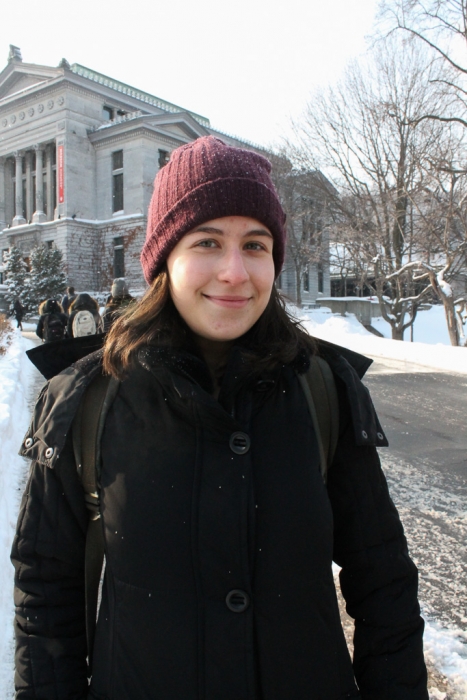
Word on the Y: What are your headline predictions for 2018?

As one of the most eventful years for North American politics in recent history, 2017 offered a slew of surprising and thought-provoking news stories. With the new year upon us, there are endless possibilities for what this year’s major political headlines will be. To get students’ thoughts the on the matter, The McGill Tribune trekked out to the Y-intersection for the first Word on the Y of 2018.

Q: What are your headline predictions for 2018?

A:

Sophia Pauly – U0 Life Sciences

“[Hopefully] that more women will get elected in all countries.”

Darshan Daryanani – U1 Political Science

“The Brexit process will take a long time and Theresa May’s popularity [in the polls] is not going to get any better. I don’t think Britain will get a special status with the European Union. At the same time, [international politics] is a field of unpredictability so I can’t make any sure assumptions.”

Mark Saadé – U3 Chemical Engineering

“Lebanon’s Prime Minister recently resigned because Saudi Arabia made him resign [basically] so I’m thinking that the Prime Minister’s gonna get replaced by someone who’s more aligned to Saudi Arabia’s interests because of the whole Saudi Arabia-Iran conflict.”

Paula Neocleous (left) and Rodrigo Odjeda (right) – U1 Psychology and U1 Biochemistry, respectively

Neocleous: “I feel like it’s gonna get worse before it gets better […] at least if we’re talking about American politics.”

Odjeda: “I don’t have any predictions for this year because I think that everything that happened with Trump and his election pretty much set a bar where anything can go [as far as politics] and the influence of that election basically means that […] anything can happen at this point. I think that’s for the worse.”

Jun Oh, Faculty of Law, Exchange Student

“I think that we’ll see […] things explode.”

Features

Girls of game dev

Vanessa Chu is a U0 Science student at McGill University. She is also a member of Game Dev McGill, an on-campus club for students who want to try their hand at making video games. Chu grew up playing her Nintendo DS, and her father was an avid gamer as well. Despite not majoring in a field related to game development, Ontario-native Chu chose to attend McGill because of its community of students interested in gaming, as well as Montreal’s vibrant tech scene.


“One of the bigger reasons I chose McGill […] is because of the community around Montreal for game development because that’s always been one of my big hobbies,” Chu told The McGill Tribune. “And that’s why when I came to McGill and found out there was a club for game development, I joined right away.”

Science & Technology

Canada’s fentanyl crisis by the numbers

The scientific community describes the fentanyl crisis in these general words: Catastrophic and growing. Over the past decade, Canadian researchers have observed the deadly effects of the growing trend of cutting fentanyl into powdered party drugs. With the help of Edith Zorychta, associate professor in the Department of Pharmacology and Therapeutics, The McGill Tribune set out to quantify the dangers of fentanyl. 

Fentanyl is 50 times as lethal as other opioid derivatives, including morphine. In an email to the Tribune, Zorychta explained that not all related drugs have the same effect on the human body. 

“Their actions on the brain are not the same, and their effects are never limited to the brain alone,” Zorychta said. “Opioids differ from one another in the magnitude and duration of their effects, and they all share the ability to interact with specific opioid receptors.” 

Opioids interfere with interactions between neural pathways in the spinal cord and brain, which under medical direction can be used in the treatment of chronic pain. The neural impulses that are affected in the brainstem also control a person’s breathing mechanisms—or in simpler terms, their oxygen intake and carbon dioxide release. If breathing is suppressed, the brain’s supply of oxygen depletes and the consequences can be fatal.

As little as 0.002 grams of fentanyl can be deadly. This quantity, equivalent to the weight of two grains of salt, can be enough to effectively suffocate the ingester. 

“Opioids suppress the sensation of pain and the emotional reaction to pain,” Zorychta explained. “Because they are so potent, the difference between a survivable and a lethal dose can be very small.” 

The human body rids itself of toxins via metabolization or excretion, but when neither can occur quickly enough to rid the body of the drug, death becomes imminent. 

Canadian drug agencies have noted a 2000 per cent increase from 2012 in the prominence of fentanyl in street drugs. Law enforcement warns of other potentially lethal drugs, such as heroin and cocaine, being cut with fentanyl by drug manufacturers to lower production costs. 

“It is relatively easy to smuggle quantities [of fentanyl] that can be sold for millions of dollars,” Zorychta explained. “Illegal drug sellers are not concerned about the safety and well-being of their customers.” 

Fentanyl and its derivatives are now being added to just about anything to produce a rapid high. 

Four thousand Canadians are estimated to have died in 2017 due to an opioid overdose or related complications. This staggering figure from the Public Health Agency of Canada (PHAC) comes from a series of increases in opioid-related deaths across the nation. 

“Since the powder is frequently added to other drugs like heroin, methamphetamine, and cocaine, an unsuspecting buyer can die from fentanyl while thinking they are consuming something else,” Zorychta said. 

Four people die every day in the provinces of Alberta and British Columbia due to fentanyl overdose. More than half of illicit drug deaths in B.C. last year were related to the consumption of fentanyl products. The most effective treatment currently available is Naloxone, a medication designed to combat opioids in the event of an overdose. 

“Naloxone blocks opioid receptors and prevents fentanyl and other opioids from acting,” Zorychta explained. “If it can be administered before breathing stops, death can be averted.” 

Unfortunately, in many instances the effects of fentanyl are so rapid that bystanders may not recognize what is happening fast enough to administer the antitoxin. 

The fentanyl crisis is a growing threat to the welfare of Canadians that must be addressed by both lawmakers and drug enforcement agencies in the immediate future. For those who plan to partake in any type of drugs, fentanyl testing kits are commercially available and are a simple, individual solution to ensure that the drugs purchased are the same as those advertised. 

Campus Spotlight, Student Life

McGill Outdoors Club makes the most of Montreal winters

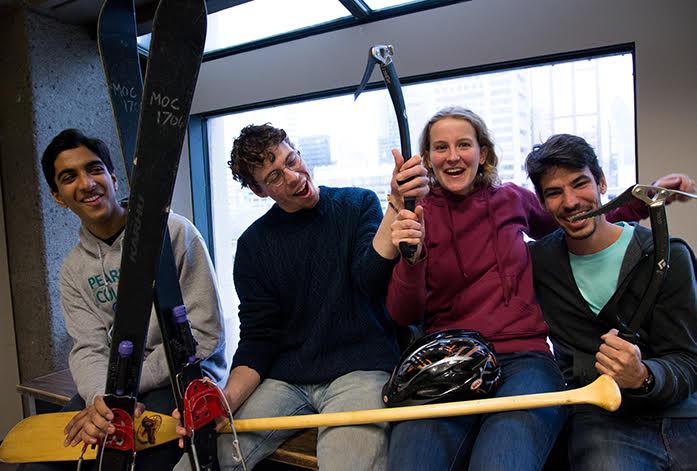
Each year, the end of the holiday season inspires dread for the rest of winter. Come January, our sweaters grow worn with time and our excitement over the first snow has melted with the realization that the ruthless Winter season will stretch on for months longer. The McGill Outdoors Club (MOC), however, has a different take: The club strives to cultivate students’ appreciation for this season through sport—including ice climbing, to cross-country skiing, winter kayaking, and many other winter recreational activities.

Founded in 1936, the MOC is one of the oldest outdoors clubs in Montreal. Led by 29 executive members, this independent student group rents out sporting equipment and leads trips to remote areas outside Montreal. Membership is open to everyone, from beginners to professionals, McGill students to Montrealers, undergrad to post-grad. The MOC welcomes anyone with a passion for the outdoors.

“The MOC is one of the oldest and largest clubs on campus,” Kyle Dolph, MOC President and U4 Arts student, said. “Names and faces change, but the attitude doesn’t [….] we’re committed to getting people outside.”

The MOC owns a house in Prevost, Quebec, a Laurentian town less than an hour’s drive from Montreal. For a fee ranging from $5 to $15—depending on night and room choice—students can stay in the house overnight and partake in sports nearby, including ice climbing, hiking, and cross-country skiing on trails the club built in the 1930s and 1940s. These trails, which supplement the free skiing trails found on Mont Royal, make cross-country skiing more accessible for McGill students. Joanna Peterschmitt, MOC Cross-country Ski Officer and U3 Science student, regularly takes advantage of the sport’s availability.

“I think when there’s a lot of snow, it’s a more fun way of getting around,” Peterschmitt said. “It’s a nice balance between downhill skiing and hiking.”

In previous years, the MOC has led survival trips, zipper-less camping, and backcountry skating trips where participants hiked to find frozen natural ponds to skate. This semester, the MOC tentatively plans to offer 25 trips, including introductory Telemark skiing trips—a type of downhill skiing with one’s heels unclipped from the back of the ski—for students seeking to embrace the cold.

Additionally, Louis Devaux, MOC House Manager and U3 Engineering student, will run, for the first time in the club’s history, a bobsled trip in early February that pits small teams against each other to build the fastest bobsled using broken skis.  

To Dolph, braving negative temperatures and trying out new activities helps with learning to appreciate the Winter season.

“Winter sports are not a way to endure the winter, but to enjoy the winter,” Dolph said. “At least for me, and other people in the MOC, we’re happy when winter comes. We’re almost sad to see it go.”

Before joining the MOC, Dolph had no experience with winter sports. Since becoming a member and climbing the club’s ranks, however, he has tried various activities including hockey, winter camping, and Telemark skiing. But of all the sports he’s tried with the MOC, ice climbing has become Dolph’s main winter sport.

“I chose [ice climbing] because it feels very real,” Dolph said. “It’s a very unnatural thing to be climbing a sheet of ice. It’s a lot of fun.”

Equally enthusiastic about winter sports, Navoneel Chakraborty, Kayak Frosh coordinator and U1 Arts and Science, feels most passionately about winter kayaking, which he describes as an unforgettable experience.

“When we were kayaking [off the coast of British Columbia in February], and it started snowing, it was deathly silent and it was eerie, but also serene,” Chakraborty said. “It’s a very different kind of surrounding to be in, and it was genuinely beautiful.”

McGill, News

McGill works to define the university context in student regulations

After finalizing updates to the Charter of Students’ Rights last October, McGill continues to deliberate changes to the Student Code of Conduct, including expanding the meaning of the “university context.” While the revisions remain tentative, McGill has made them available online, alongside a form soliciting student feedback the changes. Senate expects to finalize the Student Code of Conduct by the end of this semester.

“University context” refers to the locations where McGill has jurisdiction, meaning its regulations, such as the Code of Conduct, can be applied. Currently, it encompasses McGill property and field study programs, but has not previously been interpreted as applying to off-campus events organized by students. The McGill Senate has been considering broadening the definition of the context in the Charter and the Code for the past year, according to Engineering Senator Tre Mansdoerfer.

“Things that impact well-being on campus are now under the university context,” Mansdoerfer said. “Let’s say a student assaults someone at a bar off-campus, but they both go to McGill. The university can now have some sort of role in that.”

Public discussion surrounding the McGill context has stemmed in part from a 2015 incident involving two then McGill students, Conrad Gaysford and Kathryn Leci, outside of an off-campus house party. Despite the fact that both were enrolled at McGill, Leci struggled to convince administrators to take disciplinary action against Gaysford because the incident did not occur within the jurisdiction outlined by the university context.

Changes to the Student Code of Conduct are still being debated. Potential wording for the Code’s new definition of “university context” was presented to Senate at its meeting on Nov. 23, 2017. The new wording for the university context outlines circumstances that fall under it and more generally upholds a right for members of the McGill community to enjoy the university environment.

“‘University context’ means circumstances occurring […] off-campus, where the conduct has consequences that may be reasonably seen to adversely affect the security of students […] while on campus or while participating in university programs, events or activities,” the definition reads.

Mansdoerfer said that the new definition will result in closer administrative oversight of large-scale student drinking events that have previously fallen into grey area, such as Frosh, Carnival, and Science Games.

Dean of Students Christopher Buddle nonetheless cautioned that there was still much work to be done within the working group for Code revisions, and other forums as well.

“There is strong student representation on the workgroup,” Buddle wrote in an email to The McGill Tribune. “There is also an advisory panel being formed, which will likely [meet] in early February. That panel will consist of 40 to 50 people representing key stakeholders, from student societies to members of the Committee on Student Discipline.”

Buddle emphasized that the working group will seek broad consultation with members of the McGill community, and prioritize student rights when considering revisions to the Code.

“We remain firm in ensuring there is due process for any student accused of a violation of the Code,” Buddle wrote. “We need to take the time required to do things right.”

In the meantime, last semester’s changes to the Charter of Students’ Rights provide a reference for the definition of the university context. The updated Charter also included a provision that aims to protect students’ scholarly work, such as papers published in academic journals.

“I support the change made to the Charter, however […] I will be interested to see how this change is institutionalized, and if it will lead to any tangible increase in respect for student scholarship,” McGill International Review Editor Marissa Fortune wrote in a message to the Tribune. “Although the addition to [the Charter] is much too broad to provide any meaningful impact to the way intellectual property is protected among students, it is a positive step in the right direction.”

Arts & Entertainment, Film and TV

Sam Rockwell shines in Three Billboards Outside Ebbing, Missouri

Writer-director Martin McDonagh’s (In Bruges, Seven Psychopaths) world is inhabited by broken souls; well-intentioned but flawed people who hurt the ones they love because they have not found any other way to cope. Pain passes between individuals in an endless cycle of violence, and we watch as it grows, infects, and destroys everything in its path.

Months after her daughter was raped and killed on her way back home, Mildred Hayes (Frances McDormand) rents three decrepit billboards outside her hometown of Ebbing, Missouri. On them, she calls out the beloved local sheriff William Willoughby (Woody Harrelson) for his incompetence and failure to find the culprit. Her desperate call for justice soon turns into an all-out war against the police department and most of Ebbing’s small community.

The rest unfolds in ways that would make the Coen Brothers proud, albeit with more explicit violence and swear words than they would dare put to film. Blood is spilled, and moral intuitions are questioned before being furiously shattered. Three Billboards is as darkly funny as anything this side of The Lobster and as emotionally taxing as 2014’s Room, often both at once. A particularly brilliant interrogation scene between Hayes and Willoughby features one of the most shockingly beautiful film moments of the past few years. McDonagh’s script is full of unexpected turns, uproarious snappy dialogues, and fascinating character developments. Count this one in for a Best Screenplay nomination at all major award shows this year.

As the gruff, vengeful Hayes, McDormand offers a performance worthy of her iconic turn as police officer Marge Gunderson in Fargo. However, this isn’t to say the two have anything in common: Whereas Marge was a ray of sun piercing through the endless Minnesota winter, Hayes is more the type to start brawls at junior league hockey games. Still, there’s a tragedy to her character, as hiding behind a wall of insults and crotch-kicks is a woman who has endured torment all her adult life: One who has deprived herself the right to connect with anyone on a deeper level.

Arguably more impressive, however, is Sam Rockwell’s fantastic turn as Willoughby’s second, Officer Dixon. We get to know him as a power-hungry man-child who never faced any real consequences for beating up an innocent black teenager. He is a man who still lives with his mom despite his graying head, and does not seem quite as displeased with this situation as he pretends.  As McDonagh gives the racist cop a redemptive arc, Rockwell works wonders to transform Dixon’s pathetic character into a fully-fledged human being.

It is unclear whether redemption awaits these anti-heroes, or even if they truly want it for themselves. McDonagh argues that self-awareness is only the first step of a tortuous process which the world certainly will not support. But it is a big step nonetheless.


Commentary, Opinion

After the march: Political parties deliver lasting change

On Saturday, Jan. 20, hundreds of Montrealers gathered at Place des Arts to march in support of women’s rights. While demonstrations of popular disapproval of U.S. President Donald Trump might give individuals worldwide some hope that human decency remains in society, they will not evict him from office. This is not to say that acts of resistance do not have their place in a healthy democratic society—the success of the 1960s civil rights movement was contingent on civil disobedience and protest. However, for change-seekers in Canada and the U.S. to realize their political goals, there must be equally exuberant efforts to bring about change through existing democratic institutions.

Joining a political party is the first step to do so. While imperfect, parties are the established vehicles in liberal democracies through which individuals who share a common vision can band together to shape state institutions. In electoral democracies, an individual is powerless to effect change alone; it takes a group effort, and not only once every year, but through continuous engagement and participation.

Yet, political participation in Canada has been in decline over the past 30 years. While voter turnout in the 2015 federal election reached a 20-year high of nearly 68.5 per cent, it failed to breach the 70 per cent benchmark that was common before 1990. Further, only about two per cent of Canadians are registered members of a political party.

There is one group in society most notably absent from electoral politics—young people. In both Canada and the U.S., turnout is significantly lower among voters aged 18 to 24 than the national averages. This is not for lack of interest in political issues, however. In a report published following the 2015 Canadian federal election, non-partisan advocacy group Samara Canada found that young voters engaged in political discussions as frequently as older demographics did. Voter turnout in the 2015 federal election reflected this. Young voters boasted the highest increase in turnout of any demographic. Nevertheless, young people are the most disconnected from political parties. Samara also found that while more than three-quarters of Canadians above the age of 30 were contacted by parties during the election, only half of young voters were.

An individual is powerless to effect change alone; it takes a group effort, and not only once every year, but through continuous engagement and participation. 

Turning to political parties is imperative if young people are to shape the future of our nations. Parties offer individuals the opportunity to participate in and shape a broader movement, and realize common policy objectives. In Canada, Prime Ministerial candidates are chosen by parties’ membership, and party platforms are determined by members at conventions. For those who complain that elections present limited choices for voters, partisan politics offers the opportunity to have their voice heard. The options for the next Prime Minister presented during federal election campaigns are ultimately determined by the few who choose to engage in political parties.

The good news is that political parties in Canada are more accessible than ever. Canada’s three major parties all choose their current leaders by popular vote as opposed to a delegated convention, meaning that any Canadian can join a party and cast a ballot. The Liberal Party was the first to do this in 2013, and went so far as to allow non-members to cast a ballot, as long as they registered as a Liberal supporter. The party has since eliminated membership fees altogether, rebranding itself as representing an open and inclusive progressive movement.

By joining political parties, youth have the opportunity to exert unparalleled influence over government policy. Canada is home to one of the largest youth political groups in the world, the Young Liberals of Canada. Young Liberals are more than just young people within a larger party, they have their own organizational structure and considerable influence over policy. The Liberal Party’s policy on medically-assisted death was proposed by Young Liberals in Quebec. The New Democratic Party also offers young people space to have their voices heard in politics. In 2011, the party had a number of young candidates elected, four of whom were students at McGill at the time.

Political parties on campus are more than the average club—they offer students a real opportunity to shape our society. In the age of Trump, liberals are facing a considerable challenge. Nevertheless, as demonstrated by marches across the globe, activists are fighting for social progress. This energy must be harnessed and directed into our political parties to deliver lasting change. Now that the march is over, the real work begins.


Liam is in U3 studying Political Science at McGill. Joe Biden is his hero.


Arts & Entertainment, Theatre

Rhinoceros tramples into Players’ Theatre

Rhinoceros begins with stillness. While the rest of the production is full of chaotic and frantic energy, the play opens simply, with all seven cast members onstage, clad in identical white jumpsuits, eyes closed, exemplifying the ideal tabula rasa—a blank slate. As a green light dims, Berenger, played by Emily Sheeran (U1 English), raises her hand, snaps her fingers, and the story begins.

Besides the deeper connection to the themes of morality and responsibility that permeate Rhinoceros, director Guy Ettlin’s (U3 Psychology and Economics) choice to place his entire cast onstage for the pre-show is a testament to the production’s biggest asset—its ensemble cast. Adapted from Eugène Ionesco’s 1959 play of the same name, Ettlin, along with the Players’ Theatre, have deftly transposed Ionesco’s script into an ambiguous setting. Neither time, nor place, is ever made clear. However, the tale of Berenger and the Rhinoceros still rings true in our political climate. Written in the absurdist style that exploded post-Second World War as a response to Fascism and Nazism, Rhinoceros serves well here as a warning for modern viewers about the dangers of conformity.

Rhinoceros chronicles the tales of a small town’s inhabitants, focusing on the alcoholic everyman Berenger, who in this production is gendered ambiguously and portrayed by Sheeran. Half philosophical rumination on the self and half slapstick comedy, the play centers around a rhinoceros that stomps by a café early one morning. As Berenger and his friend Jean (played by a brilliant Steven Finley, U3 Psychology) argue about the existence of the rhinoceros, debating whether it has one horn or two, or whether it is Asian or African, a mass metamorphosis begins to occur. One by one, the characters lose their humanity until they become—you guessed it—rhinoceroses.

The pure commitment and enthusiasm of the actors allow the script to shine. It’s a shame that the production team couldn’t keep up with its performers—the costuming and set design leave something to be desired. A black box space is a wonderful canvas, however the minimalist set pieces seem hastily done, undermining the legitimacy of the performers.

Thankfully, all seven cast members dive straight into the rich and clever script—nothing is held back in this black box theater. It’s easy to take an absurdist piece and perform it for its superficial humour. Occasionally Rhinoceros veers into this territory, but, thankfully, there are crisp, striking performances that ensure that the show does not fall flat.

Olivier Bishop-Mercier (U3 Theatre and Math) successfully slips between three roles: The Logician, Mrs. Boeuf, and Tony, all the while creating distinct and lively characterizations. Liana Brooks (U2 Anatomy and Cell Biology), fluidly switches between genders as the Housewife and Mr. Dudard, appearing in the first act as a voice of mania, then in the second, of reason.

Altogether, this small ensemble manages to generate the energy of a cast twice their size, and their breaking of the fourth wall succeeds in keeping the audience’s attention.

“You must learn to be more detached and… see the funny side of things,” Dudard says to Berenger.

The two look down onto the masses of rhinoceroses that stampede beneath Berenger’s apartment. Besides being the motto of the play, it’s also a message to the audience member: To look past theatrical conventions, and to simply enjoy the play that is being presented to you. Rhinoceros makes it easy.

McGill, News

School of Social Work progresses gender-inclusive bathroom initiative in Wilson Hall

The Social Work Student Association (SWSA) was recently victorious in its three-month campaign to make bathrooms in the School of Social Work’s (SSW) Wilson Hall bathrooms gender-inclusive. On Jan. 9, the SSW degendered all of the bathrooms except for those on the second floor, which houses offices for the Faculty of Arts. The issue of gendered bathrooms has been on the SWSA’s agenda since October 2017, when several undergraduate Social Work students brought it to the association’s attention.  

“A non-binary student had a lot of issues with being followed into bathrooms by [McGill] security […] in the Redpath library,” SWSA Vice-President (VP) Internal Vincent Mousseau said. “[They] basically told them that they were in the wrong place, which is extremely problematic.”

The SSW initially planned to address the matter by clearly delineating existing gender-inclusive bathrooms and making them more accessible to people with disabilities. However, the SWSA successfully pressured the School to change all of the bathrooms in Wilson Hall to be gender-inclusive as well.

“The research showed us that there were no increased rates of sexual violence against women in degendered bathrooms,” Mousseau said. “The statistics actually show us […] increased rates of suicidality, increased rates of anxiety and depression among trans people when they don’t have access to bathrooms.”

Because the School was initially willing to make the existing gender-inclusive, single-stall bathrooms more accessible, but unwilling to redesignate other gendered bathrooms, the SWSA took matters into their own hands. On Nov. 20, the Trans Day of Remembrance, the SWSA put up signs in Wilson Hall designating its bathrooms gender-neutral without the approval of the SSW.

“The safety of these transgender and nonconforming students [could not] wait,” Mousseau said. “We just took the unilateral action of putting the signs up on all of the [bathroom] doors in the building [.…] with information [on posters] about why we’re doing this.”

These signs were repeatedly torn down by the administration in Wilson Hall, most often on the third floor, where the SSW offices are located. The SWSA received emails from the School on Nov. 21 calling for them to desist and suggesting a meeting to discuss the issue.

On Nov. 22, the SWSA and Queer McGill held a demonstration outside Wilson Hall in support of the campaign. Director of the SSW, Nico Trocmé, then agreed to a meeting with the SWSA on Dec. 1, when two committees were formed to negotiate the redesignation of the bathrooms and to foster conversation within the School about the restroom issue, respectively. These committees are composed of Social Work staff, SWSA members, and external consultants from organizations like the Social Equity and Diversity Education Office.

SWSA U3 representative and redesignation committee member Noah Markis-Morrison believes the committees helped pressure the School to redesignate its bathrooms.

“As we gained support within the faculty and with the committee that was formed, we began to see some progress with the School’s willingness to address these issues,” Markis-Morrison said.

The SSW approved the change just before the December final exams period. Over winter break, the committee worked to ensure that returning students would have their choice of restroom respected. The next step for the SWSA is to acclimate the McGill community  to the changes by encouraging discussion among staff and students through forums and sensitivity exercises within the School.

“Recognizing that Wilson Hall is slated for major reconstruction in the next two or three years, we have nevertheless made changes that significantly improve access and safety,” Trocmé said. “The full renovation of Wilson Hall […] will allow for a proper redesign of the washrooms to have closed-stall, all-gender washrooms.”

Student Life

McGill Students Knitting Club: An inclusive atmosphere for all things yarn

Although perhaps an old-fashioned method of stocking your winter wardrobe, knitting has benefits beyond the sense of accomplishment of making your own scarf. The McGill Students Knitting Club aims to promote appreciation for the craft among students, gathering anyone interested in learning and all things yarn-related.

The McGill Students Knitting Club gained official SSMU club status last year. Nonetheless, it has since grown to become the place to go on campus for all things yarn-related since it was initiated in 2013 by Alejandro Carboni, a McGill graduate. It aims to be an inclusive club which welcomes all those interested in knitting, crocheting, discussing fibre arts, or simply experimenting with a new hobby. By offering beginner materials and teaching technique during weekly meetings, the knitting club welcomes first-time knitters with open arms.

“Our main event is our weekly meeting where we sit around and knit,” Noemie Tremblay-Lamontagne, U3 Arts student and Vice-President Resources of the club, said. “We talk about classes, and professors, things we like and things we dislike. Knitting is stress-relief and it helps to be able to [knit] around other people.”

The sense of calm that Tremblay-Lamontagne experiences while knitting is scientifically backed. According to a 2013 study in the British Journal of Occupational Therapy, there is a significant correlation between knitting and feeling calm. The study showed that knitting also has the potential to increase brain function.

The hobby has proven social benefits too. The same study found that knitting in a group can increase happiness and improve social skills by providing a commonality between members, giving them both a sense of belonging and confidence.

Yet, for those who are taking up knitting for the first time, the thought of practicing their skills in front of others can sound intimidating. In order to accomodate first-timers who may feel nervous about their ability, the knitting club hosts beginner workshops at the start of every semester, taught by seasoned members.

“Usually, the very first thing that beginners do is grab a piece of yarn and needles and [just] try to knit,” Tremblay-Lamontagne said. “At the very beginning, [one’s knitting] is really uneven and [they] don’t know how to do different motifs. Once you know how to knit, you can do really pretty things. For [starters], a scarf is easy cause you only need to go back and forth, unlike a hat, in which you have to go around, and socks, which are extremely difficult.”

Another common barrier to access is the gendered association knitting holds. Knitting is stereotypically thought to be performed by women because of the historical link between femininity and domestic craft. It is also seen as old-fashioned due to its impracticality and inefficiency in the modern world, so it’s not something many McGill students would think to do in their limited spare time.

According to Tremblay-Lamontagne, members of the knitting club have felt the impact of this stereotype firsthand. At one point, a prospective member asked them whether their club was for women only, simply because of this implication. The McGill Student Knitting Club works hard to challenging stereotypes about the craft by emphasizing its relevance in the lives of busy students and creating a space for anyone interested in this hobby to do so.

“[Knitting Club] is really diverse,” Tremblay-Lamontagne said. “We have a surprising amount of guys […] which is a good thing. We have grad students, we have undergraduate students. There are people in Arts, Engineering, Science, and Agriculture. […] It’s a very welcoming and low pressure environment.”

Read the latest issue

Read the latest issue