


Latest News

Commentary, Opinion

“Bonjour-Hi:” The value of multiculturalism

Valérie Plante, Montréal’s new mayor, has openly supported providing services to citizens in the language that they are most comfortable with, be that English or French. Plante recently proposed promoting bilingualism in the Société de Transport de Montréal (STM) by providing emergency messages in multiple languages.

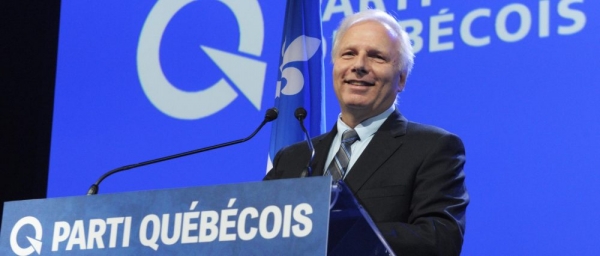
However, the current provincial government continues to resist bilingualism. Most recently, Québec lawmakers passed a unanimous motion that calls on businesses to scrap the beloved, “Bonjour-Hi!” and replace it with simply, “Bonjour.” Although this motion carries no legal weight, it demonstrates the rigid campaign to defend the French language that parties such as the Parti Québecois (PQ) continue to pursue. In the motion’s original wording, the PQ went so far as to call the bilingual greeting an “irritant.” PQ Leader Jean-François Lisée promised that, if elected in 2018, there will be a “French language crackdown,” through measures such as creating more language restrictions in the workplace. Where Lisée is wrong is that instead of being seen as an “irritant,” multilingualism is one of the many gifts of a multicultural society and an asset to the province as a whole. The provincial government should see the value in Plante’s ambitions to make Montréal, and Québec as a whole, more inclusive for anglophones and other language minorities.

Montréal is Québec’s largest city. Beyond that, it is a global hub, home to groundbreaking artificial intelligence research, and attracting international attention. Tourists, students, and immigrants come from all over the world, and many do not speak a word of French when they arrive. The 2016 Census found that the number of anglophones in Québec increased by 45,230 from 2011, with over 1.1 million native English speakers—9.6 per cent of the total provincial population—now calling Québec home. In Montréal, the English-speaking population is significantly higher: Only 54 per cent of Montréal households cite French as their primary language. It is becoming more and more evident that Quebecers speak English, too. Eventually, the government will have to stop fighting this reality. Although Québec has a thriving francophone culture, it is not only unsustainable to continue to ignore the province’s language minorities—it disregards the value of multiculturalism as a whole.

Although Québec has a thriving francophone culture, it is not only unsustainable to continue to ignore the province’s language minorities—it disregards the value of multiculturalism as a whole.

Economically, shunning English and other languages is unsustainable, especially if Montréal wants to see growth in the future. Most international business is conducted in languages other than French, such as English. Bilingual workplaces are rising in Québec, and for the rest of Canada, nine out of 10 employees work exclusively in English. In the 1960s, Montréal was booming and on its way to becoming the business capital of Canada. However, increasing regulations and political tensions due to language and sovereignty drove private investment, and some of the most wealthy and educated people out of the province to cities like Toronto. This phenomenon is not unique to Montréal: Between 1971 and 2015, more Quebecers left the province than settled in. By cracking down on English again, Québec is doing a disservice to its own citizens and businesses, effectively sabotaging their means to work or operate throughout Canada and internationally.

Furthermore, the narrative that francophone-focused groups routinely ignore is that of Indigenous languages in Montréal. While Québec’s history has been filled with oppression, forced assimilation, and colonialism, it is unfair to position francophones as the only victims. Indigenous populations have experienced cultural genocide at the hands of the government through oppressive policies like the residential school system. According to the 2016 Census, between 2006 and 2016, Québec saw a 37.5 per cent increase in people identifying as First Nations and a 149.2 per cent increase in people identifying as Métis. In 2011, 20.9 per cent of Canada’s 213,490 total Aboriginal mother tongue population lived in Québec.

The promotion of multiple languages should not be seen as an attack on francophone culture, but as a gift of multiculturalism. In a province where many languages are represented, it is irrational to restrict citizens to using just one, even if it has a strong historical tradition. Quebecers do not say “Bonjour-Hi” to attack Francophones—they say “Bonjour-Hi” to include those whose mother tongue is not French. If anything, Quebecers should add more languages to the greeting, and embrace the multicultural direction that the world is headed in, not actively resist it.


Abeer Almahdi is a U1 student studying International Development. Abeer is a Ravenclaw, and a proud mother of a lazy two year-old pomeranian/pekingese mix.


Science & Technology

Breastfed babies are less likely to develop eczema

Since the 1950s, breastfeeding has been almost a taboo subject in the United States and Canada. A simple Google search of “breastfeeding” shows top news stories of women being shamed by strangers for breastfeeding in public. This negative response might help explain the low rates of breastfeeding in many developed countries.

In the United States, less than 49 per cent of babies ever receive breast milk and in the United Kingdom, only 34 per cent do. Even more striking, only 17 per cent of American women and one per cent of British women. follow the World Health Organization’s recommendation to exclusively breastfeed for six months.

According to the United States Department of Health and Human Services, women face a variety of barriers to breastfeeding beyond social stigma and disapproval, including work-related issues, unsupportive partners, and concerns about pain.

However, a study conducted by scientists at King’s College London, Harvard University, University of Bristol, and McGill University have found that breastfeeding can provide a variety of benefits to the child, with no adverse health consequences to the mother.

The study, called PROmotion of Breastfeeding Intervention Trial (PROBIT), began in 1996 and followed 13,000 Belarusian babies from birth to adolescence to examine the effects of breastfeeding on health. Babies in the intervention group received much longer and much more exclusive breastfeeding than those in the control condition.

The most recent publication to stem from this research investigated two outcomes of the breastfeeding intervention—atopic eczema and asthma—analyzed in a follow-up of the subjects at age 16. The study found that the breastfeeding promotion intervention group saw a reduction in risk of eczema, but no difference between the intervention and control group for asthma.  

Michael Kramer is a professor and researcher at McGill’s Faculty of Medicine and the Research Institute of the McGill University Health Centre, and the Principal Investigator on the PROBIT study. He has been working on this trial for over 20 years and can attest to the wide range of benefits that breastfeeding accords.

“I’m surprised about the beneficial effect [breastfeeding] had on cognitive ability with no similar effect on behavior such as depression, problems socializing, and ability to pay attention,” Kramer said. “There was a general effect on brain development but not on behavior. Also, this [finding] in the paper was surprising to me because the kids that had eczema at age 16 were not the same [ones] that had it early in life.”

Indeed, as Kramer explained, other benefits to breastfeeding included higher verbal IQ at  six and a half years old, significant reduction in gastrointestinal infection in the first year, and likelihood of atopic eczema in the first year of life as well as during adolescent years.

Researchers saw no negative health effects of breastfeeding on the mother. There was no difference in blood pressure, body fat, or body mass index between the mothers in the control compared to the intervention group.

As to why breastfeeding could protect from eczema, even 16 years later, Kramer is not quite sure.

“There are many components in breast milk that affect the immune system and is responsible for protective effects against infections,” Kramer explained. “Oligosaccharides, sugar molecules found in the breast milk, can bind to virus and bacteria. There are also antibodies, lymphocytes, and lactoferrins, but how these molecules might protect against allergic disease including eczema is not well understood.”

The PROBIT study gives yet another reason, besides courtesy and respect, to not criticize women who breastfeed in public. Women should not have to be ashamed of breastfeeding their child or have to hide in bathrooms to avoid negative remarks. Those who decide not to breastfeed should, however, also not fear the reprimand and haughty remarks of mothers who do. However a woman chooses to feed her child, her decision is her own and should be respected.

McGill, News

Minerva schedules cause confusion over semester end dates

Every academic year, the Committee on Enrolment and Students Affairs (CESA) and the McGill University Senate approve the Calendar of Academic Dates, which stipulates dates for the start and end of classes and other important events throughout the semester. CESA and Senate approved the Calendar of Academic Dates 2017-2018 in April and May 2014, respectively.

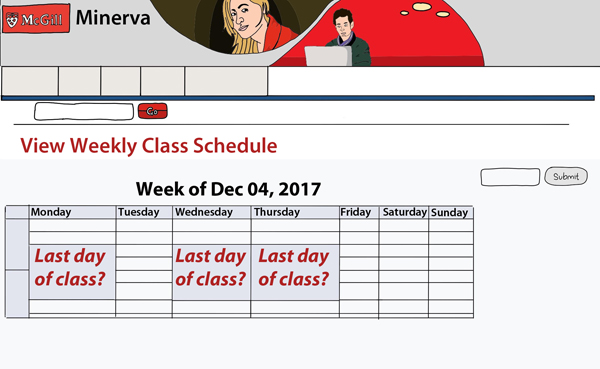
The Calendar determines the end date for each class depending on its schedule: Classes that met only on Wednesdays were scheduled to end on Nov. 29, while classes that met Mondays, Wednesdays, and Fridays ended on Dec. 6. Moreover, because Thursday, Dec. 7 followed a Monday schedule, classes that met only on Mondays ended on that day.

However, according to Associate Professor of English and Jewish Studies Yael Halevi-Wise, this calendar is not widely-used among professors, many of whom instead preferred to use Minerva’s weekly teaching schedules which contain their class itineraries for each week of the semester.

“When I designed the course syllabus before the semester began, [the] first thing I did was consult my personalized Minerva schedule,” Halevi-Wise said. “I planned all meetings and assignments accordingly. It was therefore surprising to find out that what looks like a personalized schedule on Minerva was actually not offering correct information.”

As the end of the semester approached, many professors and students came to realize that the class dates in the Minerva schedules did not match those approved by the Senate for the Fall semester. While different courses end on different dates, only one final date, Thursday, Dec. 7, can be entered into Minerva. Thus, Minerva schedules display classes as if they would be going up until that date, when in reality some of them were supposed to end before.

“The fact that courses on the Minerva schedules do not match the varying Senate last date of classes is a system limitation in that there is no logic in the system to automatically generate the specific end dates on each course based on the various schedule patterns of the courses,” Interim University Registrar (Enrolment Services) Anna Walsh wrote in an email to The McGill Tribune.

Faced with complaints and confusion, the administration instructed professors to follow the Calendar of Academic Dates 2017-2018 instead of their Minerva schedules.

“There was an email sent around on [Nov. 21] that said that there had been some questions about when the last classes would be, based on the 39 [hours of class required for every three-credit course], the Minerva class schedule, and the key dates,” Associate Professor of History and Classical Studies Lynn Kozak said. “I think that they knew that there was some gap [between those things]. There was some clarity the next day within [the Faculty of] Arts, [explaining] the dates approved by the Senate.”

Although professors have had to amend their course syllabi, Halevi-Wise feels that the burden of the scheduling discrepancy has largely fallen on students.

“Students have very complex schedules,” Halevi-Wise said. “They budget their time very carefully, and if all of a sudden there’s confusion, it affects them when they’re studying for an exam, [working] on projects that they have to get somebody to do, if they [have a job].”

Until being approached for an interview by the Tribune on Dec. 1, Associate Dean (Student Affairs) for the Faculty of Arts Lucyna Lach remained unaware of any errors in students’ schedules. Despite gaps in communication over end dates for classes, the administration recognizes the negative impacts this mistake has had. Lach said she has now brought Arts professors’ attention to the discrepancies in the Minerva schedules via email.

“It has now become evident that it is critical to resolve this issue so that all versions of the Class Schedule and myCourses reflect the accurate end dates on each course section,” Walsh said. “Students and instructors should not be expected to look elsewhere for that information. Enrolment Services will be working with IT early in the new year to have special coding implemented to address this issue.”


Science & Technology

Studying bird speech patterns can explain universal grammar rules

In the 1960s, Noam Chomsky, a linguist at the Massachusetts Institute of Technology, observed that different languages across the world have common patterns. Chomsky postulated the Theory of Universal Grammar (UG), which suggests that humans have created languages and grammar rules that conveniently fit with how our brain is organized. McGill PhD student Logan Smith and his supervisor Jon Sakata, an associate professor in the Department of Biology, have found supporting evidence for this theory through studying the zebra finch, as a songbird.

If the UG theory is correct, all existing human languages, regardless of how many there are in total, would be constrained by a limited number of all the possible grammars in existence. UG states that language will always develop with a common set of structural rules and properties that are innate, such as verbs, nouns, and functional words. Sakata’s lab is one of many labs that study songbirds to investigate how humans process speech and music. In an interview with The McGill Tribune, Smith highlighted how songbird vocalizations parallel the structure of grammar rules.

“It turns out that the vocal learning process in birds is quite similar to the process in humans,” Smith said. “Birds start by producing noisy, variable vocalizations akin to human babbling, and through practice hone their vocalizations into a species-typical song. Each individual male zebra finch will learn and produce only one song with a stereotyped sequence. Zebra finches are capable of learning [many] different sequences, and will mimic the [sequence of] their tutor.”

Smith took advantage of the songbirds’ capacity to learn multiple sequences by exposing them to each sequence at random, and observing which sequence they preferred to sing in the end. He found that the patterns produced by natural populations of birds were very similar to those of the laboratory-raised birds.

“We think similar types of processes related to aspects of universal grammar may also occur in other animals,” Smith said. “Our study found that zebra finches are predisposed to learn certain types of sequences over others, which we think could parallel how humans are predisposed to learn certain types of language structures over others. [It also] tells us that biological predispositions in vocal learning can exist in cases where an individual is capable of learning many possible sound sequences.”

Smith’s work also explores the connection between motor processes and speech production. He suggests that differential learning patterns could be attributed to processing in the auditory or motor systems.

“When learning a new language, our speech is modelled after what we’ve heard from a native speaker.” Smith said. “Motor function and auditory processing are important in learning speech.” We can only emulate certain accents, but only at the mercy of our motor flexibilities. Take dogs, for example. They seem to understand some of our verbal commands, but merely bark at us in response instead of speaking our own language. Likewise, we could tell apart the different meanings behind the barks by their intonation but not mimic their barks. “We are [also] interested in exploring whether these learning biases are rooted in biases in motor function or auditory processing (or a combination of both).”

The existence of learning biases could have implications for how humans learn new languages.  Although our ability to pick up new vocabulary declines substantially as we age, we may still be able to pick one up quicker than expected if the UG theory holds true. The Sakata lab has shown that language bias exists even in songbirds. Apparently, there may be fewer gaps between different languages than once thought.

Art, Arts & Entertainment, Gaming

“Art a la Mode” bridges the gap to the future of art

A street artist, a professor, a tattoo artist, a videogame designer, and a curator all walk into a bar—or rather, a McGill University auditorium.

On Nov. 30, the McGill Students’ Visual Arts Society (MSVAS) presented “Art à la Mode: Keeping Art Current,” a Q&A discussion panel questioning visual art’s position in today’s world. The panel focused on how visual art has moved out of its traditional arena and has emerged in fields like technology, pop culture, and social justice movements.

Montreal is a hub for technology, style, and visual art. The MSVAS took advantage of all the city has to offer in curating their discussion panel, which featured some of Montreal’s most interesting art personalities. The panel consisted of Julia Skelly, McGill Department of Art History and Communication Studies Faculty Lecturer and feminist scholar; Rebecca Cohen-Palacios, videogame developer and co-founder of Pixelles, a non-profit organization for women in gaming; Fluke, a Montreal street artist; Robb Jamieson, the curator of Art Pop Montreal; and Katakankabin, a tattoo artist working at Minuit Dix Tattoo in the Mile End.

The discussion covered a wide range of experience and disciplines, exploring questions about their unique disciplines, how they define art, and how their distinct scenes have changed over time.

Each guest began by explaining their origin story, giving the audience more insight into the way they think about their own experience with visual art. Cohen-Palacios began her career as a website designer, until one day she saw an advertisement for a six-week intensive program for women interested in video game design. Two weeks after she graduated from the program, she interviewed at Ubisoft Montreal, and has been working there ever since.  Fluke discussed his roots in the Montreal graffiti scene, and how his street art saved him from a life of homelessness. He explained that art for him began as a survival tool and blossomed into a career.

Though each speaker’s artistic roots are different, they share a common theme: Regardless of their niche, they each described visual art as their chosen medium for self-expression and social action. Fluke commented on his experience in the Montreal graffiti scene, explaining how for him, street art was a means of self-expression.

“It’s really about action,” Fluke said. “What causes a 16-year-old person to risk going to jail? Or [being] killed? There’s a social need to be acknowledged, to fight for space.”

Each speaker passionately emphasized this need to occupy space, to demand acknowledgement for themselves or others. Cohen-Palacios used the example of women in gaming. She explained that as resources for creating games become free to access, a more diverse population can create content. As more people enter the industry and producers become more representative of the general population, video games’ ability to have a social impact increases.

The speakers discussed the future of visual art as a vehicle for new voices in existing industries. Professor Skelly explained how she uses her platform to teach students about the social structures that surround modern art, and to critically examine how artists may be underrepresented due to race, gender, and sexuality.

“As an art historian, I am deeply uninterested in the question of money when it comes to art,” Skelly said. “I am thinking of the art I want to teach my students. Art allows me to write about things I find important.”

The speakers finished the panel by describing the future of visual art—a future in which they hope visual art can be used as a tool for both institutional and social change. In this vein, Cohen-Palacios highlighted the need for the video game industry to address the inequality between the number of women and men employed in the field.

MSVAS delivered a diverse and multifaceted panel. The questions were pertinent and created an active debate among their guests. Together, MSVAS and the speakers created a thought-provoking dialogue about modern art and the many ways it can be used as a social tool today, and as we move into the future.

Features

ESports enter the McGill arena

On Dec. 3, eight teams of students from universities across North America battled in the Tespa Collegiate Series: Overwatch quarterfinals. Tespa—”a network of college clubs founded to promote gaming culture and host the best college eSports events and competitions”—is one of many organizations dedicated to collegiate eSports, or competitive video-gaming. The Tespa Collegiate Series is the organization’s dedicated competition in Overwatch, one of the six games featured in the tournament. To an outsider, this organization and specific competition might sound like one of an endless number of video game challenges, but the US $120,000 in scholarship and prizes up for grabs would indicate otherwise. ESports have increased in popularity in countries around the world and the number of formal competitions continues to grow. Organizations like Tespa facilitate this growth but the rise of collegiate-level eSports in North America is still a relatively new phenomenon. Canadian and American students are generally less familiar with Tespa and other collegiate eSports organizations than with traditional sport governing bodies such as U Sports and the National Collegiate Athletic Association (NCAA).

Sports

Pulling back the curtain: Access to sports superstars through social media

“I Dont wanna be here,” tweeted then-Phoenix Suns point guard Eric Bledsoe on Oct. 22. When he pressed send, Bledsoe had used a little over seven per cent of Twitter’s now 280-character limit to captivate the entire basketball world.

Within a few hours, sports news sites picked up the tweet and framed articles around it. Was Bledsoe requesting a trade? After a mess of drama, it turned out he was. Two weeks later, he was shipped to the Milwaukee Bucks. On Nov. 7, Adrian Wojnarowski of ESPN confirmed the details of the Bledsoe trade, finally putting an end to the rumour mill that began spinning as a result of Bledsoe’s own tweet.

Once upon a time, all sports stories broke through exceptional reporting. Sportswriters worked hard to accumulate sources, fact-check, and get a story to print or publish online. But then came Facebook, Twitter, Instagram, and Snapchat, and the players themselves joined in, accepting the social media revolution with open arms. The wall between players and their fans broke down, allowing them to communicate with each other directly.

This has allowed players to break their own news. On Dec. 1, Ken Rosenthal of The Athletic reported that minor league baseball pitcher Christian Binford had signed with the Orioles. His source was an update to Binford’s Twitter biography.

Athletes have even started their own publication of sorts, in the form of Derek Jeter’s The Players’ Tribune. Boasting an extensive list of contributors from the sports world, the website has broken stories as big as last year’s Kevin Durant free agency decision, and regularly posts content from players in order “to connect directly with their fans, in their own words.”

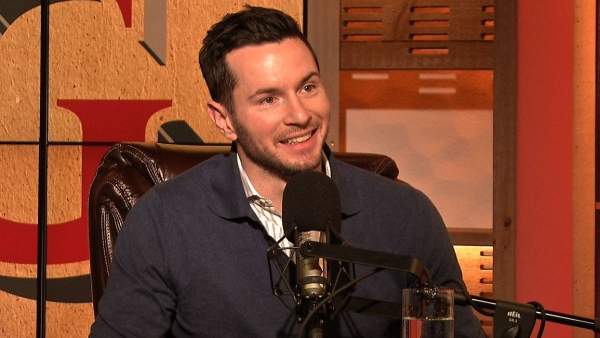
For some, the written word isn’t enough, giving rise to podcasting. After a season of co-hosting their popular podcast “Road Trippin’,” Cleveland Cavaliers players Richard Jefferson and Channing Frye were separated in October. With Jefferson’s release, the podcast rebranded as “Road Trippin’: Richard vs. Channing,” allowing the athletes to continue ushering in guests like Kyrie Irving with his flat earth theories. Fans can get an inside look at players’ lives through other podcasts from Golden State Warrior Draymond Green and Philadelphia 76er J.J. Redick. Redick’s podcast rebooted on Nov. 29 on Bill Simmons’ The Ringer podcast network, and the first episode features his Internet-famous teammate Joel Embiid.

In the podcast, Embiid revealed some of the secrets behind his Internet fame and what lies behind his success with the fanbase. Although he’s just having fun, he is aware of his reputation as a bit of a troll on social media; he embraces trash talk through Twitter and Instagram, especially through creative use of locations. Thanks to social media, fans can enjoy a side of Embiid that would otherwise go unseen.

The way fans interact with sports is constantly evolving. Sports has turned into a two-screen experience with social media, and it looks as if ways to watch and interact with our favourite athletes will only get more dynamic. That’s the sports world we’re headed toward, and, as fans, we should be thrilled. The more fans get to learn about the magic behind athletes’ madness, the more they should know they ‘wanna be’ here—unlike Bledsoe in Phoenix.

Arts & Entertainment, Film and TV

Short guides to active viewership and listening

Active Viewership

Throw your cellphone, food, and “friend” out the window

Rather than splitting your time between different distractions, do one thing at a time!

Ask “Why?”

Take for granted that filmmakers know what they are doing, and that all things happen for a reason. Questioning every artistic decision will force you to dig deeper into the work’s intent and meaning, all while keeping you zoned in.

Suspend your disbelief, for God’s sake

Each film or series introduces its own set of rules. Identify them, and understand that characters will follow these rules specific to their world. Fiction is about internal logic; thinking “that doesn’t make sense” will only distract you.

Watch teaser trailers only

I get it, Hollywood; the more people know about the product, the likelier they are to purchase. However, stories tend to be much more engaging when you don’t already know the major plot points. Do yourself a favour and stay away from those long-form trailers.

Look out for themes in the craft

Cinematography and soundtrack become stronger narrative tools than dialogues when successfully exploited. Identify the colour palette and recurring musical themes and try to make sense of them.

Pause series, never movies

Films and episodes are the length they are for a reason. Half of a series’ fun lies in the tension between two episodes, but pausing a movie destroys its rhythm. View the story as intended by its creator.

Active Listening

Listen with headphones

If you really want to give the album your full attention, listening with headphones will not only allow you to appreciate the sonic quality, but cancel outside distractions

Pay attention to (or look up) lyrics when listening

Lyrics can also help you to understand what an artist is trying to express, and allow you to process an album as a cohesive, thematic work. Words take on entirely new meanings when paired with certain sounds, and vice versa.

Allow yourself to conjure up images

Explore the related sights, touches, tastes, and smells that a song conjures. Follow the impulse to create an accompanying narrative or a music video in your head.

Listen for composition/production

Identify individual elements of the song that don’t stick out as much as the lead vocals. Search for the bass line and try isolating that for a portion of the song. Think about instruments or devices used. If you hear a funky sample, ask where it could have come from.

Learn more about the artist

The more you know about a musician, how they approach songwriting or particular quirks they have when recording, the more you can appreciate the craftsmanship that goes into each tune. Try to examine if they have an identifiable sonic style or if they have changed album to album, song to song.

Feel it

If you want to dance, dance! Whether the music is making you drop it low or sob, you’re really listening when you feel your body responding.

Commentary, Opinion

Swipe right—for the right reasons

I recently re-downloaded the dating app Tinder. I was working on a difficult essay and, frustrated by my lack of success, found myself reactivating an old profile and swiping furiously. This was not the first time this had happened. When school becomes stressful and the pressures of McGill begin to make me feel inadequate, Tinder inevitably reappears on my phone, and then disappears a few days later. Upon reflection, I realize that I do not use the app to connect with others. Instead, I use it for the fleeting sense of validation that will dissipate as soon as I put my phone down.

A 2017 University of Rhode Island study associating use of the app with low self esteem and negative body image suggests that my experience is not uncommon. It has been well documented that young people are undergoing a mental health crisis. At McGill, student mental health is especially dire, with 65 per cent of undergraduate students reporting social anxiety and 44 per cent reporting depression. It’s also been established that this crisis is worsened by heightened social media use.

Social media is not inherently evil; it’s an easily accessible means of communication, but one with consequences when misused. Treating Tinder, or any other online platform, as a coping mechanism or a means of validation is just one such misstep. Still, it’s easy to see the appeal of these apps. By allowing us to fracture our identities into a set of consumable personas online, Facebook or Instagram profiles can be used to briefly alleviate feelings of stress and inadequacy.


Social media is not inherently evil; it’s an easily accessible means of communication, but one with consequences when misused. Treating Tinder, or any other online platform, as a coping mechanism or a means of validation is just one such misstep.

Tinder, with its built-in instant gratification, is one of the easiest ways to achieve this momentary validation. Matches are a clear confirmation that one’s online persona is not only acceptable, but desirable. Even better, the stakes are low, as there is no compulsion to message or even reply to those matches in the first place. However, in terms of social media apps’ effects on self-esteem, Tinder may also have the most depressing consequences. The University of Rhode Island study confirms what many already know to be true: Presenting a simplified persona in the context of romance—traditionally one of the most meaningful ways to connect with another person—only underscores the sense of alienation common to college dating culture. If social media is used as a kind of self-medication, the result is often more loneliness, more stress, and more fear of inadequacy. Using Tinder this way is not a way to connect with others; it’s an ill-fated dialogue with the self, an externalization of a problem into an idealized persona.

It does not have to be this way. Social media apps like Tinder are unprecedented connective tools that transcend physicality, and they should be used with care. Conscious social media use, defined by social connectivity and the intention to communicate respectfully with others, can create and strengthen relationships. If Tinder users treat the app as an opportunity to meet like-minded people, they might find their lives enriched. However, more often than not, young people’s Facebook, Instagram, and Tinder habits are unconscious bids for validation. Using social media in this way divorces social capital from social interaction, compromising meaningful communication.

Next time I re-download Tinder, I will ask myself why. If my answer is anxiety, or inadequacy, or anything other than the desire to connect with others, I will turn to something else.


Grace Gunning is a U3 History major and occasional artist. She enjoys climbing, gardening, and cheesy 80's sci fi.


Read the latest issue

Read the latest issue