

Latest News

Soccer, Sports

From the cheap seats: The Superclásico

Though casual football fans might not be aware, one of the biggest derbies on the planet is the Argentinian Primera División’s “Superclásico”: River Plate versus Boca Juniors. The two Buenos Aires clubs have had a fierce rivalry since 1913. Though they are now the two wealthiest clubs in Argentina, River is considered to be the rich person’s team, with the nickname “Los Millonarios,” while Boca is seen more as a blue collar club. Fueled by the demographic difference, the rivalry’s intensity boils over into violence between spectators from the two opposing sides. In 2013, the mounting tensions prompted the Argentinian Football Association to ban away supporters at all Argentinian football matches.

While in Buenos Aires, attending the Superclásico is a must for any football fan. A couple of friends and I bought tickets off an unauthorized dealer, since getting tickets directly from the club is impossible to do if you’re not a “socio”, a member of the club. On our way to El Monumental—River Plate’s stadium—we had to pass numerous checkpoints controlled by anti-riot police. Some were armed with rubber bullets, as though they were preparing for chaos. As we got closer to the stadium entrance, it became clear that they were armed for good reason: We saw some fans scale the fence, pass through barbed wire, and jump two stories to enter the stadium.

However, these shenanigans were nothing compared to the “Barra Brava”, a term used to describe the hooligans who form organized fan groups for teams in Latin America. They ran toward the entry, where the police stood guarding the stadium. The front line was hit by police batons, yet they still pushed toward the entrance. The police threw tear gas, but the “Barra Brava” did not stop, and continued pushing until the police relented. There was another turnstile just before entering the stadium, but they were able to jump over it without too much resistance: The mob had already faced the anti-riot police, making the turnstiles mere hurdles.

Inside the stadium, alongside the River Plate “Barra Brava”, I understood why excitement for the game was so intense: There were already fireworks and smoke grenades, people chanting at the top of their lungs, standing on precarious walls, falling off and climbing back on as if it were nothing. Not a single person was sitting down, and joints travelled from hand to hand.

The mayhem never stopped, even when the visiting Boca Juniors scored: The fans kept chanting as if nothing happened. It was a complete mess, but a beautiful, somehow organized, mess. All the violence outside the stadium was gone. When River Plate finally equalized, the fans were absolutely ecstatic. A circle of men formed around every child to protect them from the crowd’s movements. Fans were in tears, hugging all those around them. Some never even looked at the game—they were the crowd leaders, pushing people to sing the different songs, praising River and mocking Boca. With the game almost finished and the Boca Juniors leading 2-1, the “Barra Brava” started a final chant that roughly translated to, “Whether you play well or bad, we stand beside you.”

Although the level of football did not rival the top European leagues, I have never seen fans so passionate or so united. The 61,000 people in the stadium felt like family. The game felt more like Sunday mass than a sports game; futbol really is Argentina’s religion.

News, SSMU

Glustein v. Koparkar Judicial Board hearing held on General Assembly BoD ratification vote

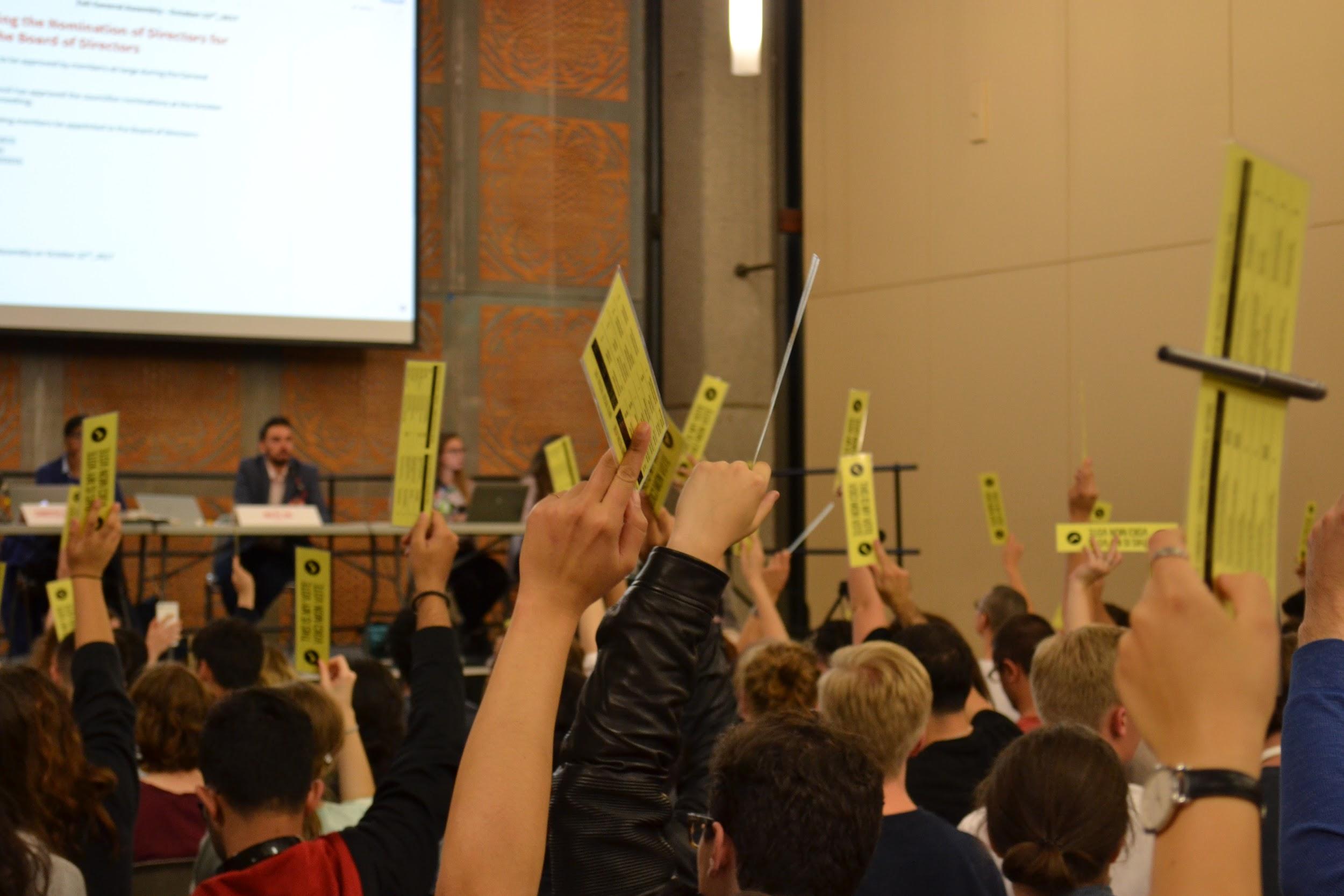
At a hearing held on Nov. 30, the Students’ Society of McGill University (SSMU) Judicial Board (J-Board) committed to delivering a verdict in the case of Glustein v. Koparkar by Dec. 31. The hearing concerned a dispute over the constitutionality of a motion passed at the at the Oct. 23 Fall 2017 General Assembly (GA) that divided the ratification of appointments to the Students' Society of McGill University (SSMU) Board of Directors (BoD) into a separate vote for each appointee. BoD appointments are typically ratified by GAs as a single ticket, with members-at-large voting either yes or no to the collective ratification of all appointees. However, because of the motion to divide the question, only seven of the 10 BoD appointments voted on by the GA were ratified, with the remaining three rejected. While the seven Directors whose appointments were ratified at the GA were supposed to begin their terms on Nov. 15, a J-Board interim decision to extend the terms of the previous 12 Directors indefinitely remains in effect.

The Dec. 31 deadline for the J-Board’s verdict means that deliberations will last more than double the 14-day timeline that the J-Board typically allots for cases. At the hearing, Justice Samuil Stoychev explained that the complex nature of the case has delayed their verdict. All decisions made by the J-Board must be ratified by the BoD—who have already had their last meeting of the semester—a conflict which Stoychev acknowledged at the close of the trial.

“We’re worried the decision will be overturned by the BoD either way if it is rushed,” Stoychev said. “It’s very likely the decision won’t be actionable until next semester anyway.”

After protesting the motion to divide the BoD appointments at the GA, BoD member-at-large Jonathan Glustein submitted a petition to the J-Board which listed SSMU Vice-President (VP) Internal Maya Koparkar—who originally moved the motion—and former SSMU Legislative Council speaker Jad El-Tal—who, as speaker, allowed the motion to be moved and voted on—as respondents. In his petition, Glustein alleged that the division of the ratification votes was unconstitutional, and requested the J-Board nullify their results.

At the hearing, Koparkar, who also sits on the BoD, explained that her motion was an attempt to increase the legitimacy of BoD appointments and alleviate SSMU members’ concerns about their undemocratic nature. Koparkar noted that, in response to these concerns, the SSMU Legislative Council also chose to vote on the Directors’ appointments individually.

“The motion was not targeted to remove specific Board members, and I didn’t think it would cease being more than a procedural matter, like the bloc vote,” Koparkar said. “I didn’t expect three Directors to be rejected. I had no way of knowing. My own spot was in jeopardy too.”

Noah Lew, a current member-at-large on the BoD and one of the appointees rejected by the GA, made a viral Facebook post claiming that the failure of his ratification was the result of anti-semitic sentiment at McGill.

“I was blocked from being able to participate in my student government because I am Jewish, because I have been affiliated with Jewish organizations, and because I believe in the right to Jewish self-determination,” Lew wrote.

Glustein and his counsel Nikolas De Stefano, a McGill Law student from the Legal Information Clinic, argued that section 6.5 of the SSMU Constitution requires appointments to the BoD to be ratified as a bloc. They also argued that sections 6.9 and 6.10, which list the conditions under which a Director can be removed and replaced, do not include their appointment failing to be ratified at a GA. Additionally, De Stefano argued the Constitution does not require the BoD to be an elected body, and that splitting the ratification violated the Constitution.

"By splitting the vote, you mutilate the entire constitutional structure,” De Stefano said. “You turn an appointed body that is supposed to be ratified by bloc into an elected one [….] The people who voted at the GA knew next to nothing, saw no nominating papers, and were not campaigned to. For better or worse, the Constitution does not designate [the BoD] as an elected position.”

News, SSMU

Board of Directors delivers updates on Special Committee on Anti-Semitism

The Students’ Society of McGill (SSMU) Special Committee on Anti-Semitism is in the planning stages of developing its recommendation for the SSMU Board of Directors (BoD) and Legislative Council. On March 14, the committee will advise the Board and Council on how to best confront anti-Semitism on campus and make Jewish-identifying students feel safer.

At the Nov. 26 BoD meeting, Director Jonathan Glustein, a member of the committee, presented the progress made. The committee has held two meetings thus far, on Nov. 14 and 20.

“We agreed on a timeline for the recommendation to be presented to both Council and the Board,” Glustein said. “[The committee] set about five different goals that they wanted to pursue. One of them is a definition on anti-Semitism, another one is […] a review of anti-Semitism historically at McGill.”

SSMU Legislative Council approved the committee at its Nov. 29 meeting, per a motion moved by Glustein. While intended to combat anti-Semitism on campus in general, the committee was created specifically in response to allegations of anti-Semitism at the Fall 2017 General Assembly (GA) on Oct. 23, as well as an open letter. The committee was struck shortly after McGill University announced its own investigation into the events of the GA on Oct. 25.

The committee includes representatives from various Jewish student cultural groups at McGill, including Hillel McGill, Chabad McGill, Independent Jewish Voices McGill, Am McGill, Israel on Campus, and the Jewish Studies Students Association, each of which have been given a single seat.

Although the committee has yet to establish how it will proceed with developing its recommendation, Noa Levin, the committee representative for Am McGill felt that establishing the body was an important first step.

“The General Assembly […] left a lot of people feeling very concerned and confused,” Levin said. “The fact that [the] committee exists [means] there’s already a lot of Jewish students in a room that are now being empowered to affect their experience on campus.”

However, not all groups represented on the committee agree with its methods. Tali Ioselevich, a member of Independent Jewish Voices McGill (IJV), an anti-Zionist Jewish student group, said that in IJV’s view, the events of the GA—namely, Director Noah Lew’s failure to be ratified—were not anti-Semitic.

“The claim that Noah Lew was not ratified because he’s a Jewish student […] is not substantiated,” Ioselevich said. “If you look at the people who voted against Noah Lew at the GA, a lot of Jews voted against him. And [that] was not only [because of] his stance on [Boycott, Divest, and Sanctions against Israel], but also the fact that he was not transparent in his dealings with SSMU, which are totally legitimate reasons to vote someone down.”

IJV was given a seat when the committee was struck at Council, but was only informed after IJV president Hani reached out to Glustein.

“There are actual cases of anti-Semitism on campus, and those should be addressed,” Ioselevich said. “But the committee itself was created directly in response to the [events of] the GA, which were not in and of itself a case of anti-Semitism.”

Ioselevich nonetheless affirmed the importance of IJV’s role on the committee.

“It’s very important for us to have a seat at the table,” Ioselevich said. “Otherwise, […] it seems to me that there would be a homogeneity in the perspectives, and if we’re not there, it might as well be an open and shut case of, yeah, [the events of the GA] were anti-Semitism.”

Despite differences within the committee, Levin expressed optimism about its effectiveness.

“Obviously, people have different political opinions, but we are all committed to making this campus a safe and encouraging place for Jewish people, so I’m confident that we’ll be able to work together,” Levin said.

Chabad McGill, Hillel McGill, and Israel on Campus did not provide comment by press time.

Out on the Town, Student Life

A guide to Montreal’s best holiday markets

December is nearly upon us, and that means two things: Finals are just around the corner, and, perhaps more enticing, holiday markets are opening up around Montreal. These pop-up shops are one-stop spots for picking up unique gifts, enjoying cold-weather snacks, and experiencing live entertainment. Not sure where to start? The McGill Tribune compiled a list of the city’s most festive–and free–markets to visit before winter break.

Le Grand Marché de Noël

(Daria Kiselava / The McGill Tribune)
 
Runs: Dec. 1 to 24
Location: 175 Sainte-Catherine street west

In the middle of Quartier des Spectacles, Le Grand Marché de Noël is one of the city’s largest holiday markets. This year, the venue will showcase products from a wide array of Quebec-based businesses, from vineyards to handmade clothing retailers.

Visitors can also participate in a number of activities scattered throughout the market, including a “tire d’érable” station and a tour of the festival grounds on the Via Rail Little Train. Additionally, guests can grab winter treats, like hot chocolate and maple taffy, from one of 13 food and drink vendors.

Noël dans le Parc

(Daria Kiselava / The McGill Tribune)

 
Runs: Dec. 1 to 25
Location: Parc des Compagnons-de-Saint-Laurent, Parc Lahaie, and Place Émilie-Gamelin

This music festival-turned-holiday show has been a Montreal favourite since 1994, when it was founded by three Montreal-based musicians as a platform to showcase local talent. Over the years, Noël dans le Parc expanded its setup to include a campfire, a marketplace, and a petting zoo. Today, the event is staged at three spots across the city: Parc des Compagnons-de-Saintt-Laurent, Parc Lahaie, and Place Émilie-Gamelin.

It’s the perfect place to grab a bite to eat on a winter’s night. Be sure to to stop by the food tents, where you can find hot drinks, sausages, and marshmallows to toast around the campfire, all while enjoying free live performances.

The Nutcracker Market

(Daria Kiselava / The McGill Tribune)


Runs: Nov. 30 to Dec. 10
Location: Palais des congrès, 1001 Place Jean-Paul-Riopelle

Located in the heart of downtown, The Nutcracker Market offers visitors the opportunity to give back while doing their holiday shopping. Organized by Les Grands Ballet, 10 per cent of all proceeds are donated to the Nutcracker Fund, which pays the transportation costs for sick and low-income children to see its production of The Nutcracker and attend educational workshops.

What makes this market unique is its variety and charity-oriented nature. This year, 105 vendors will be participating, selling everything from chocolate to cozy sweaters. Standouts include quirky candy from Candy Labs, handmade alpaca wool goods from Alpagas des Appalaches, and winter accessories made out of recycled materials from Gibou.

Etsy Montréal: Holiday Market

(Daria Kiselava / The McGill Tribune)


Runs: Dec. 16 to 17
Location: Théâtre Denise-Pelletier, 4353, rue Sainte-Catherine Est

Shopping at Etsy Montreal: Holiday Market is an ideal opportunity to support local artists and entrepreneurs. The brain-child of Etsy and the local business co-op Hochelag, this market is the place to pick up unique handmade gifts. This year, the craft show will feature the work of 110 artisans from in and around the Montreal area, making it the ideal spot to buy a little piece of Montreal to send to both friends and family. At the market, visitors can browse jewelry, accessories, ceramics, and clothing. Be sure to also check out the food display, where cake, chocolate, and popcorn will be for sale.

Instagram, McGill, News

Quebec Studies minor program no longer under review

At the Nov. 8 Arts Undergraduate Society (AUS) Legislative Council meeting, AUS Vice-President (VP) Internal Rebecca Scarra put forth a motion to establish a Quebec Studies Students’ Association (QSSA) in order to facilitate negotiations between the AUS and the Quebec Studies program administrators at McGill. This, among other measures, part of an effect made to increase student retention in the program, which was at risk of being cut earlier this year due to low enrollment rates.

The Quebec Studies minor program provides an interdisciplinary approach to the study of Quebec history, culture, and society. The minor program continues to be one of the smallest at McGill, with fewer than 20 students currently enrolled. The low enrollment rates resulted in the removal of the major program in 2016, according to Professor Eric Bélanger, the director of the Quebec Studies Program.

“The numbers were simply not high enough to justify the major program,” Bélanger said. “So, we decided to focus on developing the minor program instead.”

Due to provincial budget cuts over the past few years, the Faculty of Arts was forced to terminate 50 courses in the 2014-2015 academic year alone. According to AUS VP Academic Madeline Wilson, enrollment is the primary measure that determines a program’s viability. Programs with low enrollment are placed under review by the faculty in order to determine concrete strategies to increase enrollment. If there is no increase in enrollment over a certain period of time, these programs are cut from the Faculty of Arts. The North American Studies program is currently being phased out for this reason.

“In the case of the Quebec Studies Program, the program was placed under review a few years ago,” Wilson said. “As enrollment did not increase, the [Faculty of Arts] decided to cut the major program. However, the minor has recently been removed from review because [its] enrollment has increased.”

Despite the increase, the Quebec Studies minor is struggling to maintain its current enrollment. Olivia Kurajian, President of the QSSA, hopes that establishing a student association will make the program more visible to Arts students.

“It’s our goal to attract enough people to the department to reinstate the major program,” Kurajian said.  

Under Quebec law, all departments are guaranteed a student association to represent their interests in student government. Following the approval of the motion to establish the QSSA, AUS Council formed an executive committee comprised of a President, a VP External, a VP Events, and a VP Finance. These positions are currently held by Olivia Kurajian, Mary-Jane Roy, Sarah Dery, and Veronique Leblanc, respectively. Since the QSSA’s founding, the executives have been planning events for the Winter 2018 semester, including a trip to Quebec City.

In addition to the QSSA events, the Quebec Studies Program has implemented hands-on learning opportunities in an effort to increase student retention. In collaboration with the Social Equity and Diversity Education Office (SEDE), many Quebec Studies courses offer a community engagement option, which connects students to local organizations that offer internships and volunteer opportunities, thereby integrating students into Quebec society.

“[The community engagement option] also caters to different types of learners,” Kurajian said. “You have the chance to understand the nuances of what you are learning about through hands-on experiences. There’s also something to be said about being a smaller program. [It] allows you to explore the material in a way that simply isn’t possible in a larger program.”


Science & Technology

Say ‘no’ to the nocebo

It’s that time of year again, when mental health initiatives are becoming more active. With finals looming ahead, it may seem like the pervading mood on campus is generally negative. However, it’s important that we question whether these initiatives themselves are responsible for subconsciously swaying our mood this way.

The number of McGill students seeking mental health or counselling services on campus has increased by 57 per cent over the last three years. While the implementation of a Fall Reading Week could work to combat this spike in demand, a nation-wide mental health epidemic requires more systemic solutions. Investigators have a plethora of suspects: Our sedentary, sunlight-deficient lifestyle, the prospect of graduating jobless, or the feelings of isolation brought about by superficial connections made over social networks. A psychological phenomenon called the nocebo effect could partially cause this post-modern mental health decline in students.

Known as the evil cousin to the placebo effect, the nocebo effect occurs when negative expectations result in negative consequences, which in some cases are tangible physiological changes. For example, when a physician warns a patient that a procedure may hurt, studies have found that the patient ends up reporting more pain than if the suggestion hadn’t been made.

In 1998, the nocebo effect led to an unnecessary evacuation at a high school in Tennessee. A teacher reported feelings of dizziness, nausea, and headaches after noticing the smell of gasoline in her classroom. The school was evacuated and 99 students and teachers went to the emergency room reporting similar symptoms. An investigation later found no evidence of toxins in the environment, and no gasoline leak of any kind, concluding that it was a mass psychogenic illness.  

Similarly, we can deliberate whether the mere suggestion of the symptoms of depression is partially responsible for this growing pandemic. Jay Olson, a PhD student in Psychiatry at McGill, agrees with this hypothesis.

University students are often told that their program is difficult and that many of them will end up depressed,” Olson said. “Promoting awareness of mental health issues is good for obvious reasons, it reduces stigma and increases reporting of symptoms. But it could also help reinforce symptoms similar to the nocebo effect.”

While “Trying to Stay Afloat?” posters on campus play a significant role in destigmatizing mental health issues, it’s possible that they play a part in stimulating the symptoms through the nocebo effect.

Research on this topic is sparse; the broad effects are difficult to study due to the numerous variables that must be taken into consideration. Olson and his colleague, Samuel Veissière, an assistant professor in Psychiatry and Anthropology at McGill, are discussing ways to study the relationship between mental health initiatives and the nocebo effect.

With finals in sight, it’s important to be mindful of the nocebo effect’s impact on student well-being. Spend a minute sharing something interesting you’ve studied with a friend. Instead of taking lots of short interspersed study breaks scrolling through your newsfeed, save up and schedule a longer break to relax. Phone a friend, catch up on Riverdale, or buy yourself a cheesecake. Take up the activities that provide the positive reinforcement necessary to alleviate possible symptoms of the nocebo effect, and be successful this exam season.

Student Life

The link between gut health and mental health

University life can pose a challenge to maintaining healthy eating habits. From sugar-filled bars grabbed swiftly on the way out the door in the morning, to late-night cups of Tim Horton’s, the rigors of academia do little for the average student’s physical health. But stress-eating processed candy and grabbing rushed slices of pizza can be detrimental for mental health too, as research shows an important link between gut health and mental health.

While we may think of our bodies as belonging to ourselves, we are actually home to millions of microorganisms. These microbes, which include a variety of bacteria, viruses, and fungi, have tremendous potential to impact our physiology as they colonize many parts of the body, including the gut.

In turn, a 2017 University College Cork study suggests that gut bacteria may influence their host’s anxiety and depression. Increasing the number of ‘good’ bacteria in the gut can reduce stress, improve memory, and lower social anxiety.

Mariia Taguer, a third-year PhD candidate in Microbiology and Immunology, studies the community of diverse microorganisms living in the gut, which is collectively known as the gut microbiome. In addition to improving mental health, Taguer considers having a strong microbiome to be of great importance, as it impacts the immune system.

“[The gut microbiome] helps to clean our immune system,” Taguer said. “A lot of diseases we’re finding now, like inflammatory diseases, [relate] to how our gut microbiota [work with] the immune system. This is really based on […] disturbances to our gut microbiota […] in our early years, which can lead to an altered immune system [.…] It helps to digest a lot of our food [by breaking down] certain foods down for us. Fibre, which we can’t digest ourselves, is [broken down] by [gut] bacteria.”

For students looking to boost their mood, diet is an easy place to start. Instead of reaching for coffee when feeling under-the-weather, students should reach for a mango. Packed with healthy fibres that gut bacteria thrive on, the fruit is bound to improve stomach health—which can improve mental health, too.


Healthy eating habits are not a substitute for therapy or medication. If you are struggling with mental health, McGill offers both counselling and psychiatric care.


Mango and lime sorbet recipe

Makes 4 servings.

Ingredients

  • 500g frozen mango chunks

  • 1 lime, zest and juice

  • 100ml coconut water

  • 1 tbsp caster sugar (optional)

  • 200g fresh raspberries

  • 100g fresh coconut shavings

  • Fresh mint to garnish

Instructions

  1. Place half of the mango into a food processor. Add both the juice and zest of the lime to the mix. Process the ingredients until they are well mixed and the sorbet is formed.

  2. Taste your sorbet for sweetness. Add sugar to taste.

  3. In order to achieve the consistency you like, gradually add small amounts of mango and coconut water until you’re satisfied.

  4. For a fun way to plate your sorbet, place a few berries in the bottom of a clear glass. Add a couple spoonfuls of your sorbet on top of the berries. Decorate with more berries, shaved coconut, and a pinch of fresh mint.

Recipe adapted from Love Your Gut.

Read the latest issue

Read the latest issue