Latest News

Out on the Town, Student Life

Ponton Costumes, est. 1865 takes a unique approach to vintage Halloween outfits

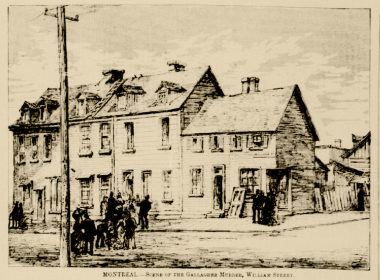
When it comes to dressing up for Halloween, many students experience annual anxieties over finding a last minute costume that isn’t the run-of-the-mill cat ears or devil horns. Ponton Costumes stands in stark contrast to commercial costume stores, with its large array of high quality vintage costumes. Located in the Old Port, the store’s history dates back to 1865, when Joseph Ponton, theatre enthusiast and founder of the shop, worked as a barber on St-Laurent boulevard.

“Next to the barber shop, there was a costume store,” Carmelle Gagné, current owner of the store, said. “But he was not the owner for very long. Joseph Ponton died young, so the store was sold to Monsieur Phillipe who worked there for 20 years [….] Then it was sold to another [man] who worked there for 25 years, and then another one, until I bought it.”

Following Ponton’s death, the store continued to thrive as it passed on from successor to successor. It is now known as the oldest and largest costume shop in Montreal.

“Before [becoming the owner] I worked here for 30 years,” Gagné said. “I bought the store because I loved it, and it’s been an adventure.”

Gagné started working at Ponton Costumes in 1987, and continued to work as a saleswoman until she was presented with the opportunity to buy the shop. She currently owns the store with Dominique Broussard. Three years ago, the pair relocated the store to St. Catherine street East in the Old Port, away from their previous location near the Notre Dame church. Although the new location is smaller than the old space, Gagné believes it is easier for customers to walk through and for employees to maintain.

“The old one was much bigger,” Gagné said. “It was too big. Four floors. We had two floors for costumes, one floor for accessories, and one floor for [dressmaking]. It was hard to clean everything everyday, and there was so much [stuff] it was hard to [navigate].”

Despite its smaller location, the store didn’t lose any of its charm in the move. With giant purple velvet curtains framing its entrance, and a quaint, antique interior, the vibe at Ponton’s instantly puts shoppers in the Halloween spirit. The store offers a wide selection of costume paraphernalia from all decades, including antique masks, wigs, and accessories. Broussard also has her own station in the shop where she makes and mends the costumes on site. The wide variety of garments are organized neatly by era as to make one feel like they are travelling backward through time while walking through the store, from the 1990s to Ancient Rome.

Not only are the costumes handmade and the accessories antique, but the passion the owners have for the store comes through in every aspect of the shop. No other Halloween outlet in Montreal can trace its history back to the late 19th century, and rarely do they offer over 15,000 costumes spanning more than 20 themes. Since 1865, Ponton Costumes has remained one of Montreal’s greatest shops.

McGill, News, SSMU

Closure plans leave SSMU building tenants uncertain

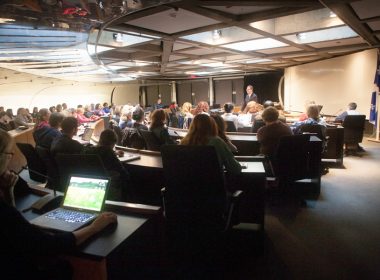
In the aftermath of the announcement of the SSMU building scheduled closure on March 17, 2018, over 50 clubs and services that use the building are struggling with plans to find new offices. Clubs whose relocation plans are finalized include the Peer Support Centre, the Legal Information Clinic, and MSERT. The complete shutdown, planned to continue through the Winter 2019 semester, is necessary to construct a rooftop mechanical room, among other renovations. While the Students’ Society of McGill University (SSMU) must relocate all of the building’s tenants, many group leaders say this assistance has come too late to be helpful.

Lower-profile groups, such as the Alegria Contemporary Ballet Company, are especially concerned about slipping through the cracks in the closure. The company’s president, Zoë Goldstein, understands that SSMU is in a difficult position, yet was dismayed by the fact that her group only found out about the closure through word of mouth.

Although Alegria does not perform in the SSMU building, it uses the building to rehearse for free. According to Goldstein, the group has already spent roughly $3,000 to rent a theatre next spring, and may now lack the necessary resources to obtain practice space.

“I expect that [SSMU] should have reached out to us right away,” Goldstein said. “The closure will cost us a lot a lot of money, and we’re on a tight budget. It’s difficult to find studio space, especially on weeknights [….] It’s a tremendous source of anxiety for me.”

A more visible tenant experiencing relocation pains is the Midnight Kitchen (MK) collective, a free vegan lunch service that operates from the third floor of the SSMU building. Although MK was notified of the closure in advance, Wade Walker, a paid employee of MK, would have preferred additional outreach from SSMU General Manager Ryan Hughes.

“[SSMU] did initially, in late August, say they had found us a space in a building on Peel [Street] that a lot of other services are going into,” Walker said. “But we brought up concerns that it wasn’t a commercial kitchen. Can we move our [food service] permit there? What happens with the equipment there because it’s not industrial?”

According to Walker, it was for these reasons that Hughes later ruled out moving MK to the Peel Street location, effectively bringing the collective back to square one.

“We don’t have any strong leads right now,” Walker said. “I guess we’re getting a little bit worried. It would have been nice if they had not offered us a space that was not going to work […] because it cut out a month’s worth of time that we thought we had it, and weren’t actively looking for other spaces.”

Although Walker expects that MK’s operations will return to normal after the SSMU building reopens, if the collective is unable to find an interim kitchen space, they may have to provide fewer meals or only offer cold foods. Walker also noted that some of the collective’s paid staff might have to search for new employment.

Other students facing temporary job loss are the employees of Gerts Bar, which will temporarily close.

An employee of the bar, who wished to remain anonymous to avoid retribution from management, alleged that Gerts knew of the impending closure in March, when it re-hired staff for this year. The student explained that they were not told that their employment would be cut short, and only learned of the closure along with the rest of the student body in September.

“My initial reaction [to the closure] was shock and disbelief,” the employee said. “We had signed contracts that were supposed to go until the end of April [2018] We have received no notice as to what is going to happen to those contracts after the building closes.”

Features

“Please read the policy”

This past week, The McGill Tribune spoke to Angela Campbell, associate provost (Policies, Procedures  and Equity), and a pioneer of McGill’s new Policy against Sexual Violence. In this correspondence, the Tribune asked specifically about Our Turn—a third party inter-university action plan that grades Canadian universities on these types of policies­—pointing out that McGill scored zero for failing to process “faculty and staff […] under the same SVP (Sexual Violence Policy) as students.” Her response was rather curt.

                “This is false,” Campbell wrote. “The Policy applies to all members of the McGill community. Please read the Policy.”

                How is it possible that Campbell had such a different interpretation from Our Turn’s report on McGill’s Policy against Sexual Violence? The answer is that Campbell’s claim isn’t entirely unfounded, but it’s not entirely right either.

                Technically, Campbell is correct. As outlined in Section 1, “this policy applies to all Members of the University Community,” and faculty and staff members fall under the ‘University Community.’ However, when it comes to methods of recourse, students and faculty are held to different standards. Marc-Antoine Séguin, the director of Student Advocacy and University Affairs for the Legal Information Clinic at McGill (LICM), a not-for-profit organization that helps students navigate McGill policy, explained what exactly this difference entails.  

Commentary, Opinion

#MeToo comes at a cost

On Oct. 15, I scrolled past the first of the now viral “Me too” posts. Since then, I have tried to articulate my mixed feelings toward the “Me too” campaign in dozens of conversations with friends and fellow survivors. As much as I admire the thousands of women who have spoken up through this campaign, I cannot help but feel uneasy about the emotional and affective labour that the “Me too” movement demands of survivors.

Affective labour, in this instance, comes in the form of calling upon survivors to post in order to prove their personal and collective experiences of sexual assault and harassment. The viral visibility of the campaign itself forces survivors to relive intensely difficult emotions and experiences with every post they see. To call this upsetting is to put the feeling—and its magnitude—lightly.

As I debated whether I should post a "Me too" myself, I also considered the positive and empowering aspects of this hashtag. Indeed, #MeToo speaks to the shared experience among over half the population, and moreover, a type of experience that is otherwise taboo in regular conversation or public forums. No one wants to bring up difficult personal stories of sexual assault or harassment in spaces or moments not meant for them—such as a Facebook newsfeed—and these designated spaces are almost always few and inaccessible. As such, to be able to say "Me too" via social media can be a rare moment of catharsis. "Me too" gives survivors a platform to be brave and outspoken. In return, they are validated and heard.


The drive of this movement rests wholly on the backs of the survivors.

And yet, in our celebration of the bravery and resilience of these individuals, we must not forget that the effectiveness of “Me too” is wholly predicated on every participant’s acute and mostly involuntary affective labour. Actress Alyssa Milano, one of the purported initiators of the viral movement, tweeted in her original post: “If all the women who have been sexually harassed or assaulted wrote ‘Me too.’ as a status, we might give people a sense of the magnitude of the problem.” Those who post are thus called upon and even pressured to come forward with their own testimonies. In many ways, this campaign therefore replicates pre-existing patterns in which we demand survivors to convince us of their truth from a position of fundamental disbelief. Meanwhile, those who see the posts are forced to not only recall their experiences of assault and harassment, but also relive the trauma of systemic disbelief, inaction, and general helplessness that so frequently follows these experiences.

And so, over the past few days, as the momentum of “Me too” wore thin through attrition, and criticisms emerged alongside sentiments of solidarity, it was the survivors who came under fire.

In other words, while the intent of "Me too" might be to expose the prevalence of sexual assault and harassment against predominantly women to predominantly men, the drive of this movement rests wholly on the backs of the survivors. While the effectiveness of such a strategy remains up for debate, we absolutely cannot forget the affective labour we are demanding—and have always demanded—of survivors.

Likewise, we cannot forget that overwhelming statistics and testimonies regarding sexual assault already exist, and have proven ineffectual in prompting significant change. Performative allyship online will be the first result of this movement, but it is not enough. What remains to be seen is whether meaningful action will follow, or if we are merely retracing well-worn paths of demanding affective labour of survivors from a standpoint of systemic disbelief.

If you feel frustrated and fed up,

Me too.


Muhan Zhang is a fourth-year joint honours Art History and East Asian Studies student. Her thesis pertains to contemporary Asian diasporic and transnational art, and she likes making lists and rearranging her furniture.


Science & Technology

Why reducing emissions isn’t enough to change our climate trajectory

Audience members at the Living Soils Symposium’s climate talk on Oct. 15 fell silent when the conference’s final speaker, President and Co-Founder of The Carbon Underground Larry Kopald, spoke out on the bleak future of climate change mitigation.

“I’d like to start by saying we’re not going to save the world,” Kopald said.

The symposium was hosted from Oct. 13 to 15 by Concordia University, and featured a team of interdisciplinary speakers discussing how soils play a role in many of our most pressing social and environmental issues. Food producers, government delegates, journalists, and NGOs joined the league of speakers to pitch in their two cents.

Among them was Kopald, a branding professional of 25 years, whose advertising portfolio includes some of the biggest names in consumerism; from American Express to Huggies diapers, all the way down to chicken McNuggets. But behind his savvy business sense is his passion for environmentalism. Kopald expresses the need for a world-wide wake up call on climate change.

“We don’t have 50 years,” Kopald said. “And so far nothing we’ve done has gotten the world to come together and say ‘this is a crisis.’”

The last 250 years have witnessed the industrialization of both energy and food. In terms of energy, incredible progress has been made in re-industrializing cleaner, more efficient forms. Thirty-five per cent of Germany’s power production for the first half of 2017 was renewable energy, and in August, Orlando became the 40th American city to pledge to reach 100 per cent renewable energy by 2030.

“[Clean energy is] less expensive, it’s reducing emissions, it’s producing millions and millions of new jobs around the world and it’s never going to save the planet,” Kopald said.

This statement seems terribly inaccurate considering the scale of ‘green’ energy operations over the last 40 or so years. But Kopald argues that we can’t save the world, because creating renewable sources of energy and reducing emissions is only one half of the equation to which a bigger picture exists.

Carbon stays permanently in the atmosphere until it’s removed, and though the time lag between when carbon enters the atmosphere and when its effects are visible is debated, the upper limit is centuries long. If every country were to reduce their carbon emissions to 0, global warming would still continue. Kopald thus brings the other half of this equation to light—and why soil is one of the variables.

“What if we look at food the same way we look at energy,” Kopald said. “What we’re looking at is renewable foods, and ultimately, renewable soils.”

Renewable foods is the second half of the equation. Soil’s capacity for carbon sequestration–the removal of atmospheric carbon dioxide from the atmosphere–is astounding, but the intensive agricultural methods that have been used since the industrial revolution have not only degraded the soil to the point where it no longer is arable, but have inhibited its ability to sequester atmospheric carbon.

As a result, a new demand for regenerative agriculture grows: A system designed to maintain healthy soils that can absorb atmospheric carbon. Science is capable of restoring soils; according to Kopald, it’s now a matter of creating incentive for food producers to practice regenerative agriculture and for corporations to invest in it.

“Ninety-three per cent of the Fortune 100 companies have made investments in renewable power,” Kopald said. “What if we’re offering food companies renewable food? What we’re doing is offering healthier supply chains.”

He argued that, fundamentally, the situation demands a better business model. Science has the means to regenerate soils but it’s a matter of big corporations and governments initiating the shift. The solution to the world’s carbon problems isn’t just a matter of reducing our emissions–it’s understanding what we can do to reverse the damage that’s already done.

“And when you put renewable food together with renewable energy, you get a very promising future,” Kopald said.

Commentary, Opinion

McGill students need a Fall reading week to maintain mental health

Taking a break is beneficial and often necessary for maintaining mental health. A rising number of Canadian universities are acknowledging this in their academic calendars by implementing a Fall reading week. With strenuous midterms, shorter days, and overburdened on-campus support services, McGill students need a Fall break to improve their well-being and academic success.

In November 2015, the Students’ Society of McGill University (SSMU) proposed a Fall reading week, but failed to implement it because of administrative concerns, including, according to former Vice-President (VP) University Affairs Chloe Rourke, “aversion to change” and apprehension about student benefits from the break. Further, outdated tradition has placed constraints on how the McGill calendar is set. Currently, the calendar follows Senate guidelines that are still based off of year-long courses, meaning they’re not structured with Fall midterms in mind. In April 2015, an Enrolment Services survey of 5,000 students found that 71.5 per cent of respondents were in favour of having a Fall reading break. Later that year, SSMU passed a motion in support of the break.

Although efforts have been made to find a way to accommodate a Fall break through calendar restructuring, administrative barriers are not a sufficient excuse. The momentum behind creating another break must continue to grow, in order to give students the aid they require as immediately as possible—ideally by next year. For every bureaucratic speed bump blocking the path to implementing a Fall reading week, there are countless students whose participation in their education is diminished by burnout.

Students would benefit massively from an additional break. As one of Canada’s top schools, McGill is known for its rigorous academic programmes. This hard-working atmosphere is intense year-round, but reaches alarming peaks during midterm season—when stress and exhaustion can ignite mental health challenges for students. McGill Health Services has even reported an increased demand for mental health support in October and November. Unfortunately, the spiking demand means longer waitlists and delayed assistance for those who need it most. Despite these critical issues and evident student support for an additional break, the university has yet to update the calendar.

For every bureaucratic speed bump blocking the path to implementing a Fall reading week, there are countless students whose participation in their education is diminished by burnout.

With rising demand for mental health services, other Canadian universities have moved to adopt Fall breaks for their weary students. Today, 61 per cent of universities nation-wide incorporate rest days into Fall semester. At the University of Alberta, for example, officials implemented a post-midterm break to alleviate pressure on students whose mental wellness had been strained during the arduous assessments. Mount Royal University in Calgary—another school that has recently designated a Fall break—believes the time off offers students experiencing challenges in their studies the opportunity to seek academic aid at a time that’s early enough in the semester to course correct—a reassurance that lessens students’ mental burdens.

At Western University, implementation of a first-semester break arose from more than just student petitioning and a concern for mental health on campus—it was a response to crises. After two high-profile suicides, the Senate finally heard what students had been saying for years—that they needed a break—and added a week off in October.

Tragedy cannot be the only way to incite a response. McGill’s mission to advance learning and offer the best possible education is not obtainable for students when they are unable to manage their studies alongside their mental health. Administrators must recognize concerns about overwhelming student stress and face facts about deteriorating wellness during midterms. This means working through bureaucratic barriers to implement a restructured academic calendar with a Fall reading week sooner, rather than later.

McGill needs to support students during stressful periods; not just through on-campus support, but through thoughtful restructuring of their academic experience to allow students time to catch up on work and rest. McGill cannot wait for tragedy to occur—it should take action now.


Johanna is a U1 student majoring in Philosophy with a double minor in Political Science and Gender Studies.


Arts & Entertainment, Theatre

‘Nightfall’ explores the intersection of art and insanity

Players’ Theatre is an independent group at McGill, run entirely by undergraduate students. Nightfall, their first production of the 2017-2018 season is a theatrical adaptation of four tales by Edgar Allan Poe: The Raven, The Fall of the House of Usher, The Pit and the Pendulum, and The Tell-Tale Heart. The play takes us into the mind of Poe and, through a continuous, vignette-style adaptation, explores the meaning and meeting of madness and genius. An engaging and ambitious revisioning of Poe’s works, Nightfall provides strong performances, and—although suffering from somewhat unpolished audio production—serves as a haunting tour of Poe’s fraught inner workings. 

Director Kenzia Dalie’s adaptation is one continuous act with no intermission and only small set changes separating the four storylines. The first story, The Raven, depicts Edgar Allen Poe as he sits in his study, trying to forget his lost love, Lenore. The appearance of a raven at his window drives Poe mad as he repeatedly asks the raven painful and personal questions—questions to which the raven only responds, “Nevermore.” In The Fall of the House of Usher, an unnamed man returns to the home of a boyhood friend, Roderick Usher, only to find that the house and its inhabitants are hiding sinister secrets. The Pit and the Pendulum is a first-person narration of a man who finds himself trapped in a prison and has to escape a series of torturous devices. Finally,  The Tell-Tale Heart provides a story of paranoia and mental deterioration as Poe himself tells the story of how he murdered an old man.

Luke Horton delivers a haunting performance as Poe in the opening and closing stories. Matthew Milton, Oliver Epstein, Esme Thompson, Emma Barbisan, and Stanley Myers O’Mulloy round out the dynamic cast. The actors play multiple roles, giving the production an intimate feel and allowing each actor to develop a more prominent presence on stage. This directorial decision to keep the cast small pays off, as Nightfall’s strength lies primarily in its actors’ performances. 

The opening tale, The Raven, serves as an introductory piece into the mind of Poe. The dialogue is split between cast members, creating a seamless shared narrative. Horton’s Poe captivatingly delivers some of the most poignant lines in the poem. With sunken eyes and lifeless stares, he dominates the stage and convincingly captures the poet’s mania. Perfectly rehearsed dialogue from Epstein, Thompson, and Milton, who all play unnamed characters, create a fluid narrative that is wonderfully eerie to watch. 

Interestingly, the raven of the poem is played by an actor (Emma Barbisan). Although the avine personification is initially intriguing, its presence at times distracts from the rest of the characters on stage. The raven only repeats a single word of dialogue a handful of times, rendering its large physical presence on stage somewhat at odds with its limited vocabulary.

The subsequent three tales provide a similar combination of horror and suspense. However, tense moments were periodically interrupted by technical shortcomings. Set changes, although necessary, felt unpolished and lighting and sound cues were not always precise. Sound effects were also an issue, most notably in the third piece, The Pit and the Pendulum. Nightfall chooses to use voice over in its adaptation of the story, rather than a live performance of the dialogue—a technical choice which doesn’t quite live up to its potential. Myers O’Mulloy gives a strong speechless performance as the prisoner, yet the unpolished and uneven recording feels like a jarring modern insertion in an otherwise antique world.

Sarah Alevy’s set is well utilized and appropriately versatile, with a singular old-fashioned living space serving as the setting for three out of the four pieces (The Pit and Pendulum is set downstage and uses only a single chair). Costume designer Allie McGowan also stands out with her use of old-fashioned formal wear, invoking a distinctly Victorian aura. 

Nightfall, despite a few technical  shortcomings, is a unique adaptation of literary classics. With compelling performances and haunting characters, it presents an appropriately disturbing examination of a poet’s descent into madness—a fitting performance for the Halloween season.


Nightfall runs from Oct. 18-28 at Players’ Theatre, 3rd floor SSMU. Tickets are $6 for students and $10 for general admission. Tickets can be reserved online or purchased at the door.

Halloween
Off the Board, Opinion

Adults need Halloween, too

Being a grown-up is really hard. Any young adult can attest that our first encounters with personal finances, heartbreak, and aging parents can be downright scary. The real world is indeed a frightful place, rife with political instability, wildfires, and unexpected ways to die. The idea of having a specific holiday with the purpose of frightening the masses seems redundant at this point in time—our lives are already scary enough. Thankfully, Halloween is about much more than fear itself.

As a child, the purpose of Halloween seemed abundantly clear: Dress up, get spooked, get candy, and eat candy. Kids think about their costumes with great anticipation, and genuinely look forward to immersing themselves in the Halloween spirit. It is, after all, a day that celebrates the key facets of childhood: Play, fantasy, and creativity.

Alas, as our bodies age and our minds become jaded by the general mess that is human life, our imaginations slowly waste away. We play less, work more, and become generally less enthused about Halloween. Finding a costume becomes a source of stress, tacked on to the long list of other things that need to get done. Trick-or-treating is no longer an option, replaced by run-of-the-mill house parties or nights out in half-assed unicorn costumes bought at Walmart the day of.

Yet, things don’t need to seem so dire. The imagination is a muscle: It may be weakened by years of inaction, but it is still ready to be used. Halloween is the perfect occasion to reinvigorate our childhood spirits, and it deserves to be recognized as such. Halfway through the most stressful period of the semester, it’s incredibly vital to take this one day to prioritize living out our wildest fantasies.

Halloween may seem like a strange thing to spend valuable energy on in the middle of a bustling life, but it’s important to remember that play is actually good for you. Celebrated psychologist Abraham Maslow included play among 14 attributes essential for living a fulfilled life. Playfulness, according to Maslow, can be defined by amusement, humour, gaiety, and effortlessness. There are few better ways to let go of everyday stresses and inhibitions than to dress up as a completely different person, animal, or object.

Halloween is the perfect occasion to reinvigorate our childhood spirits, and it deserves to be recognized as such.

Better yet, putting actual effort into making a costume that you care about is a sure-fire way to flex those imaginative muscles, and get the most out of Halloween. There are two ways to potentially go about the task of building a costume: Either think of something you would specifically want to be and seek out the necessary pieces, or go to a thrift shop and improvise an outfit. Last year, my friend and I went full-on goth for no more than 10 dollars, using thrifted items and things we already owned. It was lit.

In addition, the fun of Halloween goes beyond imaginative play and creative thinking. Experiencing fear in a non-life threatening context can be delightful in and of itself. The adrenaline-fuelled excitement brought on by horror films, escape rooms, and insane corn mazes can trigger positive emotions like relief and triumph once the initial spook wears off.

At its core, however, the point of Halloween is to literally and figuratively embody someone else, which allows you to escape the stresses of regular life. Or, if you actually do need to work or do something important on the day of, taking care of business while dressed as ‘80s pop icon Cher is a surefire way to make your day infinitely more special.

It’s abundantly clear that Halloween is not a day to waste. It serves an important purpose: To remind us that despite everything we have going on, time spent having fun is never time wasted. In fact, I’d argue that adults need Halloween more than children do—kids don’t need to be reminded to have fun. As an adult, it’s easy to get caught up in the mundanity of busy life, and to forget the simple joys of pumpkin carving and fake blood.


Selin Altuntur is a U4 Arts student and Managing Editor at the Tribune. She will be embodying Canadian country music legend Shania Twain this Halloween at a MATH 141 midterm near you.


Read the latest issue

Read the latest issue