

Latest News

Joke

McGill releases ‘Fill-in-the-blank’ statement to be used for next McGill scandal

On March 27, the McGill administration released a partly-blank statement for students to use when condemning of any future scandals. An explanation accompanying the statement clarifies that after the series of recent scandals involving McGill and the Students’ Society of McGill University (SSMU), the administration has decided to no longer release individual statements.

Now, if students would like the university to issue a statement condemning any future scandals, they can simply print out the statement template, and fill in the blanks with the details of the new controversy. 

“Dear Member of the McGill community,” the statement begins, “We were shocked and disappointed to hear of the recent [insert behaviour that is considered reprehensible] by [name of individual/organization here].”

The statement goes on to explain that this hypothetical offence constitutes an infringement of whichever values the university currently stands for.

“We would like to remind the community that McGill stands in steadfast support of [value or principle that this action violated], and/or strongly condemns [prejudice or misconception that this action furthered].”

When asked for comment, McGill Principal Stephanie Fournier explained that the new statement policy would save the administration the valuable time it currently spends issuing condemnations of the various missteps of its students and faculty.

“With students filling out our statements of condemnation for us, administrators will now be able to focus on more important issues facing the University.” Fournier said. “I’m personally looking forward to our project to increase the incline of University Street, and the upcoming unveiling of our memorial for Flood Girl.”

If the new statement does not solve McGill’s public relations issues, Fournier noted that she would consider releasing a statement disassociating the University from itself. 

This article is a work of satire and is part of the Joke Issue. 

Martlets, Men's Varsity, Sports

Know Your Athlete: Marty the Martlet

McGill is known for fostering success stories in academia and athletics alike and, proof that birds of a feather flock together, Marty the Martlet is no exception. Marty is just like most McGill students: He juggles the rigour of school with having fun and a full-time job—one that isdesigned to entertain us loyal McGill sports fans. But Marty wasn’t always a silly goose; he used to chicken out every time he was in the spotlight.

“Believe it or not, I was really shy when I was a wee hatchling,” Marty said. “I couldn’t fly as well as the other birds, I wasn’t as smart, and I’d be teased about that.”

Salvation for Marty came through dance. He began shaking his feathers and listening to musicals at which point he heard the song “Dancing Through Life.”

“That beat just got me grooving and made me smile, it’s a pretty ‘wicked’ song,” Marty said.

Since 2005, Marty has been on a mission to spread the song’s message and make people stop worrying about school. Though his dance moves might be strange, crowds flock to see him.

“I love seeing people excited when I show up,” Marty said. “I get bombarded to take pictures and dance with them. I love seeing people laugh at my silliness, [….] even [McGill Principal] Suzanne [Fortier] says I have great dance moves!”

While the prancing around is certainly fun, Marty trains hard to be there. Despite his cuddly exterior, he works his tail off to stay in shape.

“I have to hit the gym often to really keep my muscles tight and my cardio up, or else I can’t dance and cheer,” Marty said. “No one wants a soft Marty.”

When he’s not putting in reps  at the gym or dancing around campus, Marty is grinding out his school work at McLennan.

“I’m a busy bird with big dreams,” Marty said. “I’m keeping my GPA in the 3.6 to 4.0 range.”

Marty somehow also finds the time for other endeavours and the occasional chick flick. 

“I’m actually collecting research and drafting my first book!” Marty said. “But of course when I’m not sticking my beak in books and research, I’m in front of the TV watching Netflix.”

Marty certainly sets an admirable example for all high achieving McGill students. On one wing, he’s known for having fun and letting loose, but on the other, he pushes himself to soar to new academic heights. In this respect, Marty’s advice to McGill first-year hatchlings could also benefit upper-years.

“Come out and support your [McGill] teams!” Marty says. “The games are so fun and you get so much McGill swag. Also, take risks with your classes. You’ll never know when that random elective you pick will become your favourite class!”

Indeed, sometimes the best ideas can come from just winging it.  For everyone at McGill, you need to leap from your nest if you want to fly, and don’t be afraid to ruffle some feathers along the way. 


McGill Tribune: Cardio or weights?
Marty: Both! Got to keep my heart healthy to keep up the sick dancing, but got to keep my body trim for the ladies.
 
MT: Favourite Montreal poutine?
Marty: Duck, sugar coated fries, and lots of maple syrup. My cousins weren’t too happy about the duck, but man those little floaters are tasty!
 
MT: “McGill once McGill twice” cheer or “I’d rather be a Redman” cheer?
Marty: “McGill once McGill twice” because I can dance around to that. I can’t speak, which is why I love to dance. I let my sick moves do the talking.
Hockey, Sports

The NHL’s point system woes

With five minutes left to play in the third period, the Toronto Maple Leafs and the Montreal Canadiens are tied 2-2. In the midst of a close playoff race, both teams are looking to grab any precious points they can to push them into the postseason. In such a tight contest with back-and-forth chances all game, the final minutes should have the crowd on the edge of their seats, squeezing anyone around them as the teams go full throttle trying to pull ahead. Instead, both retreat into a defensive shell, no longer taking any chances, as they let the final few minutes wind down before overtime.

This is the reality of most NHL games that are tied in the final minutes of regulation. Teams take advantage of the NHL’s point system, staying cautious and stalling until they can get a guaranteed one point in overtime. Since a win in overtime, or in the shootout, is worth the same two points as a regulation win, and a loss in this scenario grants one point, there’s no reason to risk losing in regulation and miss out on a point that requires just holding out a few more minutes. Essentially, a game that ends in regulation is worth two points, but for some inexplicable reason, overtime or shootout games dole out a combined three points—two for the winner and one for the loser.

With nearly 25 per cent of NHL games from 2005 to now going to overtime, this system makes it difficult for teams to try and move up in the standings when their opponents can just stall until overtime and clinch at least one point. It’s commonplace for teams with less than five minutes remaining in regulation to just buckle down and wait for the third-period buzzer when the game is tied. The NHL needs to change this point system in order to prevent teams from taking advantage of this flaw.

An easy solution to the league’s problem would be the switch to the aptly-named “three points for a win” system. Similar to European soccer leagues, an NHL team that wins in regulation would receive three points while an overtime winner would be awarded two and the extra-time loser would still receive one. Thus, winning a game in regulation would be worth more than winning a game in overtime or a shootout. According to a 2007 Canadian Press article, NHL general managers flirted with this idea back in 2004, but support for the measure vanished while other, more drastic rule changes such as the shootout, were adopted.

Adding an extra point for a regulation win would provide an extra incentive for teams to try to push forward in the third period of games that are tied, especially for those fighting for playoff berths. Games approaching overtime would once again become exciting, with some teams on the brink of the postseason possibly pulling their goalie in order to get all three points. A team that looks bound to be eliminated from postseason contention could suddenly be back in the race by stringing together a series of regulation wins. Fans may be disappointed to see less overtime hockey and fewer shootouts but the added intensity at the end of regulation will make up for the lack of extra time.

Science & Technology

What’s the deal with CRISPR?

CRISPR offers the potential to cure presently untreatable cancers and diseases. Moreover, it could revive an extinct organism, such as the mammoth, using tiny bits of genomic information that scientists have collected through their serendipitous discoveries.

CRISPR is a gene editing technique that allows investigators to alter the gene sequence of an organism using a technique that is based on a genome surveillance mechanism employed by bacteria.” Dr. Richard Roy, Molson Chair of Genetics and a professor in the McGill Department of Biology, said.

The scientific community and the general public are elated by the CRISPR technology’s recently realized potential to edit genomes precisely.

What exactly is CRISPR?

In 1987, a team of scientists at Osaka University discovered five consecutive 29 nucleotide-long repeats in bacteria DNA, interspersed between non-repeated sequences that were 39 nucleotides long. Surprisingly, the word CRISPR—which stands for “clustered regular interspaced short palindromic repeats”—does not denote the fanciful technology itself; rather, CRISPR refers to the unusual DNA sequence that originally tipped off geneticists to the bacteria’s potential. At this time of the discovery, repeated sequences in bacteria were known to be rare. Hence, it did not take long before more labs followed suit in investigating the purpose of these unprecedented repeated nucleotides.

Non-repeated intervening sequences closely resemble viral genomes. Therefore, these sequences essentially serve as a memory storage for bacteria. With CRISPR, bacteria ‘remember’ the viral genomes’ profiles and lay out specific defences against the formerly exposed virus type.

Bacteria’s peaceful lives can be devastatingly disturbed upon viral intrusions. The extraordinary diversity of viruses can render the defences of the bacteria helpless.

However, oftentimes, not all of the bacteria are killed. If some survive, they activate enzymes that are responsible for cleaning up the remnants of viral genomic components. These enzymes grasp and insert the viral remains in between the CRISPRs of the bacterial genome. If the same type of virus were to attack the surviving bacteria, the bacteria would know what to do. Instead of using CRISPR as a defensive mechanism, scientists have harnessed the bacteria’s ability to replicate gene sequences to modify genomes with specific genes of interest.

Whose idea is it?

With such a radical new technology, there is extreme financial opportunity. Rights of ownership over the CRISPR technique have lingered since its initial discovery. Recently, the CRISPR patent disputes were partially settled between the Broad Institute of the Massachusetts Institute of Technology (MIT) and Harvard, and the University of California (UC) Berkeley. On Feb. 15, the U.S. Patent Trial and Appeal Board ruled in favour of the Broad Institute. As a result, the Broad Institute won the patent pertaining to editing eukaryotic genomes, a patent that UC Berkeley considers to be interfering with its claim.

The dispute was about who the patent belongs to,” Roy said. “Feng Zhang [of the Broad Institute] got the patent, leaving the scientific community perplexed. Jennifer Doudna [of UC Berkeley…] quickly saw that there were ways to co-opt the process to provide a means of directing it to whatever sequence an investigator might want to target.”

What’s next?

CRISPR will soon be more sophisticated. What would happen to our children if we are armed with a refined and reliable CRISPR technology? For example, eggs and sperm are fertilized on a petri dish instead of in the mother’s fallopian tube during in vitro fertilization (IVF). Although IVF was initially deemed unethical, most people who vehemently disagreed with the technology now accept it. This could be the case with CRISPR as well. For now, however, CRISPR holds several unresolved ethical issues. For instance, altering genes in the human population could be irreversibly consequential as the modified genes will carry on for generations.

The future is hard to predict, but CRISPR is likely only limited by the imaginations of the end users,” Roy said. “This is still ethically very nebulous, so lawyers, philosophers, policy makers, and scientists will have to engage in a long and active discussion as to how to proceed and what will be off limits.”

Joke, Private

‘Hey, can you watch my stuff for a sec?’ now legally binding verbal agreement

In an updated version of its Charter of Student Rights, McGill has amended that, “Hey, can you watch my stuff for a sec?”, “I’m just going to get coffee, will you be here for the next ten minutes,” and “Sorry, could you…” are all legitimate, legally binding contracts. 

The clause amends "Part I: Fundamental Rights and Freedoms," Section 8 of McGill’s Charter. Section 8 originally reads, “The University has an obligation to ensure that adequate measures are taken to protect security of students on University property.” Section 8.1, effective as of Fall 2017, will add, “such ‘adequate measures’ include, but are not limited to, ample security guards, security cameras, a student judicial system, and casual but nonetheless legally binding verbal conversations between students who before coincidentally choosing seats next to one another were total strangers.” 

Ivan Dubé, McGill’s procurement legal counsel, explains the purpose of this amendment. “McGill is an academically rigorous institution, but social interaction plays a tremendous role in the University’s educational mandate. With section I.8.1, the University administration seeks to instill in its students a sense of collective responsibility.” 

One financial analyst suggested that the provision might be related to the recent slash in McGill’s operational expenses budget; however, Dubé was unavailable for comment. 

Amendment I.8.1 was procured after years of legal battle, following 2013’s “Morrison vs. Schulich Floor 5”. On Oct. 17, amidst the Fall midterm season, Claire Morrison, U2 Sociology, alleged that she requested that students around her keep an eye on her laptop while she left to get coffee, yet when she returned, her Macbook Pro was missing. 

While three of the students involved are legally prohibited from commenting, exonerated defendants Iman Azzari, U1 Chemistry, and Jason Klein, U0 Science, agreed to speak to the Tribune. Azzari, who left the library before Morrison returned, renounces any responsibility. 

“She said she’d be back in five minutes, but like, four hours later, she’s still gone. I’m supposed to watch her stuff because she didn’t feel like bringing a backpack with her?” Azzari said.

“How was I supposed to know the guy who picked up her shit wasn’t like a friend or her boyfriend or something?” asked Klein, echoing Azzari’s comments. 

McGill hopes that in securing provision I.8.1, the University will be able to provide a legal framework to support students like Morrison. 

For students with similar concerns to those of Azzari and Klein, Dubé offers a list of what constitutes a valid legal agreement. 

“Agreements to such a request need not be verbally explicit. Vague head nods, irritated shrugs, and weak half smiles are all legally binding.” 

As Fall 2017 approaches, McGill is preparing an administrative council to review the success of the implementation of provision I.8.1. The motion will be voted upon at Senate at the Sept. 20 meeting. 

In the interim, McGill’s legal counsel prepares to tackle “Silent vs. Talking: What is the Appropriate Level of Volume in the Ambiguously Labelled First Floor Redpath?”

This article is a work of satire and is part of the Joke Issue. 

Editorial, Opinion

Beyond zero-tolerance: McGill needs a new approach to deal with hazing

On March 13, The Globe & Mail published an article detailing a hazing incident that occurred in September 2015 involving McGill’s men’s and women’s basketball teams. The piece, based on the testimony of an anonymous member of the Redmen basketball team, alleged that first-year players were forced to drink various alcoholic drinks, and then “ordered into sexual games with semi-nude female athletes.” News of this most recent incident comes more than 10 years after McGill adopted a “zero-tolerance” policy toward hazing after a widely-publicized 2005 case involving the Redmen football team.

This latest hazing incident reveals the problems inherent in McGill’s current hazing policy, and the need for McGill to develop a better procedure for responding to and addressing instances of hazing. 

First, the administration demonstrated an unacceptable delay in its response to the incident. The university received word of the hazing during the 2015-2016 season, which ended in March, yet McGill didn’t form an ad-hoc committee to investigate the violation of the Varsity Code until August 2016. By the time the committee released its report in December 2016, it noted that team-wide sanctions were not appropriate since many of the players involved had already graduated. If McGill wants to hold athletes accountable for hazing—regardless of what sanctions it decides on—it needs to respond more quickly in order to reach its decision while those athletes are still on the team. 

Additionally, McGill’s response to the 2015 incident suggests that the university is no longer following the strict anti-hazing policy it outlined in 2005, as those procedures were not fully implemented in this case. After the 2005 hazing, McGill stated, as part of its “zero-tolerance” policy, that any team engaged in hazing would automatically be suspended for the season. However, McGill did not suspend the basketball teams implicated in this incident. Instead it placed the Redmen on probation two seasons and the Martlets for one, and suspended one player from the men’s team for one game—a clear departure from the zero-tolerance policy. While on probation, a second offence by the team would result in its suspension. The administration also specified in its report that it was imposing sanctions that “revolve around education, awareness, and prevention,” like having both teams attend a “Safer Partying” workshop to learn about the risks of hazing.

McGill’s move from a zero-tolerance to an education-centred policy has the potential to be a more effective way to address the problem. Punishment without prevention is unlikely to lead to progress, and the policy of automatic suspension may discourage athletes who have been hazed from coming forward, as they may worry that in seeking help they are hurting themselves and their teammates by bringing down a suspension on their whole team. 

Regardless of the benefits, having one policy in theory and another one in practice makes the university’s stance appear to be contradictory. Either McGill has a policy of zero-tolerance and automatic suspension or it does not. This needs to be made clear as athletes, coaches, parents, and members of the McGill community look to the university for a clear outline of how it plans to deal with hazing. The way the administration handled this most recent incident suggests that it is aware of the flaws of its 2005 policy. If so, it needs to make this clear while crafting a new policy. 

Hazing is a serious issue, and McGill needs to ensure that its policy addresses hazing in an effective, supportive, and flexible manner in order to reduce the harm hazing can cause. Hazing is an issue both rooted in and normalized by the culture of university-level athletics; as such, it requires a response that is focused on education, awareness, and prevention, rather than relying solely on punitive measures. The policy should not mandate automatic sanctions and respect the wishes of athletes who come forward so that mechanisms of recourse do not discourage athletes from reporting instances of hazing. Finally, the university must conduct the re-examination of its hazing policy in a proactive and transparent manner—McGill should show initiative in addressing this issue rather than waiting for another report like that of The Globe & Mail to prod it into action.


Private, Student Life, Word on the Y

Word on the Y: What do you wish you’d known as an undergrad?

The undergraduate years are undeniably some of the most exciting—albeit confusing—years for a lot of students. To help students navigate this period of constant learning and discovery, The McGill Tribune reached out to current McGill professors to find out the valuable lessons they took away from their experiences.

McGill Tribune 

Laura Pavelka, Faculty Lecturer, Department of Chemistry

“The undergrad experience is really about learning who you are, what you like, how you learn, and the soft skills acquired along the way. Those are the things that will stay with you for the rest of your life. It’s ok if you don’t know what you want to do yet. As long as you continue to try new things, follow what challenges you, and take on interesting opportunities, a path will emerge. Just listen to yourself first and foremost.” (Western University, Class of 2004)

sara

Penelope Kostopoulos, Department of Psychology
 

“This is the best time to explore, travel and meet interesting people. Attend lectures outside your classes, participate in committees and go on exchange programs in foreign countries. Introduce yourself to the professors and engage them in your learning. Take advantage of all the opportunities. Never in your life will you be immersed in such an exciting, diverse environment at an age when you are open minded, young. Exchange programs provide a unique opportunity to travel, learn and meet new people across the world. Find mentors that can help guide you. Don't be afraid to approach professors and ask questions.” (University of Patras, Class of 1999)

graeme

Oran Magal, Course Lecturer, Department of Philosophy
 

“One thing I wish I knew: Automatic online backups! This sounds silly, until that one time your computer gets wrecked or stolen. Put all your notes and essays in your DropBox or Google Drive folder and you'll thank yourself later." (Tel Aviv University, Class of 2003)

David

Michael Hilke, Associate Professor, Department of Physics
 

“As an undergrad student I took the minimalist approach and thought that many things we learned were useless, but it came to bite me later as a professor, when I realized that I had to learn all these things I thought were useless, except that now I have much less available time than I had as an undergrad. It would have been useful to inquire and learn about the bigger picture of how the different topics we learn are interrelated and where there are used in a modern context.” (University of Geneva, Class of 1990)

julie

Chantal Westgate, Faculty Lecturer, Desautels Faculty of Management
 

“I wish I had spent more time going out, developing relationships. I was very focused on my studies because at the same time I was studying in a different language than my mother tongue.
I wish I had the time to do more sports. I was a little too unidimensional and very focused on studying.” (Concordia University, Class of 1982)

merouane

Frieder Schöck, Associate Professor, Department of Biology

“It would have been nice to know how much time is spent on trying to obtain money to do research—but this wouldn’t have changed my [career] choices. Or maybe that I should have been more proactive as an undergrad about talking to professors and inquiring about research projects.” (University of Erlangen-Nürnberg, University of Edinburgh)

jen

Anthony Francesco Imbrogno, Course Lecturer, Department of Political Science
 

“Talk to your TAs and your professors! I really wish I had spent the time reaching out to professors about their research. Go [to] their office hours, and talk to them. They are there to have a discussion with you, so don't waste the opportunity.” (University of Calgary, Class of 2006)

emma

Nikolas Provatas, Professor, Department of Physics
 

“As undergraduate students we often assume that undergraduate studies are about learning specific skills we’ll use in our future careers. While that is partially true, a much more important goal of [undergraduate] education is to teach us how to integrate knowledge to solve new problems we haven’t encountered before. In that sense, I think of [undergraduate] studies as a "mental boot camp” that helps one survive in the real world, where we are often called on to solve problems and make decisions without a solutions manual or someone to guide us. Had I appreciated this when I was an undergrad I would have been better prepared to approach some of the difficulties and frustrations I encountered.” (McGill University, Class of 1988)

ben

Kenneth Ragan, Professor, Department of Physics
 

“Life more closely resembles a random walk than a well-planned journey. Have goals, but be flexible and opportunistic—serendipity can be one of life's great pleasures.” (University of Alberta, Class of 1980)

simon

Richard G. Donovan, Professor of Practice, Desautels Faculty of Management
 

“I wish I knew all the opportunities available to me at McGill including courses, clubs and activities. [Also,] I wish that I had interacted with more students from other faculties. The richness of diversity here at McGill is tremendous. I [would have] done an independent studies course to further my depth of knowledge as well as leverage the experience of my professors.” (McGill University, Class of 1988)

Off the Board, Opinion

It’s not just humans who can be biased

The tech industry has long been a demographically homogeneous place, and there has been a lot of conversation about how to make the industry more inclusive for people who don’t fit the stereotype of the Silicon Valley tech bro. However, making the products themselves more inclusive hasn't received as much public attention. In part, this can be attributed to the idea that mathematics, computer science, and software engineering are inherently logical and egalitarian. Equations don't have subconscious biases, after all—or so the thinking goes. This line of reasoning has two fatal flaws: The first is that programmers are notoriously bad at predicting what the code that they write will do, which means that software can often have unintended social consequences. The second goes back to a common saying in machine learning circles: "Garbage in, garbage out.” In layman’s terms, models are only as good as the data they’re based on. As such, it’s critical to collect data that reflects the diversity of the people that machine learning models are used to study.

For example, a machine learning model used to predict the likelihood of criminals to reoffend after jail time predicted that, all other inputs being equal, people of colour were more likely to reoffend than Caucasian individuals. In another case, image recognition software frequently misclassified black people as gorillas. Currently, the top 10 Google image results for "engineer” are all men in hardhats.

Even if software runs precisely according to its specifications, failure to consider the social ramifications of a new product or feature can result in painful consequences for users. Take Facebook's birthday notifications feature, for example. In theory, it's a convenient way to avoid the potential awkwardness of forgetting someone's big day. But when someone is grieving over the passing of a loved one, the last thing they want to see is a Facebook notification about the deceased’s birthday. Although this might seem obvious, it was not initially implemented when Facebook rolled out this feature. Now, Facebook allows users to memorialize accounts so that friends of deceased individuals no longer receive birthday reminders, but this feature is relatively new.

Models are only as good as the data they’re based on. As such, it’s critical to collect data that reflects the diversity of the people that machine learning models are used to study.

The performance of machine learning models are highly dependent on the data that they are trained on. At a high level, the way that facial recognition software is developed is by taking a classification algorithm, showing it a bunch of pictures of things that are faces, and things that are not faces, and saying “This is a face” or “This is not a face” accordingly. But if an algorithm is only shown white faces, then it will only learn that white faces are indeed faces, and although it might guess that people from other ethnicities also have faces because they look like white people, it will also be much more likely to misclassify them as “not faces.”

This is a real-world problem that Snapchat faced when it was working on its filters that use facial recognition. The filters simply did not work as well for people with darker skin, because the training data that Snapchat had used was mostly white people. Nobody thought to make sure that the images they were training their models on were fully representative of the diversity of human faces.

A lack of representative sampling has also been seen in clinical trials, where drugs are often tested only on men. Drugs that are shown to be safe and effective in clinical trials are sometimes found to be ineffective or even detrimental to the health of women who take them.

Scientific and technological developments can have major ramifications for society. Often, the effects of a product on its users are unanticipated by its creators. It’s critical that the scientists and engineers responsible for them take the time to consider how their work may affect people who are not exactly like them.

Clare is a U2 Math and Computer Science student, and a Web Developer at the McGill Tribune.


McGill, News

New Office for Sexual Violence Response, Support and Education opens on Sherbrooke

On March 27, the Office for Sexual Violence Response, Support and Education (O-SVRSE) opened its doors to the McGill community and hosted two open houses. The office is located at 550 Rue Sherbrooke Ouest, Suite 585, and officially opened in November 2016.

Associate Provost (Policies, Procedures and Equity) Angela Campbell helped create the Policy against Sexual Violence, which was approved by Senate on Nov. 23 last semester, and stated that the policy led to the creation of O-SVRSE.

“The implementation [of the policy] has mostly been taking place through the establishment of the [O-SVRSE],” Campbell said. “An implementation committee has been formed and will be lead by Professor Lucy Lach in the School of Social Work, and she will start her role imminently.”

According to Campbell, the Policy against Sexual Violence and O-SVRSE are the foundation for tackling sexual violence at McGill.

“[O-SVRSE] and the policy are really crucial beginnings for the development of a coordinated and effective response to the challenge of sexual violence on campus,” Campbell said. “So that the work of ensuring that we prevent [sexual violence] and raise awareness about its impact requires ongoing work and collaboration from all members across the campus community.”

Sexual Violence Response Advisor Émilie Marcotte, an O-SVRSE employee, characterized the office as the administration’s response to students who are looking for help. The O-SVRSE team includes Marcotte, Harm Reduction Officer Bianca Tétrault, Consent McGill Office Assistant Lucy Mackrell, Social Work Intern Bryn Davies, and Consent McGill volunteers.

“I think it is very important that the university has developed this office in the sense of having a designated point of entry for sexual violence [survivors],” Marcotte said. “[Sexual violence] is a big societal issue and I think McGill already has a lot of resources, including [the Sexual Assault Centre of the McGill Students’ Society (SACOMSS)]. This is the administration’s way of saying, ‘If there is a problem, if there is an issue, if you need help, if there is a question, here is where you can go.’”

Consent McGill volunteer Ki-eun Peck, U3 Arts, said that she volunteers for O-SVRSE to help prevent sexual violence on campus.

“I used to volunteer for Rez Project, and there are a lot of connections between Rez Project and Consent McGill,” Peck said. “[My goal is to] prevent even one sexual assault from happening.”

In addition to helping individual survivors, another  goal of the office is to implement more sexual violence education to change society’s perception of sexual violence in general.

“[O-SVRSE] also does the prevention [of] and education [about] sexual violence,” Marcotte said. “[…Tétrault] has been working at McGill for three years now doing the Consent McGill campaign and different workshops. So, I think the idea […is that] more resources will be put into developing different workshops and [training] more people, [and] that will also [create] a culture change on how people think and speak about sexual violence.”

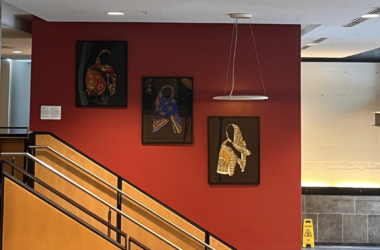
Marcotte explained that the purpose of having an open house is to raise awareness of the existence of O-SVRSE. The office also features a mural created by a SACOMSS volunteer that symbolizes the experience of being a survivor and the process of healing.

“I think it’s important for people to know that the office is there and where we are […],” Marcotte said. “We are not on campus, we’re right across. That was done purposefully so that there will be more confidentiality. It’s also accessible, there are elevators, which are not in every building on campus."

Read the latest issue

Read the latest issue