Latest News

Editorial, Opinion

Beyond zero-tolerance: McGill needs a new approach to deal with hazing

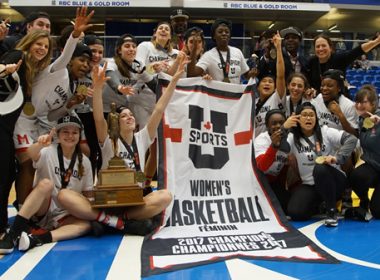
On March 13, The Globe & Mail published an article detailing a hazing incident that occurred in September 2015 involving McGill’s men’s and women’s basketball teams. The piece, based on the testimony of an anonymous member of the Redmen basketball team, alleged that first-year players were forced to drink various alcoholic drinks, and then “ordered into sexual games with semi-nude female athletes.” News of this most recent incident comes more than 10 years after McGill adopted a “zero-tolerance” policy toward hazing after a widely-publicized 2005 case involving the Redmen football team.

This latest hazing incident reveals the problems inherent in McGill’s current hazing policy, and the need for McGill to develop a better procedure for responding to and addressing instances of hazing. 

First, the administration demonstrated an unacceptable delay in its response to the incident. The university received word of the hazing during the 2015-2016 season, which ended in March, yet McGill didn’t form an ad-hoc committee to investigate the violation of the Varsity Code until August 2016. By the time the committee released its report in December 2016, it noted that team-wide sanctions were not appropriate since many of the players involved had already graduated. If McGill wants to hold athletes accountable for hazing—regardless of what sanctions it decides on—it needs to respond more quickly in order to reach its decision while those athletes are still on the team. 

Additionally, McGill’s response to the 2015 incident suggests that the university is no longer following the strict anti-hazing policy it outlined in 2005, as those procedures were not fully implemented in this case. After the 2005 hazing, McGill stated, as part of its “zero-tolerance” policy, that any team engaged in hazing would automatically be suspended for the season. However, McGill did not suspend the basketball teams implicated in this incident. Instead it placed the Redmen on probation two seasons and the Martlets for one, and suspended one player from the men’s team for one game—a clear departure from the zero-tolerance policy. While on probation, a second offence by the team would result in its suspension. The administration also specified in its report that it was imposing sanctions that “revolve around education, awareness, and prevention,” like having both teams attend a “Safer Partying” workshop to learn about the risks of hazing.

McGill’s move from a zero-tolerance to an education-centred policy has the potential to be a more effective way to address the problem. Punishment without prevention is unlikely to lead to progress, and the policy of automatic suspension may discourage athletes who have been hazed from coming forward, as they may worry that in seeking help they are hurting themselves and their teammates by bringing down a suspension on their whole team. 

Regardless of the benefits, having one policy in theory and another one in practice makes the university’s stance appear to be contradictory. Either McGill has a policy of zero-tolerance and automatic suspension or it does not. This needs to be made clear as athletes, coaches, parents, and members of the McGill community look to the university for a clear outline of how it plans to deal with hazing. The way the administration handled this most recent incident suggests that it is aware of the flaws of its 2005 policy. If so, it needs to make this clear while crafting a new policy. 

Hazing is a serious issue, and McGill needs to ensure that its policy addresses hazing in an effective, supportive, and flexible manner in order to reduce the harm hazing can cause. Hazing is an issue both rooted in and normalized by the culture of university-level athletics; as such, it requires a response that is focused on education, awareness, and prevention, rather than relying solely on punitive measures. The policy should not mandate automatic sanctions and respect the wishes of athletes who come forward so that mechanisms of recourse do not discourage athletes from reporting instances of hazing. Finally, the university must conduct the re-examination of its hazing policy in a proactive and transparent manner—McGill should show initiative in addressing this issue rather than waiting for another report like that of The Globe & Mail to prod it into action.


Private, Student Life, Word on the Y

Word on the Y: What do you wish you’d known as an undergrad?

The undergraduate years are undeniably some of the most exciting—albeit confusing—years for a lot of students. To help students navigate this period of constant learning and discovery, The McGill Tribune reached out to current McGill professors to find out the valuable lessons they took away from their experiences.

McGill Tribune 

Laura Pavelka, Faculty Lecturer, Department of Chemistry

“The undergrad experience is really about learning who you are, what you like, how you learn, and the soft skills acquired along the way. Those are the things that will stay with you for the rest of your life. It’s ok if you don’t know what you want to do yet. As long as you continue to try new things, follow what challenges you, and take on interesting opportunities, a path will emerge. Just listen to yourself first and foremost.” (Western University, Class of 2004)

sara

Penelope Kostopoulos, Department of Psychology
 

“This is the best time to explore, travel and meet interesting people. Attend lectures outside your classes, participate in committees and go on exchange programs in foreign countries. Introduce yourself to the professors and engage them in your learning. Take advantage of all the opportunities. Never in your life will you be immersed in such an exciting, diverse environment at an age when you are open minded, young. Exchange programs provide a unique opportunity to travel, learn and meet new people across the world. Find mentors that can help guide you. Don't be afraid to approach professors and ask questions.” (University of Patras, Class of 1999)

graeme

Oran Magal, Course Lecturer, Department of Philosophy
 

“One thing I wish I knew: Automatic online backups! This sounds silly, until that one time your computer gets wrecked or stolen. Put all your notes and essays in your DropBox or Google Drive folder and you'll thank yourself later." (Tel Aviv University, Class of 2003)

David

Michael Hilke, Associate Professor, Department of Physics
 

“As an undergrad student I took the minimalist approach and thought that many things we learned were useless, but it came to bite me later as a professor, when I realized that I had to learn all these things I thought were useless, except that now I have much less available time than I had as an undergrad. It would have been useful to inquire and learn about the bigger picture of how the different topics we learn are interrelated and where there are used in a modern context.” (University of Geneva, Class of 1990)

julie

Chantal Westgate, Faculty Lecturer, Desautels Faculty of Management
 

“I wish I had spent more time going out, developing relationships. I was very focused on my studies because at the same time I was studying in a different language than my mother tongue.
I wish I had the time to do more sports. I was a little too unidimensional and very focused on studying.” (Concordia University, Class of 1982)

merouane

Frieder Schöck, Associate Professor, Department of Biology

“It would have been nice to know how much time is spent on trying to obtain money to do research—but this wouldn’t have changed my [career] choices. Or maybe that I should have been more proactive as an undergrad about talking to professors and inquiring about research projects.” (University of Erlangen-Nürnberg, University of Edinburgh)

jen

Anthony Francesco Imbrogno, Course Lecturer, Department of Political Science
 

“Talk to your TAs and your professors! I really wish I had spent the time reaching out to professors about their research. Go [to] their office hours, and talk to them. They are there to have a discussion with you, so don't waste the opportunity.” (University of Calgary, Class of 2006)

emma

Nikolas Provatas, Professor, Department of Physics
 

“As undergraduate students we often assume that undergraduate studies are about learning specific skills we’ll use in our future careers. While that is partially true, a much more important goal of [undergraduate] education is to teach us how to integrate knowledge to solve new problems we haven’t encountered before. In that sense, I think of [undergraduate] studies as a "mental boot camp” that helps one survive in the real world, where we are often called on to solve problems and make decisions without a solutions manual or someone to guide us. Had I appreciated this when I was an undergrad I would have been better prepared to approach some of the difficulties and frustrations I encountered.” (McGill University, Class of 1988)

ben

Kenneth Ragan, Professor, Department of Physics
 

“Life more closely resembles a random walk than a well-planned journey. Have goals, but be flexible and opportunistic—serendipity can be one of life's great pleasures.” (University of Alberta, Class of 1980)

simon

Richard G. Donovan, Professor of Practice, Desautels Faculty of Management
 

“I wish I knew all the opportunities available to me at McGill including courses, clubs and activities. [Also,] I wish that I had interacted with more students from other faculties. The richness of diversity here at McGill is tremendous. I [would have] done an independent studies course to further my depth of knowledge as well as leverage the experience of my professors.” (McGill University, Class of 1988)

Off the Board, Opinion

It’s not just humans who can be biased

The tech industry has long been a demographically homogeneous place, and there has been a lot of conversation about how to make the industry more inclusive for people who don’t fit the stereotype of the Silicon Valley tech bro. However, making the products themselves more inclusive hasn't received as much public attention. In part, this can be attributed to the idea that mathematics, computer science, and software engineering are inherently logical and egalitarian. Equations don't have subconscious biases, after all—or so the thinking goes. This line of reasoning has two fatal flaws: The first is that programmers are notoriously bad at predicting what the code that they write will do, which means that software can often have unintended social consequences. The second goes back to a common saying in machine learning circles: "Garbage in, garbage out.” In layman’s terms, models are only as good as the data they’re based on. As such, it’s critical to collect data that reflects the diversity of the people that machine learning models are used to study.

For example, a machine learning model used to predict the likelihood of criminals to reoffend after jail time predicted that, all other inputs being equal, people of colour were more likely to reoffend than Caucasian individuals. In another case, image recognition software frequently misclassified black people as gorillas. Currently, the top 10 Google image results for "engineer” are all men in hardhats.

Even if software runs precisely according to its specifications, failure to consider the social ramifications of a new product or feature can result in painful consequences for users. Take Facebook's birthday notifications feature, for example. In theory, it's a convenient way to avoid the potential awkwardness of forgetting someone's big day. But when someone is grieving over the passing of a loved one, the last thing they want to see is a Facebook notification about the deceased’s birthday. Although this might seem obvious, it was not initially implemented when Facebook rolled out this feature. Now, Facebook allows users to memorialize accounts so that friends of deceased individuals no longer receive birthday reminders, but this feature is relatively new.

Models are only as good as the data they’re based on. As such, it’s critical to collect data that reflects the diversity of the people that machine learning models are used to study.

The performance of machine learning models are highly dependent on the data that they are trained on. At a high level, the way that facial recognition software is developed is by taking a classification algorithm, showing it a bunch of pictures of things that are faces, and things that are not faces, and saying “This is a face” or “This is not a face” accordingly. But if an algorithm is only shown white faces, then it will only learn that white faces are indeed faces, and although it might guess that people from other ethnicities also have faces because they look like white people, it will also be much more likely to misclassify them as “not faces.”

This is a real-world problem that Snapchat faced when it was working on its filters that use facial recognition. The filters simply did not work as well for people with darker skin, because the training data that Snapchat had used was mostly white people. Nobody thought to make sure that the images they were training their models on were fully representative of the diversity of human faces.

A lack of representative sampling has also been seen in clinical trials, where drugs are often tested only on men. Drugs that are shown to be safe and effective in clinical trials are sometimes found to be ineffective or even detrimental to the health of women who take them.

Scientific and technological developments can have major ramifications for society. Often, the effects of a product on its users are unanticipated by its creators. It’s critical that the scientists and engineers responsible for them take the time to consider how their work may affect people who are not exactly like them.

Clare is a U2 Math and Computer Science student, and a Web Developer at the McGill Tribune.


McGill, News

New Office for Sexual Violence Response, Support and Education opens on Sherbrooke

On March 27, the Office for Sexual Violence Response, Support and Education (O-SVRSE) opened its doors to the McGill community and hosted two open houses. The office is located at 550 Rue Sherbrooke Ouest, Suite 585, and officially opened in November 2016.

Associate Provost (Policies, Procedures and Equity) Angela Campbell helped create the Policy against Sexual Violence, which was approved by Senate on Nov. 23 last semester, and stated that the policy led to the creation of O-SVRSE.

“The implementation [of the policy] has mostly been taking place through the establishment of the [O-SVRSE],” Campbell said. “An implementation committee has been formed and will be lead by Professor Lucy Lach in the School of Social Work, and she will start her role imminently.”

According to Campbell, the Policy against Sexual Violence and O-SVRSE are the foundation for tackling sexual violence at McGill.

“[O-SVRSE] and the policy are really crucial beginnings for the development of a coordinated and effective response to the challenge of sexual violence on campus,” Campbell said. “So that the work of ensuring that we prevent [sexual violence] and raise awareness about its impact requires ongoing work and collaboration from all members across the campus community.”

Sexual Violence Response Advisor Émilie Marcotte, an O-SVRSE employee, characterized the office as the administration’s response to students who are looking for help. The O-SVRSE team includes Marcotte, Harm Reduction Officer Bianca Tétrault, Consent McGill Office Assistant Lucy Mackrell, Social Work Intern Bryn Davies, and Consent McGill volunteers.

“I think it is very important that the university has developed this office in the sense of having a designated point of entry for sexual violence [survivors],” Marcotte said. “[Sexual violence] is a big societal issue and I think McGill already has a lot of resources, including [the Sexual Assault Centre of the McGill Students’ Society (SACOMSS)]. This is the administration’s way of saying, ‘If there is a problem, if there is an issue, if you need help, if there is a question, here is where you can go.’”

Consent McGill volunteer Ki-eun Peck, U3 Arts, said that she volunteers for O-SVRSE to help prevent sexual violence on campus.

“I used to volunteer for Rez Project, and there are a lot of connections between Rez Project and Consent McGill,” Peck said. “[My goal is to] prevent even one sexual assault from happening.”

In addition to helping individual survivors, another  goal of the office is to implement more sexual violence education to change society’s perception of sexual violence in general.

“[O-SVRSE] also does the prevention [of] and education [about] sexual violence,” Marcotte said. “[…Tétrault] has been working at McGill for three years now doing the Consent McGill campaign and different workshops. So, I think the idea […is that] more resources will be put into developing different workshops and [training] more people, [and] that will also [create] a culture change on how people think and speak about sexual violence.”

Marcotte explained that the purpose of having an open house is to raise awareness of the existence of O-SVRSE. The office also features a mural created by a SACOMSS volunteer that symbolizes the experience of being a survivor and the process of healing.

“I think it’s important for people to know that the office is there and where we are […],” Marcotte said. “We are not on campus, we’re right across. That was done purposefully so that there will be more confidentiality. It’s also accessible, there are elevators, which are not in every building on campus."

Joke

Montreal hipster ‘heard of it first’

In the Mile-End neighbourhood of Montreal, tote bags too-small-to-carry-anything-in are catching on. But local hipster James Bax assures that he totally heard of it first. 

“Everyone started using these tote bags all of a sudden,” Bax said. “But I started it. I mean, I’ve used aesthetically-pleasing but nonfunctional things for years. Like those glasses with no prescription? I heard of those, too, before everyone else.” 

Bax is also a fan of kombucha, the popular fermented drink making its way into every health-food store and yoga studio—and he says he started the bubbly trend. In his studio apartment that his parents pay for, Bax ferments his own scobies and bottles the drinks in mason jars from Eva B’s. 

“These jars? They weren’t even for sale, but I loved them so much that I had to have them. I’ve loved mason jars for a long time, way before everyone else started Instagramming them. I don’t use Instagram anymore, instead I use Tumblr. Instagram is just too mainstream now.” 

Among other popular trends hitting the Montreal community, like Blundstones and man-buns, Bax knew about them before they were cool. He describes this talent as a ‘sixth-sense.’ Though there are many types of hipsters, Bax seems to be them all: He rides his bike everywhere, braids his beard, goes to every protest in the city, switched to a vegan diet years ago—he even heard about lattes before coffee shops started offering them. 

“I know everything there is about coffee really, but right now I’m into matcha lattes, so of course everyone is starting to drink them,” Bax said, rolling his eyes. “Do they even know what matcha is?” 

When asked what exactly matcha is, Bax responded that it is ground spinach, when it is in fact powdered green tea. But Bax doesn’t actually go to any cafés in Montreal—none of them are authentic enough. Rather, he makes his own cappuccinos and macchiatos with his vintage espresso machine. 

“It can be really exhausting, you know, loving something before it’s popular. Because once everyone does know about it, you don’t get the validation and credit you deserve. But I’m okay, because I know that I really heard of it first.” 

This article is a work of satire and is part of the Joke Issue.

Out on the Town, Private, Student Life

Review: Five takes on five dishes for five dollars each at CINKO Bar

CINKO, a resto-bar located in Montreal’s Quartier Latin, boasts a wide variety of dishes at only $5 per dish. To try out this seemingly too-good-to-be-true deal, The McGill Tribune’s Student Living team swung by during CINKO’s Saturday lunch hour, analyzing flavours and evaluating quality.

(Flaminia Cooper / The McGill Tribune)


Poutine

(Flaminia Cooper / The McGill Tribune)


While at first CINKO sounds like a great option for students looking for a cheap meal, there is a bit of a catch. As the waitress claimed, the restaurant operates under a pub license, not a standard restaurant license. Because of this, you have to buy a drink if you want to order food. This can raise your bill significantly depending on your choice of beverage, though the rosé sangria was worth it.

As for the food itself, the poutine was tasty. The fries were just crispy enough without moving into crunchy territory. The cheese curd to gravy to fry ratio was perfect, with the right amount of sauce to last until the final fry was consumed without making them soggy. The dish was well-salted, too—no one component overpowered another. The gravy was on the thinner side and had a distinct chicken taste to it, which wasn’t necessarily a bad thing, just different from what I’m used to. My only complaint was the size of the meal. It came in a shallow dish, which made it look larger, but the poutine definitely was a smaller portion than other options on the menu. That said, after eating, I felt satisfied without being stuffed full.

By the end of the meal, the bill came to just over $15. It was reasonable for a lunch out, but more than I expected to spend for poutine at a place whose name literally translates to “five.” While I enjoyed the food enough, in the future I would rather go to another spot where I could just get the dish I want without the added cost of the mandatory drink.

– Eloise Haliburton

Smoked Salmon Risotto

(Flaminia Cooper / The McGill Tribune)


The smoked salmon risotto was presented in a flat bowl and garnished with green onions and peas. It looked remarkably professional given its low cost, and it had a decent consistency. It was obvious that the line cook who prepared this dish gave a damn about his or her end of production. It’s hard to say the same about the diligence of the restaurant’s executive chef. The salmon was overly salty and dominated the taste of the entire meal. The salmon was dry to the point that it required a considerable amount of chewing—the cheap meat distracted from the actually decent rice and broth. This dish was an ambitious arrangement blown off-course by its low-cost ingredients. But, what else would you expect for a five dollar dish?

– Daniel Griffin

Classic Burger

(Flaminia Cooper / The McGill Tribune)


Overstimulated by the decorative choices of CINKO, especially the wall of protruding and detached soles of Vans sneakers, I decided on a safe and canonized choice: The burger. In size and form, it reminded me of a McDonald's burger and fries combo—though the bun was adorned with a garnish of lettuce, pierced by a bamboo stick to hold the sandwich together. My first impression was a mouthful of starch, though as I ate, I began to notice finer details of my meal. The beef patty complemented the slightly toasted bun, the lettuce and tomato contributed a sweet freshness and moisture, and the garlic aoli, bacon and American cheese exaggerated the salt profile. In other words, it just tasted like a burger.

– Makoto Wakabayashi

Ciabatta Sandwich

(Flaminia Cooper / The McGill Tribune)

CINKO served up a superb meal that only costed five dollars before additions. After ordering my mandatory drink—I went with ginger ale—it took no time at all to decide on something tasty. Before I knew it, a lovely tofu ciabatta sandwich was right in front of me. I am a huge fan of bread, and this sandwich did it in for me. But the additions of grilled tofu, pico de gallo salsa, fried artichoke sauce—which was amazing—and guacamole perfectly complemented the thick ciabatta roll, and each bite delivered a wonderful mixture of the ingredients. It was a light but satisfying sandwich, and a near-perfect vegetarian option. I would have liked a little more guacamole on the sandwich, but all in all, CINKO offered an enjoyable atmosphere and simply delicious food.

– Grace Bahler

Tofu Chili & Chevre Salad

[metaslider id=51988]

Though I received both at the same time, I began my meal with the tofu chili. The dish came with slices of naan bread, which I used to scoop up the chili as I ate. Though this was a nice touch, the chili itself fell short of spectacular. Its flavour was average and its consistency was a bit odd. The tofu was broken into small cubes that were overly marinated and they were not integrated smoothly into the rest of the chili. On the other hand, the chevre salad made for a beautiful—and delicious—meal. The ball of chevre was fried and served atop lightly dressed mixed greens, with two slices of toasted bread. Though I immediately spread the cheese on the bread, thus leaving the greens to be consumed on their own without chevre, the bread and cheese were both cooked perfectly. I quickly forked up the salad portion; however, it was small, so I’d recommend this meal as a side dish, not a main.

– Audrey Carleton

Campus Spotlight, Private, Student Life

Campus Spotlight: Social Equity and Diversity Education Office

The Social Equity and Diversity Education (SEDE) Office at McGill provides equity education across campus and beyond. Through equity training sessions, workshops, and advising services for students and faculty members, SEDE aims to serve the needs of marginalized voices on campus.

Founded in 2005 by Associate Director Veronica Amberg, SEDE once existed solely within the walls of a basement office in the Strathcona Anatomy and Dentistry building. It has since grown to staff seven full-time employees and a large number of student volunteers. To Shanice Yarde, equity educational advisor (Anti-Racism and Cultural Diversity) at SEDE, the office has grown to become an important part of campus, as conversations about oppression and equity increase in frequency and impact.

“There’s an energy that’s here right now,” Yarde said. “I think people are recognizing that we know there are problems and we just need a little support because we don’t really know what to do about it or how to fix them. And so, it’s really cool that people are tapping into SEDE for that support and that guidance.”

In February, SEDE launched the first-ever administrative-level programming for Black History Month. After arriving to her job at SEDE to discover that no formal celebration of the month existed on campus, Yarde seized the opportunity to pilot a month of events under the theme “Celebrating Black Excellence in All its Diversity.” Having only been with SEDE for one year, Yarde brought a fresh take to planning the event—in this case, this was an asset, rather than a hindrance.

“I feel really honoured and lucky to be able to come in with this fresh energy and to kind of take the lead on this,” Yarde said. “And to really create these spaces—not just for black people at McGill, but for people of all races to come and to learn and to engage with each other in ways that are meaningful. But then it was also really, really important to have spaces that were [reserved for] black people because that, again, just doesn’t ever happen on campus [….] Finding ways to really centre black people in my organizing was especially important when so many black people feel so isolated, and, in a lot of ways, just ignored at McGill.”

After receiving Senate approval on Feb. 15 to host annual programming for Black History Month, Yarde remains optimistic that her work will set the stage for more successful celebrations to come. Even so, the fact that this was the first time that an office within the McGill administration hosted a formal celebration of Black History Month demonstrates how black voices are often sidelined on campus.

“For me it was just a confirmation of the need and of the lack,” Yarde said. “[….] I think it really speaks to a really, really huge gap at McGill and across a lot of institutions [….] Just hearing all of the feedback from people has been overwhelming and just showing that people have been wanting this and have been waiting for this, and have also been demanding it in a lot of different ways.”

Beyond its programming for Black History Month, SEDE has made other important developments to better serve marginalized students on campus in recent months. Among them was the creation of the Community Projects Manager (Racialized and Ethnic Students)—whose role will be to serve the needs of racialized students on campus—using funding provided by the Sustainability Projects Fund (SPF). Further, SEDE recently launched Café Collab—a series of events that bring marginalized students and student service providers together to discuss ways to alter campus policies and institutions to better serve these students.

In its 12 years as an institution, SEDE has given a platform to students on campus whose voices are often ignored. Its recent programming for Black History Month is evidence of its perpetual innovation in this realm—a vote of confidence for continual improvement and expansion in the future.

McGill, News

Senate addresses reported increase in applicants to McGill from U.S. and overseas

On March 22, the McGill Senate held its monthly meeting and discussed the sale of lecture materials not produced by professors, the Annual Report on Enrolment and Strategic Enrolment Management, and the Budget Plan for Fiscal Year (FY) 2017-2018.

Question Regarding Sale of Lecture Materials

Before the meeting, Pharmacology and Therapeutics Professors Terry Hébert and Dan Bernard put forth a question regarding the legality of lecture materials sold and produced by outside companies including Prep 101 and SOS Tutoring. In the document, Vice-Principal (Research and Innovation) Rosie Goldstein and Provost and Vice-Principal (Academic) Christopher Manfredi stated that professors are responsible for enforcing intellectual property rights on material that they produce.

Pharmacology and Therapeutics Associate Professor Edith Zorychta said that due to costs and access to Teaching Assistants (TAs) and tutors, companies like Prep 101 are doing a disservice to students due to their high cost. For five hours, the cost of a Prep 101 tutorial is $112.75, whereas the cost of McGill Tutorial Services is $75, and the cost of working with a TA in office hours and tutorials is free, according to the Prep 101 and McGill Tutorial Service websites.

“I think it’s becoming a significant problem,” Zorychta said. “There’s a certain level of dishonesty, it’s unfair to our students with [the high cost of external services]. Also, [professors] wonder why some of these outlets are allowed to put their ads on bulletin boards.”

Manfredi said that he is unsure of affiliation between Prep 101 and the university.

“I am vaguely familiar with Prep 101, as far as I know there is no formal relationship with the university,” Manfredi said. “This is something that I can look into more closely.”

Annual Report on Enrolment and Strategic Enrolment Management

University Registrar and Executive Director of Enrolment Services Kathleen Massey presented the Annual Report on Enrolment and Strategic Enrolment Management, compiled by Massey and Deputy Provost (Student Life and Learning) Ollivier Dyens.

According to Massey, one issue that McGill University faces is a decline in yield rates, or the percentage of students offered admission who attend McGill. The university’s yield rates have declined from 51.4 per cent to 42.6 per cent in the past 10 years.

Massey said that recently there has been an increase in applications, possibly caused by political changes in the U.S., the UK, and other countries.

“Changes may be from Brexit, American elections, and other international factors,” Massey said. “Applications from the [U.S. have] increased by 21 per cent, and applications from overseas and international high schools about 23 per cent.”

Massey also discussed her goal to increase the diversity of applicants, increase the amount of students from French CEGEPs, and keep the percentage of international students between 25 and 30 per cent.

Budget Plan FY 2017-2018

Manfredi presented the second version of the Budget Plan FY 2017-2018 to Senate. According to Manfredi, there were no major changes from the Budget Plan FY 2016-2017 to the Budget Plan FY 2017-2018.

“We are fortunate at the moment to be operating in a stable budgetary environment,” Manfredi said. “We are able to relax some of the administrative support-style reduction measures.”

Although Manfredi said that McGill has a stable budget, he predicts that the university’s financial deficit will increase.

“I think we all understand that I am anticipating [that] we are going to do more than normal capital expenditure over […] the next decade,” Manfredi said. “We built resilience into our budget to cover that. Nevertheless, we’re projecting a good increase in our cumulative finance deficit.”
The final Budget Plan FY 2017-2018 will be delivered to the Board of Governors on April 27.

News, PGSS

Macdonald Campus holds referendum to explore disaffiliation with graduate student governance

Following a week-long campaign period, the Macdonald Campus Graduate Students’ Society (MCGSS) will hold a referendum on March 30 for its members to decide whether or not to explore disaffiliatation from the Post-Graduate Students’ Society (PGSS), which currently represents students on both the downtown and Macdonald campuses. If the motion passes, it would provide MCGSS executives with a mandate to initate the process for a second referendum on the question of whether to disaffiliate or remain a part of PGSS.

MCGSS President Jaaved Singh explained the Society’s wish to sever its ties with PGSS due to students’ poor representation within PGSS, difficulties in communication, and limited access to the resources and services on the downtown campus. Meanwhile, PGSS Secretary-General Victor Frankel expressed concern that, as one of the larger Post-Graduate Student Associations at McGill, MCGSS voting to disaffiliate would significantly lower the number of PGSS members.

“If this passes, we stand to lose a lot of important members,” Frankel said. “People that are really great advocates for graduate students, education, student rights, transparency in governance, all these things that I think MCGSS members really add to the strength of PGSS.”

Singh had issue with MCGSS’ relatively limited representation within PGSS. Normally, the nine departments that MCGSS represents would independently have a total of 18 votes; however, due to the difficulties involved in transporting 18 students from the various departments downtown for regular meetings, all nine departments are instead represented by the singular MCGSS, which gets only three votes on the PGSS Legislative Council.

“[The current voting structure] gives a huge power imbalance,” Singh said. “Technically, we’re a larger group that fills a smaller role within the PGSS structure.”

Krittika Mittal, a PhD student in Natural Resource Sciences (NRS) and student representative for the NRS department in PGSS, cited several challenges arising from the distance between the two campuses. According to Mittal, living and working near the Macdonald campus means she almost never uses the services at the downtown campus.

“If I’m paying for all those resources and services, but I’m not using them there, why are we paying money to PGSS?” Mittal said. “If 100 per cent of the fees I’m paying are going to the Macdonald campus community and I’m able to access those resources here, I think it’s just better that way.”

MCGSS members will lose certain advantages if the disaffiliation passes, including access to PGSS’ Thomson House, various events and discounts, and the PGSS health and dental plan. However, Singh mentioned that there would be negotiations over service provision and that there are several types of membership, such as associate rather than full members. Additionally, he said that MCGSS could try to adopt the Macdonald Campus Students’ Society’s (MCSS) health and dental plan should the referendum pass. Currently, MCSS represents undergraduate students on the Macdonald campus.

“I see the future with MCSS being more of a partnership–not one organization, but two organizations with joined agreements or missions that affect all students,” Singh said. “Working with MCSS is a lot easier because we’re less than five minutes away from speaking with them. It’s a lot easier than having to get all the way downtown.”

Singh emphasized that MCGSS wouldn’t go any further in rejoining MCSS, citing the progress made since the organization’s initial split in 2012.

“MCGSS becoming independent from MCSS has developed a stronger student union culture within MCGSS,” Singh said. “Before, you pretty much had all the campus responsibilities under MCSS and all the graduate representation under PGSS, so there wasn’t a niche for MCGSS to fill, and since MCGSS separated from MCSS, it started getting more involved.”

Frankel concluded that PGSS would prefer to see MCGSS stay, but would support them regardless of how they voted. Singh emphasized that entertaining the notion of separating was logistical and financial, not personal.

“There’s no resentment, it’s just the current situation operating within PGSS is not working for MCGSS, so we want to become our own group and disaffiliate [from] them,” Singh said. “We think it makes sense to become our own group, with our own fees, and that way we can really tailor our services and support to Mac grad students.”


A previous version of this article incorrectly stated that the March 30 motion was on the question of whether MCGSS should disafilliate from PGSS or not. In fact, the motion was on whether MCGSS executives should explore dissafilliation. A second referendum would be required to actually separate the two societies. The Tribune regrets this error.

Arts & Entertainment, Theatre

Bringing the McGill Drama Festival to life

The McGill Drama Festival (MDF) is an annual event that takes place at Players’ Theatre on the third floor of SSMU. MDF prides itself on its six plays being entirely written, acted, and produced by students, and aims to promote inclusiveness in the McGill theatre community. 2017 co-coordinators Jordan Devon, U3 Arts, and Kaleigh Bourk, U2 Arts, were inspired to take on a major role in the development of the festival because of a strong sense of community. 

“[The festival] brings so many people together in the theatre community,” Bourk said. “You get to display student written work, which is the best part about it—just the fact that you’re producing something that your friend in Chemistry class could’ve written. I find that’s the most incredible thing about it.” 

Devon stressed that one of the reasons that student involvement in the MDF is so vital is that McGill community allows for a diverse collection of works to be submitted.

“It was so wonderful to be in a cast where the director was studying theatre but the actors were studying political science and biology,” Devon explained.“It’s such a wonderful thing to coordinate a festival where people from all different walks of life come together. You have students who aren’t English majors submitting works and they get the opportunity to have their work seen.” 

Former McGill student Cain Humeniuk is the writer of existential drama The Loops. His writing process was the result of nursing the idea for the play in his head for years. 

“A lot of the time, you’re trying to write and collect your thoughts that you have on life and the world,” Humeniuk said. “And so, I guess that’s the main point of what I was trying to do [with Loops], is take these philosophical thoughts and idealistic thoughts I’ve had [….] It’s really telling my experience of spirituality, individuality, and existentialism.”  

MDF’s support of student work is further exemplified by the annual Colin Krivy Award. Years ago, Colin Krivy was involved in theatre at McGill. After his death in 2004, the Krivy family set up a fund of $500—awarded to the best playwright of the festival. The winner is determined by three judges, one of whom is a family friend of the Krivys and the other two are faculty members in the Department of English. 

One special aspect of the event is the connections and relationships that develop amid the spirited work required to put it all together. 

“It becomes like a huge family,” Devon reminisced. “It’s such a lovely experience to bond with so many people from different environments.” 

The Ever Present Witness by Maddie Joliffe 

A 1950s nuclear family is not what it seems. Maintaining their cool façade proves to be difficult as double lives and secrets become increasingly dangerous.

Joshua by Laura Jarecsni

Joshua illuminates the universal stress of trying to fit in through the experiences of Jesus Christ.

The Original by Daniel Galef

The Original follows the lineage of ancient entertainment and modern pop culture through adaptations of theatre classics such as Romeo and Juliet and A Comedy of Errors. Epochs and genres clash in this musical adaptation of literary and theatrical history.

Loops by Cain Humeniuk

Time is thrown for a loop in Loops. In this play about the human condition and the nature of knowledge, the protagonist must decipher a sudden shift in scenery and escape before time runs out. 

The Mixer: A Fratire in One Act by Benjamin Butz-Weidner

This one act play lampoons the debauchery of frat culture in an absurd, Hangover-style adventure.

The Meeting to Save Goody Diana by Michaela Kim

This postmodern take on the Salem Witch Trials calls into question individual and historical actions, the supernatural and magical, and the cruelty of humankind.

The McGill Drama Festival runs March 29 to April 8 at Player’s Theatre in the SSMU Building. Tickets are $6 for one night of three shows, and $10 for a festival pass­, which provides access to each show once on any day.  For a full schedule visit the Players’ Theatre’s Facebook page. Tickets can be reserved by emailing [email protected]

Read the latest issue

Read the latest issue