


Latest News

Science & Technology

McGill researchers develop new model for Zika virus experiments

The spread of new and emerging viruses poses a constant threat to public health and presents a concern to developing and developed countries alike. Population growth, climate change, and the increasing ease and speed of travel have exacerbated the transmission of these viruses.

Overpopulation results in the construction of homes in previously unsettled areas, providing zoonotic viruses—viruses that normally infect animals—with the opportunity to transmit to humans. The original case of the most recent Ebola outbreak was a two-year-old boy in a newly-built village in Guinea who came into contact with fruit bats, the natural reservoir for the virus.

Rising global temperatures are giving mosquito-borne diseases, such as malaria and yellow fever, chances to infect naïve populations, which were previously protected from these diseases by cold temperatures.

The Zika virus (ZIKV), a previously mild infection endemic to central Africa and Southeast Asia in the late 20th century, spread with the aid of modern travel and mutated to cause fetal microcephaly. Microcephaly is the name of the condition where infants are born with an abnormally small head.

Among recent emerging viruses, ZIKV is especially insidious as pregnant women who become infected exhibit mild and nonspecific symptoms, which often cause the infection to go undetected.

There are currently no drugs or vaccines for ZIKV, and treatments are usually aimed at alleviating symptoms. Additionally, the first diagnosis of a Zika infection often stems from the tragic realization that a newborn is afflicted with microcephaly, which poses significant developmental and behavioural consequences.

A number of challenges exist to produce an effective ZIKV vaccine, the chief of which is a lack of a suitable model to conduct experiments on the virus. Another difficulty is the virtual absence of any previous scientific knowledge on ZIKV. Before the epidemic in South America, the virus did not cause any severe symptoms and was thus not labelled as a top candidate to secure research funding.   

Recent research conducted by Dr. Martin Richer and Dr. Selena Segan, assistant professors in the Department of Microbiology and Immunology, could be a critical step in producing a suitable mouse model system for ZIKV study. The paper, published Feb. 23 in PLOS Pathogens, outlined a procedure to analyze ZIKV infections in mice with fully functional immune systems.

Previous studies have focused primarily on immunocompromised mice, since researchers were interested in the mechanism that caused the disease. However, the development of a vaccine against infectious pathogens requires intimate knowledge of how a host responds to infection. Not only did the paper outline an immunocompetent mouse model for ZIKV, it also characterized T cells—a type of white blood cell—as they responded to the virus.

In particular, the group discovered a conserved region of ZIKV’s envelope protein that these T cells respond to, called an epitope. It is conserved in 103 of the 104 published ZIKV gene sequences. The paper states that this finding could be an important step in the development of a vaccine against Zika.

However, virtually all currently approved vaccines use antibodies to generate protection. Antibodies are produced by B cells—another subtype of white blood cells—and the epitopes they respond to are often not the same as those of T cells.

“It’s very difficult to create a T cell-mediated vaccine, mostly because we don’t yet know that much about them,” Richer said in an interview with The McGill Tribune. “We need more basic research into cell types, such as cytotoxic CD8 T cells.”

Cytotoxic CD8 T cells are white blood cells involved in the killing of infected cells and are one of the cell types analyzed in their publication.

There is certainly a long road ahead for the creation of a ZIKV vaccine, but the development of an immunocompetent mouse model is a major step in this process. The analysis of B cell and antibody responses, as well as the discovery of new epitopes in different mouse strains, and whether the same epitopes can be found in humans, remain open and exciting avenues for further investigation.


Arts & Entertainment, Books, Private

‘How to Murder Your Life’ paints unapologetic portrait of addiction

One can only imagine the relief felt at the Simon and Schuster offices the day Cat Marnell announced she had finished her book. Conspicuously titled How To Murder Your Life, the work in question had cost the company three years and a $500,000 advance—most of which Marnell had reportedly spent before she’d even begun to write. Even so, the publishing company must have known what they were getting into.

In 2012, Marnell quit her job as the contributing beauty editor at the popular website, xoJane—started by media mogul Jane Pratt—where Marnell quickly gained notoriety as the “unhealthy health and beauty writer.” She chronicled her hard partying lifestyle in New York City, occasionally pausing her drug-fueled narrative to mention a beauty product or juice cleanse of some sort. Her pieces became the primary source of traffic to the website—with provocative titles like “I spent two weeks in a mental institution and left with better hair.” It seemed like Marnell was destined for her own brand of Internet gonzo greatness until she quit her job to write a book, telling the New York Post that she was simply not cut out for the 9-5 working world.

How to Murder Your Life hit the shelves on Jan. 31. From the opulent, Kennedy-grade boarding school where she spent her high school years all the way to the seedy, squalid streets of Alphabet City, Marnell’s stories read like the diary entries of a girlish ingénue. The hallmark of her writing has always been its brazen, lowbrow quality. Even the darkest among her stories were told in the same breezy manner.

“They were all nightcrawler vampires who raged until dawn and slept until dusk,” she wrote in her memoir, describing the sinister cast of characters she’d meet in nightclubs. “This is terrible for the soul but great for the skin—no sun damage, you know? So everyone looked good.”

Marnell began her publishing career auspiciously enough, working as a beauty editor for Lucky magazine, one of Conde Nast’s biggest publications. Contrary to her trademark druggy antics and general lack of conscientiousness, Marnell has endless respect for the industry.

“Magazines are what I love,” Marnell confessed in an interview on Feb. 29 2016 with Gavin McInnes, the founder of Vice Media—a publication she’d written for briefly. “I hated books like the Devil Wears Prada, when those Conde Nast bitches crack their whip, you should be honoured to fucking jump! That’s the glamour industry!” When Marnell was 28, she was forced to resign from her job. Later, she went to work for Pratt—a job she never took quite as seriously.

How to Murder Your Life was added to the New York Times bestseller list not two weeks after it was released—an impressive feat for a non-celebrity memoir. The book is as tragic as it is trashy, full of heartbreaking anecdotes about a young woman very much alone in the throes of addiction—not exactly easy reading. Perhaps one could attribute its success to the fact that such a sensational downward spiral will inevitably attract a crowd, but her long-time readers insist it’s more than that.

Near the end of her days at xoJane, Marnell published a piece on Whitney Houston’s death in 2012—which was rumoured to be drug related—where she also responded to criticisms about her own use.

“So many of you have expressed your disgust about how much I talk about drugs,” Marnell wrote, “I really tried to stop for a while, but you know what? No one else in women’s magazines or websites is writing about this stuff, so there’s nowhere for a female community to read it… It would be wonderful if we lived in a world free of drugs and drug addiction, but we don’t.”

Most addiction memoirs have one thing in common—in the end, the writer realizes the error of his or her ways and cleans up. But not Marnell. Instead, she writes that she is conflicted—why, she asks, should an addict have to be recovered in order to tell her stories?  After all, Hunter S. Thompson—the pioneer of gonzo journalism and with whom she is often compared—carried on the same way for decades without ever having to publish a sanctimonious book about the evils of substance abuse.

How to Murder Your Life is lauded as an insightful look into the addiction epidemic just as often as it’s accused of being nothing more than a transparent attempt at shock value. Ultimately, it’s neither. It’s a story about a lonely girl who never quite grew up—and it might just be the most honest piece of writing to come out in a long time.


Commentary, Opinion

Good grades, good friends, good money: McGill’s work-life balance only lets you pick one

This winter semester, I have been on exchange at the University of Edinburgh. As a student at McGill, I was heading towards either a breakdown or a new level of being. Two part-time jobs, two extracurricular activities, a volunteering position, and a full-time course load had me sprinting from place to place and spending any free time I had studying. Despite overloading myself with activities, I still felt like I was underachieving and under-participating in comparison to my peers.

McGill students thrive on stress and sleepless nights: They can often be heard on the 3rd floor of McLennan at midnight on a Wednesday bragging about who got the least sleep while getting the best grades. So when I arrived in Edinburgh, I was surprised to find the student lifestyle was entirely different—and exchange students from other North American universities agreed with me. The amount of work that McGill University expects out of its students, without even taking the recommended CV-boosting extracurricular activities into account, takes up all the time that students abroad spend working and partying.

With more limited contact hours between lecturers and students, the education at the University of Edinburgh is less intense than that of McGill University. Three courses at the University of Edinburgh are equivalent to 15 credits at McGill. These courses are each two hours a week, and only have one paper and an exam to complete as requirements. Whether this is a better educational model is up for debate, but six hours of class per week allows for a more reasonable schedule than fifteen. In the Scottish educational system, high achievers thrive, whereas students who put in minimal effort get minimal results—yet, due to the infrequent class hours and minimal workload, anyone can keep up with the requirements. The qualifier for good grades is the time and effort put into creating a single piece of quality work for three classes, instead of trying to come up with multiple perfect papers for each of your five. Students have fewer assignments to complete, and more time to complete them.

While there are students struggling to achieve a work-life balance at universities worldwide, there must be a way to find a balance between the low contact-approach at the University and Edinburgh and the high intensity demands of McGill.

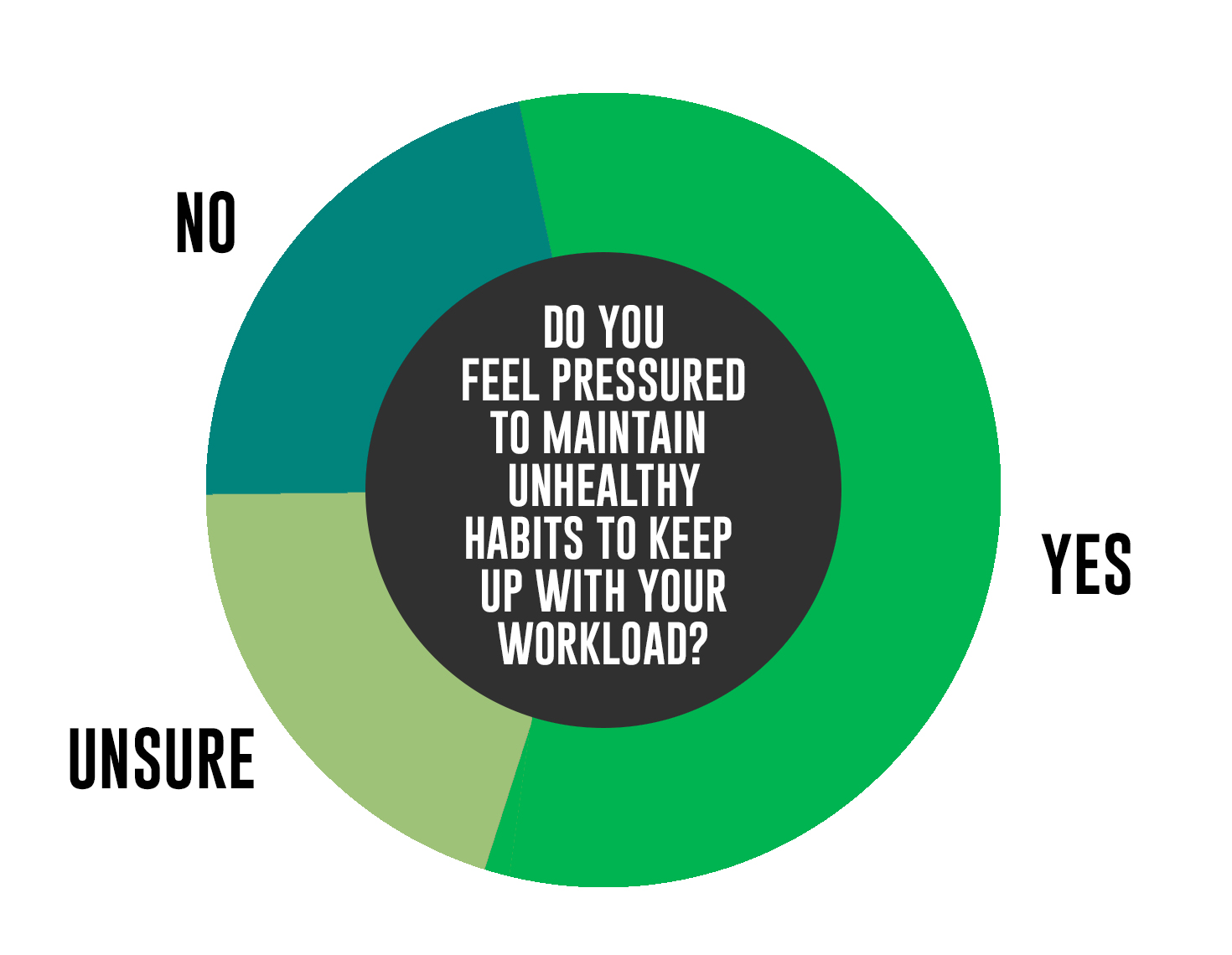
The situation at McGill is a stark contrast. According to a recent survey conducted by the Engineering Undergraduate Society (EUS) at McGill, 74 per cent of undergraduate engineering students cite academic workload as the most stressful aspect of their major. Despite students’ awareness of the stress of their programs, they continue to prioritize grades over mental wellness—they say that they have little time to take advantage of the mental health services on campus due to academic demands. This degree of distress about the high workload at McGill cannot be blamed on poor planning and laziness. If 87 per cent of surveyed students felt physically exhausted by their workload, something in the academic system here is flawed.

While there are students struggling to achieve a work-life balance at universities worldwide, there must be a way to find a balance between the low contact-approach at the University and Edinburgh and the high intensity demands of McGill. Surveys, like one conducted by the EUS, bring attention to the problem of work overload at McGill; however, students need to continue talking about this issue. Further, both McGill and students should be aware that this amount of work is not normal everywhere. If it is committed to the wellbeing of its students as well as their GPAs, the university should accept responsibility for the adverse effects of its intense workload on students and work on finding ways to reduce it.

In the meantime, there are some solutions to the problem of balancing work and life. Students should consider taking fewer credits per semester, to ease the mental burden of a full-time student course load while trying to maintain a healthy lifestyle. This allows more time for non-academic activities, such as a job or participating in extracurriculars. McGill fosters a competitive environment where doing less academically is sometimes viewed as a failure—I have heard people say that taking less than a fifteen-credit course load is basically “nothing.” Feel free to remind these people that it is important to care for your mind and body instead of just your grades.

No number of tips can help some students cope with the sheer amount of work McGill expects from their students and the all-or-nothing environment that the university fosters. McGill needs to reconsider its curricula if it wants to see well-functioning alumni who remember their time at McGill fondly instead of with heart palpitations.


Tara Allen-Flanagan is a U2 Art History and English literature student who enjoys beekeeping but does not enjoy getting stung by bees. In her free time, she likes to explore the multitude of vending machines around campus and cuddle with her friends’ cats.


Laughing Matters, Opinion

Solving McGill’s problems, one building sign at a time

It’s no secret that McGill is currently facing a pretty long list of serious problems. The university’s reputation has taken a hit over the recent scandals plaguing the student society. Budget issues persist, as the provincial government cut funding for the 2016-2017 school year. The administration continues to clash with student groups over its investments in fossil fuels. A recent report revealed the need to address discrimination in faculty hiring. Not to mention that our section of Sherbrooke can only be generously described as a “street” while the saga of the Great McTavish Ditch drags on.

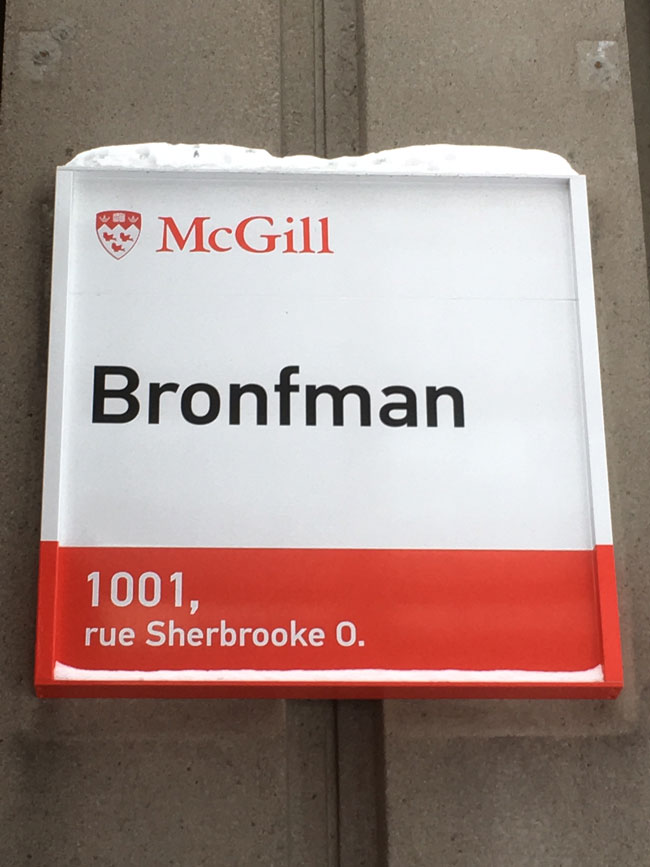
With all these pressing issues, students and staff alike should be glad to hear that the McGill administration has launched a groundbreaking initiative. As of last month, McGillians have been treated to a bold new surprise: The university now has new building signs.

As the McGill Reporter revealed on Feb. 21, the administration has replaced the building signs on the Downtown Campus, and plans to do the same for MacDonald Campus soon, all as “part of a larger overhaul of exterior signage on McGill campuses.” Don’t be confused—the old, decrepit, oafish buildings are still the same, it’s just that fancy new signage that gives a concrete slab like the Leacock Building a whole new feeling.

According to the Reporter, the signs are part of an effort to secure McGill’s status as a world-class institution. The signs reflect a “new font, new materials, new design” philosophy, which is apparently part of “a modern design practice observed at leading North American universities.” Here the article specifically mentions Harvard and Yale, who presumably have built their prestigious international reputations on the back of their outstanding building signs. After all, Harvard couldn’t possibly have produced such notable alumni as Bill Gates, Ban Ki-Moon, and eight American presidents, if its building signs were in a lowly font like Comic Sans MS.


Don’t be confused—the old, decrepit, oafish buildings are still the same, it’s just that fancy new signage that gives a concrete slab like the Leacock Building a whole new feeling.

Of course, the ambitious signage project doesn’t necessarily mean McGill has let its other—more pressing—problems fall to the wayside. But, if the administration is looking to be more efficient, it could consider incorporating some easy fixes to other issues in its new signage project. For instance, it could save students a lot of trouble by simply adding an asterisk on the sign for any building that does exist in theory, but has in reality been rendered totally inaccessible by construction.

The signage overhaul also foresees the installation of an “interactive terminal” at the Roddick Gates, which will provide visitors with information about McGill and its downtown campus. Perhaps this terminal can also help McGill address some communications issues, and potentially improve its image. With a dizzying number of controversies on campus this year, it can sometimes be hard to remember where students should be directing their anger. A simple interactive app on the Roddick terminal could help clear this up. Concerned about the unethical investments of your university? Yes, you can take that one to the James Building—though results are not guaranteed. Mad about that thing another student said on Twitter? Take that one to SSMU, that’s not the admin’s problem. And of course, the terminal needs to be able to answer that vital question students ask themselves every day: Where is the current samosa sale?

The signage project does come with a degree of self-awareness: The project manager admits that signs are “small details” when it comes to the university as a whole. Let’s just hope the university’s renewed interest in “small details” isn’t a sign that they’ve given up on addressing the McGill’s larger flaws.


David Watson is an Opinion Editor at The McGill Tribune and a U3 Political Science and History student. He is currently one Nobel Prize away from being a Nobel Prize winner.


@McGillTribOp |


Out on the Town, Private, Student Life

The Common Thread: Teaching Montreal to sew, stitch by stitch

A few generations ago, sewing was a required class in American schools. Today, many people no longer know how to sew; however, this is slowly changing—sewing is experiencing a resurgence in popularity among DIY enthusiasts. Increasingly, many people are recognizing the plethora of benefits to sewing—not only does it reduce stress, but it equips one with the knowledge to produce one-of-a-kind pieces for themselves or for profit. But how does one get started without the knowledge or a sewing machine?

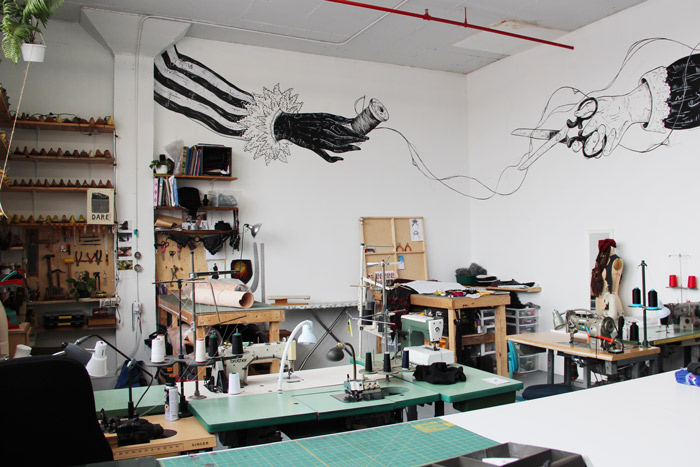
That question has been answered by a cooperative maker-space in Rosemont called The Common Thread/Le Fil Commun. The sewing co-op, in which artists share materials and knowledge for $10 an hour, describes itself as "a wearable arts studio" that supplies a workspace, industrial sewing equipment, and materials to its members. Founded in November 2016, the Common Thread offers open studio sessions on Saturdays from 11 a.m. to 6 p.m. During this time, for a nominal fee, the studio is open for sewing novices to work alongside experienced tailors or to attend drop-in workshops. 

According to co-founder and Montreal-based artisan Kiri Skuce, one of the goals of the Common Thread is to provide an accessible and affordable space for people to explore the art of sewing. Skuce was inspired to form a sewing collective after noticing a gap in craft-based education between the beginner and professional levels. 

“I think that in starting this project I have many different goals,” Skuce said. “I think the short-term is to just make  [sewing] more accessible for people who just want to get into it because there is pretty much nothing available between not knowing how to sew at all and going into a full-time three-year degree [….] If you already know how to sew, and you need a place to work [as a professional], there isn’t anywhere [to go].”  

With the assistance of mentors, neophytes can realize projects they wouldn’t be able to accomplish at home. Amateur craftspeople can learn everything from making patterns to working with industrial machinery. 

[metaslider id=51485]

“So far, mostly novices I would say [come in to the Common Thread],” Skuce said. “People come in to learn the basics. [Our members often] have a project in mind, but don’t have the space to work on it at home […] and with this collection of machines, you can make pretty much anything [….Sewing] can be easy to get into, you just need all of the right things, so we hope to provide that.”

Crafters at the cooperative often find that making their own clothes gives them a newfound appreciation for the material goods they consume on a daily basis. The hard work of making a new item of clothing from scratch can be especially rewarding for patrons. Skuce noted that when people make items themselves, they tend to gain a heightened appreciation for manufacturing that lasts long after the class.

“There is a really interesting thing when you go through that process [of sewing your own clothes] where you realize how much work goes into something,” Skuce said. “Suddenly, something as meaningless as a shirt […] being involved in [its] creation process readjusts your value systems when it comes to these objects that we take for granted. I think it is the first step to become more sustainable in the things that we consume, because if you realize how valuable a thing is, you are going to maintain it.” 

Looking ahead, Skuce hopes to grow the Common Thread by expanding its studio space and services for first-time seamstresses. In the coming months, the Common Thread will offer classes for beginners, including belt and sandal-making. In the meantime, the Common Thread’s members continue to support each other as they learn in a collective space. 

“Work gets easier when you are with more people,” Skuce said. “[….] When you have a dynamic of sharing and trust, it is contagious.”

Commentary, Opinion

Students should be aware of study drug risks

Over the last several years, the use of unprescribed “study drugs”—stimulants such as Ritalin, Adderall, and Vyvanse—has been steadily rising on university campuses across North America. These drugs are intended to treat individuals with disorders, such as attention deficit hyperactivity disorder (ADHD). For those students without a prescription, however, these drugs produce hyperactivity, which can be experienced as intense focus and productivity. The misuse of these drugs as performance-enhancers in this way is understandably appealing; in a time of ever-increasing academic pressure, they seem to offer improved focus and stave off fatigue, to the point where some students can’t imagine finals season without them. Their unprescribed use on campus has become fairly normalized, but as the visibility of study drug use rises, the days of unrestricted, unquestioned access may be numbered.

The Oxford University’s Student Union (OUSU) recently unveiled student workshops on study drug use. As an email sent to students explained, “OUSU are rolling out workshops based on student experience and knowledge, exploring the reasons why people might start using smart drugs, and suggesting safe and sustainable solutions.” Oxford’s workshop is just one example of how organizations at universities are becoming more aware of the growing use of study drugs by their students. If students without diagnosable disorders develop a reliance on these drugs in university, they risk becoming dependent on them to handle stressful situations later in life, or could find themselves in legal trouble.

Students who become dependent on study drugs as performance-enhancers are creating serious problems for themselves in the long-run, as they will eventually have to break the habit.

University puts students through such a crucible of pressure that they come out ready to handle whatever the workforce throws at them, for at least the next few years. Students who habitually use these drugs without a prescription do not only risk trouble with the law—they are setting themselves up for a hurdle in future stressful work situations, once they have to adapt to the lack of access outside of the campus bubble. Students who become dependent on study drugs as performance-enhancers are creating serious problems for themselves in the long-run, as they will eventually have to break the habit.

The unprescribed use of these drugs isn’t just problematic because they obfuscate a student’s natural abilities. Adderall is a Schedule I drug in Canada, meaning it can form a chemical dependence and its possession with a prescription is illegal. The McGill campus bubble has a way of normalizing fairly bad behaviour, particularly when it comes to substance use—one need only look to McGill’s binge drinking culture for evidence of this. While it may seem innocuous in the campus context, the misuse and sale of study drugs amounts to prescription drug abuse and trafficking. The law doesn’t know what a “study drug” is. The law only knows what an illegal stimulant is.

Workshops, like the one organized by the OUSU, can be helpful opportunities to remind students of the potential harms of study drug use. If McGill wants to be proactive in addressing the misuse of these stimulants as study aids for any student—rather than their intended use for students with attention disorders—it should consider following Oxford’s example of harm reduction initiatives specific to study drugs.

SSMU would be well served by joining the ranks of Oxford and shedding light on the misuse of these drugs. A non-judgmental, educational environment—that makes the laws as well as potential consequences of unprescribed study drug, use clear—would be a valuable resource for the McGill student body.

Jake Cruickshank is a U2 History student. He drinks.


McGill, News

EUS Wellness Survey sheds light on mental health in Faculty of Engineering

On Feb. 23, the Engineering Undergraduate Society (EUS) released the results of a wellness survey of its members that was conducted in November 2016. To address the findings, EUS hosted an open forum on March 9.

According to EUS President Jean-Louis Shi, the results signal a need for change in the Faculty of Engineering.

“The results are pretty shocking,” Shi said. “Seventy per cent of our student population feel like they have to maintain poor sleeping and eating habits. And then, we have 74 per cent of students who said the biggest stress is from the workload.”

Dean of Engineering Jim Nicell explained that it will be important to conduct more surveys pertaining to the mental health of McGill Engineering students in order to create a baseline to measure if progress is being made. Nicell stated that even though he found the results alarming, they did not surprise him.

“This is an issue that we need to be more aware of,” Nicell said. “As a faculty and how we assign workloads. Around one-fourth of our students felt like their faculty cares about their mental health. First, we have to admit that we have a problem, and then [we have] to mobilize resources.”

Nicell and Shi both suggested that one problem that the Faculty of Engineering faces is adequately preparing their students in a field that requires a lot of specified training. Another problem, according to Nicell, is not overwhelming students with the required workload.

“I’ve been meeting with all the deans [of engineering] across Canada,” Nicell said. “We’ve had more conversations about mental health in the past few years than ever before. We recognize that our program is challenging. It’s an increasingly complex world, both sociologically and technically. Essentially, what we do is keep on adding curricula without taking things out. Something’s got to give, it might be that we’re expecting too much of our students in a short amount of time.”

An Open Forum on Engineering Undergraduate Wellness was hosted on March 9 to discuss the results of the EUS Wellness Survey. The forum covered three main areas: Academic, support, and awareness. Points taken from discussion during the forum were presented on March 13 to Engineering Chairs and Directors Committee.

EUS Mental Health Commissioner Jiayi Wang said the attendance of the forum was big enough to lead to productive conversations, but small enough that it was not overwhelming. Both students and faculty attended.

“We had two staff from [McGill Engineering Student Centre] MESC attending,” Wang said. “They were able to offer their side from advising students in an advisor-student relationship.”

Even though he finds the statistics to be indicative of a larger issue with work-life balance within the faculty, Shi says that they also show that engineering students are not alone when it comes to being overwhelmed. Shi noted that a lot of students at the forum were interested in what their rights are.

“Students want to know more on their rights, so they can hold their professors accountable,” Shi said. “Whether it is scheduling a test [outside of scheduled class time during Add/Drop or the last 14 calendar days of the semester], unclear guidelines, [or] work loads that aren’t related to what students are learning.”

Through the publication of the wellness survey and events, like the open forum, Shi hopes that engineering students recognize that EUS is trying to implement changes to improve the mental health of students in their faculty.

“We want people to know that we are taking action up front,” Shi said. “We want to have a better reporting system soon where students can express their complaints, like online in Google Form.”

Editorial, Opinion, Private

Winter 2017 PGSS Referendum Endorsements

Health and Dental Insurance Plan Cost Renewal: “Yes”

The proposed changes to the Post Graduate Student Society (PGSS) Health and Dental Insurance Plan (HDIP) include several measures that would benefit those covered by the policy, improving the quality of medical care available to graduate students. In addition to renewing the Health and Dental Fee for the next five years, the plan increases students’ coverage for physiotherapy and psychology treatments, as well as preventative dental work. While this question would increase the amount of the fee, the premiums would be renegotiated on a yearly basis to ensure competitive rates, and will be restricted by a maximum cap of $265 for the Health premium, and $219 for the Dental premium. Given that this renewal provides tangible improvements to the medical coverage of graduate students, and includes measures to limit costs, the Tribune endorses voting “Yes” on this motion.
 

Thomson House Upkeep Fee (PGSP) Description Change: “Yes”

This motion does not change the nature or the amount of the Thomson House Upkeep Fee, which serves to fund the maintenance and improvement of Thomson House. The purpose of this question is to make a change to the description of the fee by removing the caveat that the fee was “not for the purpose of capital investments or leasehold improvements.” This specification prevented the PGSS from using the funds for the maintenance the building, furniture, and grounds of Thomson House. As this change in the language would allow PGSS to use the money it receives from this fee in a less restrained and more effective manner, the Tribune endorses voting “Yes” on this motion.

Editorial, Opinion

Winter 2017 SSMU Referendum Endorsements

Motion Regarding Referendum Question on Constitutional Amendments: Vote “No”

The sole question of the Students’ Society of McGill University (SSMU) referendum consists of a series of proposed changes to the SSMU Constitution, as suggested by the Ad-Hoc Democratic Governance Review Committee. The new constitution would contain changes to dozens of current clauses: Notably, it would change the titles and functions of some executive positions, modify the procedures surrounding General Assemblies (GAs), and update the Land Acknowledgement. While some of the proposed changes would provide meaningful improvements to certain areas of the constitution, they are outweighed by a series of changes that would make some SSMU procedures less transparent, and less democratic.

The proposed changes include several improvements, such as the rebranding of the VP Operations as Vice-President (VP) Sustainability & Operations, and shifts the management of human resources from the VP Finance to the President’s portfolio, where it was prior to the 2016-2017 academic year. However, these understandable administrative tweaks are overshadowed by a series of detrimental changes which will make SSMU’s functioning less representative and democratic.

This motion lowers the standards of representation for the bi-annual GAs hosted by SSMU. In a major change, this motion would remove the current requirements surrounding quorum for the GA that help ensure a broad range of McGill students are represented at the session. Currently, quorum for a GA is 100 members, who must be from four different faculties or schools, and with no single faculty accounting for more than 50 of those members. This guarantees that the students present at the GA are roughly representative of the diverse faculties at McGill. The current proposal would remove this protection, instead setting quorum at 100 members, with no consideration for their faculty of origin. For Special GAs, quorum is further loosened from 100 members down to 50, and provisions about the faculty of members are again waived when it comes to submitting agenda items at GAs.

In recent years, the SSMU has often struggled to achieve quorum—but loosening the protections that ensure broad representation is an undemocratic way of addressing this issue. The SSMU can and should explore other options to increase participation at the GA, like pushing for cancelled classes on the day of the GA, or even hosting a GA only once per academic year. But amending the constitution in order to move the goalposts—as this motion would—is not the appropriate solution.

Furthermore, one of the proposed changes would no longer require the SSMU Board of Directors (BoD) to inform the student body when it holds a confidential session. The BoD already exhibits a lack of transparency, as minutes of their meetings are difficult to obtain online. Especially given recent scandals involving SSMU, the society should be striving to be more transparent and accountable, not less.
Not all of the proposed changes in this motion are negative, and yet they are all included in one question, which only give students the option to approve or reject them all at once. And given the harmful effect some of these changes will have on representation and transparency in SSMU, the Tribune endorses a “No” vote on this motion. Those changes that are beneficial will hopefully be proposed in a future referendum, without being attached to detrimental ones. In the meantime, this motion simply isn’t worth the potential risks.

Arts & Entertainment

The limitless gallery: A discussion on virtual art in the Internet age

Art is becoming increasingly digitized. As university students, we are at the threshold of an entirely new era of art, one without the bounds of physical space or financial limitations. As the Internet has expanded and social media platforms matured, social networking’s impact has become global. To advance into a digital art community, the current and future generation of artists must embrace this new environment.  

For millennials, social media is challenging to avoid, as the bestselling author of Socialnomics, Erik Qualman, explained in 2010. 

“We don’t have a choice whether we do social media,” Qualman said. “The question is how well we do it.” 

The Pew Research Center posits that over 90 per cent of young people aged 18-29 have accounts on at least one form of social media. With such a large demographic of users, it’s understandable that social media has evolved past sharing photos or chatting with friends. Rather than simply being a new form of communication, social media is becoming a vital part of successful branding,  helping expose artists and their work to the world. 

“There’s an ethos of young artists that accept this,” Dr. Christopher Gutierrez, a professor in the McGill Department of Art History and Communications, explained.  “[. . . . ] We are at a point where these people have been able to make names for themselves through online presentation.”

When addressing the various forms of social accounts used for art sharing, Gutierrez argues that Tumblr is the website platform on which users are most likely to borrow from others. This is done through reblogging, rather than creating original content. Importantly, social media platforms do not claim ownership of the content published through their website. Both Instagram and Tumblr state in their terms and conditions that users retain the right and ownership to their intellectual property. Still, users who replicate their own work and repost others, immortalizing it on the Internet, can lead to plagiarism disputes. 

“It isn’t just that you’re giving away your own work, it’s that you’re creating content for Tumblr,” Gutierrez added. “And you’re actually making art for corporations.” 

This mass online presentation, however, can have deteriorating effects on the art. Gutierrez explained that on the Internet, you have to save and download a photo in order to keep it—and the image degrades slightly from its original state. 

“[Through replication] you lose a little part of the original piece,” Gutierrez said.

(creators-images.vice.com)


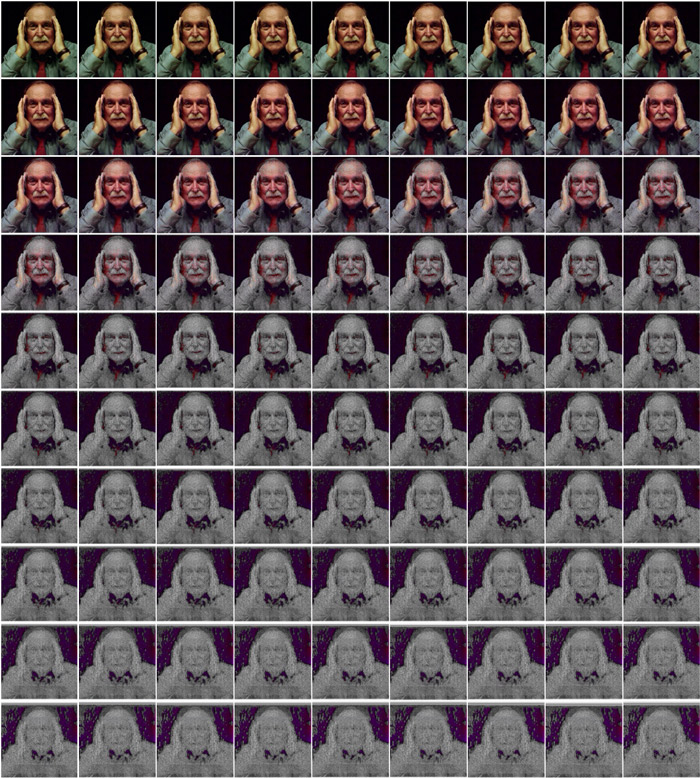
Pete Ashton is an artist who repeatedly re-uploads images to his Instagram account until they degrade into almost nothing. He cycles through these images as they become discoloured and fuzzy. 

“Tiny details show its age, it’s become dated in some way,” Gutierrez explained, in reference to Ashton’s art. He argues that we tend to think of digital files as immaterial, but they degrade through circulation. Reproduction affects the quality of the image, even online. 

Despite the degradation of physical quality when art is posted online, the Internet presents a major advantage for distributing one’s art. Artists create websites to post their portfolios and use Instagram, Tumblr, Pinterest, or individual blogs to  gain publicity. Additionally, art through the medium of social media lowers the entry barrier one might otherwise face in the global art community. Artists no longer have to rent out a gallery or be selected to have their work publicized in a show. The competition for physical space is transforming into competition for viewers’ attention.—the Internet is a limitless gallery. Nevertheless, this increased visibility does not ensure exposure. A proliferation of visual art online requires artists to instantaneously grab viewership. 

“There’s the paradox there—t­­he right to free speech isn’t the right to be heard,” said Gutierrez.  “So how images circulate and the barrier to entry is definitely lower. People have better access and ability to create things, but what gets seen and how and why?” 

Gutierrez expanded on how modern mediums of visual art struggle to conform to traditional viewing.

“Institutions and galleries are still struggling with art that they still can’t recognize,” Gutierrez said. “It is hard to deal with because a GIF is something that is largely consumed on a screen, and it moves and it’s mobile, so by putting it up on a wall seems counter-intuitive—so how do you present art in that sense? At an institutional level, it proposes this question of, ‘So how do we present this art?’ But as a viewer it presents an interesting opportunity of seeing and gathering art.” 

This is where the actions of university students come into play. We, as both viewers and artists, use social media to our artistic advantage. University students, particularly in North America, have likely used social media technology since adolescence. The potential of social media to increase the accessibility of art is an opportunity we must take advantage of.  

The loss of the physical quality of an image through its propagation online could be considered a necessary sacrifice in the evolution of virtual art. Yet, through an additional collective effort, the proper citation for digital art can be produced. The initial purpose of social media may not have been to distribute art, let alone become a platform for creating it, but this isn’t the first time that the potential of cyberspace has surprised us. The future generation of prominent artists will consist of those who best adapt themselves to this changing technology. 

Read the latest issue

Read the latest issue