Latest News

Basketball, Hockey, Martlets, Men's Varsity, Sports

2016-17 McGill Athletics roundup

Martlets Basketball

As the fourth seed in this year’s women’s U Sports basketball tournament, the McGill Martlets defeated the Regina Cougars on March 9, securing the school’s third consecutive trip to the national semi-finals. After a shaky start to the season, the Martlets entered the weekend riding a hot streak, winning nine of their last ten games and undefeated in their last five. Alex Kiss-Rusk has led the way for the team, averaging over 14 points per game to that point. Aside from their star centre, the squad has found its success through expert shooting and dominant rebounding.

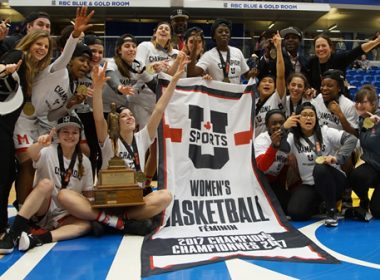
McGill trumped the Laval Rouge et Or in the tournament’s final round to earn the school’s first women’s basketball national championship in McGill history. One day before, McGill upset Carleton–the tournament’s highest-seeded team. Their postseason run came after the team won this year’s RSEQ championship. The Martlets finished their historic campaign with a sterling 25-9 record after starting the season 2-5.

Stephen Gill 


(Lauren Benson-Armer / The McGill Tribune)

Redmen Basketball

McGill Redmen basketball should do nothing but hold their heads high as their 2016-17 season comes to an end. The squad clinched their second consecutive RSEQ title–and third in four years–after a dominating 13-3 regular season and an 82-65 routing of the UQÀM Citadins in the RSEQ final. Missing their starting point guard Kendrick Jolin, who was dealt a season ending injury on Feb. 16, the team headed into the U Sports tournament riding a seven-game winning streak. Looking to rebound after an upsetting 72-69 first round loss to Calgary in last year’s CIS tournament–now called U Sports–the Redmen downed the University of Manitoba Bison 63-53 to advance. Unfortunately for McGill, the team next came face-to-face with the six-time defending champion Carleton Ravens. Despite a valiant effort from the Redmen, the team fell short, losing 74-58. Unable to recover from the loss, McGill fell again to Dalhousie in a close fought 69-63 bronze medal game.

Aaron Rose


(Remi Lu / McGill Athletics)

Martlets Hockey

The fourth-ranked McGill Martlets Hockey team secured the program’s 14th RSEQ conference championship on March 4, with a 3-0 win over the Concordia Stingers. After finishing the regular season 16-4, the Martlets took the number-one seed into the RSEQ tournament. They pushed past the fourth-seeded University of Ottawa in the semi-finals, then rolled past Concordia in the best-of-three final without conceding a goal. 

McGill now has a week off to prepare before heading to the U Sports Women’s Hockey National Championship in Napanee, ON starting on March 14. The Martlets last won a national title in 2014. 

Fifth-year centre Mélodie Daoust leads the team in scoring with 56 points in 33 games and second-year forward Olivia Atkinson is the leading scorer with 26 goals. Freshman goaltender Tricia Deguire has been solid in goal this season with a 1.62 goals against average and a 0.934 save percentage.

André Morin


(mcgillathletics.com)

Redmen Hockey

With a 21-4-3 record, Redmen Hockey finished the regular season in first place in the OUA. In the RSEQ quarter-finals, McGill narrowly beat Laurentian in Sudbury, to follow up a home-ice blowout that moved the Redmen into the semifinals. After two subsequent victories against UQTR, the Redmen fell short in the conference finals, losing to Queen’s in a best-of-three series. However, the Redmen managed to clinch the OUA Bronze wild card series against the Windsor Lancers on March 10 to secure their berth in the U Sports Final 8 Championship. Now the team will travel to New Brunswick to compete in the U Sports tournament where McGill hopes to overcome OUA disappointment and win their first national championship since 2012. 

Patrick Beacham

News, SSMU

SSMU Legislative Council passes motion on constitutional amendments, discusses Ger resignation

At the Students’ Society of McGill University (SSMU) Legislative Council meeting on March 9,  a lengthy question period took place due to the sudden resignation of former SSMU President Ben Ger earlier that day. In anticipation of the length of the question period, councillors voted to amend the agenda so that approximately half of the motions were voted on before it began. Council members passed the Motion Regarding SSMU Support For Floor Fellow Bargaining and the Motion Regarding the Endorsement of the McGill Communities Council Letter to the Board of Governors. Councillors then debated the current balance of power between the Judicial Board (J-Board) and the Board of Directors (BoD), with reference to the Motion Regarding the Amendment of Internal Regulations of Governance. The motion was ultimately amended and then passed. After the question period, Council passed all of the remaining motions.


Question Period

At the beginning of Council, Vice-President (VP) Student Life Elaine Patterson read an addendum prepared by former president Ger regarding his resignation.

“Based on serious concerns raised by students close to [Ger], the Executive recognized his own inadequacy in handling the David Aird case and has failed his responsibility in upholding the safety of our members,” Patterson said. “In light of this, he was personally and professionally unsuited to continue in his position of authority as president of SSMU.”

Clubs Representative Adam Templer asked Patterson why Ger was inadequate for the position. Patterson explained that a person came forward and made allegations that Ger had committed gendered violence in the past.

“The Executive recognizes that somebody that has allegations of gender-based violence against them is not equipped to handle the scenario […] regarding David Aird,” Patterson said.

During the question period, councillors addressed allegations involving Ger and former VP External David Aird. Questions focused on the Executive Committee, Legislative Council, and BoD members’ knowledge of Ger and Aird’s actions.

Science senator and former BoD member Sean Taylor asked VP University Affairs Erin Sobat when he became aware of Ger’s sexual assault allegations. Sobat answered with reference towards Aird’s allegations.

“A couple of members of the Community Disclosures Network [CDN] reached out to me in early February, about how an executive might be removed from a position,” Sobat said. “The specific nature of their concern was not disclosed in detail. I only became aware of those incidents and testimonies when they were reported on by The McGill Daily.”


Motion Regarding the Amendment of Internal Regulations of Governance

The Motion Regarding the Amendment of Internal Regulations of Governance proposed a change to the number of votes required for the BoD to overturn J-Board decisions. Additionally, the motion proposed that the Legislative Council be able to pass decisions before ratification from the BoD.

Council voted to split the motion into two separate sections for voting. Council members voted to accept all sections of the motion except clause 4.c.

Clause 4.c would give the BoD the ability to overturn a decision made by the J-Board with a two-thirds majority if the decision is deemed unreasonable or motivated by prejudice, collusion, bribery, or conflicts of interest. Current regulations, which will remain in place, require a four-fifths majority for such changes to be made.

Faculty of Law Representative Romita Sur expressed her concerns with clause 4.c.

"The Law Students Association voted unanimously […] against this motion,” Sur said. “[….] In light of everything going on, I think it is important to remember that the [BoD is] involved with very intense political processes and the [J-Board] is a place that is supposed to be neutral."

Arts Representative Isabella Anderson responded to Sur’s comments, explaining that the Arts Undergraduate Society (AUS) Council held a straw poll, which was in favour of the motion, including clause 4.c.

VP Finance Niall Carolan made the case for the BoD's political neutrality.

"The [BoD] does not discuss any political issues, the only reason the Board is there is to preside over legal and financial responsibilities of the society," Carolan said.

A motion was proposed to bring clause 4.c to the J-Board Review Committee which was passed.


Motion Regarding Referendum Question on Constitutional Amendments

SSMU also discussed its upcoming referendum question, which contained many alterations to the SSMU Constitution, including changing the VP Operations executive title to VP Operations & Sustainability. Additionally, the motion proposed a change to the definition of quorum for the General Assembly (GA), such that there would be no faculty requirement for quorum. Currently, there is a requirement that at least four faculties must be represented in order to reach quorum.

The Winter 2017 GA had difficulty reaching quorum on Feb. 20 and has had similar issues in the past. Sobat explained the impetus for the change and said that without quorum, the GA cannot provide proper representation.

“There were times when we had quorum, and then lost it,” Sobat said. “To me, that is not representation, that is fighting for quorum.”

Senate Caucus Joshua Chin responded to Sobat's statement regarding representation.

“I am very uncomfortable with the removal of faculty requirements for quorum,” Chin said. “[….] I feel that we are making [GAs] less representative.”

Chin put forth an amendment to the motion that would reinstate faculty requirements for GA quorum. The amendment failed and Council then voted to pass the motion

Baseball, Private, Sports

10 Things: 2017 MLB Headlines

Heading into the 2017 Major League Baseball season, here are 10 stories to follow.

1.     Repeat contenders?

No team has successfully defended their World Series title since the 2000 New York Yankees. Nonetheless, the current Chicago Cubs look built to become perennial championship contenders. Their young core players should continue to improve. The only potential weaknesses are in centre field and at the back end of the pitching staff, where the team will look to improve during the year.

2.     No more Mr. Papi

The Boston Red Sox will have to replace David ‘Big Papi’ Ortiz’s production both on the field–where he hit .315 with 38 home runs last year–and off the field where he was a vocal leader of the team. If second baseman Dustin Pedroia can take the reigns of the team, the acquisition of Chris Sale should help ease the burden on the offence.

3.     Jays looking for a slugger

Expecting designated hitter Edwin Encarnacion to sign a mega-contract elsewhere, the Toronto Blue Jays brought in designated hitter Kendrys Morales to replace their long-time slugger. The market for power hitters failed to materialize and Encarnacion settled for a 3 year, $60 million contract with the Cleveland Indians. Morales might lack Encarnacion’s upside, but with a bounce-back season from right fielder Jose Bautista the Jays could be back in October.

4.     A young man’s sport

Rookie shortstops Trevor Story and Corey Seager burst onto the season last year in the National League while Detroit Tigers starting pitcher Michael Fulmer became an ace. This year, Red Sox outfielder Andrew Benintendi and Atlanta Braves shortstop Dansby Swanson look to take the league by storm.

5.     Time’s ticking

Commissioner Rob Manfred has made a concerted effort to decrease the duration of games. The two most significant rule changes for 2017 are the start of a no-pitch intentional walk and a 30-second limit for managers to decide whether to challenge a play. Will it work? Only time will tell.

6.     The Young Yankees 

At last season’s trade deadline, the Yankees re-loaded their farm system with a plethora of young prospects. Catcher Gary Sanchez tore up the league down the stretch and New York re-signed pitcher Aroldis Chapman to bolster their bullpen. They may not challenge Boston or Cleveland this season, but their championship window should reopen soon.

7.     New rules with new CBA

Two changes to the new collective bargaining agreement may affect trade deadline strategy. With steeper penalties for surpassing the Competitive Balance Tax (“Luxury Tax”) thresholds, teams may be more inclined to trade away their star players. However, with lower penalties on teams looking to sign top-tier free agents, winning teams might be willing to wait until the offseason to bring the reinforcements.

8.     Bounce back candidates

Pittsburgh Pirates outfielder Andrew McCutchen, Tampa Bay Rays starting pitcher Chris Archer, and Arizona Diamondbacks starting pitcher Zack Greinke were three of the biggest disappointments in 2016. Don’t expect the same this season—all three look poised for bounce-back campaigns in 2017.

9.     More baseball than ever

A longer spring training and this year’s World Baseball Classic means more innings and probably tired players when September rolls around. Last year, Red Sox shortstop Xander Bogaerts looked fatigued at the end of the 2016 season, so the Boston Red Sox probably aren’t thrilled that their young star is tallying innings for the Netherlands national team.

10.  Brave new world in Atlanta

The SunTrust Park era begins this season in Atlanta and with it comes increased pressure to return to the postseason. They probably won’t reach that goal in 2017, but with 23 year-old shortstop Dansby Swanson and arguably the most talented farm system in baseball, the future looks bright for the Braves.

Elections, News, SSMU

SSMU Election 2017: VP University Affairs

The Students’ Society of McGill University (SSMU) Vice-President (VP) University Affairs represents student interests at level of the university administration. The VP University Affairs sits on the McGill Senate, maintains relations between SSMU and all levels of the university—except for the Board of Governors, which falls within the President’s portfolio—oversees SSMU’s student research endeavours, and operationalizes SSMU’s commitment to equity.

The two candidates for 2017-2018 are Alexander Dow and Isabelle Oke. At the press conference on March 6 and the debate on March 9, candidates were able to elaborate on their platforms.

Oke elaborated on her plans to bring happy lights and both visual and non-visual cues to the library in order to help students understand the health effects of studying. Her platform, which focuses on campus outreach, student rights, and accessibility, spoke about what she thinks is the VP University Affairs’ most important responsibility.

“The university’s process in providing education is something that’s inherited generation by generation,” Oke said. “I see the student body as being an intermediary group that protects the individual rights of students on campus when the university can’t recognize what they are necessarily. That’s the framework with which I see SSMU’s strongest institutional power.”

At the debate, candidates spoke about engaging students, particularly those dealing with mental health issues or sexual assault.

Candidates were asked questions sent in from the outgoing executives, with Chief Electoral Officer Alexander Nehrbass and Deputy Electoral Officer Nicholas Nehrbass moderating the debate. Current VP University Affairs Erin Sobat asked about barriers that block student accessibility to the McGill experience and how the candidates would work to address those. Oke spoke about accessibility challenges in the classroom, the precarious status of student labour, and overhead fees.

Dow’s platform is characterized by the phrase “students first.” He focuses on giving students a voice on campus and rebuilding lines of communication between the student body and SSMU.

“One of most important parts [of accessibility] is advocating to upper administration that if something is wrong you need to have student support within that faculty in order to change those things,” Dow said.

In response to a question from Sobat, which clarified that mental health falls under the VP Student Life portfolio, the candidates focused on different channels for improving the mental health system at McGill. Dow mentioned increasing discussion on healthy study habits and his intention to work with the Library Improvement Fund—overseen by the VP University Affairs—to address related mental health issues.

Oke discussed the overburdening of student health services and the need to extend mental health education and care to the classroom. Increased demand for the newly merged McGill Mental Health and Counseling Services has led to long wait times and complaints this year.

“More accessible teaching practices will result in lesser burden on mental health services [professionals],” Oke said.

An audience member posed a question about the VP University Affairs’ role regarding the new Policy against Sexual Violence approved by the BoG in December 2016. Sobat worked on the policy at the level of the Senate this past year, and the future executive will be working on the implementation phase of the policy as detailed in section 7 of the policy.

“Communication with students on this issue will be key because if students don’t know where to go […] this policy will not succeed,” Dow said. “[….] I want to make sure that students are able to use it in future.”

Oke explained that she would want to provide students with information on how the policy is implemented and so will be able to communicate specifically what implementations should be made.

When asked about the equity portion of their portfolios, Dow spoke about emphasizing delegation to equity commissioners who are knowledgeable and understanding of the policy.

Oke expressed a desire to focus on a specific issue, namely safety on campus.

“I want to focus on one thing and get a lot of traction going on a specific issue,” Oke said. “The idea I want to tackle is safety on campus, what creates it, what sustains it, and what different institutions on campus have a role to play on it.”

Elections, News, SSMU

SSMU Election 2017: President

The Students’ Society of McGill University (SSMU) President is the spokesperson of the Society, enforces its constitution and internal regulations, and manages relations between SSMU and McGill. The president is also responsible for coordinating the SSMU executive team.

The three candidates are Lukas Shannon, Helen Ogundeji, and Muna Tojiboeva. At the press conference on March 6 and the debate on March 9, candidates were able to elaborate on their platforms.

At the press conference, Shannon explained how he would create a dialogue committee to promote constructive conversations regarding contentious issues on campus.

Ogundeji described her idea to create an ad-hoc subcommittee that would explore the creation of a code of conduct for student executives.

Tojiboeva spoke on how she will reform the relationship between the Board of Directors (BoD) and the J-Board.

“Most of the petitions [for hearings] are directly against SSMU executives […] and the executives in question do sit on the [BoD],” Tojiboeva said. “In my experience, [executives have] always found a way to slow down the process [….] What I really want to do is to make sure that the SSMU [J-Board] can be called an independent body.”

At the debate, the candidates were asked questions submitted by the outgoing executive, with Chief Electoral Officer Alexander Nehrbass acting as moderator. Ben Ger, who resigned earlier that same day, asked how each candidate would balance support and accountability in their role as leader of the executive team.

Ogundeji reiterated her plan to implement an executive code of conduct, which she said will hold the executives accountable to a specific standard. Shannon stated that he believes there is no conflict between support and accountability.

Tojiboeva answered that she would ensure that minutes from the BoD meetings were posted on the SSMU website.

The second question from Ger asked what the candidates believed to be SSMU’s priorities in terms of advocacy at the level of McGill administration, specifically on the Board of Governors (BoG). The SSMU President is the only undergraduate representative on the BoG.

Tojiboeva responded that she would advocate for an increase of mental health services on campus and, as the only undergraduate representative, would seek feedback from other undergraduates when deciding which other issues to advocate for at that level. Ogundeji said that greater change would be possible if more students had a voice on the BoG and intends to increase representation. Shannon agreed with Ogundeji, adding that he would seek to strengthen his connection with non-student members of the BoG.

In response to a question from the live stream, the candidates elaborated on their ideas for Francophone affairs, which technically falls under the VP External portfolio. Ogundeji proposed the creation of a buddy system between students who are from Montreal and those who are new to the city.

Tojiboeva suggested the creation of a week focused on Francophones. She also proposed the creation of a mentoring system that would support students who are transitioning from a French education system into the English system at McGill.

A member of the audience asked how the candidates would support racialized students on campus. Ogundeji elaborated on her platform, stating that she would seek to create a program with the VP Student Life and the Mental Health Subcommittee that would support such groups.

“I have experience working on equitable governance reform committee, working with committee members to create equity seats on council and to create racialized seats and black student seats, given the colonial and slave-owning history of McGill,” Ogundeji said.

Tojiboeva explained that her proposed changes to the J-Board would help SSMU to better reflect the needs of marginalized students. Shannon stated that he would seek to expands platforms that marginalized students can speak from.

The debate portion of the event focused on the distribution of mental health resources. Students currently pay over $100 per semester to Student Services, which funds services such as the McGill Counselling and Mental Health Services. SSMU’s budget currently subsidizes the Peer Support Centre, Nightline, and SACOMSS.  

Tojiboeva claimed that the 2016-2017 SSMU budget did not allocate any funds to mental health services. After a question from Ogundeji, Tojiboeva clarified that she would use the surplus that SSMU is projected to run this year to streamline the existing system.

“[I would] make sure the system that already exists becomes more effective, [instead of creating] new things because would take more money than that to create a functioning system,” Tojiboeva stated.

A previous version of this article misspelled Helen Ogundeji's name. The Tribune regrets this error. 

Elections, News, SSMU

SSMU Election 2017: VP Finance

The Students’ Society of McGill University (SSMU) Vice-President (VP) Finance is responsible for developing and managing the annual SSMU budget, authorizing agreements between SSMU and external groups, and overseeing the disbursement of funds to student groups.

Arisha Khan is the only candidate for the position. Her platform includes plans to update SSMU’s invoice and central booking software, introduce a Customer Relationship Management system, and develop a comprehensive professional development program for students who handle club finances.

Khan described the financial benefits of transitioning to newer software during the press conference on March 6.

“We have around six per cent of our annual budget devoted to IT expenses,” Khan said. “Over the last year we spent an additional $2,100 to migrate […] to Gmail [….The technology] we use to manage our clubs and services […] is early 2000’s at best. The cost of that is having to spend a lot more on administrative costs and rough work that people really shouldn’t have to do.”

At the debate on March 9, Khan emphasized the need for a restructuring of SSMU funds to make sure students can access proper resources when needed.

“We spend a lot of money on overhead and administration expenses, compared to other [post-secondary] student associations [in Canada],” Khan said. “For example, SSMU had the largest number of executives across Canada, but nowhere near the largest [undergraduate] population, so with that in mind, there is obviously structural issues that we should be examining with regards to our resource allocation and ways that we can streamline processes to have less administrative burden.”

A question was posed via the live stream about the Symphonic Band Club’s lost sheet music. Approximately $6,000 worth of sheet music was misplaced when SSMU club offices were cleared out in May 2016 and the Symphonic Band Club has been seeking compensation since. Khan assured audience members that she is prepared to deal with the issue if it remains unresolved next year.

“[….If] the sheet music issue is still ongoing if and when I assume the role, I would consult with the appropriate bodies, such as our insurance companies and our legal team,” Khan said.

She plans to increase SSMU transparency by making budget information easily accessible.

“I’d like to create a website that has all of our financial resources and snapshots of our expenditures so that students can be engaged,” Khan said.

In conclusion, Khan said that her previous positions will allow her to raise SSMU to one of Canada’s premier student unions.


“I hope that I can bring my range of experience to integrate here at McGill so that we can be competitive with our peer institutions,” Khan said.

Elections, News, SSMU

SSMU Election 2017: VP Operations

The Students’ Society of McGill University (SSMU) Vice-President (VP) Operations is responsible for managing the SSMU building, operations including Gerts Bar and Sadie’s, and overseeing SSMU’s sustainability efforts.

Anuradha Mallik is the only student running for election as VP Operations. Her platform includes reviewing SSMU’s unethical and unsustainable investments, continuing the SSMU Environmental Committee, and expanding the Crash Pad project, which allowed students to stay overnight in the SSMU ballroom during the Fall 2016 Frosh.

“There are a lot of commuter students who have early exams that stay at the library late, and wouldn’t want to make their commute late at night,” Mallik said. “So I think that introducing the Crash Pad for academic purposes like that would be beneficial to the students.”

Mallik also answered questions and presented her platform at the March 9 SSMU candidates’ debate. Mallik emphasized utilizing feedback from constituents on SSMU building space use, continuing to work on revenue-generating ventures—such as Gerts, Sadie’s, and SSMU MiniCourses—and maintaining sustainability across SSMU operations.

To increase revenue generated by Gerts, Mallik proposed continuing to hold the Faculty of Science BARmacy at Gerts. She also intends to introduce further employee training to help combat bystander culture.

On the relationship between the portfolio and the McGill Office of Sustainability, the candidate emphasized ongoing communication and utilizing existing connections with representatives from the office.

Responding to a question on increasing Sadie’s revenues—the student-run cafeteria that operates on the second-floor of the SSMU building—the candidate promised to maintain and build upon the work done by this year’s VP Operations, but left the option of bringing more external vendors into the SSMU building.

“Student involvement with Sadie’s is important, but vendors are an important input to Sadie’s in terms of the institutional knowledge that they bring,” Mallik said.

Additionally, Mallik expressed her intention to consult with students on what they want out of SSMU MiniCourses. She promised to rework the management of MiniCourses, and suggested introducing more dance and exercise workshops—however, SSMU is currently unable to offer services in these areas due to overlap with McGill Athletics.

In terms of qualifications for the job, Mallik referred to her past experience organizing model United Nations events at McGill and her work on various sustainability projects. She emphasized her ongoing passion for and commitment to sustainability throughout the discussion.

“One of my big passions […] is sustainability and I started working on a lot of big sustainability projects from the 11th grade onwards […],” Mallik said. “A lot of the passion I have towards operations and sustainability started a long time ago. [I will] do whatever I can with this position and shape it in a positive way for the McGill community.”

Elections, News, SSMU

SSMU Election 2017: VP External

The Students’ Society of McGill University (SSMU) Vice-President (VP) External represents the society’s interests to local and provincial governments, other student associations, and groups, including McGill labour unions. The VP External is also in charge of SSMU’s political campaigns and mobilization efforts.

After Mazin Gasim withdrew from the race after the press conference on March 6 and Noah Century withdrew on March 12 after being censured by Elections SSMU, the remaining candidate for the position is Connor Spencer. At the press conference and the debate on March 9, the candidate was able to elaborate on her platforms.

During the press conference, Spencer said that McGill should join the Association for the Voice of Education in Quebec (AVEQ) and collaborate with other universities in order to fight provincial and federal austerity measures. In the Winter 2016 Referendum, SSMU members voted against joining AVEQ. SSMU has continued to participate in AVEQ as a non-voting member with observer status.

Spencer also plans to overhaul the VP External website in order to promote the outreach of the office.

“The website for the VP External right now is off the [SSMU] page a little bit,” Spencer said. “[…] It would be great if we had a campaigns tab […] with a regularly updated [page] that goes into what has happened this week at the provincial level that specifically would affect McGill students as members of the Montreal community.”

In her opening statement at the SSMU Executive Candidates’ Debate, Spencer stressed integration with the larger Montreal community and student movements, improving accessibility for students, and the implementation of a gendered and sexualized violence policy for SSMU.

The moderator and audience questioned McGill’s role in the Montreal community and Quebec student movements, the candidate's experience and qualifications for the role, and the candidate's specific plans for the indigenous affairs aspect of the VP External portfolio.

“It’s something that I hope to really, really work towards including,” Spencer said. “At the same time, [I] recognize that I don’t come from those communities and it’s important that I don’t have a stance on what that should be because it’s about opening a dialogue with those communities about what they want to see and how we can make that happen.”

Several members of the audience expressed their approval of Spencer’s answer by snapping.

In her closing statement, Spencer emphasized that she wanted to continue her work in student activism and affecting change at McGill.

Elections, News, SSMU

SSMU Election 2017: VP Internal

Maya Koparkar is the only candidate running for the position of Vice-President (VP) Internal, which is tasked with overseeing the Students’ Society of McGill University (SSMU) first-year outreach activities, communications, and student engagement. Koparkar aims to expand the portfolio of VP Internal in order to diversify the events offered to promote first-year engagement.

The VP Internal’s first major project is overseeing Frosh at the start of the Fall semester. Koparkar proposed to act as a mediator between frosh coordinators in order to facilitate collaboration with smaller faculty froshes. In addition, she proposed ways of promoting health and wellbeing through frosh, in line with recent years’ efforts to make frosh more accessible and put less emphasis on drinking and partying for new students with other interests.

“I want to speak to departmental internals about creating cohesive programming [and] better guidelines for student about how to Frosh,” Koparkar said. “For example, taking naps, rest, drinking water, [and providing] accessible food options and [beverage] options besides alcohol during Frosh. Maybe Frosh [would want] to organize morning zumba or yoga, that could be looked into as well.”

Tofunmi Odugbemi, President of the McGill Political Science Students Association (PSSA), raised the issue that the SSMU listserv neglects to include content relating to departmental events. Current VP Internal Daniel Lawrie has sought to reduce the amount of content included in weekly listservs, making selections based on content that he believes will appeal to the largest amount of the student body. Koparkar suggested collaborating with departmental organizations in order to facilitate communication with SSMU.

“A lot of the standardized process for submitting content to the listserv is set in stone, but I would look forward to working with departmental organizations,” Koparkar said. “[There are] lots of things [departments] can offer to students that [SSMU] can effectively promote [….] For example, I want to work [with] departmental organizations to better engage them with SSMU events.”

Furthermore, given recent scandals involving SSMU executives, Koparkar intends to mend the relationship between the society and its members.

“I want to create channels for students who don’t usually get involved with SSMU,” Koparkar said. “[….I will] create engagement in terms of diversifying the events portfolio. [Something] I learned as a member of the [Students’ Society Network Program (SSPN)] for two years [is that] events don’t need to be large to engage students. [They] could be small, [like providing] food during exams. [I aim to] collectively engage campus away from politics.”

In her closing statement, Koparkar explained the importance of mending SSMU’s image.

“[I have] lots of passion for providing students with [a] great connection to SSMU,” Koparkar said. [I want to] humanize SSMU by taking away the bureaucratic elements. People see the role of VP Internal as a party planner, but there’s more to offer students. Building from the ground up with first-year engagement can create a more unified SSMU and student body moving forward.”

Elections, News, SSMU

SSMU Election 2017: VP Student Life

The Students’ Society of McGill University (SSMU) Vice-President (VP) Student Life manages relations between SSMU and its clubs, services, and independent student groups. In pursuit of this, the position is tasked with helping student groups coordinate events, assisting student groups with resources, managing the Society’s mental health initiatives, and collaborating with university staff from Student Services.

Jemark Earle is the only candidate for VP Student Life. His platform features a significant focus on projects that complement student mental health services, including training all faculty student executives in Mental Health First Aid and creating a Mental Health minor.

During the press conference on March 6, Earle described the specifics of his plan to address mental health on campus.

“Right now we have the Career Support Centre […] which deals extensively in helping destigmatize mental health and allowing students to speak when speaking to a professional is too intimidating,” Earle said. “[Training student executives in mental health would] create a space where [executives] would be […] more approachable, more empathetic to situations, and create a space to talk.”

At the debate on March 9, Earle spoke more on his emphasis on mental health.

“My platform deals extensively with mental health and this is because I’ve seen how detrimental this can be on campus,” Earle said. “What’s missing from the equation is student input and as your VP Student Living I plan on dealing with the administration because I don’t believe they’re being transparent in how they deal with students.”

Incumbent VP Student Life Elaine Patterson asked Earle about conflict mediation, with Earle explaining his approach.

“What I believe helps or is beneficial in dealing with student conflicts is sitting with both parties and acting as mediator between them, ask them to say what the conflict is […], working towards asking them what they want from the other party, and what the other wants from them,” Earle said.

Patterson also inquired into how Earle will balance his time between supporting his personal projects, mental health, and over 150 student groups on campus—Patterson believes that the latter is the largest part of the portfolio. Earle clarified his priorities.

“In the first few months I know a lot of the job is going to be dealing with clubs and services, we have activities night so I’ll have to be responding to a lot of emails and talking to a lot of clubs and services representatives,” Earle said. “So I think that dealing with the mental health and the clubs and services […is] what I will prioritize over my personal projects.”

Read the latest issue

Read the latest issue