


Latest News

News, SSMU

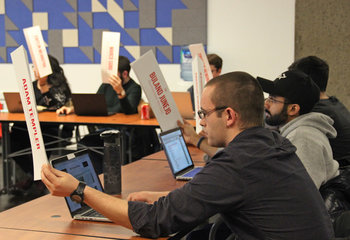
SSMU launches new Executive Shadowing Program

The Students’ Society of McGill University (SSMU) executive team is made up of seven enrolled students who oversee aspects of student life on campus. Each executive has been elected by the student body to manage a specific portfolio; positions include Vice-President (VP) Operations, VP University Affairs, VP Student Life, VP External Affairs, VP Internal Affairs, VP Finance, and President.

Beginning on Jan. 24, SSMU launched an Executive Shadowing Program that allows students to sign up to shadow a SSMU executive by filling out a short online form. The application puts students in contact with a SSMU executive through email and, once connected, the student and the executive schedule a time to meet.

An objective of the Shadowing Program is to demonstrate the responsibilities of the executives, thus preparing potential future candidates.  VP Student Life  Elaine Patterson said that understanding SSMU executive positions can be difficult without first-hand experience.

“A year ago, I had never really done student staff work personally,” Patterson said. “So, I understand that it could be very intimidating to run for a position. I think the shadowing program will show interested students that this is really a welcoming environment. You can read all on paper about what the position is like, but until you actually sit behind this table, you cannot really understand what the job really entails.”

Before the restructuring of positions at the end of last school year, executives regularly worked over 100 hours. Ger and VP Internal Daniel Lawrie both stated that, despite the long hours and stress, being a part of the SSMU executive is a valuable experience.

“Honestly, it is in a sense an internship to life, getting a sense of how to work a job, and having a team around you to get the job done,” Lawrie said.

SSMU elections have historically had low voter turnout, with only 17.5 per cent of the undergraduate student body participating in the most recent election. The Executive Shadowing Program was developed in Summer 2016 to increase the transparency of SSMU governance and promote engagement with the campus community. It is expected to extend to SSMU councillors and upper administrative members of McGill staff in the future.

Planned to start early this week, the program will have no end date. The length and the content of the shadowing will be left to the discretion of the student and his or her assigned executive. With the candidates for the previous SSMU election consisting mainly of Caucasian males and the recent SSMU-sponsored report on equitable governance, President Ben Ger hopes that the program will play a role in further reform.

“In the past year, we have really been focusing on providing equal access to governance for all identities on campus,” Ger said. “Elections definitely favour a specific population and I believe the makeup of our executives team could definitely be better. The shadowing program will make elections more accessible to everyone.”

The SSMU election nomination period for next year’s executives will begin Jan. 30 and end Feb. 10, with voting from March 13 to 16. After the election results are announced on March 16, the incoming executives will go through a month-long transition period in May and start their official term on June 1.

“When you step into a position like this, you are stepping in to become the heads of a multimillion-dollar company that is only here to help,” Ger said. “It is not here for profit. It is here to specifically make people happier. It is so hard yet so overwhelmingly rewarding. The people who I went into this with has become the family I’m going to be walking out with.”

Science & Technology

MNI researchers create data model to isolate causes of Alzheimer’s disease

Alzheimer’s disease, first described by Alois Alzheimer in 1906, is a progressive brain disorder that causes debilitating cognitive impairments. Today, it is the most common cause of dementia, responsible for 60 to 70 per cent of 47.5 million cases worldwide. Due to its high prevalence, Alzheimer’s disease poses a significant economic burden for affected families and the Canadian health system at large. With Alzheimer’s disease increasingly becoming one of society’s major public health concerns, targeted research has become a priority.

Researchers have identified various biological abnormalities at the microscopic level that manifest themselves in the classical symptoms of Alzheimer’s. These abnormalities include plaques, composed of specific peptides called amyloid-beta, that form outside neurons—the fundamental units of the nervous system. Furthermore, specific biological structures called neurofibrillary tangles, which are stabilized with tau proteins, accumulate inside neurons. Inflammation and damage to synapses, which are avenues of communication between neurons, also occur. The eventual result of these and many other flaws is brain degeneration with noticeable changes in structure and widespread death of neurons. The combination of these defects lead to the symptomatic behaviours of Alzheimer’s disease.

The presence of Alzheimer’s disease is accompanied by many pathological indicators; however, scientists have not identified the exact cause of the disease. Currently, they surmise that Alzheimer’s results from dynamic interactions between multiple factors rather than any one significant trigger. One of the scientists holding this view is Dr. Yasser Iturria Medina, a post-doctoral fellow at the Montreal Neurological Institute (MNI).

“Alzheimer’s disease is not causally associated with any unique neuropathological mechanism, but rather with multiple concomitant factors,” Medina said.

His own research is focused on elucidating the causes and progression of Alzheimer’s disease, specifically through the development of an “integrative multifactorial causal model.” The model, when optimally developed, will evaluate all possible pathological factors, as well as their interactions, to determine the cause of Alzheimer’s disease. The end goal of this model would be to enable the development of personally tailored and efficient therapeutic interventions for Alzheimer’s disease.

In pursuing the development of this model, Medina investigated the early signs present in the development of Alzheimer’s in one of his recent studies. The study, published in Nature Communications last June, examined how certain brain processes change over time as Alzheimer’s disease progresses. The processes considered were: The deposition of amyloid-beta proteins, metabolism, vascular function, functional activity at rest, structural properties, cognitive integrity, and the levels of peripheral proteins. As part of the study, Medina looked at 7,700 images from 1,171 subjects. Utilizing sophisticated algorithms, his study established an order of disease progress and identified one of the earliest signs of Alzheimer’s disease development called “intra-brain vascular dysregulation”—that is, impairment of the blood supply in the brain. The results of this study mark an important step towards understanding the underlying causes of the disease—crucial to eventually finding a cure.

But even with such important advances, a lack of full knowledge regarding Alzheimer’s limits available treatment options. At present, there is no cure for Alzheimer’s disease. Treatments available today are only designed to treat its symptoms, with five FDA-approved drugs currently available to do so. However, present consensus states Alzheimer’s disease can not be stopped or reversed once it begins.

Undoubtedly, finding the cure for Alzheimer’s is a daunting task. It will only, and eventually, be accomplished through the unrelenting and collaborative efforts of researchers around the world.

Martlets, Men's Varsity, Sports

57th Woodsmen Games brings thrills to Mac campus

The 57th Annual Intercollegiate Woodsmen Competition brought fast-paced action, roaring crowds, and the scent of freshly chopped wood to McGill’s Macdonald Campus on Saturday, Jan. 28. The suspense was palpable from the 9 a.m. ceremonial first cut to the dangerous water boil finale.
For those unacquainted with the tradition of the Woodsmen Games, the event is a series of high-octane lumberjack-inspired competitions. There are both single competitor and team-based events with results translated into cumulative sores for the Canadian and American universities present. McGill’s lumberjill’s placed first, while the lumberjacks finished fourth. The day’s action was broken up into morning and afternoon sessions.
“The morning events are more sign-in events, […] you sign in and you [compete],” McGill Woodsmen captain Dominic Mercier-Provencher said. “But for the afternoon, it will be more concurrent. Every school competes at the same time doing the same events.”
The first session was filled with enthralling action in events like the pole climb, axe throw, and—the Mac campus special—the snowshoe race. In the race, athletes compete in a 1.5km race while wearing snowshoes, tremendously increasing the difficulty of sprinting tremendously.
After the excitement of the morning events, both athletes and spectators alike retreated from the heavy snow into the Ceilidh Bar for beer, chili, and coffee. Despite the weather, the crowd seemingly doubled in size when the competition resumed for the afternoon.
“For me, I like [the afternoon] better,” Mercier-Provencher said. “It gives you an idea of how well you did against the other teams. We’ll have the underhand chop, swede saw, and crosscut saw.”
 While the morning was great fun, the afternoon took the intensity to an entirely new level. The first events of the session- swede and crosscut saws-were phenomenal displays of pure power and timing on the saw exchanges. Each event consisted of teams making cuts through blocks of wood with athletes rotating positions throughout the competition. At times, the entire structure holding the block would shake despite the other four members of the team weighing it down. While McGill’s lumberjacks were impressive, the lumberjills showed a tenacity and level of skill well above the competition.
The underhand chop soon followed and brought a heightened sense of danger to the proceedings. Each team of two athletes stood on top of a block and slashed down, with the first member chopping towards the middle on both sides of the stick. As soon as they finished, the second began in earnest. The chop is so dangerous that athletes wore chainmail on their legs and feet to prevent severe injuries. Multiple times, the competitors were centimetres away from severing their own foot. The whole spectacle was equal parts petrifying and exhilarating with each successive heat bringing more danger.
After the life-threatening nature of the underhand, the quarter split was needed to bring both comedy and brevity to the afternoon. Consisting of teams of two, the event centred around each member attempting to first chop a log in half, then break it into quarters. While this may seem straightforward, the logs went flying after the first cut, causing the lumberjacks to sprint after the chunks of wood trying to split the remaining timber.
The day ended with the pièce de résistance—the water boil. The day’s most dangerous event featured innovation, fire, and engineering prowess all rolled into one quick-fire competition.
“The water boil consists of a can and a little bit of water and soap,” Mercier-Provencher said. “You have to build a fire and make the water boil as fast as you can. It’s really fun.”
Like the rest of the day’s events, this too was exceedingly dangerous. When trying to get the perfect thickness of wood to start the fire, the woodsmen repeatedly attempted to make precise cuts downwards on the log, often coming within inches of losing a thumb. After starting the fire, the athletes then built a miniature pyre to allow the flames to encompass the can. By this point, each of the competitors lay down beside the fire, acting as a human billow for the flames. As soon as the first hint of the soapy water boiled over the can, the crowd exploded.
While these events may seem like nothing more than jazzed-up menial tasks, the competitive environment and skill all added to the day, making it greater than the sum of its parts. Anyone with the opportunity should check out the event next year.
“It’s a very nice day, everyone should come to see us,” Mercier-Provencher said. “We practice hard, about four mornings per week. It’s very funny and it’s fun for everyone if people come see and cheer us.”
The experience itself is worth the hour and a half bus and metro trip to Macdonald Campus. It is likely you will never see anything like this again in your life. The whole day is unique and more entertaining than any other free event imaginable on a Saturday.

Martlets, Men's Varsity, Sports

Team Challenge showcases McGill track and field

On Jan. 28 and 29, the Tomlinson Fieldhouse hosted the 22nd annual McGill Team Challenge. Nineteen schools from across Eastern Canada competed in the largest indoor track meet in the country.


Dominant Guelph, Laval, Sherbrooke, and Dalhousie squads captured the top four spots in both men’s and women’s team rankings. McGill was largely kept off the podium, with second-year pole vaulter Megan Dimler capturing the team’s only bronze medal. Despite the lack of hardware, the McGill team remained upbeat about their performance.


“I threw my season’s best [in shot put], so I was pretty excited about it,” fourth-year Vanisa Ezukuse said of her 11.30m throw at the meet.


Ezukuse currently sits eighth in USports shot put rankings, enough to qualify for the national championships held at the University of Alberta in early March. For now, however, she’s staying focused on meeting her personal standards.


 “Sixteen metres is my ultimate goal [and] I’m slowly getting there,” Ezukuse said.


Many other personal bests were shattered by McGill’s runners. In his first home meet, freshmen Gift (Seph) Marshall-Burghardt was able to cut eight seconds off his 1,500m time to finish in 4:11. Teammate Jeremy Briand also registered a personal record at the same event, finishing in 3:56.


 “Everything seems to be coming together,” Marshall-Burghardt said. “With the home meet, it was great.”


The McGill track team has worked hard to become a cohesive unit and maintain a sense of team spirit.


“If I’m at a meet, I’ll go see a cross-country person run, and cheer them on, or go to the shot put circle and ask how it’s going,” third-year long-sprinter Ariane Lismer said. “Meets [are] where we conglomerate and cheer each other on.”


The team will travel to New York next weekend before returning to host another meet the subsequent weekend. To end the season, the RSEQ championships will be held on Feb. 24 and 25 at Laval University. Sprinting Coach Marie-Eve Dugas is pleased with her athletes so far, and knows exactly where to focus her efforts for the remainder of the season.

“We [have] some technical aspects to [work] on, and a little bit of speed and speed endurance, as well as some exchange practice for the relays,” Dugas said. “But we should be good to go for provincials.”

Stats Corner: The fastest event at the meet, the 60m dash, was completed in just 6.85 seconds by Guelph University’s Kyle Thompson.

Key Moments: Vanisa Ezukuse beat her personal best and broke McGill’s record in the weight throw with a distance of 15.71m.

Quotable: “We work so hard every practice and it’s just awesome to be here with everyone at the track, with everyone cheering everyone on,”—Long-sprinter Ariane Lismer.

A previous version of this article published on Jan. 31, 2017 incorrectly stated Vanisa Ezukuse's record breaking performance in weight throw. The Tribune regrets this error. 

Montreal, News

McGill student bound for Women’s March on Washington denied entry into U.S.

Joseph Decunha, U3 Physics, was refused entry into the United States at the St-Bernard-de-Lacolle crossing border crossing on the night of Jan. 19. He was planning to attend the Women’s March on Washington, a day-long protest calling for action on a broad range of issues, such as women’s rights, racial inequality, and environmental justice.  

Decunha, a Canadian citizen, was travelling with two other McGill students when he was stopped and questioned by the U.S. Customs and Border Protection (CBP). When he informed the officer that he was going to the Women’s March, he was directed to secondary inspection for further questioning.

“The first question he asked was, ‘Are you anti or pro-Trump?’” Decunha wrote in an email to The McGill Tribune. “Which sounds very malicious now knowing the outcome but was said in a very friendly way. I spoke briefly about the affordable care act and some of the racist remarks made by the [then] President-elect. His responses were friendly and I assumed that he also was not a Trump supporter.”

According to Decunha, the CBP officer also asked whether they were violent or radical protesters. After a series of questions, the officer noted that he would speak to his supervisor.

“He came back and first explained that he classified my behavior in the U.S. as ‘silent disruption,’ a term which he dropped on a number of occasions as though it were a legal term,” Decunha wrote. “After explaining that the events we were attending had official permits, he moved on from using this pseudo-legal jargon and then used a different explanation.”

Decunha believed that he was denied entry into the U.S. solely on political grounds.

“When we posed the question if simply attending the inauguration without going to the Women’s March would constitute tourism and satisfy that requirement, we were told [by the officer] ‘Sure, but now you’ve already told me the truth and to change your story now would be to lie to a federal agent,’” Decunha wrote.

Over 400,000 people cross the U.S.-Canada border each day. Due to a reciprocal arrangement between Canada and the United States, citizens do not need a visa to enter either country on a short-term basis.

Less than 0.1 per cent of travellers are denied entry, for reasons which include national security concerns or participating in prohibited activities. According to Evan Fox-Decent, an associate professor of law at McGill who specializes in immigration and refugee law, he has never heard of the term “silent disruption” as a reason to deny entry into the U.S..

“I’d be very surprised to find a judicial review decision to bar somebody from entering because they looked like they were going to […] be involved in some form of silent disruption,” Fox-Decent said.

Border control officers have the discretion to refuse entry, but officers must offer a legitimate reason in doing so, according to Fox-Decent. In Canada, Fox-Decent said, both citizens and noncitizens cannot generally be barred entry for protesting.

“Typically, the protections of the Charter [of Rights and Freedoms] extend to non-citizens as well as citizens. So if you’re here for a short period of time, you’re entitled to protest as much as […] a citizen,” Fox-Decent said. “The fact that you’re coming to protest, so long [as] there is no evidence you intend to do so unlawfully, or violently, […] that could not be a ground for barring entry.”

Fox-Decent acknowledged that he is not a U.S. constitutional scholar, but remains highly skeptical that protesting is regarded as sufficient grounds for barring entry into the United States.

“I would be very surprised if that [protest] could withstand scrutiny [as a valid reason to deny entry],” Fox-Decent said.  

Rex Brynen, a professor of political science at McGill University, believes that the United States government has every authority to bar Decunha’s entry.

“The U.S. has a perfect legal right to control the admission of foreign nationals and is under no obligation to admit protesters,” Brynen wrote in an email to The McGill Tribune. “Protest, it could be argued, doesn’t constitute a valid reason for entering the U.S.. In this case, there was likely heightened sensitivity for fear that anti-Trump protests could get out of hand or be targeted.”

Brynen added that it is unlikely for the Trudeau government to act in response to multiple Canadians being denied entry for attending the Women’s March.

“I’m not sure that Americans wanting to enter Canada to attend a protest would be admitted either,” Brynen wrote. “There’s nothing Canada would want to do [in response,] since we certainly would want to retain our own ability to bar Americans entering Canada.”

McGill, News

SSMU to assist clubs, independent student groups in transitions

On April 7, 2016, the Students’ Society of McGill University (SSMU) Services Review Committee and the Board of Directors (BoD) prompted seven student groups to change their status within the SSMU structure. The Savoy Society, Elections SSMU, First Year Council, and the McGill International Student Network lost their status as independent student groups (ISG) and The Players Theatre, Organic Campus, and McGill Outdoors Club (MOC) gained ISG status.

In 2015, the previous SSMU Vice-President (VP) Clubs and Services Kimber Bialik–which has since been renamed the VP Student Life portfolio following executive restructuring in 2015-2016–reinstated the Services Review Committee for the first time since 2011. The committee evaluates whether listed services comply with the April 2016 modifications to the internal regulations of student groups.

The internal regulations of student groups specify that a service must provide resources and support to members while additionally providing referrals, awareness, education, or advocacy services. The final Services Review Report concluded that for various reasons outlined in the report, the five previously listed services did not meet the new requirements. On April 7, the SSMU Legislative Council ratified the committee’s recommendations to revoke these ISGs’ status.

The McGill International Student Network has since become a SSMU club, the First Year Council now falls under the portfolio of the SSMU VP Internal, and Elections SSMU is overseen by the SSMU General Manager. The Players Theatre and Organic Campus are transitioning into ISGs while SSMU is still considering the Savoy Society’s status, with plans to make it a programming department under the VP Student Life portfolio.

On May 24, the McGill Outdoors Club (MOC) had its club status revoked at a BoD meeting. Members of the Board believed that the size of the club made it better suited as an ISG. They worried that the MOC’s large transactions would look suspicious to auditors. In addition, the Board believed that the club’s activities posed risks to students not covered by SSMU’s liability insurance.

“Our internal regulations say that our clubs need to have bank accounts that are internally managed by SSMU,” Bialik said at the BoD meeting on May 24. “[The MOC has] their own external account that we know nothing about. They have their independent insurance policy. They manage property also. They have a lot going on. So they are already operating like an independent student group and this transition won’t change anything for them.”

According to MOC VP Communications Chris Mills, SSMU and the MOC had previously discussed the possibility of becoming an ISG, with inconclusive results. The BoD decision was made unilaterally and without the knowledge or consent of the MOC.

Mills said that the MOC has been actively appealing the decision, due to a long-term standing agreement with SSMU enabling the MOC to exist as a club while simultaneously owning a separate bank account.

“By their own constitution, ISGs have to be registered nonprofits,” Mills said. “You can’t take a club which doesn’t exist legally and turn it into an [ISG]. The club doesn’t have a legal standing outside of SSMU. [The 2015-2016] generation of executives did not necessarily appreciate all the differences between being a club and an ISG in terms of what it means for administrative and legal overhead.”

As an ISG, the MOC will have to register for legal status, file its own tax returns, and obtain necessary insurance. Mills explained that the added responsibilities associated with operating an ISG are a lot for a volunteer-run organization to undertake.

SSMU VP Finance Niall Carolan said that SSMU is willing to cooperate with the MOC with the possibility of reinstating its status as a SSMU club.

“Throughout this [academic] year we have been meeting with [the] MOC to try to find the best structure that works for them and that also works for SSMU,” Carolan said. “That may very well end up being a club. I am happy to keep them as a club as long as the support structure is there for them to succeed.”

SSMU VP Student Life Elaine Patterson plans to dedicate this year to assisting all transitioning student groups so that they will be more stable next year.
“The end goal would be to make sure that the groups transitioning into independent student groups status do become legally recognized by the province of Quebec as separate from SSMU,” Patterson said. “Then from there my goal is just to make sure that transition is as smooth as possible for these groups.”

Art, Arts & Entertainment

The selfless selfie: “Hypotheses” conference discusses narcissism and post-internet art

Since the boom of social media, selfies have gained widespread popularity. It is an art form that is rarely given credibility, often being touted as evidence of the milennial’s supposed narcissism.

Last week, Hypotheses, an arts symposium, hosted a conferenced called “Posting The Self(i.e.): Performing Bodies and Post-Internet Art” at the Montreal Museum of Fine Arts. At the event, Marina Merlo, PhD Candidate in Film Studies at Université de Montréal, and Estelle Wathieu, M.A. Candidate in Art History at Concordia University, presented their papers, opening up a discussion about performative aspects in photographic selfies and post-Internet art.

In her paper, titled “Performance and Gesture in Selfies: Excellences and Perfections,” Merlo discusses Amalia Ulman’s 2014 work called Excellences and Perfections. In Ulman’s work, which was referred to by The Telegraph as being the “first Instagram masterpiece,” the artist performed and photographed a changing persona, and documented it through photos uploaded on an Instagram account. First, she presented a character of an aspiring artist, then a sugarbaby undergoing various issues, such as drug abuse and self-harm, and then showcased a phase of rehabilitation to become a character who enjoys fitness and travelling.

Merlo points out that Ulman’s project is a niche case study regarding concepts related to selfies, such female body image, celebrity culture, and authenticity. However, through her paper and her presentation at the conference, Merlo postured that that Ulman’s “selfie” photos, which are mainly taken in front of mirrors, were not traditional selfies.

“To readily identify a basic or traditional selfie, I argue that two things are important,” said Merlo. “Firstly, the photographer looks knowingly into the camera lens, and secondly, the photographic gesture must be very obvious. It must be clear that the photograph was purposely taken by the person in the picture [….] Considering these criteria, ‘Excellences and Perfections’ does not feature any traditional selfies. [For example] a self-portrait taken in the mirror makes the photographic gesture much less obvious, and the bodily interaction with the camera is drastically modified.”

In dissecting these differences, Merlo argues that a selfie is a voluntary and deliberate action. Through exploring the performative nature of selfies, she proposes that the common conception of the narcissistic nature of selfies is complicated. 

Merlo noted the difference between the selfie phenomenon and the myth of Narcissus, in which the Greek hunter falls in love with the image of himself in a reflecting pool. Although Narcissus is seeing his own image, at first he doesn’t recognize himself. 

“Narcissus is, therefore, othered as an image to a point that he believes it is someone else he is seeing [….]” Merlo said. “This form of mythical narcissism does not properly describe what is happening in a selfie, the selfie is always a voluntary action, just like for a performative utterance [….] [A selfie] can’t be an accidental photograph. This is very unlike what Narcissus is doing.”

Wathieu also brought up the topic of selfies in her paper entitled, “From ‘teen-girl tumblr aesthetic' to 'selfie feminism': evolution of the discourse around a complex and ever-evolving network of artists." She postured that the photography of Petra Collins portrays the experiences of racialized women through the lens of white women, thereby reducing the political potential of intersectionality in their project.

In analyzing their work and the political activism behind selfies, Wathieu brought up the topic of selfie feminism. She discussed the 2016 essay Closing the Loop by Aria Dean, where the writer claims that the selfie’s political impact as an act of feminism is limited as the “compounded male, white, and colonialist gazes blur Black women and femmes into oblivion.” Wathieu believes that the act of female self-imaging on the internet is not a cohesive movement that can be analyzed.

“While I agree on [Dean’s] arguments [….] I believe that [her] vision was biased, as soon as she named her object of study, selfie feminism, reducing it to politics of representation,” she said. “What I would like to propose today is to reposit this discourse […] and to propose a vision of this body of work as an ever-evolving and complex network more than as a fixed canon.”

Wathieu and Merlo presented different ideas about what a selfie is, and the role it plays in representation and feminine identity. It is clear that selfies are much more than a syndrome of millenial narcissism, and a practice that is difficult to define in current social and political contexts.


Errata: An earlier version of this article incorrectly named Estelle Wathieu’s paper as "Intersectionality and Post-Internet Art: Petra Collins and Lula Hyers” instead of the correct title, which is “From ‘teen-girl tumblr aesthetic' to 'selfie feminism': evolution of the discourse around a complex and ever-evolving network of artists." Furthermore, the earlier version incorrectly associated a point Wathieu made about the political potential of intersectionality of the works of Petra Collins to the work of Lula Hyers as well. The McGill Tribune regrets these errors.

Science & Technology

4 tips for a better night’s sleep

Ever wake up feeling tired after getting over eight hours of sleep? You’re not alone. For an activity that we have been doing since we were born, sleeping—at least, sleeping effectively—is not always easy. There are a variety of factors and processes that can make it difficult for students to get a good night’s rest. Fortunately, there are numerous steps individuals can take and changes they can make to ensure that they will be more successful falling asleep, staying asleep, and waking up feeling well-rested.


Avoid laptops and smartphones before bedtime

Your penchant for watching lecture recordings and looking at memes on Instagram before bedtime is most definitely impeding your ability to get a good night’s sleep.  According to findings by the Lighting Research Center at Rensselaer Polytechnic Institute, the blue and white light emitted by digital screens can disrupt the body’s release of melatonin. Melatonin is a hormone that helps people sleep by maintaining their circadian rhythm—which is essentially a 24-hour biological clock programmed in the human body that dictates when one feels tired or awake.

Within an hour or so before bedtime, try doing something that doesn’t involve technology, such as studying with your textbook, flipping through a magazine, or reading the school newspaper.


Limit exposure to sound

Residents of crowded cities like Montreal are constantly exposed to a barrage of sounds and noises. While the screeching of cars and the enthusiastic shouting of bar-goers on St-Laurent might seem like minor annoyances initially, they could be seriously affecting students’ ability to sleep properly at night. Noise does not need to fully awaken a person in order to disturb their sleep cycle. According to the World Health Organization’s Night Noise Guidelines, even a sound as low as 30 to 40 decibels—such as quiet whispering—has the potential to cause sleep disturbance.

Make sure that all of your windows and doors are closed to limit the amount of external noises that can seep into your bedroom. For people living in particularly loud neighbourhoods, listening to white noise—steady, unvarying, unobtrusive sound—during sleep might be helpful. A study published in Sleep Medicine revealed that white noise increased sound arousal thresholds in sleeping individuals exposed to recorded sounds. In other words, white noise helps mask the effect of other, more disruptive noises. Check out Spotify’s white noise playlist or one of the many free apps available online.


Hands off the snooze button

Although it is a pleasurably cathartic experience to hit the snooze button repeatedly in the morning, (especially while dreading the walk to class through a labyrinth of construction), this is a practice that prevents people from feeling fully awake in the morning. By pressing the snooze button and drifting off into mini-sleep, the brain’s sleep cycle starts all over again.

A typical sleep cycle lasts between 90 to 120 minutes, making it impossible for anyone to complete a cycle in a standard snooze period. Therefore, the body is unable to reach a meaningfully relaxing stage of sleep. Even worse, the circadian rhythm ends up being confused in the process. The result is that after the snooze, people typically wake up feeling even groggier.

Instead, try using a smart alarm clock. There are various smartphone apps in this category, like Azumio’s Sleep Time, that generally work by tracking the user’s sleep cycle with the phone’s accelerometer. The alarm goes off within a period of a few minutes before the set time, specifically when the user is not in a phase of deep sleep, essentially waking the person up when their body is naturally ready.


Beds are for sleeping

The bed is a very comfortable piece of furniture—it is tempting to plop into it to enjoy a plethora of non-sleeping activities, such as watching Netflix, reading, or texting. Simple Pavlovian conditioning explains why this habit is not conducive to falling asleep at night. In order to fall asleep faster after getting into bed, people need to associate their bed, a neutral stimulus, with sleep, a biological stimulus. Reinforcing this connection elicits a response of sleepiness when somebody climbs into bed. By mentally linking the bed with another activity, such as watching shows or texting, the person weakens this conditioning.

The simple tip to overcome this: Don’t watch Netflix in bed.

Science & Technology

How McGill invented pain: 1970s pain scale still used today

Has a doctor ever asked you to rate your pain on a scale from one to ten?

Over 40 years ago, McGill University’s Dr. Ronald Melzack and Dr. Warren Torgerson set out to create a quantitative measure for pain—that is, a numerical scale to analyze the condition of patients.

“The McGill Pain Questionnaire consists primarily of three major classes of word descriptors—sensory, affective, and evaluative—that are used by patients to specify subjective pain experience,” Dr. Melzack wrote in the 1975 issue of The Journal of Pain. “It also contains an intensity scale and other items to determine the properties of pain experience.”

In other words, doctor asks their patients to select which words best reflect their pain levels and to assign each a number of intensity. The words patients select each have an assigned quantitative value on the survey, allowing the health care professional to calculate a number for their level of pain.

With the McGill Pain Questionnaire, doctors guide patients through a series of questions, asking them first to select a single word from each group and then circle a specific number of words in specific categories. ‘Pulsing’ and ‘quivering’—both sensory words—are in category one. ‘Agonizing’ and ‘torturing’—both emotional words—are in category 20. ‘Troublesome’—an evaluative term—is in group 16. A quantitative measurement for pain is derived from their selections, coupled with a numerical value given for the intensity of the pain experienced.

While the above adjectives seem to represent a variety of pain levels, other terms are more difficult to differentiate and quantify. For instance, how can ‘frightful’ and ‘horrible’ represent two different types of pain? What’s the difference between ‘nagging’ pain and ‘tiring’ pain? Although hospitals still use the McGill Pain Questionnaire today, many undeniable flaws have surfaced since its introduction in the 1970s.

Inherent shortcomings arise from translating subjective observations into quantitative measurements. A numerical scale, calculation, and ranking all vary based on the person’s past experiences. A mother with two children may consider childbirth a ‘10’—the worst pain imaginable, whereas a young girl with an ear infection might not be able to imagine any pain worse than what she is experiencing.

Most scientists and doctors agree that a less subjective measurement would be beneficial. No such test or questionnaire has yet to be published, but steps have been taken to pursue a less numerical method of categorization.

“There are lots of problems that come with trying to measure pain,” Professor Stephen McMahon of the London Pain Consortium told The Independent on Jan. 10. “I think the obsession with numbers is an oversimplification. Pain is not unidimensional. It doesn’t just come with scale […,] it comes with other baggage. How threatening it is, how emotionally disturbing, how it affects your ability to concentrate.”

However, turning this baggage into scientific data fit for analysis also poses many challenges, making the escape from a numerical system seemingly impossible. Dr. Adnan Al-Kaisy, head of the Pain Management and Neuromodulation Centre at Guy’s and St. Thomas’ Hospital in London, hopes that technology may uncover a way to measure varying types of pain.

“[We’re] trying to develop a tool […] which will give an accurate impression of how active or disabled they are, and tell us the cause of their pain from the way they sit or stand,” Al-Kaisy told The Independent.

Whether or not such a measuring device will be developed in the near future is unknown. However, as pain research continues at McGill’s Alan Edwards Centre for Research on Pain, there’s no reason why what began here can’t continue here. Perhaps the next McGill Pain Questionnaire won’t be a questionnaire at all; maybe it will be the McGill Pain Machine.

Creative

Unity Abroad: Solidarity and Resistance in the Year of Trump

The voices of McGill Students on their anxieties, hopes and fears in the newly tense atmosphere in the wake of the neighboring US election. 

Produced by Noah Sutton
Directed, Shot, and Edited by Alex Gardiner.
Rally footage and additional editing by Noah Sutton.

Music by Emmett McCleary/Easter.
"I Made This Bed and Now I Must Sleep In It."

McGill Tribune 2017

Read the latest issue

Read the latest issue