

Latest News

Legal Information Column, Student Life

Wrapping up the year: Gifts and the law

Merriness might seem to be stubbornly hiding around the corner, but, believe it or not, this semester is wrapping up, and students will soon be exam-free, and many are faced with gifts aplenty as the holiday season arrives. With every joyful exclamation of “thank you” this month, one might wonder whether Quebec law has anything to say about gifts. Does the law recognize presents? If Jesse receives a new camera by stealing Alex’s heart, can Jesse lose the camera by breaking Alex’s heart? Below is a brief overview of what Quebec law has to say about presents, past and future.

What is a gift?

Perhaps rather unsentimentally, the Quebec law defines gifts as contracts. Specifically, a gift is a contract wherein a person gives up ownership of property to another person without getting anything in return.

While oral contracts are usually binding, the law requires an additional formality in order for gift contracts to count: The decision to give something as a gift needs to be recorded in writing by a notary.

However, does this mean that Alexis simply handing Regan tickets to a Habs game doesn’t carry legal weight as a gift? No, it indeed still does. This is because there is an exception to the in-writing rule for gifts of what is called “movable” property, which are essentially things that are not buildings or land. For gifts of movable property, such as hockey tickets, it is a gift if the party receiving the item accepts and immediately takes possession of the object. Regan taking the tickets from Alexis’ hands after Alexis offers them therefore makes their transaction a gift. If Alexis tells Regan that the tickets will come the following week, Regan cannot enforce the promise against Alexis unless it was written down by a notary.

Who can give gifts?

While generosity might be a virtue, the law imposes some limits on the ability to make gifts to protect certain classes of people. For example, minors can only give away property of little value—the exact amount is left to a judge to decide on a case-by-case basis. As well, a gift is null if it is given by a person currently receiving care from a health or social services establishment to an owner, director, or employee of the centre, unless the recipient is the patient’s spouse or close relative. The law declaring a gift null means that the person who wanted to give it away is still the owner.

What happens when a gift has problems?

If Avery and Drew are both students preparing for interviews, and Avery gives Drew an iron that they found one day while cleaning the basement, can Drew sue Avery if the iron suddenly turns out to be defective and burns one of Drew’s shirts? No. The person who gives a present is not responsible for the unknown defects of the item. That being said, Avery would be responsible if, for example, they knew that the iron was old and had faulty wiring, yet didn’t warn Drew and therefore Drew’s hand got burned because the iron caught on fire. This is because the person giving a gift is still responsible if they know about a problem with a gift, but do not warn the recipient and the recipient suffers bodily injury.

Can gifts be ungifted?

Surprisingly, yes. Perhaps taking a page from centuries of parenting common sense, the law says that gifts can be revoked for ingratitude. Ingratitude is defined as when the person who receives the item later acts in a reprehensible way toward the person who gave them the gift, such as hurting the person physically or emotionally. However, the person who gave the gift cannot provoke the other person to act out or cause harm in order to claim that they deserve to have their gift returned. Revoking a gift must be done within one year of the ingratitude or the day the person who gave the present became aware of the ingratitude.

In the past, courts have accepted various acts as reprehensible enough to require that a gift be returned. In one situation, an individual acted as a companion for an elderly person and promised to look after the person. However, the individual then abandoned the elderly person shortly after receiving a gift from them. In another case, one person threatened to end their romantic relationship if their partner didn’t give them their car. Finally, a present can’t be taken back if it was given in the hopes of achieving some sort of goal that later doesn’t happen. Not being wooed by a gift is not considered ingratitude, for example. Of course, ingratitude is determined by the judge on a case-by-case basis, taking into consideration the particularities of each situation.

~

To look up court decisions about specific cases in the past, visit an online database, such as canlii.org.

To ask  your own question, contact the Legal Information Clinic at McGill with the directions found on our website. According to the Act respecting the Barreau du Québec, only lawyers and notaries can provide legal advice or counsel. The LICM, therefore, only provides legal information. For legal advice, please contact a lawyer.

Arts & Entertainment, Music

Rethinking classical music at McGill

Classical music doesn’t seem to get much popular attention these days, but that doesn’t mean that young people aren’t interested. McGill students of all faculties and majors have been seeking out alternative groups to channel their classical music creativity.  

At McGill, classical music is popular among music majors due to the variety of faculty choirs and orchestras available to Schulich students. However, there are still many non-music students with an appreciation for the genre. These students may have a musical background, but many choose to opt out of the music faculty’s ensembles due to their highly competitive nature and restricted rehearsal times. Clubs such as the Symphonic Band, Les Muses Chorale, and McGill Choral Society offer a much more relaxed approach while still appealing to amateur classical music lovers. 

“When I was in grade seven, my art teacher […] had us list our instruments [in a scale], like which ones we wanted to play. And I picked euphonium on the list because the name sounded cool, I [didn’t even know] what it looked like,” said Georgia Douglas, U0 Science and euphonium player in McGill’s Symphonic Band. 

But that seemingly random decision developed into a love for both classical music and the instrument,   as she’s played both euphonium and horns in high school and joined the Youth Orchestra in Toronto. Douglas brought her euphonium to McGill from her hometown Toronto, despite misgivings from teachers and friends; her passion for music led her to audition for the Symphonic Band.

“We’re playing ‘Second Suiteby Holst right now,” said Douglas. “I love classical music, [especially] Romantic period stuff. I think Holst is included in that. He’s probably one of my favourites, like the ‘Planets’ [Holst’s 1914 orchestral suite].”

Another club that attracts non-Schulich classical music lovers is Les Muses Chorale, a women’s chorale ensemble conducted by Xavier Broussard-Ménard. Diana Little, U2 English and the president of Les Muses, spoke of their predominantly classical repertoire. 

“Right now, we’re doing a lot of Russian […] romantic and contemporary music,” she said. “We’re doing a whole set by Rachmaninoff, his ‘Six Choruses,’ which is [like] the one big thing that we do every semester. We’re also doing some Tchaikovsky, Poulenc, Brahms.”

Unlike the McGill Chorale Society, Les Muses is known for its intimate size of 25 singers, as well as being accessible for francophones. 

“A good portion of what we sing is in French,” said Little. “Our conductor is French-Canadian, so it’s really important that a lot of our program is in French to incorporate the heritage of the city. We also participate a lot in the choral community in Montreal, so there are a lot of other choirs that we collaborate with.”

For Little, what attracted her to Les Muses was the style of music they offered, as she wasn’t interested in the contemporary styles played by most a capella groups on campus.

“Most a capella groups on campus are very flashy, but that wasn’t what I was looking for. I knew that I wanted to do a classical ensemble,” she explained. 

At her Toronto high school, Little was a vocal major in the arts program. Her classes focused on singing in choirs such as Toronto Children’s Choir. At McGill, she hoped to continue with her musical interests but also meet like-minded people, a sentiment echoed by Douglas. 

“I want, like, music friends,” said Douglas. “In high school, my main group of friends were all in band together [….] The band I’m in now is all non-music students, so it’s nice that we have music in common even though we’re all in [different programs].”

Unlike Les Muses, Symphonic Band Club and McGill Choral Society do not hold auditions, making them even more accessible to the rest of the student body. Timothy Sung, U0 Management and concert manager for the McGill Choral Society, explained how important it is to make classical music more accessible. 

“I think it’s something that everyone should be able to enjoy, not just people who’ve been trained in music,” he said. 

Sung is also a part of McGill’s Classical Music Club, although MCMC is less focussed on performing, but rather attending concerts and appreciating music in general. 

For Sung, his favourite composer is easy to name. “I really like Bach. I like the angst in his music,” he said.  

Interest in classical music isn’t always conspicuous, but the culture at McGill is alive and well. Clubs across campus keep the lesser-known joys of Bach, Copland, and Poulenc in the hearts of minds of students and enthusiasts alike. 

Sports

Ten Things: Fictional Athletes

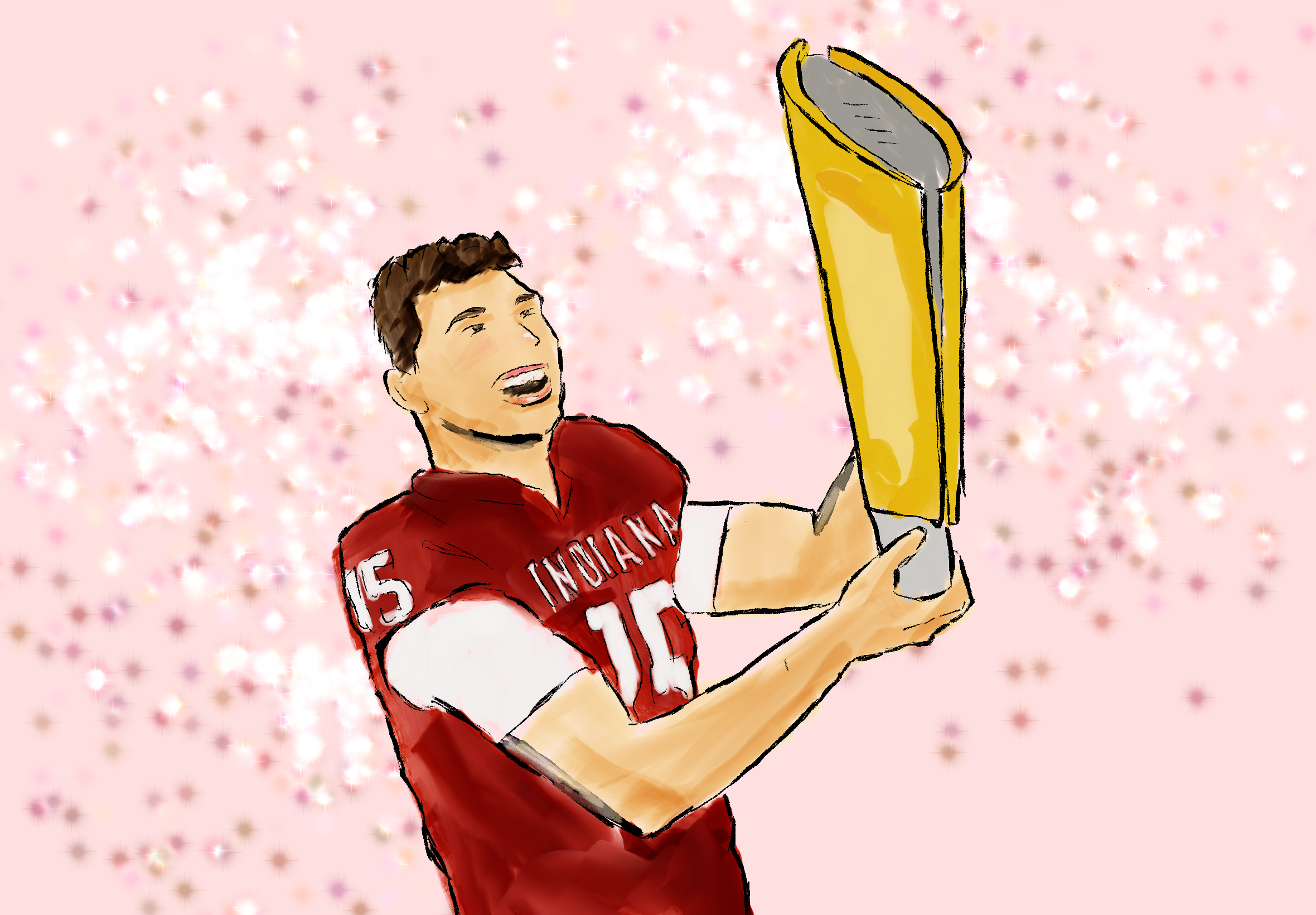
  1. Ricky “Wild Thing” Vaughn – Major League, 1989

Wild Thing captured the hearts of Cleveland with his bad boy attitude and erratic pitching arm. Had Vaughn entered this year’s World Series in the 10th inning, Cleveland would be celebrating their first title since 1948.

Science & Technology

Médecins Sans Frontières: Transcending the bounds of international medical care

“It is important that at one point you draw a line,” Dr. Joanne Liu, McGill alumna and international president of Médecins Sans Frontières (MSF), said at McGill’s Global Health Night on Nov. 1. “You will have to draw your own line as you go around this kind of world and […] see things that don’t make sense.”

Indeed, this is the mandate that MSF–Doctors Without Borders in English–operates on. MSF has been on the frontlines of every major health crisis since 1971, providing emergency medical care in areas affected by natural disasters or heavy conflict. They’re also known nowadays for their presence in areas of extreme poverty, where access to basic health care can be a challenge.

Over 90 per cent of MSF funding comes from private donors, allowing the organization some autonomy when it comes to setting up and choosing projects. This money goes toward running hospitals and clinics, performing surgeries, battling epidemics, carrying out vaccination campaigns, and operating feeding centres.

Many university students, including Markus Tralla, U2 International Development Studies and History, are attracted to the organization’s commitment to international medical relief.

Tralla serves as the Vice-President Campus Operations for McGill’s Friends of MSF, a chapter of a MSF support organization. Many in the group, including Tralla, hope to join an MSF mission in the future.

“MSF [is] so associated with going on missions [.…It’s] such an integral part of their mandate […] it motivates people who are interested on that front,” he explained. “[The other members and I] are very invested in the work.”

Drawn to principled health care, Kyong Ran van der Wal, a McGill PhD candidate in Family Medicine, began work for MSF as a young lawyer in 2000.

“It was a sense of adventure, as well,” van der Wal joked.

For seven years, van der Wal worked on various projects as a coordinator for MSF in Chad, the Democratic Republic of the Congo, Eritrea, Nigeria, Sri Lanka, and Sudan where she negotiated with warring factions in order to secure a place for MSF to stay and treat victims.

Van der Wal recalled the tiring six to twelve months she’d spend on a mission, working around the clock to make sure everything ran smoothly. MSF workers in politically unstable regions face the real dangers of conflict zones—sometimes risking their own lives in order to conduct their work.

One of MSF’s main goals is to remain politically neutral while treating patients, especially in areas of high conflict. Van der Wal admitted that staying completely impartial can be difficult in a highly politicized situation, especially in the case of the Darfur crisis, where she worked from 2004 to 2005. But, because MSF works on a need-based objective, van der Wal said it’s easier to judge who gets treated first.

Témoignage, French for witness, serves as a guiding principle of MSF’s work. MSF makes it a policy to speak out on the behalf of the people they assist in a neutral, non-political way. Van der Wal compared MSF’s vocalization of global issues with the strict confidentiality policies of Red Cross, noting that by speaking out, MSF can help Canadians understand foreign issues by bringing abusive and intolerable situations to light.

McGill, News

Open forum for the Provost’s Task Force on Indigenous Studies and Indigenous Education provokes dialogue on indigenous issues

On Nov. 22, the Provost’s Task Force on Indigenous Studies and Indigenous Education hosted an open forum to discuss their progress and receive input from members of the McGill Community. The Task Force was launched Sept. 22 of this year with the purpose of creating initiatives focused on integrating indigenous viewpoints into all areas of academic life, including research and retention of indigenous students and faculty.

Featured speaker Kenneth Deer, who is a member of the Mohawk nation and served on the Board of Trustees for the United Nations Voluntary Fund for Indigenous Populations, said that prejudices against indigenous people affected his upbringing.

“I don’t speak the language,” Deer said. “I’m a victim of the government language policy which forbade us to speak indigenous languages in schools.”

Deer asked forum participants to participate in the indigenous practice of thanking each aspect of creation and think of how ideas can impact the future during the forum.

“We start from the earth, the plants that grow, the medicines, the crops, and we gives thanks to the creator to these things that are necessary to our survival […],” Deer said “We have to remember all the people, the babies, the boys the girls, the elders, just like all the other animals. That brings us here today we all come here with purpose, we are here to deliberate about indigenous education. I ask all of you to keep creation and the future in mind.”

The forum was separated into six different groups that participants could choose and move between during a 30 minute time frame. Notetakers served to encourage participants to share their ideas rather than to teach a topic. According to Isaac, five of the groups–Indigenous Recruitment and Retention, Academic Programs and Curriculum, Physical Representation and Symbolic Recognition, Research and Academic Complement, Building Capacity and Human Resources–represented the five categories of the Provost’s Task Force for Indigenous Studies and Indigenous Education. There was an additional group where people could list ideas that did not fit into the other five categories.

Project Manager for the Indigenous Health Professional Training Initiative Jessica Barudin, who completed the Graduate Physical Therapy program at McGill in 2015, said outreach can be changed. She facilitated the discussion of Academic Programs and Curriculum.

“McGill needs to get out and meet the community, not just bring them in,” Barudin said. “Institutions aren’t always welcoming.”

Bethany Douglas, who received her master's degree in Education from McGill in 2016, is a member of the Mohawk nation and is from Kahnawà:ke. Douglas said she felt supported during her time at McGill University.

“I knew the First People’s House was there, as a place I could go to study,” Douglas said. “There was a community aspect, as there was a group from Kahnawà:ke. The First People’s House made it a wider family.”

Deer said racist attitudes towards members of the indigenous community should be tackled at a young age.

“Compulsory courses on indigenous courses could combat racism,” Deer said. “An alternative would be a better education in elementary [and] high school.”

McGill Provost and Vice-Principal (Academic) Christopher Manfredi said the university will provide monetary support for the Task Force for the recommendations released in the reports in January and June. According to Manfredi, the amount will be determined depending on what is in the preliminary report.

“We need to reflect upon the past to make a better future,” Manfredi said. “I want to thank everyone on the Task Force for their work. We know that the Task Force will be providing recommendations, those will need resources, as we build our budget, we are leaving places in the budget for those resources.”

Paige Isaac, co-chair of Provost’s Task Force on Indigenous Studies and Indigenous Education and coordinator of First People’s House, said that the ideas collected from the forum would be considered for the Task Force’s reports.

“The Task Force will make recommendations with respect to the role that McGill can and should play in responding to the [Truth and Reconciliation Committee’s] calls to action,” Isaac said. “There will be a preliminary report in January and the final report in June.”

Behind the Bench, Sports

McGill Intramurals ensures only the average survive

McGill Intramurals are highly competitive and low-level matches that border somewhere between animalistic and majestic. These clearly untrained and mediocre athletes pay tens of dollars to compete against the worst of McGill Athletics. Some people wrongly believe these casual leagues are there for “fun,” but that couldn’t be further from the truth. Winning is everything for a well-oiled intramural squad.

“On my dodgeball team, we had someone who took it way too seriously,” B-League dodgeballer Max Newcamp said. “He would yell at every girl on the team if they even tried to throw [the ball].”

In intramural dodgeball, the will to win supersedes even basic human courtesies. Teammates lose all sense of empathy and revert to barbaric creatures. But dodgeball isn’t the only über competitive intramural sport.

“I once saw a friend lay out a kid for being in his zone during football,” Intermediate flag football linebacker Sami Meffre said. “He was coming across the middle, caught the ball, and took a huge shot. This is flag football, too. It was crazy.”

That’s what happens to players who don’t protect themselves when they go over the middle in intramural flag football. The intensity of the game means players sometimes lose sight of the flag aspect of the contest, turning a recreational sport into a high-stakes competition.

Intramural basketball matches are equally intense. Friendly back and forth can soon get out of hand and become violent.

“This one game I was reffing, these two guys […] got too tangled up, but one of them shoved the other guy and then they were face-to-face pushing each other,” B-league basketball referee Itai Nitsan said. “Of course, every player on the court runs into the middle of a scrum trying to calm it down, but in reality they just make the scrum bigger.”

Overreactions and aggresion come easily in the heat of the moment. With high tempers and little training in restraint, inexperienced athletes become shaken with hardly any provocation. 

Sometimes more seasoned players will take charge and try to coach their teams to victory. 

“We would go against teams that would actually call their own plays with names and everything,” Newcamp said. “One team even called audibles, but they were so unathletic it really didn’t even matter.”

As it turns out, some players are unteachable in low-level athletic contests. The best strategy is usually just letting the physically-average specimen try to dominate matchups game after game. 

In intramural basketball, unskilled ballers put everything they have on the line. Their bodies are simply tools used to win a much revered intramural championship.

“I once reffed a game where a guy fully dislocated his finger,” Second-year intramural basketball referee Arman Bery said. “A med student on the other team popped it back in, and then the guy tried to argue with me and my co-ref to let him keep playing.”

Apparently nine fingers are more than enough to perform on the court or the field. San Francisco 49ers legend Ronnie Lott once had his finger amputated to prevent missing game time. Want to be a true intramural baller? You have to follow Lott’s lead.

In all seriousness, intramural sports are actually meant to be about fun. The games are supposed to be friendly, particularly in lower divisions. There’s no reason for students to risk their well-being and friendships over an intramural match of basketball, dodgeball, flag football. To rephrase the great Allen Iverson: “I mean, listen, we’re talking about intramurals. Not a varsity game! We’re talking about intramurals. I mean, how silly is that?”

Student Life

The peculiar case of rez caf cliques

For many first-years, their first foray into McGill life starts in residence. Fresh, bright-faced students come into university expecting to find that perfect group of friends—like something out of Friends or Saved by the Bell—and yet, residence life can be incredibly intimidating to navigate. In many ways, it can even seem like a throwback to the divides of the high school cafeteria.

This occurs because for many students, it is easier to stay within the one network of friends they may make when choosing where to sit in the caf. Over the course of the school year, this ends up creating a cycle in which students only eat with the people they know, making residence cafeterias feel more like a breeding ground for typical high school cliques than a welcoming environment in which to share meals with their friends.

"I think we all know the standard trend [where everyone’s] being open and hyper-friendly at the beginning of the first semester,” said Mana Moshkforoush, U0 Science and president of the Inter-Residence Council (IRC). “And although that’s definitely the case with some people, I find that university is very different from high school in that because there are so many students, you can’t really restrict yourself to a single group.”

Though Moshkforoush doesn’t seem to view residence life as particularly exclusive, the same cannot be said of many other students. When observing certain residence cafeterias, New Rez in particular, the disproportionate number of people sitting alone to people eating in groups is clear. For a residence of 700 students, the New Rez cafeteria seems almost ridiculously small.

Out of all the residences, RVC’s cafeteria is most frequented by students from all areas. This may be due in part to the cafeteria’s large selection of food, but according to Nadia Bichri, a U1 Science student living in RVC, much of the cafeteria’s charm lies in its openness.

"Because of the way our tables are set up, like four friends will get together, and then [gradually] more people join in, even if they don’t really know anyone,” Bichri explained. “You have this friendliness all the way down the table.”

This attitude adds to the numerous qualities—including its location and food selection— attracts so many other first years to the RVC cafeteria. With a large space and bright lights, RVC’s cafeteria is fairly friendly and inviting. Moshkforoush, who is from Douglas, also prefers RVC, since it’s so conveniently located directly across the street from campus.

While other cafeterias such as Douglas and Bishop Mountain Hall (BMH) have similar setups, their location on top of the hill make it hard for students of different residences to gather there. However, BMH still serves to unite the three upper residences: Molson, McConnell, and Gardner.

"BMH easily has the best caf layout to meet new people, because all of the tables are structured to fit 12 or more students,” Rebecca Spiteri, U0 Arts and Molson resident, said. “With BMH being up the hill though, it difficult for students in other residences to visit, but rather than isolating the upper rez students, it creates a strong sense community within the 3 residences.”

With any residence, however, students face the challenge of eating alone at any point in the year. Moshkforoush stressed the importance of taking initiative to be social.

"I'm not going to lie,” Moshkforoush said. “People are usually surprised that I approach them and ask to sit with them [in the cafeteria], but the conversation picks up really quickly and […] I’m happy [to meet] someone new! We’re all in the same boat.”

Staying within the confines of social boundaries in rez is comfortable, but sometimes going out of one’s comfort zone to add to a welcoming rez culture–within the confines of the caf–is worth the plunge.

Student Life

Secretly freeing the nipple: @wearenipscapes challenges instagram censorship regulations

@wearenipscapes is an Instagram account dedicated to challenging the sexualization and censorship of female nipples. The page consists of pictures of beautiful landscapes with subtle nipple additions, usually hidden somewhere in the corner. The McGill Tribune recently spoke with Sally Maxwell, U3 Science and founder of @wearenipscapes, about her inspiration behind starting the account and why she thinks it’s so meaningful. 


The McGill Tribune (MT): Can you tell us a little bit about @wearenipscapes and why you started it?
Sally Maxwell (SM): @wearenipscapes is an Instagram account that I started in April [2016] when I was travelling with some friends in South America. Essentially, it is photos of beautiful landscapes with nipples poking out of the side of the image. The purpose of the page is to try and remove the stigma of the female nipple on social media, while exploring the beautiful planet we live in and expressing that through these nipscapes.


MT: Do you think social media plays a role in worsening the stigma of the female nipple?
SM: Definitely. I started it because I was frustrated by the fact that the female nipple was so stigmatized on social media—Facebook and Instagram both have clauses in their community guidelines where female nipples aren’t allowed to appear in photos unless they are images of a woman breastfeeding or post-mastectomy scarring images. I follow and support the Free the Nipple movement, and so I guess this was my way of expressing that.
MT: “Free the Nipple” is a really important movement right now. Why do you personally think nipple equality is so important? 
SM: Primarily, I think that nipple equality is a symbol for gender equality as a whole. For starters, the female nipple has been sexualized in a way that the male nipple never was, when the only true difference between the two is the milk producing capability and the lump of fat that may or may not exist behind the nipple.
MT: Do you think the fact that the nipple is so stigmatized makes girls more insecure about their bodies?
SM: Yes, undeniably. I think that girls, from a young age, are taught to hide their body—not only their nipples, but all parts of their body. Slut-shaming is prevalent in our society, and this not only creates a body-negative—versus body-positive—atmosphere, but also increases body-shaming, and ultimately eating disorders, depression, and anxiety. By teaching girls to hide parts of their body, we are dampening that empowerment and freedom, that form of expression, feeling good in our bodies, being proud of who we are, loving ourselves.

MT: I’ve noticed that a lot of accounts that show female nipples, like yours, get reported frequently. Have you received any backlash from Instagram? 
SM: Instagram has taken down several of my posts, which makes me very sad, but I haven’t received any direct messages from the public or from Instagram employees—I tend to just repost whatever they take down as a sort of “fuck you” to Instagram because the community guidelines are so ridiculous—like, only can nipples be present if they represent something that is entirely non-sexualized, such as a child sucking milk out of it. I think it is just an algorithm that can tell what looks like a female nipple/breast so they know which photos to take down. For nipscapes, we’re typically able to avoid this filtering method because the nipples come from the side of the photo, so it’s only if there is a lot of breast that they are taken down.
MT: What do you see for the future of nipscapes?
SM: I definitely hope to continue having fun with it, but also to grow the nipscape community and have more folks taking their own nipscapes and freeing their nipples!


Science & Technology

Blurring the lines of reality at the Montreal International Game Summit

Every year, thousands of gaming conventions are held around the world to discuss what the future holds. Demonstrators, presenters, and indie developers show up to sell their wares and talk about the “next big thing.” At this year’s Montreal International Game Summit (MIGS), held Nov. 13 to 15 at the Palais des Congrès, augmented reality (AR) and virtual reality (VR) were the obvious stars of the show.

The summit featured both indie game developers and major production companies—including Ubisoft, EA, PlayStation, and Microsoft—who demonstrated new games and technologies. MIGS also hosted lectures on all things videogames and featured a job fair for networking and interviewing with recruiters.

“It’s always important for us to be [at MIGS] because we want to meet the community,” Fabrice Giguère, public relations manager at Ubisoft Montreal, said. “We want to meet the people, but we also want to represent the industry [of video games] that saw its growth over the past 20 years. We have our recruiters, students can come and give us their resumes, we can talk about job openings, and so forth.”

Providing a platform to connect industry professionals is a key component of MIGS’ success.

“We’ve had really good conversations,” Katie Jo Turk, a hardware expert and performance capture supervisor at Faceware Technologies—a motion capture studio—said. “We’ve had great potential leads come to our booth, […] people who are making games, [and] indie developers who are just starting out.”

VR has recently captured the imaginations of many in the gaming industry. Nearly all of the largest stations on the conference floor had a VR setup. Convention-goers had a chance to put on a VR or AR headset—including the Oculus Rift, HTC Vive, Playstation VR headset, or Microsoft Hololens—to explore what many believe to be the future of video games.

“It definitely seems like VR is a focus.” Technical Marketing Manager and tech evangelist at Autodesk, Matthew Doyle, said. “There have been several VR related talks. There are multiple booths that have VR setups.”

Doyle, who has attended six MIGS conferences, noted that this summit was different from years past.

“Last year, VR was barely a twinkle in anybody’s eye,” Doyle said. “It was being talked about, but you didn’t see a lot of it here at MIGS.”

This contrast is due in large part to advancements in the technology over the last year. Major studios–or “the big guys,” as Doyle called them–are starting to invest more money into VR to form a viable industry. Simultaneously, more VR devices are finding their way into the hands of consumers and developers as the technology is further researched, but there is still a long road ahead.

“Everyone is waiting for the studios to follow [by making games for VR devices], because obviously if you have the hardware without the content, it’s only a piece of plastic,” Giguère said.

Because VR is almost an entirely new medium, developers are only just exploring new ways to use virtual reality in their games. Despite headsets becoming more technologically advanced, the software that can be used on them is relatively limited compared to the sheer number of games available on traditional platforms, such as consoles and personal computers.

The unfamiliar nature of VR and AR is also off-putting to many consumers.

“Some people, after 20 minutes, they say they are tired of it,” Turbulent CEO Marc Beaudet said. ”Sometimes in gaming, you’re going to sit for four, five hours, so how can you adapt a game in which you play hours and hours for a technology which, right now, is a bit uncomfortable after [20] minutes?”

Beaudet, whose company works in the video game, education, and entertainment industries, also noted the monetary difficulties of building a business based on VR. Currently, he explained, VR is difficult to make into a workable business model as it often results in a loss.

Microsoft has also stepped into with ring of augmented reality with the Hololens, a different type of headset.

Instead of replacing the real world with a simulated reality like in a video game, the Hololens lets the user interact with the real world in a way much like Tony Stark in the Iron Man movies: By tapping and moving holograms projected over reality by the headset—referred to by Microsoft as mixed reality.

“It’s a fully untethered mixed reality device that projects holograms into the world around you,” Sage Franch, a tech evangelist at Microsoft, said. “These holograms can interact with the space around you, and it’s constantly mapping your room and your environment so that it provides the best experience possible.”

It might seem like science fiction, but it really works. Holograms and animations interact almost flawlessly with the real world; with endless implications for designers, engineers, doctors, and the average consumer—once the product is mass released, that is. For now, a developer version of the headset is available for $3,000 from Microsoft.

Other industry players that have been steadily growing also showed off their latest and greatest at MIGS. Gameloft, a mobile games studio, presented several games, including Dungeon Hunter 5 and the upcoming game Modern Combat Versus. Thanks to the ubiquity of smartphones, mobile games are more and more accessible to people around the world.

“A lot of people used to think that video games were only for men or teenagers,” Loïc Ramboanasolo, a producer of Modern Combat Versus, said. “And now on mobile, it’s actually women that are more predominant [gamers] than men.”

This expanding landscape makes it easier to reach new audiences around the world, allowing for a more universal gaming experience.

Though the gaming industry is drastically changing due to its expansion to new mediums, traditional video games remained a staple of the convention. An array of indie developers occupied a good part of the convention floor. Each developer had a small cubicle, called an “Indie Pod,”  where they set up their own demonstrations of traditionally-styled games.

Ubisoft, in addition to demonstrating a new VR game called EagleFlight, promoted the release of Watch Dogs 2, an open-world game released publicly on the third day of the conference. Meanwhile, Warner Brothers Games showcased Batman: Arkham Knight.

At its heart, the convention remained focused on a group of people with a shared interest in video games.

“[It’s] kind of a geeky thing,” said Doyle. “There’s just something magical about creating some art from start to finish, seeing it come to life. And as for VR, well, I never get tired of seeing someone who’s never tried it before put it on [….] They’re like, ‘Whoa, that’s amazing!’”

And it is. A tangible feeling of awe was in the air at MIGS. A line wrapped around the Microsoft booth to try on the Hololens and rarely was a headset sitting on a chair unused. Whether VR will becomes massively popular remains to be seen, but for now, simply testing out a new way to experience reality is nothing short of incredible.

McGill, News

ISID presents “Unpacking Participatory Democracy”

On Nov. 22 and 23, McGill students and faculty joined activists at a conference titled “Unpacking Participatory Democracy: From theory to practice and from practice to theory,” presented by the McGill Institute for the Study of International Development. Activists from global organizations, including South Africa’s Open Democracy Advice Centre, the UK’s Integrity Action, and Germany’s Transparency International, were in attendance.

The event was organized by Aruna Roy, McGill’s 2016 Professor of Practice in Global Governance. Roy is a prominent activist who has led many socio-political movements in India, including the passage of legislation on the Right to Information and the Right to Employment. Speakers included indigenous human rights activist Ellen Gabriel and Hussein Khalid, executive director of HAKI Africa, an organization focused on combating corruption on the continent.

A recurring topic of discussion at the conference was the limitations of academic theories about democracy and how theory can be enhanced by real democratic movements in action. Activists in attendance shared their personal experiences with the struggles faced by their campaigns. 

Against the backdrop of Donald Trump’s recent victory in the U.S. presidential election, Roy kicked off the conference with an opening speech encouraging discussion and discouraging disillusionment. 

“The worst thing we can do today is to lose hope about the world and about democracy,” Roy said. “We need to rebuild and work harder.”

Panelist Anne Marie Goetz, professor at the Center for Global Affairs at New York University and former UN Women’s chief advisor on Peace and Security, discussed the ongoing struggle of women’s rights and appealed for immediate action.

“Misogyny is not a side-show,” Goetz said. “It is a central driver of destructive decision-making. Combating misogyny cannot be postponed until after peace, climate change or disarmament negotiations are over. As the anti-war activist Cynthia Enloe says, ‘Later is a patriarchal time-zone.’”

Panelist Vivek Ramkumar, senior director of Policy at the International Budget Partnership in Washington, D.C., said it is more important than ever for students to become involved in democracy.

“The timing [of the conference] could not be better,” Ramkumar said. “I think there is a sense of despair [….] There is the idea that we should disengage for the next few years because our side has lost. Students need to maintain optimism that they are agents of change and they will bring that change, but there is no easy way, and they must get involved.”

Edwina Shaddick, a recent McGill master’s graduate in Sociology, agreed that the conference helped restore some optimism about the future of democracy.

“It’s quite cathartic to come after the Trump presidency,” Shaddick said. “The conversations I’ve had with people are quite dire. Everyone’s reeling from the election. As [panelist] John Harriss said yesterday, this happened in the 1860s and 1930s, and now again we are at a time when we need to say no to fascism and pick the alternative of social democracy. It is important to know that it has happened before and people have fought it, and they will fight it again now.”

Roy said that if there is one message she would like students to take away from her conference, it is to engage with democratic politics.

“The big picture only changes if all the small pictures change, so nothing is too small for engagement with democratic action,” Roy said. “It is just defining justice, equality and the principles of ethics. Do it wherever you are. It adds up.”

Read the latest issue

Read the latest issue