
Latest News


Illusion, reality, and the aesthetic diversity of perspective
More in Art:
-
 Know Your Artist: Theodore A. Harris
May 27, 2026
Know Your Artist: Theodore A. Harris
May 27, 2026
-
 The forgotten history of the Montreal coffeehouse
April 7, 2026
The forgotten history of the Montreal coffeehouse
April 7, 2026
-
 Live long and prosper, Notre-Dame-de-Grâce
April 7, 2026
Live long and prosper, Notre-Dame-de-Grâce
April 7, 2026
Strolling down boul. St.-Laurent towards the McGill Fine Arts Commission (FAC) exhibition, I momentarily regretted never completing that Art History minor. Not being an educated scrutinizer of fine art, how could my perspective add anything to the artistic conversation? But as the bubbling atmosphere of jazz, artists, and gallery-goers swiftly immersed my visual and auditory senses, I felt that the space demanded nothing more than true appreciation and openness to engage with the surrounding creativity. I became aware of how much artistic perception relies on intuition instead of critical analysis and grew to appreciate the value in the singularity of each artistic expression.
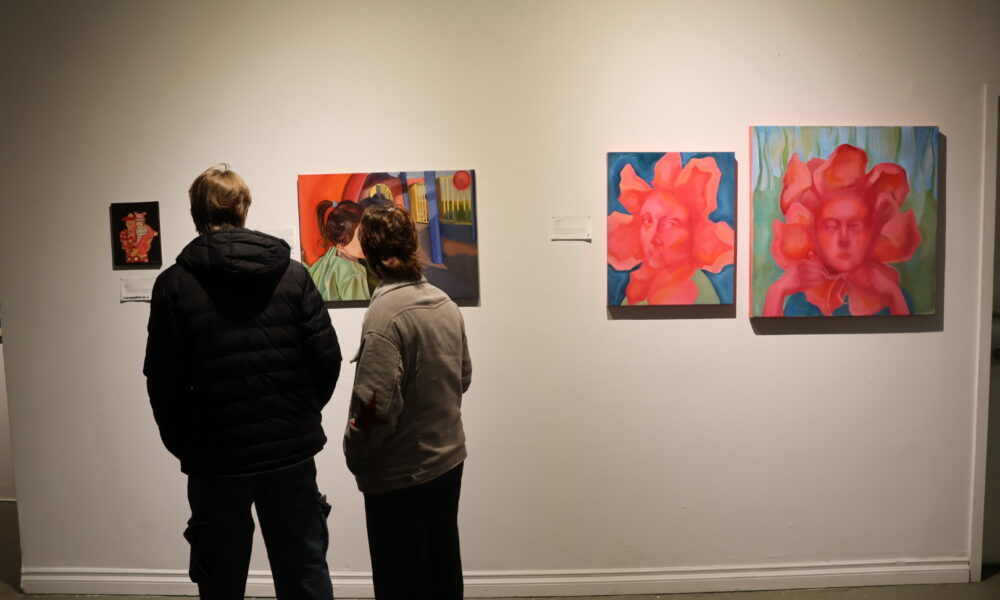
The exhibition, titled Mirage, ties visual art to the naturally occurring optical phenomenon of a mirage, exploring the fine line between illusion and reality.
“The whole idea of Mirage is that everyone has their own reality, everyone sees something different, […] and that in itself is so unique,” Diya Senghera, FAC Co-Commissioner, explained in an interview with The Tribune.
The exhibition brings together a wide range of perspectives, encouraging viewers to explore the boundary between imagination and reality through their interaction with the artists’ ideas and the theme of illusion. Despite the many interpretations each painting, sculpture, and film may offer, Mirage’s presentations diversify this range of interpretations even more. Mythical realms, imagined spaces and undefined objects challenge the viewer’s visual perception and play a role in most of the exhibition’s fine art.
The majestic emanation of Mia MacLeod’s oil on canvas, titled Free Fall, caught my eye from afar. Its deep blue colour—a thematic element in the exhibit connecting art to the natural phenomenon of the mirage—and the intricate fusion of physicality and lightness in her figures are central to the exhibit’s impact. MacLeod describes her artistic vision as a combination of surrealism’s style with expressionism’s colours.
“I love spaces that aren’t settled in reality but have a mystical, magical quality to them,” MacLeod said in an interview with The Tribune.
Kat Sun’s glazed ceramic sculpture, Reverie, plays with space differently. Its interwoven shape has an uncertainty to it; it appears to be twisting and decomposing at the same time.
Maya Farres’s digital art similarly relates to the ambiguity between what we perceive as our imagination and the uncertainty of physical space. In Sofishticated, a shining fish swims above a young woman’s head, bubbles rising, in a space resembling water. In her inscription, the artist explains her goal to express the discernible truth that can be found in mind wanderings.
“The piece asks the question whether the fish we swim with are subtle reflections of the physical world, or simply just daydreams,” Farres wrote.
For some artists, Mirage relates to the illusion found in mirrors and, thus, in appearance. Phaedra’s vividly coloured painting When the Mirror was Play, depicting a young girl and her mirrored reflection in a playground setting, is part of her larger series concerning mirrors.
“The mirror transitions in its meaning as we get older to points of insecurity and judgment,” Phaedra said in an interview with The Tribune.
Winnie-Grace Melchor’s work Lost in Reflection similarly explores the relationship to the mirror by discussing beauty standards, society’s expectations, and consumerism.
The diversity of artworks does not end here; Aia Segal’s Self Performance displays a room filled with a jumble of imagined, fictitious objects and material items through a unique combination of oil pastel and embroidery on cotton fabric. On top of that, Mirage’s immense diversity in themes, styles and materials goes beyond visual art by incorporating a performance from Mosaica, one of McGill’s oldest dance companies.
“There are so many different artists at McGill, and that is part of what we want to celebrate,” Katherine Squitieri, FAC Co-Commissioner, explained to The Tribune.
Truth be told, this experience doesn’t need an Art History minor because, ultimately, it is our own perspectives that create meaning in art and bring it to life.
The radiance and resilience of De Stiil Booksellers
More in Arts & Entertainment:
-
Know Your Artist: Theodore A. Harris
May 27, 2026
-
The forgotten history of the Montreal coffeehouse
April 7, 2026
-
 Preserving childhood magic in adulthood
April 7, 2026
Preserving childhood magic in adulthood
April 7, 2026
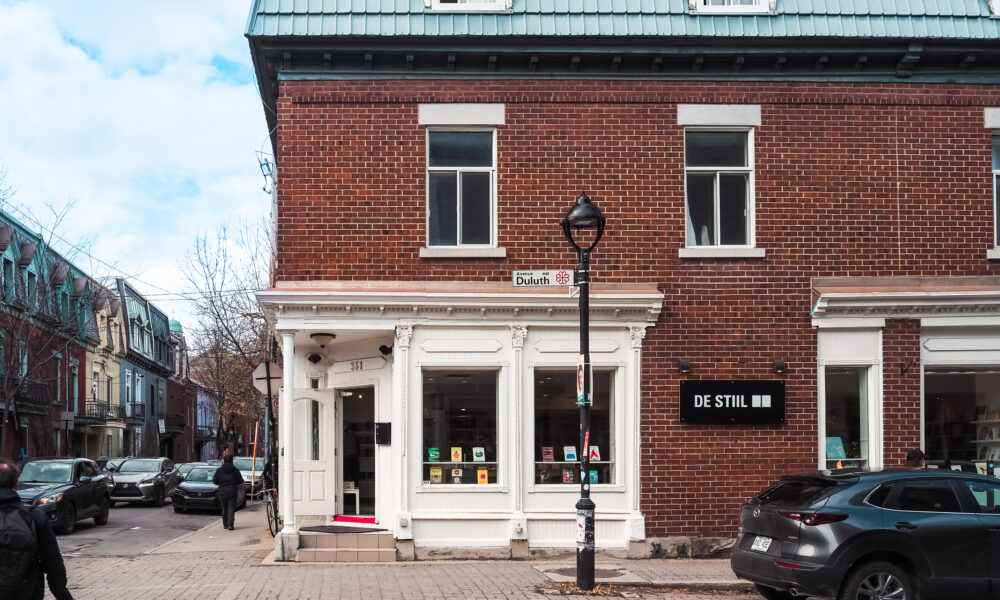
De Stiil Booksellers, a small independent bookstore nestled in the Plateau, is caught in the crossfire of an international trade war. In response to U.S. President Donald Trump’s recent tariffs on Canadian goods, Canadian Prime Minister Mark Carney has promised to act “with force” by issuing counter-tariffs taxing American products.
While not included in the March 4 Canadian counter-tariffs, books were added to the list of commodities liable for further tariffs, a surprising move that led booksellers to, as De Stiil’s owner Aude Le Dubé put it, “freak out.”
As the situation unfolds, the future of De Stiil—and independent bookstores across Canada—remains uncertain.
But Le Dubé is determined not to let this affect her customers. When asked about the tariffs, she stressed that she would never raise prices by more than 10 per cent.
“I didn’t want to worry our customers,” she said in an interview with The Tribune. “This is our problem, not theirs.”
Though Le Dubé’s devotion to her customers is admirable, her store will absorb any extra costs, threatening already slim profit margins.
“I don’t know anything about bookselling, and I refuse to learn,” Le Dubé joked.
There is truth in her words; Le Dubé is not interested in maximizing profit, but in providing readers with a wonderful selection of curated literature and translations.
Though she may not know much about the business of bookselling, she certainly knows a lot about books. Originally from France, Le Dubé is wise, worldly, and well-dressed, her charisma outshone only by her humility. She effortlessly weaves apt quotations and spontaneous gems of wit into her warm, welcoming speech. Le Dubé reads every morning and prescribes this practice to others, a treatment for the chaotic whirlwind of life. And she doesn’t dog-ear her pages—“I use a bookmark,” she said, laughing. “Are you kidding?”
De Stiil Booksellers is a perfect reflection of its owner: Polished and inviting, intellectual and teeming with life. The store’s eclectic selection is curated by Le Dubé and her staff, giving it a personal identity that most bookstores lack. Le Dubé has high standards for her selection, guaranteeing that customers are met with mastery on every shelf—from Italian classics of yesteryear to newly published 700-page Catalan tomes, such as the one Le Dubé is currently reading.
For her, bookstores are the last standing technology-free third places in Canada.
“Where else are you going to sit for hours and talk to people and see life unfold around you? See people come and go, hear them talk and laugh?” she says.
Fittingly, De Stiil hosts a weekly “Page Break” event every Wednesday at 7 p.m. In the bookstore turned silent-reading sanctuary, guests pay a $5 CAD entry fee, hand over their phones, and enjoy a glass of wine while immersed in their book.
However, Le Dubé believes that the importance of books is not only their escapist potential. Amidst the rising global tide of violent jingoism and the seemingly endless effusion of negativity, literature’s power to foster empathy and share diverse perspectives is needed more than ever.
“I want people to read about other ways of thinking […] that’s the only way we’re going to change people to not get into a nationalistic whirlpool,” she said.
The best way to support independent bookstores such as De Stiil is to buy their books. But Le Dubé says she would never want anyone to feel obligated to purchase anything at her store.
“Come to the bookstore to be around people, to read, to be around books,” she said.
It is hard to imagine walking around De Stiil and not being overcome with a love for literature and an appreciation for its owner.
“I do believe in our mission as booksellers,” Le Dubé said. “I think we’re important […] [because we] can change something and people’s minds […] a little bit, one at a time.”
Exploring the etchings of women’s shame at ‘Bad Girls Only’
More in Art:
-
Know Your Artist: Theodore A. Harris
May 27, 2026
-
The forgotten history of the Montreal coffeehouse
April 7, 2026
-
Live long and prosper, Notre-Dame-de-Grâce
April 7, 2026
Their bodies are cast in stark black ink. Harsh cross-hatching carves out exaggerated forms featuring sagging breasts and bulging stomachs. The slight fingers of one of the women curve around a heart, pulling it to her mouth moments before taking a bite. Another’s hand grasps tightly around the hilt of a sword drawn from the sheath at her hip.
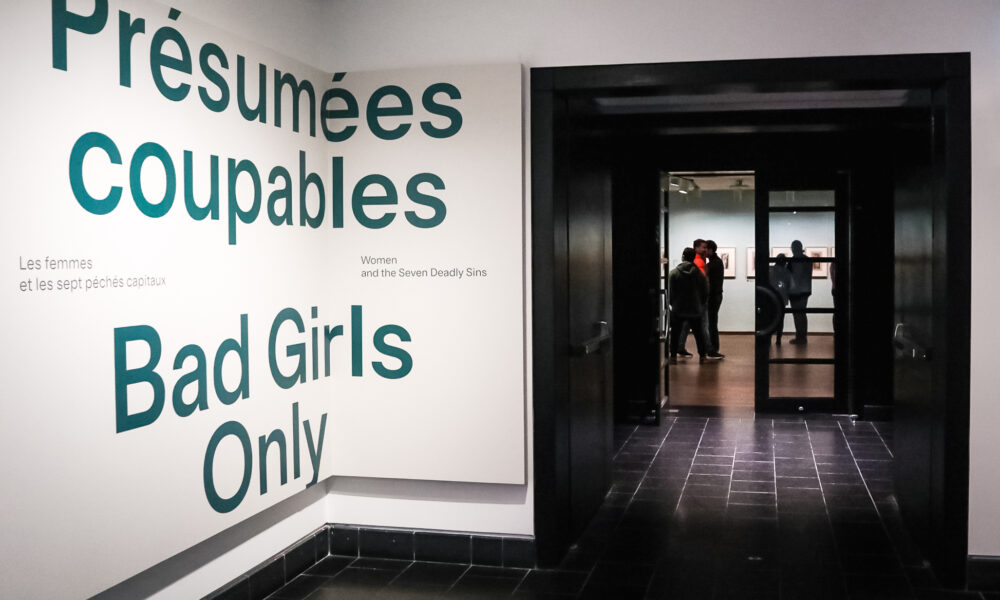
The first room of the Montreal Museum of Fine Art (MMFA)’s new exhibit Bad Girls Only: Women and the Seven Deadly Sins features preparatory drawings by Dutch artist Hendrick Goltzius (1558-1617) coupled with their matching prints created by Goltzius’ stepson, Jacob Matham (1571-1631). The second adjoining space holds another set of prints created by Flemish engraver Hieronymous Wierix (1553-1619). The pieces share a common thread: They all depict women as embodiments of the seven deadly sins.
A TV screen at the end of the exhibit shows modern-day artist Xavier Charbonneau demonstrating the act of printmaking. He takes a pointed tool with a wooden handle called a burin and makes small marks on a copper plate. Once finished, Charbonneau applies a thick black ink to the face of the etched plate with a roller and stamps it onto a piece of paper, the image now permanent.
From gluttony to envy, the prints demonstrate society’s prevailing villainization of women. The earliest pieces in this collection were produced in the 1580s. That women still feel conscious about these ideas 450 years later reveals a terrifying durability surrounding women’s shame. The act of printmaking seems to metaphorically describe the establishment of these ideas in the Western social sphere. Originating as simple sketches, the fuzzy edges of women’s shame are subsequently carved into a metal plate and confirmed throughout time in stark ink.
In addition to the video featuring Montreal artist Charbonneau, the exhibit’s end faces a wall of handwritten cards. Beside this wall sit slots with empty sheets and pencils, providing viewers with the opportunity to make their mark. The cards hold questions relevant to each deadly sin, asking things such as, “What is one thing that made you proud today?” answered by one museum-goer with “Being engaged and enjoying breakfast and art with my family.” Another paper asks, “Describe a food or drink that gives you comfort,” and is met with the answer “Pancakes.” These prompts act as a way for viewers to reframe their positions on shame.
“The empowerment comes from the knowledge of this period, and that internalized shame is not natural and innate; it is culturally and societally produced,” curator Mary-Dailey Desmarais said in an interview with The Tribune.
The distorted bodies of the women in the exhibit are a representation of how society has historically placed women as vessels for degradation. Seeing the artistic process of this is not an ignition of fear but a way of contextualizing such perspectives. Some Dutch man in the 1500s sat down to draw women in their most demeaning form—warnings to women about how their actions make them look to others, thus contributing to a continuing history of slandering women.
But that’s all they are: Drawings. That fact allows for a certain level of freedom. Understanding the fine-scale method it took to bring sketched-out misogyny into permanent ink provides a new sense of power. A pointed carving tool should not make women feel ashamed for eating, getting angry, or having sex.
Facing these works, it can be easy to see yourself in them. All of the things that society tells women not to do stand embodied in front of you. By understanding the process by which these pieces came to be, however, one can see the fabricated nature of their insecurities and start to break free of how society frames them.
‘Bad Girls Only: Women and the Seven Deadly Sins’ is on display at the MMFA until Aug.10 . Tickets are available both online and in person. Free for those aged 25 and under.

Sheep are having a Pop Culture moment—and it’s unsettling
More in Arts & Entertainment:
-
Know Your Artist: Theodore A. Harris
May 27, 2026
-
The forgotten history of the Montreal coffeehouse
April 7, 2026
-
Preserving childhood magic in adulthood
April 7, 2026
They’re baaaaaack—and not in a cute nursery rhyme kind of way. Sheep have tiptoed their way back into the cultural frame, not just as pastoral props but as full-blown characters, metaphors, and messengers. From a blood-streaked Icelandic hybrid in Lamb to the soft-eyed flocks in Bergers, the modern media sheep is anything but innocent.
Sophie Deraspe’s Bergers (or Shepherds) features numerous sheep, but none are quite as unsettling as the humans around them. The film follows a disillusioned Montreal advertisement executive, Mathyas, who escapes the corporate grind to become a shepherd in rural Provence. This might sound like millennial burnout-turned-farmer fantasy, but Deraspe doesn’t romanticize. Instead, she places her protagonist face-to-face with an uncompromising truth: Nature doesn’t care about your spiritual awakening.
In Bergers, the sheep aren’t mythical, magical, or symbolic. They are bodies—vulnerable and ultimately commodified. As Mathyas learns, even this so-called simple life turns out to be unstable, challenged by a shifting climate and economic strain. He is initially drawn to the romantic notion of a pastoral life. However, he soon faces the harsh realities of herding and the struggles of adapting to a new way of life. Nature is harsh, indifferent, and, at times, violent.
Lamb (Valdimar Jóhannsson), on the other hand, could not strike a more contrasting tone. The Icelandic folk horror follows a couple adopting a half-human, half-sheep creature named Ada. On paper, it’s absurd; in execution, it’s devastating. What begins as a tender attempt to reclaim lost love spirals into horror with the arrival of Ada’s ram father. This isn’t just folklore gone feral; Lamb unfolds like a dark environmental fable: Nature, again, refuses to be rewritten.
So, why sheep? And why now?
In pop culture, sheep have long signified docility—“sheeple” being used as an insult towards conformists. But as Lamb and Bergers portray, that connotation is ready—and even destined—to change. These stories portray sheep not simply as the symbol of innocence we know from nursery rhymes or nativity scenes, nor as a symbol of docility. Instead, they use the animals to critique how humans project their desires—whether for control, comfort, or escape—onto the world around them.
A man trades his desk job for a field of bleating livestock, or a family dresses a sheep-child in baby clothes: Beneath all the absurdity lies a real discomfort. These images are too close to fantasy to be real but too grounded to dismiss. The sheep reveal just how anxious we can be about agency, autonomy, and belonging. They reflect the quiet fear of wanting to escape the systems we’re born into but having nowhere to run. Whether shepherded or anthropomorphized, sheep expose our need to make sense of disconnection through control, care, or even delusion. The unease comes not from the sheep themselves but from the human need to reshape them into what we want them to be.
The cultural fascination with sheep is never only about cinematic allegory, nor is it new. Sheep have long been used as a symbol in both fashion and pop culture. From Princess Diana’s iconic “black sheep” sweater to Lamb Chop, a 20th-century sock puppet known for her surprisingly sassy comebacks, they’ve made their mark. The image of the sheep constantly sways between conformity and defiance, obedience and disruption. Maybe that’s the point. In a media landscape increasingly obsessed with binaries—good vs. evil, tech vs. nature, us vs. them—the sheep offers something more blurred and possibly more real.
They aren’t just back—they never really left. It’s just now that they are stepping into the centre, not to lead or to follow, but to remind us that meaning often comes dressed in wool.
Neurostructural correlates of obesity: Evidence for brain-body interactions
More in Private:
A spotlight on the student strike for Palestinian liberation’s film screenings: ‘Gaza Fights for Freedom’
More in Arts & Entertainment:
-
Know Your Artist: Theodore A. Harris
May 27, 2026
-
The forgotten history of the Montreal coffeehouse
April 7, 2026
-
Preserving childhood magic in adulthood
April 7, 2026
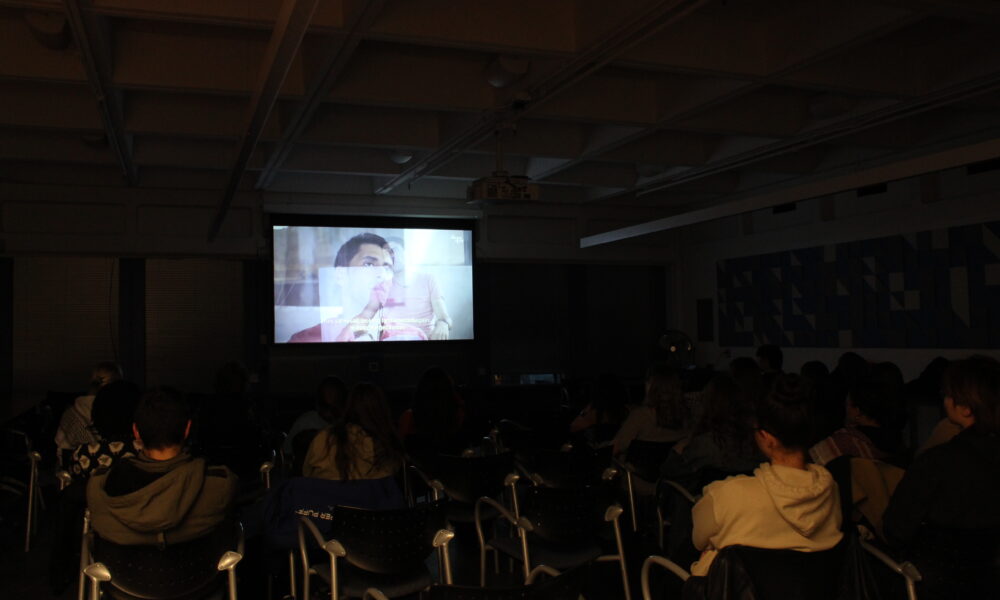
The arts have long been a powerful medium for human rights activism. Last week, students hosted two film screenings alongside workshops and teach-ins during the Student Society of McGill University (SSMU)’s student strike for Palestinian liberation.
“It’s to reiterate that our education is not just happening within the classroom,” Rama Al Malah, U2 Science, said in an interview with The Tribune. “Education is happening when we’re having these discussions and these reflections within these political and cultural spaces, and it’s also part of this revolutionary study and education that we need to engage with in order to be part of this movement.”
Gaza Fights for Freedom—written and directed by Abby Martin—documents the Great March of Return protests that took place in 2018. The opening shot shows Palestinian children building sandcastles, washed away by the sea—the same sea that Israel has blockaded.
The documentary centres on Palestinian stories, faces, and voices. Poet and journalist Ahmed Abu Artema, watching birds fly over barbed wire, tells us that he hates the occupation because it goes against nature. His poetry inspired the March. Nurse and paramedic Razan Al-Najjar’s grieving family tells us how, at the end of the day, she used to tell them about every person she had saved. The Israeli Defense Forces fatally shot her in June 2018.
“If you look at […] Black Studies, if you look at Indigenous Studies, and then you look at Palestinian Studies, documentaries have been critical for people under occupation, or people whose histories—or some parts of their histories—have been obliterated because the documentary puts you in direct contact with the people living the reality of an occupation,” Professor of Islamic History Rula Jurdi said in an interview with The Tribune.
Perhaps the power of documentary lies in its intimacy in the face of injustice: That, too often, the people who see, hear, speak, and live under occupation are not those who are listened to. From behind the camera, viewers can hear voices, some since silenced, telling us not to forget.
Gaza Fights for Freedom screened on April 2.
A&E on the most impactful novels they’ve encountered in the classroom
More in Arts & Entertainment:
-
Know Your Artist: Theodore A. Harris
May 27, 2026
-
The forgotten history of the Montreal coffeehouse
April 7, 2026
-
Preserving childhood magic in adulthood
April 7, 2026
Eugene Onegin by Alexander Pushkin (RUSS 223: Russian Literary Giants 1) – Isobel Bray, Contributor
Eugene Onegin is a timeless novel-in-verse set in 19th-century Russia. It follows the titular aristocrat, who, after inheriting his uncle’s estate, retreats to the countryside. Eugene is bored with high society and indifferent to those around him. He meets personalities like the poet Vladimir Lensky and young, intelligent Tatyana Larina. The verse form only enhances the story, as Pushkin blends social commentary with his melodic and emotional writing. His portrayal of Russian high society is sharp and often ironic, yet never fully devoid of empathy. What stood out to me was the realism of the characters—flawed, human, and heartbreakingly self-aware. Onegin, with his cynicism, is both frustrating and strangely familiar. Lensky, the doomed romantic, is his foil: Idealistic and earnest in a world that doesn’t reward it. The narrator is a character unto himself, breaking the fourth wall with asides that feel surprisingly modern. Pushkin reflects on his own youth, writing, and memory with a tone that is both playful and melancholic. Despite being written two centuries ago, Eugene Onegin is filled with moments that speak to the present about identity, image, and the consequences of not acting when it matters.
Lolita by Vladimir Nabokov (ENGL 227: American Fiction after 1945) – Bianca Sugunasiri, Staff Writer
Content warning: Pedophilia, Kidnapping, Sexual Assault
Fresh out of high school and heady with literary ignorance, I was met with a rude awakening in the form of Vladimir Nabokov’s Lolita. I was thrown from my comfortable world of sheltered grade-school literature into one of the most viscerally disturbing novels I have ever encountered. The thought of devoting time to dissecting the first-person account of a repulsive pedophile was terrifying. I was further disturbed by the Vanity Fair review quote printed on the back of my copy: “The only convincing love story of our century.” Everything in me was primed to reject the novel. But one class, my professor said something that turned my perspective on its head. He challenged the notion that Lolita was a sick fantasy, but was instead designed as a rebellion from the modernist notion of “art for art’s sake.” The novel is widely known for its unexpectedly embellished prose that flows artfully like poetry. Contrasted with the uncomfortable ideas that Nabokov presents, it makes a sadistic mockery of the Aesthetic Movement. All of a sudden, the novel went from a glorification of inhuman immorality to a meticulously crafted protest for me. Although it is impossible to know what Nabokov truly intended, the man insisted that there should not be a child anywhere in the book design. This is not a love story, but an exposé of the parts of humans we deign to forget: Discomfort deliberately wielded to elicit change.
Jazz by Toni Morrison (ENGL 505: Sound, Voice, Music, Noise) – Kellie Elrick, Arts & Entertainment Editor
Content warning: Violence, feminicide
Last summer, I was on a transatlantic flight from Rome to Toronto when a fuse blew, knocking out the electricity in my part of the plane. This is how I first read Jazz—in one sitting, in close quarters, hurtling at top speed over the sea in a lightly malfunctioning airplane. It knocked me out. The narrative twisted and turned, screaming, singing, breathing. I encountered it again in a seminar in the fall and remained enraptured by the text. Jazz changed what I thought a novel could be. The narrative speaks to itself, echoing between chapters, calling and responding in non-chronological order. The present moves forward into the past, which in turn responds to the present, engaging in an oral tradition that rebels against its written form, speaking at once from Harlem in 1926 and Virginia in 1888. Morrison’s novel sings of Black womanhood, history, modernity, music, enslavement, violence, what’s unspoken, what’s heard, freedom to act, freedom to speak, freedom to be; Joe shoots his young lover Dorcas; his wife Violet slashes Dorcas’s face in her casket, and the novel shoots off into the present, past, and future all at once. It begins with a sound—sth—and ends with a call: “Say make me, remake me. You are free to do it, and I am free to let you because look, look. Look where your hands are. Now.”
Crime and Punishment by Fyodor Dostoevsky (RUSS 224: Russian Literary Giants 2) – Charlotte Hayes, Arts & Entertainment Editor
On a Wednesday night in the dead of February sometime last year, I came to a sudden, horrible realization: I needed to be on page 300-and-something of Crime and Punishment by 11 a.m. the next day—and I had yet to crack open the book. Although I’m not proud of this (and by no means endorse the following actions), what transpired over the next 16 hours was nothing short of transcendent. I sat down on my couch and just started reading. The floorboards of my empty Plateau apartment creaked. Cold air squealed through its barely sealed doors. I sat hunched on the couch, eyes glued to the page. Hours passed in a blur of plot twists, coffee, and sleep-deprived delirium. Maybe it was heart-pounding guilt-by-proxy brought on by Dostoevsky’s prose, or maybe it was just 5 a.m. Still, I’ve never felt more connected to an objectively awful person than to Rodion Raskolnikov. Reading Crime and Punishment shifted how I view literary canons. For the first time—outside of Shakespeare or a few biblical parables—I grasped how a piece of writing can ripple across art forms. From later Russian novels to the moral puzzles of ‘70s Hollywood cinema, Dostoevsky’s tale of guilt, greed, and moral ambiguity in redemption has proved enduring and unsettling. I may not have known it then, but sitting groggy in a conference on four-ish hours of sleep the next morning was exactly what I needed to round out my university experience.
From space to place: Third places and why they matter
More in Features:
-
 How can I show you I’m doing better if there’s nothing good for me to do?
April 13, 2026
How can I show you I’m doing better if there’s nothing good for me to do?
April 13, 2026
-
 Your health, your problem
April 8, 2026
Your health, your problem
April 8, 2026
-
 On becoming Chinese
March 30, 2026
On becoming Chinese
March 30, 2026
I came to McGill with a lot of big questions: What will I major in? What classes will I take? But most importantly, I asked myself: “Where am I going to hang out?”
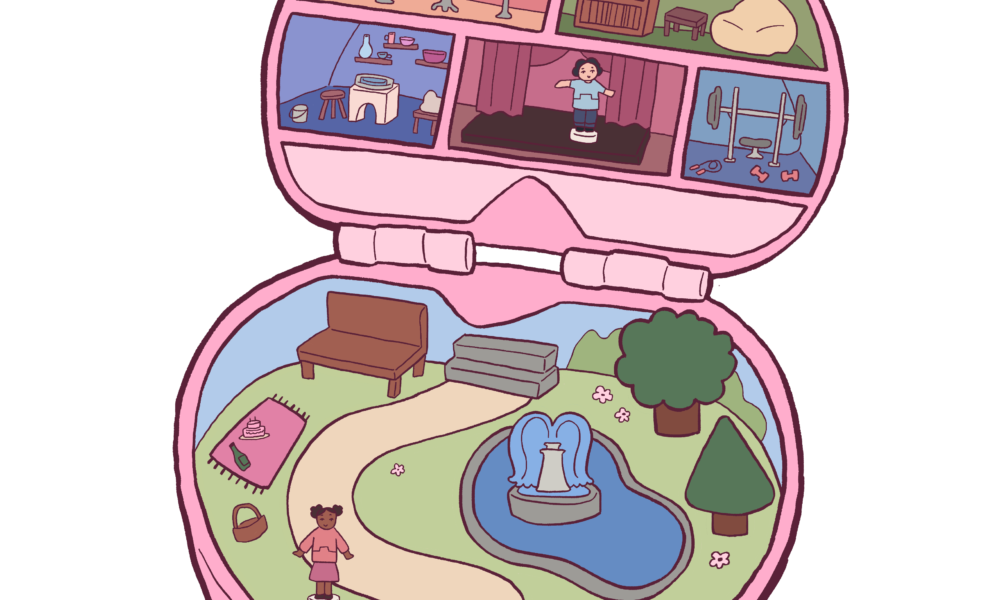
I had this dream of what university would look like: Sunbathing on the grass with a hot dog in hand, watching people play frisbee on the field, lounging on a picnic blanket with friends in the park, or maybe just sitting in a cafe sipping coffee and watching the people go by. I didn’t realize it at the time, but there was a term for what I was looking for. It wasn’t until I took an urban sociology class that I realized what I searched for is what sociologists refer to as a third place—a place to just be.
The term “third place” was first coined by the sociologist Ray Oldenburg, who defined it as a space outside of the home (the first place) and work or school (the second place), where people gather informally to socialize, exchange ideas, and build community. These spaces are essential not just for community life and mental well-being, but for fostering the kind of informal, peer-driven learning that enriches the university experience. As members of the McGill community, we must recognize our administration’s role in nurturing, or neglecting, these vital environments.
Everyone has their favourite third places, where they go in between classes, on the weekends, or when they need a space to just be. My favourite place on campus? The Geographic Information Centre (GIC), tucked away on the fifth floor of Burnside Hall. Calling the GIC a study space would be doing it a grave injustice—the GIC is multipurpose: You can heat up your lunch and eat while chatting with friends in some armchairs, study in silence in the quiet zone, work on the communal computers, join a group study session, or chat with friends in a booth. I go there ostensibly to study, but really, I go to see people. As a Geography major, the GIC is where I feel a true sense of both academic and social community. It starts with a familiar face that slowly grows into learning names, telling stories, and building friendships.
Ava Maika, U3 Arts, says her favourite third places at McGill include the Players’ Theatre and the University Centre. For her, these are places that offer both casual connection and meaningful conversation. Off-campus, she highlighted the Quebec Public Interest Research Group’s (QPIRG) Alternative Library, a space that prioritizes inclusion and accessibility.
“QPIRG’S alternative library is an amazing third space,” Maika wrote in a statement to //The Tribune//. “They prioritize community and inclusion, which is crucial. From their website: ‘A library is a site of gathering where everyone should feel welcome to be, read, and exchange.’ I like their definition.”
For another student, Sarah Grech, U3 Arts, her favourite third place is even closer to home. She has lived on boul. St.-Laurent for the last couple of years, and she considers the street itself to be a kind of third place.
“I especially enjoy the summer, when the street is closed off and you can interact with different shops, vendors, tourists, and locals—pretty much anybody,” Grech said in an interview with //The Tribune//. “I think these spaces all have a positive influence on my life—whether my experiences within them are positive, negative, or neutral—because they allow me to gain a better understanding of the world around me.” She also mentioned Square Saint-Louis and Parc La Fontaine as go-to spots regardless of the season.
For students at a large, often overwhelming institution like McGill, third places are more than just hangout spots—they are lifelines of belonging. These inclusive and welcoming environments combat feelings of isolation, especially for students living far from home for the first time. This sense of belonging doesn’t just affect emotional health—it can impact physical health too.
Take, for instance, the 1995 Chicago heat wave, which overwhelmed most of the Midwest and led to 739 heat-related deaths in Chicago over five days. Many lives were lost, but studies revealed that neighbourhoods with stronger community ties, where neighbours knew and looked out for each other, fared significantly better, even when compared to neighbourhoods of higher socioeconomic status. Consider a similar finding in Roseto, Pennsylvania, where researchers noticed that the rate of heart disease in the borough’s close-knit Italian-American community was strikingly low. Upon investigation, studies concluded that strong social connections and communal living played a central role, and coined the phenomenon as the “Roseto Effect.” Our environments and our relationships within them have a tangible influence on our health and well-being. Community is crucial, and it needs space to grow.
Beyond building a sense of community, third places are educational spaces. University is about more than classes and coursework. Learning happens everywhere: In extracurricular clubs, student-run services, and especially in casual dialogue with peers.
Professor Jan Doering, now at the University of Toronto (UofT), but formerly of McGill’s Department of Sociology, reflected on how physical space shaped his connections with students.
“At McGill, there was no graduate student office space in Leacock, where my office was located. As a result, I did not usually have any casual interactions with graduate students in that space,” he wrote to //The Tribune//. “In my new office at the UofT, graduate student workspaces and faculty offices are in the same space, which means I have more conversations with students.”
The value of informal learning extends off campus, too.
“Speaking in the evening (rather than during work time) and in casual spaces (restaurants, bars) makes it easier to share new ideas that have not yet solidified,” Doering added. “Conferences can do the same thing, but they often encourage a somewhat performative style of interaction that is less generative.”
These spaces can also become political. Here, people can come together to share values, organize, and resist. Physical space is never neutral. Its design, who controls it, and who are welcome all influence which voices are heard and which are suppressed. At McGill, this dynamic has come into sharp focus in the last year as student encampments and other protests have turned everyday locations, including lawns, streets, and buildings, into sites of collective resistance. When students occupy space against McGill’s demands, they are reclaiming visibility and asserting a right to be heard within the university they attend. However, excessive surveillance and security measures can make third places feel tense or inaccessible, discouraging the openness and spontaneity that make them generative.
“Post-encampment, the heavy security presence on campus has certainly not made me feel any more safe,” Maika said.
The power of a third place lies in its openness, its ability to welcome multiple perspectives, hold disagreement, and be a place for exchanging ideas. Cafes, libraries, and student lounges become places where political movements are born, people come together, and ideologies form through conversations. Without these spaces, activism becomes fragmented, driven into the margins, or shut down altogether. While McGill says it aims to create spaces where students can safely explore and express ideas, the administration must ask itself if it is truly pursuing this aim, or whether it is policing campus spaces into silence. A university that values free inquiry cannot treat space as apolitical. How we gather //is// how we resist and speak truth to power.
While we have seen third places bounce back post-pandemic, the echoes of lockdown life still linger, as well as the digital platforms that sprung up to replace physical ones. During COVID-19, makeshift third places appeared online, from Zoom breakout rooms and Discord servers to Twitch streams and Netflix Parties. They became lifelines for many students, especially those isolated from campus. In these digital spaces, people could study together, organize events, and keep their social community alive during government lockdowns. Despite the help these platforms provided, they also highlighted the limitations of online communities. Screens can connect us, but they can’t replicate the feeling of bumping into someone while on the way to class or the unplanned depth of a conversation that lasts a little too long during a morning run to the cafe.
There has also been a growing discourse about the “digital public square,” referencing the idea that civic discussion and debate now happen on platforms like X, Reddit, and even TikTok. These spaces can empower access, especially for those beyond traditional institutions. However, they don’t come without drawbacks.
“Online spaces attract similar mindsets,” Doering said. “In physical spaces, you meet people from all walks of life.”
Algorithms, designed to reinforce engagement, often create echo chambers—spaces where users only encounter opinions they already agree with. Without the friction of physical proximity, we lose opportunities for disagreements and negotiations.
While digital third places have value, we should resist the idea that they can replace the real thing. Face-to-face interaction isn’t just nice to have, but foundational to learning how to live with others and be a member of society. The richest communities, online or offline, are those that allow for organic interactions and all the messiness and surprise encounters that they come with. That is what physical spaces offer that digital versions often lack.
Third places allow for spontaneous and creative social interactions, but the spaces themselves are shaped by deliberate funding decisions and architectural design as well as sustained policy measures. At McGill, we need to move beyond the idea of spaces as neutral backdrops to learning, and recognize them as the active participants they are in educational experiences. The university has a responsibility to foster inclusive and accessible gathering spaces to support community, learning, activism, and well-being. They are not distractions from university life—they //are// university life.
So, go find your third place. Use it. Share it. Cherish it. Remember, sometimes the most important part of your education isn’t where you have to be—it’s where you choose to go.

Morals and meaning: An atheist’s second look at religion
More in Features:
-
How can I show you I’m doing better if there’s nothing good for me to do?
April 13, 2026
-
Your health, your problem
April 8, 2026
-
On becoming Chinese
March 30, 2026
My parents never pushed me towards religion. They are atheists themselves, so my exposure to Christianity was limited to attending Friday night youth group sessions with my aunt at her local Evangelical Lutheran church. I remember attending a Halloween service when I was 11 or 12—on that particular evening, the pastor told us we would be protected from the demons of horror movies, as long as we were baptized and followed the teachings of the Lord. I, meeting neither of these requirements, was terrified on the drive home, even though my parents had told me not to believe the things that the church had taught us that night.
Despite the pastor’s warnings, my disbelief in a higher power only grew as I got older. More recently, however, I’ve noticed that atheism makes it difficult to answer the sorts of questions that one might find themselves asking when trying shrooms for the first time (I assume, that is…), like “Can one ever be genuinely altruistic?” and, “How does one go about making their life meaningful?” Unfortunately, atheists don’t often believe these questions have definite answers. I’m not all that satisfied with this conclusion.
This dissatisfaction has become harder and harder to ignore throughout my time at McGill, particularly in the past 12 months, presumably because of the increased independence I have as an “adult” who lives alone. In any case, it has forced me to reevaluate the views I’ve held so strongly for the past 20 years—crucially, this has meant addressing my convictions towards faith.
I think there are two things fundamentally wrong with the way I have been approaching conversations about religion. The first is that I have judged religion from a “right or wrong” perspective, getting hung up on the truth of different cosmologies and beliefs, rather than focusing on the impacts that faith has on believers and communities.
Najda Kassam, U3 Arts, who grew up Muslim but now feels more agnostic, continues to understand the comfort that faith gives people.
“Nobody wants to feel like they have to be the strongest human alive, they don’t want to deal with everything on their own, it is painful and sad,” Kassam said in an interview with //The Tribune//. “And I felt that way, [because] I was trying to deal with it all on my own. But when I think about it, I find it’s easier to cry in the arms of my friends, right? And that’s kind of what religion does for people.”
People have turned to religion in times of crisis for as long as it has existed. To dismiss this found comfort in the name of science or “rational” thinking is irresponsible and, frankly, rude. My preferred method of self-soothing involves several hours’ worth of Instagram reels, so to each their own.
At a societal level, religion has inspired artists and architects around the world for centuries. It has created spaces for communities of like-minded people to form. It brings peace and provides one with a general way of being. While it would be incorrect to say that organized religion has been harmless throughout human history, it is equally problematic to ignore the reasons people have turned to faith in the first place.
The artistic and ritualistic practices that emerged from religion create a myriad of beautiful things to engage with, regardless of whether you hold the corresponding faith.
Kat Mulligan, fourth-year French Studies student at Concordia University, is a regular church-goer, despite identifying as an atheist.
“I like hearing the organ music, the choir, and I like that it’s a sort of meditative space,” Mulligan said in an interview with //The Tribune//. “I think Catholicism does a good job with aesthetics, so especially as someone who doesn’t have the faith aspect to religion, I like the kind of show they make of their religious experience.”
These environments have built avenues to experience the beauty of religion while simultaneously being surrounded by people who show up for causes they care about. This in itself can have a restorative effect on your faith in humanity.
“I really like the aspect of ritual, and I think it’s nice when people go all in on something [….] In general, I like the idea that Catholicism wants you to hold yourself to a high standard morally,” Mulligan said.
My second error was to think that ‘religion’ and ‘atheism’ mean the same things to everyone who uses the terms. Throughout my interviews, it became clear that people do not necessarily stand by every aspect of a particular doctrine, and that part of coming of age is deciding for yourself what aspects of faith (or a lack thereof) are meaningful and valuable for you. Even I, a diehard atheist, find myself praying before writing an exam or waiting to hear back from an internship application. Seeing doctrines as monoliths ignores a lot of individual variation in belief and practice. The beauty of having a belief system partially lies in the way each person adapts it to their own life in practice.
“It doesn’t have to be one rule for everybody, and there are so many different parts of the interpretation that you can make as you go. That’s the point of any piece of literature you’ll ever read in your life,” Kassam said. “It’s all interpretive. No one’s going to read the same thing the same way.”
//Perhaps//, I thought, //there was some interpretation of faith that could help my atheistic heart with its existential line of questioning.//
Alongside each person’s unique interpretation of their beliefs and traditions, the students I spoke with all had their own approaches to the relationship between religion and morality. Jordan Ona, third-year English Literature student at Trent University, mentioned the Sermon on the Mount from the Gospel of Matthew as an important source of moral guidance. Its teachings encourage one to practice compassion, humility, and forgiveness.
“That is one thing I appreciate that religion stresses on, is that it really does strip away everything you think is important,” Ona said in an interview with //The Tribune//. “Like having good skin care, a good body, being smart and in school? No, it’s loving your neighbour, your mom and dad, brother, everyone you love, and just washing everyone’s tears away. That’s what’s important.”
In contrast, Kassam’s takeaway was less about specific instructions from a holy text, and more about the fact that, as humans living on the same planet, we are all innately connected. However, this feeling of connection, in her eyes, is not entirely removed from the idea of faith.
“I think God is this interconnectedness within us and these strings that attach us and the ties that we are, and so it would be sort of like severing that if I dishonoured it, or if I didn’t go about [life] in a way of acknowledging everything around me,” Kassam said.
This narrative ties into other faith-related aspects of Kassam’s life, namely the existence of the soul, and the value of curiosity and education.
“I kind of think that [education is] the way I carry through with my faith,” Kassam said. “So even though I don’t necessarily have to go to mosque or have to be in a certain place to pray, I find that being inquisitive and learning and finding things out and doing research gives me this sort of meditative, or religious sort of aspect to it.”
Zachary Liu, U3 Science, highlighted the overlap that atheists and theists may have in their belief systems despite taking different routes to reach the same conclusions.
“A lot of the values that I think of when I think of religion, I think I have not necessarily the same values but similar ones, except mine weren’t obtained through religion,” Liu said in an interview with //The Tribune//. “When I want to help someone or do something that I deem to be morally right, it doesn’t have anything to do with any external force. This is just me wanting to do it because I want someone else to be happier.”
While Liu currently identifies as an atheist, Liu’s father was Catholic, and his mother was Buddhist. Understanding religion was thus an important part of his upbringing, even if it did not ultimately inform his moral compass.
“For some parts of my family, it’s a big part of what their community looks like,” Liu said. “And then so for me, it’s important, for example, if I want to understand my grandparents. I think it’s important to have that context of their social circle like in what their events are like.”
Sam Kunesch, U3 Science, echoed a similar idea to Liu, on the premise that while religion can help people find meaning and direction, it is not the only way to do so. As a biology student and a former Catholic, Kunesch looks to the biological principle of reciprocity for moral inspiration, which is reminiscent of the biblical teaching to “love thy neighbour.”
“Reciprocity is a strategy where an organism acts in a way that temporarily reduces its own fitness while increasing another organism’s fitness, with the expectation that the other organism will reciprocate the favour later,” Kunesch said in an interview with //The Tribune//. “So we have an evolutionary advantage to something that is also advised to us by the Bible [….] It’s the closest thing to what I consider a universal truth when the religious people and the scientists can agree on something.”
***
One of the final questions I asked each of my interviewees was whether they thought life is inherently meaningful. In retrospect, I sounded an awful lot like Jaden Smith talking about the political and economic state of the world, but it was one of the driving questions behind this project, so I asked it anyway.
It wasn’t until Ona asked me how I would answer it myself that I realized I hadn’t considered the question all that deeply. It took merely a few seconds of critical thinking to realize that, while life may not have some greater, philosophical meaning, the fact remains that I am alive now, surrounded by people whom I love. My care for others exists whether it is biologically, divinely, or philosophically motivated, and I would be doing a disservice to myself and the people around me by not embracing it.
Whether you find your meaning and morals by following the word of God, through the principle of reciprocity, or simply out of the goodness of your heart, it would seem that ultimately, we are all working towards one common goal: To help and to love one another. And really, what more can we do?