


Latest News

Hockey, Men's Varsity, Sports

McGill Redmen hockey dominates Brock Badgers in penalty-filled contest

After a contentious first period, the McGill Redmen (10-2-1) exploded with three goals during the second and finished the game with a 6-1 victory over the visiting Brock Badgers (7-5-1) on Nov. 19.

Close opening periods have been the norm for McGill this season. A slew of powerplays in the second period shifted the momentum to the Redmen and allowed them to get three goals on the board.

“The more the game goes on, we get our legs back and the execution gets better,” McGill defenceman Dominic Talbot-Tassi said. “Then the powerplay gets us the momentum and we get going, then they can’t keep up with us.”

While the powerplays did generate scoring opportunities, numerous turnovers and penalties put severe strain on the Redmen penalty-kill unit. This allowed Brock to slide a goal past a worn-down Redmen penalt-kill team.

“Especially when you have the same guys going over the boards, it might take a toll,” Redmen defenceman Nathan Chiarlitti said. “But at the end of the day, we’re a team and we play as one group. If some guys need to contribute more one game, then that’s fine.”

The struggle of the first period was followed by the Badgers’ attempts to throw the Redmen off their game by starting fights. As McGill continued to pull away with a wide lead, multiple ejections ensued in the second and third periods as instances of roughing and fighting erupted in the corners. Brock racked up more ejections and penalty minutes from these aggressions than McGill and the resulting penalties only expanded the five-goal lead that the Redmen held to the end of the game.

“Late in the game like that, when we’re up 6-1, they’re going to try and do stuff like that to get our guys out of the game,” Redmen Assistant Coach David Urquhart said. “We knew the other team was going to be a little chippy and our guys did a good job of defending themselves.”

The Redmen will face UOIT and Queen’s on Nov. 25 and 26, respectively. Having lost to UOIT earlier in the season, the team feels ready for a re-match.

“That was one of the games we had a slow start, so that’s going to be one of the focuses for that,” Urquhart said. “We’ve grown a lot since then, and we’ve been developing an identity since then, so this is a good chance for retribution for that game.”


Stat Corner: 158 penalty minutes were racked up during the game with 130 of those minutes coming from the third period alone.


Quotable: “It’ll be revenge for us.” — McGill defencemen Dominic Talbot-Tassi on the upcoming game against UOIT


Moment of the Game: Two back-to-back goals by the Redmen, the first from the slot by Dominic Talbot-Tassi and the second by Nathan Chiarlitti, brought about the mid-game surge in goals that established McGill’s lead and accelerated the pace of the game.


McGill, News

Students rally at “Love Trumps Hate” protest at McGill

On Nov. 14, students participated in a protest organized by Democrats Abroad at McGill following Donald Trump’s victory in the American presidential election on Nov. 8. In Fall 2016, American students made up 11.3 per cent of the undergraduate entering class and 6.8 per cent of the graduate entering class.

The protest started around 5 p.m. at Milton Gates. Participants engaged in speeches denouncing the policies promoted by President-Elect Trump and calling for society at large to take action. The crowd then peacefully marched to the Roddick Gates. Protestors had prepared posters with slogans such as “Love Trumps Hate” and “Respect existence or expect resistance,” as well as posters of the Palestinian flag and gay pride flags.  

Vice President (VP) Events of Democrats Abroad at McGill Ella Hanson explained that the event aimed to provide a space for all students to voice their thoughts and opinions after the U.S. elections.

“I think we saw a lot of protests happen around the U.S. and we wanted to give American students and also international students at McGill the opportunity to express their opinions about the results in the election,” Hanson said.

Thomas Chroeter, a German-American U1 Arts student present at the protest, believes it is important to participate in such events in order to prevent Trump’s re-election in 2020.

“The one thing that we can do in order to not let something like this happen again is to go in the communities, speak to people, […] to join groups like Democrats Abroad at McGill, and to make sure that at the next elections we know that we fought our hardest, that we did our very best in the next four years to not give Trump a second term,”  Chroeter said.

Chroeter recalled feeling deeply discouraged and disoriented when the election results were announced.

“I was feeling lost, I didn't know what to do,” Chroeter said. “It was probably one of the worst nights of my life.”

Beatrice Dimaculangan, U1 Arts, an American student also present at the protest, had an emotional experience on election night and in the following days.

“As I was watching the election, I was actually in a room full of international students where there was a lot of Americans and everyone was in tears,” Dimaculangan said. “I was in tears the next morning, […] I had friends hitting me up that were scared for their lives, for their futures.”

Dimaculangan feels particularly threatened by Trump’s program and policies due to a triple vulnerability.

“I am a woman, I am a minority, I come from a family of immigrants, so right now I’m feeling very fearful and anxious for my future,” Dimaculangan said.

Despite the apprehension, Dimaculangan remains optimistic about the future impact of her generation, who largely voted for Hillary Clinton.

“As a group of millennials we are […] incredibly vocal about our opinions and very optimistic about the impact that we can make […] because if you do look at the distribution of votes for millennials, […] it’s predominantly blue,” Dimaculangan said.  

Amanda Demers, president of Democrats Abroad, explained that due to the elections, participation in the organization’s events has significantly increased this year.

“This year has been, obviously, the most active year […],” Demers said. “There’s been a big sense of concern and worry for a lot of Americans, especially being abroad, because you feel like you can’t do as much […] so we’re trying to provide them with outlets so they can become involved.”

Democrats Abroad intends to organize more events of this type if students’ urge to protest maintains the intensity manifested last week. However, nothing is planned yet.

“We hope [that] if the interest is still there and, depending on what happens, […] we will definitely be organizing more events,” Hanson said.

News, PGSS

PGSS Council stands with AMUSE in negotiations

On Nov. 16, the Post-Graduate Students’ Society (PGSS) legislative council discussed a motion supporting the Association of McGill University Supports Employees (AMUSE) collective bargaining. The council also addressed questions to Provost and Vice-Principal (VP Academic) Christopher Manfredi and discussed security measures that were to be taken at the Nov. 19 Masquerade Ball.

PGSS Support for AMUSE

AMUSE, a labour union that represents casual and temporary workers at McGill, is currently engaged in the bargaining process for a new collective agreement for its workers. The union’s bargaining concerns include hiring priority for jobs workers have done before, raising the minimum wage to $15.38, and a better work-study posting system.

AMUSE held a five-day strike from Oct. 29 to Nov. 2 after the McGill administration refused to make concessions. Maxim Baru, AMUSE communications and outreach officer, explained that steps are still being taken to move forward with the collective bargaining agreement.

“We are back at negotiations right now,” Baru said. “Unfortunately, the university has not been sufficiently moved to change their position on any substantive issue. We are continuing negotiations and considering all options moving forward.”

When asked if AMUSE will hold a second strike, Baru said that plans are not currently in place.

“Right now there are no plans for a second strike though the strike mandate is still in effect,” Baru said. “We are keeping all options open. If we go on another strike, there will be ample time given to all members.”

The motion for PGSS to support AMUSE in its collective bargaining process passed unanimously.

Provost to Council

Provost Manfredi held a question and answer discussion with the Council. When asked if students should expect tuition changes for out-of-province, exchange, international, and graduate students, Manfredi explained that all tuition rates, except for international undergraduate students in select disciplines such as Science and Management, are set by the province.

“We don’t get to decide what rates will be for our students,” Provost Manfredi said. “That is the same for graduate students as well. Tuition is allowed to rise by the disposable family income in Quebec, which is about 1 per cent per year.”

Provost Manfredi also spoke of some of the campus sustainability ideas that were brought up at the Nov. 10 joint board-senate meeting.

“We were grouped in three different sets of tables: Short term, medium term, and long term,” Manfredi said. “Our long term table came up with how we should set a date by which McGill should be carbon neutral and develop an action plan to get there.”

Further discussion included how McGill can incorporate sustainability into curriculum and introduce travel policies that aim to cut down the carbon footprint of faculty and students.

Masquerade Ball

PGSS held a masquerade ball for its members on Nov. 19 at Thomson House. In response to the accessibility of Thomson House and recent reports of sexual assault and harassment against students near McTavish Street and Dr. Penfield Avenue, PGSS will take measures to keep students safe during the event. Currently, Thomson House is not accessible from McTavish Street due to construction. All pedestrian traffic has been directed to Peel Street.

According to Mina Anadolu, PGSS Internal Affairs officer, students will be provided with a card that lists phone numbers to campus safety services. Walksafe, McGill Student Emergency Response Team (M-SERT), and Peer Support Centre will be stationed at the event.

“We will be increasing lighting and will alert McGill security about the event,” Anadolu said. “Currently, McTavish is closed, so we’re trying to utilize Peel to keep [students] safe.”

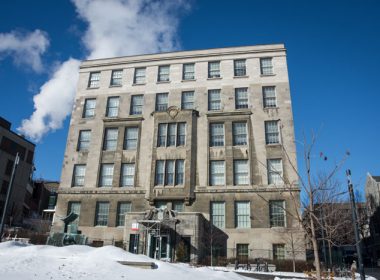
McGill University Arts Building
Off the Board, Opinion

A plea to disgruntled Americans at McGill

It has taken quite a lot of time for me to process what this election means for myself and for my country. I have felt everything from sadness to anger to fear to nausea. The most qualified presidential candidate in the history of our nation was defeated by a man with no experience who ran on a platform of hate and fear. At first I was embarrassed to be American. The House and Senate remain majority Republican, and the next Supreme Court Justice will be nominated by a man who has promised to overturn Roe v Wade. This may feel like the end of days, but I promise you it is not. It is essential that we American students at McGill mobilize politically if we are dissatisfied with the result of this election.

If this election has taught Americans anything, it’s that we need to stick together and stand up for our marginalized communities, including immigrants, the poor, ethnic minorities, and women. They are the ones most at risk in Donald Trump’s America, and many can’t afford or don't have access to the resources to leave the country. When you feel tempted to apply for a visa and move to Canada, or you hear friends and family discuss leaving, even jokingly, remind them that leaving does not end the effect of the Republican takeover at home. Donald Trump has already recruited Myron Ebell, a climate change denier, to help transition the Environmental Protection Agency; promised to repeal the Affordable Care Act; and deport 800,000 undocumented workers who came to our country as children and were set on a path to citizenship by Barack Obama. By leaving, you will be abandoning those most vulnerable to the after-effects of an election that we are all ultimately responsible for. Living under a Donald Trump presidency and Republican majority government may be difficult, but there are millions for whom it will be much more difficult.

Racism, sexism, xenophobia, and violence may have defined this election but they do not have to define the United States or its people. We can give ourselves time to mourn, to process the world that has suddenly turned upside down. But, soon, we must begin to put the pieces back together. Donald Trump did not win the popular vote; it is okay to feel that he is not your president. What it is not okay is to give up.

We must not let this momentum die. It is now our responsibility to get involved politically—however possible. We are the ones who will be living with the ramifications of this decision for the coming decades. You can start from Canada. If you have not already, get involved in Democrats Abroad at McGill. Start applying for government internships, use your summers to mobilize, phone bank, and fundraise for organizations that are fighting against conservative legislation.

Then, go home. It is time to fight against the fear and hatred Trump ran on, and show the members of society who he has insulted, threatened, and scapegoated—Latinos, Muslims, those with disabilities and the LGBTQ+ community—that they are still an important and valued part of American society. Pay attention to and vote in midterm elections. Get involved in your local politics: No level is too small. Volunteer for organizations that are fighting the good fight—environmental groups, gun control activists, and abortion rights protectors such as Planned Parenthood.                                     

This is not the end. This election does not mean it’s time to give up on our democratic institutions. This was not a failure of democracy—in fact, it was an example of our democratic institutions performing as they were designed. However, democracy’s success does not mean that everyone has to be satisfied with the results of an election. We can be using these same institutions to fight for the changes we were hoping to see before Trump was elected. It is time to politically mobilize, to put our time and money where our mouths are, and to start making a difference. Democrats gained seats in the House and the Senate; Hillary Clinton won the popular vote. Our country has the potential and the desire to do better and be better, but it is going to take all of us to make our inclusive, optimistic vision of America a reality. Our world may have been changed on Nov. 8, but it doesn’t have to be for the worse.

Legal Information Column, Student Life

An overview of immigrating to Canada as a student

Unexpected news. This was what kept students glued to TVs and computer screens on Nov. 8, despite upcoming midterms looming in the background. After a week to digest the election results, what’s inevitably come up among U.S. citizens, even if jokingly, has been the topic of immigrating to Canada. Of course, it may also be the magic of the Montreal Canadiens or this city’s affordable rent that invites students to settle down here. Whatever the reason, below are just some of the ways a foreign national can extend their stay in Quebec, either temporarily or permanently.

A temporary permit for a worker or a student staying in Quebec is called a certificate of acceptance (CAQ). Foreign nationals studying at McGill most likely hold a CAQ for studies. With a CAQ, a foreign national may apply to extend their studies, to obtain a work permit, or to obtain permanent residency.

How may a person extend their period of study?

If a person wishes to extend or change their level of studies beyond the expiry date of their current CAQ, they must file a new application for a CAQ for studies. This may be done online or by mail. It is recommended by many universities to do this several months preceding the expiration of the current study permit.

How to obtain a post-diploma work permit?

If a person wishes to extend their stay after receiving their diploma, they may apply to Citizenship and Immigration Canada for an open work permit. This is called the Post-Graduation Work Permit Program (PGWPP). A person must already have a study permit and have continuously studied full-time for at least eight months before applying for a work permit. A person must apply within 90 days of receiving notice from their educational institution indicating that they have satisfied all the requirements for obtaining the diploma. Also, an applicant who doesn’t meet full-time status in their final academic semester, but is otherwise eligible, may still apply. Note that this type of permit is only valid for a maximum of three years. However, the permit cannot exceed the length of the program of study of the student. For example, if the academic program lasted two years, the work permit will also only last two years. 

This application can be filed online through the Citizenship and Immigration Canada website.

How to obtain permanent residency in Quebec?

There’s a difference between the selection and the admission of permanent residents. The Quebec provincial government retains sole authority in the selection of permanent residents destined for their province. Being “selected” by the Quebec government means that the province wants the applicant to stay in the country; however, the province doesn’t have the authority to allow someone to stay—that is to say, the Quebec government cannot issue permanent residency visas. The Canadian federal government is responsible for the admission of permanent residents and therefore is the authority that will issue the visa. So, to apply for permanent residency, a person must first apply to the Quebec provincial government for a selection certificate (CSQ), and then submit an application for permanent residence to Citizenship and Immigration Canada.

Applying for a CSQ

A foreign national who is either studying or working temporarily in Quebec and who wishes to settle permanently in the province must apply for a CSQ under the category of what is called a “skilled worker.” This application must be submitted while the person is still staying in Quebec.

Someone holding a study or work permit may apply for a CSQ through the Quebec experience program (PEQ)—an accelerated program to obtain a CSQ. However, the criteria are more onerous than through the regular selection program for skilled workers. Someone not eligible to apply through the PEQ may still apply for a CSQ through the regular program.

Qualifying for the PEQ

Like Quebec experience program name suggests, one criteria for acceptance is that the applicant must have the intention of settling and working in Quebec. As the program promotes successful integration into the province, the government will also require the applicant to promise to provide for their needs as well as the needs of their immediate family for at least the first three months after acceptance. Furthermore, the applicant needs to show advanced intermediate knowledge of oral French. Finally, the applicant needs to have respected all the conditions of their current work or study permit. 

Depending on whether the PEQ applicant is currently holding a work or study permit, there are other conditions. For example, a PEQ applicant with a study permit must have a diploma or expect to complete their study program within six months of submitting their PEQ application. In any case, the application needs to be submitted no later than 36 months after the program of study has ended. For someone with a work permit who wishes to apply for the PEQ, they need to have held a job for 12 months over the last two years before the PEQ application. In addition, they must currently be working a job at the time of their application.

Applying for permanent residency

Once a person has obtained a CSQ, they may apply to Citizenship and Immigration Canada to become a permanent resident as a skilled worker selected by the provincial government of Quebec.

Even though Quebec has selected the candidate, Citizenship and Immigration Canada still has the right to refuse to issue a selection certificate. The application might be refused if Citizenship and Immigration Canada believes that the applicant does not actually intend to settle in Quebec. 

It’s important to note that immigration law is complicated, and decisions depend on the discretion of the official reviewing the file; requirements thus vary case-by-case. Moreover, there may be other eligibility concerns. For immigration advice, please contact a lawyer. Taking the time early on to learn about the law may be beneficial when everybody is scrambling to stay on the north side of the border (or wall). 


To inquire further about these processes, or to ask your own legal question, contact the Legal Information Clinic at McGill (LICM) with the directions found on our website. According to the Act respecting the Barreau du Québec, only lawyers and notaries can provide legal advice or counsel. The LICM, therefore, only provides legal information. For legal advice, please contact a lawyer. 

Commentary, Opinion

Why isn’t mental health the top priority at McGill?

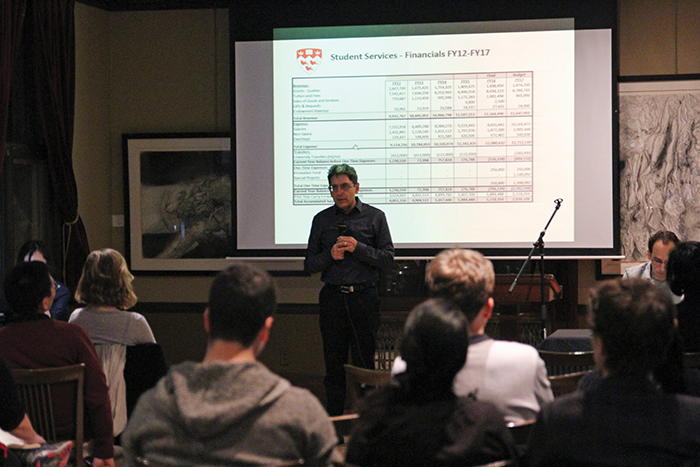
On Oct. 24, the Students’ Society of McGill University (SSMU) hosted a Q&A panel to address questions regarding the state of mental health at McGill. Only 16 students attended the panel out of a population of over 39,000. Whether the low attendance rate was due to the stress of midterms season or a lack of knowledge about the event, it is clear that mental health and related policy is not the main priority for many students. This is a symptom of the university’s culture, which places more emphasis on academic rigour than on the well-being of its students. 

As a student in the university, this is troubling. Mental health problems should not be an expected part of the McGill experience. It is the institution’s role to mitigate and prevent factors that may contribute to psychological issues of its students. 

Mental health issues are characterized by the Public Health Agency of Canada as “alterations in thinking, mood or behaviour (or some combination thereof) associated with significant distress and impaired functioning.” A 2014 McGill report on data from the 2012 and 2014 Counselling and Mental Health Benchmark Study revealed that McGill students reported higher academic distress and depression in comparison to American benchmarks. This report also indicated high levels of anxiety amongst students and a perceived lack of social support from the community and peers.

In response to the growing psychological problems on campus, McGill has developed several initiatives, including an online McGill Mental Health Hub, as well as student-initiated events like the Mental Health Awareness Week. In addition, McGill Counselling and Mental Health Services (MCMHS) has recently implemented the “stepped-care” model. However, as was reiterated by speakers at the Q&A panel, these clinics do not have an adequate number of professionals nor the space to address the needs of every student.  

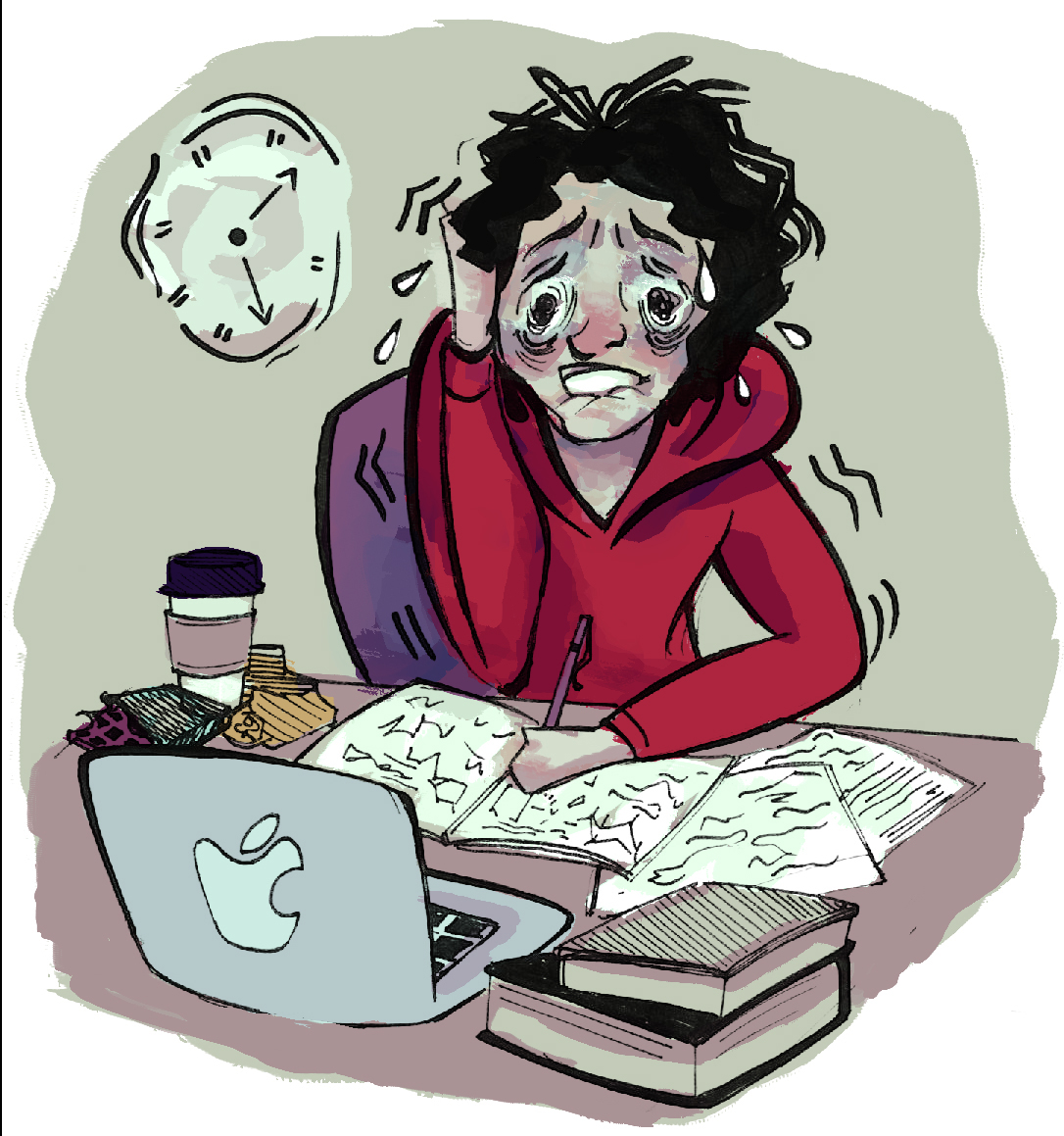
The reality is that no matter how many resources are available, academic distress plays a large role in students’ lives. This is a symptom of the campus’ culture of excellence. To be clear, McGill’s problem is not its high-achieving character. McGill attracts many of its students because of its academic excellence; the workload is understandably demanding. The academic demands and stressful environment become problematic when students prioritize their grades and work over their mental wellness. Often, mental health only becomes a concern after students have reached a tipping point of psychological distress. 

McGill must focus on preventing mental health issues from arising in the first place. To do so, there must be systemic change that involves shifting McGill’s framework to prioritize the wellbeing of its students over its academic achievements. As McGill’s report indicates, when campuses prioritize mental and physical wellness, students learn better and are more satisfied and engaged. 

Ideally, specialized mental health prevention training should happen within faculties to create a more centralized culture of mental wellness, which makes self-care an essential component of students’ academic experiences. For example, McGill’s Schulich School of Music has a mandatory mental health training and mentorship plan, prompted by the high levels of anxiety and stress in the faculty itself. This initiative enrolls incoming students in a compulsory class in music professional development, which provides comprehensive training in mental and physical wellness. The program also matches new students with mentors and provides access to a music student well-being hub

Yet, a large population of McGill students are in the Arts, Science, Engineering, and Management faculties. These departments also foster competitive environments, but do not have specialized mental health programs to directly address the issues. In the Faculty of Arts, professors often run through the course curriculum and academic demands, only to bring up mental health as a side note and remind students that they should not hesitate to seek out student services. After that slight briefing, class resumes, and mental health is once again placed on the back-burner. 

McGill is making strides to provide better mental health services and awareness, but there is room for improvement in terms of prevention and integration of services at the faculty level. If the poor attendance at the Q&A panel is any indication, there must be a stronger shift towards addressing the pervasive presence of mental health issues on campus. For McGill, that requires recognizing that the well-being of students is the primary concern. 

McGill, News

Arts Health and Wellness Week teaches students how to handle the stress of the school year

From Nov. 7 to Nov. 11, the Arts OASIS and McGill Arts Health and Wellness Project collaborated to hold Arts Health and Wellness Week (AHAW). AHAW was a week of activities and seminars to help students de-stress and learn about mental health. Events included The Happiness Workshop, an educational session on how to maintain a positive mindset, and the Salad Jar Workshop, which provided students with ingredients to make a healthy meal.

Ila Astren, U2 Arts and the head organizer of AHAW, said that the week is a useful resource for students and was intentionally scheduled for this time of year.

“AHAW is meant to give students an opportunity to carve time out and de-stress, as well as help reduce the stigma associated with mental illnesses and seeking for help,” Astren said. “Especially this week, there is such a student need [for de-stress….This particular week was chosen] on purpose to give students [an] opportunity to de-stress during this paper writing time and presidential elections.”

According to Astren, students at McGill often do not know about all of the resources available to them, especially services focused on mental health and counselling.

“With regards to mental health, often, things are centralized where they are. For this reason, this week was held in order to create a diffusal of the resources available on campus,” Astren said. “[…The] main idea […] was to showcase what we already have on campus so that students are exposed to what they don’t know and can go later in the year if they need to.”

On Nov. 8, the Study Abroad Networking Session + Mental Health While Abroad Information Station was held in Leacock. At this event, students who had gone abroad offered advice based on their own experiences.

“[We and the Arts OASIS and the Study Abroad Office] recognize that some students may find [studying abroad] stressful and shocking so basically what we did there is promote and give information on mental health tips that students can use when going abroad,” Astren said.

Maxine Clare, U4 Arts, studied abroad in Palestine for a semester and said that it was a unique situation that affected her mental health.

“I wouldn’t say [I was] homesick, but there were times when it was hard because of the political situation and I got to feel the daily oppression that Palestinians feel–there is a sense of entrapment,” Clare said.

Anne Nudo, Arts OASIS Student Advisor, Study Away/Exchanges, was there to offer advice to students on choosing a study abroad program and maintaining their mental health while away from home.

“Check out the host university thoroughly [before leaving for your study abroad program], attend all the pre-departure sessions, which discuss safety and health and meet with faculty advisors or doctors, depending on the issues, before departure,” Nudo said.

The Salad Jar Workshop took place on Nov. 9 and was an interactive event organized with Healthy McGill and intended to teach students how to make their own wholesome meals. According to Astren, the salad workshop was so popular at the 2015 AHAW that organizers decided to hold it again this year.

“A handful of students, as many students as possible, will have done something this week where they felt good, whole, and had carved out some time to de-stress,” Astren said. “If they got a nourishing dinner from our salad workshop, whether or not they explicitly learned about healthy nourishment, they benefited.”

Features

Life outside lectures: The value of technical jobs and internships

Under the shadow of exams, assignments, and endless lectures, the pressure of academic life can turn the McGill bubble opaque. Although we call ourselves McGill students, there are four months of the year during which most of us are not studying at McGill University.

Many students use their respite from classes and exams to undertake professional opportunities. Student employment in Quebec is among the highest of all the provinces in Canada. According to the Institut de la statistique du Quebec, during the summer of 2015, over half of the students in Quebec between the ages of 15 to 24 were employed. Summer internships can also lead to employment opportunities after graduation. For example, according to a Seattle Times article, at Microsoft, 85 per cent of interns receive full-time offers at the end of their internships.

Student Life

Winter is coming: How students can keep heat in without breaking the bank

As temperatures fall, energy bills are on the rise for Montreal residents. Heating costs amount to approximately 54 per cent of the average customer’s total energy usage and new renters can often suffer from sticker shock upon receiving their first winter bill. The McGill Tribune spoke to Audrey Giguère, press officer from Hydro-Quebec, on how first-time renters can cut heating bills this winter.

1. Eliminate drafts

A sure-fire way tenants can reduce their current heating bill is to get rid of all drafts in the apartment. A draft is a current of cold air coming from the outside. If you are unsure if there is a draft in your apartment or where drafts may be coming from, check the interior walls of the apartment. 

“Twenty-five per cent of heat loss comes from draft leaks,” Giguère said. “If you place your hand close to the window or doors, you can feel if there is a draft.”

If there is a draft coming through the windows, this problem can be easily fixed by covering  windows with ordinary plastic wrap from your local grocery store. To insulate your windows, cover the window from top to bottom with the plastic wrap and secure each end with tape. Once the half of the window is covered, press your hand against the window so that the plastic clings to the glass of the window. Then repeat the process for the lower half of the window. This will create a better seal on the windows and close up any gaps that let cold air inside. If there is a draft coming from a door, tenants may want to consider asking their landlord to replace the weatherstripping, which seals off openings around doors from outside elements. 

2. Lower your thermostat

This tip may seem obvious, however, many students may be surprised to learn how big a difference even the most gradual changes can make on your total heating expenses. 

“If you lower your thermostat by one degree Celsius, you can save up to $40 a year,” Giguère said.

For additional savings, Chouinard suggests renters lower their thermostat by two or three degrees Celsius. However, everyone has different habits and preferences, so find a temperature that works for all of the renters living in the apartment. A good rule of thumb is to set your thermostat around 20 degrees Celsius during the winter and increase the temperature to your comfort.

If tenants are looking to save money, but feel a bit chilly after lowering their thermostats, they might want to try keeping warm in other ways. Try wearing a warm hat around the apartment, as uncovered heads can lose up to 50 per cent of body heat. Wearing extra layers and drinking hot beverages may help as well. 

3. Don’t waste heat on unused space

Try to prioritize the rooms that need to be heated in the apartment, such as bedrooms or the living room. Conversely, turn down the thermostats in low priority rooms, such as laundry rooms, storage areas, and the kitchen.The money saved can be better used making the rooms you spend the most time in comfortable.

“If you have an unoccupied room, close the door and set the temperature for 17 degrees Celsius,” Giguère said. 

Another good habit is to lower the thermostat whenever the apartment is unoccupied. When tenants are not home, they should lower their thermostat by 2 or 3 degrees Celsius. This can save another $50-$75 on their annual electric bill.

4. Let nature do its work

Sunlight is a natural source of heat and, best of all, it’s free. Chouinard recommends that students take advantage of sunlight to cut their annual electric bill. 

“Open your blinds or curtains during the day, and close them at night to keep the heat inside,” Giguère said.

Incorporating this habit into your daily routine maximizes the heat that comes into the apartment during the day and minimizes the heat lost during the night. Additionally, renters may want to consider replacing thin curtains with a thicker set. Thicker curtains will create a more effective barrier between the apartment and the outside air during the evening. 

5. Don’t block the heat source

Make sure that the area in front of heat sources is cleared to maximize the flow of air. 

“It is very important to keep all furniture away from the heat source. If not, the apartment will not heat properly,” Giguère said.

For maximum heating efficiency, walk through the apartment to make sure that there is nothing blocking your heating system. This will save tenants from having to crank up the thermostat to keep their apartment warm. 

Out on the Town, Student Life

A walk through Eva-B

While walking down the glittery, busy St-Laurent, it’s easy to pass by a store like Eva-B. The storefront is boarded up and covered by graffiti and stickers, looking more like an abandoned building than a vintage store. Yet beyond this front lies one of the most popular vintage haunts in Montreal. Eva-B is a go-to thrift store that attracts everyone, from local hipsters to visiting celebrities alike. 

Eva-B is organized by three sections dispersed between two levels—on the first is a consignment vintage store and a coffee shop, and on the second is a used goods floor—all while offering an alternative, vibrant underground community with the goal of preserving an era of Montreal history. Founded in 1987 by Gabriel Croteau, the shop has undergone many transformations over the years. According to Manager Catherine Coghlin, who has been at Croteau’s side for the last nine years, the original Eva-B was nothing like what it is today—in fact, vintage clothing was never meant to be its main focus at all.

“Originally, [Croteau] rented out the space [beside the current store], and [it] started out as a bookstore,” Coghlin said. “It was him and a friend of his, and they only sold second hand books [….] As time progressed, he was like, ‘Oh, can I buy the building?’ And when that happened, he had so much [extra] room […] so he started selling his girlfriend’s [mother’s] clothes, and that worked well.”

To some, selling old family clothing may be unconventional, but Coghlin says her boss has always been quirky. From digging through the garbage to hoarding junk throughout the years, it’s no wonder that Croteau has shaped Eva-B to be a haven for fans of the old, the forgotten, and the abandoned. 

“[The store’s] been through all kinds of stuff,” Coghlin said.  “We’ve done second-hand [clothing], new [clothing], tailored clothes [….] We’ve [also] done theatre stuff, we’ve had a theatre room [.…] And now we’re back to books and clothes.”

[metaslider id=47995]

Though Eva-B may have a large and eclectic selection of both vintage and cheap, modern clothing, the real charm is in the aesthetic and atmosphere it provides for shoppers. There is a small café located by the entrance, where the store sells delicious sandwiches, snacks, and drinks for relatively cheap prices. On the first floor, customers may recline on comfortable couches and enjoy a meal, or even sit outside in the courtyard to get away from the hustle and bustle of the store. 

The café side of Eva-B was created on a whim, as well. 

“[Croteau] would just make food for himself, and clients would be like, ‘Oh, that smells good!’ And gradually […] it just kind of happened,” Coghlin said.

All of this—the huge selections, cheap prices, and warm atmosphere—has contributed to Eva-B’s continued success. Compared with many other thrift shops or fripperies in Montreal, Eva-B differs in its position as a half-way between high-end vintage and Value Village-style stores. Additionally, both Croteau and Coghlin have always maintained excellent relationships with customers in an effort to create a sense of community. Though the store doesn’t maintain any active social media pages, Coghlin notes that shoppers are keen to share Eva-B’s unique aesthetic on sites such as Instagram or Facebook. 

“People hashtag Eva-B a lot. It’s funny, actually, you can see the [changes] throughout the years. If you go all the way down [the Eva-B tag on Instagram], you […] see what [the store] was like, our history, just on Instagram,” said Coghlin. 

Indeed, Eva-B strives to fulfill a look that attracts young creative people. The music, playing overhead as customers browse, is hand-picked by the employees of the store, and features artists such as The Smiths and The Talking Heads. Walking around the store feels disorienting—there are cassettes, typewriters, and books that seemed to have come out of the last century. 

Even the boarded-up door—although rather dubious-looking—manages to perfectly encapsulate Eva-B’s grunge style. The entrance signs are tucked away, as though to preserve the clandestine nature of the store. 

“Not many people notice that we actually exist, because all of the front of our store is completely boarded-up,” Coghlin said. “Being on St-Laurent at three in the morning, you get a lot of drunk people […] and people would break the windows, and we didn’t have enough money to [repair] them. We [tried] to patch it up with little pieces of wood until eventually we had to patch up the whole front because we kept getting bottles of beer thrown, [and drunk] people breaking in.” 

Coghlin doesn’t remember when graffiti started showing up on the walls, but she notes that it could have been from fans of the store, or simply young people attempting to vandalize property. Whatever the case, it’s certainly worked in Eva-B’s favour, especially in maintaining an underground image. 

As for the mysterious name, Coghlin makes a tenuous connection to Eva Braun, but says she doesn’t really know either. 

“I’ve asked [Croteau], ‘Where is Eva-B from?’ and his answer to that is, ‘I don’t remember.’ Now he is a bit old, but I don’t really believe that,” said Coghlin, with a laugh. 

Read the latest issue

Read the latest issue