Latest News

McGill, News

Part of Frank Dawson Adams Auditorium ceiling collapses

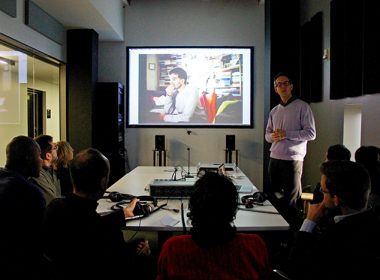
On Nov. 3, the ceiling of the auditorium in the Frank Dawson Adams Building leaked water and partially collapsed during a RELG 252: Hinduism and Buddhism lecture. No injuries were reported.

According to Associate Director of Preventative Maintenance Claude Lahaie, the leak was a result of human error.

“Because the building is very old, we have to [perform] maintenance on it,” Lahaie sad. “We took an electrical cable out of the floor, which left a hole. The incident was a human error, not something that could have been prevented.”

Lahaie stated that the process of restoring the ceiling is still in progress.

“The leak was caused by water coming from the floor above,” Lahaie said. “Someone took a floor opening for a floor drain, thus leaking clean water on the ceiling below. The cleaning work and drying was completed some days ago. The missing ceiling tiles will be replaced shortly. Proper safety equipment is required to lift the personnel up the 30 feet to do the work.”

Professor Lara Braitstein, who teaches RELG 252, said the worst part of the experience was the risk that students would be harmed in the incident.

“The leak was a small leak at first, and it took ten minutes for the ceiling to collapse,” Braitstein said. “I first asked the students sitting there to move, but then it was clear that it was getting worse. I asked them to evacuate to the back, but they wanted to come to the front to take photos and videos. [The students] evacuated, and [the TAs and I] stayed behind to make sure the students were okay.”

Braitstein said she hopes that if this happens during other classes, professors will put their students’ safety first. She was also concerned by the lack of a prompt response from Building Services over the issue.

“After 10 to 15 minutes, Building Services still hadn’t come, and I had called Building Services right after I saw the ceiling start to leak,” Braitstein said.

Hannah McKillop, U3 Religious Studies, witnessed the collapse and was shocked by the situation but appreciated Braitstein’s concern for her students.

“The TA brought over a garbage bin to catch the water and then it began to pour,” McKillop said. “People were taking Snapchats, and we were so confused. Basically, it was just a little stream of water, then it was as if it was raining, it was unbelievable. Finally, [Professor Braitstein] suggested we leave, saying though this was pretty funny, it was also dangerous. Later she sent out an email with resources to mental health services on campus. I think she handled the situation beautifully.”

McKillop said that this incident is a reflection of McGill’s poor infrastructure and that McGill needs to improve the safety of its buildings.

“It's a shame that events like this are needed as a wake-up call, but I hope [that…] future improvements can be made,” McKillop said. “A healthy learning environment requires many things, and one of those is safe and secure buildings.”

McGill, News

McGill Board of Governors and Senate discuss sustainability in annual joint meeting

On Nov. 10, the McGill Board of Governors (BoG) and Senate held their annual joint meeting to discuss challenges pertaining to the university’s direction and mission in the upcoming year. The discussion was focused on McGill’s sustainability plans and initiatives. Past joint Board-Senate meeting topics include strengthening mental health at McGill (2013) and  McGill’s engagement with the external community (2014) . Sustainability was also the focus of the 2007 Board-Senate meeting.

The meeting began with a table display of a few of McGill’s current sustainability initiatives, including the Barbados Field Study Semester and projects funded by the Sustainability Projects Fund, such as the Education Community Living Environment (ECOLE) and Plate Club.

Principal Suzanne Fortier recognized the significance of sustainability efforts from McGill students and faculty in keeping with the university’s mission and Vision 2020 Sustainability Strategy. Vision 2020 aims to establish McGill as a global leader in sustainability through its efforts in five areas: Research, education, connectivity, operations, and governance and administration.

Fortier stated that she believes it is important to include sustainability in all three components of the university’s mission: Teaching, learning, and service to society.

“It is very important that […] in a variety of fields […] we are able to learn about sustainability, teach about sustainability, and also to empower our students to [be sustainable] in their activities, not only while they’re at McGill, but after they leave our university,” Fortier said.

Dean of Science Bruce Lennox addressed the unique challenges of sustainability research, which, unlike other sciences, often lacks a clear end goal or solution.

“We got a man on the moon, and he came back,” Lennox said. “The human genome project, in a small number of years, through basic science development, accomplished [its goal]. But sustainability […] also involves problems […] that don’t have endpoints that are as readily definable as putting someone on the moon. It’s about the integration of science into our society.”

Three McGill professors–Graham MacDonald, Andy Gonzalez, and Elena Bennett, from the Geography, Biology, and Natural Resource Sciences departments, respectively–presented their sustainability research at the World Economic Forum’s Annual Meeting of the New Champions in Tianjin, China in June. MacDonald, Gonzalez, and Bennett presented this research again at the joint meeting on Thursday.

Bennett, an associate professor in the McGill School of Environment,  has been researching sustainability success stories in communities around the world in order to learn how their success can be emulated globally.

“By collecting examples of these success stories, which we call ‘bright spots’ or ‘seeds of a good anthropocene,’ by understanding what makes them successful, we can help build better human-environment relationships that stay within planetary boundaries,” Bennett said. “We see our bright spots as pockets of a better future that’s already in place today.”

Attendees were asked to discuss what they consider to be the top opportunities to advance McGill’s sustainability objectives in teaching, research, and operations. They were divided into three groups to focus on immediate, medium-term, and long-term objectives.

Immediate term objectives identified by attendees included curtailing water use by installing more automated water bottle filling stations and implementing a feedback system for people to report areas of wasteful water use.

Proposed medium-term objectives include reducing barriers to introducing new courses and sustainability initiatives at the university, improved communication and accessibility between the Macdonald and Downtown campuses, and mandatory sustainability courses.

Long-term objectives include setting a target date for McGill to become carbon-neutral and achieve energy efficiency, as well as investing to address the sustainability issues presented by the old age of many university buildings.

There is currently no plan for if, how, and when these initiatives will be implemented. The topic of the next join BOG-Senate meeting has yet to be announced.

Science & Technology

Seasonal Affective Disorder: How light therapy can help fight the winter blues

Seasonal Affective Disorder (SAD) is a mood disorder provoked by reduced daylight hours during autumn and winter. SAD is considered a seasonal type of depression characterized by irritability, oversleeping, increased tiredness, changes in appetite, and reduced motivation to participate in social activities. Countries closest to the equator report almost no incidences of SAD, whereas extreme northern and southern countries have high incidences. This is mainly due to the fluctuations in daylight hours as the seasons change, disrupting a person’s circadian rhythm—or internal clock—which controls a person’s physiological response to light and darkness.

Approximately two per cent of people in Canada and one per cent of people in the U.S. experience SAD every year. Women are four times more likely than men to experience SAD due to the disorder’s association with female hormones. Individuals who have been previously diagnosed with depression, or those who have a family history of depression, are at an even higher risk for SAD.

The underlying causes of SAD are undefined, but it is likely that the reduction in daylight hours causes shifts in hormone and chemical levels in the brain. The two main hormones responsible for SAD are serotonin—responsible for mood—and melatonin—responsible for inducing sleep. Some people are more sensitive than others to this reduction in daylight hours and will produce more melatonin and less serotonin during the autumn and winter months. These chemical shifts disrupt the circadian rhythm, worsen moods, and decrease energy.

As with many other forms of depression, exercise and frequent trips outdoors can help prevent or relieve SAD symptoms.

The most common treatment for SAD is light therapy, which consists of daily exposure to a light box that mimics outdoor light, leading to increases in serotonin levels in the brain that will help lift moods and relieve other symptoms. It is best to start light therapy early in the fall, before symptoms appear or they become to get too intense and interfere with school work and other daily activities.

Purchasing a light box may be a huge expense for many students, as they typically cost upwards of $250 each. However, they have been shown to help alleviate depression symptoms during those stressful and long winter months, and could be considered a wise investment in one’s well-being rather than only a burden on the bank account. Alternatively, cognitive behaviour therapy and antidepressants can be used to treat more severe cases of SAD. These resources are also available through McGill’s Mental Health Services.

If you are unsure if you have SAD, trying light therapy has not been shown to cause any harm. There are some new and useful resources at McGill for students to rent a light box to try at home before buying one. “Happy Lights” is a wellness program that was started by Students’ Society of McGill University (SSMU) last year, through which students can rent a light box for a few weeks. The rental provides a sufficient period of time to test the effectiveness of light therapy to alleviate SAD symptoms. In addition to SSMU’s “Happy Lights,” there are other light therapy lamps available on campus offered by McGill Mental Health Services, the McGill Office of Religious and Spiritual Life (MORSL), and Macdonald Campus Student Services.

Behind the Bench, Football, Private, Sports

It’s time for the Packers to say goodbye to Head Coach Mike McCarthy

Green Bay Packers’ Head Coach Mike McCarthy is in a precarious situation in his 11th season on the sidelines. The Packers sit at 4-5 and media and fans are questionning McCarthy’s future as coach. There is no question McCarthy was a godsend for the Packers in 2006 to make the transition from the Brett Favre to the Aaron Rodgers era. However, even great coaches don’t last forever.

McCarthy compiled a 108-60-1 record from 2006 to 2016, an impressive record only surpassed in the same span by Bill Belichick of the New England Patriots. While it is undeniably hard to fire a coach that successful, it needs to be done. McCarthy relies on an antiquated system of offence and refuses to change. The West Coast offence he employs is extremely basic in its passing concepts. It uses short, quick, timed routes—similar to  legendary coach Bill Walsh’s offence from the 80s.

The McCarthy West Coast scheme was extremely successful in his early years because of its reliance on the quarterback. With all-star quarterback Aaron Rodgers at the helm, the offence worked effectively and carried the team to a Super Bowl victory in 2010. Unfortunately, the modern NFL defence has adjusted to McCarthy’s tactics. NFL teams are not calling basic coverages as often as in the 80s or mid-2000s. Instead, defensive coaches employ complex coverage schemes designed to confuse offences.   Despite defensive innovation, McCarthy refuses to adapt, continuing to rely on his quarterback to understand intricate defensive systems.

Rodgers masked the issues with Green Bay’s offence with near flawless performances, supported by his excellent supporting cast week after week. Rodgers’ preparation, strong arm, and pinpoint accuracy kept the team afloat for years. He also was lucky enough to be surrounded by one of the best receiving cores in the league during his Super Bowl run and subsequent record-breaking 2011 season. However, five years later, Rodgers’ receiving core is a collection of late-round draft picks, a recovering Jordy Nelson, and a constantly ailing Randall Cobb.  

Unlike other teams, the Packers’ offence cannot simply be fixed by hiring  a new offensive coordinator. McCarthy remains in charge of the offence and stubbornly believes in his system despite the team’s continued struggles. If he does not innovate, he must go. 

The next coach of the Packers needs to be someone who isn’t afraid to change their offensive scheme. Coaches like the Atlanta Falcons’ Offensive Coordinator Kyle Shanahan and the Denver Broncos’ Head Coach Gary Kubiak have both made their careers by creating unique schemes tailored specifically for their personnel. On a team that doesn’t use free agency like the Packers, the ability to properly use the personnel on the roster is paramount. 

With the struggles of 2015 and 2016, the Packers can no longer turn a blind eye to the failings of Head Coach Mike McCarthy. While he was successful in the past, it does nothing to change the reality that his lack of innovation and stubbornness to change are handicapping the Packers’ organization. In order to salvage the remainder of Aaron Rodgers’ career, the Packers need to make a change and hire a coach who can turn the offence around.

Arts & Entertainment, Music

In celebration of Leonard Cohen

“Poetry is just the evidence of life. If your life is burning well, poetry is just the ash.” Leonard Cohen’s words resonate potently in the wake of his passing last Monday at the age of 82. He was one of the great artists of the 20th century and leaves behind a prolific legacy of poetry that is transcendent in both beauty and insight, novels that provoke moral urgency and self-reflection, and timeless songs of sorrow and redemption.

Cohen’s trajectory into a six-decade artistic career began at McGill as an undergraduate student studying English Literature. His first volume of poetry, Let Us Compare Mythologies, consisted largely of poems Cohen wrote while at McGill and was published in 1956 as the inaugural volume of the McGill Poetry Series. This early work registers the formation of topics that would come to characterize Cohen’s art, including meditations on spirituality, sexuality, war, depression, love, and loss.

In his lifetime Cohen published two novels and eleven books of poetry, accompanied by over a dozen albums. His music emerged during the 60s and 70s within the bohemian folk rock scene in New York City, and became distinguishable by its darkness. Unlike many artists of his generation, Cohen experienced artistic growth into his 80s. His work flourished over the course of his long life; from “Bird on a Wire” in 1968, to “Hallelujah” in 1984, to “You Want it Darker,” his final album which was released this past October.

Leonard Cohen envisioned a unique audience for his work, which he defined in a letter to his publisher as, “inner-directed adolescents, lovers in all degrees of anguish, disappointed Platonists, pornography-peepers, hair-handed monks and Popists.” However, his bold artistic spirit undeniably reached many more; Cohen was inducted in the Rock and Roll Hall of Fame in 2008, received a Grammy Lifetime Achievement Award in 2010, and was awarded the Glenn Gould Prize in 2011.

His history in Montreal and the influence of the city in his work is a source of Canadian pride. Cohen’s death has spurred the community to come together.  Following the announcement of his passing, fans have left paintings, candles, letters, musical instruments, flowers, and even bagels on the doorstep of Cohen’s home in Montreal’s Plateau area. A vigil for the artist gathered outside his home this past Saturday to celebrate Cohen’s life and sing his songs together. All of this exemplifies the way in which his work, in all its forms, touched countless lives.

Reflecting the grace with which he lived his life, Cohen left the world with a sense of closure. Following his triumphant world tour in 2007, Cohen noted that the experience “brought his career to the full circle that he hadn’t expected.” In his final record, which opens with the title track, “You Want it Darker,” Cohen sings: “Hineni Hineni / I’m ready my Lord.” Hineni is Hebrew for “Here I am,” resembling a return to his Jewish roots and marking an announcement of readiness—it is a self-eulogy expressing his spiritual devotion. Furthermore, in late July 2016, after receiving word that his muse and former partner, Marianne, was on the brink of death, Cohen said “So Long, Marianne,” once more in a letter to her which gestures to a knowingness that his time was coming soon as well:

“Well Marianne, it’s come to this time when we are really so old and our bodies are falling apart and I think I will follow you very soon. Know that I am so close behind you that if you stretch out your hand, I think you can reach mine.”

“There is something strangely comforting about his death—about the way of this death,” noted Professor Brian Trehearne, who teaches the course on Cohen in the English Literature Department. He departed this life with the grace and elegance that characterized his artistic pursuits. Cohen’s manager Robert Kory saw his legacy as one of, “insight, inspiration and healing for generations to come.”

“Now I greet you from the other side of sorrow and despair, with a love so vast / And so shattered, it will reach you everywhere.” Cohen’s haunting “Heart With No Companion” lyrics ring as we bid farewell to the iconic artist. Though he will be greatly missed, his voice will endure.

Commentary, Opinion

In appreciation of the McGill Library

When I look at the McGill Library, I am grateful for its extensive variety of academic sources, which have been vital to my studies. Recently, the University of Ottawa decided to cancel thousands of individual journal and database subscriptions in order to make up for a $1.5 million budget shortfall in the 2016-2017 fiscal year. This should be concerning for university students on any campus, and must serve as a reminder of the importance of preserving and growing the range of scholarly resources available in university libraries. Although students may forget to take time to reflect on the significance and importance of their university library, students should never take it for granted. What is currently happening at the University of Ottawa is a travesty; fiscal responsibility is necessary, but it should never be at the expense of the university’s purpose, which is to equip all members of its community with the most amount of tools and resources possible in the pursuit of knowledge. 

As a McGill student, I am always impressed by the sheer magnitude of resources available for research through the library. With a $33 million annual budget—ranked the highest in 2015 among Canadian universities for “percentage of the budget devoted to library services”—the McGill Library provides students with a wide variety of resources, made easy through the online search function on the WorldCat database. Over half of its budget is spent on information resources, including access to 1,342 databases, thousands of academic journals, and millions of print and e-books. McGill also has an interlibrary loan system which allows students to borrow from a host of other university libraries, such as Concordia. This is indispensable for all students, as  access to the largest amount of books, articles, and even unpublished theses is essential in producing the best possible work. 

The availability of the accumulated knowledge within a library is an essential pillar to the McGill University Mission Statement, which states, “The mission of McGill University is the advancement of learning and the creation and dissemination of knowledge, by offering the best possible education, by carrying out research and scholarly activities judged to be excellent by the highest international standards.” This mission statement holds McGill to its commitment to providing an inclusive range of academic sources to the university community. Many professors use these resources as the foundation for their research and their curriculum in classes. In addition, exposure to differing academic points of view help students to develop their critical thinking skills. McGill must continue to promote the exposure of its students to a broad range of academic perspectives. The contents of the McGill Library, such as its Rare Books and Special Collections, primary sources, and academic research, are all part of an academic heritage that should be preserved and accessible to members of the McGill community. 

The University of Ottawa’s recent budget cuts will hinder access to a diversity of sources and research. In contrast, despite the high costs of journal subscriptions and recent budget cuts, McGill University continues to prove its commitment to its students’ learning experience through its impressive collection of scholarly resources. This should not be taken for granted, but celebrated and appreciated by every university student. 

Editorial, Opinion

Fall 2016 SSMU Referendum Endorsements

The Motion Regarding Free Menstrual Hygiene Products Fee and Health and Hygiene Products Fund: “Yes”

As the Tribune has previously argued, the Free Menstrual Hygiene Products Fee would provide significant benefits to all McGill students. By helping to promote equal access to education, the motion effectively benefits all members of the McGill community by helping to create a university where everyone is fully engaged in their learning. It will alleviate the financial cost, as well as the stress that is associated with procuring menstrual products. A previous draft of this motion elaborated on the advocacy potential of the policy; this should not be forgotten. This motion will help reduce the stigma surrounding menstruation, and may push other universities or institutions to adopt similar policies. The policy implicitly acknowledges the role of menstruation as a historical and current barrier to women’s education. SSMU should seek to clarify where the products will be provided across campus.

The Motion Regarding the Creation of a Musicians’ Collective Fee: “Yes”

The Musicians’ Collective provides students, especially those who play music but are not within the Faculty of Music, with essential resources. Through services like educational workshops, practice room booking, performance opportunities, and instrument and equipment rental, the Musicians’ Collective allows any student to connect to a music community. Furthermore, the costs of owning an instrument and any additional equipment can be very expensive; the Collective’s resources help to alleviate these costs. Voting for the creation of this fee supports and enriches the arts community at McGill. This 10 cent fee is opt-outable, which means that students who do not use the Collective’s services do not have the pay for them. As the Musicians’ Collective is a SSMU student service, one issue may be the precedent that the creation of this fee may set. The creation of this fee indicates that students could be asked to pay for services that should come out of the SSMU budget. 

The Motion Regarding the Midnight Kitchen Fee Renewal: “Yes”

Midnight Kitchen is a non-profit, volunteer-run collective that provides free, vegan lunch and breakfast meals on campus. In terms of its accessibility, diet-sensitivity, and sustainability, it provides an important service to members of the McGill community. The fee renewal includes a 10 cent increase from the current fee of $3.25, which is justified given Midnight Kitchen’s growth in popularity. Given the cost of meals and limited dietary options at other food vendors on campus, a free or by-donation meal service for a fee of $3.35 per semester is invaluable to many. In promoting healthy, diet-sensitive food options—catering especially to vegan, vegetarian, gluten-free, and dairy-free students—Midnight Kitchen promotes food accessibility and healthy eating, both of which are essential to education. Furthermore, Midnight Kitchen promotes sustainable food practices in that it composts, uses ingredients received by donation, and patrons must bring their own reusable dishes.

The Motion Regarding the Midnight Kitchen Discretionary Projects: “Yes”

Midnight Kitchen was founded as a free food service with a political anti-oppression mandate to oppose processes of profit-driven food corporatization and privatization that hinder food accessibility and sustainability. It deserves the right to operate on these terms and pursue causes in line with its mandate. Although the separation of this question into two parts allows students to support the continued existence of Midnight Kitchen as a food service without supporting its political purposes and discretionary projects, students should not endorse one without the other. Midnight Kitchen provides a service that students benefit from; if they choose to make use of it, they must recognize its mandate and its right to pursue it. The portioning off of this 10 per cent of its fee budget will not significantly diminish Midnight Kitchen’s ability to serve meals. 

That being said, the language of this question is vague. There is no definition of what this funding entails, who will receive it, and whether it is in the form of money, food, or other support. The motion should have included more details regarding its mandate as well as examples of how this 10 per cent has been and would be used. Over the remainder of the campaign period, Midnight Kitchen should clarify how it will use this 10 per cent of its student fee budget and provide examples of the projects, initiatives, and events it plans to fund or has funded in the past. 

Commentary, Opinion

Designated smoking areas rather than smoke-free campus

On Oct. 18, McGill sent an email to students detailing a policy proposal on the movement towards a smoke-free campus. The proposal states that the Downtown Campus will prohibit smoking on the premises—aside from the Upper Residences, which will have a designated smoking area.

I am not a smoker. With that in mind, I still believe that the policy proposal put forward by McGill to move towards an entirely smoke-free campus is mistaken in its approach. This is not the best way to handle the needs of smokers versus those of non-smokers. Kicking smoking off campus is picking sides rather than accepting both smokers and non-smokers as members of the McGill community. A better solution would be to create several designated smoking areas throughout the Downtown Campus, which is something the Working Group recognized as important to maintain at Upper Residences. It is important on the rest of the campus, too. 

Smoking is essentially a social and stress-relieving activity. These are two very important aspects of a McGill student’s life. McGill isn’t exactly known for its plethora of student services; it is a common complaint that the university’s support for its student body is lacking, especially when it comes to mental health services. It is possible that students are in part smoking to deal with the stress of McGill academics, and it would be wrong to put the squeeze on this function without offering up alternatives to students.

McGill has a responsibility to deal with its own smokers, not simply to push them off campus and make them somebody else’s problem. Smokers tend to congregate around each other, planting their roots in areas that quickly become littered with stubs and vacated of non-smokers. These areas currently exist around campus: What student isn’t familiar with the litany of nerve-wracked students huddled under the Redpath underpass, smoking to relieve the stress of a deadline? If these smokers were pushed off campus, they would have to migrate en masse. They might instead congregate across from the Roddick Gates, on the wide sidewalk in front of Paragraphe books, or to some other sheltered area nearby. Pushing the smokers off campus would create bubbles of McGill students smoking around the surrounding neighbourhood. This isn’t fair to nearby businesses and residents, and won’t help the reputation of students in the area. In any off-campus location, they would just be blocking the sidewalks, smoking, and getting in people’s way.

The maintenance of current designated smoking areas is a better solution than a totally smoke-free campus. These spaces offer a better and fairer balance between the needs of smokers and non-smokers at McGill. Designated smoking areas allow smokers a place to indulge in their stress-relieving habit as accepted members of the McGill community. They also keep smokers away from high-traffic areas to accommodate those who do not wish to be exposed to harmful secondhand smoke.

The proposal fails to consider McGill’s responsibility not just to protect its non-smokers, but also to also include its smokers. Students who smoke are as much a part of the McGill community as those who do not. It would be exclusionary to force them off of school grounds in order to partake in their habit—one that is in part a social way of dealing with stress. In order to protect those who do not wish to be exposed to secondhand smoke, while still acknowledging smokers as a part of the McGill community, the creation of designated smoking areas throughout campus is the best solution.

Basketball, Men's Varsity, Sports

McGill Redmen basketball overcome Laval Rouge et Or despite offensive troubles

McGill Redmen
62

Laval Rouge et Or
61

Despite shooting only 35 per cent from the field in their season opener, the McGill Redmen (1-0-0) rallied in the fourth quarter to beat the Laval Rouge et Or (0-1-0) 62-61 on Nov. 10 at Love Competition Hall.

 “We missed a lot of shots, open 3’s,” Head Coach David DeAveiro said. “I don’t remember the last time we shot the ball like that.”

The Redmen’s anemic offence allowed Laval to jump out to an early 11-0 lead in the first frame. While McGill played solid defence–holding Laval to 4 of 23 shooting from the field–the visitors dominated the early portion of the game. DeAveiro turned to his bench to inject some energy back into the game. 

“We got young guys off the bench that are making big shots,” DeAveiro said. “We had Daniel [Pieper] playing well for us today, Greg Trahan played well today [.…] Our bench did a really good job.”

Players coming off the bench provided a spark for McGill in the second quarter. They began connecting on their field goals and the team played with a newfound intensity. Laval’s foul trouble hindered their efforts on offence and defence. The Redmen managed to come within one point of the Rouge et Or at the end of the first half. 

McGill flagged again in the early moments of the third quarter, however, and Laval jumped out ahead. Coach DeAveiro once again turned to his young bench. 

“[Our] second half [adjustments are] where we wanted to be [from the start],” DeAveiro said. “We wanted to move the ball more from side to side [and] share it. We wanted to attack after swinging it a few times and we got some baskets.” 

McGill was still down by one point at the end of the third quarter, but Laval’s lead lasted less than a minute in the fourth as McGill went on a 6-0 run to start the final frame. Fourth-year forward Francois Bourque sealed the game by making a pair of free throws to put McGill up by four and retrieved a loose ball with 30 seconds left to prevent Laval from closing the gap in the final moments.

 “I knew at that point the game was over,” Bourque said. “They couldn’t close the game or take the pressure and they turned the ball over.” 

McGill’s next match is at UQÀM on Nov. 17 at 8:00 p.m. where the Redmen are expected to pick up a second win before returning home for Pots and Pans night against their crosstown-rival the Concordia Stingers on Nov. 24.


Stat Corner

McGill has won three of the last six games against Laval by two points or less.

 Quotable

“Shots we just normally make we missed. Sometimes that’s basketball. You make shots, you miss shots.” – Redmen Coach David DeAveiro on the team’s offensive struggles.

 Moment of the Game

Francois Bourque retrieved a loose ball with 34 seconds left to ensure a McGill victory over Laval.

Commentary, Opinion

Remembrance Day should not be an occasion for indifference

The time of year has once again arrived when we see bright scarlet poppies pinned on the breasts of innumerable coats and sweaters. Evoking the frightening clashes of bayonets upon bloody fields, the reverberating shocks and explosions of shells colliding with rain-beaten garrisons, and the agonized screams of trembling men, this ornament sits as a timeless reminder of a turbulent war that shook the world and our nation. And yet, the history of this day—which this little trinket symbolizes—as well as Canada’s broad military history, are often neglected in the bustling conversations across campus.

It is not so surprising that the modern young person is less than enthusiastic about commemorating the legacy of war. When it comes to Remembrance Day, the interest of most Canadians is waning. In a 2006 poll conducted by The Globe and Mail, only 41 per cent of Canadians said they would attend a Remembrance Day ceremony—a nine per cent drop from the preceding year. It also revealed that one in four believed that U.S. General Douglas MacArthur was Canadian; only 31 per cent could identify flying ace Billy Bishop and leading commander Sir Arthur Currie as Canadian military heroes.

A lack of familiarity with Canadian military history generates a respect that is remote, vague, and impersonal. The hazy remembrance of a nameless soldier hardly creates a dignified and realistic tribute to the casualties of several wars. This lack of familiarity converts many apparent acts of Remembrance Day recognition into meaningless, banal customs.


A lack of familiarity with Canadian military history generates a respect that is remote, vague, and impersonal.

This general disengagement with Remembrance Day is furthered by the fact that some student organizations have attempted to detract from honouring Canada’s military history on this day. For example, Demilitarize McGill’s protests during last year’s Remembrance Day Ceremony at Lower Field indicate that the military tradition has at least to some degree, particularly among youth, been scorned instead of appreciated, in part because of discontent with Canada’s participation in more recent conflicts in Syria and Afghanistan.

Modern student activism, which fosters critical thinking and cultivates political discussion, should not be discouraged. However, a greater understanding of the Canadian military history must be achieved before it can be dismissed in its entirety. Canadians must take Remembrance Day as an opportunity to remember other prominent pieces of Canadian military history. Canada also made valuable contributions in the Second World War and the Korean War, which are worthy of recognition and appreciation. If Canadians realized some of the Canadian military’s considerable efforts to prevent human rights abuses and defend the rights of vulnerable nations from aggression, they might be more hesitant to dismiss or scorn its history.

The problems with student observance of Remembrance Day are unlikely to improve this year: Montreal’s annual Remembrance Day ceremony is no longer being held on McGill’s downtown campus due to construction on Sherbrooke Street. Yet in the absence of a formal ceremony, students should still consciously and honestly examine why Canada embraces Remembrance Day. One ought to know the historical and contemporary legacy of our nation’s military before one can celebrate or dismiss it.


Read the latest issue

Read the latest issue