Latest News

McGill, News

Drop in appointments overhauled at McGill Counselling and Mental Health Services

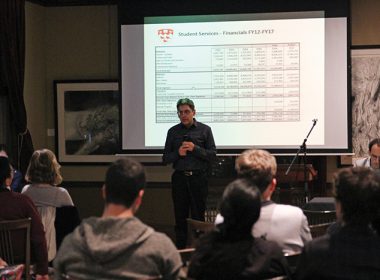
Starting this October, receiving medical notes for exam and assignment deferrals has been made substantially more difficult. With the ongoing integration of McGill Counselling and Mental Health Services (MCMHS), drop in appointments at the student mental health clinic have been overhauled. As a part of this change, students will no longer be able to receive medical notes during drop in hours unless they meet the criteria for the newly designed “Safety Appointments.”

Safety Appointments function the same as drop in appointments, but they are reserved for students who are considered urgent cases. This includes those who are having thoughts of harming themselves or others, have had a recent drug overdose, have recently attempted suicide, or been hospitalized in a psychiatric ward. It also includes those who have recently been physically assaulted, are feeling disconnected from reality, or are fearing for their physical safety. Drop in hours for students with psychological ailments that do not meet these criteria have been eliminated. For these students, medical notes will be available only if they have had past appointments at MCMHS.

According to the Director of McGill Counselling Service Dr. Vera Romano, MCMHS was faced with significant issues with wait times for both drop-ins and scheduled appointments.

“One of the key rationales for delineating the safety appointments [was] the fact that, when the intake process got bottlenecked, […] it created situations where a lot of [the] urgent appointments […] were filled,” Romano said. “Those who actually were in danger or were in grave need did not have access.We did not implement a change in our [medical note] policy. We have implemented changes that have to do with access, and those have ramifications on how students access medical notes.”

According to Romano, the overhaul of MCMHS is a continuing process.

“It’s very important to communicate that we have not yet finished the launch,” Romano said.  “That is, we’re still in design stage. We’re looking for feedback to see what’s working [and] what’s not.”

The availability of medical notes is one of many items that Student Services plans to address as they continue to tweak MCMHS following its integration. According to the Interim Senior Director of Student Services Cara Piperni, the administration is looking into a number of options to address the issue of medical notes.

“We’re looking at the possibility of having a case manager, like a nurse or a social worker, and they could have time carved out to deal with [medical notes],” Piperni said. “We are looking at the possibility of defining ‘urgent appointments.’”

According to Piperni, it is unlikely that urgent appointments could be used to receive medical documentation for exam deferrals.

Students’ Society of McGill University (SSMU) Vice-President (VP) University Affairs Erin Sobat thinks that the policy change was shortsighted.

“I don’t think that [they are] considering the reality of how accommodation works,” Sobat said.

Sobat has reached out to Student Services in order to negotiate making medical notes more widely available within the new urgent care system.

“I don’t think Student Services fully understands the fact that [they] are basically hanging out to dry this category of students that doesn’t meet this threshold of urgent need,” Sobat said.

Caitlin Courchesne, U3 Science, feels conflicted about the changes. She understands the rationale, but, as a former drop in patient at MCMHS, she is simultaneously frustrated.

“You might not know exactly what a mental health disorder is until it presents itself under a situation of high stress,” Courchesne said. “In the context of [the] exam period, I can imagine that there is probably an influx of students who go [to drop in appointments]. If someone is going who doesn’t need it, then that puts someone else who really does need to access the service at a disadvantage.”

However, Courchesne also feels it is difficult to define a person’s need for mental health services and is worried that without access to medical notes, many students will lack the time necessary to seek mental health support.

“What is the definition of who needs it and who doesn’t? That’s a spectrum,” Courchesne said. “I’ve used emergency drop in during exam time. I went through a loss during [an exam period]. I lost my grandmother. That, by definition, wouldn’t qualify for me to get exempt from an exam anymore [….] It's just frustrating for me to look back on that.”

Out on the Town, Student Life

Coffee shops that are actually conducive to studying

With midterm season coming to an end, many McGill students have finally left the library and emerged into the daylight again. Unfortunately, these few exam-free weeks are short lived. Finals are slowly creeping up and, personally, I am not ready to set up camp in McLennan again. This is where Montreal’s well-known café culture becomes enticing. There is an endless number of places where you can find a change of scenery, get your daily coffee fix, and retain your last shred of sanity until exams are over. Cafés can be a hit or miss when it comes to their potential as a study space, with their varying noise levels and sometimes unreliable Wi-fi. Fortunately, I have tried and tested several in the downtown area surrounding campus for their potential as a study space. 


(Hannah Taylor / The McGill Tribune)

Cafe Humble Lion:

904 rue Sherbrooke O.
This small quirky cafe is just opposite the Roddick Gates on Sherbrooke, making it the most conveniently-located place on this list if you are already on campus. The staff are always friendly, and the coffee is some of the best I’ve had in Montreal. Their menu includes a range of small, delicious items for a small lunch or snack, although this limits the number of hours I can spend here, before  need a proper meal at some point during the day. The music isn’t too loud or disturbing, and the atmosphere and decor is really pleasant. It can get fairly crowded during peak hours and weekdays because of its downtown location, but is relatively quiet over the weekends, so it caters to almost all study environment preferences, depending on the day. It isn’t ideal if you like to spread your books and notes out, as their tables and countertops are quite small. However, the wifi is very fast, so I would recommend going here alone to catch up on lecture notes or answer emails. Cafe Humble Lion has 3.5 stars on Yelp, but as a student, I think it deserves a higher rating.


Yelp rating: 3.8/5
Tribune rating: 4.5/5

Price: $$
 

(Ellen Owsowitz / The McGill Tribune)

Cafe Nocturne:

19 rue Prince Arthur O.

Formerly called Café Kitsune, this study spot isn’t the biggest of places, but still feels very spacious with the large amount of natural light, in part beacause of its floor-to-ceiling windows. The high communal tables inside are wide enough to fit all of your study materials, though this is not preferable for someone who tends to feel claustrophobic, or needs their own personal space when studying. The Wi-fi works well, the lighting is good, and most of the customers are students, which can be motivating, since everyone else is also working on schoolwork. The music is on the alternative side and can be loud at times, and there are often people walking in and out of the shop. I would recommend bringing earplugs or headphones if you are easily distracted. As a study space, Café Nocturne is still high up on my list with its fun atmosphere and convenient location; however, I have given it a lower rating than Yelp because of the noisy and heavily-trafficked environment can be.

Yelp Rating: 4.5/5

Tribune Rating: 4/5 

Price: $$


(Ellen Owsowitz / The McGill Tribune)

Cafe Parvis:

433 Rue Mayor

More of a restaurant than a coffee house, Café Parvis provides the perfect motivation to get up in the morning and treat yourself to a good brunch while studying. The space is practically made for Instagram, with plenty of natural light, aesthetically-pleasing decor of soft tones, and plants hanging from the ceiling. It has a bar where you can sit with a coffee or tea and work for a couple of hours without too much disruption from those eating lunch at the tables. It’s not ideal for group studying, but provides a nice atmosphere to finish that assignment on which you’ve been putting off for a while. There might be too much going on in the background to concentrate for extended periods of time; therefore, the space works better for smaller tasks that don’t require extended focus, such as answering emails. It can get extremely busy during lunch and dinner as well, and the number of people studying at Café Parvis is quickly replaced by parties eating meals rather than studying. For this reason, I would highly recommend going as early in the morning as possible—7 a.m. on week days and 10 a.m. on week nights.

Yelp Rating: 4.3/5

Tribune Rating: 3.5/5

Price: $$


(Margaux Delalex / The McGill Tribune)

Anticafé:

294 rue Sainte-Catherine O.

Probably the quirkiest place on the list, the Anticafé is a place for those who get too distracted when they study at home, but can’t stand working in the library or more commercial cafés. Open until 11 p.m. every night, Anticafé is an apartment in Place des Arts that has been converted into a public space with mismatched tables and couches in every room. Instead of buying your coffee and snacks, you pay for the amount of time you stay here, starting at $3 up to a maximum of $9. This provides you with unlimited coffee, tea, and cookies, and you can heat up any food you bring in the microwave or toaster. The second floor is reasonably quiet, and has a great view of Place des Arts; however, the overall atmosphere was a little too relaxed for me, with a lot of people walking around or having casual conversations instead of working. 

Yelp Rating: 4.5/5 stars

Tribune Rating: 3/5 stars

Price: $

(Margaux Delalex / The McGill Tribune)

Cafe OSMO:

51 rue Sherbrooke O.

Café OSMO was specifically created as a social workspace geared towards students and entrepreneurs. It is furnished with modern decor and plenty of space where you can spread out your work and get comfortable. The room itself is quite spacious, with large windows and skylights that let in plenty of natural light, despite being a basement property. The WiFi is extremely fast, and there are plenty of electrical sockets dotting the walls, ensuring that you can always charge your laptop, phone, or tablet when you need to. The space  is optimal for both group projects and individual studying. Unfortunately, the café closes at 6 p.m. every day, and is closed on the weekends, which isn’t very practical when your next midterm is on a Monday. Even so, when Café OSMO is open, I always get plenty of work done.

Yelp Rating: 4.2/5

Tribune Rating: 4/5

Price: $$$

Science & Technology

Joint McGill-Concordia team design net-zero energy dwelling at 2017 Solar Decathlon China

Students and faculty from McGill and Concordia have teamed up to construct a sustainable dwelling to enter the 2017 Solar Decathlon China. This year the competition will be held in Dezhou, China’s ‘Solar Valley’–so named because of the region’s focus on solar power generation. The design theme of this year’s competition is the construction of a two-story solar-powered house for a single family in Dezhou.

Team Montreal is comprised of students and faculty from several different departments at Concordia and McGill. The diverse group of faculty support have experience in team management, research, and sustainable building practices.

An international extension to a U.S. Department of Energy program which has been held biennially since 2002, the Solar Decathlon China was started in 2011, in partnership with China’s National Energy Administration, as a contest where university teams from four different continents compete to construct the greenest dwelling. These contestants must design a functional, comfortable, and sustainable home by connecting clean energy technology, energy conservation, and environmental stewardship with creative architectural design. Their successful designs have been used to model the future of sustainable living and to stimulate future development and ecological awareness. The Solar Decathlon China requires that the residence be equipped with the necessary appliances for occupancy by a real family. The designs are evaluated by a panel of experts on the bases of cost, efficiency, power capacity, and architectural quality.

Team Montreal developed a Deep-Performance Dwelling (DPD) design that is applicable to both the living context in Dezhou and in Montreal. The team plans to construct a permanent home in both cities. The DPD is meant for an urban setting and is inspired by iconic designs like the Montreal Rowhouse and the Siheyuan Courtyard house, taking a culturally integrative approach.

“‘Deep-Performance’ implies a socially, culturally, and technologically advanced architecture that embodies qualitative and quantitative notions of performance in addressing energy efficiency, comfort, well-being, affordability, environmental sustainability, and ecological awareness,” Team Montreal writes on its website.

Through typological architecture, the dwelling is innovatively designed as a net-zero energy and low-to-zero carbon system housing unit.

“Our approach to net-zero energy is through Passive House design and construction principles,” Ben Wareing, architecture lead for the team, said. ”This methodology allows us to reduce the energy demand by 70 to 80 per cent, [while] the remaining demand met by the [solar] photovoltaic system on the roof.”

The house design promotes an interplay between technological advancement and sustainable living. For example, inhabitants are made aware of solar power usage, among other data, from

sensors within the house, encouraging an ecologically-minded lifestyle through visualization. The core of the DPD design is flexibility and adaptability through time.

Team Montreal’s innovative design draws from multiple disciplines to encourage learning and research in a variety of fields.

“It’s a great pedagogical opportunity for our students because the project itself is based on innovation and collaboration,” Carmela Cucuzella, associate professor from the Department of Design and Computation Art at Concordia and one of the main faculty members involved, explained. “It’s hard to get such an opportunity at an undergraduate level, so we are very excited.”

The team is supported by distinguished research labs, such as the Facility for Architectural Research in Media and Mediation (FARMM) at McGill, the Centre for Zero-Energy Building Studies (CZEBS) at Concordia, and the Topological Media Lab (TML) at Concordia.

“We would like to create awareness and prove that if students can provide affordable net-zero energy housing, then the industry should be able to apply these design principles and techniques [as well],” Wareing said. “We are trying to propagate an approach that encompasses socio-cultural, economic, and environmental aspects [… towards] a holistic approach to sustainability.”

 
Arts & Entertainment, Music, Pop Rhetoric

Pop Rhetoric: Bob Dylan, Nobel Laureaute

By now, you probably already know that Bob Dylan’s Nobel prize win is either a triumph of lyrics as literature or the harbinger of the decline of Western civilization. Over the past few weeks, the announcement has led to an all-consuming blaze of Internet think pieces. There’s been an explosion of responses that few artists (other than Kanye), let alone septuagenarian folk icons, are capable of starting. Intrepid writers both affirm and condemn the notion of lyrics as poetry, deftly expose the Nobel committee’s bias towards white, male writers, and question why such an esteemed artist needs the award at all. In an astoundingly complex display of mental and verbal acrobatics, a Telegraph op-ed even dared to compare Dylan’s victory to the rise of Donald Trump. 

The cultural legacy of Bob Dylan is undeniable. Biographies of the man (including those written by Anthony Scaduto and Howard Sounes) border on portraying him as a saint. Bob Dylan had his finger on the pulse of 1960s America. Whether skewering well-meaning elitism in “Like a Rolling Stone,” attacking entrenched racism in “Hurricane,” or simply, beautifully pointing out that “The Times They are A-Changin’”, Dylan had something insightful to say on almost every subject in the most turbulent decade of the post-war era. Lyrically, he was the best of them all. If any musician were to be considered a literary force, it’s him. Leonard Cohen put it best when he said that giving Bob Dylan the Nobel Prize was like “pinning a medal on Mount Everest for being the tallest mountain.” To say he doesn’t need the Nobel Prize is an understatement. It’s an honour but an afterthought, considering the cultural colossus that Dylan has become in past decades. 

With this in mind, the controversy isn’t really whether Bob Dylan deserves the Nobel prize. In terms of cultural impact, of course he does. It’s more a dispute of the prize’s purpose.  Some may question the committee’s decision to recognize a pop culture icon like Dylan, who played to thousands of adoring baby boomers for outrageous prices at last week’s Desert Trip Festival in Indio, California instead of choosing a more unheralded literary figure (as was the case with last year’s winner Alice Munro). Others may argue that the Nobel Prize should seek to recognize and advance traditional literature—a field already under siege by a plethora of new media. 

Addressing these concerns involves doing more than talking about Bob Dylan or the Nobel Prize; it means talking about literature. Just as Mother Theresa and Barack Obama’s Peace Prize wins got us talking about the complexities of peace in modern, Western society, Bob Dylan’s triumph behooves us to do the same for literature. Even the staunchest Dylan fan would admit that his Nobel Prize win is controversial, but if it takes controversy to have meaningful conversations about what’s culturally important in 2016, that’s a good thing. Accepting “Bob Dylan, Nobel Laureate” for many involves a relaxing of intellectual standards or even a suspension of disbelief. Cultural awards remain as subjective as they are contentious. But, if these critics remain skeptical of Bob Dylan’s value as an author, they can find a silver lining in the bounty of valuable discussion going on in personal conversations, interviews and yes, online think-pieces. As we approach the end of a turbulent 2016, this open communication is just what we need. 

Art, Arts & Entertainment, Music

In virtual reality: Entertainment and enlightenment at Björk Digital

Drifting off to sleep after attending Björk Digital, I found myself in an ontological panic. I was falling into a strange half-dream-state that had me questioning the true nature of reality. 

Montrealers have one week left to enter the mouth of Björk, the iconic Icelandic singer. After the Björk Digital exhibit at Centre Phi Gallery closes, museum-goers will no longer have the privilege of staring into her epiglottis as her voice lifts them into a space beyond reality. The Björk Digital virtual reality (VR) experience is, as one would imagine, a surreal trip. It is moving, disturbing, bizarre, and enlightening. It is undoubtedly the future of experiential media. 

After making stops in London, New York, Sydney, and Tokyo, the multimedia exhibit has come to Montreal as part of this year’s Red Bull Music Academy, a travelling culture festival featuring music, talks, and installations. Throughout her career, Björk has consistently pushed boundaries—and not only with her music. Her artistic persona explores our primal instincts and our role in the natural world. In crafting content for VR, she has created art that challenges our perceptions and extends our sensory experience to new landscapes. 

For many exhibit attendees, this will be the first time putting on a virtual reality (VR) headset. The exhibit consists of five VR music videos from her most recent album, Vulnicura. A second gallery displays Björk’s new Biophilia app and a reel of her latest videos. 

From the outset, viewers might be skeptical about the emotional impact of a VR music video. The first video for “Black Lake” confirms these suspicions: It’s gimmicky and doesn’t take full advantage of VR as an interactive medium. Thankfully, the exhibit gets progressively better. A highlight is the somewhat claustrophobic experience of being inside Björk’s mouth as she sings “Mouth Mantra.” The video for “Quicksand” is mesmerizing, involving animated grains of sand that dance around the viewer’s head, forming abstract images. 

The final video for “Family” is the most exciting use of the technology. The viewer is standing upright with the VR headset, holding two controllers that allow for interaction with a virtual environment. With the headset on, viewers see the movement of their own hands and arms, allowing them to reach out and touch their environment. An animated version of Björk sings and takes viewers flying through a sea of animated vulvae. The experience feels oddly emotional, as one experiences a degree of intimacy with the artist that would not be possible in any other medium. The fourth wall is broken, and the barrier between technology and reality is blurred. 

Despite this success, there is no doubt that the technology is still primitive. VR is a young yet  rapidly expanding industry, with the market expected to grow to $120 billion USD by 2020. At times, this exhibit feels like a prototype experiment in an emerging media platform. The display is pixelated and the clunky Samsung Galaxy headset risks causing neck pain after an hour. The medium is clearly still in its early stages, but when the technology advances, the possibilities for storytelling are endless. But, despite the technological downfalls, the exhibit is still undoubtedly worth attending. This is an exciting opportunity to partake in the emergence of a platform that is sure to become hugely popular in a number of years. 

As our media landscape shifts into uncharted territory, this multimedia exhibition is an example of how interactive technology can revolutionize our perception of the world around us, causing us to question the nature of reality. 

Björk Digital is an ongoing exhibition at the DHC/ART Foundation for Contemporary Art at 451 Rue Saint-Jean in Old Montreal. It will end on November 12th. Book your appointment at http://dhc-art.org/


Features

Out and about: A visual diary of St-Laurent’s nightlife

It’s a cold Friday night in November, yet the street is busier than ever. People are crowded on the sidewalks, waiting in disorderly lines and eager to get into the coolest bars and clubs. Cigarette smoke mixes with the cold air as enthusiastic chatter rings over the noise of the traffic. People lean on window ledges, posing for the perfect selfie or Snapchat, while others devour steamies from La Belle Province or 2Chow noodles. Every so often, fire trucks, police cars, and ambulances race through the scene of revelry. Undoubtedly, boulevard St-Laurent is a staple of Montreal’s nightlife scene. It is a familiar location that holds countless memories for many students. 

McGill, Montreal, News

Construction forces relocation of Remembrance Day ceremony

For the first time since 2009, the Royal Canadian Legion’s Remembrance Day ceremony will not be held on McGill’s Lower Field due to the construction on Sherbrooke. The ceremony will instead take place at the newly renovated Place du Canada on Rene-Levesque Boulevard.

Administrative Coordinator for the Office of the Principal and Vice-Chancellor Naomi Allsopp was in charge of organizing the event when it was held at McGill. According to Allsopp, the Legion was concerned about noise levels and obstruction of the Roddick Gates caused by construction this year.

“The ceremony first came to McGill in 2009 because of the construction at Place du Canada,” Allsopp said. “It was the Legion’s decision to move back there because of the construction on Sherbrooke, not McGill’s.” 

Remembrance Day ceremonies across the Commonwealth are traditionally held before cenotaphs, monuments that honour those who died in all wars. When the ceremony was held at McGill, a temporary wooden cenotaph was erected. Now that the ceremony  has be relocated to the Place du Canada, it will once again take place next to the Montreal Cenotaph.

According to Allsopp, Lower Field has its own historical and symbolic importance, despite not being in close proximity to Montreal’s official memorial.

“It was the place where many soldiers gathered before the First World War,” Allsopp said. “Many of these soldiers were McGill students. Many actually left for Europe from Lower Field.” 

The decision to hold the ceremony at McGill has not been without controversy. Protests organized by Demilitarize McGill have been a common occurrence at Remembrance Day ceremonies since 2014. Demilitarize McGill is an activist group that opposes McGill’s involvement in defense research and has used Remembrance Day ceremonies as a platform to protest Canada’s military engagements abroad.

Adam Templer, U4 Arts, served in the Canadian Armed Forces Reserve and has attended Remembrance Day ceremonies on Lower Field. He recalls when a spectator chastised Demilitarize McGill for protesting.

“Neither she nor anyone around me could believe they were protesting on Remembrance Day,” Templer said. “[Demilitarize McGill] didn’t earn any sympathy or support, and I don’t think they ever have by doing so.” 

For Alice Rougeaux, U3 Arts and a member of Demilitarize McGill, moving the ceremony off-campus does not change her opinion that McGill is still complicit in military violence by continuing to hold a ceremony at MacDonald Campus.  

“While I am obviously glad the event is removed from campus, therefore removing the oppressive presence of the military, weapons, and other glorifications of militarism, it doesn't exactly strike me as a resounding victory,” Rougeaux said. “This might have been different if the removal was deliberate and in line with my objections to the performance of Remembrance Day.”

During the annual ceremonies, McGill has hosted various dignitaries including the mayor of Montreal, members of federal and provincial parliament, diplomats, and representatives from veteran groups. In 2014, then Lieutenant-Governor of Quebec presided over the ceremony at McGill. 


Baseball, Sports

These aren’t your grandpa’s Cubs: From the curse of the billy goat to World Series champions

These aren’t your grandpa’s Cubs: From the curse of the billy goat to World Series champions

Wasif Husain

As third-baseman Kris Bryant fired the final out to first base, Chicago rejoiced. After 108-years, the Cubs shed themselves of the “Curse of the Billy Goat” and won the World Series. For generations, they were the loveable losers and they nearly let this one get away too. But now, the Cubs look poised to compete for the World Series for years to come. However, before Chicago fans start looking ahead, let’s look back at those 108 years of tribulation.

The magic of Orval Overall and Three-fingered Mordecai Brown


On October 14, 1908, leading 3-1 in the World Series over the Detroit Tigers after a pair of dominant pitching performances from ‘three-fingered’ Mordecai Brown in games one and four, Orval Overall threw the final out of the World Series for the Chicago Cubs. After back-to-back championships in 1907 and 1908, the future would be bleak for the Cubs.

(mlb.com)


The Curse of the Billy Goat

It all started in 1945, when a smelly goat wasn’t allowed into game four of the World Series at Wrigley Field. The owner of the goat famously proclaimed, “You are going to lose this World Series and you are never going to win another World Series again.” They would of course squander a 2-1 series lead and lose the World Series to the Tigers. This would mark their final World Series for seventy years.

(redeyechicago.com)


The curse of the black cat


Then, in 1969 the Cubs started the final month of the season with a five game lead on the second-place New York Mets. In a crucial game against the Mets at Shae Stadium on September 9, 1969, a black cat wandered across the field. The Cubs would go on to lose the game and 12 of their next 20 games, losing their division lead, and missing the playoffs, setting the mark for one of the biggest season collapse ever seen.

(history.com)


The Steve Bartman foul ball

Lastly, who could forget the famous Steve Bartman incident? In game 6 of the NL Championship series, a fly ball was heading into foul territory when a nerdy-looking, headphone-wearing fan reached out over the railing and interfered with a potential catch by a Cubs outfielder Moisés Alou. The catch would have been the second out in the eighth inning of a potentially series clinching game. The Cubs would on to give up 8 runs in the horrific inning, and lose 8-3. Of course, they would go on to lose game 7 and a chance to go to the World Series.

(sportingnews.com)


The curse breakers

However, all the bad luck was erased on Wednesday night. Down 3-1 in the series, the Cubs came storming back, winning games five and six to force a game seven. After squandering two three run leads, Chicago pulled ahead in the tenth inning to claim the World Series and the loveable losers quickly turned into America's sweetheart. With five starters under the age of 25, the Cubs look poised to continue their dominance.


(sportingnews.com)

The future


Theo Epstein, Cubs President and de-facto general manager—and certified curse breaker—deserves a bulk of the credit for the 2016 victory. Using Chicago’s big budget he brought in big names to compliment a number of shrewd trades and high-level draft picks. He shored up the batting lineup and added high quality pitchers, quickly turning these perennial losers into a World Series contender. Now, after a century of misfortune, the Cubs are back on top. When Overall threw the final out in 1908 he was capturing the second of consecutive World Series championships, with the talent already in place for these Cubs, a pair of championships and a Cubs dynasty could be on the horizon for those lovable former-loser Chicago Cubs.


(fivethirtyeight.com)


Baseball, Sports

Former Montreal Expos Bill ‘Spaceman’ Lee revives his political career

Bill “Spaceman” Lee knows a thing or two about extending his career in an unconventional way. The former Major League Baseball (MLB) pitcher for the Montreal Expos and Boston Red Sox—at 69 years old—pitches every weekend in Vermont and Florida senior baseball leagues. 

“I won the Vermont [Senior Baseball] state championship this year, and I am going to go to Florida to play this winter,” Lee said. “I love baseball. When you play, it puts your brain over the pain of slight arthritis and pulled muscles, and it allows you to breathe better, and makes you look forward to each day.” 

Now, the eccentric southpaw pitcher is running in the 2016 Vermont gubernatorial race—his latest foray into politics since campaigning in the 1988 U.S. election under the satirical Rhinoceros Party of Canada. While some of Lee’s more ‘out there’ policies from his political past—such as destroying the Rocky Mountains to increase sunlight in Alberta and banning chairs to help combat back pain and obesity—must be taken tongue in cheek, he does display genuine concern for social and environmental justice.

“[In 1988, I ran on a platform of] no guns, no butter. They will both kill you,” Lee explained. “Basically, small is better. I believed in limits to growth, I believed in harnessing the tidal force, I was always pro-fish, pro-water, pro-ecology [….] We have to go small, or we are going to basically pollute our country to death.”

Unsurprisingly, Spaceman has strong opinions on the charged 2016 U.S. election. 

“It is terrible,” Lee said. “It is a polarization. You know, Donald Trump’s music is right—we should throw out the incumbents—but his spirits are wrong and he is the wrong person for the presidency. [Trump] leads to fascism. As much as Hillary is the consummate politician, she is not the answer either.”

Lee still believes that the United States missed a trick by not voting for him in 1988, or Bernie Sanders in 2016.

“I believe that if I had been elected in ‘88 the world would be a kinder, gentler place, with Canadian-style politics,” Lee said. “We would have total health care, a civilized society with less guns, less violence, with less Black Lives Matter things—because Black Lives do matter because they are the ones getting lynched and the Trump people are against [Black Lives Matter]. It is a sad state of affairs.”

Despite his strong sense of justice, it is tough to know when to take Lee seriously. A University of Southern California graduate, he is intelligent and funny—he appeared on the cover of High Times after he was indicted by the MLB for marijuana consumption. He is also perceptive—at a recent film screening of his biopic Spaceman, Lee implored questioners not to be caught on the wrong side of history, like a “dinosaur with his stubby arms close to his chest.” It was a comically apt image and message.

Perhaps Lee provides his best wisdom when he is rhapsodizing about baseball: He graciously recalls losing game seven of the World Series as Red Sox’s starting pitcher against the Cincinnati Reds.

“[The game seven loss] just shows you that winning and losing is not what [baseball] is all about,” Lee said. “[Rather], it is the fact of the game. It is like the day I got to hear Vin Scully broadcast Dennis Martinez’s ‘el perfecto’ game. It was poetry. That is what baseball is all about. It is the constant playing and reliving summer and spring again.”

It’s unlikely Spaceman will become the governor of Vermont. But, in the year that the Cubs won their first World Series since 1908 and a reality TV show host is the Republican presidential nominee, anything seems possible.

Editorial, Opinion

Quebec must uphold freedom of the press

Last week, the Service de Police de la Ville de Montreal (SPVM) revealed they had obtained a warrant to monitor the cell phone of La Presse journalist Patrick Lagacé in order to determine the identity of his sources for an investigation into police fabrication of evidence. Over the last several months, police obtained 24 warrants from provincial courts to monitor the numbers of Lagacé’s incoming and outgoing calls and the GPS location of his phone. Since then, both the SPVM and the Sûreté du Québec (SQ) have admitted to monitoring the phones of at least nine other journalists and confiscated the laptop of another.

This behaviour on the part of Quebec police, as well as the courts responsible for issuing the warrants, is deeply troubling. The scandal could have damaging consequences for provincial media outlets, as well as for Quebec citizens, who depend on the local press and are equal stakeholders in the right to freedom of the press.

For investigative journalists, the anonymity of sources is sacrosanct. It is through this guarantee of anonymity that whistleblowers and other vulnerable sources can feel safe to come forward and share their information with journalists. This process is often crucial when it comes to exposing instances of government or private corruption, abuses of authority, or corporate malpractice—indispensable stories that help keep governments and corporations accountable to the citizenry. Investigative pieces, such as The Boston Globe’s famous exposée on sexual abuse in the Catholic Church, often depend on confidential testimony from victims. If sources no longer feel that they can talk to journalists without the risk of exposing identities to police and other figures of authority, they will be less likely to come forward. Fewer stories will be exposed, meaning both the press and the public will suffer.

A free and independent press has a vital role in democracies; this scandal risks jeopardizing that function. Because citizens can only hold their government accountable if they are informed, the press performs an essential democratic service through its reporting. In Canada, this role is enshrined in the Constitution: Section 2(b) of the Charter of Rights and Freedoms guarantees “freedom of the press and of other media of communication.” By invading the privacy of Lagacé and other journalists by monitoring their phones and seizing laptops, the police are impeding the media’s ability to provide this service.


The Montreal police’s behaviour should be troubling not only to members of the media, but to anyone concerned with the state of democracy in Quebec.

The manner in which these warrants to monitor journalists were granted also has concerning implications. These journalists were not monitored because they were suspected of a crime: Their privacy was violated as a means to gather information on others. 

Surveillance in the digital age opens a significant number of new possibilities for police agencies, but they must continue to operate in a way that allows for the protection of privacy rights—especially when anonymous sources are involved—by maintaining the same standards of probable cause as other forms of police work.

If there is anything to be gained from this scandal, it may be the increased interest in protections for journalists in Canada. According to Tom Henheffer of the Canadian Journalists for Free Expression, Canada “doesn’t have anywhere near the kinds of protections [for journalists] that most Western democracies do.” This includes the lack of “shield law,” which would prevent journalists from being compelled to reveal anonymous sources in court.This includes the lack of “shield law,” which would prevent journalists from being compelled to reveal anonymous sources in court.

The Montreal police’s behaviour should be troubling not only to members of the media, but to anyone concerned with the state of democracy in Quebec. The provincial government has announced the creation of a public inquiry to look into the affair. Needless to say, the police and the municipal and provincial governments must endeavour to regain the trust of the media and the people. This scandal should also serve as a sober reminder of the value of and need to protect freedom of the press in Quebec. 


Read the latest issue

Read the latest issue