

Latest News

News, SSMU

Students vote “Yes” to strike for Palestine at Special General Assembly

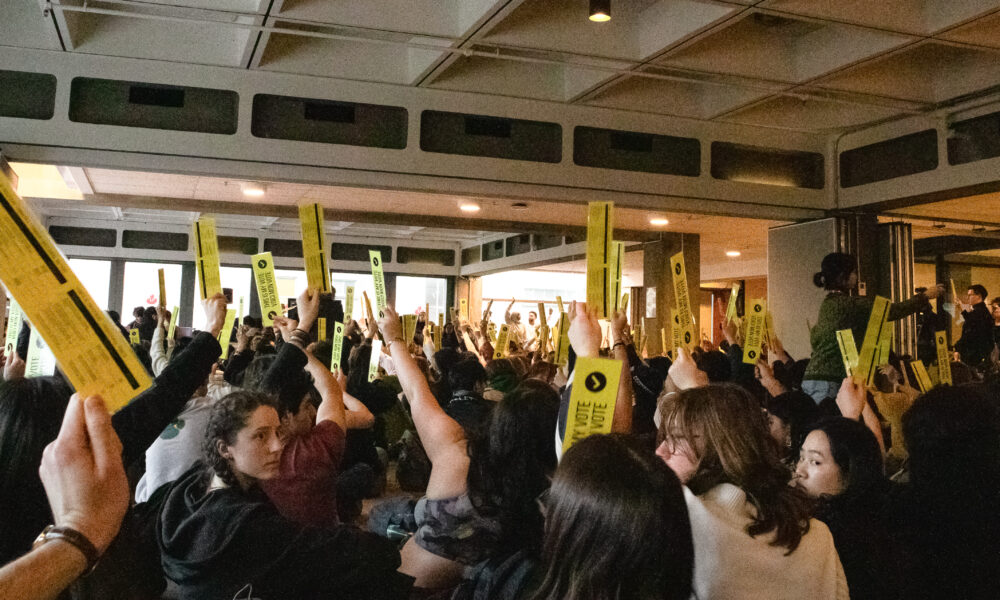
Hundreds of students ratified a motion for the Students’ Society of McGill University (SSMU) to strike for Palestine following a Special General Assembly (SGA) on March 27. The SGA exceeded its quorum of 500 students, and the motion passed with 679 in favour and 13 against or abstaining. It was then put to a ratification vote to the SSMU constituency on March 27. Of the 3,933 students who voted, 72 per cent, or 2,731 students, ratified the motion, casting a “Yes” ballot. SSMU members will go on strike April 2-4.

The strike motion asks that students not attend class during the three-day period to call on McGill to accept three demands. The first states that McGill must divest from companies linked to the manufacturing of weapons that the Israeli government uses against Palestinians. The second request is that the university end research partnerships with institutions benefiting from the sale of military technology, and the last demands that the university cease all disciplinary cases currently filed against students involved in advocacy for Palestine. Students for Palestine’s Honour and Resistance (SPHR) at McGill will host programming over the strike period, encouraging students to attend political education and cultural events rather than classes.

At the SGA, the student who submitted the motion gave a five-minute presentation on the strike’s intent. The student—who wished to remain unnamed—began by addressing Israel’s continuation of its genocide of Palestinians since violating the ceasefire agreement on March 18. The violence includes several ground invasions by the Israeli army, which have killed over 1,000 Palestinians. The student also drew attention to Immigration and Customs Enforcement (ICE)’s abduction of student activists across the U.S. The speaker asserted that McGill students have a continued responsibility to demand that the university end participation in military research and funding that goes toward the Israeli occupation in Palestine. 

“Students have long been at the forefront of change, leading the charge against the Vietnam War, standing on the front lines of the civil rights movement, and driving the struggle against apartheid in South Africa,” the student said. “We learned from history that students have the power to force the hands of our political class and administrations and that divestment is possible.”

During the question period following their presentation, the speaker noted that students can still submit assignments and attend exams during the strike, but should remain absent from class whenever possible. The student added that they hope that if at least half of undergraduates go on strike, professors will change deadlines and lesson plans to adapt. 

SSMU Vice-President (VP) External Affairs Hugo-Victor Solomon told The Tribune that groups across campus have reached out to him to show support for the strike and are preparing to implement measures to accommodate students participating. 

“This was a really rare moment of hope,” Solomon said. “We saw that the online registrations exceeded 800, close to 900 in fact [….] Working with the strike petitioners has been a really rewarding process. It’s cool to actually fulfill what SSMU is meant to do, which is be a vehicle to support student democracy and campaign efforts.”

A representative of SPHR, who wished to remain unnamed, emphasized McGill’s role in setting a precedent for other universities in an interview with The Tribune. They hoped that if students ratify the strike motion and pressure McGill to grant its demands, other institutions across North America may be inspired to do the same.

“It’s like a chain reaction,” the representative said. “Which is exactly what happened when McGill divested for South Africa, […] which made […] other universities divest as well, and the apartheid ended due to boycott and divestment.”

Jayden, a GA attendee graduating this year, told The Tribune that the overwhelming student support for the strike marks a newer, stronger wave of mobilization for Palestine than they have seen in the last four years.  

“Sometimes, as students, we might feel a little powerless in these circumstances, especially when our tuition is what’s funding this,” Jayden said. “But we’re seeing that so many different faces, so many different cultures, so many different nationalities are coming together and acknowledging that the plight of one person is also our plight. What does it mean about our world if we’re not all trying to thrive for a safer, better, more peaceful world altogether?”
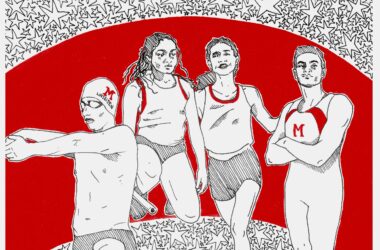
Behind the Bench, Sports

“We’re all human”: Refereeing blunders through the years

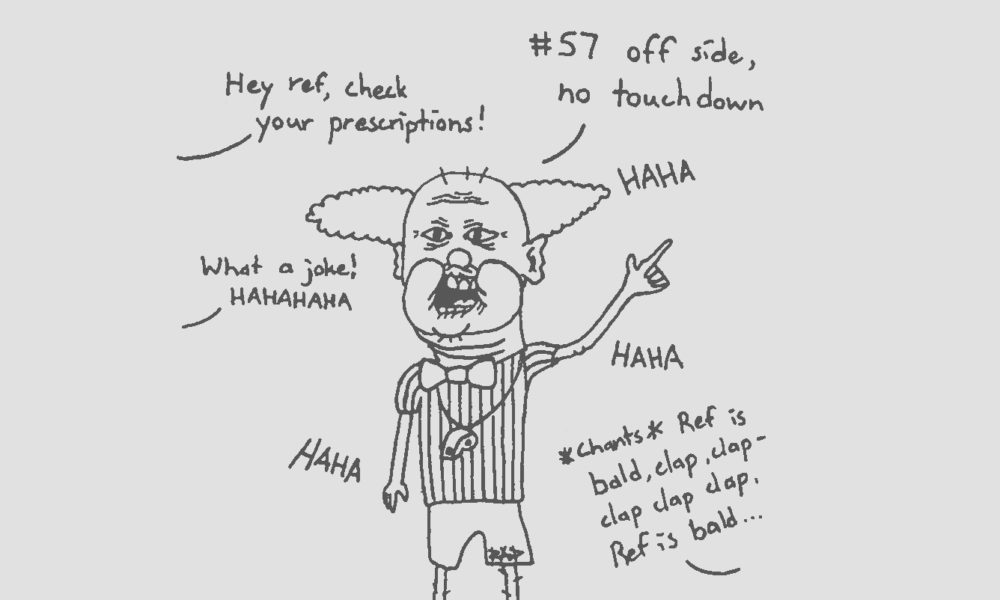
Referees are constantly stuck between a rock and a hard place. The call they make will be sure to anger at least half of the people watching the game. It’s a thankless job that takes an incredible amount of hard work to progress to the top level. Occasionally, referees make decisions so blatantly wrong that there’s nothing even the most casual of fans can do to avoid shouting at their TV screens or joining in on jeers in the stadium. Here are some of the most consequential, confusing, and downright comical refereeing mistakes throughout sports.

Josip Šimunić (eventually) sees red

The 2006 FIFA World Cup brought one of the most peculiar refereeing blunders in soccer. Croatia was fighting for their survival, needing a win against Australia to advance to the round of 16. With his squad winning 2-1, the Croatian defender Šimunić pulled back Socceroo star Harry Kewell, earning the defender a yellow card. Disaster struck in the 90th minute when Šimunić laid a crunching tackle on an opposing player. English referee Graham Poll showed the Croatian a second yellow card, which would normally add up to a red card. But Poll simply didn’t show Šimunić the red. Amazingly, Šimunić received a third yellow card for arguing with the official after the match had concluded, which culminated in a red card. This made him possibly the first player ever to receive three yellow cards in a match.

The “Fail Mary”

The 2012 NFL season began with officiating uncertainty. The referees had entered a lockout in the summer, and the league was forced to replace them for the beginning of the season with officiating crews from lower levels, even pulling some high school referees. A Week Two showdown between the Green Bay Packers and Seattle Seahawks had fans begging for the refereeing lockout to end. The Seahawks were down by five, and they had the ball in Packer territory with less than ten seconds left on the clock. Quarterback Russell Wilson scrambled around the pocket, looking for an open receiver. He spotted Golden Tate in the back corner and aimed to deliver to his target. Tate blatantly pushed Green Bay’s Sam Shields in the back, causing the defensive back to fall over. 

This missed call was compounded by the calamity that occurred when Tate “caught” the ball for a miraculous touchdown. One official signalled that the ball was intercepted by Packer M.D. Jennings, while another signalled touchdown. To everyone watching, it was clear that Jennings had intercepted the football. After 10 minutes of confusion, the replacement referees reached a verdict: Touchdown. This debacle quickly accelerated negotiations to end the lockout, and an agreement was reached two days after the game.

The Imperfect Game

In the 240,000-plus games of Major League Baseball played, only 24 of them have been a perfect game, making it one of the rarest achievements in sports. A perfect game is when a pitcher retires all 27 batters he faces without allowing a baserunner. However, it should be 25 perfect games. On June 2, 2010, Detroit Tigers pitcher Armando Galarraga only needed to get Cleveland utility man Jason Donald out to go down in baseball history. Donald hit a sharp ground ball to first baseman and future Hall of Famer Miguel Cabrera, who fielded it cleanly and threw over to Galarraga, who was covering first base. 
The throw clearly beat Donald, and he should have been called out. However, first base umpire Jim Joyce inexplicably called the runner safe. The immensity of this decision was realized by fans and players alike. Cabrera looked as if he was on the brink of tears. What followed was an even more unexpected tale of forgiveness. Joyce, who was previously voted the best umpire in the league by the players, was beside himself when he realized he got the call wrong. While Joyce talked to Tigers general manager Dave Dombrowski, Galarraga entered the room and shared a hug with Joyce. The Tigers pitcher left the umpire with a simple message that everyone should remember the next time they’re shouting at a referee for a blown call: “We are all human.”

Horoscopes, Student Life

The Tribune Predicts: Finals season horoscopes

Are you curious about what this finals season has in store for you? Forget your study guides—the answers are written in the stars.

Aries (March 21-April 19): As finals approach, chances of securing a comfortable spot in one of the McGill libraries become increasingly slim. No matter how desperate you are for a seat, beware—you must avoid the Schulich basement at all costs. The stars predict a familiar foe may be lurking there, ready to throw off your focus. 

Taurus (April 20-May 20): Sure, you may feel a bit sluggish this spring, but that doesn’t mean you’re immune to the study bug. In the next week, a call with a loved one will give you a surge of motivation to hit the library. Have you called your parents lately? 

Gemini (May 21-June 21): Your curiosity knows no bounds, and neither do your questions. While you’re typically tempted to type a flood of queries in the class group chat, you’ll put those frantic fingers to better use this finals season. The stars predict you’ll book back-to-back office hours appointments.

Cancer (June 22-July 22): Your compassion and sensitivity will make you the recipient of many late-night calls from friends dealing with finals-induced stress. Offer support whenever you can, but don’t forget to prioritize your well-being. Turn on do-not-disturb when you need time for yourself—we won’t judge.

Leo (July 23-Aug. 22): There may only be a few days of classes left, but that won’t stop you from making a new friend before the semester is over. This finals season, you’ll find out that the best friendships are built on shared panic and caffeine. 

Virgo (Aug. 23-Sept. 22): You’ve organized your studying schedule down to the last minute, but a welcome interruption will throw a wrench in your plans. Embrace spontaneity—it may be exactly what you need to refocus and recharge. 

Libra (Sept. 23-Oct. 23): Libra, you have a lot on your plate in the coming weeks, but you’ll find a new hobby to help you de-stress. Whether it be colouring books, crocheting, or yoga, the stars suggest you invite a friend to unwind with you. 

Scorpio (Oct. 24-Nov. 21): Scorpio, this finals season, your intense focus will be unmatched—but be warned: Your drive might lead you to burn the midnight oil a little too long. The stars predict you’ll thrive best if you remember to take breaks. Sometimes, the most productive thing you can do is step away and recharge your batteries.

Sagittarius (Nov. 22-Dec. 21): As exams approach, you’ll feel the pull between adventure and study sessions. For you, frequent walks to clear your mind and explore are inevitable, but make sure you return to your textbooks afterward!

Capricorn (Dec. 22-Jan. 19): Your determination is unmatched, but this finals season, your natural pessimism will start to creep in. You’ll find yourself doubting whether all your hard work will pay off, but rest assured—it will. Stay focused and trust that your effort will lead you to success, even if it feels like the odds are stacked against you.

Aquarius (Jan. 20-Feb. 18): Your bold, impulsive nature means you’re never afraid to take risks—even with your study schedule. In the past, last-minute cramming may have given you those pleasant adrenaline rushes, but this spring, you’ll find that consistency pays off. Believe it or not, you’ll finally learn to pace yourself, and you’ll conquer finals season without breaking a sweat!

Pisces (Feb. 19-March 20): You’re no stranger to sacrificing sleep for a few extra hours of cramming. If you have plans to work in the library after dark, avoid the silent floor—it will drain your energy rather than fuel your focus. The stars suggest you seek a lively new study space that keeps your mind sharp!

Emerging Trends, Student Life

One’s company, two’s a crowd, three (p.m.)’s a darty

You don’t always need an excuse to host a day party or ‘darty’—usually, just a backyard—but this past St. Patrick’s Day saw an overwhelming number of afternoon get-togethers, even by Montreal standards. With spring weather rearing its head, darties per capita can be expected to skyrocket. But what makes Montreal and McGill such great places to host darties? Are they any different from the festivities in university towns like Kingston? Who invented the darty?

Day drinking, presumably, is about as old as normal drinking, and we have records of ancient Greek men hosting intellectual banquets called symposiums. Literally meaning “drinking together,” the participants would argue over philosophy and show off their nice items, which is by all means pretty similar to a modern-day darty.

The term first surfaced on Urban Dictionary in 2008, but has gained more traction in recent years after being published on accounts popular among university students like Barstool Sports and university publications such as the Ohio State University’s The Odyssey and the University of Maine’s Her Campus.

The Tribune reached out to students who have hosted and attended darties to get their take on the darty scene at McGill. Meave Harrington, U3 Arts and a Montreal local, talked about how she first learned about darties through her family.

“The first time I heard of the term darty was from my older sisters who also went to McGill,” she said. “They were preparing me and really hyping darties up and saying it’s a great opportunity to come together with your friends on a really nice day and relax from all the schoolwork.”

Harrington also praised the city for being extremely darty-friendly.

“I’ve hosted darties in Jeanne-Mance, and that’s a great place for a lot of people to come together and play things like spikeball, or even bring a pong table,” Harrington said.

Kirk Slocum, U1 Arts, felt that there was no major difference between throwing darties in Montreal compared to other schools in the area. Nevertheless, he acknowledged that the high number of students who live off-campus creates a strong party culture. 

“I don’t know if McGill specifically is a better place to host darties compared to other schools, but the fact that all students are forced to have apartments after first year means that there’s a greater percentage of students living in the student neighbourhoods,” Slocum said. “They form a good community, and a good community is better for parties.”

In Montreal, drinking in parks is permitted before 8 p.m. if accompanied by food, which makes the city more welcoming to picnic darties. However, McGillians have had mixed experiences with police enforcement shutting down their events.

“I feel like the only downfall about darties is that the cops can come through even though it’s 3 p.m. on a Saturday. You can get unlucky,” Harrington shared.

Slocum, however, found that the police were relatively relaxed when it came to daytime events. He also expressed no preference when comparing darties to parties, though he’s hosted two of the former in the past.

“I personally like darties but not any more than parties. And I don’t know if there’s any difference between them; it’s just that when a darty’s done, you can still go do stuff after,” Slocum said.

On the other hand, Harrington emphasized her appreciation for darties, highlighting how good weather and open space can be conducive to making new connections.

“I really like darties, and I know so many other people that do because it’s a really wholesome event,” she said. “Parties are a bit cliquey-er, I feel like the crowds at darties are more outgoing. Everyone likes to be outside. Parties are dark and cramped, while darties are bright and open.”

With the late spring snowstorm (hopefully) behind us, now’s a great time to consider planning a darty for yourself! All it takes to host a successful one is daylight hours and a group of willing friends. With that in mind, whether you need a break from studying or just finished your final exams, it’s the perfect time to darty the day away.

Sports

Meme madness: The internet’s sporting circus

In the age of social media, sports have evolved beyond competition into fertile ground for internet comedy. From sideline antics to questionable celebrations, athletes and coaches unwittingly transform into viral sensations with a single expression, gesture, or moment. As sports and internet culture continue their inevitable collision, The Tribune examines some of the most enduring memes across three major leagues.

National Football League (NFL):

Trump dance celebration: Touchdown of trolling

In terms of viral celebrations, few can compete with the unexpected presidential dance moves that somehow emerged from the gridiron. Players gyrating all together with staccato, terribly orchestrated Trump-like ‘lack of swagger’ became an instant internet sensation in the 2024-25 season, once again proving that touchdown celebrations can be an occasionally volatile vehicle for performance art to overlap with politics. 

Patrick Mahomes: The alleged match-fixer meme

Conspiracy theorists and meme lords unite! The constant joke that Patrick Mahomes, the Kansas City Chiefs quarterback, is secretly orchestrating game outcomes has transformed him from MVP quarterback to internet-appointed master of sports manipulation. Every perfectly thrown pass and touchdown now comes with a host of suspected corruption. Then, of course, the Chiefs lost the Superbowl to the Eagles this year, which provided the internet with endless new meme content against Mahomes and the Chiefs. 

Bill Belichick: The human poker face

In the world of explosive emotions that is the NFL, Bill Belichick—the former General Manager of the New England Patriots and current Head Coach at the University of North Carolina Chapel Hill—remains the ultimate meme of stoicism. His expressionless stare became an internet shorthand for general indifference and nonchalance, transforming the coach into a living, breathing meme that speaks volumes by saying and doing absolutely nothing in the face of positive or negative circumstances. 

National Basketball Association (NBA):

Shannon Sharpe’s “Lakers in 5” prophecy

Shannon Sharpe’s unwavering belief that the Los Angeles Lakers will triumph in exactly five games has transcended sports commentary, becoming a cultural phenomenon. Embodied by a compilation of different memes rhyming together, this viral NBA meme culminates in the famous punchline “Lakers in 5.” Sharpe’s passionate proclamations have turned a statistical prediction into internet art, making “Lakers in 5” a mantra of unfiltered optimism.

The Drake curse: Musical jinx extraordinaire

When Drake supports a team, internet folklore suggests disaster will follow. His appearances at sporting events have become a meme of spectacular misfortune, with fans religiously tracking which team will next fall victim to the rapper’s seemingly supernatural ability to hex championship hopes. The only teams that seem to make it out alive are Canadian, like when the Toronto Raptors beat the Golden State Warriors in 2019 to win the NBA Final

Crying Michael Jordan: The meme that launched a thousand tears

No sports meme pantheon is complete without the iconic tearful Michael Jordan face. What began as a moment of athletic vulnerability transformed into the internet’s most versatile reaction image, immortalizing raw emotion in pixel-perfect ridicule. Used across sports, pop culture, and many other formats, the crying MJ meme has been taking the internet by storm for years, including in Jordan’s own documentary, The Last Dance

English Premier League (EPL):

Thierry Henry’s laugh: Comedy gold in football commentary

Thierry Henry’s infectious, somewhat mischievous laugh has become more memorable than some of his actual goals. Stifling laughter in many circumstances, his consistently playful grin makes his punditry moments all the more entertaining. His varied, humourous expressions have transformed serious football analysis into comedy gold.

Gary Neville: The Monday Night Football meme machine

Monday Night Football transformed from mere sports analysis to a comedy sketch, largely thanks to Gary Neville’s animated reactions. His passionate dissections of gameplay and snapshot reactions of shock and excitement, microphone in hand, have made tactical analysis feel like stand-up comedy, entertaining millions even beyond traditional football fandoms with his witty retorts and hilarious one-liners.

Jurgen Klopp: A walking meme

Less a manager, more a walking meme-generator, Klopp’s touchline antics, masterful interviews, and aggressively expressive celebrations have turned Liverpool’s sidelines into a circus act. Every fist pump, every incredulous look is internet content waiting to happen. His eye-catching, full-body, erratic reactions to even the smallest occurrences on the field encapsulate the term ‘body on the [touch]line.’ 

McGill, News, SSMU

SSMU staff and students report disorganization at 4 Floors Saint Patrick’s event

On March 14, the Students’ Society of McGill University (SSMU) held the 4 Floors event to celebrate Saint Patrick’s Day. Three floors in the University Centre Building, along with Gerts Bar in the basement of the building, were reserved for the event starting at 5 p.m., providing dancefloors, coat check service, and festive beverages until midnight. However, some McGill students expressed frustration with 4 Floors, specifically concerning the logistics and the turnout of the event.

University Centre Building Manager Wallace Sealy confirmed that SSMU sold 1,400 tickets at the price of $10 CAD each.

Nora Lannert, U4 Arts, was a student volunteer at the event. She explained that attendees were each sent a QR code ticket to enter the University Centre, but that a technical complication prevented many students from making it through the doors.

“There was an issue with the QR code where if they had downloaded or screenshotted their ticket, [it would show] that they had already been scanned before,” Lannert said. “[As a result,] people were turned away.”

Additionally, Lannert recounted the long line of people waiting to enter Gerts as a result of the QR code issues.

Karina Allagh, U3 Management, explained that the Four Floors event did not match her expectations due to the long line and overall ambiance. 

“I had to line up to get a bracelet, which I did not expect,” she told The Tribune. “I also expected to enjoy the Gerts atmosphere, but by the time I got in [….] all the floors besides Gerts were heavily lacking.”

The organization of the event fell under SSMU VP Internal Zeena Zahidah’s portfolio. She did not respond to The Tribune’s request for comment on the situation in time for publication.

A SSMU member, who wished to remain anonymous, helped organize the event closely. They acknowledged the logistical issues and disorganization with the 4 Floors event planning. 

“The event was disorganized when it came to who was in charge, what volunteers were supposed to be doing, communication between floors, drink tickets and how they worked, food for those working and volunteers, coat check, […] training, amongst other things,” they said.

Anirudh Ram-Mohanram, U3 Arts, was an attendee at the event. He told The Tribune that he perceived that many staff were under pressure.

“The bars were really understaffed,” he said. “It seemed like the security guards were really stressed about the number of people there.”

SSMU President Dymetri Taylor explained how the organization of large-scale events like this one can be improved in a written statement to The Tribune.

“For events like these, you usually want a plan that’s well established 1-2 months in advance. Everyone has a clear role and knows who to go to if there’s an issue and nothing is added last minute,” he said. “Furthermore, there’d be clear training for volunteers, and if things go wrong, a clear hierarchy of what gets escalated and to who.”

Regardless, Taylor maintained that large-scale SSMU events will still be held in the future.

“We certainly have plans to host similar events in the following years, as that should be the bread and butter of the SSMU,” they said. “Next year, it will likely be on Halloween, with double the capacity of around 2,800.”

Despite the disorder of this year’s 4 Floors event, Lannert, Allagh, and Ram-Mohanram all emphasized that on-campus events cultivate McGill’s character on campus.

“It’s nice to have somewhere that everyone can get in, [where] everyone comes together,” Lannert said. “I think it builds campus identity.”

(Dante Ventulieri / The Tribune)
Campus Spotlight, Student Life

A retrospective on McGill’s ambitions

Nestled at the foot of Mount Royal, McGill’s campus offers a respite from the busy downtown streets of Montreal. Over the years, many projects have been proposed that would improve the campus experience for students. While these ambitions and concepts are exciting, McGill must often rely on the cooperation of various levels of government for funding and approval, and as a result, their ability to execute these plans leaves many promising designs stuck in the blueprinting phase.

Join The Tribune as we head down memory lane, reminiscing about a campus that could have been.

McTavish underpass

Many students on campus are intimately familiar with the joys of its northwest area, home to the Law, Medicine, and Education faculty buildings, among others. Crossing on red at the McTavish and Docteur-Penfield intersection has become a rite of passage for many rushed students. In the late 1960s, however, McGill had other plans. True to the planning principles of the time, where impeding the flow of vehicular traffic was seen as taboo, the proposal saw the construction of a pedestrian underpass underneath Docteur-Penfield. Perhaps it was better that this plan never got off the drawing board, as pedestrian underpasses are associated with safety and connectivity concerns.   

Fiat Lux

A beautiful library is a defining characteristic of long-established universities. Though McGill has some impressive spots, like the Birks Reading Room or the Morrice Hall Octagon Room, it lacks a truly impressive flagship library. For fans of brutalism, McLennan might scratch the itch, but it’s a tier or two below the libraries at Johns Hopkins, UC San Diego, and U Chicago, among others. In 2019, when I first started at McGill, the administration announced the Fiat Lux project, their plan to completely overhaul, modernize, and expand the McLennan-Redpath Library complex by 2025. Back then, I remember thinking that if I ever ended up pursuing a master’s at McGill, I would get to enjoy the renovated library. Today, as I enter the final weeks of my master’s, all I’ve gotten is a library devoid of books and an announcement that the project has been suspended.  

McGill College Avenue revitalisation

Maybe this one is a bit of a stretch—it’s really a municipal project, but it bears the name McGill, so why not include it? One of my first pieces for The Tribune was about the McGill College Avenue Revitalization Project: Announced in 2020, the city envisioned pedestrianizing the avenue and adorning it with micro-forests, an outdoor fire pit, and an entrance to the McGill REM station. Though slated for completion by 2025-2026, construction has yet to start. The Ring, however, is a nice surprise that adds a flourish to the view from the Roddick Gates.

Bike parking garage

In 2015, a plan to build an underground bike parking facility in the University Centre was proposed by McGill and ékm architecture. The project included 250 rentable secure bike parking spaces, 10 shower stalls, changing rooms, 116 lockers, a repair station, and a space for the FLAT Bike Collective. Construction was supposed to begin in 2018, but alas, 10 years after the proposal and 17 years after the idea was initially floated, the notion of secure indoor bike parking is but a pipedream for the McGill community.

The future of McGill campus

Though McGill Campus Planning and Development has a pipeline of projects, both small and large, funding directives from the provincial government have unfortunately pushed McGill to suspend many of its capital projects. While it might be a while before McGill can return to its ambitious roots, students can at least look forward to the Fall 2025 reopening of the Upper Main Road… well, hopefully. 

Montreal, News

Robbie Madsen challenges misconceptions of homelessness in QPIRG-McGill talk

The Quebec Public Research Interest Group at McGill (QPIRG-McGill) hosted a workshop called “What does homelessness look like in our communities?” on March 25 as part of the annual Spring into Action series. Robbie Madsen headed the discussion, speaking about the 15 years of homelessness they experienced while travelling across Canada.

“It’s important for people to come out to listen to the stories [of homelessness],” Madsen said. “Because that’s the only way people’s minds can be elevated to higher levels of thinking.”

The programming challenged the preconception that poverty is a requirement for homelessness. Madsen and other participants described how the rising cost of living in many cities is inflating unhoused populations, regardless of income level.

“Some people think that homelessness means jobless[ness], and that’s not true. We’ve done research that shows that it’s nowhere close to being true, especially in the States,” Madsen said. “There [are] people that earn $50,000 USD a year that are in the shelters because they can’t afford their rents anymore.”

This trend is also observed in Canada; Madsen described Toronto as a “tent city,” where people with full-time jobs comprise around 20 per cent of the city’s unhoused population. Although Montreal’s equivalent statistic is only three per cent in comparison, this number may increase as the cost of living continues to skyrocket.

In an interview with The Tribune, Carl Bystram, a QPIRG-McGill organizer, recognized this growing income insecurity and stressed how important it is to include speakers like Robbie Madsen in the conversation.

“Homeless people are oppressed,” Bystram said. “There’s a housing crisis in Montreal right now, and a lot of people are feeling it. I think […] more and more people are finding themselves on the street, and the people out on the streets are very misunderstood by society.”

In an email to The Tribune, Lil Borger, an independent community organizer in Milton-Parc, highlighted simple ways that McGill students can support the unhoused community. 

“It’s a bit cliche, but the easiest thing students can do to support the unhoused community is to treat them like people,” Borger wrote. “Make eye contact, smile, and if you have the time/capacity, see if there’s something they need that you could help with.”

Bystram shared the same sentiment, believing more empathetic actions from all people—not just students—can help improve the lives of unhoused community members.

“There are a lot of organizations that are working [to support the unhoused] in the neighbourhood, so just get involved,” Bystram said. “A part of it is just having more conversations on how it is happening, having humanizing conversations, just talking to people in your neighbourhood who are experiencing hardship.”

The workshop identified homelessness as a systemic issue that has deep historical roots, especially for Indigenous peoples. Madsen themselves experienced this, describing the irony of being unhoused and Cree, as their ancestors thrived on the very same land.

“How can someone be homeless in their own homeland?” Madsen asked the audience. “I’m not allowed to live in what my ‘normal’ house would be. It’s been that way for 200 years in Canada. I’m still not allowed, even though we’ve acknowledged the Indian residential schools and the Sixties Scoop and the murdered, missing Indigenous women and all kinds of stuff.”

Borger echoed that while students can help address the unhoused crisis, institutions like McGill have more power and resources to tackle this systemic issue.

“A question I always ask students is: How is it that there are so many unhoused individuals spending time on the street in Milton-Parc, and yet you never see any of them on the McGill campus space?” Borger queried. “McGill definitely has a lot of power to help support the unhoused community, and I do not think they do anywhere near enough. There should be consistent and ongoing educational opportunities provided by McGill to connect students with the community around McGill to learn, get involved, and support.”

Soccer, Sports

Dribbling through professional success as a young athlete

At just 14 years old, McKenna (Mak) Whitman has made history as the youngest player to ever appear in a National Women’s Soccer League (NWSL) match. She debuted for NJ/NY Gotham FC in their 2025 season opener against the Seattle Reign. A rising star in women’s soccer, Whitham has been a standout talent from a young age, earning recognition for her exceptional skills on the field. Signed just before her 14th birthday in July, she not only became the youngest player in NWSL history but also became the youngest athlete in any sport to sign a name, image, and likeness (NIL) deal with Nike

Whitman’s rapid progress as a professional athlete reflects a broader trend in the NWSL—more young players are breaking into the league, and there are currently over a dozen athletes featured on rosters this season who are under the age of 18. Whitham’s record-breaking debut depicts both the increasing opportunities for young talent and the new demographic of the sport.   

However, Whitham’s debut also sparks an important discussion about whether the NWSL’s current policies provide enough support for young players. The league has established safeguards—including pediatric medical evaluations, safety assessments, and long-term development plans—to help athletes who are under 18 transition into the professional scene. 

Despite these measures, fans and parents have concerns. Competing in such a physically demanding league against experienced professionals presents risks, from physical injuries to mental and emotional fatigue. A 2019 study found that 35 per cent of elite athletes experience burnout, depression, and anxiety. While these young players receive structured support, managing education alongside a professional career, and handling the pressures of early commercialization are pressing issues.

The increasing presence of young athletes in professional sports raises concerns about whether players are being pushed into the spotlight too soon. While early talent development is crucial in competitive sports, the pressure of performing at a professional level as an adolescent can have lasting effects on an athlete’s physical, mental, and emotional well-being. The transition from youth soccer to the NWSL is not just about skill level but also about handling media attention, sponsorship deals, and the weight of audience expectations. With a plethora of different media platforms using their name as a buzzword and the inevitable negative criticism that comes with this career path, it is easy to see how this could negatively affect an athlete’s mental health.

With 13 minor players joining the NWSL since 2024, it is evident that the youth are starting to make their mark on the league. While athletic success at such a young age is a remarkable achievement, it often allows players to put less focus on their academic careers as they know they can secure their future through athletics. This approach may seem pragmatic but it is not without its risks: If the athlete gets injured or is dropped from their team, they would not have the safety net of higher education to use as an alternate path. The NWSL must take the protective measures needed to ensure that young players’ studies are also prioritized, alongside their athletic journey. 

The NWSL and other leagues must continue refining their policies to strike a balance between fostering young talent and ensuring the players’ long-term well-being. Going forward, the fan community must appreciate not only the immeasurable talent of young athletes, but also recognize the hardships and added stress they endure. As a fanbase, it could be as simple as not engaging with any form of public scrutiny or criticism directed towards the athlete and being aware of the toll excessive media and attention can take on an individual. As the trend of younger players entering professional sports continues to grow, leagues, teams, and sponsors must see and take responsibility for the holistic approach needed to ensure young athletes’ well-being.

News, Private, SSMU

SSMU BoD members debate hiring process for VP Finance and subscription to Bounce app

The Students’ Society of McGill University (SSMU)’s Board of Directors (BoD) met on March 25 to discuss the hiring process for Vice-President (VP) Finance, whether the student union should pay for organization app Bounce, and possible renovations in the University Centre

The meeting began with a discussion on the new process for hiring the SSMU VP Finance. This role was previously student-elected, like all other VP positions. However, following the Winter 2025 referendum results, in which 87.7 per cent of voting students approved the motion to make the role a hired position, the BoD will now appoint an applicant for the role who the student body will ratify in a referendum. Council Member and incoming VP External Seraphina Crema Black noted the importance of taking the general will of the students into account during the hiring process. 

“However we go about this process, I think we should consider that the person who ran for the position [in the Winter 2025 executive election] and got elected was elected with quite a large majority,” Crema Black said. “Whoever’s on that committee should take [that] very seriously [….] I think it was [around] 1,400 students voted in favour of Dylan [Seiler].” 

VP Internal Zeena Zahidah responded to this, claiming that the hiring process should instead focus on expertise and experience over electability. 

Zahidah then raised questions on how to address potential conflicts of interest between BoD members and applicants for VP Finance now that the position will be hired. 

Solomon responded, noting the guidelines around whether a Board member should disclose conflicts of interest and recuse themselves from any decision-making benefiting applicants are “very surface-level.” He stressed that recusal is voluntary and that Board members should not be persuaded to recuse themselves, although he encouraged recusal in the event of a conflict of interest. 

President Dymetri Taylor advised that the HR Manager revise and release the job description for VP Finance, and the Board opted to finish the conversation about the hiring process later. 

Next, the Board turned to a Motion brought forward by Director of Clubs and Services, Hamza Abu-Alkhair, regarding building renovations for Room B-24 of the University Centre. 

Abu-Alkhair said the motion followed a conversation with the building manager, who noted that the space is currently unused due to disrepair. Repairs would include electrical work, carpet change, repainting, and the demolition of walls. The Board agreed to postpone the motion until further consultation could take place. 

The Board then revisited a debate on whether SSMU should commit to Bounce, an app that would centralize processes for clubs and student groups. 

Zahidah raised concerns that students would not use it, citing the failure of the recent election to meet quorum twice in a row as an example of a lack of student participation. 

“I doubt that we have enough student engagement and sway at this point for even the consideration of our ability to move a bunch of students to download an app when they won’t even go into their emails to vote on something that directly affects them,” Zahidah said. “I don’t know if this is a space where we should be putting our energy right now or our staff’s energy right now.” 

The Board decided to use a free trial for Bounce through September, approving the motion, and stating they will reevaluate involvement with Bounce after the trial. 

Soundbite:

“I’m not saying that [candidates’ experiences] don’t matter. I guess I’m trying to highlight that there was a democratic election and that many people voted for something, and I think that means something.” — Crema Black on the importance of election results in appointing VP Finance alongside qualifications. 

Moment of the meeting: 

The public session of the meeting ended with the Board discussing the Special General Assembly meeting scheduled for March 27, which voted on the Motion Regarding Strike in Support of Palestine Liberation. Council members expressed concerns about the limited capacity of the meeting given the high number of expected attendees,  an issue the Board addressed by granting the option of attendance via Zoom. 

Read the latest issue

Read the latest issue