

Latest News

Student Life

Spring into style

Most McGill students know all too well that when the faintest signs of spring arise, there will always be a few students on campus who bust out their spring/summer clothes far too prematurely.  Even though the first day of spring is technically March 20, this date is deceiving to McGillians, as snow has been known to grace the campus well into April while bringing sadness, annoyance, and frustration along with it.

Warm weather will come eventually, though, and when it does, a (further) lack of desire to study will likely affect many students. To combat this pain, one can turn to a well-tested and widely recommended mood alleviator: Retail therapy. Browsing and picking out a few spring items will make the awkward weather adjustment much smoother, and give students something to look forward to in light of the looming final exam season.  

This spring, certain staple items such as the trench coat have been reimagined, and other completely new items like the sleeveless long vest are popping up at most popular retail stores. Suede is also trendy right now and is great for the spring weather, as it’s more substantial than cotton or silkier fabrics. These additions to stores’ Spring 2016 collections are pictured below. 

Classics like striped shirts and light wash jeans are still prominent, and together make an easy outfit to assemble. In an economical sense, light wash jeans can’t be worn all season long, so splurging on them compared to dark wash denim might not make the most sense for everyone. 

With some time and research, less expensive versions of spring staple items can be found that your future self will be thankful for. Below are some spring wardrobe suggestions that can be catered to different budgets. 

a, Basketball, Podcasts, Sports, The Sport Authority

The Sport Authority EP. 7: Looking back at Sam Hinkie and The Process

[audiotrack title=”The Sport Authority Ep. 7: Looking back at Sam Hinkie and The Process” songwriter=”Zikomo Smith and Mayaz Alam” date=”April 12, 2016″ width=”700″ height=”200″ src=”https://24f2041bb5b609d25f1a97039f71682cc9154421.googledrive.com/host/0B9rQxTeDv2duM0FmSjBSYkZFS1k/all%20hail%20hinkie.mp3″ autoplay=”on”]

Sam Hinkie has resigned and The Process is over. After Hinkie’s resignation where do the Philadelphia 76ers go from here? Ziko Smith and Mayaz Alam are on the McGill Tribune Sports podcast to discuss what The Process meant to not only Hinkie’s career but also team building in the NBA. They also have a brief discussion about which team they’d like to be the general manager of for the next five to 10 years

Opinion

Britain the brave

On June 23, 2016, the people of the United Kingdom will vote in a referendum on whether their country should remain a member of the European Union (EU). The outcome of this referendum will be of enormous importance to Britain.  Scotland has suggested that a vote to leave the EU could trigger a second independence referendum; however, despite the risks, it is in the interests of British democracy and of the EU itself for the UK to vote to leave.

At present, the EU is fundamentally undemocratic. The primary law-making body of the EU is not the elected European parliament, but the EU’s appointed executive body, the European Commission.  The European parliament is largely ineffective. In contrast to legislatures in most democracies, while the parliament can vote for or against and amend legislation, its members are not permitted to propose legislation. This inevitably creates a democratic deficit.  The entire parliamentary agenda is determined by a cozy coterie of bureaucrats who are not elected by the citizens of EU member states. The commission has extensive jurisdiction in making law over areas ranging from employment regulation to immigration.  One recent study estimated that over 60 per cent of all new laws in the UK resulted from European Commission directives.

EU institutions are also a poor mechanism to implement the policy preferences of the British people. Under Britain’s Westminster parliamentary system, no sitting parliament has the capacity to bind a future one. Thus, if a government enacted legislation that most of the electorate opposed, there was a simple mechanism to enact change: Vote in a new government. Tragically, no such mechanism exists at the European level. With the European parliament unable to propose repeal of legislation, European directives put forward by the commission tend to become entrenched.  Additionally, given the breadth of EU membership, it is close to impossible to design legislation that adheres to the policy preferences of the varying electorates across such a diverse array of nations. In essence, by their very design, EU institutions have neutered nation state democracy and stripped the British people of agency in controlling their own destiny.

Though it may seem initially paradoxical, a British departure from the EU could be in the interests of other member states. Since 2010 the Euro has had enduring troubles. The unsustainable debt levels in many peripheral nations such as Greece have put the future viability of the single currency in doubt.  To ensure that the Euro remains viable, nations that use the currency would have to undergo much further extensive economic integration where richer EU nations would transfer funds to peripheral nations; however, Britain has opposed burdening its taxpayers with such a scheme for over a decade. By leaving, Britain would no longer be an obstacle to the necessary economic and political changes needed to shore up the single currency.  A British departure, by allowing for greater pooling of sovereignty and economic integration among the remaining member states, could actually strengthen both the Euro and the pound.

By leaving the EU, Britain would take a step into the unknown. The future will be fraught with uncertainty; however, by leaving, the British people will be able to retake control of their destiny as a proud, self-governing nation. Policy and politicians would be more accountable to the electorate if the British tradition of parliamentary supremacy is restored.

Despite the risks, the opportunity that leaving the EU offers is worth pursuing.  It is in the interests of the British people that they take a leap into the unknown and bravely forge a new, independent future.

Podcasts, Soccer, Sports, The Sport Authority

The Sport Authority EP. 6: Evaluating the Barclays Premier League

[audiotrack title=”The Sport Authority Ep. 6: Evaluating the Barclays Premier League” songwriter=”Zikomo Smith and Simon Thara” date=”April 6, 2016″ width=”700″ height=”200″ src=”https://24f2041bb5b609d25f1a97039f71682cc9154421.googledrive.com/host/0B9rQxTeDv2duM0FmSjBSYkZFS1k/Tribune%20prem%20podcast%20%282%29.mp3″ autoplay=”on”]

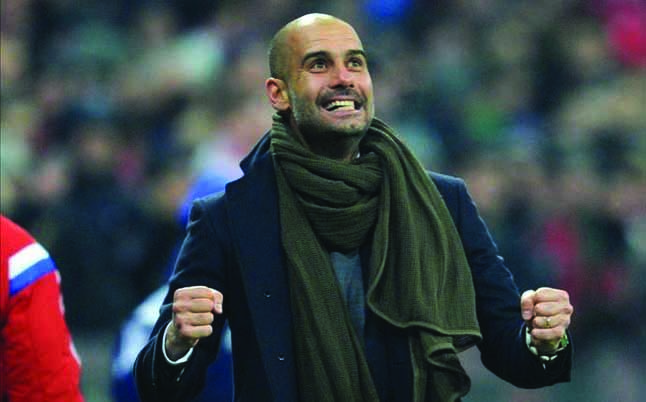
The Barclays Premier League is winding down, and upstarts Leicester are firmly at the top of the league. Is their 2015-16 success story instructive for other teams across the Premier League. Also what impact will Pep Guardiola have when he arrives in England next season? How will he handle the packed schedules, injuries, and tough mid-table sides? Ziko Smith and Simon Thara are on the McGill Tribune Sports podcast to discuss the state of the Premier League, tell some jokes, and meditate on Arsenal and Tottenham.

Osheaga alt-j
Arts & Entertainment, Music

Osheaga all-Canada round-up

Half Moon Run (Montreal)
Indie rockers Half Moon Run struck it big this year with a third row mention on the Osheaga lineup poster. The band’s biggest performance challenge will be proving that they are not Walk The Moon.
Grimes (Montreal)
Ex-McGill student Claire Boucher is returning to the Osheaga stage high off the success of Art Angels, which topped more than a couple Best of 2015 lists. Expect electro-pop and a signature, endearing lisp from the artist to whom Pitchfork refers as “a human zeitgeist.”
Coeur de Pirate (Montreal)
The francophone favourite, Coeur de Pirate, is sure to woo crowds with her soothing lyrics. More than that, if she plays her 2008 classic “comme des Enfants,” she’ll steal the throwback show.
Wolf Parade (Montreal)
After a five-year hiatus, this indie band returns to Osheaga for the first time since 2006. Since their edgier sound has largely fallen out of style in the indie scene, their return is much welcomed.
Kaytranada (Montreal)
The Haitian-Canadian DJ brings a welcome twist to the hip-hop electronic genre. Given that he’s 23 years old and already working with Rick Rubin, he’s a must-see for all recent college grads contemplating life choices and the student loan debt that comes with them.
The Barr Brothers (Montreal)
In a way, The Barr Brothers are the ideal mid-day festival band—laid back enough to give tired festival-goers a bit of a break, but never too laid back. Their acoustic arrangements are simple and elegant, and always build up to something beautiful.
Charlotte Cardin (Montreal)
Newcomer Charlotte Cardin played her first show outside of Canada just this week. She will bring a classic franco-jazz sound to her performance at Osheaga, something everyone can sway along with.
Caveboy (Montreal)
It wouldn’t be Osheaga without a smattering of indie-dream-pop. Thankfully, Caveboy’s version of this elusive genre is actually emotive, joyous, and fun to dance to.
HAUTE (Montreal)

McGill
Martlets, Men's Varsity, Sports

McGill Tribune Sports Awards 2015-16

  • Rookies of the Year

    Kade Wist

    Affectionately nicknamed “Baby Kade” by his teammates, Kade Wist entered McGill at only 17 years old, making him the youngest swimmer on the McGill swim team and in the RSEQ. The 5’11, 160-pound native of Calgary managed to capture eight race victories over the course of four Quebec Cup meets, swimming butterfly and freestyle. Wist was also an invaluable member on relay squads, earning McGill several podium finishes.

    Wist qualified for CIS Nationals in the 100m butterfly and 200m butterfly events, and while at Nationals broke his personal best in the 100m butterfly by 0.7 seconds to qualify for the B-final, ultimately placing 8th. He also qualified for the 200m butterfly final, placing 9th.

    Wist is one of seven McGill qualifiers for the Canadian Olympic team trials in anticipation of the 2016 Rio summer Olympics. At qualifiers, he’ll be swimming the 100m butterfly and 200m butterfly. With the pedigree of former McGill and Olympic swimmer Andrea Nugent, a promising start to his McGill career, and three to four more years with the Redmen, Wist is positioned to become the backbone of the Redmen swim team. 

    Olivia Atkinson

    Olivia Atkinson, a 19-year-old freshman from Toronto Ontario, has been a flash of bright young talent in the Martlet women’s hockey team this year.  At 5’6”,  Atkinson brought physical prowess to the forward unit and developed her scoring ability while playing on the same line as 2014 Olympic gold medalist, Melodie Daoust. 

    Atkinson’s versatility as a forward gives her a foundation to be a strong presence and leader on a Martlet hockey team that’s welcoming nine rookies next year.

    Atkinson dressed in all but one of the Martlet’s 40 games this season, tallying seven goals and eight assists for a total of 15 points overall, including a valiant two goal effort against the Montreal Carabins in November. Her efforts helped lead the women’s hockey team to a second place finish in the RSEQ, and a berth to Nationals in Calgary.

    Atkinson’s on-ice skill is compounded by her work ethic off the ice in the weight room and on the track. With an unrelenting desire for excellence and the breadth of skill she adds to the hockey team, Atkinson will continue to develop into a force over her next few years with Martlet hockey.


  • Athletes of the Year

    Samuel Labrecque

    Senior Redmen hockey defenceman Samuel Labrecque continued to impress in his second season at McGill since transferring from NCAA team Clarkson Golden Knights, earning his second consecutive McGill Tribune male Athlete-of-the-year. This season, the Granby, Quebec-native and CIS All-Canadian was the highest scoring rearguard in the CIS and came third among all players in goals. He also topped the CIS in power play goals and led the Redmen to a 25-16-0 record this season.

    The left-handed economics student earned the title of OUA Defenceman-of-the-year and set a McGill single-season record for points scored by a blueliner with a massive 44 on the season—16 goals and 28 assists. Labrecque was truly vital to the Redmen’s offence this season, being involved in 37.9 per cent of the team’s 116 goals.

    Helena Reinfels

    In her last year with the Martlet track and field team, pentathlete Helena Reinfels achieved personal goals and broke league records thanks to her dedication and training. The 5’10” senior won a silver medal in the pentathlon at the CIS Championships with a score of 3686 points. The previous year, Reinfels finished ninth in the pentathlon despite having no experience in the shot-put or high jump, which are elements integral to the event. She currently holds the RSEQ record score for the pentathlon. Reinfels also competes in sprinting events, hurdles, and long jump. In addition to the pentathlon, she also qualified for the CIS Championships in the 300m sprint, hurdles, and long jump–electing to compete in the pentathlon and 300m sprint.

    Reinfels’ silver medal in the pentathlon was the highest podium finish by the track and field Martlets at a CIS meet since 2005 and the best finish of an individual McGill track athlete since 2003. She also broke the McGill record for the pentathlon twice over – the first time at the McGill Team Challenge in January, and then again, breaking her own record at the CIS meet.


  • Teams of the Year

    Redmen Lacrosse

    The Redmen Lacrosse team had a season for the ages this year. Going undefeated in the Canadian University Field Lacrosse Association (CUFLA) regular season and playoffs, the Redmen defeated the Western Mustangs 15-11 in the Baggataway Cup to win their first title since 2012 and the second in the program’s history. Five players earned All-Star status, with William Waesche named the league’s top goaltender, Connor Goodwin the top midfielder, and Paul Rakoczy the top defenceman. Long stick midfielder Quinton Bradley and defensive midfielder Bohe Hosking joined them as CUFLA All-Stars.

    “It’s really exciting, mission accomplished,” said 13-year veteran Head Coach Tim Murdoch. “To go undefeated, now that I reflect on it, is almost more of a feat than winning the championship itself. Our theme developed by the captains this year was ‘As one’ and we literally took that to heart.”

    This was the fourth season in a row that McGill reached the final and will see many seniors graduate who played a role in each of those campaigns. Overall, the Redmen will lose 12 players to graduation this year, including all four co-captains.

    Martlet Basketball

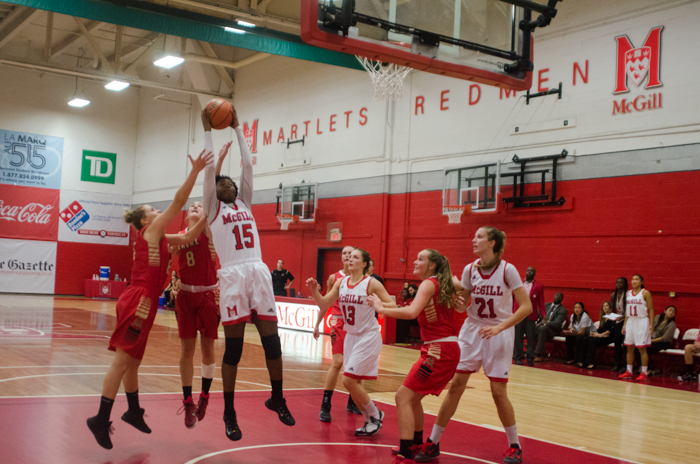
    The Martlet Basketball team completed its fifth straight year of domination in the RSEQ, once again taking home the RSEQ Championship Trophy after going (22-2) in the regular season. Though the team entered the CIS National Championship as the No.1 seed and with the best defensive record of any team, they failed to place in the tournament.

    Despite this loss in the CIS, the Martlets still proved throughout the regular season that they were the team to beat. This powerhouse has been dutifully developed by Head Coach Ryan Thorne, who has just completed his 13th year with the team, and was crowned the 2016 CIS Coach-of-the-Year. 

    Thorne’s skill as a coach is easily matched by his team’s prowess. In their final season, co-captains Mariam Sylla and Dianna Ros were excellent on court all season, supported by former NCAA player Alex Kiss-Rusk, who was awarded All-Canadian honours this year. Even with the loss of Sylla and Ros, fans should look forward to a sixth consecutive RSEQ victory next season given that the team is stacked with strong rookie players—including Gladys Hakizimana, who received CIS All-Rookie honours—prepared to take the team back to Nationals.


Opinion

Debating Project Consent


Project Consent shows us how to tell it like it is

In Project Consent’s new videos, dancing, laughing, and whistling genitalia tell us without a doubt that If it isn’t yes, it’s no. It might seem ridiculous that mature adults would need dancing, animated body parts to explain a rather serious issue, but although consent is commonly talked about, collective society still has a lot of progress to make. Recent high profile media cases, such as accusations against Kesha’s producer, Dr. Luke, and former CBC radio host, Jian Ghomeshi—in which both Ghomeshi and Dr. Luke were found to be not guilty of sexual assault—illustrate why we need to keep talking about consent. In response to the continued presence of sexual assault on university campuses, including McGill’s, campus initiatives like Rez Project and Consent McGill are presently working to promote consent; however, results haven’t been achieved on or off campus. Project Consent’s videos might seem silly, redundant, or overly simplistic, but this is exactly why we should embrace them.

The ongoing search to find the perfect metaphor for consent has no lack of source material: Be it a cup of tea, poutine, a bad haircut, or even pizza toppings, there are endless ways to illustrate consent. Of course, most people understand that you shouldn’t force a cup of tea on your houseguest—never mind your unconscious houseguest.

But while goofy and creative metaphors are effective at catching public attention and sparking discourse, the problem is that they are still only metaphors. Sometimes, metaphors can distract from the fundamental messages they are supposed to convey, and can make a serious issue seem like something as trivial as pizza toppings. Project Consent knows that if people are going to continue to seriously address the issue of consent, they need to talk about it as it is. We can no longer afford to sugarcoat, transform, or distort consent.

As is apparent in most sexual assault cases, consent is not easy to determine retrospectively. Cases often turn into he-said-she-said disputes, and lead to speculation by the media and observers more generally, who attempt to identify prior and subsequent behaviour on the complainants’ parts that might indicate whether or not acts were consensual. The ordeal of taking legal action often discourages survivors from coming forward and pressing charges, even though one wouldn’t think twice about taking legal action for most other physical injuries and emotional traumas.

Certainly, in the recent case against Ghomeshi, subsequent behaviour—including the fact that the women had sent him flowers or suggestive emails after the alleged assaults took place—was used to question the credibility of the women’s claims, especially when these details seemed incongruous with their stories. Many people seem to forget that consent is necessary at every single stage of an encounter or relationship, and just because a survivor continues contact with his or her assailant afterwards for whatever reason, it does not necessarily mean that sexual assault did not occur. Every time such a case falls into the spotlight, the necessity of being proactive rather than reactive is reinforced.

Initiatives such as Rez Project and Consent McGill aim to further conversations and understandings of consent on campus, but the issue cannot be resolved until the message reaches all members of the community. That survivors often wonder whether they are equally responsible for not having explicitly said “No” is extraordinarily disheartening. Project Consent’s videos can complement initiatives at McGill and hopefully reach a broader audience through their quirky but simple take on the issue. Project Consent reminds us: If it’s not yes, it’s no.

– Emma Avery

Project Consent is flash without substance

Recently, several videos appeared online as part of Project Consent, a nonprofit campaign that visualizes sexual consent. They are some of the most stultifying videos in existence, and they say a lot about popular culture’s viral influence on sexual manners in 2016. There are several iterations of the cartoon videos: In one, a personified penis dances towards a vagina, and in another a hand approaches a breast. These videos have gone viral. There were a few other versions of the video, but the gist is pretty evident. Penis hits vagina. Vagina says no. It was a far cry from the consent-by-tea, which asked “Would you like a cup of tea?” instead of “Would you like to have sex?” That video had explained, “If someone does not want a cup of tea, don’t force them to drink it.” How quaint.

There’s a lot to say about the video with the hands, butts, and vaginas, as many people probably do. What it boils down to is a lack of subtlety. This is not like the student in health class objecting to the metaphorical uses of the banana. Clarity is fine. But this was like watching a pornography clip in health class, or if the health teacher himself started groping a mannequin because words were too hard. It was beyond the pale—a slap in the face and a bucket of water over the head at once. A lack of subtlety, an unflinching gaze, and a starkly straightforward message: These define sexual education on the Internet, where the medium of the viral video is the message.

Think about what it means to use talking penises and vaginas as incredible visual panacea for the sexually depraved: It isn’t necessary. The tea skit, where tea was a metaphor for sex, was not too advanced for anyone. In health class, the banana was not too yellow to connote the human phallus, nor was the metaphor a perplexing scourge to responsible condom-use. Some people feel awkward about eating bananas in public, and most everyone can understand the tea video.

There is one simple reason that personified sexual organs appeared on the Internet, and it is not because there was any confusion that needed Project Consent to clear it up. It exists for the same reason pop music and viral videos exist—the people behind Project Consent latched onto the magical effect of popular culture to spread messages. In other words, they understood the need to achieve the status as viral for the video to become wide-reaching.

Pop culture is a format, a style, and a conduit for popularity. Even bizarreness is to its advantage, as it stimulates reactions and conversations. But more often pop culture is simple. Taylor Swift gets right to the heart of romance in only three minutes, and we don’t mind hearing her relatable ideas repeatedly. With pop, no one wants a symphony of subtlety or a lengthy development of ideas. They want simplicity, clear images, and flashing lights. Hence why Taylor Swift videos are such a phenomenon. Upload one, and whamo!—you get millions of views. The same applies for the Project Consent videos, which reduce the message of consent to animated genitalia. The result: A pretty useless video finds its way into your newsfeed. Brief shock-value (really, the detail of some of these 3D organs is bizarre) attracts popularity, but for it to work it has to be all format. All dazzle, no spark. It does not change people’s perceptions—it just attracts their attention.

Project Consent claims it is doing something new, breaking down walls of misconceptions: Hogwash. The only walls it is breaking down are our own feeble barriers to insipid Internet videos. The point of popular culture is to say simple things and use images effectively. Project Consent did this, but it went too far in the direction of images, saying absolutely nothing new.

Ben Cohen-Murrison

McGill, News

Polish Institute of Canada to vacate location on McGill campus while students petition

The Polish Institute of Arts and Sciences in Canada (PIASA), which has occupied 3479 Rue Peel since 1969, housing a collection of nearly 50,000 books and documents, was informed by McGill that it must move out of its building by June 1.  PIASA received this verbal request from the administration on Jan. 21 of this year.   

The McGill Polish Students’ Association (MPSA) gathered a petition of nearly 600 signatures from members of the McGill community last week, calling upon the administration to reconsider the decision. 

Provost and Vice-Principal (Academic) Christopher Manfredi, cited the building’s physical condition as the reason for its closure. 

 “The condition of the building in which [PIASA] and the Library are now housed has deteriorated to the point that it can no longer be used for that purpose,” Manfredi wrote in an email to the Tribune.  “My understanding is that the supporters of the Institute and Library fully appreciate this fact.”

PIASA was conceived during the Second World War by McGill professor and historian Oskar Halecki and Wanda Stachiewicz, an eminent member of the Polish community in Quebec. Its founding members were allocated space in the James Administration building by a motion passed through McGill’s Board of Governors (BoG), and in 1969, PIASA moved to their current location.

“The institute was founded […] during the war by the Polish scientists and professors who were, at this time, in Canada,” said Stanisław Latek, president of the board of PIASA. “Many of the founders were the members of the Polish Academy of Sciences in Kraków, and one of the founding members was Dr. Penfield. He agreed […] to give the space to the Institute, so our collaboration with McGill dates from the very beginning.”

May19, 1943 minutes1
Minutes of the 1943 BoG meeting, page 1. Photo courtesy of PIASA.

Since then, PIASA has hosted numerous notable Polish figures, including Czesław Miłosz, leader of the Polish Solidarity movement, Lech Wałęsa, leader of the Warsaw Ghetto Uprising, Marek Edelman, and Cardinal Karol Józef Wojtyła, who would later become Pope John Paul II.. Agnès Domanski, graduate student at McGill and volunteer at PIASA, highlighted that the institute often functions as an educational port of entry for scholarship between Canada and Poland.

“The idea, essentially, behind the Institute […] is to bring Polish culture to people here, […] to the McGill community, and Montreal at large, Quebec at large,” said Domanski.   

Alexandre Magdzinski, MSc(A) in Nursing at McGill, and member of the MPSA, explained that a goal of the petition is to ensure that the administration is aware of the value that PIASA brings to the university. 

“We have hundreds of people signing, saying that’s horrible that they’re closing it down.” Magdzinski said. “[McGill] should keep stuff like this, it’s what makes a university a university, these types of contributions.” 

A major concern for PIASA is the fate of the Wanda Stachiewicz Polish library, which houses a collection that includes documents from the Polish government in exile, Polish literature and novels translated into French and English, and books smuggled out of Poland during the period of communism. Around 10,000 of these works are currently catalogued in McGill’s system. 

May19, 1943 minutes2
Minutes of the 1943 BoG meeting, page 2. Photo courtesy of PIASA.

 “[The collection would be] a gift to our McGill library,” said Colleen Cook, Trenholme Dean of Libraries. “Those materials that we feel are important for a research collection we would bring in […] and materials we felt were inappropriate for a research collection, we would not accept.” 

Storage of the remaining collection will be up to PIASA. 

“I don’t know what would happen to the remaining volumes, because we wouldn’t own them,” Cook said. “It would be up to the Polish Institute to decide the disposition of them.”

Currently, PIASA does not have a plan for relocation of the Institute or the Library. 

“The answer we got […] is basically nothing,” said Domanski. “[The administration is] basically saying ‘Your organization is dying and we will take your books if you want, we’ll put a sticker in them that says Polish Library’ [….] That’s not really a solution [….] That still means effectively the end of the Institute. We don’t have anywhere to go.”

PIASA is not a division of the university, nor does it have a Memorandum of Agreement (MoA) which would legally bind the institute with McGill along certain conditions.  Additionally, it receives no financial support from McGill.  Domanski explained the relationship they have with the university as one of a friendly, informal agreement. 

“I guess McGill doesn’t owe us anything,” Domanski said. “All we have is […] a verbal agreement, and […] the precedent of 70 years.” 

Letter sent to PIASA in 1979 by Principal Johnston / (Courtesy of PIASA archives)
Letter from Principal Johnston to the PIASA, dated 1979. Photo courtesy of PIASA.

The library is accessible to McGill students for free, and open to the city of Montreal through its status as a municipal library—which secures its funding through the Quebec Ministry of Culture. PIASA covers the rest of its expenses, such as the conferences it hosts, through personal donations, funding from the Polish Embassy in Ottawa, and the Ministry of Culture in Poland. 

“We only have one payroll employee,” said Latek.  “[Everyone else] is a volunteer, including me.”

Arts Senator Erin Sobat reached out to PIASA after he saw the Facebook event for the petition. He spoke with volunteers at the institute, and consulted with the third-floor occupant of the same building, the Association of Graduate Students Employed at McGill (AGSEM), which will also have to vacate.  

"[PIASA] doesn’t have a legal relationship with the university at all,” Sobat said.  “It’s unfortunate that there’s not even a MoA […] [McGill] is required to give AGSEM a space according to their collective agreement, at minimum an office and a phone."

Sobat indicated he has no specific plans yet for an official response on the decision, although there are options to do so. 

“In terms of follow up, we might submit a question to the McGill Senate,” Sobat said.  “[MPSA] got over 500 signatures from faculty and students and I’m sure they could get more with outreach.”

The petition will be submitted to McGill on April 15. Magdzinski recommends any student who wishes to vocalize an opinion to the administration to do so through contacting PIASA, or by reaching out to the MPSA.

“For now, we’re going to start with a petition,” Magdzinski said. “If people want to write actual letters, send them out to the Polish Institute […] If you have a personal statement you want to share, or you want to help us out, you can email us too.” 


The MPSA can be contacted at [email protected] 

a, Features

Rare books: The hard spine of the modern library

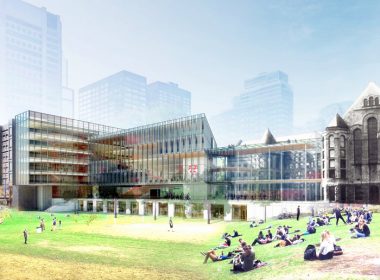
Before attending McGill University, the enormity of the McLennan-Redpath Library Complex struck me. My first steps into the library were both timid and excited. Whether you are going to the library to work on a group assignment, cram for an exam, or to pick up a book, the atmosphere of knowledge is palpable. Sure, the current picture of the library is far from ideal—in particular, McLennan-Redpath is striking in its brutalist concrete squareness—but, it remains the knowledge centre of the university.

Across Canada, university campuses are modernizing. Laptops replace notebooks, lectures are recorded and posted online, and courses are taught remotely through Skype and Google Hangout. Students no longer need to use libraries to have access to thousands of articles and documents. In this context, the plans for upgrading the library seem par to the course. The needs of students have changed since 1969 (the year that McLennan was built), and are even more different from the needs of 1893 (the year that the first Redpath library was built).

Science & Technology

Social psychology disproves common terrorist labels

Following the recent terror attacks in Lahore and Brussels, terrorist threats seem stronger than ever. According to the most recent Global Terrorism Index, terror-related deaths have surged from 3,329 in 2000 to 32,685 in 2014. The increasing presence of terrorism has resulted in a greater desire to learn why terrorists do what they do.

“There’s more urgency to understand [terrorists] and to identify them ahead of time,” explained Professor Frances Aboud, from McGill’s Department of Psychology.

For most people, it’s easier to believe that there is something mentally wrong with terrorists. They are dismissed as deranged, psychopathic, and sadistic. Using these labels helps create a safer distance between “them” and “us.” Unfortunately, modern social psychology has disproved these labels. 

A few well-known studies have gone on to show that ordinary, stable people are capable of inflicting mortal pain onto strangers. Take for instance, the results from Dr. Stanley Milgram’s experiment, which showed that study participants were willing to consistently obey an authority figure—even when obedience called for administering lethal electric shocks delivered to others. Milgram’s ‘obedience to authority’ study is often used to illustrate that anyone can be influenced to commit violent acts against strangers. While many would like to believe that terrorists are monstrous creatures, Milgram’s experiment (and others) demonstrates that the average person can be induced into perpetrating extreme violence.

While there are different variations of terrorism around the world, it is notable that many terrorists are drawn in during adolescence and many become absolutely dedicated to a cause.

Adolescence can be a psychologically difficult time, as identity and a sense of belonging are more valued as an adolescent develops. For example, in adolescence, it is common to associate with a particular band or TV show (think: Harry Potter Potterheads), which can become a part of an individual’s sense of identity. Religion also can, and often does, play a role in developing identity, as there are fundamental principles that one can follow to shape their sense of self. Aboud notes that while there’s nothing wrong with fighting or identifying oneself with a cause, trouble develops when the cause becomes violent.

“It’s easy to tip from the fundamentalism to thinking that you’re absolutely right and the others are absolutely wrong,” Aboud said. “This is a really childish way of thinking about things.”

One of Aboud’s main research focuses is child development and racial prejudices. She notes that at a young age, children are prejudiced towards people that look different from them; however, by the age of 8, children have generally outgrown their black-and-white world and begin to process more advanced themes like fairness and truth. Aboud explains that this childish way of thinking can be brought back, even in adulthood.

“There’s a lot of people who pick it up later in life,” Aboud said. “Even though they can think properly, they go back to thinking in a very dichotomous, black-and-white childish way and that’s just because it suits them ideologically for whatever reason.”

Creating a strong sense of otherness yields a lack of compassion, which can evolve into acts of hate and terror under the right circumstances. It’s important to note that this childish way of thinking is not only present in terrorist groups.

“Although we often think of Islamic extremists and Islamaphobes as being diametrically opposed, the two are inextricably intertwined,” psychologists S. Alexander Haslam and Stephen Reicher explained to Scientific American.

Many terrorist groups and politicians feed off each other to draw support for themselves. The noxious relationship, scholars have recently termed ‘co-radicalization,’ fuels frightening consequences, and new leads, for understanding how extremists are made.

Read the latest issue

Read the latest issue