Latest News

Behind the Bench, Sports

Where’s the Ref? Israel and the 2026 FIFA World Cup

The movement to ban Israel and its teams from all upcoming FIFA tournaments has gained significant traction since February—a period of time contained, ironically, by ceasefire on its foundational end. 

The “Show Israel the Red Card” campaign began on Feb. 19, when Celtic F.C. supporters in Scotland unfurled a huge banner reading “Show Zionism the Red Card” during a Champions League match versus Bayern Munich. The club’s ultras, known as the Green Brigade, distributed leaflets declaring Israel guilty of breaching international law. What started in Glasgow quickly went global. Stadiums from Spain to Chile have seen chants, banners, and a red sea of placards demanding Israel be sent off​.

Backers of the movement state that ethical consistency is overdue in international sports. Over the years, FIFA has occasionally saddled up as the rightful sheriff of global football and booted rogue players from the saloon when the law (or at least public opinion) demanded. South Africa was barred for decades due to apartheid. Yugoslavia, ousted during the Yugoslav Wars. Chile, red-carded after their goalkeeper staged an in-game injury with a razor blade—yes, really. Indonesia and India, both banned for respective internal issues within their football federation. Mexico, suspended in 1990 for fielding overage players in a youth tournament. Russia, kicked out in 2022 following the invasion of Ukraine. Greece narrowly avoided a ban as recently as 2016. 

It is a diverse sheriff’s log. Inconsistent, yet dramatic—“Where do you stop?”, we may be compelled to muse, reflecting on the many powerful countries (from China to India to the U.S.) with spotty human rights records. In short, FIFA does not always draw its pistol, but the question remains whether Israel’s actions—apartheid, occupation, and mass civilian murders—will see it placed on that storied wanted list.

As of Jan. 22, 2025, 382 footballers have died under Israel’s genocide. Israeli bombardment has killed youth footballers, coaches, even entire teams. The Palestinian Football Association mourns a generation of talent lost to politically motivated airstrikes.

True fans value human life more than any trophy. The movement’s supporters may point out that FIFA’s own statutes contain a code of ethics promoting human rights and fair play—ideals more in line with “candy from a baby” than “Israeli airstrike kills 400.” By banning Israeli teams, FIFA would be following the spirit of past boycotts that helped topple injustice. Such precedents underscore a powerful message: When governments commit atrocities, the global community can unite to refuse “business as usual.” Exclusion from the World Cup can be likened to a kind of penalty that puts real pressure on a state’s public image. 

Not everyone is cheering on this call. The reality is that Israel played their first World Cup Qualifier against Estonia this weekend, winning 2-1. Those in positions of power may balk both at the idea of losing money and at the idea of engaging in collective punishment. The Red Card Israel movement could torpedo the careers of Israeli athletes. Is it fair to dash the World Cup dreams of a young winger—say Anan Khalaili of Royale Union-Saint Gilloise—because of decisions made in Tel Aviv and Jerusalem? 

Some may argue that if FIFA starts banning every nation with blood on its hands, we might end up with a very small World Cup indeed. But is it merely about goals and sponsorships, or can it also be about human dignity? The Red Card Israel movement passionately opts for consideration of the latter.
With the ceasefire broken and violence escalating once again, the Red Card movement may gain renewed urgency and visibility in the near future. At the same time, heightened tensions could make an institution like FIFA even more reluctant to act, fearing backlash or accusations of politicization, when the nation will likely see itself out early in the competition in any case.

Science & Technology

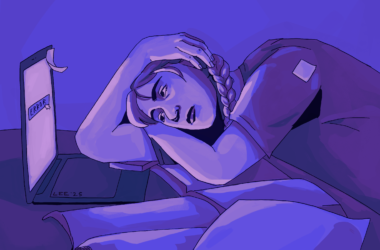
Sleep on it: ‘Share Your Sleep Story’ spotlights sleep as a healthcare and human right

When all the world is asleep, the body is hard at work. 

While many people view their resting hours as lost time, the Share Your Sleep Story initiative explores sleep as time invested in a deeply human act of being. The public engagement initiative highlights individuals’ experiences with sleep—and the effects of not getting enough—and seeks to bridge the policy gap between abundant research and a society that ignores the importance of getting a good night’s rest. Madhura Lotlikar, a McGill PhD student in neuroscience and the initiative’s founder, sat down with The Tribune to discuss the project, the impact of sleep loss on health, and sleep as a human right.

This interview has been edited for length and clarity.


Eliza Lee (EL): To start off, can you talk a little about your current research outside the Share Your Sleep Story initiative? How did your research lead you to the project?

Madhura Lotlikar (ML): I have [several] different projects I’m working on, but the common theme is sleep loss. My priority is to understand the effects of sleep loss on human brain and memory and the ways to offset those effects [….] So I’m looking at if exercise training can make our brains resilient to the effects of sleep loss. Another project […] is implementation of sleep research and rehabilitation settings, because there’s a lot of data on sleep issues in rehab settings. We have people who need support for stroke, […] or traumatic brain injury or physical injury, these kinds of things—they have a lot of issues of sleep, but there is no translation of sleep research into practice. 

When I started working in this field, I quickly realized that there is a lot of data on sleep health [….] I thought that there must be a lot of policies surrounding this issue, and I was baffled that there is very little [….] I was thinking that if we want to actually implement things in society, we need to understand what [those] who face sleep issues need [….] That’s where I was like, ‘Okay, we need to have some lived understanding, some lived experiences of these people.’ That’s just one part of the puzzle. It’s not going to solve things, but it’s just one part. 

Jamie Xie (JX): Sleep is so human, but society sees it as a barrier to productivity and often tries to take that away from us. Could you talk a little bit about your perspective on sleep in the context of healthcare, and how we don’t give it the full respect of healthcare?

ML: There is a misconception that we are not being useful when we are sleeping. Actually, we are not being useful when we are not sleeping—if we don’t sleep, we are not going to be productive. Sleep is important for emotional regulation, mental health, productivity, and quality of life [….] I think a lot of people still take pride in not sleeping enough, because they want to say that they are busy, and as you said, that it’s very personal. Sleep is not only governed by your individual factors, like […] your sleep needs, but also by societal and social factors. What does society think about sleep? Do they think that you are lazy because you’re sleeping more, or you have more sleep-need? What social circumstances are you in? Are you coming from a low socioeconomic background? Maybe you have to work two shifts, two jobs, and you’re not going to kind of get enough sleep, or you have food insecurity.

Importantly, [sleep] also affects other diseases [….] You have data for people with Alzheimer’s—they have sleep issues. People who have sleep issues have an increased risk of dementia, cardiovascular diseases, mental health issues [….] Tackling sleep health is essential, not only for the individual, but for society as well. 

EL: Returning to the impact of sleep on Alzheimer’s, risk of dementia, and other diseases—how does that impact the brain?

ML: When you’re sleeping, there are a lot of toxins that get removed from your brain that have accumulated throughout the day [….] That is one of the functions of the lymphatic system. For example, this protein called amyloid beta starts accumulating in your brain, and if you don’t sleep, it stays in your brain. That protein, amyloid beta, […] is one of the important proteins that can get clumped into plaques, and is one of the pathological hallmarks of Alzheimer’s disease.

But there are other functions of sleep, such as [recovery]. The different stages of sleep help you to restore your brain and body. If you’re injured and you have chronic pain […] your body is not going to heal and recover as much if you don’t sleep, or you have sleep apnea, or you are not getting full, restorative sleep. 

EL: The Share Your Sleep Story initiative also describes ways to prioritize sleep through policy-making. Can you talk about how we can protect sleep through policy, and why it’s undervalued currently?

ML: There are a lot of misconceptions on sleep and its importance, and there is not a lot of awareness [….] Currently, sleep health education is very [minimal] for family doctors [….] They need to be asking about [patients’] sleep no matter what condition they have, because it’s integral to any disease that a person might [have] at a clinic. Sleep health education programs should increase—many times, […] whenever [the people I talk to for the initiative] have sleep disorders or sleep issues, they just don’t get enough help. There are no accessible resources.

For night shift workers, for example, […] maybe organizations […] could provide them with some service to drop them off at home, because after working for 12 hours in a very stressful environment, you don’t want to take the metro. Drowsy driving is a huge problem amongst workers [….] There is a lot of evidence and implementation is lacking. 

JX: The role of the night shift worker, […] and this idea of sleeplessness as a way of life—it makes me think about the way that society accommodates you. Before you were talking about how often we relegate these people to making a sacrifice for society [….] Can you talk about how we can accommodate workers’ needs and rights to sleep?

ML: Sleep should be a human right [….] If you’re not sleeping, it’s going to affect everything. In terms of accommodation, it affects your social life. [For those] who have circadian rhythm disorders, you are basically awake at the time that most of the society is not [….] Of course, that affects everything, from who you date to what you can do [….] You have to work on society’s time. It’s very difficult [….] Just decreasing the stigma and understanding sleep needs, […] that is the first step before we can even start accommodating the needs of people. 


Share Your Sleep Story is also run by co-director Adrián Noriega de la Colina, and team members Marie-Pier Villeneuve, Nour Chahine, Josianne Barrette-Moran, Hannah Moore, Jyothi Inampudi, and Stefanie Tremblay.

McGill, News

Arts students will no longer be able to pursue certain Independent Study Aways this summer

Effective Summer 2025, BA, BTh, and BSW students at McGill will no longer be able to pursue Independent Study Away (ISA) programs outside of Canada. The change was initially announced by the Arts Office of Advising and Student Information Services (OASIS) on Nov. 14, 2024, in response to an update to McGill’s Policy on Student Safety Abroad.

An ISA allows students to earn credits towards their McGill degree while studying at a university on a pre-approved list of around 250 institutions. Unlike an exchange, students pursuing an ISA pay tuition directly to their host institution.

As of Summer 2025, OASIS will no longer approve ISA requests for international institutions. Though exchange programs are not affected, OASIS’ decision makes it impossible for students in the Faculty of Arts to earn credits at African institutions, reduces opportunities for studying at Chinese universities by 90 per cent, and lowers the original 73 American institutions they could earn credits from to just 13.

According to Manuel Balan, Associate Dean (Strategic Initiatives and Student Affairs) of the Faculty of Arts, this decision was made due to changes to McGill’s Policy on Student Safety Abroad. The Policy came into force on May 16, 2024, replacing McGill’s International Mobility Guidelines, last updated in 2013.

“[The Policy on Student Safety Abroad] explicitly [references] ISAs outside Canada, and it considers Faculties as being the sponsoring unit for these activities,” Balan wrote to The Tribune. “After an assessment of what compliance and enforcement [with the policy] would entail for the Faculty of Arts, it was determined that we do not have the administrative personnel or expertise necessary to carry out these duties in an appropriate way.”

Balan added that OASIS’ decision to stop approving ISA requests outside of Canada could be reversed in the future if the Student Safety Abroad policy is modified or if the Faculty of Arts sees staffing changes.

Axel Hundemer, Acting Associate Dean (Student Affairs) of the Faculty of Science, affirmed that, for the time being, McGill’s Student Safety Abroad policy will not affect BSc or BA&Sc students’ ability to pursue ISAs outside of Canada.

“The Faculty of Science seeks to support students who are looking for international study opportunities,” Hundemer wrote to The Tribune. “At the same time, it is mindful of the need to be aligned with the University’s Student Safety Abroad policy. We intend to continue to support ISA opportunities for students, with updated processes in place to meet the policy’s standards.”

Soso Cowell, U3 Management, completed an Independent Study Away at the London School of Economics. As a Management student, she is not directly affected by the policy change, but sees why it might pose a challenge for Arts students—her ISA was the only way she could go home for the summer while staying on track with her studies.

“As an international student, sometimes you don’t really want to stay in Montreal after the finals season. I’m English, my parents are based [in London], and I needed to take a summer class, so I [wanted to] try and find a course that’s approved by McGill at home. That was my main motivation [for my ISA],” Cowell told The Tribune

Despite closing the doors to Independent Study Aways outside Canada, 140 exchange destinations in 39 countries remain available to students in the Faculty of Arts. 

To compensate for the loss of ISA opportunities, Balan claims McGill is working to build new exchange agreements to give students more flexibility in their studies and allow them to travel farther and wider.

“There is a constant and ongoing effort to expand exchange opportunities for our students,” Balan wrote. “There are many opportunities to study outside McGill, and the Faculty of Arts is supportive of efforts to increase these opportunities.”

Science & Technology

How mental health care improves the wellbeing of women living with HIV

For many women living with human immunodeficiency virus (HIV), managing their health means navigating a complex web of challenges that extend beyond the virus itself. From dealing with stigma and past trauma to financial and caregiving responsibilities, addressing mental health struggles often takes a backseat. But new research highlights just how vital mental health care is in ensuring women with HIV stay engaged in treatment.

In a recent study, Alexandra De Pokomandy, associate professor at McGill’s Department of Family Medicine, found that women living with HIV who have access to mental health services tended to be more active in receiving treatment, calling for the inclusion of mental health support in HIV care.

HIV weakens the immune system, making it harder for the body to fight infections. If left untreated, it can give rise to acquired immunodeficiency syndrome (AIDS). While there’s no cure, antiretroviral therapy (ART) can effectively control the infection and allow people to live full and healthy lives.

However, HIV itself is not the only battle. Among people living with HIV, up to 68 per cent struggle with mental health conditions—with women disproportionately affected compared to both men with HIV and women without HIV. For women, the intersection of experiences of sexism, past trauma, and stigma only compounds the effect of poor mental health. 

“There are so many aspects of life of women living with HIV that add on to each other and they just increase the experience of oppression,” de Pokomandy said in an interview with The Tribune.

Her team’s research found that poor mental health not only impacts the mental well-being of people with HIV, but also makes it less likely that they will seek and adhere to ART.

“[Mental health support] is going to benefit their entire health, including ability to optimize taking their treatment and reaching undetectable levels of viral loads,” de Pokomandy said. 

The article also highlights differences in healthcare access between Canada and the U.S.. In Canada, many women living with HIV are recent migrants who might not be aware of available mental health services. In the U.S., the lack of universal healthcare makes cost another significant barrier to receiving HIV treatment.

“If people need to pay for mental health, they may have to prioritize other essential needs. But the barriers to mental health services are more than just the cost. Is it accessible? Sometimes it’s free, but there’s just no access,” de Pokomandy emphasized.

Even when services are available, lengthy waitlists, limited provider availability, and logistical challenges—like juggling multiple jobs or long travel distances—make it difficult for women to seek help. Many women also take on caregiving roles, making it difficult to prioritize their own mental health. 

“They will prioritize their own basic needs, the needs of their children, or the people they care for. Mental health is kind of this ‘extra service,’” de Pokomandy noted.

Stigma remains one of the major barriers to seeking mental health support, particularly for women with substance use histories as well as HIV. 

“If women have to explain their whole story to someone outside the HIV clinic and they feel [a] perceived stigma, they won’t go back,” de Pokomandy said. “Even just disclosing their story to somebody else, [there is] the fear that it will be disclosed to the community, or just the fear of the judgment.”

De Pokomandy and her colleagues found that most women seeking mental health support prefer to do so within their HIV clinic, yet even these services can be difficult to access. 

She emphasized the need for further research into why women avoid mental health care, whether due to stigma, inadequate resources, substance use, or overwhelming life demands. 

Ultimately, de Pokomandy calls on HIV clinics to take a more proactive approach in ensuring women receive the mental health support they need. Clinics must not only raise awareness of available services but also actively engage with their patients and adapt to their needs.

Arts & Entertainment, Theatre

 TNC’s student-written production of ‘Sphinx’ reaches professional levels of wit

There’s nothing like the sheer terror of waking up hungover to discover the bad decision your alter ego made the night before. Particularly when that bad decision saunters into your kitchen and greets you with cheerful full-frontal. If that’s not enough to push you over the edge, throw in an impending blizzard that will instantly kill anyone who ventures outside. 

This is the unfortunate life of Gus (Hayden Jackson, U3 Arts), forced to confront his drunken one-night stand within the confines of his studio. The casual and cocky Theo (Sam Snyder, U2 Arts) proceeds to needle his uptight ways, goading him into doing the Proust Questionnaire. They partake in the typical activities of prideful intellectuals, from insulting each others’ book tastes to sassy matches of chess. Their tension relieves itself in a galvanizing fit of passion which quickly turns to panic when Gus realizes that the man for whom his affection has grown is pure evil. An ambiguous ending leaves audiences wondering who Theo really was: The devil, or just another nonchalant man.  

From the first shocked exclamation to the last blood-curdling scream, Tuesday Night Cafe’s (TNC) production of Sphinx captivated audiences. The storyline, composed of commonplace dialogues and impactful silences, successfully conveyed the flawed intricacies of human relationships that so often elude attempts of romantic realism. Writer-directors Jack Bouchard (U2 Arts) and Odessa Rontogiannis (U2 Arts) embedded within humorous dialogue layers of awkwardly authentic connection. The limited confines of TNC’s space were stretched to creative capacity, enabling the audience to become flies on the walls of Gus’s apartment. And the acting felt so natural, as if the words were not lines, but conversations spilling from the actors’ lips. 

Jackson’s portrayal of Gus was rich with raw emotion, augmenting the intimate realism of the play. He fell fully into his character of the awkward tortured artist in body, delivery, and interaction. His Jesse Eisenberg-esque voice cracks and erratic intonation were effortless, and the shaking of his hands so realistic that it may have been mistaken for nerves. His frantic interactions with pans and paintbrushes brought the space alive whilst betraying his obsessive compulsion for control. 

Snyder’s enigmatic interpretation of Theo was dominating and eccentric, walking the tightrope of pleasure and spectacle. He projected carelessness in his body language: Sitting with his leg tossed in front of him, or intrusively rifling through Gus’s particularly placed belongings. His delivery of suggestive quips was skillfully natural; one example being his response to Gus’s rumination of not pegging him as a particular personality: “You didn’t peg me at all.” 

The duo’s chemistry was so natural that it felt like an intrusion to observe. The lack of seamlessness in their interactions mimicked the familiar ebb and flow of strangers turning friends. Even in scenes that were not meant to be intimate, Jackson and Snyder were able to create palpable tension through glances and body language. 

An honourable mention goes out to Ryan Jacoby (U0 Science), who plays Radio (literally); he stretched his role to its comedic limits. His delivery of well-placed interjections had audiences roaring with laughter. Whether it was a timely, high-volume condom ad—or the remarkably sentient comment of “Will you two just fuck already?”—Jacoby carved an unmistakable presence. He added a dynamic aspect to his static character by serving as a “Jim Halpert cam” for Gus, the two exchanging periodic glances at Theo’s flamboyance. 

The production made refreshingly clever use of sound effects, props, and stage direction. Whether it was to spotlight Radio, to disguise a quick change, or to preserve the confidentiality of the intimate scenes, “fades to black” were tactfully employed. Lifting the lights to reveal snippets of dialogue and interaction in and amongst the implied intimacy emphasized the closeness of sex that goes beyond the act itself.

Sphinx was a beautifully executed piece from inception to production—a wonderful example of McGill students’ creative talents. It exemplified the messiness of human connection whilst reminding us of how a one-night stand can go so terribly wrong. 

Arts & Entertainment, Music

Cianalas brings Celtic charm to Montreal

With St. Patrick’s Day behind us but spring ahead, the lilting Celtic tunes of Montreal-based band Cianalas make the perfect soundtrack for a city shaking off the last chills of winter. The band played their first headline show on March 19 at Quai des Brumes, a dimly lit bar on rue St. Denis with eccentric artwork lining its walls. It was the perfect setting for Cianalas—who, in just six months, have gone from busking on the streets of Montreal to playing their first headline show to a packed crowd. The attendees reflected the broad reach of the genre: Mostly 20-somethings with a smattering of older listeners, a reminder that folk music has a way of bringing people together across generations. 

The night opened with Gráinne, a Montreal-based Irish band that also features a member of Cianalas. They moved between songs in Irish and English, combining classic favourites with original arrangements. Beneath the fiddle and steady beat of the bodhrán (an Irish drum), the lyrics conveyed much of what Irish traditional music is about—history with themes of loss and longing.

When Cianalas took the stage, they captured the room’s attention from the first note. People were up and dancing even in the crowded space. Brenna Logan (vocals, guitar), Abi Rees (accordion), Ella Partington (fiddle), and Isabel Hayler Hughes (fiddle) bring a kind of chemistry that only comes from musicians who truly love playing together. Their set was a mix of instrumental and lyrical pieces, moving seamlessly between high-energy dance tunes and slower melodic songs. Logan’s vocals were strong, and the band kept an easy rhythm together. 

One of the most striking things about Cianalas is how much they clearly love what they do, and their commitment to the craft. Even a brief technical mishap with the guitar couldn’t throw them off—the show must go on! They paused to thank the audience for supporting “Irish women in music,” a statement met with cheers from the crowd, reminding them of the tradition they are carrying forward, and the space they are making within it.

What makes Cianalas stand out isn’t just their technical skill or their ability to get a room dancing (though they do both with ease); it’s the feeling behind the music, the way it carries both history and home in it. Their name, Scottish Gaelic for “homesickness,” captures the sentiment perfectly. Hayler Hughes told The Tribune that they don’t see it as a longing to be elsewhere but, rather, as a deep-rooted connection to where they’re from. The name is fitting for a band made up of musicians from all over the U.K. and Ireland, who found each other in Montreal to build a new home together. Even though their music is rooted in Celtic tradition, they have also found musical inspiration in Quebecois folk music, further tying them to the city. 

Hayler Hughes also spoke about the serendipitous way the band came together. She and Rees, despite attending the same high school in England, only met properly at a folk session in Glasgow years later while at university. They both wound up in Montreal on exchange and busked around the Plateau together. After realizing they both knew Partington and Logan through sessions and open mics around Montreal, they decided to form Cianalas. Their story, like their music, is about connection—about the way people, places, and melodies find their way to each other.

Cianalas welcomed Gráinne back on stage for an encore featuring both Canadian and Celtic classics like “Northwest Passage” and “Wild Mountain Thyme,” which had the whole bar singing along. The night was a reminder of why live music matters, especially now when big-ticket concerts feel out of reach for so many. 

Cianalas hosts a weekly folk session at McLean’s Pub on Saturdays from 2-5 p.m., welcoming musicians of all levels to join. As for what’s next, they’re planning a summer tour and hoping to get into a studio to record some of their arrangements. In the meantime, make sure to get out and support your local artists, whether they’re just starting out or they’re seasoned favourites.

You can find Cianalas on Instagram @cianalas_music

Features

The grassroots of change grow in the playground of conversation 

An invitation to reinvigorate conversation

On a hot evening in August, I found myself pacing my small kitchen with my roommate and her brother, yelling and brooding and gesticulating like the politicians at Bretton Woods deciding the new postwar world order. In a moment of spontaneous curiosity, my roommate had picked a lemon out of the fruit bowl and asked the gallery of two: “If a lemon had a soul, where would it be?”

Our answers came more quickly and vehemently than one might anticipate, considering the subject.

Her brother sided immediately with the seed, which he said held the divine power of the lemon’s immortality (eye rolls in the stands). My roommate countered that, for God’s sake, the soul isn’t reproductive—it dies with the person (sorry—the lemon) and is pervasive, like the juice. I interjected on behalf of zest—that mystical ingredient of which a teaspoon makes a blueberry scone into a magical scone. That magic, I argued, is what makes a soul a soul—lemon or otherwise. My roommate’s brother, hung up on the juice argument, claimed that the juice was the blood rather than the soul, triggering our indignation over his brash equation of a lemon with human bodily fluids.

“The soul can’t be isolated and picked out like we’re goddamn heart surgeons,” my roommate said.

And so on…

Thus, by interrogating—with whimsy and a little absurdity—a lemon, we had brought to the surface the most fundamental of human questions, and with it, the beautiful enthusiasm with which we defended our own conceptions, and deeply held convictions, of its answer.

Part 1—The problem: Conversation, conformity, and the Other

Conversation is a uniquely human medium through which we relate to one another. It is a petri dish wherein social norms are constructed, and where these norms can either be upheld, challenged, or reconstructed.

Erving Goffman, a prominent 20th-century social interactionist, claimed that when an individual “is in the immediate presence of others, his activity will have a ‘promissory’ character.” This promise is a silent agreement between both parties in an interaction, each of whom is “expected to suppress his immediate heartfelt feelings” as a means of maintaining what Goffman describes as the “smooth working of society.” In other words, according to Goffman, our conversations must be palatable, avoiding the discomfort and conflict that would threaten society’s continuity.

Where has this “smooth working of society” gotten us? With strangers, we take pride in our ability to entertain empty conversations. Over lunch with an acquaintance, we ask after aunts and work and pets, furrowing our brows and following up thoughtfully about mortgages and dog fleas: “Lyme’s Disease is no joke, you know, my aunt got it once.” Sometimes, it takes years before we ask and answer questions freely with even our best friends. In fact, as we become ever more interconnected thanks to the conquest of digitalization, the loneliness epidemic is reaching unprecedented heights.

“Maybe the reason we make conversation the way we make it is because of the fear of the Other,” said Paul Yachnin, Tomlinson Professor of Shakespeare Studies at McGill, in a conversation about conversation with The Tribune. “So much of the conversation we regularly do is to save us from actually seeing the other person.”

This fear is evidenced in our shameless avoidance of divorce, income, trauma, aging, or the absurdity of modern western society in a conventional dinner setting. It is further evidenced by our acute discomfort when Goffman’s promissory agreement to preserve repression and politeness is breached—whether by childhood innocence or mental illness.

“In Shakespeare’s time, […] people were thought to be mad, but they were also thought to have something to say that other people wouldn’t grasp,” Yachnin said. “[Now,] as soon as someone is diagnosed with psychosis, we stop listening to the words coming out of their mouth.”

Though mental illness cannot be reduced to social nonconformity, the intensity with which we ignore or reduce the thoughts that it brings to the conversational surface exposes the depth of our fear of coming face to face with the arbitrarity, sadness, and vulnerability of real human life.

While palatable complicity is easier than confrontation under North American norms of nicety, it vilifies the delight of learning truly about one another, learning from one another, and connecting as the complicated and idiosyncratic individuals that we are. Kristine Nørgaard-Nielsen, in a wonderful article titled “The Paradox of American Friendliness,” describes Americans as peaches in their interactions—with soft, friendly outsides hiding an uncrackable pit.

Such compliance runs rampant even in our closest circles, where our habitual rhythms—while informed by a deeper understanding of personhood and history—still do not give space to lemons with souls, or for questions like what would you write your manifesto about? But doesn’t the zest of humanity lie in the wonderful hidden seeds of our unwritten manifestos?

How can we counter this avoidance? When conversational conformity runs so deep, what can we do to reinvigorate and expand our relationship to conversation with courage, authenticity, and play?

Feature Image

Part 2—On play: Throw the ball, or at least catch it

Embracing playful conversation opens the door to a kind of unconditional authenticity that taps into our shared human experience.

“[Playful conversation] is just playing around, hitting the ball, back and forth, laughing—just delighting in each other, rather than this dry information exchange,” said Mikayla Lynch, U3 Science, in an interview with The Tribune.

While engaging in this play is hard when you’re trained to habitually avoid it, you can begin to take bricks out of the wall of rote conversation through spontaneous, hypothetical interrogation.

The beauty of these questions is their universality: They work just as well on strangers as your closest friends. The lemon question, for example, could be posed as fruitfully to a stranger as to your own parents, who both, by virtue of being human, will offer an intriguing answer. In fact, the stranger might raise a more compelling point than your own mother.

While it might feel necessary to save our playfulness for only our innermost circles, it isn’t. Reflecting on the beauty of playful interaction in close friendship, Lynch poked at its potential to exist with strangers as well.

“When you get closer

Off the Board, Opinion

A love letter to crappy Chinese food

I love crappy Chinese food. Don’t get me wrong, I love all types of Chinese food and would happily eat only rice for the rest of my days. But I love greasy, crappy mall Chinese food served in a plastic container with three divided sections: One for Canto-style chow mein noodles, one for sesame chicken, and one for steamed broccoli.

You may recoil and demand, “Zoe, aren’t you Chinese? How can you even stand this stuff? Why wouldn’t you want to profess your love for proper, authentic, wok-cooked Chinese food?” 

First of all, nothing tastes better after you’ve spent a day in Toronto’s crowded, overstimulating Eaton Centre. Second, who is to say what makes some Chinese food authentic and some not?

I recall my mom and I driving down Highway 401 as I proclaimed that chop suey, a Chinese stir fry dish—a category of Americanized Chinese cuisine—was a grossly inauthentic version of Chinese food and that “proper” Chinese food was better in every way. My mom disagreed; though modified for the North American palate, chop suey should be considered a valid version of Chinese food. She pointed out that it used to be one of the few ways newcomers to North America could earn a living, explaining its popularity compared to other jobs like working at laundromats or other menial labour.  Somewhere between the first waves of Chinese immigrants and the current domination of Chinese cuisine across North America, chop suey was created as a survival mechanism in a new and hostile environment.

To clarify, my mom doesn’t think that all chop suey is legitimate and told me that if Chinese people don’t cook it, it’s just glorified lo-fan (white person/American/foreigner) stir fry.

Being a second-generation Asian immigrant inspires reflection about my own authenticity. I love dim sum, but my limited Cantonese vocabulary means that all the pride I have in being able to order ha cheung (shrimp rice noodle rolls) in Chinese vanishes as soon as the cart lady begins conversing with me in a language I barely understand. If chop suey is automatically disregarded as culturally inauthentic, what chance do I have?

While criticized as an objective category, authenticity is commonly defined as something believed or accepted as real or true to itself. I argue that after years of enduring racism and xenophobia, what is more true to Chinese-American culture than a narrative of survival? No, they didn’t serve sweet and sour chicken before its creation in America, and no, you probably can’t order pig’s tongue at Panda Express. American-Chinese cuisine looks and tastes the way it does now because it was born through the innovation and early willingness of Chinese entrepreneurs to cater to a broader external market. This made Chinese restaurants distinctive among other ethnic minorities, perhaps explaining why the cast of Friends didn’t sit in their New York City apartment eating shawarma out of takeout boxes. Just as traditions are contingent and mutable, authenticity should be regarded in the same light.

Fuelled by American labour unions and anti-Chinese sentiments, the late 19th and early 20th centuries saw a national movement to counter the growing popularity of Chinese restaurants. Many Chinese businesses were perceived to be menaces to society, as they competed with American enterprises and were alleged to threaten the safety and morality of white women. Boycotts were staged against Chinese restaurants, but Americans loved chop suey so much that the non-violent boycotts were largely unsuccessful. In our conversations, my mom emphasizes that Chinese people are hard workers, thinking of her own parents (my gong-gong and po-po) who came to Canada with so little and sacrificed so much for their children. My grandfather ran his restaurant, Lee Choi Chop Suey Restaurant, for 25 years in Chicago’s Forest Park. It’s a cliché but the typical immigration story for a reason. The survival of Chinese immigrants is a story about evolution and adaptation to a new environment that wanted nothing to do with them. Today, Chinese restaurants are a cultural fixture as American as pie. So yes, I’ll keep eating my $12.99 Shanghai 360 combo two—mostly because it’s the best food-to-price value in the food court.

Commentary, Opinion

First Nation children have received a settlement of reckoning, not closure

The federal government’s recent $23 billion CAD settlement with the Assembly of First Nations (AFN) and plaintiffs in the Moushoom and Trout class actions for First Nations children harmed by Canada’s discriminatory child welfare system marks an important step in acknowledging the deep injustices and violence against Indigenous communities. The settlement is the product of years of legal battles, brought forth through the relentless advocacy of Indigenous leaders and organizations, that led to the Canadian Human Rights Tribunal (CHRT)’s 2016 ruling acknowledging Canada had willfully discriminated against First Nations children for decades. The settlement is, without question, historic—the largest of its kind in Canadian history—and a direct response to decades of the government’s neglect and systemic racism. But while financial compensation may provide a measure of restitution, it does not—and cannot—erase the ongoing impacts of Canada’s inequitable welfare policies. To call this settlement a full and final expression of justice would be to misunderstand the very nature of what justice means.

Indigenous children in Canada account for slightly over seven per cent of the country’s total child population, yet they make up more than 50 per cent of the children in the child welfare system. First Nations children in particular are over 17 times more likely to end up in the youth care system. Indigenous communities today continue to fight for their right to care for their own children. For decades, Canada’s child welfare system has perpetuated the colonial project of family separation, a legacy of residential schools and the Sixties Scoop—the forced removal of Indigenous children into non-Indigenous care, causing cultural loss and trauma. The Canadian government’s chronic underfunding of on-reserve child welfare and education services and its failure to uphold Jordan’s Principle—meant to ensure First Nations children receive essential care without jurisdictional disputes—only exacerbate these harms. 

As part of its 2016 ruling, the CHRT also demanded that Canada reach an agreement with First Nations to reform the child welfare system. In 2024, the federal government put forward a new $47.8 billion CAD reform proposal that was rejected by AFN leaders. These leaders claimed that the proposed 10-year reforms were inadequate to address ongoing structural issues. Further, some leaders felt the proposal favoured certain regions such as Ontario, particularly since it did not include children and families in the Northwest Territories (NWT)—an oversight that many took as a direct affront to legal equity. The exclusion was due to the fact that federal funding for child and family services in the NWT is provided through transfer payment agreements with the territorial government, not through the First Nations Child and Family Services Program. Chiefs from across the country voted to pass a subsequent resolution to ensure that NWT communities would be included in the reform proposal. 

Canada’s response to demands for inclusivity in reconciliation efforts reveals a priority for appearing committed to reform, even at the cost of dividing communities. Instead of working toward a national solution, the federal government announced last month that it is pursuing a separate deal with the Chiefs of Ontario and Nishnawbe Aski Nation to reform Ontario’s on-reserve child welfare system, stepping away from negotiations that include all provinces and territories. This move deepens the divide within First Nations communities and undermines the goal of achieving equitable child welfare for all. 

The Canadian public must stay engaged. Too often, the national focus on Indigenous issues fades once high-profile headlines disappear. With an upcoming election, there is growing urgency to secure a fair deal for First Nations welfare reform, especially as some Indigenous leaders have recalled the lack of funding and support for their communities during the Harper era. Regardless of which party wins the next majority, justice for Indigenous peoples, beyond simple monetary methods, must be a top priority. For students who can vote in the expected upcoming election, this is an opportunity to use your voice. For those who cannot vote, apathy and reticence are not the answer. Supporting Indigenous communities is crucial, on our own campus and beyond. 

That being said, money alone does not bring back stolen childhoods, repair fractured families, or undo the intergenerational damage caused by Canada’s policies. The recent government settlement is a necessary recognition of harm, but one that must be followed by concrete, comprehensive plans to actively prevent such harm from happening again.

McGill, Montreal, News, SSMU

SSMU fights injunction against PAGIP in appeals court, demands anonymous plaintiff come forward

The Students’ Society of McGill University (SSMU) attended the Court of Appeal on March 11 to debate the plaintiff, currently referred to as X, in an ongoing lawsuit pertaining to an injunction against the Policy Against Genocide in Palestine (PAGIP). X v. SSMU calls for the student union to pay for alleged irreparable damages amounting to $125,000 CAD experienced by the anonymous plaintiff, a former McGill student. The plaintiff side argued that the damages and injunction they have fought for are the result of SSMU planning to ratify PAGIP, which contains rhetoric they claim is antisemitic.

PAGIP was originally passed in the 2023 SSMU Fall Referendum, with 78.7 per cent of non-abstaining voters in favour. If ratified, it would mandate SSMU take an official stance in solidarity with Palestine and demand McGill divest from companies with ties to Israel. Shortly after SSMU announced the referendum results, X filed a demand for a provisional and interlocutory injunction on Nov. 21, 2023. They argued that PAGIP should not be enacted, as in doing so SSMU would violate its commitment to represent and facilitate dialogue among all its membership. 

On May 22, 2024, Quebec Superior Court Justice Shaun E. Finn granted X’s demand for an interlocutory injunction on the PAGIP and approved their request to file their suit anonymously. In the March 11 hearing, SSMU’s defence sought to appeal Justice Finn’s decisions.

Over the last year, SSMU’s legal team has fought for the injunction to be lifted, arguing that its Board of Directors retains the right to ratify motions passed by the student body. In the March 11 appeal hearing, SSMU argued that as X is no longer a McGill student, they cannot file for “ongoing damages” against the student union.  

The student union’s defense attorney, Sibel Ataogul, first presented SSMU’s general defense against X’s claim to compensation for alleged irreparable harm. She argued that X’s argument against PAGIP stemmed from ideology rather than genuine concerns for students’ safety, which Ataogul stated does not qualify as a credible basis for the claim.

Ataogul then invited the prosecutor, Michael Bergman, to justify his client’s claims that PAGIP’s ratification would be discriminatory and personally harmful to the plaintiff.  

Bergman stated that wording used in PAGIP was antisemitic and that ratifying the policy would put Jewish students on campus at a higher risk of harm. He then informed the court of an expert witness in antisemitic rhetoric he wished to call upon on a later date to explain how ratifying the motion would create further division on campus. 

“[SSMU is] free to adapt whatever resolutions they like,” Bergman said. “But a policy that on its face stands to be reasonably antisemitic will put Jew[ish] students in disdain.”

The court’s judge, Justice Christine Baudouin, refuted this claim, questioning Bergman as to why a specialist is necessary to argue that PAGIP’s rhetoric is antisemitic if it was immediately clear to his client that this was the case.  

In response, Bergman stated that the broader context PAGIP was introduced into during the 2023 referendum must be taken into account in the case. He referenced alleged threats made against X when some students discovered they controlled an Instagram account dedicated to the ‘No’ campaign, a movement that campaigned against PAGIP during the referendum period, as evidence of antisemitism on campus during Fall 2023.

Justice Baudouin pointed out that none of the messages X received showed direct intentions of violence and X was never harmed, leading the judge to question X’s anonymity in the case. The judge further expressed doubt about the university’s neutrality in this case, questioning if X’s legal team communicated with McGill on this issue.

“McGill has politics, the injunction is considered political,” Baudouin said. “McGill doesn’t have a position on this injunction? I find that surprising [….] McGill is the white elephant here.”

Ataogul seconded this point, stating that the prosecution’s claim that supporters of PAGIP would threaten violence was a baseless mischaracterization of SSMU members, meant to validate X’s anonymity. She ended her argument by stating that McGill was using X’s anonymity to obscure administrative objections to PAGIP’s ratification.

“Everyone knows who [X] is, and nothing happened,” Ataogul said. “McGill is hiding behind this student so they don’t have to reveal who’s opposing student democracy.” 

The court is currently deliberating on the issue of X’s anonymity. Should the judge rule in favour of SSMU, X will be mandated to either come forward or drop their charges. A trial on the merits of PAGIP will be decided at a future hearing. 

Read the latest issue

Read the latest issue