Latest News

a, Science & Technology

Rewriting the history of the moon


A research team out of UCLA, when testing the compositions of moon rocks, determined that they possessed a striking similarity to rocks found here on Earth. This has led the scientists to believe that the Earth and the moon have the same origin. 

McGill Earth and Planetary Sciences professor William Minarik, who has taught and published on the origin of the moon, is well acquainted with the varying theories popular throughout history. 

“[The Co-Accretion Theory] was the idea that the Earth-moon system formed together, just like the sun and the planets formed together from the same nebula,” Minarik explained. “Another theory was the Capture Theory: The moon formed somewhere else, and then just because of orbital dynamics managed to somehow get captured by the Earth.” 

But since the Apollo missions, the dominant theory has been what is dubbed the Giant Impact Theory, or the Big Splash. The Earth-moon system was formed when some planetary body—called Theia, after a titaness of Greek mythology—collided with a proto-Earth, and the molten debris fell into orbit to become our moon.

This theory is nothing new, but the UCLA team’s results give it a new spin: For decades, the prevalent model was a a small, Mars-sized Theia hitting the proto-Earth off-centre. Using computer modelling programs adapted from military code used in nuclear weapons testing, this was the scenario that best accounted for the orbital dynamics we see in the Earth-moon system, including angular momentum and the moon’s lack of an iron core. However, the model resulted in a moon made up mostly of the remains of Theia and an Earth made up mostly of Earth.

This conception was strengthened by the findings of a German team two years ago that used similar techniques to determine moon rocks and Earth rocks had different isotopic ratios. Because the teams used similar methods and both findings were statistically significant, scientists can not yet fully account for the discrepancy. Only one moon rock was tested by both groups, and the measurements on that one sample agree to within the experiments’ margins of error.

Before the present results, the idea that Theia hit the proto-Earth off-centre was still feasible. The precision and accuracy of the measurements done by the researchers at  UCLA are so good, however, that the group is confident the only explanation can be very thorough mixing in the impact.

The new findings cast this theory (a blob of Mars-sized Theia spinning off to become the moon) into doubt. What now seems likelier is a young proto-Earth that was only 80 per cent as big as the current Earth taking a head-on collision with a Theia of about the same size. This also means that the blob of molten planet that escaped from the crash wasn’t mostly Theia at all—the collision thoroughly mixed the two masses to the extent that both the moon and Earth, afterwards, were about half proto-Earth and half Theia. Essentially, the moon and Earth are made of the same stuff.

To come to this conclusion, the group measured levels of rare oxygen isotopes in the samples. The isotope levels are measured using a mass spectrometer, which accelerates particles down a long tube before bending their paths with a magnet. Lighter particles, like ones with fewer neutrons, bend more, and so end up in a different spot on the detector.

“The mass spectrometers are just getting better,” Minarik stated. “They’re getting bigger, the magnets are getting more precise, the flight paths are longer, the electronics are lower noise.”

And, luckily for the researchers, their forebears had the foresight to predict this. 

“The Apollo samples—and this is one of the benefits to long-term funding—when Apollo brought back our samples, they were split in half,” Minarik said. “Half of each sample was put into storage and never touched, and the other half was sent out to be studied. So now, as instrumentation gets better, as the techniques get more precise, we still have pristine samples still in our repository that have never been touched: They’ve never seen Earth atmosphere, they’ve never been messed with.”


World's Strongest Man
a, Sports

10 Things: World’s Strongest Man

  1.  World’s Strongest Man is an annual competition that tests competitors’ physical strength, endurance, and training. Held every year since 1977, the competition includes 16 separate events designed to push the Strongmen to the limits of their ability, with the eventual winner chosen based on his performances in all of the events combined.

  2.  The current title-holder is 33-year-old American, Brian Shaw, who won his third career title at the 2015 World’s Strongest Man competition in Malaysia. Shaw towers 2.04 m high, weighs almost 200 kg and reportedly eats 10,000 calories a day over eight separate meals. Just for comparison, a 450 kg horse has to eat 15,000 calories each day. That’s only 50 per cent more calories than Shaw eats.

  3.  Mariusz Pudzianowski has the most titles of any Strongman, with five victories from 2002 to 2008. His personal bests include a 290 kg bench press, 380 kg squat and a 415 kg deadlift. Since retiring as a Strongman in 2009, Pudzianowski has begun a second career as an MMA fighter, competing mostly in his native Poland.

  4. Hafthor Julius Bjornsson, better known for his role as Gregor “The Mountain” Clegane in the HBO series Game of Thrones, has finished in the top three at each of the last four WSM competitions. The 2.05 m, 175 kg Icelander only began training for Strongman competitions at age 20 after suffering an injury to his knee that ended his professional basketball career after only one season on the Icelandic Division 1 basketball team FSu Selfoss. 

  5. The Atlas Stones are typically the final and signature event of each WSM competition. Five heavy, spherical stones are placed in front of five platforms along the length of a 10 m long course. The Strongmen must successively lift each stone–increasing in weight from 100 to 160 kg–onto waist or chest high platforms in as little time as possible.

  6.  In the Keg Toss, competitors must throw kegs of increasing weight–from 15 to 24 kg–over a 4.42 m wall. In past variations of this event, it was the height of the wall that increased while the weight of the keg stayed constant.

  7. The Vehicle Pull involves competitors pulling vehicles such as transport trucks, trams, boxcars, buses, or planes by a rope down the length of a 30 m course as fast as possible. The vehicle pulled often pays homage to a previous winner or the host location of the competition. For example, the 2007 competition’s Vehicle Pull involved a fire truck in honour of the 2006 champion Phil Pfister, a firefighter, and the 2008 competition held in West Virginia featured a coal truck, referring to the region’s coal-mining industry.

  8. The Squat is one of the mainstays of the WSM competition, performed every year since its founding. Strongmen lift items including concrete blocks, tractor tires, cars or people as many times as they can while remaining in a fixed squat position. Another regular event is the Fridge Carry, where competitors carry two fridges weighing 415 kg on a crossbar across their shoulders along a 30m course, typically completing the event in under 20 seconds.

  9. The Husafell Stone, first introduced in 1982, involves carrying a flat, triangular rock weighing 182 kg across the chest over a set distance, with the fastest time winning. According to legend, the stone was crafted in Husafell, Iceland over 200 years ago where it is still kept between competitions.

  10. A fan-favourite of the WSM competition is the Car Carry. Strongmen stand inside a stripped-down automobile with a hole in the roof and in the floor, and carry it Flinstones-style the length of a 25 m course as fast as they can. 

a, Basketball, Hockey, Martlets, Men's Varsity, Sports

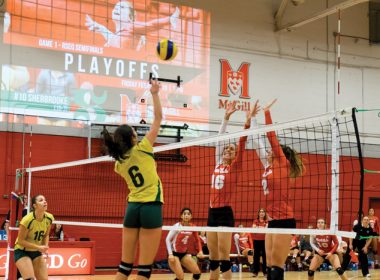
The away games: Martlets and Redmen at Concordia

Redmen Hockey

The Redmen (21-6-1) endured a 4-2 upset defeat against the Stingers (10-12-6) last Friday at Ed Meagher Arena. The defeat ended McGill’s five-game run of victories over Concordia, and provided a preview to their three game OUA East playoff quarter-finals series next Wednesday. Concordia outplayed the Redmen for the first two periods, outscoring them 3-1—senior centre Mathieu Pompei was the only Redmen player to convert in the first two periods. Rookie winger Daniel Milne was the other Redmen to find the back of the net. McGill finished second in the OUA East with a 21-6-1 record. They will play Concordia next Wednesday at Concordia. 

Martlet Hockey

The Martlets (12-5-2) came back from two goals down in the second period to defeat the Stingers (6-8-2) three goals to two. The Martlets have now triumphed over the Stingers on the last eight occasions the teams have met. Senior forward Gabrielle Davidson was responsible for the last two of the Martlets’ goals while freshman forward Nicole Howlett put McGill on the scoreboard for the first time at the end of the second period. Captain Melodie Daoust played in her 100th career game for McGill on Saturday and scored her 200th career point on an assist for Davidson’s first goal. The Martlets are currently second to Montreal in the RSEQ standings but have already clinched their spot in the playoffs with only one game remaining.

Redmen Basketball

The Redmen (9-4) defeated the Stingers (9-5) 53-44 on Saturday for their ninth win out of the last 14 games played against their crosstown rivals. The Redmen led the Stingers 17-6 after the first quarter, but by the close of the first half, Concordia had rallied to close the deficit to only two points at 24-22. The Redmen found their groove again in third quarter and never looked back on their way to a nine point victory. The team’s standout player was fifth-year shooting guard Vincent Dufort of Smiths Falls, Ontario, who recorded a “double-double” with 14 points scored and 11 rebounds collected in 36 minutes on the court. This puts the Redmen into first place in the RSEQ standings with three games left to play this season.

Martlet Basketball

The Martlets (12-1) defeated the Stingers (5-9) 77-64 at the Concordia Gym last Saturday. McGill was brilliant from the floor, converting 54.9 per cent of their shots, and 100 per cent from beyond the arc and from the free throw line. Rookie guard Gladys Hakizimana was in dominant form, scoring 19 points on 5-7 shooting, as well as converting a perfect 7-7 from the charity stripe, and 2-2 from beyond the arc. Three other Martlets reached double figures—senior forward Gabriela Herbert 17 points included a hat-trick of three pointers and 7-9 shooting from the field. On defence, McGill held Concordia to a paltry 27.4 per cent shooting performance—Alex Kiss-Rusk was formidable protecting the rim and recorded four blocks. McGill are firmly atop the RSEQ rankings and will play Laval (8-5) next Friday.

a, Editorial, Opinion

Editorial: McGill must address failure in equitable hiring

McGill’s overall failure to fulfill its equity policy is a matter of concern for the university as a whole. In a report commissioned by the Students’ Society of McGill University (SSMU), entitled “Equity in the Hiring of McGill Academic Staff: An Investigation,” researchers found that although McGill has had an equity policy in place since 2007, it has failed to improve equity in hiring practices. Not only has the university done a poor job of providing resources to support equitable employment, it has also gotten worse in its hiring of Aboriginal people and people with disabilities. McGill must improve its mindset towards equitable employment across the university, otherwise it risks becoming a petrified relic of archaic hiring practices, unbefitting a 21st century institution of higher education. It is one thing to have a policy in place, quite another to implement it successfully at all levels of the university.

According to the SSMU report, McGill is far behind other universities, including Dalhousie, Queen’s, Western, York, and Windsor, in terms of its equity practices. The policies at these other universities ensure supervision of overall hiring practices and include proactive measures to include people of colour in positions where hiring decisions and policies are created. Though the exact mechanisms for doing so vary between institutions, it is clear that these universities are doing more than McGill. If the university is to maintain its reputation, it must show that this is true not only for its research and academics but also its equity. Despite its financial situation—the common excuse for a shortcoming at McGill—the university must show that equity is a priority.

Students and the university as a whole must understand that hiring equitably does not mean hiring less qualified candidates. Instead, equity means actively creating opportunities where there were formerly none. Equity in employment is defined by the Canadian government as a policy that “encourages the establishment of working conditions that are free of barriers, corrects conditions of disadvantage in employment, and promotes the principle that employment equity requires special measures and the accommodation of the four designated groups in Canada.” These four designated groups are expanded to six at McGill: Women, Aboriginal peoples, persons with disabilities, members of visible minority groups, members of sexual orientation minorities, and gender identity minorities are included in equitable hiring practices. As of 2010, when McGill’s Senate last published census information based on self-reporting, there had been little change in the amount of representation of any of these designated groups. There has been no further information made publicly available since then.


There is a lack of a cohesive framework for implementing that policy throughout the university.

It seems that the administration has been sitting on its haunches for the past nine years. At the administrative level, the Academic Personnel Office (APO) is responsible for overseeing the administrative functions of academic hires; however, its role is limited in terms of employment equity, and so academic hiring decisions rest “almost entirely” within their respective departments, according to the SSMU report. The Social Equity and Diversity Education Office (SEDE) is an important player in the McGill context, but has limited influence on the upper administration. As a result, the departments and faculties under scrutiny in the report hire at their own discretion. The Faculty of Law and the Faculty of Engineering both received employment equity training from SEDE. This, however, was only at the request of the Faculties themselves. This may in part be improved by greater communication between the various actors responsible for hiring, but the policy itself must also fall under scrutiny.

The policy, nearing its 10th year of implementation, is outdated and lacks actionable goals and measures for its progress. Going forward, it must create a policy that will clearly monitor and measure the opportunities for equitable hiring. Currently, there is a definitive lack of transparency in the data on diversity in the student body and staff. For there to be progress, the entire university community must know where it stands. Such measurements must also take into consideration the systemic issues at play whereby people are dissuaded from entering certain fields.

Change must, of course, occur within the administration and within hiring committees throughout the university. The SSMU report contains strong recommendations for what the administration ought to do in order to improve equity, such as establishing an employment equity committee, training those who hire academic staff in equity, and showing more leadership and commitment to equity. Yet there is also work for students and professors. In a 2010 report published by McGill’s Equity Subcommittee on Race and Ethnic relations, researchers found that non-tenured faculty members of colour do not speak out about their experiences in order to protect their employment. Non-visible minority professors must therefore be aware of their own position within an inequitable campus, and communicate this to students. This being said, the onus to invoke change should not fall on minority professors and students. All students and professors must put in a concerted effort to pressure the university to prioritize equity.

Equity is above all a practice. It necessitates an overarching policy that applies and is enforced at all levels of the university. While McGill may not be hiring frequently and must wait for vacancies to open, it must take every opportunity to hire equitably—this includes all possible positions in the university, from part-time staff to tenure-track professors and high-level administrators. Progress has certainly been made, but the overall picture is far bleaker than such optimistic headlines.


a, Recipes, Student Life

Pierogies in creamy mushroom sauce

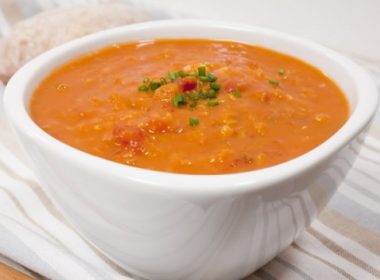
Unfortunately for students, the temperature is not expected to rise far above zero degrees in the week ahead. In the absence of a tropical breeze or a miraculous climate change, another option to keep warm is to stay home with a hearty dinner; however, when one thinks of comfort food, they shouldn’t be limited to macaroni and cheese or chicken noodle soup. Pierogies, a Polish dumpling usually filled with potatoes and cheese, make for the ultimate warming meal, and can be found in the frozen section of any grocery store. In this filling recipe, they are combined with mushrooms and (optional) kielbasa, a Polish sausage, in a creamy sauce to warm one up on cold winter nights. Be sure to remove the pierogies from the freezer an hour or two before cooking to allow them time to thaw. Any variety of pierogie can be used here, and the recipe can be made vegetarian if desired. Feel free to increase the amount of bell pepper or mushrooms if desired. This recipe makes four servings, but can easily be doubled for leftovers. 

Ingredients

1 teaspoon of olive oil 

2 cups of mushrooms (or 4 if vegetarian), sliced 

1 package of kielbasa (optional), sliced

1 onion, sliced 

1 bell pepper, any colour, sliced 

¼ teaspoon of salt 

¼ teaspoon of black pepper 

2 tablespoons of dry sherry wine (or dry white wine) 

1 tablespoon of all-purpose flour 

2/3 cup of milk (dairy or soy)

¼ cup of chicken or vegetable broth

1 (1 lb) package of frozen pierogies, any flavour, thawed 

2 tablespoons of sour cream 

1 bunch fresh parsley, chopped (optional, for garnish) 

Directions

1. Heat the oil in a large nonstick skillet or frying pan over medium heat. Add mushrooms, onions, salt, pepper, bell peppers,  and kielbasa. Sautée for around four minutes, stirring occasionally, until vegetables are tender and lightly browned.

2. Stir in sherry (or white) wine and cook until evaporated. Mix in the flour. 

3. Stir in milk, broth, and pierogies. Bring the mixture to a boil. 

4. Remove skillet from heat and stir in sour cream. Season with salt and pepper to taste. Sprinkle with fresh chopped parsley if desired. Serve immediately. Allow leftovers to cool completely before transferring to an airtight container and refrigerating.

a, Behind the Bench, Soccer, Sports

Behind the Bench: How fans shape ticket prices

The essence of fandom is hard to capture in words; fans tend to have a more familial connection to their favourite team than to other organizations or businesses. The emotions they invest into sports transcend those of any other service that is provided to the common person. Yet, the reality is that every sports team is still a profit-generating business. Unfortunately, most sports fans have limited budgets, so when local sports teams try to incorporate greater profit margins into their business model, the reaction from fans is as expressive as it is swift. 

Famed football club Liverpool FC experienced this situation firsthand when they tried to raise ticket prices and institute new price regulations at their home field Anfield Stadium. Almost 10,000 fans left Anfield during the 77th minute of a match on Feb. 6, with chants such as “You greedy bastards, enough is enough.” This stunning demonstration led to rapid discussions between the Boston- based owner—Fenway Sports Group—and senior management at Liverpool. They decided to cancel their price inflations and also issued a public apology to all their fans.

In response to the controversy, representatives from Spion Kop 1906 and Spirit of Shankly, two of the supporters groups that organized the demonstrations, released the following statement: “More must be done to make football affordable; however, we have always stated that this is a journey that the owners should embark upon, and this is a positive step in the right direction towards fairness and away from greed, but it is only one step.”    

Liverpool management came to the realization that devout fans expect to be treated with the respect that they have shown to their club for decades, even though the demand for tickets at famed soccer clubs is relatively inelastic. This is a reality for many sports clubs with passionate fans, including FC Barcelona, Green Bay Packers, Chicago Cubs, and so on. The sports world is as lucrative as it has ever been. Reflected by rising salary caps, new television deals, and bigger contracts, the common fan does not expect to shoulder a heavier financial burn.

Many cities gain recognition on a national and international level because of their sports teams. Fans are a huge part of the esteem and pride surrounding these organizations, and they are the people who spend their hard-earned money on team gear, memorabilia, and tickets. They are the driving force behind the companies and they do it gleefully, as long as they feel that they aren’t being explicitly manipulated or taken advantage of. When that does occur, fan reaction is deservedly harsh because they are the reason that the team, owner, players, and management all make millions of dollars. 

Any claims by teams that they are not making desired profits should be aimed towards the league itself for poor stadium infrastructure, because even with inflation over the years, ticket prices have still increased exponentially. Teams looking to maximize economic profit cannot discount the unique role of fans as more than a customer, and instead an emotionally invested family member. In the end, it takes more than money to represent how much a sports organization means to people, and that love and passion for these teams should not be exploited.

a, Arts & Entertainment

Staff Round-Up: Kanye West’s The Life Of Pablo (TLOP)

As a long-time Kanye West fan, I knew The Life of Pablo (TLOP) would deliver in terms of innovation, and considering Kanye’s career progression it was easy to guess that TLOP would feature heavily over-processed samples and gospel-esque backing beats with strong hooks and stronger guest artists. Admittedly, the best part of this album is the featuring artists, whose names are neither listed under the track nor the artist columns on TIDAL. Chance the Rapper’s verse in “Ultralight Beam” is clearly inspired by multiple ego-boosting sessions with Yeezy (“I made Sunday Candy, I’m never going to hell / I met Kanye West, I’m never going to fail”), while Rihanna’s appearance on “Famous” turns the track into something sultry and ironically introspective. In terms of outstanding uses of samples, “Low Lights” blows away the competition with its lyrical strength and emotion. 

Unfortunately, it was features like “Low Lights” and stellar guest verses that highlighted just how lyrically weak Kanye was on this album. Tracks that could be great would get yanked down by petty, childish lyrics about Ray-J and former lovers. The most egregious example of this came in “Father Stretch My Hands Pt. 1,” a track that was meant to be a reflective look at Kanye’s relationship with his father and instead opened his first verse with a line about a model’s bleached asshole. However, this album really shines when Kanye returns to his College Dropout roots in tracks like “Waves” and “30 Hours” (which is basically just the updated “After Hours”). Here, Kanye provides the love he promised on Twitter and alluded to with the summer release of “Only One,” and it works well for him, in spite of his claims on “I Love Kanye.” Looking at this album in combination with Yeezy Season 3, the delayed release time, and Kanye’s multiple Twitter meltdowns, TLOP is a performance of insanity, inconsistency, and introspection, and one that far exceeded my already high expectations.

—Morgan Alexander, Managing Editor

After a couple weeks of strategically-placed Twitter beef, Kanye West has graced us with his mysteriously named seventh studio album TLOP. Pablo Picasso? Pablo Escobar? The central character of the album is as uncertain as its musical contents; each song is patchy, sonically and thematically schizophrenic. TLOP starts off with ardent gospel tunes squeezed through Kanye-typical distortion. “Famous” flexes Rihanna’s raw power as she covers Nina Simone’s “Do What You Gotta Do.” It also includes a sample from Simone’s original song, as well as a Sister Nancy sample. Amid the jumble of melodies, and despite the strong female energy, Kanye decides to reminisce about the women who owe him their careers. He gloats about Taylor Swift, “I feel like me and Taylor still might have sex / Why? I made that bitch famous,” a claim that feels neither true nor triumphant. The album includes some entertaining features from Chance the Rapper, Kendrick Lamar, and others, and the haphazard melodic jumps are actually quite interesting—but Yeezus himself doesn’t seem to be saying anything new.  “Wolves” is a standout track; it feels gentle and genuinely concerned about his new family’s notoriety.  The lyrics combine Kanye’s faith and familial devotion: “Cover Nori in lamb’s wool / we surrounded by the fuckin’ wolves,” he warns Kim. This line is scary as hell, and probably the realest thing Kanye spits on TLOP.

—April Barrett, Arts and Entertainment Editor

Laptop-stealing cousins of the world, beware! Kanye West is finally back after one of the most publicized blown deadlines in music history. On third listen, it’s becoming clear that this is likely his best album musically, and his worst album lyrically. He excels on tracks like “Wolves” and the 90-bar monster verse on “No More Parties in L.A.” but he too often devolves to “shocking” one-liners and lazy repetition instead of digging in and delivering the introspection and wit that made his earlier albums so great. Furthermore, he tends to get outshined by artists like Chance the Rapper and Desiigner, often feeling like a feature on his own album. 

That doesn’t matter as much when the album is as well-produced as it is. After listening to the first track, “Ultralight Beam,” it suddenly becomes clear why the album took so long. Its intermittent gospel choir and lush organ stack up against the best of anything Kanye has ever produced, continuing his streak of fantastic album openers. Despite the fact that the rest of the album never really lives up to the gospel vibe he was going for, there’s a lot to like about nearly every song, from the sample of Sister Nancy’s “Bam Bam” on “Famous” to the grimy piano sound of “Real Friends.” The fact that there’s no real narrative or sonic through-line to the album means it can feel more like a jumbled collection of songs than an actual album, but it’s hard to find fault with something this joyful and unique. 

Christopher Lutes, Arts & Entertainment Editor

The much anticipated follow-up to 2013’s Yeezus, Kanye West’s latest album, TLOP, offers a solid snapshot into the sounds, history, and cultural force that surround the self-proclaimed ‘genius’ that everyone loves. The opening track of the record, “Ultralight Beam,” explores a highly somber, gospel-influenced sound, and really sets a serious tone with politically charged lyrics that self-consciously invites listeners to demand more from the album. As a result of the albums heavy reliance on featuring artists, we don’t, however, get to hear Kanye rap himself until the fourth track, “Famous”, where he immediately enters with his much beloved controversy, notably shifting praise from Taylor Swift toward himself, and provides a much needed refreshment with his clean vocals when compared to the auto-tuned voices and relatively generic beats that dominate the preceding tracks.

The album’s features are simultaneously a blessing, as they enable the album to explore a variety of sounds, such as the jazzy feel of the Kendrick Lamar-led “No More Parties in L.A.”, and a curse, as the sheer number of features, particularly coming from the almost featureless Yeezus, ultimately bury and hide Kanye the rapper in favor of Kanye the producer and don’t always provide interesting additions to the album. When Kanye the rapper does emerge, however, he provides some of the album’s most memorable tracks, most notably “30 Hours”, that never fail to generate clear and catchy flow. With the various moments of lyrical intimacy that display a self-reflexive Kanye musing on his hip-hop legacy, the wide range of soundscapes covered by the album, and the occasional great feature, TLOP, despite some of its filler, posits itself as a great overview of the legacy that is Kanye that’s a worthwhile listen for newcomers and hardcore fans alike.

Luka Ciklovan, Staff Writer

The opening track of TLOP, “Ultralight Beam” is an affirmation of faith: Faith in God, faith in yourself, and faith in Kanye- and Kanye would like to convince you that these are all the same thing. “This is a God dream,” Kanye calls. A gospel choir responds with a soaring, vast proclamation of that statement. In this line Kanye seems to introduce a new age; the line represents a pivot in the path of culture, art, fashion, and celebrity. Then Chance the Rapper comes in: “I made Sunday Candy, I’m never going to hell / I met Kanye West, I’m never going to fail,” he raps, then sings “This is my part, nobody else speak; this little light of mine; glory be to God, yeah”. Chance at once lauds his own success while contributing much of that success to Kanye himself. This apparent contradiction is essential in Kanye’s “gospel”. “Ultralight Beam” is an anthem; a resounding introduction to an album that as a whole seems to be a manifesto of everything Kanye stands for.

Kanye once said, “if you’re a Kanye West fan you’re not a fan of me, you’re a fan of yourself”. Everything about TLOP supports this statement; Kanye practices an extreme form of self-esteem that has garnered huge amounts of criticism- but why? Is humbleness, modesty, and being apologetic really the way to success? In Kanye’s case, certainly not. “Low Lights” and “I Love Kanye” are particularly representative of this concept. “Low Lights” delivers a spoken word performance that, astoundingly, blurs the line between Kanye and God. “I Love Kanye,” while definitely the most obvious track on the album, is the most interesting. “What if Kanye made a song about Kanye, . . . Yo, that’d be SO Kanye!” Kanye raps, at the end laughing at the line “I love you more than Kanye loves Kanye”.

Kanye believes in himself, but more importantly, Kanye believes in you. In his Saturday Night Live performance of “Ultralight Beam” he smiles gleefully during Chance’s rap and Kelly Price’s solo, like a proud father. TLOP, with at least a dozen features, is a celebration of Kanye but also a celebration of some of the most talented people in the music industry today. Musically, TLOP is excellent. “Waves”, featuring Chris Brown, is expansive and totally immersive. “Wolves” delivers an exciting surprise; at the end we hear the voice of Frank Ocean, a lone wolf himself, coming out of the woods in a rare and highly anticipated appearance. TLOP is loaded with talent, but it’s also a statement loaded with controversy. The album, just like Kanye himself, is an outrageous expression of talent and self-love.

Evelyn Goessling, Staff Writer

It’s Kanye’s world, we’re just living in it. After four name changes, a near-dystopian fashion show and a last minute postponement (#BlameChance), TLOP is finally here, and man, is it weird. TLOP is easily Kanye’s most diverse record to date. Every track feels meticulously crafted to give us every possible side of Kanye in 2016. We get the old Kanye (the chop up the soul Kanye) on tracks like “No More Parties in LA” and “Real Friends.” We get hell-raising, scorched-earth trap fireworks on “FACTS” and “Father Stretch My Hands.” Still, there are songs like “Wolves” and “Fade” that sound like nothing he’s ever done before. It’s a mess at times, but man is it a beautiful one.

It’s become common knowledge that Kanye records always have great features, but TLOP might feature his best supporting cast yet. Kendrick Lamar slays over a slippery Madlib beat on the aforementioned “No More Parties in LA.” Somehow, Kanye lured Frank Ocean out of whatever cave he’s been hiding in to deliver a scene-stealing turn on “Wolves.” And then there’s Chance, the new king of Chicago hip hop, who delivers what must be the best verse on the record on “Ultralight Beam.” Chance deserves additional credit for saving “Waves,” a towering pop-rap monolith that might just be TLOP’s best song.

Fans put up with a lot of shit from Kanye. To be honest, he seems like a crazy person most of the time. But then he puts out a record that makes all the twitter rants and the egomaniacal ranting somehow manageable. The Life of Pablo is one of those records. It was well worth the wait. 

Eric Noble-Marks, Staff Writer

Rooney rule
a, Behind the Bench, Football, Sports

Behind the Bench: Rooney Rule Ramifications for Female Representation

Diversity and minority visibility in professional athletics has recently made international headlines, with the inauguration of new professional women’s sport leagues, such as the WNHL, the MLB implementing programs to increase female and minority job candidates, and new awards like the British Ethnic Diversity Sports Awards recognizing the diversity of elite athletes. Most recently, the NFL—a league notorious for an administration littered with middle-aged white males—has inaugurated a new rule to encourage more women in administrative roles, complementing their diversity-encouraging “Rooney Rule.” The Rooney Rule is over a dozen years old, and was inaugurated to combat bias against ethnic minorities applying for coaching jobs and front office positions. Now, in addition to interviewing at least one minority candidate when filling football operations positions, NFL teams must interview at least one woman to fill league executive office positions as well.

Since the Rooney Rule was implemented, minority coaches have gained more visibility behind the bench, perhaps because the rule has worked to counteract racial stigmas within the league. Currently there are five head coaches of colour in the NFL. Before the Rooney rule, only seven head coaches in the history of the NFL history were minorities. Behind the numbers, however, is a radically different story. Perhaps most tellingly, the number of minority coaching hires have stagnated, and even slightly declined, over recent years. The rule has definitely ensured that more minority candidates have been interviewed for NFL positions, and yet  most coaches and executives are white. The same candidates tend to get recycled through a variety of teams, and most of these candidates are white. Though teams are required to interview minority candidates, it’s no guarantee that those candidates will be hired. 

One cannot help but wonder whether this problem will recur in the hiring of women. Setting interviewing standards for women certainly gives talented females visibility in the hiring process, but implementing the rule just creates a soft quota that must be filled solely in the initial interviewing phase—as opposed to actually empowering women vying for a front-office position.

But similar to how the Rooney Rule de-stigmatized the visibility of minorities in professional football positions, the expansion to women might achieve a similar end, even if the outcome is not as pervasive as intended. Already in 2015, even without the rule, women have found employment in viable positions within the league. This year, Sarah Thomas became the NFL’s first female full-time official, Jen Welter became the first female to hold a coaching role when the Arizona Cardinals hired her as a pre-season intern, and Kathryn Smith of the Buffalo Bills scored a full-time coaching role—the first female to do so. Undoubtedly, all of this is progress, and through their actions, the NFL has asserted that they are committed to advancing this progress even further. Even though elements of the rule perhaps don’t go far enough in ensuring gender-equality, it’s definitely a positive first step.

Unfortunately, the rule is limited to a small number of professional leagues. Neither the NCAA nor the CIS have adopted similar rules for executive positions, and though the NCAA mandates gender equality in athletics with Title IX, many schools have been known to exaggerate, or even lie, about the amount of rostered female athletes to fulfill their quotas. In terms of executive positions, in the CIS only 72 out of 480 head coaches were female in 2013, and only two of those women coached men’s teams. The issue is nuanced, with questions about the qualifications of females wanting to coach remaining a legitimate problem, but the predicament remains the same: There are not enough female representatives in coaching and executive positions in athletics, at both the professional and collegiate level. Since the NFL recruits heavily from NCAA collegiate teams, they are in a unique position to pressure these collegiate teams to put similar gender-leveling rules in place – because though some professional leagues have taken a necessary initial measure to increase visibility, collegiate leagues noticeably haven’t, and they probably should.

In terms of representation of females in executive and coaching positions, McGill does adequately. Almost every varsity team has female representation on the coaching staff, the head of strength and conditioning— Laura Strenger—is a woman, and females are well represented on the executive committee. Though McGill seems to not need a policy to ensure female representation in athletics, other institutions might. And though McGill certainly has female representation in athletic administrative positions, it is by no means an equal representation in comparison to their male counterparts. Programs to develop the coaching or business prowess of female athletes while they’re still in university might allow them to be viable candidates for future front-office positions in sports. In the meantime, however, implementing a policy like the Rooney Rule across all leagues across North America would be a good first step in developing future female leaders in athletics.

Bodywash
a, Arts & Entertainment

Album Review: Bodywash – Bodywash

On their debut EP, Bodywash (the McGill band formerly known as Cult Classic) sticks to a relatively simple synth-pop—or “cream pop,” as the band puts it on their Facebook page—formula. Although it is not a harbinger of anything groundbreaking, it is more than worth checking out for any fan of chilled-out, easy-listening tunes. In what appears to be a diplomatic move, the band has opted to equally showcase the dreamy, cool-bored voices of Chris Steward and Rosie Long Decter, giving them each two songs in which they take the lead. Of Steward’s half, “This Cruel” is the standout; the opening is peppered with delayed guitars, setting a distinct, sonically interesting tone and creating a lush atmosphere for Steward’s pleasant, wistful vocals. As for Long Decter, while “Some Place You Can Leave” is noteworthy for providing a slight departure from the rest of the EP with more of a ‘50s doo-wop beat, “Clothes” is filled with a more earnest yearning and a gentle sultriness on the singer’s part. This  blends nicely with Steward’s backing harmonies and the guitar vibrato provided by Steward and second guitarist Adam Macpherson.

Thematically, Bodywash does not venture out of the ordinary and mostly sticks to the tried-and-true topics of budding or fizzling relationships. That being said, the band exhibits a certain kind of dexterity in crafting songs that sound fresh and ready to be played at any late night party worth its salt. “If only you could be this cruel,” croons Steward, coming across as both hopeful and helpless. His grasp on how to effectively articulate romantic woes can be heard in his lyrics on “Nothing At All” and “This Cruel,” while the entire band collaborated on the writing process for “Some Place You Can Leave” and “Clothes.” As far as production and sound mixing go, kudos to all those involved, in and out of the band, for putting out an independently made EP like Bodywash (recorded at McGill’s music studios) without needing to suffer any reduction in sound quality. 

All in all, it’s a professional, very listenable (if too “safe”, creatively) start for what is sure to be an up-and-coming band in Montreal’s extensive music scene. For a group that emerged out of the ashes of what was once “that great band at OAP,” they have certainly come a long way, and McGill should be proud to call Bodywash one of its own. They may be struggling to shed their image as a university band, but for now, their unique history with the school only serves to separate them from their competition.

a, Campus Spotlight, Student Life

Campus Spotlight: Vent Over Tea

Many of the mental health services at McGill take place in a formal office setting, and some require a wait time from a few weeks up to two months. Vent Over Tea offers a different approach—one that requires little wait time and can take place at any café in the city. 

Sarah Fennessy, co-founder of the program and recent McGill graduate with a B.A. in psychology, first proposed the idea for a casual, empathetic listening-based service last April on Spotted McGill. From there she recruited a small group of volunteers to form an organization which pairs together a student who needs to vent and an empathetic listener. 

“We will meet you at any café in the city and it appears like a conversation between two friends, which makes the service more approachable,” Fennessy explained. 

The ability for conversations to take place within a cafe or any other casual venue is what sets apart Vent Over Tea from other mental health services offered at McGill. Providing a comfortable space, and an ideal audience for the person venting to talk through their issues with is the fundamental goal of the program. 

Though not a substitute for other mental health treatments, for some, speaking with an empathetic listener has proven to be just as effective as traditional forms of therapy. In a study by Hans Strupp and Suzanne Hadley, two researchers at Vanderbilt University, college-aged males with mild symptoms of depression were gathered and then split into three groups. Two groups of men were treated by a psychologist, and the third group spoke with a professor who was described as an empathetic listener. According to the study, “Patients treated by professors showed, on average, as much improvement as patients treated by professional therapists.” This inspired Fennessy and the other co-founder, Chloe Chow, to co-ordinate a similar service for students. 

Chow, another recent graduate from McGill with a B.Sc. in psychology, explained that ‘ventees’ undergo training through a mandatory active listening workshop in order to learn how to be effective listeners, such as using open body language and good eye contact. Many are also trained in mental health crisis counselling, and have experience with organizations like McGill Nightline and Sexual Assault Centre of the McGill Students’ Society (SACOMSS).

“We look for people that are committed to helping others,” Fennessey said. “To interview people I would vent to them and see if I was comfortable, and if they could facilitate the conversation [….] We chose the people who were described by friends as the person they would go to talk to.” 

Chow and Fennessey have both been ‘ventees’ and claim that the one hour session is a gratifying experience for them as well as for the person venting.

“Sessions usually start with them very stressed out and by talking it through you can watch them solve the problem on their own and gain some clarity just from talking about it,” Fennessey said. “It’s really rewarding.”

Letting clients come to their own decisions is an important aspect of the program. Ventees are instructed to ask questions that help their partner look more deeply at what is bothering them, and through doing so come to their own conclusions. 

People come to vent for many different reasons—the most common being relationships, academic stress, and stress about the future. The goal for the volunteers is not to give advice, but to allow people to talk through their current challenges.   

“Everyone is coming because they really feel like they need to get something off their chest,” Chow explained. “What we want to bring back with this service is a sense of interconnectedness—to make [people who are venting] feel validated and heard.” 

For now, Vent Over Tea is currently in a transition period. They are remodeling their website and are hoping to have an app soon to link “venters” with “ventees” more easily.

“We always make the joke that it will be like a Tinder for venting,” Chloe said.

Fennessey and Chow are currently contenders for the Dobson Cup—a competition that provides mentorship for student entrepreneurs at McGill. The winners of the competition are awarded funding for their business to grow, and if successful, the two are hoping to expand the program outside of the McGill community.

“The goal is to be accessible to anyone in Montreal who needs to vent, and ideally we would want the service […] to be available in any city,” explained Fennessey. “Everyone in every demographic has something to vent about.”

This article was corrected on Feb. 18. The Tribune regrets these errors.

Read the latest issue

Read the latest issue