

Latest News

a, Opinion

The timely demise of PostMedia

If a tree falls in a forest when no one is around to hear it, does it make a sound?

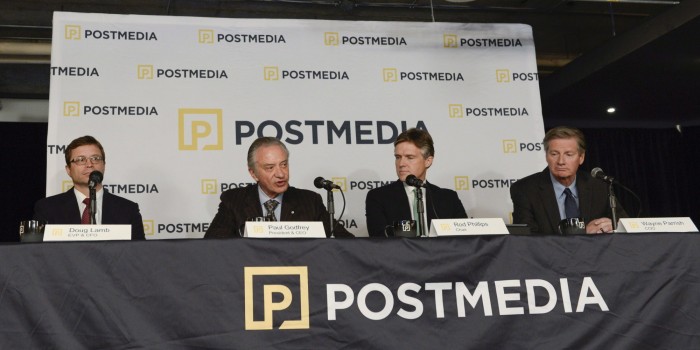
Two weeks ago, 90 journalists from PostMedia Network Inc., Canada’s largest newspaper chain, were fired in the latest blow of its ongoing struggle to stay afloat. Along with the layoffs, the company, which owns over 200 media brands nationwide, will merge offices of previously separate newspapers in Calgary, Edmonton, and Ottawa. Although CEO Paul Godfrey noted that he will continue to maintain separate brands, it’s hard to imagine how effective this will be when merging offices also means merging editorial staff. The underlying issue, however, has implications beyond PostMedia and its recent controversy: Even if merging newsrooms allows PostMedia to stay alive for a while longer, the Canadian public needs to be aware that such a move will only decrease the range of stories and opinions covered in PostMedia newspapers.

Today, newspapers are caught in a seemingly downward spiral where, in order to survive, they need to attract online revenue. But in order to achieve this, they first need a greater online presence. While the evolution of the internet and communications technology has hurt newspapers everywhere, PostMedia’s decline has been especially rapid. Its failed attempt at transitioning into the digital market further shows the difficulty newspapers face in trying to sustain themselves through online advertisement space—Google and Facebook together swallow up 50 per cent of advertising revenue. Newspapers will benefit from large-scale innovation and creative solutions; however, when times are hard, funds for such seemingly excessive operations are usually the first to be cut, thereby perpetuating the cycle.

Instead of denying realities or lamenting the loss of newspapers, PostMedia’s decline should be seen as an opportunity for both current newspapers and aspiring journalists to pursue innovative, entrepreneurial, and creative strategies to create news that Canadian citizens, especially youth, want to read. Newspapers will inevitably have to build their digital presence in order to survive; in doing so, the companies that own them should bear in mind that a decline in newspaper printing doesn’t have to mean the disappearance of good journalism. The market for good journalism still exists—readership is at an all time high—but is decreasingly interested in reading news in the form of a newspaper. PostMedia is no exception to this challenge. It is, however, the most apparent example of the demands that the evolving industry poses.

Despite all newspapers having had difficulty transitioning online and maintaining past revenues, more recently conceived forms of online news have had remarkable success. The most visible examples are Buzzfeed and Huffington Post. Even other more traditional newspapers have demonstrated that online news mediums can be successful. For example, Montreal’s LaPresse has stopped printing dailies during the week and instead developed a profitable news app. Why this strategy worked for LaPresse but not for PostMedia is debatable, but there is no denying the impact of controversial, outdated policies from PostMedia—such as Godfrey’s decision last election to impose endorsements of the Conservatives.

Newspapers will benefit from large-scale innovation and creative solutions; however, when times are hard, funds for such seemingly excessive operations are usually the first to be cut, thereby perpetuating the cycle.

In an age of information overload, it’s hard to justify paying for a daily when the essential elements of most stories can be found online for free—especially for students. Today’s students are naturally well-versed in navigating the internet, rendering newspapers an extraneous, unnecessary cost. Dictated endorsements of the Conservatives hardly help regain youth interest, but in the digital era, youth interest is precisely what PostMedia needs. Although the decline of printed news is sad for a number of reasons, it doesn’t have to mean the loss of good journalism—or good journalists. What has changed is that the next generation will have to be instrumental in effecting this change within the dying industry. Perhaps a tall order, but an essential one.

Instead of losing hope in the industry, aspiring journalists should take initiative and embrace the many benefits to be found in online publication. Discussion that was once limited to a coffee shop or a morning commute can now expand into comments sections or Reddit feeds. The ability to share articles online allows news to reach an enormously greater range of audiences, as well as to target specific ones. It can foster social awareness and induce change. Although newspapers struggle to compete with Google and Facebook for advertising, paradoxically, these sites are the most accessible routes for spreading and sharing online news articles, especially amongst youth. The demise of PostMedia is an opportunity for entrepreneurial spirits to innovate within the industry; these students should remain in Canada and work to rebuild the media industry.


a, Opinion

Evaluating inequality and poverty through Oxfam’s lens

Oxfam, a non-profit organization that seeks to combat global poverty, recently released a report decrying the growth in global wealth inequality.  In the report, Oxfam claimed that the 62 wealthiest people in the world own more wealth than the rest of the global population combined.  While the conclusions of Oxfam’s study may seem terrifying, the report itself suffers from severe methodological deficiencies that lead to skewed and misleading results.  It paints an excessively pessimistic picture about the state of humanity by failing to account for the sharp fall in global poverty and reduced global inequality. The frantic response in the media is therefore disproportionate to the reality of inequality.

To come up with statistics on global wealth inequality, Oxfam relies on crude and unsophisticated methods that don’t accurately reflect the opportunities available to people globally, or disparities in economic well-being.  In order to produce relevant data, Oxfam simply subtracted an individual's debts from their assets to reach a ‘net wealth’ figure.  While technically accurate, such methods can produce very distorted results.

According to Oxfam’s methodology, which is based on material wealth, many of the poorest people in the report are those who reside in some of the most affluent nations in the world.  For example, a recent law school graduate who took on a lot of debt is likely to be classed as less well-off than a farmer in an economically developing nation that has little or no debt, but only meager assets.  This is because despite facing much less fortuitous economic prospects, the farmer still has a positive, albeit small, net worth, while the university student has an excess of liabilities over assets.  Thus, the statistics produced by Oxfam actually say very little about the well-being of the people in various countries around the world.  It would be difficult to argue that the law school graduate in an economically developed nation is less well off and faces worse prospects than the farmer.

A recent law school graduate who took on a lot of debt is likely to be classed as less well-off than a farmer in an economically developing nation that has little or no debt, but only meager assets

The report also fails to reflect the massive welfare gains the poorest individuals in the world have experienced over the past quarter of a century.  According to the World Bank, in 1990 approximately 37 per cent of the world’s population lived below its definition of the international poverty line, which is at $1.90 USD a day.  The World Bank forecasted that by 2015 only 9.6 per cent of the global population—702 million people—would have incomes that fall below this threshold.  While inequality and poverty are often conflated, they are two very separate issues.  Inequality means some have more than others, while poverty is indicative of an individual having insufficient resources to meet their basic needs and fully participate in society.  

While the former phenomenon may be unpleasant to some, the latter is of vastly greater importance.  In essence, it matters far more in terms of human welfare that people don’t suffer destitution and can meet their basic needs than for the gap between different income groups to be narrower.  Despite the gloom and doom of the Oxfam report, life is improving for some of the world’s most desperately poor people. In fact, the recent reductions in international poverty have been so rapid that many analysts believe that the virtual elimination of absolute poverty could be achieved globally by 2030.  

While it is true that income inequality has become more acute within many developed nations, the income gap between poor and rich nations has fallen sharply in recent years.  Economist Branko Milanovic has shown that over the past two decades, economic growth (both in terms of total output and per capita) in developing nations (led by China and India) has far outstripped that in developed nations.  The biggest rises in income on a global level have accrued to individuals who fall in a range from the 10th to 70th percentile of the global income distribution.  From 1988 to 2008, individuals who fall within such a range saw a real (inflation adjusted) pay rise of around 40 per cent.  This, coupled with slower income growth for workers in developed nations, has led to steady falls in the income gap between developing and developed nations.  Again, this increase in global income equality is a far cry from the tone of despair in the Oxfam report.

The report also exaggerates global wealth inequality by drastically understating the assets that billions of people worldwide have claim to. Tim Worstall contends that if items such as private pensions and medical benefits are (rightly) counted as assets owned by individuals, then it is only logical that similar public benefits, such as the Canada Pension Plan, are also counted as adding to individual wealth.  The distinction between the two types of assets is a social construct.  While one may be privately provided and the other publically provided, both a private and a public pension entitle the beneficiary a claim to a future stream of income that has a capitalized market value.  Doing so would likely dramatically narrow the large disparities in holdings of wealth.

Even if the dubious methodology of the report is discounted, other sources of data show a steady decline in global poverty.  Far from becoming the Dickensian dystopia portrayed in the report, the world is becoming one of less poverty and more equality. Moreover, it is questionable whether wealth inequality is even the core issue facing the world.  Reducing poverty further and increasing opportunity for the global poor would do much more to make the world a better place. To boost global welfare, it is more important to focus on raising the absolute living standards of people in the poorest nations than it is to focus on the wealth of a few individuals.

a, News

SUS discusses UÉQ, AVÉQ

The Science Undergraduate Society (SUS) addressed the possibility of Students’ Society of McGill University (SSMU) joining a provincial student union at its Feb. 3 Council meeting and the depletion of its Special Projects Fund (SPF). Council also heard updates on the renovations in the Environmental Science building.

Student federations

SSMU representative Sean Taylor gave a presentation explaining the governing structures of the two student federations that SSMU could possibly join next year: The Association for the Voice of Education in Quebec (AVÉQ) and the Union Étudiante du Quebec (UÉQ). The two federations largely differ in regard to the method of representation of student unions in the province, as well as their membership fees.

“[The UÉQ] has a dual government structure, so part of it is that each school has one representative, but at the same time […] they pass a second vote which looks more at the 40 per cent of the schools supporting it,” Taylor said. “It gives a […] proportional representation, whereas the AVÉQ is one representative, one vote per student union or student association, such as SSMU.”

UÉQ’s fee is $4.50 per student per semester, and the AVÉQ’s would be of $3.50 per student per semester.

Science Senator Marina Smailes mentioned a potential sovereignty violation against SSMU on the part of UÉQ.

“I was contacted before [the] last council meeting, not [by] a direct coordinator of the [UÉQ] but by someone who knew them, and they were telling me about all of these different allegations […] against the [SSMU Vice-President] (VP) External, that [there] wasn’t fair representation of both AVÉQ and UÉQ,” Smailes said. “Technically, […] if SSMU takes a stance on something, another school, like let’s say [Université de Montréal …] can’t come to McGill and campaign on behalf of the student federation […] because we have already decided that we’re actually not going to campaign for that […] and so, by contacting me on their own […] they were directly overstepping sovereignty bounds.”

According to Smailes, the Fédération Étudiante de l’Université Sherbrooke (FÉUS) also released a report accusing SSMU of favouritism towards AVÉQ, but Smailes did not have a copy of this document at Council.

Council ultimately voted for SSMU to join UÉQ. They then voted on whether SSMU should join a student federation at all. This question received five votes in favour and six votes against, with the rest of the council abstaining.

MESS renovations

McGill Environmental Science Students (MESS) representative Mackenzie Webber explained in her report the preparations for renovations in the basement of the McGill School of Environment building and providing better study areas for students.

“It’s really coming along great,” Webber said. “We have a lot of furniture coming in, we have renovations going underway for a little window seat bench and a nice mural […] and also we’re going to have an espresso machine come in and have some volunteers running it.”

Special Projects Fund

Vice-President (VP) Finance Sibat Anam addressed the unusual decrease in the SPF this year.

“For the first time in three or four years it is actually depleting quite fast,” Anam said. “There’s only about five to six thousand dollars left, so I would really suggest […] if you rely on submitting applications for the Special Projects Fund, to do so quickly.”

Anam added that he would try to continue accepting applications for future events despite the fund’s budget being low.

“I am trying my best to see if I can […] approve as many applications as possible with the committee, but we are a bit constrained,” he said.

This article was corrected on Feb. 7. The Tribune regrets these errors.

a, Arts & Entertainment, Music, Theatre

The darkness of Othello revealed in Opera Montreal’s Otello

Few stories are as tragic or as devastating as Shakespeare’s Othello, a drama that questions truth and character at its core. Guiseppi Verdi’s interpretation of the drama is equally haunting, with a satisfying balance of choral, solo, duet, and quartet pieces that highlight the complexities of the story. The libretto is slightly altered, jumping through some backstory to focus on Iago’s deceptive plots. Othello is a successful Moorish general in the Venetian Army, and unaware that his trusted ensign Iago plots carefully and maliciously for his demise, all the while unconcerned at the human costs that may become necessary in his pursuit of revenge.

Opera Montreal’s production of Otello was excellent musically. The cast shone with diverse and exciting music, and although the stage direction was lacking in some acts, the singers made up for it in their incredible vocal expression. Aris Argiris’ Iago was outstanding—his booming baritone was the focus of the many scenes, even over the title character Othello (tenor Kristian Benedikt). Argiris’ tenacious voice coupled well with his character’s remarkable appetite for deceit and villainy. Desdemona (Hiromi Omura) was a fresh and lovely voice in the midst of mostly male solos, a perfect interpretation of the character’s innocence, as well as a contrasting force to Othello’s growing forcefulness and Iago’s malice. Verdi’s arias showcased the soprano voice beautifully and Omura took up the tragic role with confidence and feeling.

The stage scenery was not as theatrical as it could or should be for such a dramatic opera. The opening scene of a tumultuous storm on the high seas seemed small in scale, and while Verdi’s music illustrated Iago’s treachery wonderfully, the stage did not support this feeling save for a few moments of spotlight and darkened background lighting. This was ultimately disappointing, as one would hope that the original drama of the theater would be maintained in the opera form.

As usual, Desdemona’s incantation of “Ave Maria” before she retires to her chambers is chilling, after witnessing so much of Shakespeare’s dramatic irony, which throughout the opera leaves the audience on the edge of their seats. Verdi’s aria hints at Desdemona’s hope, innocence, and faith in Othello, and when she finally rests it is only to the audience’s devastation, as we know what fate awaits her when she lays to rest. Omura’s light and lilting voice is a wonderful addition to the canon of famous renditions from the likes of Renee Fleming, Maria Callas, and Anna Netrebko.

Equally beautiful was the preceding aria commonly known as the “Willow Song,” in which Desdemona expresses her fears about her jealous husband. The audience is entranced in her panic as she mistakes the sound of the wind for an intruder in her bedroom. The aria is arguably the highlight of the entire opera, as the audience is privy to Desdemona’s deepest fears, sorrows, and hopes, all breathtakingly expressed in a dramatic woodwind motif and echoed by Desdemona’s powerful yet amazingly sensitive voice.

Argiris’ rendition of Iago’s “Credo” was also spectacular. The “Credo,” sung at the beginning of Act II, lays out Iago’s frightening sense of nihilism and godlessness. In the “Credo” he sings, “After all this foolishness comes death. / And then what? And then? / Death is Nothingness. / Heaven is an old wives' tale!” Again, Iago’s chilling, sinister attitude is unsupported by the staging, which seems almost unfinished or at least underdeveloped.

Opera is the most satisfying form for a story such as Shakespeare’s Othello. While not subjected to Shakespeare’s masterful language, the audience is immersed in Verdi’s music, which evokes a level of emotional response a world away from the spoken word. The power of opera is to bring emotion to life through music, which transcends barriers of language and acting. Overall, Opera Montreal’s Otello brought Othello’s tragedy to life admirably.

Otello will be playing at Sir Wilfrid Pelletier Hall on Feb. 4 and Feb. 6 at 7:30 p.m. Tickets begin at $20.

Super Bowl
a, Football, Podcasts, Sports, The Sport Authority

The Sport Authority EP. 3: Super Bowl 50 preview — Carolina Panthers vs. Denver Broncos

[audiotrack title=”The Sport Authority Ep. 3: Super Bowl 50 preview” songwriter=”Zikomo Smith and Joe Khammar” date=”February 4, 2016″ width=”700″ height=”200″ src=”https://24f2041bb5b609d25f1a97039f71682cc9154421.googledrive.com/host/0B9rQxTeDv2duM0FmSjBSYkZFS1k/Copy%20of%20Superbowl%2050%20%28final%29.mp3″ autoplay=”on”]

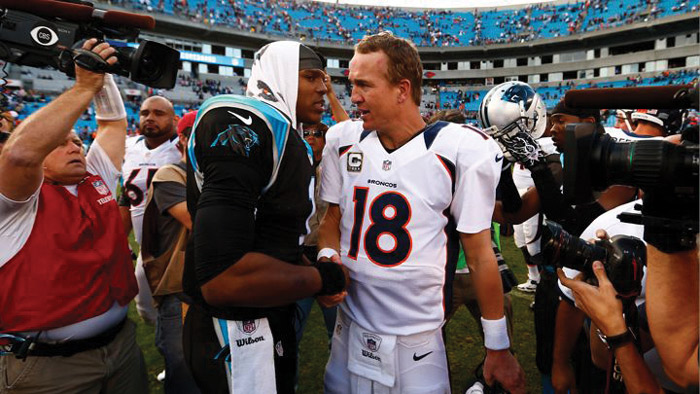
A record breaking number of viewers are expected to tune in to an intriguing Super Bowl matchup this weekend. The explosive Carolina Panthers will take on one of the all-time great defences in the Denver Broncos.

This matchup is the first time two quarterbacks drafted No. 1 overall will face each other in a Super Bowl. Narratives are already swirling in the NFL blogosphere, but Zikomo Smith and Joe Khammar of the McGill Tribune will tune out the noise, and bring you the authoritative analysis of what to expect in Super Bowl 50.

In episode three of The Sport Authority podcast, the sports section discusses the Broncos’ defence and its ability to contain Cam Newton, key matchups between the Broncos secondary and the Panther’s receiver corps, and whether Carolina should play man or zone coverage.

The Revenant
a, Arts & Entertainment, Film and TV

Survival, grief, revenge: Leonardo DiCaprio suffers with skill in The Revenant

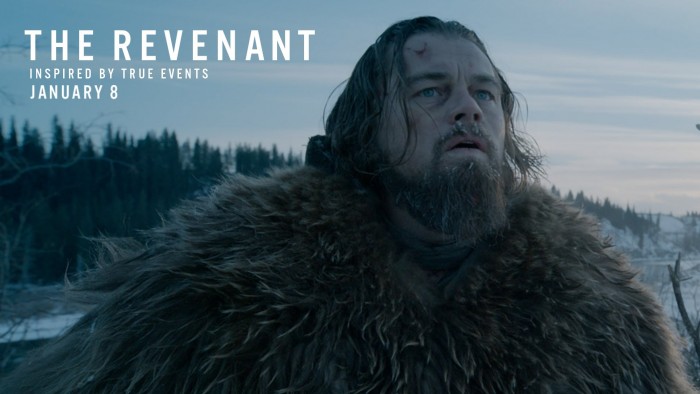
Based on the true story of 19th century frontiersman Hugh Glass who, after being mauled by a bear, was left by his hunting companion to die in the wilderness, Alejandra Gonzalez Iñárritu’s The Revenant is a haunting story of survival, grief and revenge. The hero of The Revenant, portrayed by Leonardo DiCaprio, has to overcome incapacitating injuries, freezing cold, danger, hunger, and fear in order to exact revenge on Fitzgerald (Tom Hardy), who inflicted on him unbearable suffering before abandoning him to die in the cruellest conditions possible. Iñárritu based his movie on Glass’s almost mythical adventure as told by author Michael Punke—who also serves as the United States Trade Representative and US Ambassador to the World Trade Organization—in his book The Revenant: A Novel of Revenge (2002).

The story as told by Iñárritu is first and foremost the drama of a father’s devotion to his son. DiCaprio’s character is one of undying persistence and hope, despite the ghastly scenery and death lurking at every step he makes. With the attack leaving his character for dead, DiCaprio manages to simultaneously convey feelings of physical pain, unbearable grief, and deep desperation as well as determination and hope. For a treacherous 30 minutes, viewers witness Glass unable to speak, let alone walk or move any part of his body while being carried by his hunting team through the snowy wilderness of the American rural West. What truly makes the movie fascinating is how DiCaprio manages to include the viewer in the frenzy of emotions endured by his character, making a totally un-relatable story incredibly engaging for the audience.

While DiCaprio’s genius performance lies in his facial expressions and the feelings he manages to transmit to the audience, Hardy’s achievement comes from his ability to grasp the sour and narcissistic character of Fitzgerald polished by the extremely well-written script by Mark Smith and Iñárritu. Fitzgerald, feels threatened by Glass’ navigational abilities through the mountains leading to his decision to leave Glass for dead. A pleasant surprise of the film is Will Poulter’s performance as the young huntsman, Bridger. He accomplishes the role of the tormented, yet good-hearted child who is forced and threatened to do things that go against his values. He becomes part of the reason Glass survives, and the only character besides Glass that shows humanity and respect when dealing with indigenous people.

Emmanuel Lubezki’s cinematography is so elegantly crafted it reaches in some scenes the level of pure art. He masterfully conveyed the hero’s struggle with the elements and people by alternately using extended shots of nature—the movie was filmed in Alberta, Montana, and Argentina—and long close-ups of faces, focusing the most on the eyes. The movie is mainly composed of multiple lengthy single take shots of high action moments, alternating with the most anti-climactic scenes. The director revealed that he filmed his movie using only the natural light of the winter sun. He would shoot for few hours and only small bits at a time, which added to the rawness and emotional intensity of the movie. Ryuichi Sakamoto and Carsten Nicolai’s eerie original score completed the movie’s atmosphere and contributes to its brilliance. With very little talk, the music takes over most of the scenes and adds to the emotional and physical tension of the watching experience. Looking around the theatre, one can see that spectators were literally on the edges of their seats, covering their gasps, twitching their eyes.

The Revenant is not a movie for everyone, however. The film, clocking in at two hours and 37 minutes, goes at an incredibly slow pace, with sometimes tedious, graphic, and gory scenes to emphasize the hardship and the misery of the main character. The acting is grim, and you can count no more than two or three smiles from the characters during the whole movie. There is also a certain element of magic and supernatural, common in Iñárritu’s movies, that may make The Revenant unlikely to please an audience accustomed to Hollywood style, straight forward stories of extreme action and revenge.

Nonetheless, it is impossible to deny the genius of Iñárritu’s cinematography, or DiCaprio and Hardy’s artistic prowess. With many Golden Globes in pocket, the film is well set to be a huge winner at this year’s Academy Awards.

a, Science & Technology

The final frontier: Law and politics in space

For many, space is the final frontier. The challenges associated with its exploration are immense, but so are the potential rewards. Current international law proclaims that space belongs to all of humankind, but some believe that it is only a matter of time before the potential for financial gain puts that law to the test.

Consider, for instance, the asteroid 253 Mathilde. According to Asterank, a website which catalogues asteroids, it measures roughly 50 kilometres across and is composed largely of metals such as gold, platinum and palladium, with an estimated market value in excess of $100 trillion.

So when the technology finally arrives, and some group—be it a private company or a country—prepares to launch a mining mission that will make them rich, will this prohibition on owning any portion of space make such a mission illegal? Or can a group legally extract minerals without needing to claim possession of the asteroids that they extract from, much like how it is legal to fish in international waters?

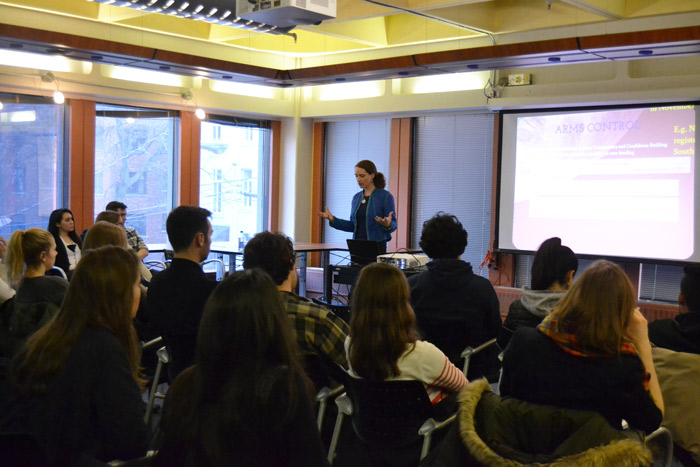
These are just a few of the questions that Cassandra Steer, Arsenault fellow at the McGill Centre for Research in Air and Space Law, strives to answer. Steer, who joined McGill in 2015 from the University of Amsterdam, offered many insights into these issues during a presentation hosted jointly by the McGill Pre-Law Society and the McGill Political Science Students’ Association (PSSA) this past Monday.

Speaking on the increasing commercialization of space, Dr. Steer suggested that outer space and the high seas are fundamentally similar.

“[The United Nations Convention on the Law of the Sea] says no one can own the high seas,” Steer explained. “But companies might be able to go in and extract [from them] […] it’s a way of regulating [the high seas] without giving away sovereignty; it doesn’t give ownership to any state, [or even] to the companies that are busy there, and I think we need a similar model in space.”

Yet as important as the still-developing economics of space are, there may be an even more pressing concern: The increasing militarization taking place in Earth orbit.

According to the BBC, an object launched by Russia in 2014 performed a series of manoeuvres in Earth’s orbit which are consistent with it being a satellite inspector—a small satellite designed to adjust its orbit around the Earth in order to approach other satellites and perform reconnaissance on them, or possibly even destroy them.

Although the 1967 Outer Space Treaty prohibits nations from stationing weapons of mass destruction in Earth orbit or on other celestial bodies, there are no restrictions on satellite-to-satellite weapons, or on conventional, non-nuclear, satellite-to-ground weapons beyond a general statement that outer space should be used for peaceful purposes. Steer explained, however, that the lack of clarity and efficacy in the current space treaties might pose problems.

“The risk of placing a laser weapon in space [is unclear],” Steer said.. “I would say it’s forbidden, others would say it’s a little bit vague, because we don’t know how to define a weapon in space.”

One of Steer’s current research goals is expanding the current international law of armed conflict to the field of space. She is working with the University of Adelaide and the McGill Institute of Air and Space Law to create a manual similar to those that already exist for land, sea, air and cyber warfare, to outline things like what kinds of weapons may legally be used in space warfare.

This manual is one that the world might not need to consult, but in a world of satellites, missiles and lasers, its importance is undeniable.

a, News, SSMU

SSMU base fee increase question fails by 17 votes

This is a developing story. Please check back later for updates.

After two weeks of campaigning, voting for the Students’ Society of McGill University (SSMU) Winter Special Referendum has closed. The referendum proposed a $5.50 increase in the base fee per term as well as the addition of a seventh portfolio to the SSMU executive. The base fee increase was rejected with 50.3 per cent (1600)  voting “No” and 49.7 per cent (1583)  voting “Yes." The restructuring of the executive team passed with 72.1 per cent voting affirmatively and 27.9 per cent voting no. In total, 3438 students participated in voting, allowing the referendum to reach the 15 per cent required quorum with a 16.3 percent voter turnout.

“The results were kind of a shock,” SSMU VP Finance and Operations Zacheriah Houston said. “But to be honest, at first we were all just thrilled that we made quorum; the 15 per cent quorum was new this year and we were really worried that we weren’t going to make it.”

With the rejection of the proposed base fee increase, the SSMU faces a difficult decision and will likely have to make budget cuts.  According to Houston, all parts of the SSMU budget are fair game for adjustment as it considers next year’s budget during the current February budget revisions.

“It’s going to be a challenge to make the cuts that we’re going to have to make,” Houston said. “With this, we have to make a little more than $100,000 worth of cuts and adjustments, but either way, those cuts needed to be made. But everything is on the table right now. It’s going to take some time to look at the entire budget and see every area we can adjust.”

Houston and the rest of the executive team are relieved and eager to distribute the workload more evenly among the future SSMU executives, though the addition of the seventh executive will create more work for the remainder of their term.

“As disappointed as I am about the membership fee failing, it’s still such a win that the seventh executive passed,” Houston said. “It is so important that we become better able to do our jobs by distributing the workload across an additional person [….] It’s overwhelming because we have a lot of work to do now. With that question passing comes five by-law books, a bunch of policies, tons of committees, and everything needs to be revised. Our entire structure now needs to be rewritten.”

a, Science & Technology

McGill remembers Marvin Minsky

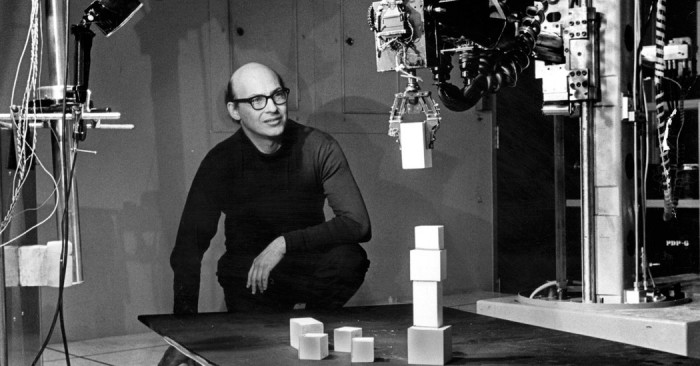
Marvin Minsky, the MIT scientist, philosopher, and author, passed away last week at the age of 88, from a cerebral hemorrhage. Known around his campus as “Old Man Minsky,” he was a pioneer in a number of fields from cognitive and computer science to philosophy of mind and information theory. He is best remembered, however, for establishing the field of artificial intelligence (AI), as well as creating the MIT Artificial Intelligence Laboratory (now known as the CSAIL), which has been the driving force of AI research for decades.

During his life, Minsky also authored several books on his work such as The Emotion Machine, which extrapolates on his theories of mind and discusses the achievements and problems of AI research, Perceptrons, which deals heavily with neural network technology in relation to computer learning research, and The Society of Mind, influenced by observations from developmental psychology as applied to AI. In The Society of Mind, Minsky described how he believed intelligent robots could be designed.

“His work on the ‘reactive agent’ approach to robotic intelligence, along with his MIT colleague Rod Brooks, helped foster a different way of designing robots, especially ones that are small, autonomous, and by themselves not too intelligent,” Director of the McGill Centre for Intelligent Machines (CIM), James Clark explained.

The concept of the ‘reactive agent’ is central to the Society of Mind Theory. The theory states that intelligence and other complex phenomena scientists associate with sentient beings can emerge naturally from the interactions of several mindless 'reactive agents' operating under simple algorithms.

“Minsky showed that collections of such robots could work together to form societies which would express, in his words, ‘true intelligence,’” Clark said.

Others, however, interpreted Minsky’s career differently.

“He did quite respectable work, but I wouldn’t qualify that work as AI-related,” explained Engineering Professor Jorge Angeles, a McGill roboticist and founding father of the CIM. “My belief is that AI is a buzzword that is being exploited for commercial purposes. How can intelligence be created artificially if nobody has ever been able to define it?”

But most view Minsky’s influence as substantive and enduring. McGill computer science Professor Joelle Pineau, who teaches Artificial Intelligence (COMP 424), begins her course with a brief AI history lesson. Most importantly, she discusses the historic 1956 conference at Dartmouth that is regarded as the real beginning of AI.

“Minsky was a giant in our field,” Pineau said. “Until this week, Minsky was the last of the big names from that meeting to still be alive.”

Over the course of Minsky’s long and extraordinarily varied career outside of the lab, he also served as a scientific adviser on Hollywood sci-fi films such as 2001: A Space Odyssey, and even suggested the plot of the novel Jurassic Park to author Michael Crichton during a walk on the beach.

His more technical innovations include developing the confocal microscope (invaluable to the life sciences for its high degree of resolution), the head-mounted display (a major milestone in virtual reality), and creating in 1951 the first ever randomly-wired neural network, called SNARC.

“Although I never had the pleasure of meeting Marvin Minsky, I was certainly influenced by his research, as were countless others who work in Cognitive Science and AI,” McGill psychology Professor Thomas Shultz, who studies neural networks, said.

Minsky also collaborated with MIT Professor Seymour Papert on the first educational robots called ‘turtles,’ which used a programming language they developed called Logo. Since then, these robots have been used by a number of professionals looking to help children learn basic programming skills.

“During a sabbatical, I noticed that my daughter’s third grade class lacked an effective way to use newly supplied classroom computers,” Shultz said. “In my spare time, I designed a modest Logo course and taught it to these third graders, as a demo for the school’s teachers. It was fun to see that Papert and Minsky were correct in their prediction that kids would love doing this.”

There happens to be a significant coincidence in the timing of Minsky’s passing which corresponds to another major AI landmark.

“It seems particularly poignant that Minsky passed away the same week that we are hit with the impressive news that an AI system had reached human-level in Computer Go,” Pineau said.

Go is an ancient and very abstract board game a lot more complicated than chess. Computers have been consistently beating humans at chess for years now, but researchers thought teaching them Go would take much longer than it did.

Computer learning is advancing at breakneck speed—even if Minsky didn’t think so—and this is largely because of his work and the work of others he inspired.

“Minsky is survived by his wife Gloria Minsky; three children, Margaret Minsky, Julie Minsky, and Henry Minsky,” wrote an automated news-writing bot known as Wordsmith for Wired.

Software programs like Wordsmith aren’t exactly AI, but they show the incredible degree of sophisticated output achievable by coding and algorithms that was once thought impossible, and the modern world has Marvin Minsky to thank for that.

a, Science & Technology

The Zika virus, explained

News headlines are swarming with concern over outbreaks of the mosquito-borne Zika virus. First discovered in 1947, the Zika virus is part of the flavivirus family and was believed to pose no threat to humans; however, this virus is the recent cause of over 4,000 cases of microcephaly in infants—an illness causing underdevelopment of the brain and an irregularly small head. Microcephaly can lead to impaired vision and hearing, as well as other neurological abnormalities.

The virus is prevalent in South America, where it has spread to 21 countries through the mosquito carrier Aedes aegypti. This species is known to carry other viruses such as dengue and yellow fever—two other members of the flavivirus family—and are known to have various neurological effects including Parkinson’s-like symptoms and encephalitis.

Zika virus appears to be less severe than dengue or yellow fever; infection ranges from asymptomatic to fairly mild symptoms—aches, inflammation in the eyes, joint pain, rash; however, pregnant women appear to be at high risk of transmitting the infection to their fetuses, causing the increasing rates of microcephaly.

The virus was first discovered in Uganda and was possibly carried to South America during the 2014 World Cup. The upcoming Olympic Games in Rio de Janeiro pose a threat to the rest of the world population, opening up the possibility of global outbreaks. In an attempt to prevent this, the Brazilian government just announced it will deploy 220,000 soldiers to bring pamphlets door-to-door, advising people—especially pregnant women—on ways to prevent infection.

Virology professor Selena Sagan, from the McGill Department of Microbiology and Immunology, focuses her research on other flaviviruses, such as hepatits C and dengue. The Zika virus, however, presents new difficulties.

“We don’t know enough about transmission to the fetus,” Sagan said. “Zika virus is a very new virus being studied.”

Development of a vaccine doesn’t seem to be in the near future—scientists believe it may be 10 years before a vaccine for Zika virus could be developed.

“It is difficult to predict how quickly research and development will take to produce an effective vaccine,” Sagan explained. “We’ve studied dengue virus for much longer and approval for vaccine trials just began last year; however, since Zika is closely related, there may be things we’ve learned in studying viruses like dengue and Chikungunya [a related virus] that can be used in developing a Zika vaccine.”

In the meantime, governments in Colombia, El Salvador, and Ecuador are urging women to avoid pregnancy until the outbreaks end. This raises ethical concerns over women’s reproductive rights, especially in countries with stricter laws surrounding birth control and abortion.

Luckily, humans appear to be a dead-end host for Zika, so infection control focuses on preventing mosquito populations from spreading. Possible solutions include releasing genetically modified mosquitos that are sterile or resistant to the virus, as was recently proposed to prevent mosquitos from carrying malaria. Pesticides are another option, but similarly to the problems antibiotics face, mosquitos may evolve to become resistant.

According to the World Health Organization (WHO), the virus is likely to spread to the United States. Four million cases of infection are estimated to occur in the Americas within the next year, and this year’s El Niño weather appears to be speeding up the process.

“Since [Canada doesn’t] have the [mosquito carrier], it’s unlikely we’ll have an outbreak [here], but the southern United States [is] at risk,” Sagan explained. “With global warming, these vectors seem to be traveling north, so it’s difficult to say if it will be a problem years from now.”

Read the latest issue

Read the latest issue