Latest News

a, Opinion

Commentary: The dangers of empathic giving

A few weeks ago in February, James Robertson, a 56-year-old factory worker from Detroit, told police he no longer felt safe in his home. Ever since his car broke down in 2005, Robertson has walked 34 kilometres to work, five days a week. But after a touching news story about him went viral, a local college student started an online crowdfunding campaign that raised over $350,000 on his behalf.

The online response to his struggle followed a dangerous trend in society. In considering where to donate, people are swayed more by empathy than by rational thinking.

Despite the good intentions behind the donations, the money that Robertson received caused him problems. Robertson was now more wealthy than most of his neighbourhood. He constantly feared robbery, as neighbours— some friendly, some not—swarmed his front door asking for money. Robertson had lived in Detroit for 15 years, but when a nearby man was stabbed to death for his relatively measly $20,000 lottery winnings, he decided it was time to leave.

A simple question, such as “Who needs the money most?” could have elicited a more pragmatic response. While Robertson pocketed a small fortune and a brand new car, many others in his community were also suffering.

Herein lies the problem with crowdfunding campaigns. They give misery a human face, and then manipulate people’s empathy for money. This creates wildly popular tales, such as Robertson’s, which are picked up by social media and prime-time TV to be gobbled by the public. We can see Robertson and empathize with his struggle, and online campaigns allow us to feel like we’re helping.

In considering where to donate, people are swayed more by empathy than by rational thinking.

But empathy-driven decision-making is blind. What about people who don’t get time on the tube? Surely they deserve help as well. By letting emotion control our judgment, we end up giving too much to too few people.

For example, after the Sandy Hook shootings, Newtown, Connecticut witnessed a huge stream of toys that were offered to the students of Sandy Hook Elementary. But there is such a thing as too many teddy bears; the school eventually ran out of room, and had to ask people to direct their gifts down another path.

The goodwill of such benefactors is heartwarming, but the results of their actions, although not entirely their fault, can be ineffective and wasteful. In light of this, donors have a choice: They can be guided by empathy, and donate to help a few people with very sad stories, or they can spread out their donations in a way that will help larger groups in society whose struggles may not have received the same degree of publicity.

Of course, the former will continue to thrive. When people fund one man, they can watch his evolution on national news, proud to play a small part in a much larger story. But imagine what $350,000 could have done if spread among the people at Robertson’s door, or if used to improve public transportation for everyone in the neighbourhood.

The goal of charity is to alleviate suffering and maximize wellbeing. If those on the giving side take this seriously, they should help organizations aiming for broad change, even if thinly spread. In such, empathy—and emotion overall—can still be used to galvanize. But it ought not be used as a tunnel vision so heavily focused on a single person, ignoring the widespread struggles faced by others. Sadly, a shift from this practice is unlikely to occur, as donations guided by empathy and self-congratulation remain just a click and a credit card number away.

a, Arts & Entertainment

Album Review: Kendrick Lamar – To Pimp a Butterfly

Kendrick Lamar is at his best when he embraces the contradictions that define his life. He is one of the most famous rappers alive, but feels stifled by his culture and his past. He’s outwardly full of bravado and bluster, yet unable to get past his crippling self-doubt. Fame has let him escape from the hell of the inner city, but he “keeps runnin’ back for a visit.” 

All of this is on display in his new, game-changing album, To Pimp A Butterfly, making it more impressive that the album feels of a complete piece rather than just a collection of songs. Songs like “u” and “i” showcase the fluctuations in his psyche, cycling from self-hate to self-love. “Hood Politics” succinctly zooms from micro to macro on the issue of racial politics, starting with his friends in the hood and ending with the President of the United States. 

Musically, he has forged an iconoclastic sound inspired by Flying Lotus and jazz and funk standards of the ’70s, leaving behind the sound that typifies a lot of modern hip hop. He has also largely done away with guest verses, which gives him more room to show off the remarkable amount of control and range he has over his voice, moving between gruff, rasping, and high-pitched yelps of victory. This is a work of supreme confidence and insight, and deserves a spot in the hip-hop hall of fame, right next to Illmatic (1994) and Fear of a Black Planet (1990).

a, Science & Technology, Student Research

This Month in Student Research: Valérie Losier

When Valérie Losier, a U3 Physics major, holds up the project she’s been working on for the past academic year, it doesn’t look like the next generation of breast cancer detection technology. Nonetheless, the device—a labyrinth of wires connecting computers and sensors to a bra—may soon become common sight in hospitals and doctors’ offices.

The Popovich lab where Losier has spent the past seven months working is exploring a method of breast cancer detection that moves away from traditional x-ray mammography, which uses the densities of different types of tissues to make a diagnosis. Instead, this new technology uses microwaves to look at tissues’ dielectric properties—a measure of a substance’s ability to reflect and refract radiation.

“The whole basis of this research is that tissues of the breast have different dielectric properties,” Losier said. “You basically shine light [at the tissues], and depending on what is scattered off, you can construct a map [using] the dielectric properties.”

Since the tumours have different dielectric properties, it makes detecting them easy. The detection instrument’s safety presents a major advantage over traditional mammograms.

“X-ray mammography uses X-rays, which ionizes the tissues, and that limits the scans to one time per year, and that’s obviously not optimal,” Losier explained. “This method would be doable once a month because it [uses] microwaves, and they operate at low power [like] wifi and cellphones.”

Because no research has shown any problems associated with extended exposure to these types of waves, the procedure itself is essentially harmless. Losier’s work focuses specifically on the physics of sending out these microwave signals. Essentially, the machine generates signals in the form of wave pulses, which are then read by antennas. Differences in wave readings can then be interpreted to create a map.

“You get 240 antenna-pair readings, [which involve] a lot of algorithms to construct the map,” Losier said. “What I’m involved with is making sure that the signal is sent properly, and that you can read the signal properly in each antenna pair.”

Thus far, the instrument has been tested only in the lab. Losier has been preparing it for clinical trials and anticipates being able to test its accuracy on real tissues awaiting the Glen Hospital relocation project to finish.

Prior to working on breast cancer detection methods, Losier held positions in two other labs. 

“I’d done research in physics in my first year,” Losier said. “It was experimental physics working on a satellite instruments [….] Then I did research in atmospheric science after; it was theoretical, numerical work, and then I decided that I wanted to do an engineering master’s and I thought ‘I don’t have experience in engineering’ so I thought I would get involved with a group […] in the engineering department.” 

Losier got involved with the lab through a physic’s project course, and strongly recommends using lab courses such as a 396 course—known also as an independent research project—as an introduction to research.

“I just sent [my supervisor] an email,” Losier said. “I’d say [my] advice for anyone is to just get involved in September. Do a 396 course […] and if you do a good job, [the professor] will offer to pay you the next term.”


a, Arts & Entertainment, Theatre

Peer Review: Bring Your Own Juice

It is no surprise that McGill, a school of academia and research, is reputable for its political groups, newspapers, and environmental activism. Yet, comedy often fades into the background almost unnoticed. How ironic is it that in Montreal, a city that’s home to the Just for Laughs headquarters and festival, the comedy scene is underrepresented at McGill?  

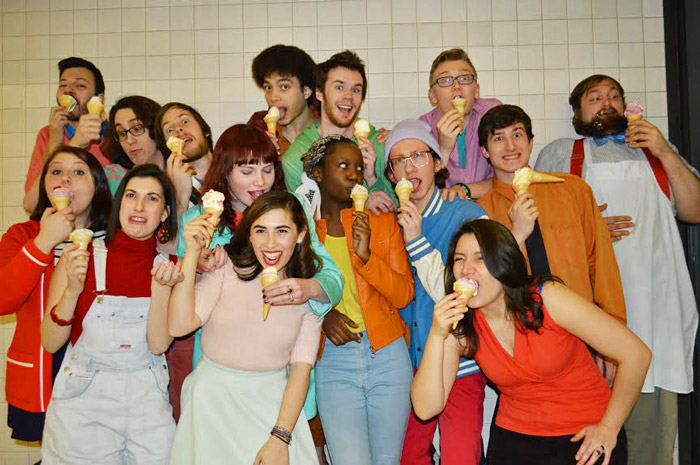
Despite this fact, 15 talented McGill students brought the third annual Bring Your Own Juice (BYOJ) production to life at the Players’ Theatre this past Thursday, Friday, and Saturday. The live sketch comedy, the sole group of its kind on campus, is entirely original and is written collectively by all the actors performing in the show.

The sketch follows a nonlinear plot jumping from theme to theme, while juxtaposing comedic elements that are completely unrelated. Apart from a single skit that is repeated, the audience is exposed to a range of sketches, musical numbers, and even amusing dances. It is this SNL-inspired cohesive chaos that keeps the packed theatre laughing and riveted for the entire two hours. 

“[There are] a lot of people from a lot of different comedic backgrounds: Improv, stand up, writing, or proper theatre,” said Andrej Gomizelj, stage manager. “Because everything is written by a different person, you have two things coming next to each other that have no reason to be next to each other in any way—they shouldn’t be, but it works.” 

Swearing, sexual content, and societal stereotypes are prevalent throughout the sketch; however, for the most part, the jokes remain light and politically correct. In particular, an entire sketch is devoted to a Canadian spin, in which the actors attack every Canadian stereotype imaginable from an apologetic love of hockey to Canadian pride in free health care, finally concluding with a humorous chorus of “O’Canada.” 

“It may not be your sense of humour, but you begin to appreciate it,” remarks director Dan Moczula. “It broadens your perspective on what is humor, what is funny, and what belongs on stage.”  

Despite the fact that the entire show is written, refined, produced, and performed in a month’s time, chemistry between the cast manifests itself through almost every joke. Even during rehearsal, tension between the cast is minimal and dissipates quickly. 

“Conflicts are momentary, taking a step back it’s always about the bigger picture,” commented Courtney Kassel, marketing director. “I don’t think we’ve ever had any creative conflicts, which is really interesting because we have such a diverse style. We’ve always just ended up with something without it being a source of tension.” 

This year, BYOJ underwent a drastic transition from an autocracy to democracy, which revolutionized its creative production process. Now any member of the McGill community, whether undergraduate, graduate, or professor—theoretically—can submit a script. Individuals from last year’s production review the entries and then blindly vote on which scripts should be selected. The group is also gaining momentum in numbers, expanding from eight members last year to the current 15, as well as in performance time, as this is the first year the production will run for three shows instead of one.  

This holistic, bottom-up approach unites a group all working towards the same goal: Putting on a great show that will draw attention to comedy at McGill. 

“We always call it our ‘sketch baby,’ because it’s something we hold near and dear to us and also stay up way too late taking care of, devoting ridiculous amounts of effort and time towards,” Kassel explained. 

As McGill does not officially recognize the BYOJ group as an organization, it faces several challenges. They are heavily reliant on other associations for funding and room reserving. The group is currently in the process of applying for SSMU club status, but this is a timely process, Moczula claimed. 

“We want to make comedy a reputable thing at McGill,” he said. “What we want to be is an independent place for intelligent, critically-minded people [who] are able to make fart jokes, and can book our own rooms.” 

a, Off the Board, Opinion

Off the board: Gentrification, urban-ecoism, and cultural perspectives

The houses in Kathmandu, Nepal, where my grandparents live are very tall and narrow—there’s not a lot of buildable space in the actual city. My grandparents’ house doesn’t have central heating. It’s wired up to the electrical grid, but the electricity isn’t always there. For several hours a day, electricity is cut-off to certain neighbourhoods on a rotating basis around the city. This is known as load-shedding, and it’s done because there is simply not enough electricity produced to power all the homes all the time.

The details of how my grandparents live have often surprised people when I tell them. People often comment, saying that life must be very hard in Nepal, or that my grandparents are very strong to be able to live the way they do. When hearing this, I always feel defensive. My grandparents don’t need sympathy, and their life isn’t hard. It’s just how things are done in Nepal. I know that living with six people in a six-room house would be considered crowded in Canada, and most families who do live like that here are often lower-income; but in Nepal, it’s the norm. Most middle-class and even upper-middle class families live this way.

It’s also funny for me to think that the way my grandparents live is very eco-friendly. They don’t own any cars, or a fridge. They buy their food fresh daily at a local market. They don’t use a lot of electricity, and they don’t even heat their homes (and it can get pretty cold in Kathmandu—the highs in January are a balmy seven degrees Celsius).

The way my grandparents live actually reminds me of the growing urban-ecoism movement here in Canada. People buy local and organic, take public transportation, and try to grow produce in shared urban gardens, or in window-sill boxes.

My grandparents’ lifestyle is often received with pity, when urban dwellers who aim to do the same in Canada are lauded.

My grandparents’ lifestyle is often received with pity, when urban dwellers who aim to do the same in Canada are lauded. Perhaps it’s because my grandparents have no choice—they’re just living the way that most middle-class people in Nepal do. In Canada, however, choosing to take a bus instead of driving is making a conscious choice to save the environment.

In fact, the efforts of the urban-eco movement have caused a lot of problems for other people living in cities in Canada and the United States. I’m talking about gentrification, and although gentrification is caused by a variety of things—not just urban-ecoism—many of hallmarks of gentrification go hand in hand with eco-friendly living. More organic food stores, more local businesses and less global retail-chains, more people riding bikes everywhere often lead to increased costs of living. Food becomes more expensive, and the poorer families—who are typically people of colour—get priced out of their historic neighbourhoods as rent prices increase as the area becomes more trendy.

I’m not absolving myself from all this. I’m a student in Montreal—I like the artistic, creative culture here, I like shopping at smaller, local boutiques, and I try to buy organic when I can. Still, it’s interesting the way certain lifestyles are framed, depending on what part of the world is living that way. My grandparents in Nepal are very eco-friendly, and I don’t think the way they live contributes to gentrification. Yet when other people hear how they live, I’m often met with veiled pity. Being eco-friendly in Canada, on the other hand, is celebrated, despite perhaps the ways in which it can contribute to gentrification, which does have a tangible negative effect on the other, poor, often people of colour, living in the same cities.

a, Arts & Entertainment, Film and TV

Inside the Echo Chamber

We are in the midst of a culture war where the personal and the political are becoming increasingly intertwined. A new discourse of social consciousness is emerging as the generation that was born in a world with ostensible equity across racial, sexual, and gender lines comes of age and realizes that things aren’t as equally represented as the people at the top claim they are be. This has manifested itself in a million different ways across the McGill campus, from womens-only gym hours to ‘Farnan-gate.’ Beyond McGill, issues of proper representation abound; we can see that these issues are endemic of the culture at large. 

This problem extends to popular media in that representation of women and minorities in media is nowhere near what it should be. To wit: Recent data shows that 90 per cent of major motion picture leads in a given year are white, and 75 per cent are male. Close to 90 per cent of television writers are white. Seven of the nine major television network heads and seven of the eight major film studio heads are white males. This is, of course, grossly out of line with how demographics are distributed in terms of population, so why has this been happening? Civil rights have made decidedly huge leaps in the last several decades, but it seems like television and film have been changing at a much slower rate than the rest of the world. The problem begins at the top.

“[Lack of diversity] is typical of North American power in general,” says Dr. Morton Weinfeld, professor in the McGill Sociology Department. “This would be true of Fortune 500 companies. This would be true of leaders of the major Ivy league universities, et cetera.”

A lot of this comes from the fact that demographic difference is split along socioeconomic lines. White males are more likely to earn more and be placed in positions of power than any other demographic. This creates a sort of echo chamber in which the perspectives of the majority are constantly reaffirmed while non-majority perspectives are not given an equitable footing to showcase their stories.

The race and class hegemony also has secondary effects in terms of the type of media that gets produced and how people react to it. 

“An image is not just an image,” remarked professor Margaret Campbell, at the Concordia Department of Sociology. “It’s really close to people—the way they perceive themselves, their sense of identity, their personhood, the way they perceive others.” Thus, when a young black male watches television and sees that a huge proportion of black actors are being typecast as criminals, part of that gets internalized and the boy’s world gets a little smaller.

The same principle applies to how the society is influenced by content, which is what leads to such intense and vitriolic backlash against any changes in the status quo. While the actual number of people protesting increased diversity is small, it accounts for some of the most fervent and regular dissent—be it against women’s gym hours or what Lena Dunham’s antics on Girls. This problem stems from two things. One is that the majority has been used to having a monopoly on what airs for so long that any alterations to it are perceived as a threat. The other is that people of the overrepresented majority misread the messages of content as labelling them as tacitly or overtly racist or misogynist. It puts people on the defensive—since nobody wants to be called prejudiced—and sparks backlash and aggression towards the media that they think is criticizing them.

There’s also an uneasy clashing of genuine improvement and institutionalized discrimination at the executive level of entertainment. While some studios seem to be legitimately trying to produce content that more accurately reflects the demographic makeup of North America, it can be unclear whether the increase is due to valid positive change or a desire to appease the public. For instance, take the case of Sasheer Zamata, who was hired as a Saturday Night Live (SNL) cast member amid a public controversy that the show was not diverse enough. Now she is rarely used at all. SNL has, it seems, filled its quota. This sort of lip service clearly doesn’t benefit anybody—it only makes it more difficult for consumers to discern who is truly committed to diversity. 

However, it’s important to note that things may be getting better.

“[I remember] exactly when the number of leading visible minority characters on television was zero—an easy number to remember,” recalls Dr. Weinfeld. “The number of such characters as leading roles in film was zero. The number of [minority] newscasters was zero.” 

It’s easy to forget this fact when there’s so much that needs correcting, but things are changing quickly and noticeably. In television, we seem to be exiting an era where prestige dramas are defined by white men doing terrible things, and entering one where there’s a lot more balance in representation. Content creators like Tina Fey, Shonda Rhimes, Mindy Kaling, and Justin Simien (to name just a few) are engaging with their ideologies and struggles while dispelling the myth that feminist and racial perspectives come in one monolithic form. For example, shows like Black-ish and Fresh off the Boat succeed not because of their representation of minority culture, but in their portrayal of a very specific and singular family dynamic.

Real change is coming from the bottom-up, as well. Empirical data reveals that shows with an accurate amount of minority representation are watched more than shows that have less than the average, and television is slowly changing to meet those demands. Campbell extolls the virtues of social media as a place where everybody is on an even playing field. Mediums like Twitter offer an opportunity for broad social movements to organize with relative ease and influence the people at the top. While there’s the irony that most of the worst, least progressive speech also comes from these platforms, social media is ultimately doing more good than harm. Hate increasingly falls on deaf ears, getting lost in the white noise of the sheer volume of social commentary. What gets left over and recycled and reblogged and retweeted is a critical analysis of the present and a hope that we may live in a world that is as equal as we dream it to be. 

a, Arts & Entertainment, Film and TV

Pop Rhetoric: A fresh perspective? It’s a boat time

The airing of the show Fresh Off The Boat (FOTB) on ABC was met with much fanfare and hype. The show—based off the life of chef Eddie Huang, as numerous blog sites were quick to note—was the first TV show in American mainstream media starring Asian Americans since All-American Girl (1994) starring Margaret Cho. Though Cho’s show was cut from the network after one season, FOTB currently has strong ratings and is being applauded for its ability to make racial jokes without being racist.

I had always been slightly dismissive of the numerous studies connecting media representation and self-validation. Growing up as an Asian Canadian, I had known no shows starring people who “looked like me,” but I didn’t feel deprived. I prided myself on being race-blind, focusing on the universal themes of shows instead of jibes about the race of my protagonist. But I surprised myself with the fervour with which I approached this show. When I read about its inception on media sites, I scrambled to watch the first episode, and then the next. I had not realized my craving for a protagonist who looks like me until I had access to one. I didn’t realize how good it felt to see Jessica Huang, portrayed by Constance Wu, eat sliced apple straight off the blade of a knife while home tutoring her children. All the “Asian mom” moments I had joked about with my friends—the shared moments of, “Your mom does that too?”—were finally on the screen for thousands of people to see. I had not realized how much I needed that validation, of what constituted ‘normal’ behaviour for ‘normal’ families. 

There has been plenty of discourse regarding how FOTB should not be the messiah of representation of Asian North Americans. Both the creators of the show and the actors have come towards the media denying their intention to be representative of all Asian American family experiences. Instead, they urge critics to promote a more diverse range of Asian talent and diffuse the need for FOTB to be a beacon of representation. 

In many respects, I should not be able to relate to this show at all. I could add my two cents to the babble of complaints of the show’s fake Taiwanese accents or the forced frugality jokes. A “stereotypical Asian” child like myself would have still been hard pressed to understand the hardships of young Eddie, who deals with being an Asian minority in suburban Orlando—I grew up in a racially diverse neighbourhood of Toronto. But universal themes of childhood isolation, and even the first brush with racism (Eddie is called a “chink” by a classmate in the third episode of the show—I was the target of bullying as “that Chinese kid” in third grade), not to mention the show’s absurd twists of humour, make FOTB generally excellent in its own right.

Although I support the arguments against putting pressure on FOTB to be the “model show” for the “model ethnicity,” I can also empathize with the clamour of voices urging the show to depict their families in such-and-such scenarios. The voices are urgent and impatient, vibrant with the sense of possibility that this one show has conferred, as if trying to make up for 20 years of lost time. However, what they are asking of FOTB would be called, in my mother’s words, “trying to reach the sky in one step.” It’s important to take a breath and channel those newly realized energies into other channels—supporting new media initiatives with minority majority casts, becoming patrons of upcoming talent, and continuing the dialogue around racial issues. Here’s to hoping that in the near future, shows and movies starring minorities will become so common that casting choices won’t be the primary label they are known for.

a, Science & Technology

A guide to the galaxy

On March 19, McGill students and the general Montreal public were taken on a tour of the solar system—while never leaving 103 Rutherford. Dr. Richard Léveillé, a planetary scientist who has worked on NASA’s Mars Science Laboratory mission, presented to a packed room on what scientists have learned about our planet’s neighbours. 

Léveillé started the night by addressing the number one question plaguing space scientists: Why explore space?

“Space is a very dangerous venture,” Léveillé stated. “Sometimes there are risks involved; sometimes there is loss of life.” 

But ultimately, as Léveillé explained, it is innate human curiosity that drives space exploration forward. By answering questions about space, people can answer questions about mankind’s very own origins. 

 “What are the origins and evolution of the solar system?” asked Léveillé. “Why are there all of these different bodies in the solar system? Why are they different in some ways, and why are they similar in others, and how did they get that way?”

It turns out that the search for life, though exciting, is not the driving motivator for space exploration.

“The only mission to go to another planet and search for life […] was the Viking mission in the 1970s,” said Léveillé. “The missions now are not designed to go looking for life. They’re exploring and doing all kinds of wonderful things.” 

Today’s missions typically have the much more achievable goal of improving our understanding of the solar system. After its success with the moon landings, NASA has since branched out to send probes to the farthest reaches of our planetary neighbourhood, and even in the case of Voyager I, beyond the edges of the solar system.

Léveillé’s journey through the solar system started off with the closest planet to the sun—Mercury—and continued outwards to explore Venus, Mars, and Jupiter. 

Each planet is incredibly unique and as technology evolves, scientists are learning new things about their surfaces. In the depths of Mercury’s craters, scientists believe there may be ice. Spaceships have allowed scientists to observe lightning in Venus’ atmosphere, and recent evidence indicates that the planet may have been more volcanically active than previously thought. 

Mars is the target for a startling number of missions, including a number of orbiters and rovers such as Opportunity—whose 11-year mission was originally intended to last only a few months—and Curiosity, a project that Léveillé helped work on. Although there haven’t been any signs of life on Mars, its similarity and proximity to Earth, along with the presence of ice on its surface, make it an attractive target for missions. 

Some of the more ethereal and interesting parts of the solar system lay in the moons of planets. One of Saturn’s moons, Titan, is host to both an unusually thick atmosphere and, as observed by the Cassini spacecraft, hydrocarbon seas.

“It’s so cold on Titan that you can actually condense hydrocarbons—things like methane, ethane, propane,” explained Léveillé. “On Earth we have the hydrologic [water] cycle. We think we get something similar on Titan, only with methane.”

As evidenced by Léveillé’s talk, the Earth, albeit unique, is but one wonderful planet in a wonderful solar system.


a, Arts & Entertainment

Album Review: Marina & the Diamonds – Froot

Welsh singer Marina Diamandis (stage-name Marina & the Diamonds) has previously been somewhat unsuccessful in cultivating her own identity within the much-crowded pop music scene. Her debut, The Family Jewels (2010), was a rather garish, cock-a-hoop record, and 2012’s Electra Heart suffered from over-collaboration due to Marina’s route-one scramble for a ‘pop’ sound. Thankfully, on her third album, Froot, she’s finally gotten it right.

 Leaving the shrill vocals and half-fleshed-out characters behind, Marina has progressed by taking a step back in every sense of the albums’ creation, re-focusing on the things she does best. The lyricism is introverted and tackles more nuanced themes of loneliness, feminism, and self-worth. The production is immaculate, taking on a noticeably ’70s/’80s sound which does a superb job of showcasing Marina’s much-improved and streamlined vocals.

 “Blue,” an irresistible 1980s track, describes a vulnerable dependency: “Give me love, give me dreams, give me a good self-esteem,” while the upbeat music tries to veil the sadness hidden within the lyrics. On “Forget,” she sadly admits that, “I have lived my life in debt, I’ve spent my days in deep regret.” During the standout track, “Solitaire,” she compares her career to more successful artists: “All the other jewels around me astounded me at first [….] but I’m not cursed/ I was just covered in dirt.” 

Froot showcases Marina’s acceptance of her rather off-kilter place within not just the music industry, but society as well. It’s an incredibly introspective and self-aware record: One that has enabled her to face the fears she’s seemingly avoided on her previous work, and with that, wash off the dirt and progress onward triumphantly. She confidently states on the eponymous track, “Finally I have found a way to be,” and that, “Life couldn’t get much sweeter,” and with the release of Froot, it’s clear that she means it. 

a, From the BrainSTEM, Science & Technology

From the BrainSTEM: The mammoth cometh

In February 2012, Harvard college professor and genetic engineer George Church hosted a symposium at the Harvard Medical School titled: “Bringing Back the Passenger Pigeon.” The talk centred on the use of new genome-editing technology that could change the concept of reversing extinction from being a dream to a reality. The technique, known as CRISPR—described as “jaw dropping” by Nobel scientist Craig Mello to the Independent—allows scientists to make precise changes to DNA with ease. Church, who was one of the first scientists able to successfully employ the process in both human and mouse cells, has successfully used this technique today to create functioning elephant cells coding for mammoth DNA. 

This achievement marks the beginning of easy, accessible, and precise genetic modification—a possibility feared by many. While the fear of the unknown is normal—if not expected—acting on these fears will come at a cost. 

When considering genomic editing, it’s easy to slip into the trap of cinematic exaggeration. We imagine the results given in Splice, the 2009 science-fiction horror film featuring a terrifyingly beautiful humanoid creature that is the product of the work of two genetic engineers that went amuck. Or in Gattaca, where doctors quantify inferior and superior people based purely on their genetic code. In both, we are meant to perceive the notion of genetic modification to improve the human genome—a concept known as eugenics—to be bad. This concept, almost two decades later, somehow still lingers. 

In light of Church’s recent success in combining the extinct mammoth’s DNA with that of the very alive elephant, it is easy, if not natural, to immediately consider the ramifications of genetic modification on humans and as such, put a stop to it.

  On March 19, 18 scientists, including David Baltimore and Jennifer Doudna, CRISPR/Cas9 co-discovers, published an editorial in Science outlining their fears for the future of gene modification. The editorial, titled “A prudent path forward for genomic engineering and germline gene modification,” urged for the transparency and caution of scientists.

“The possibility of human germline engineering has long been a source of excitement and unease among the general public, especially in light of concerns about initiating a ‘slippery slope’ from disease-curing applications toward uses with less compelling or even troubling implications,” the authors explained. 

How are we meant to move forward then? 

The implications of genomic modifications for humans is riddled with countless debates in law and bioethics, slowing the progress of scientists—akin to the controversy facing the use of embryonic stem cells. When considering the potential to alleviate human suffering through the understanding of genetic diseases via controlled and intelligent genetic modifications in animal subjects, there is no consideration: Genetic modification must continue, unequivocally. 

However, when considering changes to the human genome, the lines become increasingly blurry. An editorial published in Nature echoed the sentiments of those presented in Science by suggesting a ban on all edits to the human germ line. But these types of sentiments place those in the scientific community on the edge of a very steep cliff in which we are allowed to look over, but never jump. 

It’s easy to imagine that the use of genetic modification tools will lead into an age of super-humans where we modify our embryos to create children that are smarter, faster, and stronger. Instead, we must imagine that these tools will enable the understanding, and eventual curing, of horrible diseases and aliments afflicting people everywhere. But, like with all new technologies targeted for human use, we must tread carefully. Checks and balances must be implemented to limit—but never halt—the forward progress of tools like CRISPR.

Today, if we possess the skills, the knowledge, and the tools to bring back an animal that was last seen on earth 4,500 years ago, then how can we so nascently predict what will come tomorrow? By stopping, we are failing to meet the very basis of scientific inquiry. 


Read the latest issue

Read the latest issue