

Latest News

News, PGSS

PGSS councillors debate McGill’s proposed labour cuts and referendum question selection

The Post-Graduate Students’ Society (PGSS) of McGill University held its second council meeting of 2025 on Feb. 12. After approving the agenda, PGSS councillors moved on to discuss budget cuts, hiring freezes, and questions for the upcoming referendum

The first discussion item was the potential impact of staff cuts in the Faculty of Arts on Teaching Assistant (TA) positions. This follows Provost and Executive Vice-President (Academic) Christopher Manfredi’s announcement that the university will cut 250-500 positions in response to a $15 million CAD budget deficit for the upcoming fiscal year. 

Zoe Neubauer, a third-year PhD candidate in History, explained that an internal survey in the Graduate Department of History and Classical Studies found that proposed cuts to the teaching support budget would adversely impact graduate students’ education, scholarly research, and quality of life. They requested that the PGSS circulate the survey results to all Post-Graduate Student Associations (PGSAs) in the Faculty of Arts and formally condemn the university’s proposed labour cuts.

All new business items involved adding questions to the upcoming PGSS referendum taking place April 7-14. One of the motions sought to add a referendum question on PGSS lobbying the government to make labour rights applicable to graduate research. In other words, it sought to add a question to the referendum to get the PGSS to ask the Government of Quebec to classify graduate research as a job, not just part of academic coursework. 

This motion sparked a 27-minute debate among attendees. Opponents raised concerns that such a change could affect the tax status of grants and awards and put students’ education at risk if they failed to meet job requirements. 

“Making the argument to consider grad students—Master’s and PhD students—completely as employees will completely […] disregard the fact that [they] are still students,” PGSS External Affairs Officer Naga Thovinakere said.

Supporters argued that the broader PGSS membership should decide these debates through a referendum vote and with campaigning from ‘Vote Yes’ or ‘Vote No’ committees rather than just the 60 voting members present. 

“The debates that we’re having right now and the nitty-gritty can be further dealt with [in the future],” Sheheryar Ahmed, External Affairs and PGSS representative from Graduate Islamic Studies, said. “Right now, we should focus on whether or not this should be a question that the general student body should have an opinion on.”

With 14 votes in favour and 18 against, the motion did not pass.

The council voted in favour of adding a question to the referendum on approving a new provider for online primary and mental health care for members. This referendum question stands to switch PGSS’s telemedical services from current provider Dialogue, for which members pay $45 CAD per year, to Digital Doctor, a service hosted by Maple, for $25 CAD per year, maintaining the current opt-out option. 

In addition to Digital Doctor primary care, councillors also passed a motion to add a question to the referendum regarding mental health care under the service. This would be an additional $30 CAD per year fee that members could add to their Digital Doctor primary care subscription, allowing access to online mental health care; this motion also passed with an overwhelming majority. 

Moment of the Meeting:

In its final motion of the night, the council voted to include a referendum question proposing a significant reduction to the PGSS Special Projects fee. If approved, the fee would drop from $4.60 CAD to $1.50 CAD, citing severe underuse. According to the motion, the fund has primarily served as a contingency for potential legal fees and website maintenance rather than supporting new projects in recent years.

Sound bite: 

“It’s useful [and] important to have access to some kind of virtual healthcare platform. [It is] just too bad that this requires us giving money to privatized healthcare, and it’s unfortunate that the state of our public healthcare system means that [private virtual healthcare] is something we want to do, which I and my members are opposed to [….] But I’m not opposed because we’re not going to fix the public healthcare system at PGSS [council].” — School of Urban Planning PGSA representative Brenagh Rapoport, discussing the switch to Digital Doctor. 

A previous version of this article did not list Zoe Neubauer’s name. The Tribune regrets this error.

Art, Arts & Entertainment

When there are no words

When I was little and my parents were checking out at the grocery aisle, I would wander over to the greeting cards and wait. It was only upon discovering the floral-fronted sympathy cards that I began to realize death was all around us. With a history as banal as its subject matter, death is the unknowable reality of our everyday lives. It is one of the few universal experiences we all share and yet our relationship to it is anything but simple. In navigating loss, we often ask: What is there to be said when words fail? 

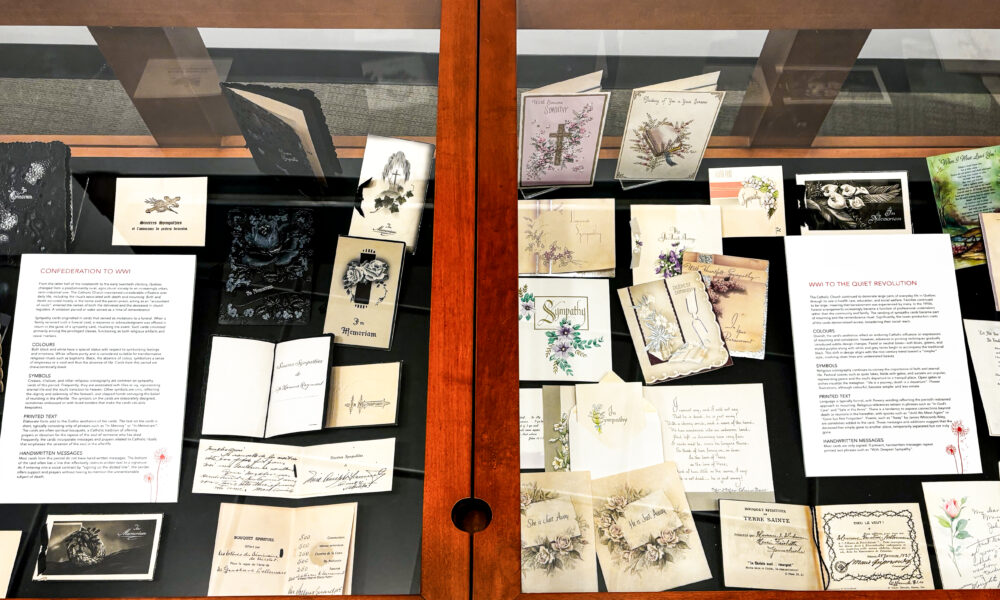
Hosted in the Osler Library of the History of Medicine until Apr. 1 and curated by the Maude Abbott Medical Museum of the Pathology Society, When There Are No Words explores the shifting sociocultural attitude towards grief through a collection of uniquely Québécois sympathy cards. The exhibit examines evolving perspectives across four primary chronological periods—Confederation to World War 1, World War I to the Quiet Revolution, the Quiet Revolution to the end of the millennium and contemporary times—tracing Quebec’s transition from a predominantly French Catholic society to an increasingly secular, multicultural one through our popular understanding of loss. 

Originating out of necessity, in a time when letters were the primary means of remote communication, sympathy cards were initially responses to funeral invitations and simple tokens to not yet provide support but rather acknowledge grief in a time where there are no words. Often featuring black motifs and restrained text, the cards offered support without having to mention the effectively unmentionable topics of death directly, exercising sensitive restraint and respect through euphemism. Through depictions of angels and written phrases such as “pray for us and the souls of purgatory,” the cards from this era reflect the Catholic overtones that dominated society, filtering into every aspect of life—even death.

From World War I through the Quiet Revolution, an “enlightened” perspective on death emerged. Sympathy cards from this period embraced minimalist pastel palettes and imagery intertwining religion and nature—gardens, gates—reframing death as a journey rather than a final departure. Handwritten cards added a personal touch but mostly echoed printed text, reinforcing tradition over individuality. 

The Quiet Revolution marked one of Quebec’s most profound cultural shifts, particularly in its ever-growing detachment from Catholicism. As Quebec secularized, skepticism of the Church grew. With rising resentment, home wakes declined, and sympathy cards shifted from funeral invitations to secular expressions of empathy. By the end of the millennium, sympathy cards had begun to trade out religious aspects for themes of nature and individualist spirituality. 

With an understanding shaped by recent scientific advancements, death is increasingly interpreted through the contemporary lens as a medical phenomenon. Sympathy cards can come from healthcare and ICU workers, reaching out to patients and their families. With personalized handwritten messages and cursive fonts mimicking the intimacy of handwriting, these cards reflect the highly individualized nature of loss. The collection’s inclusion of many more English cards than in earlier periods also reflects the changing demographics of Quebec.

In this time, we begin to reevaluate our understanding of loss, particularly the nonlinear, decentralized grief which affects not just family members but everyone who was close to the deceased. When a husband dies he leaves his wife a widow, but what is there to be said about the silently bereaved—such as the mourning of miscarriages, stillbirths, pets, ex-partners, or the passing of friends and coworkers? When society fails to acknowledge grief, is it made any less real?  

“There is a poem by Kenneth Patchen,” said Rick Fraser, Director of the Maude Abbott Medical Museum in an interview with The Tribune. “‘There are so many little dyings that it doesn’t matter which of them is death.’ I think he was expressing that we lose things all the time. There are little deaths and there are big deaths and we must pay attention to each of them because they are all a part of our lives.”

An exhibit that captures the quiet weight of grief, When There Are No Words gives voice to what words often fail to express. Quebec’s sympathy cards are not relics of the past—they are privileged living artifacts that evolve alongside us. They portray Québécois sympathy in its most intimate form. As the exhibit reminds us all—sometimes it really is the thought that counts. 

When There Are No Words is on view at the Osler Library until Mar. 30.

Science & Technology

Black History Month panel investigates representation in genetics research

On Feb. 12, McGill’s DNA to RNA (D2R) initiative hosted a webinar in honour of Black History Month. Led by Mariloue Daudier, Senior Advisor, Equity, Diversity and Inclusion for D2R, the session explored the opportunities and challenges faced by Black individuals in genetics research. The webinar featured three guest speakers who shared their insights on the importance of Black representation in RNA research and therapeutics.

Daudier began with an introduction to D2R—a McGill-led research initiative with the goal of developing an inclusive Canadian approach to genomic-based RNA therapeutics. She described a brief history of Black people in Canada, explaining that Black people continue to face equity and inclusion issues today, with particular barriers to representation in research.

However, she noted McGill’s commitment to addressing these issues and highlighted the university’s anti-Black racism action plan.

“Why this is so important to me is because by always putting Black people in the broad category of racialized individuals, we lose track of the actual representation and issues faced by the Black communities [specifically],” Daudier said. “I think [McGill’s action plan is] really a game changer to make life better for Black communities.”

The first speaker, Paul Wankah, an Assistant Professor in McGill’s Faculty of Dental Medicine and Oral Health Sciences, discussed the importance of Black representation in research, as well as issues of mistrust between Black communities and the medical field.

Wankah presented findings from various studies, examining the different ethnic groups represented within these findings. Notably, he presented a study that looked at racial and ethnic representation across several clinical trials of the COVID-19 vaccine, a prevalent RNA therapeutic. This study revealed that Black participants made up only five to seven per cent of the trial population, as compared to white participants, who made up 83 to 89 per cent.

“Here we have evidence that there is under-representation of Black people in genomic research and therapeutics,” Wankah said. “[The authors] argue that the dominance of European and American genomic research is related to advances in genomic technologies within these countries, and them having better funding opportunities, might be why [Caucasians] are much more represented in genomic research.”

Wankah then explained the origin of mistrust between Black communities and the field of medicine, referencing historical abuses in healthcare research that have led to hesitancy among Black people to participate in such studies. 

“We need more studies to understand and develop strategies to close this diversity gap,” Wankah concluded.

The second speaker, Momar Ndao, an Associate Professor in McGill’s Department of Medicine, addressed the issue of medical mistrust in Black communities abroad, focusing on his lived experience in Senegal. 

Ndao discussed gender roles as an important factor in vaccine decision-making, particularly in developing countries. He asserted that in these communities, the father makes the primary decision for their kids’ vaccination status. With limited access to information, they may be hesitant to trust the effectiveness of vaccines.

“We absolutely need to work together to make sure vaccines and technologies can be transferred [to developing countries],” Ndao said, emphasizing the importance of targeting rural areas in developing nations rather than just capital cities.

The final speaker, Loydie Jerome-Majewska, a Professor in the Department of Pediatrics, discussed the importance of Black inclusion in pediatrics. She began by discussing the prejudice faced by Black physicians, particularly when patients select a physician for their care.

She referenced a study that found Black babies had higher survival rates when cared for by Black physicians.

“We need researchers and participants that are Black in order to really understand the diseases that impact children and contribute to their low birth weight,” Jerome-Majewska said.

This powerful finding highlights the need for greater involvement of Black physicians in pediatric care and research. Jerome-Majewska concluded by reiterating the realities behind Black individuals’ mistrust of medical research, both as participants and as researchers themselves.

Arts & Entertainment, Music

Preserving music on principle: How Habibi Funk sets the gold standard

As a radio host on CKUT 90.3 FM, a non-profit, campus and community radio station based at McGill, I constantly scour the internet for obscure tracks to fill the airwaves. In November, I had the pleasure of co-hosting CKUT’s World Skip the Beat alongside my friends Monique and Isla, where we curated and exchanged our favourite world music tracks—Monique bringing in the vibrant Sudanese Jazz of Sharhabil Ahmed and I the melancholic Lebanese folk of Roger Fakhr. The common denominator? Habibi Funk, a Berlin-based label dedicated to remastering and redistributing 1970s and 80s music from the Middle East and North Africa. Blending influences of Afro-American funk, Congolese Soukos, and Iranian folk, Habibi Funk releases feel like flipping through your parent’s old vinyl collection—nostalgic, timeless, and effortlessly danceable. 

Reissue labels like Habibi Funk are not a new phenomenon but have gained significant attention in the music industry over the past decade. Unlike traditional labels, which focus on new releases, reissue labels specialize in acquiring, licensing and distributing pre-existing recordings. While labels such as Numero Group and Light in the Attic Records reissue local American artists, others such as Analog Africa and Time Capsule venture beyond domestic borders, bringing retro international sounds to contemporary audiences. When guided by fair compensation, transparency, and ethical licensing agreements, reissue labels—such as Habibi Funk—can be powerful promoters for the distribution and diversification of ‘lost’ sounds. However, if reissue labels are to profit from past artistry, they must also commit to thorough contextualization. Habibi Funk sets the standard for ethical reissuing, forging a path for an expanding market in the music industry. 

Reissue labels serve as both cultural archivists and commercial enterprises, capturing and capitalizing on past moments in music history. Habibi Funk 002, for instance, captures the explosive Moroccan punk of Al Zman Saib, and Habibi Funk 024 the Libyan Reggae of Ibrahim Hesnawai. However, the rise of reissues raises a series of ethical concerns. The work of reissue labels comes with a duty to preserve the music’s integrity and provide proper historical context, offering insights into musical influences, social impact and artist’s legacies. These concerns are particularly poignant when representing artists from developing countries, where the line between preservation and exploitation can be thin. 

In a recent interview, Jannis Sturtz, DJ and founder of Habibi Funk, openly acknowledges colonial dynamics and his positionality as a German label executive profiting from Middle Eastern and North African music. Acutely aware not to reproduce patterns of colonial economic and cultural exchange, Sturtz works directly with artists and their families and ensures complete transparency throughout the reissue process. Habibi Funk also splits profits 50/50 with artists—a remarkably high rate for the industry—and holds only temporary licenses, allowing artists to retain master ownership. In its promotional materials, the label rejects terms like “discovery” as it perpetuates a mindset of cultural superiority and implies that the music was completely unknown prior to their encounter.

Kay Suzuki of Time Capsule expresses concern with labels featuring incredible music while keeping artists shrouded in mystery and devoid of historical detail. With this in mind, Habibi Funk includes a booklet of rare photos, liner notes, and interview transcripts with every LP, offering insight into the artist’s life and the historical climate of the music’s production. Though booklets come only with vinyl purchases, extensive research is available on the label’s free Bandcamp. 

As the reissue market expands, ethical concerns persist. Reissue labels must find a way to balance between commercial success and responsible reissuing, specifically in a non-Western context. Habibi Funk may well be setting a new standard for reissue labels—but its existence raises some important considerations. With the dissemination of music through streaming services and DJs across the globe, how can reissue labels guarantee proper contextualization and compensation for artists? And if informational booklets are limited to vinyl purchases, just how accessible and effective are they? The reissue industry cannot afford to treat preservation as a mere aesthetic—it must be a principle. While Habibi Funk is leading the charge, it’s up to the entire industry to follow suit.

Editorial, Opinion

Lip service won’t save lives amid the Indigenous domestic violence crisis

This Valentine’s Day, the Centre for Gender Advocacy and The Native Women’’s Shelter of Montreal’’s Iskewu Project co-hosted their annual memorial march and vigil in honour of Montreal’s Day of Action for Missing and Murdered Indigenous Women, Girls, and Two-Spirit People (MMIWG2S+). 

With the Canadian government offering little more than mere lip service to the MMIWG2S+ crisis, marching Montrealers demanded tangible action, remembrance, and broader awareness. The ongoing national inquiry into MMIWG2S+ has resulted in countless studies highlighting that colonial and patriarchal policies were sources of intergenerational trauma, which in turn cause Indigenous women to be overrepresented among those missing and murdered. However, the government, universities, and other institutions have taken minimal action to address its roots, and in some cases—such as McGill’s ongoing legal battles with the Kanien’keha:ka Kahnistensera (Mohawk Mothers) over McGill’s New Vic Project—actively aggressed Indigenous communities.

The federal government’s initiatives to tackle the MMIWG2S+ crisis include a crisis line for those affected or in need of assistance, closely mirroring Quebec’s recent $900,000 CAD investment into a phone support line for Indigenous domestic violence survivors, an issue distinct from MMIWG2S+ yet deeply rooted in similar systemic challenges. 

The funding will be directed by the Espace Femmes Premières Nations Québec (EFPNQ) and Femmes Autochtones du Québec to offer over-the-phone hotline services in French, English, and several Indigenous languages, through which survivors can seek help in instances of intimate partner violence. Given that Indigenous women are about 3.5 times more likely to experience intimate partner violence than non-Indigenous women, this investment represents a crucial step.

However, 363 First Nation communities across Canada still lack standard cellular services, limiting the efficacy of this program and underscoring the need to address the deep roots of the Indigenous intimate partner violence crisis. Canada’s history of settler colonialism, the persistence of colonial dynamics in legal frameworks, and the residential school system, which only ended in 1996, form webs of intergenerational trauma and sow general distrust in Canadian systems among Indigenous peoples. With these previous and ongoing violences in mind, skepticism of a phone line and associated resources funded and distributed by the government is natural. 

Given the chronic underfunding of resources for survivors of intimate partner violence, such as Quebec’s appalling shortage of shelter space that led to 3,300 women getting turned away last year, a phone line initiative may well be part of the solution. However, immediate crisis response, although crucial, must be accompanied by preventative systemic change that tackles domestic violence before it occurs, effectively breaking intergenerational cycles. Additionally, it is imperative that solutions, including this hotline, are culturally- and community-informed, possessing sensitivity to the diversity of individuals under the Indigenous umbrella and offering resources both on- and off-reserve. 

Given the Canadian Government’s 46.6 per cent rate of inaction on its proposed initiatives to tackle the MMIWG2S+ crisis in 2023, the government must transform its current approaches to supporting Indigenous survivors of domestic violence. High grocery prices in Indigenous communities (potentially worsened by U.S. tariffs), inadequate healthcare systems, and flaws in foster care systems merely scratch the surface of environmental conditions that stand in the way of what would otherwise be a terminable cycle of violence. 

McGill, as both an educational and research institution, has the responsibility to foster a generation of academics and future leaders who will fight for meaningful policy changes to end the crises and violence Indigenous communities face. The university can use its own endowment to fund research on Indigenous domestic abuse and create scholarship on anti-Indigenous systemic racism—for example, by expanding the current Indigenous Studies Program to include a major. Additionally, McGill must serve as a model through its own reporting systems, which have been chronically undervalued and underfunded despite their cruciality. In the face of budget cuts, McGill must demonstrate continued commitment to supporting survivors of intimate partner violence, and to educate on Indigenous history and culture. Creating spaces on campus for discourse will mobilize the next generation to become involved in programming like the MMIWG2S+ march and vigil last week, fostering an engaged student body that will participate in community movements and initiatives to support Indigenous peoples.

Art, Arts & Entertainment

Wieland exhibit at the MMFA wears its heart on its sleeve

Joyce Wieland stares with dots of navy for eyes, a dash of white for a nose, and no mouth. She is pale and faceless, yet her portrait seems to pose defiantly. She is challenging us. 

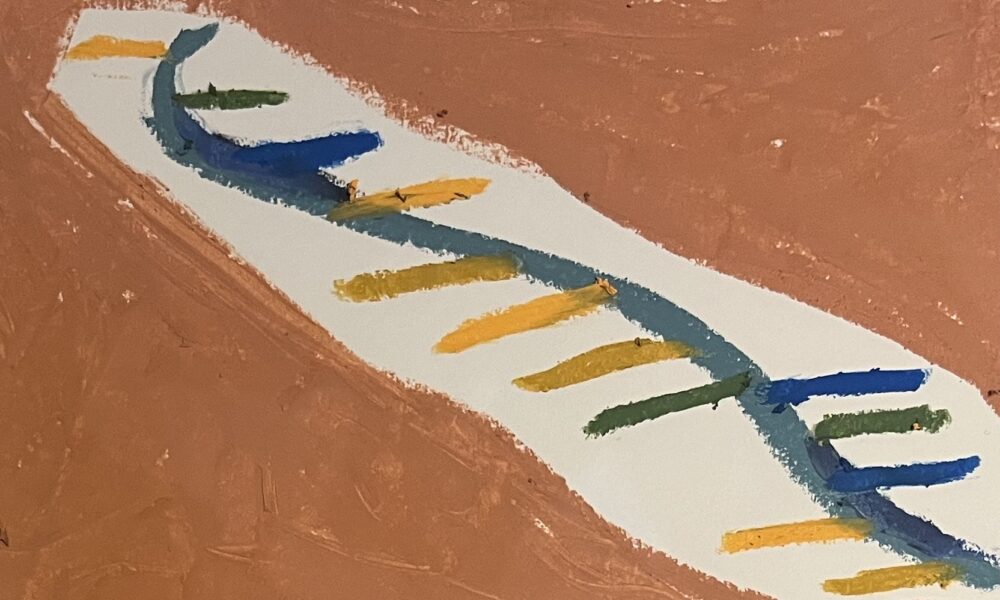
Heart Onwhich opened at the Montreal Museum of Fine Arts (MMFA) on Feb. 8—commemorates Joyce Wieland, a Canadian filmmaker and artist. Her work is deeply political and feminist, spanning a wide array of mediums. Oil paintings, cardboard collages, plastics, photography, films, and quilts line the large stone halls of the MMFA’s Michal and Renata Hornstein Pavilion

“Visitors will discover the beauty of her sensational paintings, the layered wit of her textile pieces, and the eloquence of her experimental films,” writes Anne Grace, Curator of Modern Art at the MMFA, in the exhibition press release.

Every piece in the exhibit draws a narrative as Wieland blends elements of animation, comics, and storyboarding. The foundations of her distinctive visual storytelling begin in the first room, with collage. The first few rooms showcase her early works of the late 50s and early 60s, including the faceless self-portrait, Myself (1958). Within this first room, the cardboard collages are experimental and full of wonder. It feels as if she was simply using the materials she had on hand, imbuing the work with a nostalgic and homemade quality. Her paintings in the first room are defined by bold-coloured backgrounds, wide strokes, and a spread of smaller illustrations and symbols. 

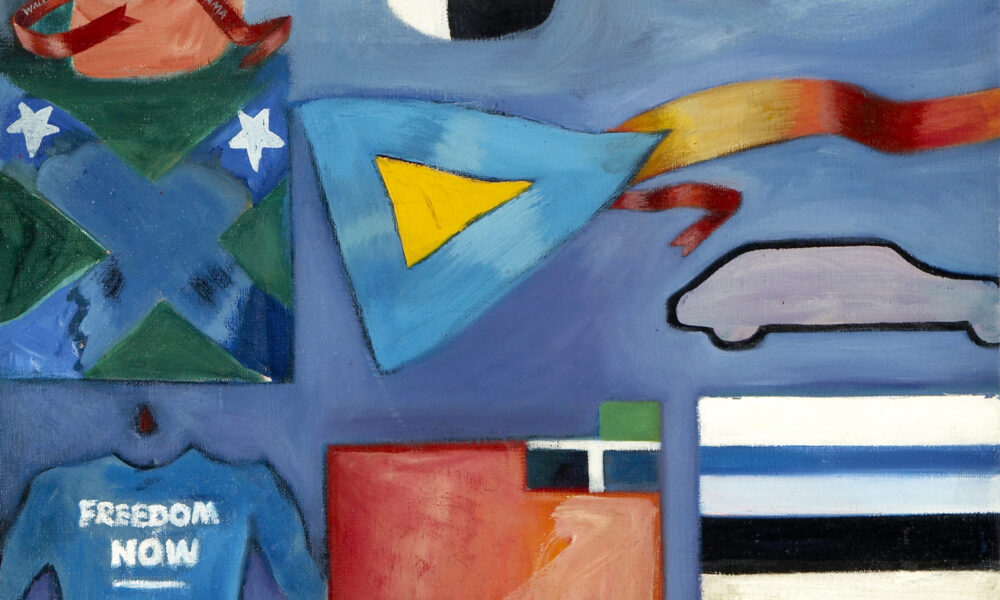
Even in her paintings, she incorporates collage: Each illustration could work as a standalone symbol, yet she combines it with others within the same painting. In March on Washington (1963), linked rings, a black-and-white heart, a Confederate flag, and a shirt emblazoned with “FREEDOM NOW,” among other symbols, recount both the tension and unity during the civil rights movement in the United States. Viewers can move their eyes through each symbol on the canvas and see a narrative unfold about the fight for racial solidarity.  

She pushes further into storyboarding with the painting Untitled (Sinking Liner)  (1963), which breaks the canvas into four sections like a comic and shows each frame of a sinking ship. She calls these “filmic paintings” as they mirror the films projected alongside the tangible displays. The films seem to tie together each element of storytelling as if each painting and collage culminated into the visuals of her films. The museum also incorporates her photography, many of them displayed on monochromatic film rolls, as if the visitor is given a peek behind the scenes, into her camera itself.

“With her seductive wit and piercing intelligence, Joyce Wieland asked us all to do better, to care more,” writes Georgiana Uhlyarik, Fredrik S. Eaton Curator of Canadian Art at the Art Gallery of Ontario, in the exhibition press release.

Wieland cements her political focus with the collection of her quilts, embroidery, and plastic artwork. She explores Canadian identity with O Canada (1970), a series of embroidered women’s lips mouthing the newly official national anthem. The embroidery brilliantly acts as an animation of singing the anthem as each embroidered lip acts as a frame that visitors can see the song being sung when their eyes move across the fabric. Many of her pieces are also made of plastic, which often feature a collage of brightly coloured plastic ‘pillows’ that recreate movie frames, flags, and a mirror. 

As visitors walk through the exhibition, the range of experimental mediums may seem scattered, lacking a centralized identity. Yet, Wieland’s multiple mediums, coupled with the curators’ choice to feature them all, challenge the idea that artists must stick to one form to craft their artistic identity. The camera roll alongside the finished films defy what it means to present a complete project as the plot of artistic development is what is celebrated. Her radical switches from painting to film to plastic mirror the revolutionary political changes of the 60s and 70s. Wieland may have started faceless, but her features are fleshed out with each storyboard, activist painting, film, and photo.

Heart On was curated by Anne Grace and Georgiana Uhlyarick. Tickets are available online until  May 4.

Science & Technology

Breaking down silos: SUSAN’s global initiative to advance sustainability

From governance and policy to social sustainability and economics, solving global environmental issues demands collaboration across all fields. 

Juan C. Serpa, Associate Professor of Operations Management at McGill, has constructed a groundbreaking initiative designed to bridge the gap between different academic disciplines, fostering collaboration in the fight for sustainability. His project, the Sustainability Academic Network (SUSAN), has become a central hub for researchers, students, and organizations, connecting over 3,000 institutions and classifying sustainability efforts into 60 distinct themes with the help of generative AI.

“We’ve been working on this for two years and released it six weeks ago, and it suddenly became viral,” Serpa shared in an interview with The Tribune. “We’ve had 8,000 users sign up already.” 

The rapid success of SUSAN reflects the growing demand for a centralized space where sustainability-focused individuals can easily connect, share resources, and collaborate across various disciplines. 

“Universities have traditionally been organized in silos,” Serpa explained. “We think about engineering, business, medicine, and arts separately. But sustainability isn’t like that. It requires input from all these fields. To tackle challenges like solar power, we need engineers, policymakers, business leaders, and more—all working together.”

SUSAN is a platform designed to address this need, uniting researchers across disciplines and promoting collaboration on projects ranging from renewable energy solutions to social sustainability initiatives. 

Serpa believes that sustainability is a unique challenge in academia. 

“If I were going to create the law academic network or the medical academic network, they don’t need this. They talk with each other already. They have their own mechanisms,” Serpa said. “Sustainability crosses the boundaries, and that’s why we need a platform like this.”

For many students and academics, finding sustainability-related events, conferences, and networking opportunities is a time-consuming task, requiring them to visit multiple websites and sift through scattered resources. SUSAN solves this problem by consolidating all these resources in one place. Whether you are looking for conferences, networking opportunities, or simply to connect with others working on similar projects, the platform serves as a comprehensive hub for all things sustainability. 

As SUSAN continues to grow, it faces the challenges of sudden success. Serpa anticipated that within the next few months, the platform could reach 100,000 users, which may put stress on its current financial model. Despite this, he is committed to ensuring that the platform remains independent from corporate influence and stays true to its goal as an academic initiative. 

“It’s a good problem to have,” Serpa said. “But as we grow, we need to think about how we can ensure this platform remains focused on its mission: Helping sustainability initiatives thrive.” 

Serpa’s vision for SUSAN goes beyond academic connections. He hopes that the platform will serve as a community space for anyone interested in sustainability, from students launching their careers to grassroots organizations hosting local events. He envisions a global network where universities like McGill and institutions worldwide come together, share resources, and work collaboratively to build a sustainable future. 

“There are already sustainability events happening all over Montreal, and we want to create a central calendar for all of them,” Serpa said. “By connecting universities, communities, and organizations, we can maximize our collective impact.” 

With its potential to grow into a vital resource for sustainability efforts worldwide, Serpa is optimistic about the platform’s future. 

“I don’t want it to be my own platform. I want it to be something that is from the research community,” he said.

As the world grapples with urgent environmental challenges, initiatives like SUSAN showcase the power of collaboration—and how enthusiastic people are about collaborating across disciplines to solve today’s pressing issues. For students, researchers, or simply anyone passionate about sustainability, this platform could be the gateway to making a difference.

Hockey, Sports

Team USA dominates Finland 6-1 at the 4 Nations Face-Off

On Thursday, Feb. 13, Team USA defeated Finland in a 6-1 victory in the 4 Nations Face-Off at Montreal’s Bell Centre. The tournament—featuring top National Hockey League players from the U.S., Canada, Finland, and Sweden—is a showcase of elite international hockey. It also serves as a preview for next year’s Winter Olympics in Northern Italy, giving fans an exciting sneak peek of what’s to come.

In the first period, Finland set the pace early against the U.S., with defenseman Henri Jokiharju putting the first point on the board. This lead was cut short when left winger Brady Tkachuk struck next, tying the game for the Americans with a quick goal. Finland struggled to match the U.S.’s intensity, spending much of the remaining period defending their own zone. Goaltender Juuse Saros was under heavy pressure, making several key saves to keep Finland in the game. 

Finland controlled much of the second period, fending off Team USA’s shot attempts for the first nine minutes. Finland’s strong defence limited the U.S.’s offensive chances as the Americans looked to gain more puck possession. Despite Finland’s defensive skills, the U.S. began making more advances late in the period. Left winger Matt Boldy deflected a shot right past Saros, giving Team USA a 2-1 lead heading into the final period.

In the third period, Team USA closed down all competition with Finland in a quick turnover. Leading 2-1 at the start of the third period, the U.S. took advantage of a power play just 15 seconds in, as right wingman Matthew Tkachuk’s shot deflected off a defender’s stick and past the Finnish goalie. A mere 11 seconds later, left winger Jake Guentzel extended the lead to 4-1, finishing with a strong shot from the left circle. 

At this point in the game, there was a noticeable shift in the crowd’s energy. There was an outpour of booing and nagging from fans, solely directed at Team USA thus far in the game. A surprising number of fans were cheering for Finland, despite being so far from home. However, spectators’ loyalties switched as the Americans began to stack up goals. “USA” chants slowly rippled through the crowd as people inevitably jumped on the winning team bandwagon. 

At 3:00 into the third period, Brady Tkachuk scored his second goal of the game, just before his brother, Matthew Tkachuk, sealed the 6-1 victory with another power-play goal at 11:13. An unexpected four-goal outburst secured the win for Team USA, keeping them as a top contender in the 4 Nations Face-Off.  

The game had its share of scrappy moments and physicality, with players exchanging a few heated confrontations throughout the match. Both teams were aggressive, particularly in the second period, when tempers broke after some hard hits and close calls. A few minor scuffles broke out as players fought for possession in front of the net, but both teams kept their focus, and the game remained under control, with Team USA ultimately securing a significant victory.

Team USA’s 6-1 victory over Finland was a statement win in the 4 Nations Face-Off, solidifying the team’s elite hockey reputation. After a competitive first two periods, the U.S. pulled ahead in the third, proving their ability to dominate against such strong international competition. This victory put them in a strong spot moving forward, and inevitably helped them prepare for their matchup against Canada on Feb. 15, which they won 3-1. Meanwhile, Finland went on to restore their reputation after playing against Sweden on Feb. 15, winning 4-3 in overtime. 

Moment of the Game: Matthew Tkachuk took a shot from the point and scored by deflecting the puck off a defenceman’s stick and 11 seconds later, Jake Guentzel scored with a snapshot, all within the first 26 seconds of the third period. 

Stats Corner: Team USA took 32 total shots on net, while Finland took 21.

Art, Arts & Entertainment

Reclaiming space: Celebrating Indigenous artistry at McGill 

Art has always offered new ways of seeing, providing glimpses into diverse worldviews and creating futures that we can strive to inhabit. On the evening of Feb. 7, the University Centre Ballroom saw a group of artists, students, and educators interrogating these multiform possibilities, recognizing the potential for art to be a reclamation of space, a form of liberation, a medicine, and an education. Indigenization and Art, an event hosted by the Students’ Society of McGill University (SSMU) celebrated Indigenous artists and identities, casting the spotlight on Zoe Gesaset-Gloqowej Lee (Chinese-Mi’kmaq), Jenni Makahnouk (Anishinaabe), and Chelazon Leroux (Dene First Nation) to share their teachings and art with the McGill community. 

The room was gently abustle with students, milling amongst a host of local Indigenous art vendors. Monalisa Simon (Inuk), owner of Oddly Monalisa Creations, designs cute, concealable self-defence tools for women, responding to the crisis of Missing and Murdered Indigenous Women, Girls, and Two-Spirit People across Canada and the U.S.. While the crisis demands systemic change rather than placing responsibility on individuals to protect themselves, Simon responds with practical creativity, imbuing self-defence with elements of individuality and empowerment. A table nearby summoned a large crowd with their bucket of soapstone, encouraging guests to try carving. People sat on the floor, hands busy as they chatted amicably with representatives from Atelier Tlachiuak, a grassroots collective of Indigenous artists, the majority of whom are Inuit, in Tiohtià:ke. The collective provided space for unhoused artists and promoted “art’s power to heal, unite, and drive social change.” 

The night would not be complete without its speakers, interviewed by Raymond Jordan Johnson-Brown (Arts, U3)—a social media personality, and Gender, Sexuality, Feminist and Social Justice Studies (GSFS) student at McGill. Institutions “work for Indigenous communities but not often with them,” Johnson-Brown remarked. He saw this gathering as an opportunity for further dialogue and collaboration between Indigenous and settler folks, facilitated by art.

On McGill’s campus, where many of the night’s contributors do not see themselves or their communities reflected, art can operate as a potent method to reclaim space through visibility, serving as an assertion of presence, permanence, and continuity. For Lee, designer, muralist, and McGill undergraduate student, her artwork—in this case, a mural intended for the SSMU lobby—is a recognition of Indigenous presence within the McGill community. Lee’s practice investigates legacy and self-recognition, blending influences from the people she loves and the aesthetics which inspire her such as Pinterest art and risograph printing. The mural will depict “traditional medicines from across the country” such as sweetgrass, cedar, and Saskatoon berries. 

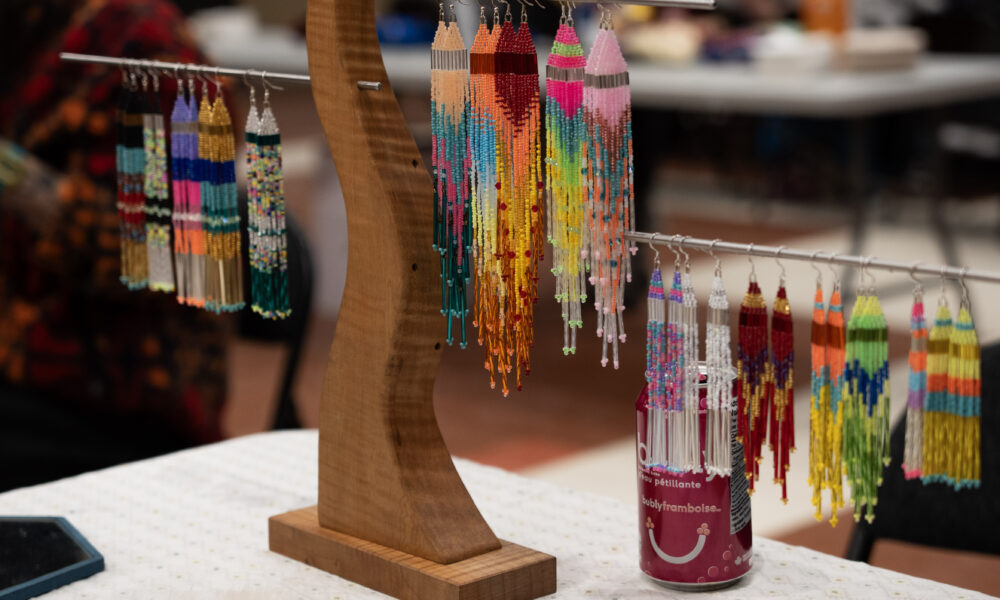
The second speaker was Jenni Makahnouk, an Anishinaabekwe beader and McGill’s first Anishinaabekwe valedictorian. Makahnouk critiqued the institution’s emphasis on French and English languages, stating she feels represented by neither. She seeks to uplift Ojibwe and other Algonquin languages, using beading as a methodology to explore the ties between language and craft. For Makahnouk, beading is both an artistic and educational practice—one that resists colonial linguistic structures while fostering cultural healing. She reminds the audience that “Indigenous art is still art,” deserving recognition as “luxury goods” rather than pigeonholed as simple handicrafts. 

The grand finale of the evening was carried out by the dazzling Chelazon Leroux: Drag artist, comedian, and educator. Leroux views drag as a means of storytelling, humour, and healing—integral practices for many Indigenous communities. Raised in Treaty 8 Territory, Fond Du Lac First Nation, they describe drag as a “superhero” persona that helped them navigate intergenerational trauma and explore their Two-Spirit identity, which they describe as being “the blessing of carrying both the feminine and masculine spirits.” When explaining that many Indigenous worldviews are defined by one’s role in supporting their community, Leroux said that being Two-Spirit is a responsibility to bridge the genders, providing a third way to serve the community. Leroux closed the night with a vivacious performance, their shimmering hair flashing as they danced to Doechii. The evening highlighted art’s power to reclaim space, challenge institutionalized erasure, and foster connection—affirming Indigenous presence and creativity as integral to the McGill community.

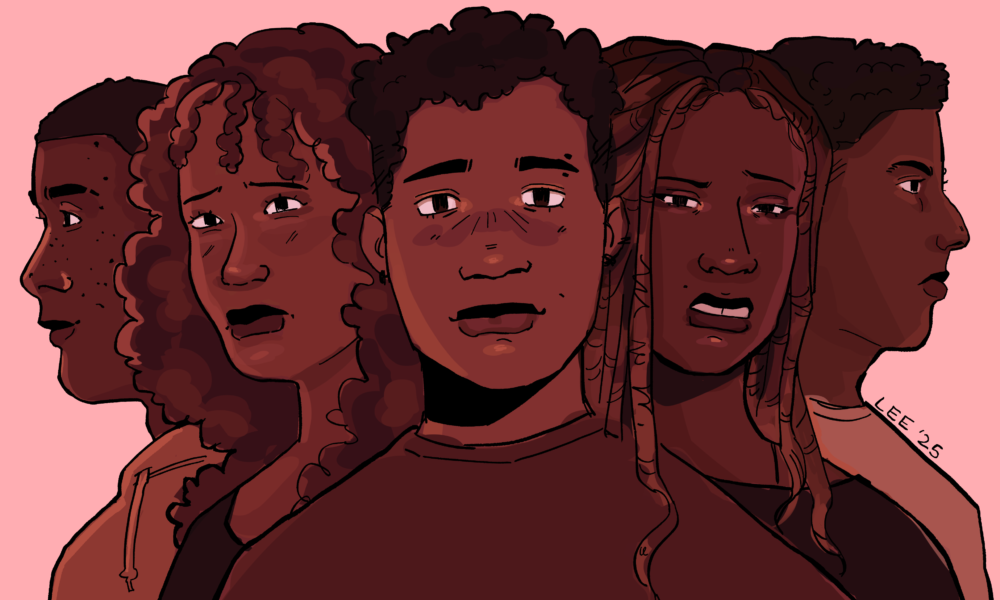
Zoe Gesaset-Gloqowej Lee is a Design Editor at The Tribune. Though quoted, she was not involved in the editing or publication of this article.

Commentary, Opinion

What’s up, doc? Discrimination against foreign doctors runs rampant amid Canada’s doctor shortage

Canada faces a dangerous shortage of medical doctors, leaving approximately five million Canadians without access to primary care providers in 2022. Simultaneously, internationally-trained physicians (ITPs) struggle to meet unnecessarily burdensome requirements to practice medicine in Canada. 

Foreign-trained doctors must undergo eight cumbersome steps to obtain a Canadian medical license—as opposed to three for Canadian-trained doctors. These include the National Assessment Collaboration Objective Structured Clinical Examination, which is expensive, offered a few times a year, and only open to a small number of applicants. This is not required for doctors from the UK, Ireland, and Australia who can apply through the College of Family Physicians of Canada. ITPs must re-complete residency training, as most provinces do not recognize foreign clinical experience, despite many ITPS having been doctors for many years. This is particularly difficult considering only 10 per cent of residency spots in Canada are open for ITPs. 

Although many provinces have introduced another quicker ITP-licensure pathway called the Practice Ready Assessment, this poses new challenges. All ITPs must fulfil a “Return of Service” requirement which mandates that physicians work in underserved areas for a set amount of time after completing their residency—usually, rural towns and communities where access to healthcare is especially low—for many years to be eligible for a license. These obstacles act effectively as indenture agreements, while Canadians and Americans are not subject to the same restriction of movement and job freedom. They do not ensure doctors are actually qualified, disregard doctors’ potential need for additional training, and apply indiscriminately to ITPs, regardless of expertise, of which 78.1 per cent are from non-Western countries. This exposes how the inequitable licensing process lacks justification and disproportionately affects doctors of colour. 

In 2020, a group of internationally trained physicians filed a human rights lawsuit—against the British Columbia Ministry of Health, the College of Physicians and Surgeons of B.C. and the University of British Columbia—for imposing barriers on foreign-trained doctors. They outlined how these discriminatory practices propagate a blatant double standard for ITPs, even when ITPs have the same level of qualification and often even more clinical experience. They argued that the province is blocking most immigrant physicians from pursuing their livelihood and lifelong profession. 

Racialized doctors’ expertise is severely devalued, and systems that uphold standards of professionalism and expertise really often protect standards of whiteness in “prestigious” institutions. It indicates a deep lack of motivation in Canadian governments to change mechanisms of white privilege and systemic racism, even when it is detrimental to the health and well-being of all Canadians.

Effective steps towards addressing Canada’s doctor shortage and the discrimination faced by ITPs would include increasing residency and professional positions for all doctors, with more spots open for ITPs, and lowering costs for examinations and re-training. Canada should also prioritize equality for all foreign workers by establishing more agreements—such as existing modified pathways for doctors from Ireland, the UK, and Australia—for already licensed doctors to skip re-examination and re-training, especially with doctors from Asian countries, where 62 per cent of ITPs immigrate from. Instead of forcing only foreign doctors to work in underserved areas with Return-of-Service contracts, Canada must provide incentives to all doctors to address community needs. 

Although Health Ministers and politicians promise action in the form of expanding open residency positions, making the licensing process quicker, and allowing ITPs to run independent practices, these measures barely scratch the surface. They do not address the scale of the problem or the systemic inequality, racism, and xenophobia still embedded within the structure of the medical licensing process. 

Ironically, Canada remains committed to enforcing the myth that these qualified doctors must be vetted and barred from practice to such a high degree to protect Canadians’ “safety,” while millions of Canadians suffer from a lack of medical care.  In order to obtain the necessary structural changes, there is a need for meaningful consideration of this deeply entrenched racist conflation between expertise and whiteness, as well as comprehensive disruption of the bureaucratic and political systems that uphold it. 

Read the latest issue

Read the latest issue