

Recently shortlisted for both the 2015 NME and BRIT Awards, Liverpool-based band All We Are is the latest to latch on to the seemingly endlessly growing number of indie-rock bands vying for attention and supposed critical acclaim. Featuring guitar riffs, lots of drums, and rock-based production, All We Are[Read More…]
Latest News
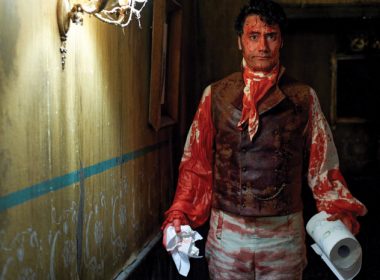
Dark creatures and light humour in What We Do in the Shadows
Comedy, in a lot of ways, is the most subjective genre in any medium. Something that one person finds hilarious could fall completely flat for another—and both would be correct in their opinions because comedy comes from the realm of visceral, indescribable feelings, and gut reactions. Even more subjective is[Read More…]

From the Cheap Seats: Red Bull Power 5
Montreal’s top university intramural hockey programs gathered on McGill’s lower field skating rink Thursday night beneath the downtown skyline to play their annual tournament. The stakes were high as teams from McGill, Concordia, Université de Montréal, UQÀM, École de Technologie Supérieure (ETS), and HEC Montréal’s respective intramural leagues faced off[Read More…]
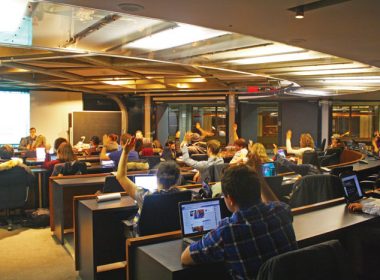
Winter 2015 budget approved at SUS General Council
SUS Budget Last Wednesday, the Science Undergraduate Society (SUS) held its General Council (GC), during which the Winter 2015 budget was approved. The budget vote had been delayed from a previous meeting to incorporate funds from the Student Space Improvement Fee, which was approved in the recent referendum. SUS Vice-President[Read More…]
Letter to the Editor: Not in my faith
After the first wave of condemnation of the attackers and sympathy for the cartoonists following the Charlie Hebdo shooting, criticism of the magazine’s content slowly crept into left-leaning commentary. Many media outlets, including the McGill Tribune, argued that the cartoons were offensive, and called into question the limitations of free[Read More…]
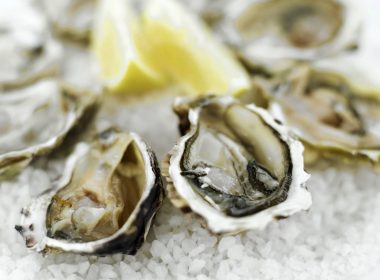
Fact or Fiction: Do aphrodisiacs really work?
Aphrodite—the Greek goddess of love, beauty, and pleasure— shares her name with another substance associated with desire: The aphrodisiac. Aphrodisiacs can be anything—foods, drinks, drugs, smells—that causes an increase in sexual desire. For centuries, people have sworn by the power certain foods, such as chocolate or oysters, to boost their[Read More…]

Off the board: A love letter to Kim Kardashian
Like the comments of a nagging mom, most criticisms of Kim Kardashian transcend time and logic—they’re baseless, they follow her wherever she goes, and they show no signs of stopping. “She’s famous but she doesn’t do anything!” “Her show has no substance!” “Her butt can’t be real!” The animosity aimed[Read More…]

The sight of the blind and the embrace of the sea
In Montreal’s landlocked position, one may miss the reassuring embrace of the ocean, which, for many coastal natives, has come to represent an integral element of home. At Musée d’art Contemporain de Montreal (MACM), Sophie Calle’s debut exhibit, entitled For the First and Last Time, has captured the mental images[Read More…]

Know your McGill Athlete: Jacob Gervais-Chouinard
The McGill Redmen are having an impressive season, and sophomore goaltender Jacob Gervais-Chouinard is a major reason behind this success. His outstanding save percentage of .944-per cent tops the CIS rankings. In the classroom, Gervais-Chouinard is a hard-working student majoring in Economics and minoring in Finance. At the moment, he’s not[Read More…]

Law professor discusses implications of Ferguson events for black Canadians
Joanne St. Lewis, Common Law professor at the University of Ottawa and former McGill student, spoke at the annual Annie Macdonald Langstaff workshop last Friday. The workshop featured a discussion on the recent events in Ferguson, a city in Missouri that gained international attention in 2014 after Mike Brown, an[Read More…]