

A t the corner of Rue Jarry and Rue des Forges, in the north-end of Montreal, there is a small plaza. At first glance, it appears fairly ordinary–there are several independent shops, a karaoke bar, a couple of cafés, and a Uniprix. The area is close to the highway, but[Read More…]
Latest News

Deep Cuts: Time Warp
My Same Artist: Adele Album: 19 Released: January 28, 2008 Adele has made a name for herself with her soulful and powerful voice, bringing new beauty to pop ballads. In “My Same” Adele’s vocal muscles were not flexed as far as on other tracks, but the cool vintage piece highlights[Read More…]

Super Bowl XLIX Preview
The McGill Tribune sports section previews Super Bowl XLIX. Two writers square off to decide whether the New England Patriots or the Seattle Seahawks will hoist the Lombardi Trophy. McGill personalities, native New Englander and Creative Director Hayley Lim, and native Seattleite and Managing Director, Jess Fu weigh in[Read More…]

School of Environment student campaigns to get seat at SSMU Council
Second-year Environment Economics student Benjamin Ger is campaigning for the McGill School of Environment to obtain a seat on the Students’ Society of McGill University (SSMU) Council. While the McGill Environment Student Society (MESS) itself is not pushing for a seat, Rachel Gould, third-year Arts & Science student and one[Read More…]
McGill admin endorses international student tuition deregulation at Senate
Four Students’ Society of McGill University (SSMU) Senators moved a question on the McGill’s stance on the deregulation of international tuition fees during the first Senate meeting of 2015 last Wednesday in order to better understand the future of tuition for international students in faculties where tuition is still regulated. The[Read More…]

10 Things: Cheats N’ Hacks
The Chicago Black Sox Gambling and sports have an intricate, interwoven history, and, to this day, game-fixing is severely restricted in many parts of North America. You can fault the 1919 Chicago White Sox for that, as eight members from the team intentionally lost games to the Cincinnati Reds during[Read More…]
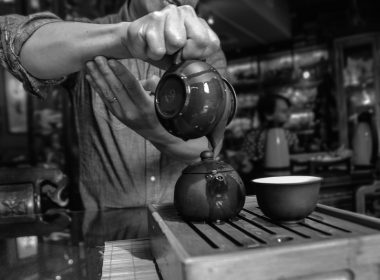
Out on the Town: Experience the art of tea infusion
The seductive scent of jasmine flowers steeped into liquid perfection has enchanted artists, scholars, and travellers for centuries. In East Asia, the art of tea roots itself so deeply into tradition that the simple enjoyment of the drink is incomplete without ritual. Through centuries of cultivation, the custom associated with serving tea refined with[Read More…]

Record-breaking weekend at McGill Team Challenge
McGill Martlets 9th McGill Redmen 6th Ten records were broken at the 20th McGill Team Challenge at the Richard Tomlinson Fieldhouse on Friday and Saturday. The indoor track meet lasted two days and is the largest indoor meet[Read More…]

Album Review: Bjork – Vulnicura
Björk’s Vulnicura manages to pull off an admirable feat by balancing intricate production with emotive rawness. The album offers a brutally comprehensive forensic analysis of Björk’s failed relationship with famed visual artist Matthew Barney. The tracks thematically capture the slow death of a long-term relationship and gradual acceptance[Read More…]

Student of the Week: Juan Estalella
To say that Juan Estalella is committed and engaged in McGill’s community is an understatement. Along with being a full-time U1 student in Management, Estalella is on the executive team of four different clubs. He is currently the marketing coordinator for the SLASummit 2015, VP Media for the International Management[Read More…]