Latest News

a, Arts & Entertainment, Music

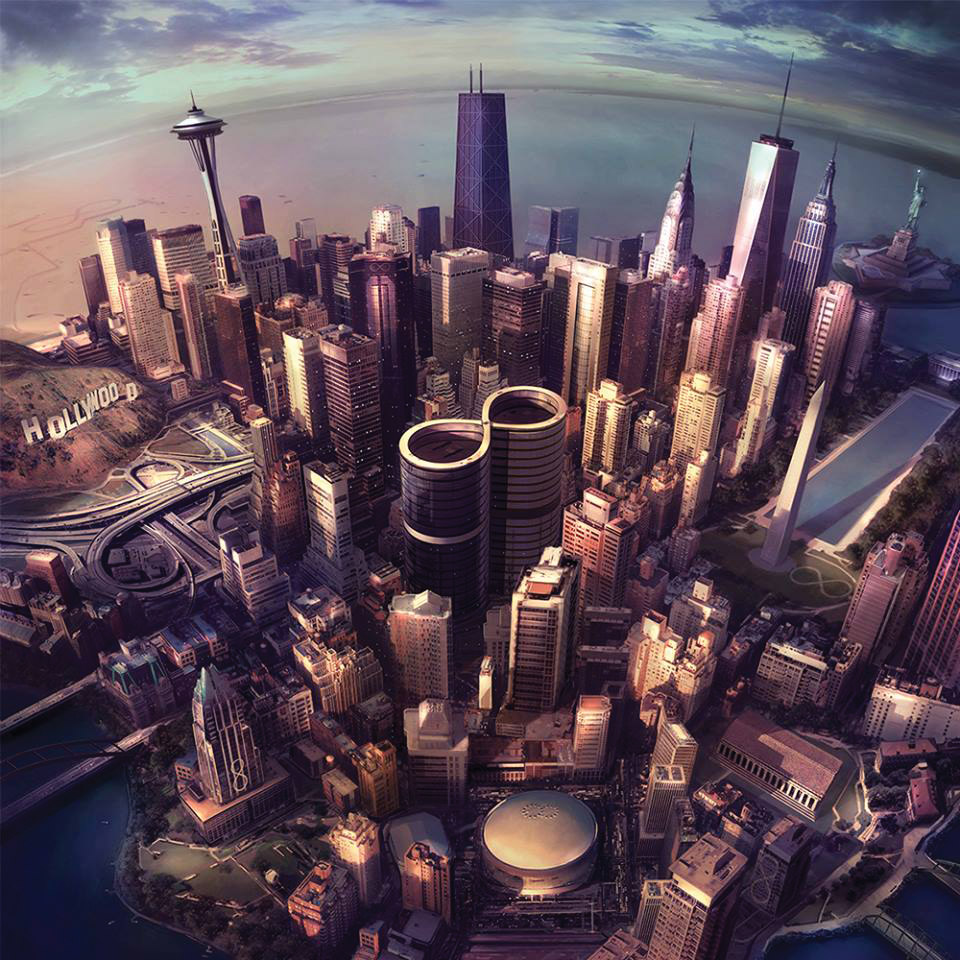
Album Review: Foo Fighters—Sonic Highways

Following the success of their Grammy-winning album Wasting Light (2011), the Foo Fighters’ eighth studio endeavour, Sonic Highways, attempts to trump its predecessor by extending its recording process to eight iconic studios across the U.S. More akin to a concept album, each of the eight tracks captures the spirit of their respective cities of recording, infusing both the lyrics and the music of the album with various historical and cultural references. As each track was released “One by One” on the album’s companion HBO television series under the same name, the hype train was ready for boarding—but it never left.

The first three tracks on the album encapsulate the best sounds of the band in recent memory: “Something From Nothing” is a brilliant opener, capturing that sweet union between tear-jerking softness and head-banging heaviness explored in Echoes, Silence, Patience, and Grace (2007), while “Feast and the Famine” and “Congregation” tap into Wasting Light’s hard rock sounds with their breakdowns and throat-wrenching screams.

Unfortunately, the remainder of the album sloughs down into mediocrity as the band begins to explore various new genres and sounds due to what seems to be a forced adaptation to each city, resulting in lackluster tracks. This is most prominent in “What Did I Do?” where the result is a cheesy, stadium rock ballad that is begging, not only for the audience’s lighters, but the question: Can this really be the Foo Fighters?

While Sonic Highways offers an interesting concept on paper, it ultimately fails precisely due to its concept. In order to properly comprehend the lyrics and musical styles of the record, it seems one must ‘tune in’ to HBO and find out.

a, Arts & Entertainment, Film and TV

But first, let me renew Selfie

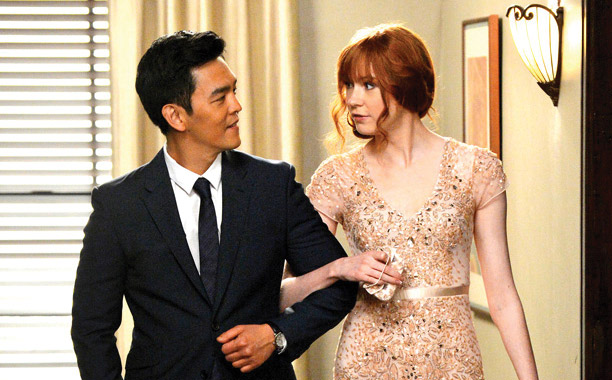
When ABC rolled out the promo for its new comedy Selfie, loosely based off the premise of My Fair Lady, millennials everywhere bemoaned its use of tired accusations that their generation was addicted to their phones, their Instagrams, and their hashtagged—you guessed it—selfies. For this reason, few were surprised when ABC announced the show’s cancellation last week—but for those who watched all seven episodes, the growth and promise Selfie eventually displayed over its short season could very well make the network regret its decision.

The pilot, which barely stretched past the offerings of the two-minute promo video, was disappointing to say the least, and focused entirely too much on being the hip, modern show that revealed just how dependent people in their mid-twenties are on their online popularity. Equally unsettling for many viewers was the show’s predisposition toward a “man fixes up the woman” trope which, admittedly, was a given based on the show’s inspiration. Eliza Dooley, plainly named after My Fair Lady’s Eliza Doolittle, proves from the onset to be a lost cause, and Henry Higgs (inspired by My Fair Lady’s Henry Higgins) seems to be too stoic to be capable of human emotions. Both characters ultimately fall flat in the pilot, leaving much to be desired in Selfie’s attempts to act as some kind of social commentary about social media.

However, there were snippets from the pilot and subsequent episodes that proved that Selfie’s writers had more than just lukewarm jokes about Siri up their sleeves. Karen Gillan’s Eliza is undoubtedly irritating, primarily due to her egotism and her seemingly vapid obsession with the number of followers she has on all social media platforms combined (300,000, according to the most recent episode). John Cho’s portrayal of Henry is both endearing and indicative of his versatility as an actor—particularly for those who are more accustomed to his nutty role in the Harold and Kumar franchise. When he takes a Buzzfeed quiz to see which Game of Thrones character he most resembles—Sansa Stark, much to his approval—and when he accidentally tags himself in a photo of his breastfeeding ex, Selfie proves its ability to be more than just a worn-out lament about “kids these days.” The show’s comedic strong points lie not just in the characters’ line delivery but also in the outrageous use of physical comedy—everything from having Eliza and Charmonique dance in a giant room filled with wigs to covering Henry’s crotch with a giant emoji as he jumps, naked, into a lake full of leeches.

Not only did the show continue to develop its comedic chops, but the character growth beyond the seemingly one-dimensionality in the pilot is promising. When Henry awkwardly admits, “I have grown accustomed to your face,” it is not only a nod to My Fair Lady, but is also delivered so deadpan and convincingly by Cho that it was difficult not to recognize the chemistry that Cho and Gillan have on camera—unconventional as it may be. By episode three, the show no longer seems to boast a plot based on a man fixing up a woman—instead, it shows just how much the two characters can learn from one another, and that both characters have faults that go far beyond the negative effects of social media. The casting of the two characters was pleasantly unexpected—the producers were looking for an actor who was British and gentlemanly, à la My Fair Lady, for Henry. Instead, the show casted an Asian actor in Cho—a move that was both refreshing and uncommon in Hollywood and on TV. To see an underrepresented minority onscreen as a romantic lead without any gross stereotyping in the character is long overdue, and the way Selfie makes Eliza and Henry’s relationship realistic and interesting without tokenizing Cho’s racial background is mature and, sadly, unprecedented.

The biggest critique that circled Selfie’s pilot was that the show was trying too hard prove that social media will be the demise of society, when in reality, the more recent episodes have proven the opposite. It has shown that social media is a great way to connect with others, but intelligently explores its downsides: Eliza takes it too far and ignores her real-life interactions, whereas Henry’s disapproval of social media does not necessarily make his life meaningful or “special” in any way. The show’s missteps, unfortunately, have come not from poor comedic timing or bad writing, but from ineffective marketing on ABC’s part. Without watching the show, it would be impossible to know just how many followers Selfie deserves, and the show’s early demise—just as it was becoming truly funny and charming—is just #unfair.

a, Martlets, Sports

McGill Synchro triumphant at home in weekend Invitational

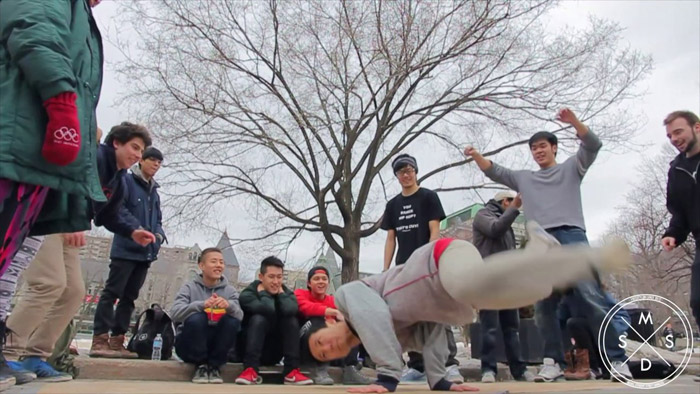
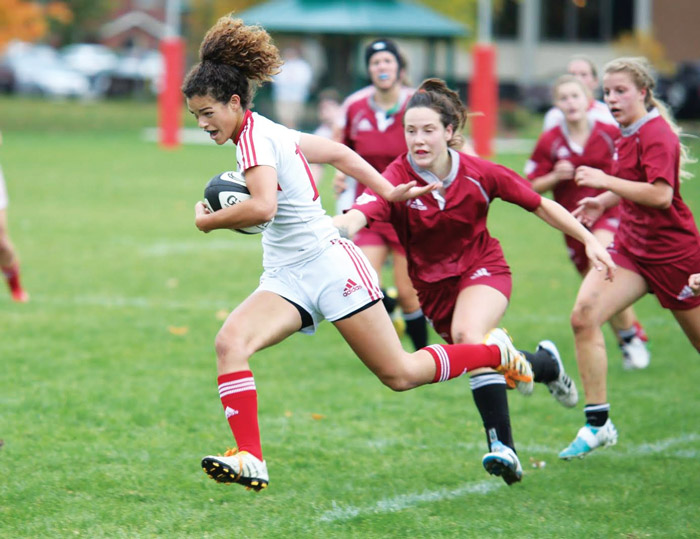
After waiting patiently for the other 10 teams to perform their routines, the McGill University White team froze into a tableau at the edge of the water, listened to the roar from the packed bleachers, and dove into the Memorial Pool. (more…)

immigration minister chris alexander
a, Opinion

Commentary: Canada’s responsibility towards refugee claimants

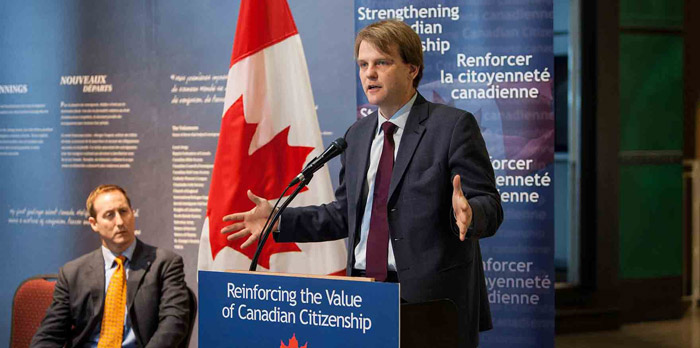
The federal government grudgingly restored health-care rights for refugee claimants this week after a court ruling reversing a Conservative overhaul of the system in 2012 that severely restricted the access of asylum seekers to health care. (more…)

a, Editorial, Opinion

Editorial: ‘Selective memory’ a selective understanding of Remembrance Day

One week ago today, during the annual Remembrance Day ceremony on McGill’s campus, Demilitarize McGill, a group opposed to military research at the university, staged a silent protest. (more…)

a, McGill, News

Open forum invited student feedback on drafted sexual assault policy

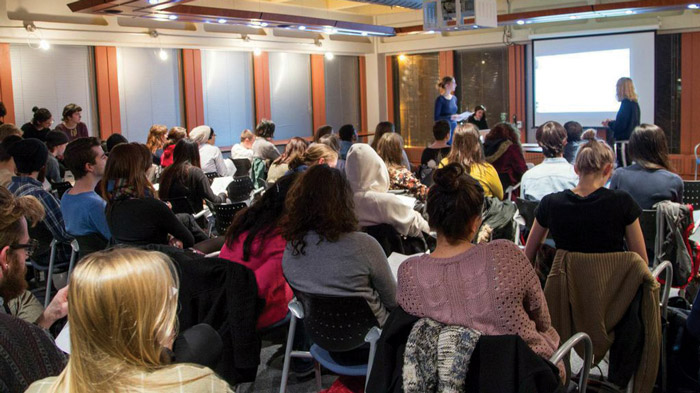
The Sexual Assault Policy Working Group held an open forum on the creation of McGill’s first university-wide sexual assault policy on Thursday, Nov. 13. The student working group consists of members from the Students’ Society of McGill University (SSMU), the Union for Gender Empowerment (UGE), the Sexual Assault Centre of the McGill Students’ Society (SACOMSS), and the Quebec Public Interest Research Group at McGill (QPIRG).

A sexual assault policy proposal was drafted by the student working group after the November 2013 Media Relations Office (MRO) mass email regarding sexual assault within the McGill community. Endorsed by signing parties that include the SSMU Council, SSMU Equity, SSMU Executive, SACOMSS, UGE, QPIRG McGill, the Feminist Collective of McGill Law (FCML), and Women and the Criminal Law (WCL), the proposal was presented to the dean of students in March 2014.

Kai O’Doherty, a UGE member, presented at the open forum. He highlighted the history of the policy and explained the importance of the Deputy Provost’s November 2014 MRO, which concerned the then-ongoing case against three MGill athletes and brought the case to the attention of students.

“When [the] case [regarding three McGill football players sexually assaulting a Concordia student] came to light, it really demonstrated McGill’s inadequate response to sexual assault cases on campus,” O’Doherty said. “[This raised] bigger questions on how McGill deals with sexual assault, [including] trying to discuss these issues and consent, and giving resources for survivors.”

According to SSMU VP University Affairs Claire Stewart-Kanigan, and Megan Baiocco, U3 Arts student and member of the UGE, the policy will be structured around four main pillars that are survivor oriented—a proactive approach, an approach that recognizes diversity of experiences related to sexual assault, and a university-wide commitment.

“When we were first creating this policy, we wanted to make sure that it embodied a core set of ideas that we would not give up when negotiating […] or consulting with people,” Baiocco said. “We want to make sure that we keep these four ideas in our policy because they are […] important in the ways that we think about sexual assault and the ways that we feel the university should deal with sexual assault.”

Stewart-Kanigan explained how the proactive pillar impacts the structure of the policy.

“As we saw from the incident with the football players last year […] a reactionary approach to sexual assault […] is not adequate,” Stewart-Kanigan said. “What we want is long-term commitment […] consistent campaigns, [and] consistent resources dedicated to combating the tolerance of sexual assault on our campus. So a big part of this policy is making sure that it is strongly proactive as opposed to reactive.”

Thursday’s meeting was the first time that a draft of the policy was shared with the wider McGill community. Now available online to the general public at sexualassaultpolicyatmcgill.com, the advocates of the policy hope to receive student feedback in order to improve on the policy draft.

Daniel Snyder, L3 law senator, attended the event and explained that he thought that students were ready for a Sexual Assault Policy to be implemented on campus.

“I would like to see continued discussion [and] hopefully people can contribute to voicing their opinion,” Snyder said. “I’ve had numerous conversations with fellow law students and all with positive reaction that people are really interested in this […] I believe that people are already involved, and now that the policy is out, they’ll be able to read it over and give their reactions.”

Presenters at the event stated that an online forum to collect student responses will soon be available on the sexual assault policy website and that anyone interested in becoming a volunteer or learning more can email [email protected].

In reference to disciplinary measures and procedures that have yet to be drafted, Baiocco and Stewart-Kanigan stated that the policy would aim to shape new measures in a way that prioritizes the survivor.
“[Disciplinary action is] a conversation that is going to be happening later down the road, probably a bit closer with the university because [it involves] very specific codes and different [decision makers],” Stewart-Kanigan said.

mental health word cloud
a, Off the Board

Off the Board: Trigger warning – showing isn’t solving

Mental Health Awareness Week, which concluded this past Sunday, provided a week’s worth of lectures and programs designed to spread awareness about mental health options on campus, as well as to help the community at large learn how to support loved ones who suffer with mental illness. (more…)

a, Opinion

Commentary: A lesson in Remembrance

On the 11th hour of the 11th  day of the 11th  month, McGill University marked the 100th anniversary of the beginning of the First World War through its Remembrance Day ceremony. (more…)

a, McGill, News

Demilitarize McGill’s Remembrance Day protest causes controversy on campus

On Tuesday, Nov. 11, Demilitarize McGill hosted a rally protesting McGill University’s Remembrance Day ceremonies. (more…)

SSMU Building at McGill
a, News, SSMU

Budget, bylaw reform, and fee consolidation reviewed at SSMU Council

The Students’ Society of McGill University (SSMU) Council met on Thursday to discuss the 2014-2015 budget, bylaw amendments, as well as fee consolidation. (more…)

Read the latest issue

Read the latest issue