Latest News

a, McGill, News, SSMU

Second annual conference held addressing mental health

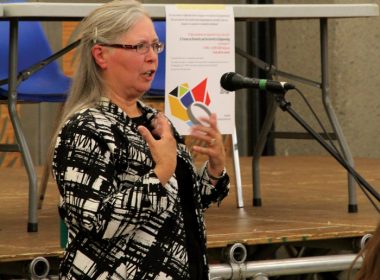
The second annual Students in Mind conference took place on Sunday, Oct. 5, and aimed to address the stigmas and concerns surrounding mental health. Through a series of workshops, panels and speakers, the event, which was attended by around 80 people, aimed to create an environment where mental health could be discussed openly and without fear of judgment.

According to Danny Jomaa, student and head of sponsorship at Students In Mind, the conference aimed to address mental health on three levels: The individual level, which was the main target, the peer level, and across campus.

“Many people know it’s good to have a strong mental health, but when it comes up in conversation, people don’t like to talk about it,” Jomaa said. “So this conference is to get it out in the open. We want to tackle the personal stigma that people have, as mental health tends to be a taboo subject, so it’s therefore not given a lot of attention.”

Jomaa described how this issue was addressed following a 2013 study conducted by Manager of Student Assessment Lina Di Genova and Manager of Counseling Dr. Vera Romano, which highlighted the prevalence of anxiety and thoughts of suicide amongst McGill students. This study is seen by the student committee as a huge step towards improving student well being.

A panel discussing mental health within a campus context included four panelists: Dr. Nancy Low, assistant professor in the Department of Psychiatry; Elizabeth Cawley, PhD student in the Department of Psychiatry; Claire Stewart-Kanigan, VP university affairs of the Students’ Society of McGill University (SSMU); and Tanja Beck, access services advisor at the Office for Students with Disabilities (OSD). All panelists believed that McGill places a higher pressure on students due to its reputation as a highly competitive university and its status as a research-based school. The expectations associated with this perception creates a norm of unhealthy habits, such as all-night sessions in the library and substituting healthy food for coffee during exam periods.

Stewart-Kanigan acknowledged McGill’s recent improvements on the subject of mental health, but noted some structures that restrict the university’s capability to address it.

“There are some exam policies that say it’s all right to have three exams within a 24-hour period before you can declare a conflict—and that’s not a reasonable expectation,” Stewart-Kanigan said. “We’re trying to do a lot of work on more academic advocacies. When you are going through things like that, bring your testimonies to us because we can push [for] these changes.”

Stewart-Kanigan also noted that it was not just structural changes that need to be made, stating that there is also a strong competitiveness amongst students with regards to study hours. She emphasized that students need to make each other more comfortable and consistently remind themselves of how their study patterns are affecting them.

As a keynote speaker, Anthony Di Cintio described his own account of struggling with depression, explaining that opening up was the first step to recovering. He stated that counselling, written reflections, and having a mental health crisis protocol helped immensely.

“Never allow yourself to say ‘I don’t have the time’ […] because it’s precisely in the moments you say this that you should be making time,” Di Cintio said. “You should recognize and appreciate all that you have accomplished thus far. It’s important to remind ourselves not just to look for [praise] outside, but remind ourselves of our accomplishments and that we chose to be here.”

While addressing the stigma associated with mental health issues, Di Cintio admitted to fearing backlash in his professional career from speaking out, but hoped that his openness on the topic would encourage employers to look beyond the stigma, and see the strength it takes to discuss it.

“When it comes to public advocacy for anything, there’s always a risk of it shooting back in your face, but if no one speaks up, then no one will talk,” Cintio said. “I like to believe that if anyone’s going to choose me out there for a job, they’re going to see how powerful and encouraging it is that someone had the guts to do this.”

Laura Heath, a first-year master’s  in psychiatry student at McGill, praised the efforts of the conference, and encouraged others to attend similar events in the future.

“I think the conference itself has been helpful. I like how the [Self-Care Workshop] focused on working on you as an individual,” Heath said. “In terms of the campus, though, I feel like the [Student Strategies for Mental Health] panel brought up key insights of the stressful nature that McGill [has]. You can see there are people trying to create a better culture on campus in terms of mental health.”

McGill Mental Health Services is available to all McGill students and is located in the Brown Student Services Building.

a, Features

The changing face of internet anonymity on campus

There is no shortage of anonymous online communities on a university campus, whether it be the updates of ‘spotted’ individuals engaging in out-of-the-ordinary behaviour, the online personas or usernames that mask real names on forums and discussion groups, or mobile applications like Yik Yak, an anonymous feed of posts from other students on campus. (more…)

a, Art, Arts & Entertainment

Post-modernism emerges in a new light

For post-modernist painter David Simpson, light is both a pastiche of past artistic traditions and a peek into the future of its essential nature. The monochromatic paintings that greet you upon walking into his current exhibit at the Parisian Laundry gallery are defined by light, as the interference pigments of his paintings reflect and play with each ray. It makes for an almost interactive experience, where every tilt of the head offers the possibility of making a new discovery in his work, and you are immediately introduced to just one of the artist’s many creative nuances.
Simpson, who was present for a special event at the gallery when I visited, is charmingly sincere and traditional in his techniques and approach to art. The gallery itself is a beautiful, open second-floor space with large windows and old wooden floors, with the paintings simply mounted on floating white boards, creating an inner square of empty space. The entirety of the experience was incredibly authentic and genuine, built by a team of sensorial experiences including the artwork, the gallery, the artist himself, and the audience’s positive reception of the exhibit.
The Giverny Capital collection, owned by François Rochon, presented the exhibit and chose to do so in an intimate setting—a table of champagne glasses welcomes what the modest Simpson deems the “few disturbed people” with the desire to see his magical pieces, as Rochon enthusiastically interacted with those present. Early on the gallery was fairly empty, but it quickly filled up with the chatter of contemporary art enthusiasts. The rainy day and subsequently dim lighting lent the paintings delicate and silver-toned hues, and one can only imagine the “dangerous” brilliance they would have exuded with direct sunlight. The simplicity of the venue synchronized with that of the works of art to create a bewitching sense of harmony in the space.
The simplicity in the artworks is distinguished by Simpson as “reducing the work to its essential” as opposed to the minimalist idealists of recent years. He expressed to me very eloquently that he does not consider himself Avant Garde, nor is he pushing to find a new art form. His work is that of a post-modernist, drawing from past traditions, with gratitude for how Vermeer “swept up” the mess of the past, but also for the expression of light in the older works of Fra Angelico. He finds inspiration in the natural sunlight of his home and studio in Berkeley, California, which he begrudgingly left to come to Montreal—begrudgingly because Simpson is very reluctant to leave his artwork, and finds the most valuable use of his time spent in front of his hand stretched canvases. It is this kind of dedication and devotion to his medium that makes Simpson so engaging and endearing. His paintings speak for themselves, but one word from Simpson adds an entire other dimension to his work.
The authentic, and somewhat traditional approach to art taken by Simpson feels like a breath of fresh air in an art world commandeered by growing digital technologies and corporatization of our present day reality. This man grew up in the depression, teaching him to appreciate life in it’s simplest form. He rejects fame and riches on principal, and insists that the “battle is in the studio,” not in the incessant self-publication taking over the world of arts today with social media. Simpson’s redefinition of monochrome painting as he plays with light, colour, and texture gets down to the gritty, essential and inexpressible truths of the world, making for an all-consuming experience that is unshakably down-to-earth.

“A Tribute to David Simpson” is running until Oct. 11 at the Parisian Laundry gallery (3550 St. Antoine West).

a, Research Briefs, Science & Technology

Research Briefs—Oct. 6, 2014

Graphene sensor tracks down cancer biomarkers

Graphene, a six-ringed carbon, has become the centrepiece for new technologies. (more…)

a, Art, Arts & Entertainment

Mile End thrift shop gets a natural makeover

When I turned into the open doorway of Citizen Vintage, the well-known Mile End boutique, I was greeted by a warm light and the cozy hum of French female artist Cgo’s intimate exhibition, “Enfants Sauvages” (which translates to “Wild Child”). Complimentary craft beer and vegetarian snacks welcomed all guests and the small thrift shop provided a close, intimate setting for the display. Her pieces lined the walls, placed perfectly above the beautiful second-hand clothing that Citizen Vintage has for sale.

Her collection of artwork was made up predominantly of prints. Constructed with curved black lines and dotted shadows, her style bears the influence of traditional marine tattoos from the 1800’s. From the perspective of an outsider, any of the graphic prints—mainly done on paper or wood—would have translated quite well onto the skin. In fact, the artist, with whom I was lucky enough to speak, had countless tattoos peppering her arms and neck. Much of the ink had been tattooed by Cgo herself, and each piece, she claimed, told a special story about her past.

Cgo most notably draws her thematic content from the spiritual side of nature, often representing First Nations culture in her work. The pieces almost felt like visual representations of oral traditions; they are replete with mystical creatures, celestial bodies, and water imagery. There were even physical pieces of nature incorporated into the exhibition: tree bark, rocks, and branches were scattered about. Many of the prints show hybridizations of humans and nature, emphasizing our tumultuous but beautiful and symbiotic relationship with the earth.

In my conversation with her, artist Cgo explained her own profound relationship with nature.

“Even if I live in a city, I am still aware of it, it makes me feel reborn,” she said. “It makes me feel better.” 

And within the Montreal cityscape, Cgo is still moved by an integral vitality that is seemingly ever-present.

“[The city] is dynamic, especially with its art and culture. It’s a big mix; it’s very fluid,” she explained.

Cgo revealed another telling detail: after an injury and trip to the hospital this year, she found herself finally integrating colour into her artwork, which was previously confined to black and white. Her existence is based on her visceral connection to her surroundings, which funnels directly to her art. Against the backdrop of a concrete city, her perspective is refreshing.

Cgo’s art is on display at Citizen Vintage (5330 Boulevard Saint-Laurent) for the remainder of this month.

McGill MOOC course Food for Thought
a, McGill, News

McGill launches popular online open course, Food for Thought, for second year

Last Wednesday McGill relaunched a Massive Open Online Course (MOOC), Food For Thought, on the website EdX, a popular online learning platform. The course, led by McGill professors David N. Harpp, Joe Schwarcz, and Ariel Fenster, debuted to 7,663 students from 158 countries as of Oct. 1.

Food for Thought is based on the popular McGill course CHEM181, (World of Chemistry), which has been a mainstay at the university since 1982. Introduced last year as McGill’s first MOOC, the online course finished with a 4.96 rating out of five, with 1,764 students completing the course in its entirety.

“The feedback was off the charts, frankly,” Harpp said. “I was a little surprised that it came up as good as it did. I thought that maybe they would say, ‘Harpp mumbles a lot, Schwarcz talks too fast,’ or something like that. There was in fact none of that, which was also a surprise. We didn’t feel that we need to change [the course] very much.”

Frank Roop, the McGill video producer for the EdX series, stated that the team’s immense preparation for the course the first time around allowed them to re-use material for the second iteration of Food for Thought.

“There was a tremendous amount of preparation done for the first [course],” Roop said. “All the slides were revamped, updated [with] new pictures, [and] copyright cleared—which is a huge aspect of it. But once that was done, and because most of the material is timeless in terms of it wasn’t dated for that year, we were able to repurpose it for this year.”

Online courses differ in format from in-person ones, but most feature lectures, readings, homework, and assignments—similar to many classes offered on-campus. However, due to the nature of the courses, there are differences in quality between MOOCs and on-campus classes, according to Teaching and Learning Services’ Alexander Steeves-Fuentes.

“[Videos] are a lot better quality,” he said. “There’s no comparison [….] The videos we produce are done in a studio. We have a professional videographer [who] does all the editing.”

According to Steeves-Fuentes, hosting Food For Thought on EdX last year has already changed the way its on-campus counterpart is being run.

“On a small scale, if you just refer to CHEM181 […] when they offered their course last semester, it was using all the new visuals they had [from the MOOC],” he said. “When they offer it in the future, it’ll be even better in some respects.”

Funding for the course is not provided by the university, and is instead provided by private donors. According to Steeves-Fuentes, who is also the online course development assistant for the EdX courses, MOOCs offer little in terms of monetary incentives.

“No one’s going to make money off of MOOCs,” he said, “They’re expensive. It’s not straightforward to develop and offer something in that kind of style and environment.”

McGill is currently developing two new MOOCs—Learning For Social Impact and Body101—and will be offering Natural Disasters (ATOC185) this coming January.

According to Harpp, it is crucial that McGill continues to develop and support MOOCs, in order to globally compete with other leading institutions.

“I think it shows that the university is interested in the public domain,” Harpp said. “I think what we do is a service to the community [….] I think we’re learning a little more about how students appreciate courses, and how they interact in courses. And we have made this one considerably more interactive than we were ever able to do on campus.”

a, Opinion

Commentary: Congestion pricing decongests little

As the circus known as the Toronto Mayoral Election heads into its final stretch, it’s become clear that public transit has transcended all other issues.
(more…)

a, Men's Varsity, Sports

Redmen continue hot streak on Welence’s walk off

The crowd at Gary Carter Field Thursday left happy thanks to late-game heroics, as the McGill Redmen (14-4) baseball team topped the Concordia Stingers (10-7) 3-2 in the annual fan night game. The win was McGill’s 12th of the season, and its third walk-off win in four games. (more…)

Read the latest issue

Read the latest issue