


Latest News

General election voting booth
a, Opinion

To be or not to be franchised

Never in my wildest dreams did I ever expect my first real political campaign to make such a big splash. When I first contacted the Parti Vert du Quebec, I offered to volunteer in the campaign and perhaps even run; but I never expected that I actually would get a chance to stand for election. However, when I met with the party leader, Alex Tyrrell, I found that my ideals and beliefs did identify very closely with the new Parti Vert du Quebec.

As a student who works part time (and with two summer jobs) more affordable education and free public transportation are very salient issues for me. There was the appalling notion of drilling for the hard-to-reach oil that might be under Anticosti Island—a large part of which is a nature reserve or park. Such a disregard for the environment reflects disgracefully on any party that supports it. I also saw the need to put aside the sovereignty debate to focus on other issues, though I myself am a federalist. Most importantly, I feel that Quebec needs a change in government. Not just in governing party, but in the very makeup of the National Assembly.

As a young, 21-year-old candidate for a party without seats in the National Assembly running in a Liberal stronghold riding my chances of making much impact were not high. However, I did make an effort to publicize the fact that there were youth active in the political spectrum. The apathy of which the young are generally accused is not all-encompassing. I wanted to show the province, the older politicians, and my fellow youth that students could have a reasoned, active voice in the democratic discourse. I hoped to encourage more students to get involved in the future and in getting out to vote. At least that’s how my campaign went for the first week. While I got some youth interested, the media was focused elsewhere. That all changed  when I was denied the right to vote by the reviewers at the Mercier revisions board. To them, I was not a Quebecer.

I had brought the necessary documentation to register as a voter in the election, as well as proof of my candidacy. Not only was I denied by the revisions board, but the board tried to convince me that I wasn’t even a candidate! Suddenly, my effort to enact change was brought into question, and my right to have a say in what happens in my province was contested. The Parti Vert du Quebec  believe that this action of turning me and countless other students away is blatant discrimination on the part of the Directeur général des élections du Québec (DGEQ), inspired by the accusations made by the Parti Québécois.

As I was fighting for the right to vote and run in the election, I was effectively trying to prove my own legal personhood. Thankfully, the judge who heard my case acknowledged the absurdity of the notion that I would have the documentation to make me eligible to run as a candidate but not as a voter. Clearly by running, I demonstrate a vested interest in the province and it is my “domicile.” Sadly, my case was the only one of the five McGill students who sued for their right to vote that was granted an injunction. My four co-plaintiffs and countless other students were denied the right to vote as their domicile was still in question. While we at the Parti Vert du Quebec respect the judge’s ruling, we do believe that this is discriminatory meddling on the part of the DGEQ against anglophone students, as inspired by statements made by the Parti Québécois. It really is a sad day when, in a Western democracy, eligible voters have their voices silenced. This should never happen, and shouldn’t have happened here.

To my fellow students, don’t let your voices be silenced—I certainly will not; but remember that you have a voice too. Speak up.

Brendan Edge is a U2 Canadian Studies and History student who was the Parti Vert du Quebec candidate in the Chomedy riding.

a, Editorial, Opinion

Towards a more proactive SSMU

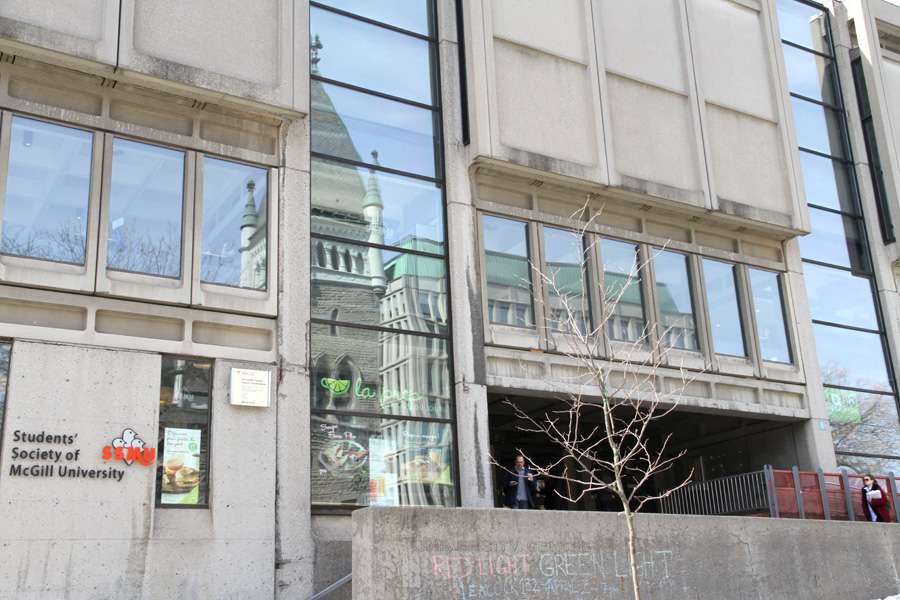
The invalidation of Tariq Khan’s victory in the SSMU elections, and the subsequent outcry, have perhaps served as the  perfect summation of the crisis of credibility that has characterized student government. Throughout this year, the councillors and executives of the Students’ Society of McGill University (SSMU) have been far more reactive than proactive in response to the numerous situations which occurred under their management. While in some cases this has been effective, in most it had led to costly, embarrassing foul-ups for the executive.

The most prominent example of SSMU failing to take proactive action in the first half of this year is one that has already been discussed in this space; the inability of the Fall General Assembly (GA) to meet quorum due to lack of advertising, thus preventing the official appointment of a board of directors and threatening various entities managed under SSMU. It was not until another GA was held, costing time, money and effort, that these issues were rectified. The outcome of the still-reverberating building fee rejection—with no “Yes” committee or any other such outreach to students on a fee execs said was critical to continued functioning—only serves to show that SSMU did not take a proactive approach to learning from its mistakes.

Another example of SSMU finding itself on the back foot was the “Farnan-gate” fiasco. This incident, which featured SSMU pelted by campus-wide, then  national and international criticism, was at first prompted by a lack of foresight and perhaps a complete disregard for the likely student reaction. It was also compounded by a fumbling response to the reaction that almost missed the underlying motivation of the reaction. The official resolution—SSMU rescinding the official apology—still left SSMU with a self-inflicted hit to its reputation while failing to turn much of the student backlash into any real institutional change.

Even so, there have also been unforeseen situations SSMU was forced to encounter this year that were reacted to adequately. The controversy that most typifies the positive aspects of a reactive approach is that of the sexual assault case against several players on McGill’s Redmen football team. Charges in the 2011 case, which resurfaced in news reports last November, caused a firestorm and spurred SSMU and other entities on campus to make new progress on dealing with McGill’s institutional framework on sexual assault. Here, the sudden immediacy of the issue left SSMU well-placed to throw its weight behind an issue that already had some momentum, which has so far resulted in some positive tangible change for students.

What do these contrasting cases say about how SSMU has responded to crises this year? In the first two, SSMU’s reactive responses to incidents of its own creation have weakened student trust in the organization and cost it valuable time that could have been spent on other more worthwhile tasks. In the third, SSMU used its advocacy platform as a way to turn the pre-existing reaction on campus towards concrete policy reforms. In all three situations, SSMU executives failed to anticipate the worst-case scenarios and plan for them. In the cases of the failed fee, GA, and apology, something close to the worst case not only ended up happening, but could have been easily foreseen. Next year, it would behoove SSMU—executives and councillors—to better assess situations and potential effects before intervening, if possible, study closely the specifics of similar past situations that were successfully managed, and, in the event of particularly heavy student criticism, find a way to channel that reaction into positive change.

Even better, a more proactive approach from the SSMU executive would be ideal. Meanwhile, students should take the time to be engaged with campus issues even when there isn’t a massive, attention-grabbing controversy—a better understanding of the mundane aspects of student politics might leave students better equipped to respond to the big crises.

Still, as with any organization, the buck stops with the leadership. Before we talk about changing student attitudes, SSMU should change theirs.

a, Science & Technology, Student Research

S.R.E.A.M: Science rules everything around me

If anybody came out to GZA’s lecture on “Consciousness, Creativity, Music, & the Origin of the Universe” that packed Leacock 132 last Saturday eagerly awaiting the Wu-Tang Clan founding member to explain advanced scientific principles to the audience, then they may have gone home feeling disappointed and unfulfilled. This, however, would be a shame, because in spite of the esoteric knowledge he lacked, GZA still managed to justify to McGill why fellow musicians and fans have affectionately referred to him as “the Genius” throughout his career.

GZA isn’t a scientist—it would be pretty remarkable if he had amassed a significant amount of academic knowledge while making music in one of the greatest rap groups of all time—and he wasn’t trying to be one when he spoke to the crowded lecture hall. Rather, his scientific genius comes from an acute awareness of the role that science plays in our everyday lives, and an appreciation for the discipline as something that can and should be accessible to people from all walks of life.

“Music has always had a direct influence over my life,” GZA explained. “Stevie Wonder once said, ‘Music is a world in itself and a [universal] language we understand.’”

Much of the lecture—which integrated various short rap verses intermittently—and the ensuing question period centred around the role of science on GZA’s personal and musical journeys, and his feeling that music can be an incredibly useful tool for relating and communicating scientific thought. In fact, GZA is currently in the process of working on a concept album called Dark Matter that will tell the story of a journey through time and space and represent the way in which dark matter affects the motion of the universe gravitationally by applying it to the lyrical motion of his music.

One of GZA’s first encounters with science took the form of a game of chess with his cousin when he was nine years old. While he would not touch the game for over another 10 years, GZA never forgot the rules.

“When I began playing seriously as an adult, I learned the tactics and principles,” GZA explained. “[These included] the time, force, and space of chess. Time, as the amount of moves; space, as the squares you control; and force, your military—your army.”

Through employing these strategies, GZA became more intrigued with the science behind the game of chess. Playing in East New York, Brooklyn, and Washington Square Park—where he reached as many as 78 games per Sunday—GZA began to consider mathematical principles like algorithms and probability while strategizing his play.

Discovering the nuances of the game, however, did not just improve GZA’s performance. The artist began to apply the same strategies he used in chess to situations in his life. His thinking shifted to a more scientific perspective, where he tried to approach scenarios from all angles and question the status quo—similar to how scientists interrogate their own experimental problems.

“The active thinking and philosophy stimulated my creative mind to consider all the possibilities and search for more,” GZA said.

This open and creative mindset helped spark the program Science Genius, which is an urban science initiative developed by the Genius himself and Christopher Emdin from Columbia University’s Teachers College.

GZA developed Science Genius to get more students interested and comfortable with scientific topics. While he knew he was not a science teacher, GZA also recognized that as a musician, he could walk into a classroom and provide students with a model to learn. Seizing the opportunity to spread his passion to an impressionable audience, GZA travelled with Emdin to 10 New York high schools to run the program. With GZA, students developed scientific raps about different topics, acquiring an acute understanding through music and lyricism.

“As we read citations and rhymes, one of the things that I try to [impart] to the classrooms is that the rhyme must be clear, eloquent, and clever,” GZA said. “I challenge students to make sense of complex information by maintaining high standards of serious lyricism.”

Even though it was clear by the time the question period came around that GZA wasn’t qualified to answer technical scientific questions, he had a strong answer when asked to tackle the most important question that the universe has for us: “What is the meaning of life to you?”

“Life is being relevant, it’s living, [and] breathing,” began GZA. “[The point of] life is to evolve, develop, grow, and raise yourself.”

Perhaps Darwin wouldn’t have equated evolution to “being relevant,” but then again, GZA didn’t come to quote famous scientists—he came to promote the value of basic scientific awareness and literacy even if one is doing something on the opposite end of the occupational spectrum—like making music. That being said, GZA still offered some parting words of wisdom that anyone looking to survive with the fittest in today’s world should take to heart.

“Don’t be the other 99 and imitate, be the one that originates.”

It doesn’t take a genius to understand these words, but when they come from a successful, intelligent, and inquisitive individual like the Genius, they truly resonate.

a, Student Life

Saying so-long to student satire

After two-and-a-half years of image-macro-based mockery and outrage—some genuine, some feigned—Daniel Braden, the man behind the “McGill Memes” Facebook page and Tumblr microblog, is graduating from McGill and moving to Boston to work on a congressional campaign. This week, the Tribune sat down with Braden to take stock of the satire of the years since the site’s launch in November 2011.

McGill Tribune: What prompted you to start the site?

Daniel Braden: Honestly, looking back on it, it was really just me realizing the funny contradictions that make up McGill. I was living with a writer for the McGill Daily at the time; she was lovely, but a lot of her friends I found very intriguing and very representative of McGill—people who would go on to do the Nov. 10 occupation, #6party, etc. I started it as an inside joke, really.

MT: Could you elaborate on these contradictions?

DB: I think one of the things I noticed were the number of people who seemed to be very wealthy. Many of them would be protesting the tuition hikes and the horrors of capitalism, but would wear expensive clothes and have expensive electronics. While that doesn’t mean you can’t have principles, these people didn’t seem to align with what you would think they would believe in.

MT: What have you found most interesting in your time running “McGill Memes”? 

DB: There were times I posted things I thought would absolutely cause an uproar, and they never did. For example, riffing off the stereotype that the Cybertheque library is frequented by East Asians. Those memes were racially insensitive, what you would call a “microaggression,” and I was pretty surprised no one really complained.

MT: Do you think you’ve managed to say anything meaningful about the university and/or its students through your satire?

DB: I actually do. I don’t want to say I’m the one true voice of McGill, because that’s not true at all. But I think I did point out things that no one discussed openly. Chief among those is the lack of service in French at McGill and the lack of full translation, outside of official McGill communications, which is notable considering there are many translation students who would be able to perform such services. English is something McGill’s anglophone students really take for granted.

MT: How hard was it to come up with material?

DB: When I first started with the strikes, the Nov. 10 occupations, #6party, and the AUS GA, it literally wrote itself. Last year was a bit hard, and it has gotten progressively harder. “McGill Memes” would probably not have gotten started were it not for the provincial and student politics in late 2011-2012.

MT: Characterize your political views in a campus context.

DB: A constantly surprised and exasperated observer. One thing that McGill politics has taught me is that nothing is too petty or too small to be taken seriously. That said, this tendency is also a great source of comedic material.

MT: Give an example of particularly petty politics.

DB: We all had to live through ‘Farnangate,’ and we’re still living through the hangover of that. While I’m not a person of color and there could be legitimate reasons for the complaint, at surface value, it was one of the pettiest things I’ve seen in my time at McGill. You would have had to have gone so far out of your way to be offended to that point.

MT: Do you think students should care more about student politics? 

DB: Yeah, I think that you can care about student politics without necessarily being angry and needlessly indignant, but I think McGill is too apathetic about these things. There’s a way to be involved in student politics without being overly tiresome.

MT: What did you think of the SSMU elections saga?

DB: What I will say about the election is that as a voter, I am angry; but as a comedian, I am delighted. There couldn’t be a better way for SSMU to end the year and for me to end my four years. On top of everything, even back to the bike gates, I am so happy that my last few weeks here will be spent hashing these failed lease negotiations and then this electoral curveball.

MT: Do you feel a sense of responsibility knowing that your more political posts are the only source of information many students get about campus news, perhaps even provincial politics?

DB: Absolutely not. If you are using my page as your only source of provincial and campus political news, you need to wake up. Additionally, while I’ve had people ask me to put up posts about their pet issues/campaigns, I really don’t think this page has that much of an impact. I don’t feel terribly responsible for it on that front.

MT: What do you hope students took out of the page?

DB: A sense of humour. McGill doesn’t really have one. It’s not a funny school. The funniest thing I’ve seen is “Lot’s wife, McGill”—and that is funny—but that’s it. They call the University of Chicago the place where fun goes to die; this is where your sense of humor just goes to wither.

MT: Do you have any plans for the “McGill Memes” page after you finish?

DB: I did originally want to try to find someone to pass it on to. As it stands, I have plans for a grand finale, but I don’t think it’s going to keep on going.

This interview was edited and condensed by Abraham Moussako.

a, Science & Technology

The Med School Diaries: Sophia Bachilova

Sophia Bachilova grew up in Massachusetts, but came to McGill University to complete her undergraduate degree in animal science at the MacDonald campus. She graduated in 2009 with a BSc. and worked in Montreal for a couple of years in order to try to build a life with her partner—whom she met at university. Bachilova first applied to the Faculty of Medicine once as an International student, though she was wait-listed after her interview. The following year, after achieving Quebec permanent residency and applying a second time, she was accepted into the program.

McGill Tribune: Why did you decide to work in between your undergraduate and applying to medical school?

Sophia Bachilova: “I really did not want to have any help from my parents at that point—I wanted them to focus on their own finances for a while. The first job I got, I was helping to track ships [and] freighters in international waters for a company. It had nothing to do with my undergraduate, but it was really a job to make ends meet. Luckily enough, I could after that job take the time to volunteer and do other things as well. Most of the time I only worked part time, partly because it was hard to find full-time jobs in the sciences with just a bachelors, and partly because I really valued the time I spent volunteering with organizations. I think I found that the volunteering skills that I could cultivate were things that I really value in my interaction with people.”

MT: What type of medicine do you want to pursue?

SB: “I used to think I would like to get involved with people in family practice and working with people in a long-term setting. I think now I am also excited to do maybe more hands on stuff. So I am not sure if that will end up shifting. I think my excitement right now is learning skills that have a hands-on component to them.”

MT: A lot of students worry about having the “perfect package” to get into medical school, what do you think about this?

SB: “During the interview process, they are not expecting you to know a lot of medicine, but they do want to see a lot of social understanding. If you can work with organizations that can teach you skills before that and about active listening to patients and working with them long term and working with communities, these are skills that will be really helpful in dealing with patients [….] Of course, volunteering at whatever organization you are volunteering for, if you are passionate about it will make the process easier. However, just because you volunteer at a hospital will not make it easier. The skills that you learn from an organization can make it easier. These are things you can write about and will make you a better doctor.”

MT: What happens if you don’t get in the first time?

SB: “I had a hard time once I graduated figuring out how to place values outside of school. I think in your undergraduate [studies], it is very easy to feel like you are achieving because you are getting grades, and once you graduate you sort of lose that. You have to learn to sort of have an extrinsic value of self worth, so I don’t actually think that a year off is a bad idea. You can go ahead and apply, and if you don’t get in most medical faculties don’t have a problem with you calling up and asking, ‘What don’t you like about my application? What can I improve on?’”

“You could take that really to heart and get down on yourself, or you could ask, ‘How can I grow to be a better person?’ Just take it as a learning opportunity, which […] the whole process of medicine will be like, anyways. You will always be shot down and receive negative feedback and [you] have to approach it as a learning opportunity.”


Redmen rugby McGill
a, Martlets, Men's Varsity, Sports

Top 5 McGill Athletics Moments of 2013-2014

Martlet Hockey wins its fourth national championship 

Winning the fourth National Championship in program history involved excitement, intrigue, and drama for the McGill Martlet ice hockey squad. Thirty-seven seconds into the second overtime frame, defenceman Brittany Fouracres put a slap shot into the back of net to put the Martlets on top against their archrival Montreal Carabins. For the Martlets, the victory meant revenge that was as cold as the ice they skated on—Montreal dethroned them from the top of the RSEQ the past two seasons and won the title last year. With Olympian Melodie Daoust returning to the fold, this dynasty is not stopping any time soon.

Rugby runs through RSEQ

Eight straight was the name of the game for the Redmen rugby squad as they won their eighth consecutive RSEQ banner this past season. They emerged victorious over the Concordia Stingers—the most team other than the Redmen to win the RSEQ—in the final. Success on the field was not limited to the men this season, as the Martlets hoisted their own RSEQ banner. The program had previously disappointed in the conference semifinal, the ending spot for their previous five seasons. This season, however, the team reached new heights behind the speed and agility of a wildly talented backline, featuring CIS Player-of-the-Year Brianna Miller.

Basketball RSEQ championships

For the second time in as many seasons, both the McGill Martlets and Redmen basketball programs hoisted the RSEQ championship, this time on back-to-back nights in Quebec City. For the Redmen, this year’s team was comprised almost entirely of underclassmen, while the Martlets returned a core group that had previously tasted championship success. The Redmen will return RSEQ Player-of-the-Year Vincent Dufort and all but one member of this year’s squad. The Martlets will lose Françoise Charest and Hélène Bibeau, two fifth-year seniors who provided skill, and poise. However, the team will return RSEQ Player-of-the-Year Mariam Sylla. With the systems in place and the coaching on point, three straight conference championships is not out of the question.

Laurent Duvernay-Tardif enters NFL draft

Fourth-year McGill medical student, Laurent Duvernay-Tardif, made national headlines this year, with extensive news coverage over his decision to commit to the NFL draft. Despite the Redmen football team’s disappointing season, Duvernay-Tardif impressed recruiters from the CFL—in which he was a projected no. 1 overall pick—as well as the NFL. NFL.com has the 23-year-old lineman going in the third-to-fourth round of the draft, with numerous teams already expressing interest in him. Duvernay-Tardif was also awarded the Forbes Trophy this year by McGill Athletics, given to the male athlete who has demonstrated the most academic and athletic success. He is also one of the first CIS athletes to be featured in Sports Illustrated (March 24, 2014).

Jessica Porfilio leads Martlets to RSEQ cross-country championship

The McGill Martlets extended their championship streak to four this season, after Jessica Porfilio led the squad to another cross-country banner. The third-year nursing student completed the championship race in 23:01.20, finishing in second place overall. Porfilio has steadily improved her performance from her rookie year, and will be key once more in helping the Martlets contend for the championship next season.

a, Opinion

Elections SSMU institutionally unaccountable

I am not one of the several thousand students who voted for Tariq Khan. However, since the student body has been informed of Elections SSMU’s invalidation of Khan’s victory on Apr. 1, I have questioned the underlying policy. Many students, including myself, have expressed surprise that Elections SSMU even had the power to invalidate a president-elect. In an already apathetic student political culture, this invalidation only serves to widen the vast gap of trust between our student government and the students. It is interesting that Elections SSMU is advocating for more political participation on campus, yet the invalidation creates a sense of frustration that leads to disillusionment among voters. If all our votes are nullified in a single sweep, regardless of the accusations, the future of political participation at McGill is adversely affected.

Appointed bodies are always more susceptible to institutional interests than the electorate, as in theory, the appointee may reflect the interests of those that appointed them. Therefore, we need to recognize that the power to invalidate a candidate should not rest with Elections SSMU, but with the student body. Elections SSMU should act as an organization that can investigate the complaints brought to them and petition to invalidate the president-elect while maintaining the privacy of those who report infractions. The student body should have the final say on judging the validity of the invalidation.

Elections SSMU is composed of three members, hired through the SSMU Council, whose aim is to “run accountable elections for members of the SSMU.” The email sent out by Elections SSMU on Apr. 1, states that “Article 27.1 of the SSMU By-Law Book I-1 gives Elections SSMU the ability to invalidate the election of a successful candidate if there have been violations of the By-laws, Constitution, or the Policies of the Society that have adversely affected the outcome of the election.”

To clarify, I am not defending Khan’s alleged actions. It is possible that he is guilty of the accusations brought against him by various individuals on campus, which have recently been leaked to campus media. Also, I am not attacking the individual members of Elections SSMU, as they are following due diligence and performing their required duties. Blaming them for acting in accordance with the bylaws ignores the larger issue at stake. The question is not: “Did Elections SSMU make the right decision?” but rather “Should Elections SSMU have the power to make that decision?”

Looking beyond the context of McGill, certain democratic societies of the world do not permit appointed bodies to invalidate candidates. Looking to Canada as an example, the Supreme Court or Elections Canada is not given the power to invalidate any prime-minster elect. The legislative houses, which are the representative bodies of the people, are given the jurisdiction to impeach an executive. Since SSMU does not have a legislative body that accurately represents every member of our university, the only close alternative is a direct decision by the students themselves through a referendum.

The student body must recognize that the invalidation is a misuse of power and move to reform our bylaws in order to bridge the gap between the government and the people. Our bylaws have forced Elections SSMU to make decisions inconsistent with the principles of a democratic election, undermining the legitimacy of the electoral process. It is our responsibility to reform the bylaws to reflect our political will and to ensure the integrity of elections to come.

a, Arts & Entertainment

What we talk about when we talk about Bill 60

When politicians attack, artists strike back. Barry Cole, president and chairman of Montreal’s Cole Foundation, is helping do just that through his Intercultural Conversations—Conversations Interculturelles program. The program gives grants to Montreal theatre companies to show the city’s diversity on their stages.

“The mission is to present onstage the stories of the various cultural communities of Montreal, so that people from a francophone or anglophone background will gain a greater appreciation for the intricacies and the subtleties of those cultures,” Cole said. For the 2014-15 season, 16 of the 27 applicants received grants totaling $250,150.

Intercultural Conversations—Conversations Interculturelles was founded six years ago in response to the recommendations of the government-sponsored Bouchard-Taylor Commission. The commision’s report called in part for greater understanding among the many communities of Quebec. Cole’s initiative sought to aid in the process through theatre. He believed that theatre could help to ease the anxieties of francophone and anglophone communities towards immigrants.

“It was a way to have the stories onstage, in a non-confrontational way, of different minority cultural groups, so that [the groups] could feel a resonance with them and change their opinions about them,” Cole explained. “With greater understanding comes greater harmony.”

Though the proposal of Bill 60—known as the Quebec Charter of Values—hasn’t changed the scope of Cole’s goals, it has intensified his desire to promote diversity in Montreal. After the initial proposition of the charter, Cole wrote a brief letter to the government outlining why he believed that Bill 60 was poor legislation. In the note, he highlighted that there was already legislation separating church and state, discussed his view that religion was a private issue rather than a public one, and emphasized the increase in diversity in Montreal theatrical productions brought about by his grants.

One recent grant recipient, the children’s theatre company Geordie Productions, is going beyond the money given by Intercultural Conversations—Conversations Interculturelles to address issues of diversity. Artistic director Dean Fleming is devoting Geordie’s entire 2014-2015 season to responding to the charter.

“Our whole season is based around differences between people, what’s the same about people, and in what ways should we be looking at what’s important,” Fleming said.

From top left clockwise: Cole, Varma, and Fleming. (levadrouilleururbain.wordpress.com/playwrightscanada.com/encoremtl.com)

A prime example of Geordie’s attempt to tackle the issues raised by Bill 60 is the upcoming play by playwright Marcus Yousef, formerly titled Hannukwanzayulemas (the new title has yet to be announced). The play was the recipient of both a commissioning grant and a production grant from the Cole Foundation. It tells the story of a young girl who has to deal with competing religious influences as a result of her parents’ divorce. The work questions what is at the core of all religions and looks at the fundamental similarities between them.

Geordie’s upcoming slate will also look more broadly at issues of intercultural harmony. Over the 2014-2015 season, the company’s plays will address topics of racism, freedom, power, and assimilation.

“One of the main things we’re trying to discuss is how we’ve spent a couple of generations teaching children to look at others and celebrate the differences amongst everybody,” Fleming said. “The question we’re bringing up now is, ‘What does the charter do to a child who’s been taught that for so long, and is now being told the exact opposite?’”

Fleming sees Geordie as having an added responsibility to stimulate cultural dialogue because it targets young audiences. In addition to being a production company, Geordie also runs a theatre school for young children, and Fleming hopes to integrate the messages of his shows into the curriculum. His main priority is to have the audience be able to relate to his company’s productions.

“As long as we continually work to put our audience [and their stories] onstage, then I think we’re doing our job,” Fleming said.

Artistic Director Rahul Varma has similar goals for his company, Teesri Duniya Theatre. Like Geordie, Teesri Duniya was also selected for an Intercultural Conversations—Conversations Interculturelles grant. They received their funding for the production of Varma’s play State of Denial.

The play links together the experiences of the Rwandan and Armenian genocides, and examines issues of identity. By being told from a Canadian perspective, State of Denial also connects the Rwandans and Armenians with Canadians.

“Canada has become a shared space for us, where we can tell the story of all people, wherever they are from, as if they are Canadians,” Varma said. “We believe in more communities, more people, more histories, and more cultures, because to us, that’s what Canada is.”

Varma’s belief in Canadian multiculturalism made him particularly outraged when Bill 60 was initially proposed. At the time, Teesri Duniya was running the play Letters from My Grandma, which was about a young immigrant woman trying to establish her life in Canada. The diversity of the play fit in perfectly with his opposition to the charter, and Varma hasn’t stopped using his programming to protest it since then.

Varma also tries to highlight Canada’s diversity through the casting of his plays. Teesri Duniya operates under a policy of “multi-ethnic casting,” which contrasts with the “colour-blind casting” policy employed by many directors. Through Varma’s approach, a playwright’s vision of a character’s ethnicity is considered paramount in determining which actor will portray him. If a character is of a certain ethnicity, then Varma will find an actor of that ethnicity. By comparison, “colour-blind casting” allows for people of all ethnicities to play parts, which often leads to the casting of white actors in roles which could go to actors of colour.

Like Geordie, Teesri Duniya extends their mission beyond the stage. They publish a quarterly journal, alt.theatre, which discusses issues of diversity and theatre in an academic format. The company has also held dialogues for people to talk about intercultural problems in a public setting; however, Varma never loses track of the power of the stage.

“Theatre is an instrument of change, because it generates consciousness,” he said. “If you present dark issues through the prism of artistic beauty, then they get accepted by the audience much better than if you are simply reading them in the newspaper.”

Varma, like Fleming, is utterly opposed to Bill 60, and he uses his art to voice his dissent. Cole and his foundation have been helping them and many others to bring their messages to audiences. Like the artists he funds, Cole recognizes a theatre’s importance in the broader cultural context. As he has said, “Theatre has a tremendous ability to influence people’s minds by giving them the example on stage or challenging them with the issues.” Through their efforts, Cole, Fleming, and Varma are all spreading that influence across Montreal.


Record store day April 19
a, Arts & Entertainment, Music

Revitalizing a bygone medium: the rise of Record Store Day

With the proliferation of digital media, the so-called ‘death of the physical format’ has been proclaimed for years. The seventh annual Record Store Day, which will take place on April 19, throws a wrench straight into this morbid hypothesis. The day’s sole purpose is to celebrate record stores, their customers, and the artists and musicians who fill their shelves. Participating stores offer exclusive limited releases, varying sales, and even live performances. Since its inception, vinyl sales have skyrocketed, reviving a medium presumed to be dead.

Michael Kurtz, one of Record Store Day’s co-founders and the current event manager, explains that the idea was inspired by a similar endeavour undertaken by independent comic bookstores called Free Comic Book Day.

“We looked at what they were doing and how they were exciting stores and their customers to celebrate the culture of the store itself,” Kurtz says. “So we decided to take that idea and do it for music, for record stores. We launched the first one with just about 10 releases, and Metallica did an event at Rasputin in San Francisco. It just exploded after that.”

Today, Record Store Day is a global event with participating stores across North and South America, Australia, Europe, and Asia.

There’s no denying the practicality of downloading and streaming music digitally, but despite its many benefits, there is something that gets lost when you interact with a medium in such a fragmented and often inattentive manner. Digital music has a tendency to revolve more around volume and convenience, often putting the art and music in the background. Kurtz attempts to articulate just what it is that makes vinyl such an appealing platform.

“Its much more of a communal experience,” Kurtz begins. “I can’t explain all the reasons for it, but it just happens to be that way. It’s like the difference between watching a movie from beginning to end in a fantastic theatre versus watching it on your phone and hitting the pause button while you talk to somebody [….] I think the vinyl experience is more devotional—kind of a real connection to the music.”

Kurtz explains that many musicians feel a certain loss when their music is listened to digitally.

“If you talk to artists who put a lot of thought and creativity into even the sequencing of their albums to create an experience, all of that is just blown out when it goes digital because it’s just so easy to skip a track [….] It becomes all about ‘What is the single?’ versus the album as a whole.”

Thanks to the large crowds it attracts, the event is a great way to help reintroduce people to the immersive listening experience that records offer and also an opportunity to really showcase musicians’ creativity.

Among the more unusual limited editions being offered at this year’s event are a space record in which various artists were given sounds recorded in space and then asked to create music around it, as well as a translucent 7-inch with knitting yarn inside the vinyl, created by Los Angeles-based band Liars. Kurtz observed that Record Store Day inspires a lot of artistic creativity and innovation.

“I think that artists have embraced it and used it as a palette for creating really unique, fun, and exciting vinyl records, which has helped lead to the explosion of vinyl as a format,” says Kurtz. “And for the music fans, they’re getting reintroduced to a format that enables them to really enjoy the music the way the artists intended it to be heard.”

As local businesses and cultural centres, independent record stores play important roles in their communities year round, and especially on Record Store Day. In these intimate venues, local talents are highlighted and neighbourhood people are brought together to bond over mutual passions. Kurtz shared his thoughts on the power that this can have in the music world.

“When you have a record store in a community, then there’s a real connection between the music fans and the artists that doesn’t exist without it. This takes the shape of special events that the stores hold, or special releases that they do, turning people on to new artists.”

Kurtz uses Lorde, whose song “Royals” was awarded Song of the Year at this year’s Grammy’s, as an example.

“When Lorde launched, she put out a 7-inch record through record stores before it really went anywhere else,” explains Kurtz. “The stores were so turned on by it that they started talking about it word of mouth, and it just gave legitimacy to her as an artist. When it started exploding digitally, it had meaning; there was a reference point. It wasn’t just hype—it was actually real. That’s what record stores do.”

Shawn Ellingham is a vinyl enthusiast and the primary owner of Soundcentral Record Shop, one of Montreal’s independent underground music stores located in the Plateau which has participated in Record Store Day for the last five years.

“There’s all kinds of music lovers,” says Ellingham. “You have people who collect [them] for the artifacts, and there are other people who just really dig the music. I think that’s what it really comes down to—vinyl really appeals to musicians and music lovers.”

He went on to explain that bringing people together through records is just the first step in fostering a community.

“Usually, people who are part of that community will share a lot beyond the music,” says Ellingham. “It’s a way to bring them together. I think an environment like this is just perfect for that. It’s a place to exchange contacts [….] I think stores like this and the others in Montreal do that, they bring like-minded people together [….] We’re also giving a venue to artists, a voice to people who might not have had their chance or who aren’t sure about how to get heard.”

On the big day, Soundcentral will be showcasing Simon Kingsbury, a local talent who will be performing a solo act. They’ll also be selling a number of Record Store Day exclusives and there will be plenty of in-store action—maybe even a foosball tournament.

Phonopolis, another Montreal record store located in the Mile-End will be having a 15-percent-off sale on all regular store merchandise, they will be carrying some official Record Store Day releases. There will be an evening in-store concert featuring Canadian indie rock artist Michael Feurerstack and other various artists. The other participating stores—each with their own surprises planned—include Sonik, Aux 33 Tours, Cheap Thrills, Sonorama, Primitive, Beatnick Music, and Boutique L’Oblique.

Of course, Record Store Day is a great event for anyone who is already a part of vinyl culture, but it is also an amazing point of entry for newbies to the scene—an open invitation for everyone to get out of the house, make some musical discoveries, support their local stores, and celebrate the arts.

 For more information and for the official list of exclusive Record Store Day Releases you can visit http://recordstoredaycanada.com

a, Arts & Entertainment, Music

Deep Cuts

Latch (Acoustic)

Artist: Sam Smith

Album: Nirvana

Released: October 4, 2013

The acoustic, sans-Disclosure version of Latch should come with an advisory to pack tissues. Stripped of the synthesizers and special effects, listeners are left with just Smith’s quivering voice, the melody of the piano, a heart-wrenching violin, and raw emotion. It showcases Smith’s true vocal prowess as he flows flawlessly from soft and gentle tones to an emphatic falsetto. The violin just as effectively reflects the vulnerability of falling desperately in love that’s described in the lyrics. Honestly, just forget the Disclosure version, this one’s on a whole other level.

Black Orchid

Artist: The Souljazz Orchestra

Album: Inner Fire

Released: February 25, 2014

If you crossed a track from legendary beatmaker Nujabes with one from McGill’s very own Busty & the Bass, the result would probably look a lot like “Black Orchid.” With a robust horns section leading the way, the six-piece Ottawa-based ensemble delivers a laid-back masterpiece that begs to have someone rapping overtop of it—until you realize that the instrumental solos are so perfect that it’s hard to justify changing anything about the song at all.

Hero

Artist: Frank Ocean, Mick Jones, Paul Simonon, Diplo

Album: N/A

Released: March 10, 2014

The unlikely collaboration of Clash singer/guitarist Mick Jones and bassist Paul Simonon; singer Frank Ocean; and producer Diplo is nothing short of absolutely brilliant. “Hero” is a mellow, soulful, and inspiring track.  Each moment brings something unique stylistically, from the retro crooning by Ocean that opens the song, to an uplifting feature from the West Los Angeles Children’s Choir. Clocking in at a relatively brisk 2:46, you’re left wishing it didn’t have to end so abruptly.

Drive-By Buddy

Artist: Black Lips

Album: Underneath the Rainbow

Released: March 18, 2014

“Drive-By Buddy” sounds like it could be off of one of your parents’ early Beatles or Monkees albums—that is, until the vocals set in. The opening track off of Underneath the Rainbow, “Drive-By Buddy” has an upbeat rockabilly vibe in its instrumentals that reflects their southern roots, but with a signature garage-punk roughness. It marries the old with the new, the squeaky-clean and the downright dirty, to create a song that makes you want to kick back a cold one while you’re “hangin’ on a broken T-bird hood.”

Read the latest issue

Read the latest issue