Latest News

a, Student Life

Market Cooperative crafts initiative to support local artists

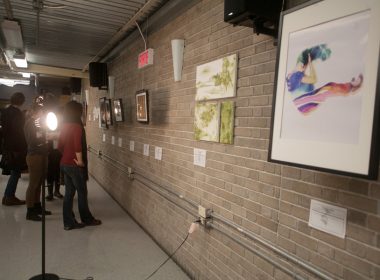
The twinkle of festive lights decorating downtown Montreal is a sign that stores will soon be overcrowded with shoppers in search of gifts for family and friends. As an alternative to this pre-holiday tradition, McGill’s Local Artists Market on Nov. 21 provides an opportunity to buy gifts you probably won’t be able to find in the mall.

Organized by the Market Cooperative and the McGill Farmers’ Market, Thursday’s market will take place in the SSMU Ballroom and will feature around 44 vendors showcasing and selling their work.

About half the expected vendors are students, and the rest are people from the Montreal community. Vendors will sell everything from photography and homemade candles and soaps, to jewelry and locally produced tea and food. Local bands will also provide live entertainment.

“The idea is to really bring people like McGill students, the Montreal community, musicians, artists, sort of everyone together into a community space where goods [are available],” Market Cooperative Co-founder Sam Gregory said. “People can find things for around the house, for Christmas, [and] for the holidays.”

Gregory and co-founder Amelia Brinkerhoff started the Market Cooperative in 2012.

“It was a venue that was lacking at McGill to show off [people’s] passions or creative hobbies on the side and really share it with the community,” Gregory said.

He stressed that the Market Cooperative is “not just for the holiday season.” Since their first event in February 2013, Gregory and Brinkerhoff have held several markets to provide opportunities for students and others in the community to share their artistic and creative work.

“Having low table prices mitigates the risk of trying out new ideas and crafts,” said Madeleine Pawlowski, a repeat vendor as part of the jewelry-making sister duo, Les Arts Plastiques. Pawlowski is an Arts student at McGill, while  her sister Alicia Pawlowski is a graduate student at the University of Alberta studying pediatrics.

(via marketcooperative.org)

“Market Cooperative is on its way to having a loyal and diverse following, and once it does, it’ll be an excellent testing ground for artists and crafters who want to see if they can make a go for it if there’s a real demand for their products,” Pawlowski said.

For the consumer, the market atmosphere provides an enriching and cost-effective shopping experience with the organizers bringing in reasonably priced vendors who aim to meet student interests.

“[A student] could go to Urban Outfitters and buy something there that’s 50 or 60 bucks, or they could come to the market and get something that’s locally produced, supporting the local economy and the community,” Gregory said. “It’s going to be more sustainable because it’s made in local places, not being shipped […] and it’s going to be more affordable, too.”

On a broader community level, the founders hope to better connect McGill with the rest of the Montreal community.

“It’s giving that opportunity to create a sense of belonging in the city and interact,” Gregory said. “Markets are a great place for people to come together. [Market-goers] spend half an hour walking around and they’ll see friends and they’ll chat.”

Pawlowski noted the more practical advantages of the markets for vendors.

“[Bringing] together the McGill crafters and Montreal ones […] fosters a connection between both communities, and [they can] share their experiences and knowledge of ‘what works’ in the handmade world,” she said.

Despite their plans for two upcoming markets in the Winter semester, the cooperative currently faces several challenges because they do not fit into SSMU’s framework due to their current operational structure. The non-profit organization generates revenue through the sale of tables to the vendors, of which a small portion goes towards a stipend for the four main organizers.

“Because of that, we can’t be a student club and there [are] a lot of barriers,” Gregory said. “[SSMU] is not supporting us being an [Independent Student Group], or seeing value in us. That’s been one of the biggest frustrations for us, [since] we’re paying $800 for the ballroom [….] Every market, we’re just trying to cover the cost.”

Internal groups, such as student clubs and Independent Student Groups, receive priority room booking in the SSMU Building, and do not have to pay for the rent. Since the Market Cooperative is an external group they have to pay rent for the ballroom, which means they have no money leftover to help the initiative grow.

According to Gregory, the Market Cooperative is not looking to become a student club because the associated bureaucracy would unnecessarily complicate the market’s operation. They hope to find a way to move past these hurdles—for example, by negotiating a lower rental fee.

“We’d like to see a compromise so we can pay half price,” Gregory said. “$400 less is $400 more we can put into the market to help it grow.”

McGill’s Local Artists Market takes place Thursday, Nov. 21 in the SSMU Ballroom at 11 a.m.-6 p.m.

a, Science & Technology

When philosophy and linguistics meet neuroscience

Jeremy Cooperstock studies human-computer interactions in an effort to augment environmental awareness for the blind community, treat lazy eye syndrome, and train medical and music students, among other endeavors. As an associate professor of the department of electrical and computer engineering and director of McGill’s Shared Reality Lab, he was just one of many distinguished speakers to address the undergraduate community at the Student Association of Cognitive Science’s (SACS) fifth Annual Cognitive Science Research Day on Nov. 13.

“Cooperstock’s presentation covered some of the lab’s latest research,” said secretary of SACS Ponarina Aleksandra. “[He discussed] music lessons facilitated by computer mediated human-to-human interaction and a fascinating computer generated surface that appears indistinguishable from real snow, ice, and even ocean waves.”

The event also included talks from other professors within the department, including associate professor and neurologist Lesley Fellows, and Kristine Onishi, who teaches child development (PSYC 304). Fellows focused her presentation on describing the use of brain lesion studies to gain insight into the inner workings of the frontal lobe and valuation (decision making) systems. It was clear that the audience was intrigued with her research and made eager use of the opportunity to ask questions.

Onishi focused on exploring the way infants understand the world. She presented various studies to address two major questions: what and how do infants know about the sound structure of their own language, and do infants have a bias for speech sounds over other sounds?

Morgan Sonderegger, associate professor of linguistics, also attended the event. Sonderegger presented an overview of the varying stability of sound systems within individuals and communities. He used the television show “Big Brother” to complete this research.

The purpose of Cognitive Science (CogSci) Research Day was to draw awareness to the work conducted by professors at McGill University that relate to the field of cognitive science—this includes computer science, psychology, neuroscience, linguistics, and philosophy, or will connect ideas between those topics.

“[We wanted to] allow undergraduate students to explore the potential fields that their studies can lead to and encourage students to engage with professors outside of the lecture halls,” VP academic of SACS Nicole Lai said.

The SACS council selected researchers that fit into the program’s interdisciplinary profile. “Since the council is comprised of students with interests spanning many disciplines, we were able to come up with a list of researchers [based on the professors we knew],” said Guido Guberman, a  neuroscience stream representative.

“My favourite part of Research Day would be the question and answer periods after each professor gave their talk,” Lai said. “The conversations and interactions between the professors and the students was the main purpose of the conference, so these sessions were what I think most of the students attending were coming for.”

“[These sessions] were the most helpful part of Research Day since it allowed students to pose their own questions about current research,” Lai said. “It serves as a good starting point for students to decide what kind of research they would eventually like to pursue.”

a, Martlets, Men's Varsity, Sports

Sports briefs

Martlet Volleyball

The Martlets (6-3) took to the court against the Montreal Carabins (7-2) for the first of four regular season meetings. McGill defeated no. 2 ranked team in the country three sets to none in rounds of 25-21, 25-20, and 25-19. Ashley Norfleet, a sophomore power hitter, led the way for the Martlets with 11 kills and 10 digs, while middles, Marie-Pier Durivage and Virginie Hebert, added seven kills apiece. The home team dominated the Carabins in hitting efficiency, posting lopsided stats of .207 to .182, and .345 to .212 in the first and third sets respectively. Third-year setter Yasmeen Dawoodjee posted a remarkable 24 assists in helping set the tone for the Martlets’ style of play.

Despite their strong start to the season, McGill has struggled to defeat perennial rivals Sherbrooke (5-4) and Laval (7-2). In order to make the playoffs this season, the team must learn to stay consistent and finish off games. In two losses against Sherbrooke and one against Laval, the Martlets failed to close out sets and lost by narrow margins. The team will travel to Sherbrooke, Quebec to play in the RSEQ-AUS Interlocking League Tournament this weekend from Nov. 23 to Nov. 24.


Martlet Basketball

The McGill Martlets (2-0) beat the UQAM Citadins (2-1) 54-44 this weekend, as the two teams faced off for the first of three matches this season. Sophomore forward Mariam Sylla led the way for the Martlets, posting a double-double of 14 points and 10 rebounds, while shooting 6-of-11 on field goals and going a perfect 2-for-2 on free throws. 5’6” point-guard Francoise Charest followed Sylla with 13 points, while guard Helene Bibeau added nine.

McGill defeated the Citadins primarily on the back of its shooting prowess from three-point range and the free throw line. The Martlets shot 20 per cent from range and 62.5 per cent from the foul line, compared to 14.3 per cent and 41.7 per cent on threes and free throws for UQAM, respectively. Both teams were also subpar while handling the ball as McGill had 30 turnovers while the Citadins posted 29.

The Martlets will face the Concordia Stingers (1-1) this Thursday, Nov. 21 at 6:00 p.m. in Love Competition Hall. McGill will look for their 10th consecutive win against RSEQ opponents dating back to Feb. 1, 2013.


Martlet Basketball

The Redmen (2-0) trounced the UQAM Citadins (1-2) 87-52 this past Saturday as the team won its second conference game. Shooting-guard Vincent Dufort and forward Nathan Joyal both notched 17 points, and veteran guard Simon Bibeau added 12 points in the victory. McGill shot an incredible 51.6 per cent from the field, making 33 of 64 shots, and also had made 8 of 16 three-point shots. The Redmen led the game throughout, scoring a dominant 31 points in the second quarter to open up the lead to 52-30 by halftime.

The Citadins’ Alexandre Bernard led the way for UQAM with 20 points, while Philippe Tamba and Marvin Pierre tallied 12 apiece.

McGill posted a worrying 20 turnovers for the game, with freshmen guard Dele Ogundokun and forward Francois Bourque posting five turnovers apiece. However, the mistakes should decrease as the team settles into the meat of its regular season, as the 10 rookies on the Redmen roster mature.

McGill will play the winless Concordia Stingers (0-2) on Thursday, Nov. 21 at 8:00 p.m. in Love Competition Hall.

a, Arts & Entertainment, Film and TV

Heroes of Hebrew humour

Although Jewish people represent only 0.2 per cent of the world’s population—according to a Hebrew University of Jerusalem study—they hold a much larger portion of social attention when it comes to comedy. Director Alan Zweig made the documentary When Jews Were Funny to investigate why Jewish people have been so famously humorous throughout the 20th century in the United States. The film does not give any definitive answers, but does offer funny ones, as Zweig interviews various Jewish comedians between the ages of 30 and 80, ranging from Howie Mandel to Bob Einstein.

This documentary feels like an E! channel special where a panel of comedians give their opinion on a celebrity or current event, except it lasts a full hour-and-a-half, and all of the comedians constantly refer to the fact that they are Jewish. By featuring only comedian interviews and short clips from Jewish 60s stand-up acts, the repetitive documentary loses any ability to engage the audience beyond the substance of the interview responses. During the entire film, the camera never moves—it is always the same distance from every comedian’s face. This static approach gets boring well before the 90-minute mark.

However, the film is not meant to be a visual spectacle; it focuses on the content of the dialogue, which ranges over many topics while remaining firmly centred on Jews. The inclusion of two generations of Jewish-American comedians brought some interesting disparities to light. Older comedians don’t see any connection between their Judaism and comedy, while the current generation attributes all of their success to their Jewish upbringing and lifestyle. The comedians’ responses to the same questions vary quite significantly, some making light of dark periods of Jewish history while others express strong outrage at any hint of anti-Semitism. Some do not see any pattern of Jews being funnier than anybody else, while others see humor as fundamental to Jewish life as food.

Due to the documentary’s narrow topic and fairly homogenous cast, it sometimes shifts into awkward territory. The film increasingly makes borderline anti-Semitic Jewish jokes or stereotypes as it progresses, while using the term “we” as if to reassure the viewer. However, these comments made me, a non-Jew, uncomfortable, knowing that if I ever repeated any of these jokes, I would immediately be branded as racist.

Judy Gold, one of the comedians interviewed, says it’s fine to say anything as long as it’s funny—and the comedians are amusing. Obviously their humour is evident while telling jokes, but it also seeps through when they are answering serious questions. Over the course of the film, each comedian tells their favorite “Jewish joke,” which are amusing and help to illustrate the culture this film hopes to explain.

There is no final opinion on what, if anything, makes Jews funnier than any other ethnicities. But there is a deep exploration of the psyches of over a dozen Jewish people in the entertainment business, a format that isn’t necessarily enlightening, but is interesting nonetheless.

When Jews Were Funny does not produce any startling information. Is not particularly well-shot, and offers no surprises. It seems to simply be a film where Jews can talk about being Jewish. For anybody deeply interested in modern Jewish culture or willing to watch a 90-minute film for a dozen good jokes, this film could be worth checking out. Otherwise, it’s flat, repetitive, and frankly, a little bit offensive.


When Jews Were Funny was originally released on Sept. 10 and makes its Montreal debut from Nov. 25 to Dec. 5 at Cinema du Parc (3575 Parc). Student tickets are $8.50.


a, News, SSMU

Students vote “yes” to Midnight Kitchen, SSMU Daycare fee increases

Undergraduate students voted “yes” to all four questions in the Students’ Society of McGill University’s (SSMU) Fall 2013 Referendum. As a result, SSMU has adopted their revised constitution; the Midnight Kitchen will remain in existence and raise their opt-outable student fee by $1 to $3.25 per semester; and the non-optoutable student fee for SSMU Daycare will increase from $1.50 to $2.50 per semester.

Midnight Kitchen

The motion to increase the fee for the Midnight Kitchen—a service that provides vegan lunches by donation to over 200 students per weekday—said that the increased fee would allow them to consider serving breakfast in addition to lunch, and for them to remain free for students who cannot afford to donate money in return for lunch.

Arts Senator Claire Stewart-Kanigan is not involved in running the Midnight Kitchen, but was a mover of the motion when it was brought to SSMU Council. She said she was happy to see that the questions passed.

“It’s a great service on campus, and the opportunity for them to have a bit more financial leeway in order for them to expand that service makes it even more useful and accessible to students,” she said.

SSMU Daycare

SSMU Daycare’s fee increase will allow it to continue regular operations without cutting services. Since its most recent fee increase to $1.50 in 2006, the daycare has opened a nursery and has been paying increasing rent for the space they occupy within the SSMU Building.

Prior to the referendum period, the daycare made cuts to services to prepare their budget as a precautionary measure in case the fee increase was denied. Now that the fee increase has been approved, the daycare aims to reinstate these services next semester.

“The most notable of these cuts was the bursary program that is available to parents who are in especially tight financial situations,” said Stefan Fong, SSMU vice-president clubs and services. “The decision to cut the bursary program this semester was a divisive one, but ultimately [was] made because it wasn’t strictly essential to the functioning of the daycare.”

SSMU Constitution

According to SSMU President Katie Larson, updates to the SSMU Constitution consist of a revision of the Board of Directors (BoD) selection procedure, as well as changes recommended by SSMU’s legal counsel, including the clarification of many definitions and changes to format that will make the document more understandable.

Larson said executives are now working to ensure that other SSMU documents are compatible with the revisions to the constitution.

“We are very pleased that the constitution passed,” Larson said. “The next step will be working on the Internal Regulations (bylaws) to be in line with the new document and to include things that were removed from the constitution back into the governance documents.”

Voter turnout

The referendum saw the same voter turnout as last year’s Fall Referendum, with 18 per cent of undergraduate students voting. Ben Fung, chief electoral officer of Elections SSMU, said this year’s turnout is typical, but that he is pursuing methods to increase participation for next semester

“We’re satisfied with the turnout, but that doesn’t mean that we’re not going to keep trying new things,” Fung said. “It’s Elections SSMU’s responsibility to always look for different avenues for improving turnout.”

According to Fung, Elections SSMU is currently undertaking a project that seeks to apply the methods used by other universities to increase turnout.

“This semester, we’re doing an intensive research campaign into the bylaws and turnout campaigns of other universities so as to improve our [electoral] bylaws and initiatives,” Fung said. “If we can find something that can feasibly be applied to SSMU, you may see something happen in the Winter semester.”


a, Opinion

Making STEM Less Sexist

The overt sexism that was once present in academia has largely  disappeared. Women are finally accorded the same opportunities as men for success, or so it seems. The reality, however, is that subtle vestiges of sexism remain, limiting the ability of female students to reach their maximum potential. Remnants of sexism seem most visible in the Science, Technology, Engineering, and Math (STEM) subjects, where women remain dramatically underrepresented.

Despite its persistence, the presumption that women lack the intellectual capabilities to excel in science and math has often been proven wrong. However, unconscious bias is a remnant of this long-standing stereotype. A 2012 study conducted by the U.S. National Academy of Sciences is an excellent illustration of this. Faculty participants were each told to rate applicants—­which had been randomly assigned male or female names­­­­­—for a laboratory manager position. The faculty consistently rated the applications with male names higher than those supposedly belonging to women, despite their identical content. Participants believed the applications attributed to men were significantly more competent than those belonging to women.

Even more surprisingly, female faculty members were just as biased towards the male applications as their male colleagues. Similar studies regarding gender biases in science fields have been conducted with comparable results. Whether or not the perpetrators of gender bias are conscious of their discrimination, these studies clearly illustrate the degree to which gender stereotypes remain entrenched in society.

Female STEM students themselves often have subconscious biases regarding their own capabilities. Although they may be fully capable of attaining the same levels of success as their male classmates, females have been known to have lower confidence in their abilities. Several factors could be contributing to the lack of confidence among women in STEM; one main reason may be a deficit of encouragement. Since these fields have traditionally been male-dominated and conventionally unwelcoming towards women, female students are less likely to have encountered the same degree of positive reinforcement as men when entering these professions.

A second factor contributing to the issues women face is that they often have been socialized away from these fields since birth. Society conditions women—and men—to act and think in certain ways. The preference of women to enter into arts-related fields rather than science or engineering can be seen as a direct result of societal norms, which stereotype all women as being more empathetic and better at communicating than men. Why are we surprised when young boys who have been socialized into playing with construction sets and assembling train sets, are more likely to want to be engineers, for example, than their sisters, who were given dolls?

For thousands of years, humans have been socialized to believe that women are inferior to men. While we have come a long way, gender biases linger within society. In order to close the gender gap in STEM fields at universities, and, more generally, to ensure gender equality in all educational and professional spheres, we must try to limit the effects of the latent preferences that are still present. In addition to acknowledging our prejudices and rectifying our tendencies, efforts also need to be made to encourage women to enter these fields.  As more and more focus is placed on progressing technologically, we must take advantage of all society’s bright minds. Continuing to focus on the contributions of only half of the population by limiting the opportunities for women to reach their full potential constitutes a large and unfortunate loss to science and technological progress.

a, Arts & Entertainment

A night out for the kids

I really had no idea what I was in store for as I took my place in the audience of the 13th annual Commerce & Administration Students Charity Organization (CASCO) charity fashion and dance show last Friday night at Telus Theatre. A quick glance at the McGill student-driven charity’s program informed me I could expect a few speeches—which were kept mercifully short and sweet—a live auction, and a slew of musical performances.

The event also featured a silent auction, as well as a raffle, with all proceeds going to the Montreal Children’s Hospital Foundation. According to the program, CASCO aimed to “raise $12,000 to complete [their] pledge” to the Foundation, which has, over the past 13 years, helped to build a new wing for the hospital. The remaining funds would be split between the Tiny Tim Fund and the Music Therapy program, both of which are run through the hospital.

After Effusion A Capella opened the show with an impressive three-song set featuring some refreshingly unexpected rap, the event’s ‘ringleaders,’ Sean Finnell and Daniel Sorek, moved things right along, with opening speeches from CASCO executive directors Majd Steitieh and Ruth Talbot,  representatives from CASCO’s University of Ottawa chapter, and a speaker from the Montreal Children’s Hospital Foundation. The “Cirque du CASCO” theme was bolstered by cotton candy and  popcorn sales, and circus music. Dance performances from the CASCO committee and the San Tropez Dance Company followed, and then came the live auction, auctioneered by Management Undergraduate Society (MUS) Career Advisor Peg Brunelle.

(Adrien Hu / McGill Tribune)

The level of professionalism of the event had impressed me thus far, but with increased audience interaction came the pointed reminder that we were most certainly at a college event. Many guests had made generous use of the bar, perhaps rightly so; after all, this was a charitable occasion. Nevertheless, a live auction doesn’t work its best when students are bidding on behalf of each other, and the look on a student’s face as someone else volunteers $350 of their money is much less funny when the whole point is to raise funds for a rather serious cause. By and large, however, attendees were extremely generous, and personal commentary by Brunelle kept the whole affair particularly entertaining.

Performances from Mosaica, which were incredibly skilled, and Brosaica, which were cleverly self-aware, wrapped up the first portion of the evening. Intermission featured a vocal performance from first-year McGill student Kat Garcia, who has opened shows for Karl Wolf and Danny Fernandes, among others. The second part of the show featured enjoyable dance performances, including jazz, lyrical, and ballet. Interspersed with these were banter from the hosts, as well as raffle draws and announcements of a few of the silent auction winners. The event lineup, while well-rounded, was also extensive, which made for a bit of a long night. It’s difficult to strike a successful balance between hyping up the crowd and keeping things moving, which Finnell and Sorek, though bursting with energy, fell just short of. Granted, I didn’t visit the bar myself, but there are only so many times I can chant “raffle” before it stops being fun.

Urban Groove finished the show strong, proving they deserve their campus reputation as the dance project to watch. Finally, the thank-yous and final bows brought the focus back to the point of the evening, and reminded us just how much hard work goes into an undertaking like this. The performances were attention-grabbing, and the event was entertaining, if at times slightly informal and on-the-fly. For those who enjoy musical performances, or who appreciate a little bit of pageantry for a good cause, CASCO certainly didn’t disappoint.

a, Features

Transitioning from CEGEP

With its pride of place in the heart of downtown Montreal, McGill is often seen as a global university, not solely a Quebec or Montreal institution. However, students from the province of Quebec make up a large portion of the university, comprising over two thirds of Canadian undergraduates and just over 40 per cent of students at both the undergraduate and graduate levels in the Fall 2012 incoming class. Students entering McGill from in-province generally apply from a Collège d’enseignement général et professionel (CEGEP), a stage of the Quebec educational system that functions as a bridge between the end of high school and university, employment, or other alternatives thereafter. At McGill, applicants with a CEGEP diploma generally receive 30 credits, or the equivalent of a full year of classes.

The CEGEP system consists of 48 public institutions throughout Quebec and is a feature unique to the province. It includes five that provide instruction in English and several other private colleges which provide the same diploma credentials but are not officially CEGEPs. Since Ontario phased out its “grade 13” program a decade agothough many students still repeat grade 12 classes—no other jurisdiction in the U.S. or Canada sets up for another year of education beyond grade 12 and prior to university. Students in Quebec enter CEGEP after grade 11 and attend either a two-year university preparatory program which gives a Diplome d’études collégiales (Diploma of College Studies), or a three year vocational program which awards an Attestation d’études collégiales (Attestation of College Studies in English); the latter is designed to facilitate direct entry into the workforce in a particular trade. The vocational degree, however, is not designed to preclude later entry to university.

(Jack Neal / McGill Tribune)

The CEGEP system was established in 1967 in the wake of recommendations made by the Parent Commission, a wide-reaching inquiry into the state of education in Quebec instituted by then-Premier Jean Lesage. This was just one in a sweeping array of changes to Quebec society in the 1960s, often known as the “Quiet Revolution.” The creation of the CEGEP also represented an equalization of the length of French and English education in the province. Previously, the French educational system consisted of three extra years of schooling through the end of university, while the English system totalled 15 years. After the introduction of CEGEP, both languages had 16 years of instruction.

The abolition of the CEGEP system has been suggested multiple times in recent years.; In 2003, the Fédération des commissions scolaires du Québec  (Federation of Quebec School Boards) released a report recommending the abolition of the CEGEP level, and in its place adding a year to high school. The argument in these cases has largely centred around the cost savings that could come from removing this additional administrative apparatus.

The value of the CEGEP program, however, has been defended by many stakeholders, and there are currently no serious plans to revamp or eliminate the system. Donna Varrica, communications coordinator at Dawson College—an English-language CEGEP—argues that the system performs a valuable service in preparing students for university-level

material.

“The expectations placed on the student are more rigorous than high school,” she said. “There is no hand-holding, there

is no one to ensure that you go to classes, do your work, [or] track your progress on a day-to-day level. Students are taught by teachers with minimally a [master’s degree and] a large percentage [of instructors at Dawson] have PhDs. [These instructors] chose to stay in the college system to focus on teaching as they were less interested in research.”

Varrica also emphasized that CEGEP offers affordable access to post-secondary education—public CEGEPs like Dawson are heavily subsidized.

According to Varrica, the education offered at CEGEPs also represents a unique blend of the high school and university experience.

“Most CEGEPs as a rule have smaller class sizes than in university—40 maximum,” Varrica noted. “While that is different than university, it serves the purpose of giving students more individual attention to tackle subjects that are new to them and more difficult, […] such as philosophy, [and] the social sciences, [that] they may not have been exposed to in high school. This method better prepares them for university. They are dealing with curriculum that is often university-level.”

Despite the academic preparation, adjusting to the workload of university from CEGEP can still be jarring for some students.

Ryan Cons, a U3 political science student at McGill who attended Dawson, said he thought that even though the program helped him develop a sense of independence, there was still a disconnect.

(Jack Neal / McGill Tribune)

“The level of material was good, but the expectations and the amount of work was nothing like what’s at McGill,” Cons said. “An essay I would have handed in at Dawson and gotten maybe high 80s on would maybe get a B- here.”

Matthew Eidinger, also a U3 political science student, had a similar view.

“I feel that going to high school and then CEGEP [helped me] make the transition in that I got to learn a lot of themes in university,” Eidinger said. “But the methodology in learning those themes was lacking, [there was] a jump that shouldn’t be there.”

Eidinger said that his CEGEP, Vanier College, did enable him to learn about many of the basic liberal arts concepts that students in a four-year program would only learn about in first year.

“[However,] the methodology [of how] it was taught and the workload was lacking,” Eidinger said. He also noted that the reading load was inadequate preparation for McGill.

The jump from a French-language CEGEP to an English-language university also heightens these transition issues. Joan Barrett, the students affairs advisor in the Faculty of Education, stated the recommendations that advisors often make for those who studied at French CEGEPs.

“The Student Affairs Office (SAO) and departmental advisers refer [students] to the services at the First-Year Office and advise them of the fact that they can submit papers in French,” Barrett said. “Depending on the student and the program, it might be suggested that they take 12 credits instead of 15. We would also communicate to them in French as needed.”

U2 physical and occupational therapy student Ariane Vaillancourt faced a significant  language transition from her CEGEP, Collège Ahuntsic. Switching from French to English was difficult for her at the beginning because of the nature of in-class interactions.

“One of the teachers [will] ask a question and you need to really answer fast,” Vaillancourt said. “And sometimes the words just don’t come out in English—I will say something in French [instead].” While Vaillancourt said she had been speaking English since she was six, she expressed the necessity of “[setting] your brain to English mode,” which she wasn’t able to do as quickly at the time.

Marion Champoux-Pellegrin, a U2 Arts student, also had difficulties transitioning from Collège de Maisonneuve to McGill.

“[The language transition] was an odd one,” Champoux-Pellegrin said. “Because I’ve always been bilingual, I’ve always watched movies and read books in English, I’ve always talked to my parents in English […] it’s more the vocabulary [that was an issue]. Focusing on one language which wasn’t French […] and catching up with all these words being thrown out in lecture [was a challenge].”

McGill does, however provide some programs to help students handle the transition from CEGEP to university. Barrett outlined one initiative, the CEGEP Student Information session (CSI), which is designed to help CEGEP students become acquainted with university. She also cited other options, such as academic skills workshops during orientation week, as well as departmental advising sessions.

Barrett noted that advisors from all of the faculties often have conversations with CEGEP advisors about ways to

(Jack Neal / McGill Tribune)

smooth the transition, though she did not have any recommendations for adapting programs at the CEGEP level.

However, students such as Sarah Gold, U2 international development studies, are critical about the transition workshops coming out of CEGEP.

“There was one workshop that was held in May to explain registration, which was completely confusing,” said Gold.  “We still had to figure it out ourselves.”

Kelly Guy, a U3 psychology student, took a similar view.

“I would have liked to see a little more presence in the CEGEPs, perhaps even past students coming back and just speaking casually to CEGEP students,” Guy said.

Despite these challenges, students who came out of CEGEP havea positive outlook on the role it played in their education. It provided a transition period where they could be immersed in some of the basic underlying concepts of university-level learning without the complete loss of supervision and small class sizes that go along with education at a large institution such as McGill.

“I found that high school prepared [us] for CEGEP, and CEGEP prepared us for university,” Guy said. “The workload was heavy, but nothing that a little extra push couldn’t help.”


a, Martlets, Sports

Martlets send Saints marching out

There is no match in the CIS for the dynamic duo of Gabrielle Davidson and Katia Clement-Heydra. Davidson, a sophomore winger exploded for a total of five goals and an assist, while Clement-Heydra, a senior centre scored two goals and added five assists,   leading the no. 1 ranked Martlets (7-0) in back-to-back victories over Concordia (1-5) and NCAA opponent St. Lawrence at McConnell Arena this weekend.

The Concordia matchup on Friday night was a thoroughly one-sided affair, much like the past 50 encounters between the two teams—all McGill victories. Following a fruitless first period in which the Martlets tested the Stingers with 16 shots on goal, Clement-Heydra opened up the scoring just 30 seconds into the second stanza. Concordia responded minutes later, but Davidson soon put the game out of reach, registering three goals in under six minutes. Clement-Heydra finished the job with another tally in the third, bringing her point total for the game to five to seal a 5-1 Martlet victory. Davidson’s hat-trick was enough to put her atop the CIS leaderboard in goals scored despite playing in five games fewer than the next highest scorer.

Saturday afternoon’s showdown with the St. Lawrence Saints proved to be a greater test for the Martlets, who had to rally from behind to seize the 3-2 victory in the dying minutes of the game. The Saints, who sit in fifth place with a 4-2 record in the NCAA’s ECAC division, came out strong and jumped to a 2-0 lead early in the second period.

(Alexandra Allaire / McGill Tribune)

McGill began its comeback with a timely goal from Davidson, but despite sustained pressure, was unable to strike again for the remainder of the period. Down by a goal at the second intermission, Martlet Head Coach Peter Smith urged his team to carry its momentum into the third period. Once again, Davidson obliged, tying the game on a low shot from the bottom of the faceoff circle just 14 seconds after the opening draw.

“We talked about reinforcing the good things that we were doing in the second period, and one of the things that we wanted to do is shoot quickly,” Smith said. “[Davidson] came out—and she’s got probably the quickest release on the planet—and really did a good job in scoring a nice goal.”

The deciding marker took a bit longer to materialize, but it arrived just in time. With only a minute-and-a-half left in regulation, Leslie Oles neatly deflected a saucer pass from Davidson into the top corner, before crashing into the net herself. The speedy fourth-year was slow returning to her feet, though Smith later confirmed that she had not sustained any serious injury on the play.

The Martlets were able to hang onto the lead to clinch the 3-2 victory, a retributive result for the team after last year’s 5-4 overtime loss to the Saints. This was the seventh of McGill’s eight matchups with NCAA teams scheduled for this season, of which they have won four. Smith praised his team’s ability to come away with the win in a very close game.

“We’ve had a couple games this year that we ended up losing that I thought we should have won—the Providence and Northeastern games come to mind—and today I thought we deserved to win,” he said.

Although they do not count towards RSEQ standings or CIS rankings, the Martlets prepare for these exhibition matches against American foes as they would any other, and see them as an opportunity for growth, especially considering their dominance against conference opponents.

“The NCAA teams are strong, so for us it’s trying to compete and show them that Canadian teams can be as strong as them, and I think it’s a good test for us,” Davidson said. “It really helps in our development.”

The Martlets will look to build on this weekend’s momentum next Saturday in Ottawa where they will take on the Gee-Gees (5-3), before returning home to host the Montreal Carabins (4-2) at 7:00 p.m. on Sunday, Nov. 24.

a, Arts & Entertainment, Theatre

If Shakespeare had written Lost…

The Tempest, the latest production by McGill’s Players’ Theatre, is the third installment in a season where the mission is “to juxtapose reality with what is magical and imaginative.” This play, believed to be the last written work of William Shakespeare, certainly does just that. Director Juliet Paperny blurs the lines between audience and actors, frequently breaking the fourth wall in order to expose the fragility of the world the characters inhabit. The set is not ornate, but presents the island locale as isolated and unidentifiable.

The comedy concerns itself with an exiled Italian noble Prospero (Ashkaan Mohtashami) who was left shipwrecked on a distant island with his young daughter Miranda (Katie Scharf). The architect of his banishment was none other than his own brother Antonio (Malachy Clearly), seeking to usurp Prospero’s position. Fortunately for him, Prospero possesses potent magic, which he uses to dominate   the spirits that inhabit the island. He presides over each event, smirking from above as he nonchalantly engineers everything. It is with this power that he raises the titular storm and brings his foes to his doorstep.

(Wendy Chen / McGill Tribune)

At this point, with the passengers of a ship embroiled in vicious winds, the narrative begins. This scene is perhaps too tumultuous, as some of the dialogue becomes briefly incomprehensible. Wild spirits, including the impressively chaotic Ariel (Kay Min)—who delivers one of the most convincing performances of the night—blow the ship to shore and separate its inhabitants. Min is as mercurial as the wind she commands, and her energy never ceases in its relentlessness. As Prospero’s plans begin to unfold, the inhabitants of the island meet the outsiders, setting off a series of comedic, romantic, and malignant interactions.

The most nuanced of these is between the only true native of the island, Caliban (Yves Abanda); jester Trinculo (Nick LePage); and an inebriated butler Stephano (Anurag Chaoundhury). Caliban is the disfigured servant of Prospero, treated cruelly by his master for trying to rape Miranda. Abanda’s performance is unerring as he traverses the character’s disparate moods and fits of grovelling insanity. He is one of the characters to engage with the audience, perhaps suggesting a tenuous hold on his own reality. He finds a new master when Stephano introduces him to alcohol and, in a series of misadventures and misidentifications as amusing at times as they are distressing, begins to plot the death of Prospero with the help of his bumbling new companions.

In yet another example of the thin barrier between reality and imagination, the spirits of the island also display their

(Wendy Chen / McGill Tribune)

awareness of the people watching the events on the island unfold. They remain wild and ethereal throughout The Tempest, appearing in varied forms as disparate as dogs and gods.

All of these characters and more venture around the isle—the approximately two and a half hours of the play occur in real time—and are eventually brought together in a reunion that will determine their collective fates.

Overall, this production is a fine display of student talent. There are several incredible performances that provide a visceral representation of a widely read story. Although the thought of Shakespeare is daunting to many, The Tempest captures your attention without letting it go, and makes the performance feel like a brief trip to an unknown island.


The Tempest runs from Nov. 20-23 at Player’s Theatre. All shows begin at 8 p.m. Student admission is $6.

Read the latest issue

Read the latest issue