

A look at Artificial Intelligence – Malika Logossou, Managing Editor A few months ago, I wrote a piece on Artificial Intelligence (AI) tools, examining whether they reduce cognitive skills and how this extends to students and adults. Drawing from Nandini Asavari Bharadwaj’s expertise, a PhD candidate in McGill’s Department of[Read More…]
Tag: research
Alzheimer’s explained: Addressing medical advances and common misconceptions
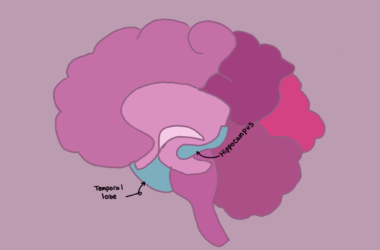
Alzheimer’s disease (AD) is a progressive neurodegenerative disease that affects memory, thinking, and eventually grows severe enough to interfere with daily life. AD is the most common cause of dementia, an umbrella term that encompasses many different symptoms of cognitive decline. While AD is still categorized as an incurable disease,[Read More…]

Not just ice caps: Shorter frozen seasons causing concern for climate scientists
The climate crisis, painfully familiar and distressing, continues to demand our attention. Some researchers are devoting this attention to analyzing the number of frozen land surface days—days when the ground surface is in a frozen state. A recent paper led by Shadi Hatami, a hydrologist and climate scientist at the[Read More…]

McGill researcher Danielle Berbrier investigates new therapeutic for women with PCOS
Polycystic ovary syndrome (PCOS) is a disease characterized by excess hormone production from the ovaries, resulting in irregular menstrual cycles and fertility issues. PCOS affects around one in ten women, making it one of the most common endocrine disorders among women of reproductive age. Beyond its relationship to menstruation and[Read More…]

Accidental discovery reveals a potential plant-based anti-aging compound
Geroscience, the study of aging and age-related diseases, has become a popular area of research in recent years. Here, the focus is not on treating age-related illnesses, but preventing or delaying their onset by understanding the biological mechanisms underlying aging. In a recent study, researchers discovered that Cyrene, a plant-derived[Read More…]

Available but not accessible: Clinicians highlight gaps in mental health service delivery
Conversations surrounding mental health (MH) have increased dramatically in recent years, with many institutions promoting wellness and expanding volumes of resources. However, the presence of services alone does not guarantee accessibility, particularly for immigrants, refugees, and socioculturally diverse communities, who often face barriers due to language, financial constraints, and increasing[Read More…]

Parenting Black and Latine children in an era of heightened racism
In a political context marked by U.S. President Donald Trump’s inflammatory rhetoric vilifying people of colour, the rise of white supremacy, and heightened anti-immigration enforcement by ICE, racism and discrimination have become increasingly prevalent and dangerous for many people of colour. Black and Latine youth, in particular, are victims of[Read More…]

‘Not enough:’ How racial invalidation impacts the mental health of multiracial individuals
Despite facing unique forms of discrimination, multiracial people remain largely overlooked in research on the intersection of racism and mental health. Multiracial people not only experience racism from strangers, but also from within their own families—a phenomenon known as intrafamilial racism. This, in turn, is a risk factor for poorer[Read More…]

Started vaping to stop smoking? This medication may help you quit both
Electronic cigarette usage has increased rapidly in recent years, with global estimates surpassing 100 million users. As vaping continues to grow in popularity, physicians and public health researchers are facing a difficult question: How should people quit a habit for which there is virtually no medical treatment consensus? A new[Read More…]

Meet your prof: Loydie Jerome-Majewska
From uncovering the genes that cause birth defects to serving as Chair of the Board of Directors of the Canadian Black Scientists Network, Professor Loydie Jerome-Majewska has been a catalyst for change across fields. She serves as a professor in McGill’s Department of Pediatrics and senior scientist at the Research[Read More…]