Latest News

a, Martlets, Men's Varsity, Sports

Getting your head in the game

In a 1987 interview with Wilt Chamberlain, Roy Firestone asked the legendary big man about the secret behind Kareem Abdul-Jabbar’s unparalleled ability to score. What made him so fundamentally different than all the other freakishly athletic seven-footers who couldn’t cut it in the NBA? 

“I believe they have athletic ability, [but] they don’t use this right up here,” Chamberlain said as he leaned forward and tapped his head. “I think that basketball players today are much better athletes, but […] their thinking process as far as the game is concerned […] pshht.” 

As a sports fan, you may hear broadcasters throw around clichéd terms like ‘team chemistry’ and ‘sports IQ,’ but when it’s coming from the mouth of ‘Wilt the Stilt,’ you have to pause. Was Abdul-Jabbar’s mental makeup at the heart of his historic success? Was his 7’2”, 225-pound frame just a happy coincidence? 

When Chamberlain tapped his head, he was pointing to the athlete’s brain, the central focus of the fascinating study of sports psychology. Born as an interdisciplinary mix of kinesiology, psychology, biomechanics, and physiology in the 1920s, sports psychology is a fledgling field of study as far as the sciences go.  At McGill, Dr. Gordon Bloom directs the Sports Psychology Research Laboratory and oversees the university’s graduate program in sport and exercise psychology. After being immersed in the world of Division I sports at California State University, Fresno, he wanted to come back to Canada to conduct further research and share his insights in the field of coaching. 

“I came here in 2000,” Bloom said. “When [McGill] brought me in to teach, the sports psychology program had been stagnant for five to six years [….] So they were looking to hire somebody, and they gave me a lab and basically said it’s yours to do what you want.”

Since then, the lab has grown to accommodate its surging ranks of post-graduate students. It provides training services for McGill and Canadian athletes in the 7,000 square foot Seagram Sports Science Centre and in a satellite laboratory at the Olympic Stadium: Many of its graduates have gone on to apply their knowledge to startling degrees of success. 

“Sports psychology […] is probably the fastest growing discipline in kinesiology—we get the most applications every year,” Bloom said. “It’s new, and it’s gotten a lot of attention with the Olympics [….] In Canada, a lot of universities have it, [but] doctoral programs are a bit more unique.”

Bloom’s primary field of research is in coaching, and after settling in at the lab, he quickly began to build relationships with the top-tier Redmen and Martlet teams.

“Our two hockey coaches at the time—Peter [Smith] and Martin [Raymond]—both had backgrounds [in sports psychology], so they had me come speak to their teams,” Bloom said. “I use them for my research and try to help the teams here as much as I can, so it’s a good two-way street.”

If an athlete is going through an intense period—whether coming back from injury, anxious about something off the court, or getting nerves before big games—Bloom is an invaluable resource. The lab offers one-on-one sessions and works with coaches and teams around exam time to help balance studies and athletics. On the flip side, many of the grad students in the sports psychology program complete internships with Redmen and Martlet teams, gaining valuable applied experience. 


When Martlet basketball captain Françoise Charest graduated and left the team last year, she left a hole in terms of leadership. Dianna Ros, the starting point guard for the team, said she struggled with the abruptness of the change, losing her mentor and having to slide into the veteran role of all at once. 

“The leadership component has been big for me this year,” Ros said. “I have had to move up this year and fill that spot with a few other girls.”

She started seeing Bloom in May, meeting a few times a month to sort out her thoughts. Though they did discuss specifics—displaying confidence on the court, embracing a leadership role, and mentoring younger players—their conversation went beyond just basketball. 

“We talked about the whole environment,” Ros said. “What’s going on in my life, the bigger picture.”

It all sounded like a normal session with your run-of-the-mill therapist. 

“[Sports psychology] focuses on health and wellness,” Bloom said. “When we’re doing research on coaching and training, we’re trying to identify ideal […] practices that not only improve performance, but also improve quality of life.”

While much of the research that goes on at the lab involves rigorous studies on various specific topics, the overarching philosophy of sports psychology is that promoting overall wellness in life has a powerful trickle-down effect into every facet of an athlete’s performance. Nobody has grasped this knowledge and applied it better than Chantal Vallée, head coach of the Windsor Lancers women’s basketball team.

After graduating from McGill with a master’s degree in sports psychology, Vallée took over the Lancers in 2005 with the goal of transforming one of the nation’s worst basketball programs from the top down. She had never coached above the high school level, but knew she could bring something special to Windsor.  

“She interviewed the top coaches in the country […] and found out how they built their programs, and [identified] ways to be successful on the court and off the court,” Bloom said. “[Taking] this personal approach, and care about [your athletes] athletically, academically, and socially [….] That’s a common theme in our research—how do you improve the quality of life and make [your athletes] feel better through coaching practices?” 

Within five years, Vallée and the Lancers were hoisting their first CIS Championship, setting the stage for a historic run of dominance from 2010 to 2014, during which the Lancers took home four consecutive Championships. Luck and good recruiting surely played a part, but Bloom did not want to understate the importance of sports psychology in achieving sporting success. 

“The most successful […] coach in [North American] sports history is Phil Jackson,” Bloom noted while pointing to a bookshelf lined with Jackson’s best-known titles. “He’s had talent, but before he coached the Bulls and the Lakers, other [coaches] couldn’t get the players to buy into it [….] You need talent to win, but that missing ingredient is team chemistry that starts from the coach […] and goes through the team leaders.”


On an individual level, McGill’s lab has used this philosophy to help raise the performance of several professional and Olympic athletes. Anastasia Bucsis, an Olympic speed skater for Team Canada and a visiting student at McGill, said that her experience with the lab helped her reflect and recover before Sochi. She explained that at a certain level, it’s a mental game, and learning to put things into perspective is crucial. 

“Everyone tells you that it’s the Olympics—anything can happen,” Bucsis said. “You just have to trust your preparation and everything you’ve done up until then because ultimately, you’re going to be skating in a circle.”

Sometimes, perspective can be everything. After winning three gold medals in swimming at the Beijing 2008 Paralympic Games, Valérie Grand’Maison started to grow tired of the sport to which she had dedicated her life. When she came to McGill to pursue a degree in psychology, she decided to join the Martlet swimming team to change things up. 

“I had won six medals, so I thought everybody knew me—again, cocky,” Grand’Maison said. “It was very humbling […] and it was nice being one of the gang.”

Grand’Maison got to know Bloom after taking a few courses in the sports psychology department, and soon began to see him on a semi-regular basis. Like Ros, she said that her sessions seemed to wander off course, straying from the pool and landing on broader topics. 

“I would also talk about my life, not only swimming […] to align my priorities and work on assuming them,” Grand’Maison recalled. “Making my own decisions and going along with them.” 

Though the Martlets were never particularly successful during her time on the team, the experience was invaluable for Grand’Maison. Hearing her teammates, girls who had only just met her, cheer her on at meets—win or lose—completely changed the way she viewed the sport. 

“It really helped me to have fun with it and take some pressure off,” Grand’Maison. “Losing is a silver medal at the Paralympics—it was the end of the world for me [….] But being part of a team that means something, and juggling school and my dreams beyond school–putting everything in perspective–made me enjoy the sport way more.”


Aside from his generational talent, Wilt Chamberlain was known for being a loner. He drove across America 20 times, always by himself, and never once married or had a girlfriend. But, as he explained to Firestone in 1987, it was all by choice. 

“I am really very content with myself—I enjoy people, I like to interact—but basically I like to reflect and I like to do that by myself,” Chamberlain said. 

His solitude came from a deep understanding of who he really was, and gave him a sense of mental fortitude that made him unstoppable on the court and remained with him many years after he retired from the NBA. For Chamberlain, and for sports psychologists, the fundamental key to athletic success lies in the knowledge that the brain has to be well for the body to perform. As Grand’Maison put it: “It’s more important to be a better person than a better athlete,” she said. “It goes together.”

a, Arts & Entertainment, Theatre

The write stuff

Hemmingway once wrote, “Writing, at its best, is a lonely life.” The lives of poets Elizabeth Bishop and Robert Lowell, as portrayed in Tuesday Night Café’s production of Dear Elizabeth, put that idea into practice. With a couple of brief exceptions, the sole pair of actors in the play are never actually together, talking to each other through the letters they write through their lifelong friendship. 

Dear Elizabeth, written by Sarah Ruhl and directed by Marina Miller, tracks Bishop and Lowell’s  relationship, spanning from the late 1940s to the ’70s. Told entirely through letters cut up and pieced back together by Ruhl, the actors spend their time sharing anecdotes about their lives, critiquing each other’s poems, and name-dropping every notable writer from the 20th century. While there’s no conventional narrative in the play, the content of the letters are meant to show the progression of their relationship—from almost-strangers to almost-lovers.

Ostensibly, the play is about weighty topics such as love, creativity, mental illness, and loneliness. However, it never really offers any form of insight into these issues—we sporadically see how these things affect each character, but there’s never a sense that it’s trying to reach further than the realm of cliché. For instance, Lowell (Max Katz) and Bishop’s (Julia Borsellino) mutual alcoholism gets distilled into him drinking and dancing too much and then passing out, and her taking a swig from a bottle of rubbing alcohol and throwing up. Other than that, it seems to have no effect on either of their lives. This lack of engagement may come from the limits of the source material—the Robert and Elizabeth of the letters are probably not very close to who they actually were, but instead, the version of themselves that they tried to show to the other person.

Playing Bishop, Borsellino makes the entire production worthwhile. A talented actor can run the gamut of emotions from happy to depressed to longing to energetic to wistful, but a truly gifted performer can express them all at once. She manages to give meaningful insight into Bishop’s inner life with every sidelong glance and weary stare. Every gesture has a hidden meaning that is simultaneously obfuscated by Bishop’s uneasy personality and illuminated by Borsellino’s performance. Every mannerism is a pixel in the picture of a fully realized person. When she breaks into tears over the death of a lover, it doesn’t seemed forced or actorly, but a genuine reaction to loss. It would have been very easy to go too far in either direction with the moment, but she plays it with such a perfect and precise level of disquiet that truly elevates the material.

Unfortunately, Katz’s portrayal of Lowell falls short of his epistolarian counterpart. In a play with so few characters, the success of the production is greatly influenced by the success of any individual performance, and Katz struggles through the part at times. Part of this certainly comes from the fact that Robert never gets the chance to reveal his true self through the letters in the same way Elizabeth does, and it should be noted that the performance comes alive at the moment when Lowell reads from one of his poems. But for the rest of the performance, I couldn’t get over the impression that his performance was mainly inspired by cigarette commercials from the 1950s, both in cadence and mannerisms.

The technical aspects of the production were uniformly fantastic. The set has a great sense of symmetry to it, with each half of the stage devoted to each character, and a desk with two typewriters in the middle that blurs the barrier between the two worlds. Bishop and Lowell’s relationship spanned three decades and two continents, and this production uses a number of stagecraft tricks to bridge that gap. Projections onto the back curtain of the stage show handy intertitles of the date, a night sky, and a beach where Bishop and Lowell grew closer together throughout the course of the play. The stage lights cut in and out to represent the passage of time. Costumes change to reflect the evolution of style over the years. With all of this, it’s still fairly easy to be confused on the time or the place, but the lack of firm grounding allows the audience to focus more on the content of the characters’ communication than the context. 

Dear Elizabeth runs from Wednesday, Feb. 18 to Saturday, Feb. 21 at the TNC theatre (Morrice Hall). Tickets are $6 for students and $10 for non-students. 


a, Science & Technology

Healthy McGill hosts the #SelfCareChallenge 2015

There’s no avoiding the fact that university students today are stressed. According to a 2013 study conducted by the Canadian Association of College and University Student Services (CACUSS), 85 per cent of students reported feeling overwhelmed by their work

Of the study’s 30,000 respondents, 91.5 per cent admitted to feeling tired or drained in the past week.

“I have eight hours a day when I sleep, and then the rest [of my time] is for school and work,” said Haejoo Oh, a U0 Management student. “Especially with midterms.”

Stress is the body’s reaction to threats. Under stress, the hormones cortisol, adrenaline, and noradrenaline are released and cause a cascade of physiological effects—heart rate increases, the liver produces more glucose, and blood is directed towards the muscles in the arms and legs. This allows the body to deal with the perceived threat, generating the fight or flight response. Today, however, the stress encountered by students is generally looming term paper deadlines, final exams, and the myriad of pressures caused by student life. As a result, stress shifts from being an acute physiological adaptation to a chronic state.

Chronic stress can cause insomnia and depression, increase vulnerability to infection, and increase the risk of diabetes and heart disease. This is especially concerning given that over 57 per cent of students in the CACUSS study reported experiencing above average to tremendous levels of stress.

The effects of stress will also undoubtedly impact students’ academic lives. In the CACUSS study, more students’ academic performances were negatively affected by stress than by physical illness, relationship problems, or learning disabilities.

Reducing stress levels can provide several benefits, such as improving attentiveness, sleep quality, and immune function. 

To promote stress reduction, Healthy McGill’s Self Care Challenge is starting conversations about mental health and stress. The challenge encourages students to look after themselves by engaging in activities like exercising, eating healthily, and drinking plenty of water. 

“Self care can be anything from making sure that you know your limits with partying and drinking, to getting help when you need it, to just on a day-to-day basis trying to live a healthier lifestyle,” said Healthy McGill coordinator Amanda Unruh.

This concept of taking time to look after themselves can be hard for undergrads, but is immensely valuable.

 “I think that, especially as students, we often feel like we don’t have time to take care of ourselves,” said Alice Gauntley, a U2 student and sexual health peer educator with Healthy McGill. “[Engaging in self-care] is a really great thing to do, especially this time of year when school can get really intense.”

The challenge is a way to inspire students to think more about mental health and dealing with stress, and also to create an environment where self-care and stress are talked about more openly, explains Unruh.

“We put together this challenge [because] we really wanted to create a campus culture of self care, where that’s affirmed and encouraged,” Unruh explained. “It’s been really great to be watching it on social media, especially to watch people doing a challenge with friends. It creates a culture of support.”

Whether initiatives like the self care challenge succeed in creating this culture of support is yet to be determined. In the meantime, stressed-out students have a range of support systems available, including the McGill Peer Support Network and free counselling services.  

McGill Gym
a, McGill, News

Students create initiative for women-only hours at McGill fitness centre

Soumia Allalou and Raymond Grafton, two McGill Law students, are in discussions with the Students’ Society of McGill University (SSMU) to seek endorsement for the implementation of women-only hours at the McGill Fitness Centre. 

Allalou started the initiative after realizing that the school did not offer women-only gym hours, unlike the University of Toronto, where she previously studied.

“Recently, I wanted to get back into shape and inquired at the McGill Athletics facility when their women’s hours were,” Allalou said. “Due to religious reasons, I can only work out in a women-only environment [….] This was upsetting to me because ultimately, I am subsidizing a service that I cannot use.”

According to Allalou, women-only gym hours encourage women who aren’t as likely to use the gym facilities to go to the fitness centre. 

“Women who do not feel comfortable using the gym because they are watched or harassed in a mixed setting can also feel more comfortable and exercise more freely [in a woman-only setting],” Allalou explained. “Women who are restricted due to religious reasons would be able to be included and use the gym.”

 According to SSMU Vice-President University Affairs Claire Stewart-Kanigan, the implementation of women-only gym hours would follow the steps of other facilities in the centre who have recognised a need for more inclusion.

“Other services in [McGill Athletics] have acknowledged the need for accommodation of particular needs to facilitate service access—such as women’s swim hours at the pool—and it is fair to extend this accommodation to other services, namely access to a fitness centre,” she said.

Allalou says she has received support for the initiative from male and female students alike. She is also conducting a survey to gather students’ opinions about offering women-only gym hours and gathering data on other Canadian universities that currently offer women-only gym hours, including the University of Toronto, University of Ottawa, Ryerson University, York University, and Queen’s University.

“Based on my surveys, I hope that the SSMU will pass a mandate endorsing this campaign,” she explained. “I then hope to schedule a meeting with McGill’s Athletics Facility to discuss how we could go about implementing our suggestion.”

Stewart-Kanigan said she is also considering bringing the idea of women-only gym hours to the undergraduate student body. 

“I have also offered the [students] the option of working with them to bring a motion of endorsement of this initiative to SSMU Council, allowing councillors to consult their constituents prior to voting,” she said. 

Victoria Greco, second-year Education student and staff member at the McGill gym also claimed that intimidation and discomfort are two factors that influence women’s aversion in joining  the fitness centre.  

“I know more women would use more of the equipment,” Greco stated.  “For example, the weight section is almost always occupied by males. So [females] might be less intimidated to go to the weight section and lift [if a women-only setting existed].”

Jared Ferguson, a first year master’s student in Exercise Physiology and McGill gym staff member, expressed similar sentiments.

“I think it would be pretty popular,” Ferguson stated. “I think it would be a good idea to get more girls involved who might not come regularly just for that reason. If there was a way that they could have a block of time where there was women only [… maybe] you would see a more even spread during regular hours.”

a, Arts & Entertainment, Music

Deep cuts – The 10-minute club

“Street Hassle”

Length: 11:00

Artist: Lou Reed

Album: Street Hassle

Released: February, 1978

“Street Hassle” is without a doubt the standout track on the album that bears its name, and perhaps one of Lou Reed’s best, period. It is split into three distinct parts that tell three different stories. The first is about a woman picking up a male prostitute, the second a drug dealer recounting the death of a woman who overdosed in his apartment, and the third a verse from Reed about love and loss. The song feels more like spoken word with strings and guitars reverberating in the background than a conventional song. As a bonus, Bruce Springsteen delivers a short, un-credited verse around the nine-minute mark.


“Impossible Soul”

Length: 25:34

Artist: Sufjan Stevens 

Album: The Age of Adz

Released: October 12, 2010

At over 25 minutes in length, “Impossible Soul” could practically be an album by itself—or at least an EP. It closes out an album that marked a big change in Stevens’ career—a shift away from a more traditional folk sound towards music grounded in synths and electronics. The track has five distinct parts that cover a wide range of styles and emotions, including quiet guitar picking, a call-and-response sing-along, and even a dance breakdown. Its runtime is fairly daunting, but if you have the time, “Impossible Soul” offers a rewarding way to spend a half hour.


“The Battle of Hampton Roads”

Length: 14:10

Artist: Titus Andronicus 

Album: The Monitor 

Released: March 9, 2010

A Civil War concept album seems like a ludicrous idea when you first hear it, but Titus Andronicus managed to execute it to near perfection. “The Battle of Hampton Roads” is a perfect microcosm of The Monitor—which gets its name from the Union warship used at Hampton Roads—as a whole. It features manic lyricism that deals with anxiety, suicidal thoughts, fantasies of revenge, and more. All of this gets laid overtop of punk-inspired Irish jigs, bagpipes, and buzzing guitars. Suffice it to say there is a lot going on in this song, but it adds up into something cathartic, and is a perfect way to end the album.


“Sing About Me, I’m Dying of Thirst”

Length: 12:41

Artist: Kendrick Lamar 

Album: Good Kid M.A.A.D. City

Released: October 22, 2012

Most rappers would likely have trouble finding enough to say to make a solid 12-minute song, but as is clear from the album as a whole, Kendrick Lamar is not short on inspiration or ideas. “Sing About Me, I’m Dying of Thirst” is a beautiful, empathetic song that tells the story of two peripheral characters in the world Kendrick describes in GKMC. The first two verses are told from the perspective of these two characters, before Kendrick offers his own view in the third, rapping about death, vengeance, sin, and salvation. My only complaint is that it is a track that demands multiple listens—a somewhat tall order for a song with a double-digit run-time.

a, Fact or Fiction, Science & Technology

Fact or Fiction: Is magic real?

Many young boys and girls wake up on their 11th birthday hoping to hear an owl rapping at their window, inviting them to attend Hogwarts School of Witchcraft and Wizardry. While most remain mere Muggles to this day, there are a few who claim to have learned the art of magic.

“When I was five years old, I was at a furniture store and this dude came up to me and pulled a coin from my ear and [then] made it vanish,” explained Master’s of psychiatry student Jay Olson. 

It was this interaction that inspired Olson to start doing magic. But it was while pursuing a Bachelor’s of Psychology at Simon Fraser University in Vancouver that Olson really began to see the links between psychology and magic.

“I learned that [what] they teach us in psychology is similar to what magicians do [with] things about attention and memory,” Olson explained. 

At that time, researchers at the University of British Columbia (UBC) were beginning to explore these concepts, which prompted Olson to reach out. The research team—composed of professor Ronald Rensink, then-student Alym Amlani, and Olson—published their work, “Influencing choice without awareness” last week in Consciousness and Cognition. The whole project started with change blindness.

“In change blindness, you show a participant a picture on the screen, you make it go away for a second, and then you bring it back,” Amlani said. “And what [Rensink] found is that if you introduce a blink in between the picture and the changed picture, it takes them a while to notice the change.” 

Rensink had also been exploring why people need to be actually paying attention to see things. This is what magicians exploit during their tricks—influencing their audience without the audience even realizing it. To prove this, the team began performing tricks, both inside and outside the lab. But first, they had to pick the type of trick they were going to do.

“We chose card magic because it’s a common thing magicians use, and at the time, no one had really published anything on [it],” Olson said. 

The trick involved taking a deck of cards, flipping through it while having the participant look at the deck and  then pick a card. Olson would then return the deck of cards to its box and hand it to the participant and ask them to name the card they had picked. The card they chose would then be written on the barcode of the card box. He was extremely successful—98 per cent of the time, the person picked the card he wanted them to pick. 

“[After,] there were three questions that we would ask them,” Olson said. “First, which card did you choose? […] Did you have a free choice, or not? And why did you choose that card?” 

Despite Olson’s 98 per cent success rate in being able to influence his participants to choose his card, 91 per cent of them believed they had made the choice of their own free will.

 “If you talk to the average person on the street and asked them if they think it’d be possible to make you choose the card, most of them would say, ‘Probably not,’” Amlani said. 

In reality, the brain responds to certain cues and environments that allow magicians to predict and influence people’s decisions. What’s puzzling is that these effects are less pronounced in lab environments. 

“When you do it in the lab, you only get 30 to 40 per cent, as opposed to the 98 per cent when I walk up to you and do the trick in person,” Amlani said. “There’s a bunch of social factors that come into it [….] There are a lot more things to pay attention to.” 

Understanding how the brain reacts subconsciously to environmental cues is extremely important when it comes to real-life situations like marketing, where something like a product’s packaging can make a consumer more likely to pick one over the other. 

“The science of magic is not about revealing the secrets of how magic works, but about looking at how magicians are able to do the things they [can] by learning about the brain,” Amlani said.

a, Research Briefs, Science & Technology

Research Briefs—Feb. 17, 2015


  • #engaged

    Charting into unprecedented territory, relationships are now using digital platforms to display signs of love and appreciation.

    A study from Georgia Institute of Technology’s School of Interactive Computing will be presented at California’s iConference in March. Entitled She Said Yes! Liminality and Engagement Announcements on Twitter, the study focused on Twitter feeds following newly engaged couples.

    The study followed 923 people who used the hashtag #engaged to announce their future plans in 2011. The research team, Munmun de Choudhury and Michael Massimi, then examined tweets from nine months before the announcement and 12 months afterward.

    Grammatical patterns underwent a noticeable change after the engagement announcement. Usage of words like “I” and “me” dropped by 69 per cent upon being replaced with “we” and “us.”

    “People began to paint themselves as a couple, rather than as individuals,” said leading researcher de Choudhury. “They’re going through a major change in life, and it shows on social media as they adapt to society’s expectations of their marital identity.”

    Additionally, as couples looked forward to their future nuptials, past tense statements were replaced and future tense occurrence rose by 62 per cent.

    The researchers also noticed that women tended to use emotional terms to describe their feelings about their significant other, such as “#love, #kind, #wonderful,” while men were more likely to use physical descriptors, such as “#gorgeous, #beautiful, and #sexy.”

    “Twitter can be a powerful tool that can mirror our thoughts and how we’re actually feeling,” explained de Choudhury. “This isn’t based on what they told us they did. It’s a reliable record–it’s what they actually did.”


  • Get on up

    A meta-analysis performed by researchers from the University of Toronto has found that the longer a person is sedentary, the higher their risk for heart disease, diabetes, cancer, and death. Though this may seem obvious, the researchers say a more sedentary lifestyle carries increased risk—regardless of regular exercise.

    “It’s not good enough to exercise for 30 minutes a day and be sedentary for 23 and a half hours,” researcher Dr. David Alter explained.

    However, the authors found that the negative health effects are less pronounced among those who participate in higher amounts exercise than among those who perform little to no exercise.

    “The findings suggest that the health risk of sitting too much is less pronounced when physical activity is increased,” said lead researcher Aviroop Biswas. “We need further research to better understand how much physical activity is needed to offset the health risks associated with long sedentary time and optimize our health.”

    The average person spends more than half of his or her day in a sedentary position engaging in activities such as working at the computer or watching Netflix.

    “Our study finds that despite the health-enhancing benefits of physical activity, this alone may not be enough to reduce the risk for disease,” Alter explained.

    The study, published last month in the Annals of Internal Medicine, acknowledges that there is further research needed to study the link between risk of disease and sedentary behaviour. No optimum balance has been found between exercise and sedentary behaviour.

    But for now, the best thing for people to do is to decrease sitting time. The researchers emphasize the importance of setting a target for reducing sedentary time by two to three hours in a 12-hour day.

    “The first step is to monitor sitting times,” Alter said. “Once we start counting, we’re more likely to change our behaviour.”


a, Arts & Entertainment

Dan Deacon – Gliss Riffer


Over the last decade, fans of musician-producer Dan Deacon have come to expect a certain degree of vibrancy and idiosyncrasy from his work. From the obscure and atonal sine wave explorations of Goose on the Loose (2003) to the infamous spoken word “Drinking Out of Cups,” Deacon has established a career based upon his quirky and unpredictable deconstructions of electronic music and pop culture. On the heels of accompanying Arcade Fire for its latest tour, Deacon has released yet another highly experimental and adventurous album that may be his best to date.

Gliss Riffer expands upon the manic tone established in Bromst (2009) and America (2012), with a dizzying upbeat vibe. Each song is carried forward at a blazing pace by racing drum pads and arpeggiated synth hooks. It is a spastic and energetic album that rarely takes breaks or pulls punches from its barrage of reverb-drenched sawtooth synths and sustained basslines.

Deacon’s use of vocals has been sparse in past albums, yet in Gliss Riffer, they frequently jump to the foreground. From the undeniably catchy chorus of the opening track, “Feel the Lightning,” he incorporates heavily processed vocal harmonies seamlessly into the album’s rich landscape of electronic instrumentation. 

In Gliss Riffer, Deacon invigorates his avant-garde compositional style with a new pop sensibility. It is an accessible yet off-the-walls acid trip of an album, and promises to give Deacon an even more ubiquitous name in the electro-indie world than he has already achieved.

a, Arts & Entertainment, Film and TV

Oscar Shorts 2015

Even the more informed moviegoers among the masses will often reach the short film portion of their Academy Awards ballots and have no idea where to start in terms of picking the two winners. The critical buzz that accompanies Oscar season largely ignores these compressed works—and the Tribune is here to rectify that. Without further ado, here are the Arts & Entertainment section’s second annual live action and animated short film reviews and picks. 

Click each perspective to read more and learn about who our picks are for this year's Oscar shorts

Animated

Eric Noble-Marks

Me and My Moulton

Set in Norway in the mid-1960s, Me and My Moulton is a charming short about the innocence of early childhood. It describes the lives of a seven-year-old narrator and her sisters as they slowly begin to understand the world. The film’s minimalistic animation style gives it a quaint and cozy feel, perfectly complementing its nostalgic narrative. Unfortunately, that narrative is also quite sparse at times, making the film seem much longer than its 14-minute runtime.

Feast

Feast is the big studio contribution to this year’s nominees and it shows. It features the cutesy, lighthearted narrative and sophisticated animation that have become staples in Disney/Pixar shorts. The film chronicles the trials and tribulations of a relationship through the eyes of a very hungry dog. What’s not to like? Feast is in many ways the perfect children’s short, boasting an adorable protagonist, simple but effective humour, and a tone that’s just sentimental enough. Though perhaps not the most unique or revolutionary of the shorts, Feast is definitely the most heartwarming. 

A Single Life

Clocking in at a breakneck two minutes, A Single Life is by far the shortest film nominated. However, it makes good use of an inventive and excellently executed premise: The film’s only character uses a magical record to fast forward and rewind her life, blending animation and music perfectly. Despite it’s brevity, this is a thoroughly enjoyable short. It makes one wonder how this exciting premise could be further explored with a longer runtime.

The Bigger Picture

The Bigger Picture is easily the most daring film nominated in this category. It tells the heartbreaking story of two brothers tasked with caring for their old and infirm mother. The film’s interesting mixture of 2D and 3D stop motion and austere colour palette perfectly reflect its themes of death and degradation. Unfortunately, it seems slightly rushed at a relatively short runtime of eight minutes. 

The Dam Keeper

Of the films nominated for best animated short, The Dam Keeper is the most puzzling. Telling the tale of an insecure pig forced to protect a city from a sinister smoke cloud, this short manages to waste a decent premise. Instead, it offers the viewer nothing more than a barrage of cliches and a poorly fleshed-out narrative. It’s too long, yet somehow fails to produce any meaningful characters. This one won’t—or shouldn’t—win.


Animated Short Prediction: Feast

Though it lacks the daring of The Bigger Picture or the inventiveness of A Single Life, Feast deserves the prize. It didn’t overreach the confines of the medium but still managed to tell its story in a creative and entertaining way. It’s the safe choice, but the right one.


Live Action

Alex Bullis

Boogaloo and Graham

Irish director Michael Lennox’s Boogaloo and Graham, set in conflict-torn 1970s Belfast, is a quirky yet socially conscious story of two boys and their pet chickens. The true strength of the piece is its impressive ability to act as an endearing and lighthearted tale of family while addressing the heaviness of an issue such as The Troubles (the name of this turbulent period) in the same breath. The children are undeniably likable, and their energy and exuberance truly makes the film. At times, it feels overly sentimental and almost tacky, but it easily stands out as the comedic highlight of the nominees.

The Phone Call

Matt Kirkby’s The Phone Call is an emotionally intense drama following Heather, an employee at a suicide help-line, as she answers the most difficult call she has ever faced—from a man who has already intentionally overdosed and simply wants company in his last moments. The harrowing, extended close-up shots of Heather’s growing distress and emotional struggle are as cinematographically tasteful as they are powerful. Kirkby’s poignant exploration of the themes of death, fear, and compassion through the eyes of a man on his deathbed form an unforgettable statement on the fragility of life and love. 

Parvaneh

Parvaneh, by Talkhon Hamzavi, tells the story of teenage Afghani migrant worker Parvaneh and her unlikely friendship with an affluent and rebellious local young woman in Switzerland. Parvaneh, while attempting to send her earnings back to aid her sick father in Afghanistan, experiences the vastly different world in which her companion resides. While earnest and heartwarming, the relationship between the women feels forced and the emotional experiences the two bond over seem eclipsed by the far more interesting backstory of the titular character.

Aya

Oded Binnun’s Aya follows an Israeli legal clerk as she is mistaken for a chauffeur, who opts to drive the passenger instead of correcting him. It has the classic feel of an eccentric indie short, but as the film progresses, it becomes a more nuanced analysis of our perceptions of strangers and the desire to connect with others. The film, though often comedic, is full of discomfort as the relationship between the woman and her passenger develops. The depth of each character slowly becomes apparent, and the awkward interactions between the two lend insight into their contrasting social natures.  

Butter Lamp

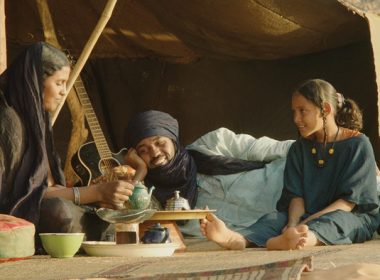
Butter Lamp, from director Hu Wei, is a subtle commentary on the influence of modernization on traditional Tibetan ways of life. It revolves around a young Chinese photographer and his efforts to photograph groups of villagers in rural Tibet. The entire short is filmed through the perspective of the photographer’s stationary camera, facing cloth backdrops that change at each scene. Each subject photographed further expands the portrayal of life in the village, and clarifies the contrast between the worlds of the photographers and the subjects. In terms of sociopolitical commentary, it is easily the most effective of the nominees. 


Live Action Short Prediction: The Phone Call

The stand-out nominee is definitively The Phone Call. Between its carefully crafted dialogue and the exceptional performance from lead actress Sally Hawkins, the work is as believable as it is profound. Heather’s teary-eyed and distraught face as she speaks on the phone is nothing short of chilling and is easily the most memorable image from any of the nominees. Already a resounding success in the international film circuit, it is a strong contender for the Oscar.


(Photos courtesy of ign.com, film.com)

a, News, SSMU

Dangerous Spaces workshop challenges conception of safe spaces

As part of the Quebec Public Interest Research Group (QPIRG) Social Justice Days series, the “Dangerous Spaces: Trauma-Informed Facilitation Skills for Holding Triggering Conversations” workshop took place on Feb. 13. Kai Cheng Thom, community worker and mental health professional, facilitated the event.

The workshop was held as a critique to the concept of ‘safe space,’ conversations which allow participants to discuss issues including, but not limited to, sex, gender, and race without being judged, stigmatised, or physically attacked. These conversations often involve marginalized minorities, queer individuals,  and sexual assault survivors who have personally experienced oppression.

Contrary to the popular perception that a ‘safe space’ provides a platform for traumatised persons to talk about their experiences without disruption and discomfort, Thom suggested that these types of conversations may actually be emotionally triggering and make participants more vulnerable. 

“Sometimes along the way, we’ll encounter something that’s very, very painful for us, and be flooded by emotions,” Thom said. Instead of ‘safe space,’ he calls the platform ‘dangerous space.’

According to Thom, such conversations are necessary for the sake of confronting the past. 

“It’s like healing a broken bone: When a bone is healing, it often heals [imperfectly]—kind of crooked,” he said. “To fix it, it has to be re-broken and reset.”

During the interactive session, participants were paired up as ‘mothers’ and ‘children.’ Each ‘mother’ used a special sound signal, such as clapping or snapping fingers, to lead their respective blindfolded ‘children’ to navigate around the room. Then, the ‘mothers’ and ‘children’ were forced to separate. The ‘children’ had to find their way back to their ‘mothers’ by listening to the pre-decided signals.

The game was meant to simulate a triggering experience, or a ‘dangerous space.’ 

“It directly addresses some of the anxieties physically: Not seeing in public, interacting with strangers,” Thom said. “The reason I wanted to do it was just to demonstrate a very possibly triggering, dangerous activity […] and to show that it can be done in a way that is slow […] consensual […] well-explained and contained, but not necessarily risk-free.”

Sabine Grutter, U3 Arts and Science, and participant in the workshop, said she was pleased with the event. 

“I found the workshop very informative and useful for community organization,” Grutter said. “One of the best things we can do in communities is […] to allow solidarity, [to acknowledge] spaces that we’re having […] and to help each other to improve.”

 The event was a part of the 10th annual instalment of Social Justice Days, a series of activities that explores social justice issues through workshops, demonstrations, screening and performances, hosted by QPIRG McGill, a campus group dedicated to environmental and social justice.  From Feb. 12 to 13, six workshops were  held on campus, with topics ranging from state violence to queer politics.

Kira Page, external coordinator of QPIRG McGill, explained how activities were chosen for the series.

“There’s a big committee, eight or nine of us who are mostly student volunteers, and some of our board and staff,” Page said. “We brainstorm topics or ideas that would be interesting [….] We sent e-mails […] and asked the community groups and campus groups to submit workshop ideas.”

Page also explained the two main objectives of the Social Justice Days events. 

“One is to […] create a diversity of political voices on campus and bring in perspectives and topics that often don’t get discussed at McGill,” she said. “The other part is to give students a really concrete [opportunity] to actually get involved.”

The topics covered in the series vary year by year, according to internal coordinator of QPIRG McGill Kama Maureemootoo.

“We see what are […] important and relevant [issues] in the moment—that’s how we do our programming,” Maureemootoo said.

Read the latest issue

Read the latest issue